

DBE reminds matric candidates: Second Chance Programme is free

The Department of Basic Education (DBE) has encouraged National Senior Certificate (NSC) candidates, who were unsuccessful in their initial attempt at the exams, to make use of the official Second Chance Programme.
The Second Chance Programme is provided free of charge to candidates.
Eligible individuals may register to rewrite or add subjects without any payment, in accordance with the department’s policies for the May/June examination cycle.
The department stressed that it does not endorse any private or commercial services that require payment for participation in the Second Chance Programme.
“For authentic information, please contact the Department of Basic Education directly or visit the official website,” the DBE said.
The aim of the Second Chance Matric Programme is to provide support to learners, who have not been able to meet the requirements of the NSC or the extended Senior Certificate.
The programme is part of meeting the goals of the National Development Plan and the basic education sector, leading to increased learner retention. Learners are also exposed to bursary opportunities for further studies.
Candidates to be supported
- Senior Certificate Examination Candidates: Learners registered to write the Senior Certificate examinations in June.
- NSC Examinations Part-time candidates: Learners who attempted the NSC examinations post 2008, and will write the examinations in May/June and November.
Targeted subjects include Accounting, Agricultural Science, Business Studies, Economics, English First Additional Language, Geography, History, Mathematics, Mathematic Literacy, Physical Sciences and Life Sciences.
The DBE is set to release the 2025 Matric Results on 12 January 2026. This year, over 900 000 candidates sat for the 2025 exams across 7 000 centres, supported by thousands of invigilators and more than 51 000 markers and moderators.

Condolences for victims of North West lightning bolt incident
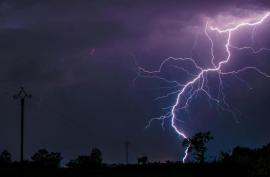
Government has extended its condolences to the families and friends of those killed by lightning at the Mphebatho Troop Festival that was held recently in the North West.
This as lighting struck at the annual festival that was held at the Dertig Sports Ground on Saturday.
“The incident, caused by a lightning strike, resulted in more than 40 people, mostly spectators and troopers, being adversely affected. Emergency services responded promptly, and those injured were immediately attended to. Patients were taken to Mathibestad Clinic for observation, while others were transferred to Jubilee Hospital for further medical care,” acting Government spokesperson Nomonde Mnukwa said in a statement.
It was reported that two people lost their lives in the incident. “Government extends its heartfelt condolences to the families and loved ones of those who have passed on and wishes all those injured a speedy and full recovery.
“Government commends emergency personnel and healthcare workers for their swift response and ongoing care and continues to work closely with relevant authorities to monitor the situation,” she said.
Meanwhile, North West Premier Lazarus Kagiso Mokgosi accompanied by MEC for Health Sello Lehari and Mayor of the Moretele Local Municipality, George Manyike and other dignitaries will visit the families of the two deceased.
“Premier Mokgosi takes this opportunity to extend his heartfelt condolences to the families of the deceased and wishes all other affected individuals a speedy recovery. The visit will be preceded by checking up on survivors of this unfortunate incident,” the Office of the Premier said ahead of the visit on Monday, 5 January.

Bafana Bafana knocked out of AFCON

Bafana Bafana have bowed out of the Africa Cup of Nations (AFCON) tournament following a defeat by Cameroon.
“Bafana Bafana are out of the Africa Cup of Nations after a defeat by Cameroon at the Al Medina Stadium in Rabat, Morocco, in the Last 16 stage of the tournament on Sunday,” the South African Football Association (SAFA) said on Monday.
Goals from defender Junior Tchamadeu in the 34th minute and Christian Kofane two minutes after the restart in the second half gave Cameroon the advantage before Evidence Makgopa pulled one back for the South African senior men’s national team two minutes from regulation time.
“With a bit of luck, the game could have seen a different outcome had the opportunities that Bafana Bafana created during the match managed to find the back of the net,” said SAFA.
“We are very disappointed and sad that we have been eliminated. I think we had the right plan, and everybody saw that, especially in the first half. We had three good chances in the first half, and the game could have been (over) then,” coach Hugo Broos said.
In a post on social media platform, X, government acknowledged the efforts of the team in Sunday night’s match.
“Bafana Bafana bow out of AFCON after a hard-fought match against Cameroon. We salute the team for their effort and commitment, and thank South Africans for the unwavering support,” said government.
Meanwhile, Bafana Bafana will return to their base in Marrakech on Monday, 5 January 2025 before finally heading back home to South Africa.
The South African senior men’s team were knocked out of AFCON after qualifying for the knockout stages in December 2025. At the time, government congratulated the team for the feat.
READ | Bafana Bafana qualifies for AFCON knockout stages
The final of the tournament is expected to be held on 18 January 2026.

SA marks over 200 days of uninterrupted power supply
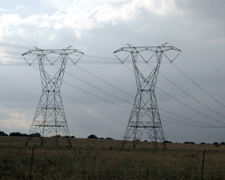
South Africa has had over 200 days free of interrupted power supply, indicating that Eskom’s power system remains stable.
“South Africa has now experienced 231 consecutive days without an interrupted supply, with only 26 hours of load shedding recorded in April and May during this financial year,” the power utility said in a recent statement.
The power utility on Friday said it continues to meet electricity demand, supported by sustained and measurable improvements in generation performance, despite the heavy rainfall experienced in December 2025.
“The Generation Recovery Plan is delivering clear results, and together with the intensive planned maintenance carried out over the past financial year, has strengthened the generation fleet, improved reliability, and enhanced Eskom’s overall operational resilience.”
The Energy Availability Factor (EAF) was 69.14% in December 2025, representing a significant year-on-year improvement of 12.57% from 56.57% recorded over the same period in 2024. Year-to-date, EAF has increased to 64.35%, with the fleet achieving or exceeding the 70% benchmark on 49 occasions.
“This performance confirms sustained recovery and reinforces confidence in the stability and security of the national electricity supply.”
Eskom said the improvements are driven primarily by the reduction in unplanned outages, reflecting the effectiveness of the Generation Recovery Plan and the benefits of disciplined maintenance execution.
Between 26 December 2025 and 1 January 2026, average unplanned outages declined to 6 822MW, less than half of last year’s level of 12 328MW, which was almost double the current figure.
Over the same period, the Unplanned Capacity Loss Factor (UCLF) further declined to 14.06%, a significant improvement of 12.06% compared to 26.12% recorded during the same period last year.
Planned maintenance remains aligned with Eskom’s maintenance schedule and supports ongoing efforts to enhance plant reliability, improve operational stability, and strengthen long-term fleet performance.
The ongoing improvement in EAF has reduced Eskom’s dependence on expensive diesel generation, enabling a stronger focus on more cost effective primary energy sources.
“To maintain a stable electricity supply, Eskom will bring 5 585MW of generation capacity online ahead of the evening peak on Monday, 5 January 2026.”
Eskom published its Summer Outlook on 5 September 2025, covering the period 1 September 2025 to 31 March 2026, which projects no load shedding due to sustained improvements in plant performance from the Generation Recovery Plan.
Load reduction
The power utility said that while the power system remains stable and generation capacity continues to exceed demand, adverse festive season weather led to a sharp increase in faults across its distribution network, with reported incidents rising by about 40% compared to the same period last year.
“While supply has been restored in most areas, some communities remain without electricity due to severely damaged infrastructure. Eskom teams have been working throughout this period and continue to restore supply safely and as quickly as possible.
“At the same time, illegal connections and meter tampering continue to damage infrastructure and pose serious safety risks. As a temporary measure, Eskom is maintaining load reduction in high risk areas to protect communities and the network,” it explained.
To address these challenges sustainably, Eskom has initiated a phased programme to eliminate load reduction by 2027.
The programme targets 971 feeders and will benefit approximately 1.69 million customers through interventions such as smart meters, Distributed Energy Resources, and expanded Free Basic Electricity support.
Progress on key interventions
• Smart meter rollout:
Eskom has installed and uploaded 73 523 smart meters on feeders affected by load reduction, with more than 90% of these installations located in Gauteng, Mpumalanga, Limpopo and KwaZulu Natal. The programme aims to install a total of 577 347 meters by March 2026, with full completion expected in 2027. Current progress stands at approximately 12.73% of the overall target, and installations continue steadily to ensure the programme’s milestones are achieved.
• Feeder removal:
The total number of feeders removed from load reduction has increased to 70. This includes 13 feeders in Limpopo and Mpumalanga (35% of the target of 37); 37 in Gauteng (29% of the target of 126); seven in the Eastern and Western Cape (47% of the target of 15), and 13 in KwaZulu-Natal and the Free State (14% of the target of 94). Nationally, the 70 feeders removed represent 26% of the overall target of 271 feeders to be removed from load reduction by March 2026.
• Customers:
With the additional feeders removed from load reduction, an estimated 95 989 customers are now benefiting, comprising 28 992 in Limpopo and Mpumalanga, 48 876 in Gauteng, 9 314 in the Eastern and Western Cape, and 8 807 in KwaZulu-Natal and the Free State.
The remaining customers still due for load reduction removal by financial year end are 205 344 in Limpopo and Mpumalanga, 96 606 in Gauteng, 16 188 in the Eastern and Western Cape, 119 039 in the Free State and KwaZulu-Natal, and 44 181 in the Northern Cape and North West. Overall, 481 358 customers out of 577 347 — equivalent to 83.37% of the target — still need to be cleared by March 2026.
• Free Basic Electricity (FBE):
Nationally, registrations are at 579 360 customers. This reflects a 19.5% increase from the baseline of 485 000 customers and represents 27.6% of the 2.1 million eligible customers.
“Eskom is harnessing technology, upgrading infrastructure, and partnering with communities to ensure a safer, smarter, and more reliable power network for South Africa.”
It further called on communities to report illegal connections, use electricity responsibly, and protect infrastructure. Any illegal activity affecting Eskom’s infrastructure can be reported to the Eskom Crime Line at 0800 112 722 or via WhatsApp at 081 333 3323.

Petrol prices decrease in January 2026
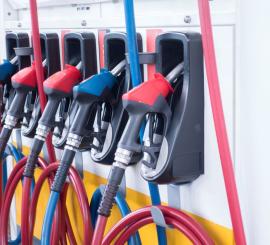
With just several days into the new year, consumers will breathe a sigh of relief as the price of all grades of petrol is set to come down by between 62 and 66 cents this week.
As of Wednesday, 7 January 2026, a litre of Petrol 93 (ULP & LRP) will decrease by 62 cents a litre and Petrol 95 (ULP &LRP) will decrease by 66 cents a litre.
The decrease in price means that a litre of 95, which currently costs R21.41 cents a litre, will now cost R20.75 in Gauteng. In the coast, a litre of 95 will cost R19.92 cents a litre.
The price of Diesel (0.05% sulphur) is set to decrease by R1.37 cents a litre, while the price of Diesel (0.005 % sulphur) will come down by R1.50 cents a litre.
The price of Illuminating Paraffin (wholesale) is set to come down by R1.10 cents a litre and the price of Illuminating Paraffin (wholesale) will fall by R1.48 cents a litre.
The Maximum Retail Price of LPGas will increase by 21 cents per kilogram and 23 cents per kilogram in the Western Cape.
According to the Department of Mineral and Petroleum Resources, the average Brent Crude oil price decreased from 63.55 US Dollars (USD) to 61.47 USD during the period under review.
“The main contributing factor is the oversupply of oil in the market due to increased production by OPEC+ and non-OPEC [Organisation of the Petroleum Exporting Countries] producers,” the department said in a statement on Sunday.
It further added that the average international product prices of Petrol followed the decreasing trend of crude oil.
“The prices of middle distillates, such as diesel and illuminating paraffin, decreased more significantly because of higher inventories for the winter season in the Northern Hemisphere. These factors led to lower contributions to the Basic Fuel Prices of Petrol, Diesel and Illuminating Paraffin by 45.03 c/l, 126.97 c/l and 87.96 c/l, respectively. The prices of Propane and Butane increased during the period under review due to tighter global supply.”
The drop in fuel prices in January 2026 follow fuel price increases in December 2025.