

DBE reminds matric candidates: Second Chance Programme is free

The Department of Basic Education (DBE) has encouraged National Senior Certificate (NSC) candidates, who were unsuccessful in their initial attempt at the exams, to make use of the official Second Chance Programme.
The Second Chance Programme is provided free of charge to candidates.
Eligible individuals may register to rewrite or add subjects without any payment, in accordance with the department’s policies for the May/June examination cycle.
The department stressed that it does not endorse any private or commercial services that require payment for participation in the Second Chance Programme.
“For authentic information, please contact the Department of Basic Education directly or visit the official website,” the DBE said.
The aim of the Second Chance Matric Programme is to provide support to learners, who have not been able to meet the requirements of the NSC or the extended Senior Certificate.
The programme is part of meeting the goals of the National Development Plan and the basic education sector, leading to increased learner retention. Learners are also exposed to bursary opportunities for further studies.
Candidates to be supported
- Senior Certificate Examination Candidates: Learners registered to write the Senior Certificate examinations in June.
- NSC Examinations Part-time candidates: Learners who attempted the NSC examinations post 2008, and will write the examinations in May/June and November.
Targeted subjects include Accounting, Agricultural Science, Business Studies, Economics, English First Additional Language, Geography, History, Mathematics, Mathematic Literacy, Physical Sciences and Life Sciences.
The DBE is set to release the 2025 Matric Results on 12 January 2026. This year, over 900 000 candidates sat for the 2025 exams across 7 000 centres, supported by thousands of invigilators and more than 51 000 markers and moderators.

Condolences for victims of North West lightning bolt incident
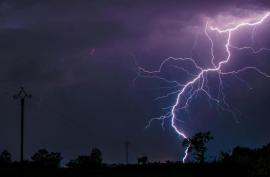
Government has extended its condolences to the families and friends of those killed by lightning at the Mphebatho Troop Festival that was held recently in the North West.
This as lighting struck at the annual festival that was held at the Dertig Sports Ground on Saturday.
“The incident, caused by a lightning strike, resulted in more than 40 people, mostly spectators and troopers, being adversely affected. Emergency services responded promptly, and those injured were immediately attended to. Patients were taken to Mathibestad Clinic for observation, while others were transferred to Jubilee Hospital for further medical care,” acting Government spokesperson Nomonde Mnukwa said in a statement.
It was reported that two people lost their lives in the incident. “Government extends its heartfelt condolences to the families and loved ones of those who have passed on and wishes all those injured a speedy and full recovery.
“Government commends emergency personnel and healthcare workers for their swift response and ongoing care and continues to work closely with relevant authorities to monitor the situation,” she said.
Meanwhile, North West Premier Lazarus Kagiso Mokgosi accompanied by MEC for Health Sello Lehari and Mayor of the Moretele Local Municipality, George Manyike and other dignitaries will visit the families of the two deceased.
“Premier Mokgosi takes this opportunity to extend his heartfelt condolences to the families of the deceased and wishes all other affected individuals a speedy recovery. The visit will be preceded by checking up on survivors of this unfortunate incident,” the Office of the Premier said ahead of the visit on Monday, 5 January.

Bafana Bafana knocked out of AFCON

Bafana Bafana have bowed out of the Africa Cup of Nations (AFCON) tournament following a defeat by Cameroon.
“Bafana Bafana are out of the Africa Cup of Nations after a defeat by Cameroon at the Al Medina Stadium in Rabat, Morocco, in the Last 16 stage of the tournament on Sunday,” the South African Football Association (SAFA) said on Monday.
Goals from defender Junior Tchamadeu in the 34th minute and Christian Kofane two minutes after the restart in the second half gave Cameroon the advantage before Evidence Makgopa pulled one back for the South African senior men’s national team two minutes from regulation time.
“With a bit of luck, the game could have seen a different outcome had the opportunities that Bafana Bafana created during the match managed to find the back of the net,” said SAFA.
“We are very disappointed and sad that we have been eliminated. I think we had the right plan, and everybody saw that, especially in the first half. We had three good chances in the first half, and the game could have been (over) then,” coach Hugo Broos said.
In a post on social media platform, X, government acknowledged the efforts of the team in Sunday night’s match.
“Bafana Bafana bow out of AFCON after a hard-fought match against Cameroon. We salute the team for their effort and commitment, and thank South Africans for the unwavering support,” said government.
Meanwhile, Bafana Bafana will return to their base in Marrakech on Monday, 5 January 2025 before finally heading back home to South Africa.
The South African senior men’s team were knocked out of AFCON after qualifying for the knockout stages in December 2025. At the time, government congratulated the team for the feat.
READ | Bafana Bafana qualifies for AFCON knockout stages
The final of the tournament is expected to be held on 18 January 2026.

SA marks over 200 days of uninterrupted power supply
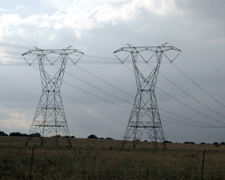
South Africa has had over 200 days free of interrupted power supply, indicating that Eskom’s power system remains stable.
“South Africa has now experienced 231 consecutive days without an interrupted supply, with only 26 hours of load shedding recorded in April and May during this financial year,” the power utility said in a recent statement.
The power utility on Friday said it continues to meet electricity demand, supported by sustained and measurable improvements in generation performance, despite the heavy rainfall experienced in December 2025.
“The Generation Recovery Plan is delivering clear results, and together with the intensive planned maintenance carried out over the past financial year, has strengthened the generation fleet, improved reliability, and enhanced Eskom’s overall operational resilience.”
The Energy Availability Factor (EAF) was 69.14% in December 2025, representing a significant year-on-year improvement of 12.57% from 56.57% recorded over the same period in 2024. Year-to-date, EAF has increased to 64.35%, with the fleet achieving or exceeding the 70% benchmark on 49 occasions.
“This performance confirms sustained recovery and reinforces confidence in the stability and security of the national electricity supply.”
Eskom said the improvements are driven primarily by the reduction in unplanned outages, reflecting the effectiveness of the Generation Recovery Plan and the benefits of disciplined maintenance execution.
Between 26 December 2025 and 1 January 2026, average unplanned outages declined to 6 822MW, less than half of last year’s level of 12 328MW, which was almost double the current figure.
Over the same period, the Unplanned Capacity Loss Factor (UCLF) further declined to 14.06%, a significant improvement of 12.06% compared to 26.12% recorded during the same period last year.
Planned maintenance remains aligned with Eskom’s maintenance schedule and supports ongoing efforts to enhance plant reliability, improve operational stability, and strengthen long-term fleet performance.
The ongoing improvement in EAF has reduced Eskom’s dependence on expensive diesel generation, enabling a stronger focus on more cost effective primary energy sources.
“To maintain a stable electricity supply, Eskom will bring 5 585MW of generation capacity online ahead of the evening peak on Monday, 5 January 2026.”
Eskom published its Summer Outlook on 5 September 2025, covering the period 1 September 2025 to 31 March 2026, which projects no load shedding due to sustained improvements in plant performance from the Generation Recovery Plan.
Load reduction
The power utility said that while the power system remains stable and generation capacity continues to exceed demand, adverse festive season weather led to a sharp increase in faults across its distribution network, with reported incidents rising by about 40% compared to the same period last year.
“While supply has been restored in most areas, some communities remain without electricity due to severely damaged infrastructure. Eskom teams have been working throughout this period and continue to restore supply safely and as quickly as possible.
“At the same time, illegal connections and meter tampering continue to damage infrastructure and pose serious safety risks. As a temporary measure, Eskom is maintaining load reduction in high risk areas to protect communities and the network,” it explained.
To address these challenges sustainably, Eskom has initiated a phased programme to eliminate load reduction by 2027.
The programme targets 971 feeders and will benefit approximately 1.69 million customers through interventions such as smart meters, Distributed Energy Resources, and expanded Free Basic Electricity support.
Progress on key interventions
• Smart meter rollout:
Eskom has installed and uploaded 73 523 smart meters on feeders affected by load reduction, with more than 90% of these installations located in Gauteng, Mpumalanga, Limpopo and KwaZulu Natal. The programme aims to install a total of 577 347 meters by March 2026, with full completion expected in 2027. Current progress stands at approximately 12.73% of the overall target, and installations continue steadily to ensure the programme’s milestones are achieved.
• Feeder removal:
The total number of feeders removed from load reduction has increased to 70. This includes 13 feeders in Limpopo and Mpumalanga (35% of the target of 37); 37 in Gauteng (29% of the target of 126); seven in the Eastern and Western Cape (47% of the target of 15), and 13 in KwaZulu-Natal and the Free State (14% of the target of 94). Nationally, the 70 feeders removed represent 26% of the overall target of 271 feeders to be removed from load reduction by March 2026.
• Customers:
With the additional feeders removed from load reduction, an estimated 95 989 customers are now benefiting, comprising 28 992 in Limpopo and Mpumalanga, 48 876 in Gauteng, 9 314 in the Eastern and Western Cape, and 8 807 in KwaZulu-Natal and the Free State.
The remaining customers still due for load reduction removal by financial year end are 205 344 in Limpopo and Mpumalanga, 96 606 in Gauteng, 16 188 in the Eastern and Western Cape, 119 039 in the Free State and KwaZulu-Natal, and 44 181 in the Northern Cape and North West. Overall, 481 358 customers out of 577 347 — equivalent to 83.37% of the target — still need to be cleared by March 2026.
• Free Basic Electricity (FBE):
Nationally, registrations are at 579 360 customers. This reflects a 19.5% increase from the baseline of 485 000 customers and represents 27.6% of the 2.1 million eligible customers.
“Eskom is harnessing technology, upgrading infrastructure, and partnering with communities to ensure a safer, smarter, and more reliable power network for South Africa.”
It further called on communities to report illegal connections, use electricity responsibly, and protect infrastructure. Any illegal activity affecting Eskom’s infrastructure can be reported to the Eskom Crime Line at 0800 112 722 or via WhatsApp at 081 333 3323.

Petrol prices decrease in January 2026
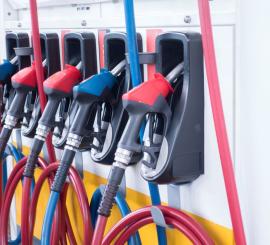
With just several days into the new year, consumers will breathe a sigh of relief as the price of all grades of petrol is set to come down by between 62 and 66 cents this week.
As of Wednesday, 7 January 2026, a litre of Petrol 93 (ULP & LRP) will decrease by 62 cents a litre and Petrol 95 (ULP &LRP) will decrease by 66 cents a litre.
The decrease in price means that a litre of 95, which currently costs R21.41 cents a litre, will now cost R20.75 in Gauteng. In the coast, a litre of 95 will cost R19.92 cents a litre.
The price of Diesel (0.05% sulphur) is set to decrease by R1.37 cents a litre, while the price of Diesel (0.005 % sulphur) will come down by R1.50 cents a litre.
The price of Illuminating Paraffin (wholesale) is set to come down by R1.10 cents a litre and the price of Illuminating Paraffin (wholesale) will fall by R1.48 cents a litre.
The Maximum Retail Price of LPGas will increase by 21 cents per kilogram and 23 cents per kilogram in the Western Cape.
According to the Department of Mineral and Petroleum Resources, the average Brent Crude oil price decreased from 63.55 US Dollars (USD) to 61.47 USD during the period under review.
“The main contributing factor is the oversupply of oil in the market due to increased production by OPEC+ and non-OPEC [Organisation of the Petroleum Exporting Countries] producers,” the department said in a statement on Sunday.
It further added that the average international product prices of Petrol followed the decreasing trend of crude oil.
“The prices of middle distillates, such as diesel and illuminating paraffin, decreased more significantly because of higher inventories for the winter season in the Northern Hemisphere. These factors led to lower contributions to the Basic Fuel Prices of Petrol, Diesel and Illuminating Paraffin by 45.03 c/l, 126.97 c/l and 87.96 c/l, respectively. The prices of Propane and Butane increased during the period under review due to tighter global supply.”
The drop in fuel prices in January 2026 follow fuel price increases in December 2025.

Government plans to eliminate load reduction
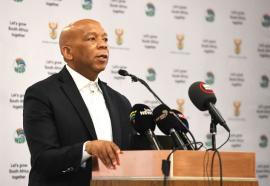
In the next 12 to 18 months, government will work aggressively to eliminate load reduction by rolling out smart meters, dealing with illegal electricity connections and upgrading infrastructure.
Load reduction refers to the intentional interruption of electricity in specific areas where the local network becomes overloaded, especially during peak demand periods.
This measure is essential to safeguard critical infrastructure, particularly in areas affected by high energy losses or illegal connections that place excessive strain on the isolated networks.
According to the Minister of Electricity and Energy, Dr Kgosientsho Ramokgopa, 1.69 million customers are affected by load reduction in the country.
This translates into about 8.5million people when considering the number of people in those households. The centre of this load reduction is in Gauteng, Limpopo, Mpumalanga and KwaZulu-Natal.
“We are going to make sure that we address the multiple manifestations of the electricity deficit in the country. Today, I am announcing that we are ending load reduction in the country. This can be achieved anywhere between 12 to 18 months,” the Minister said at a briefing in Pretoria on Thursday.
With government having largely addressed load shedding, the Minister addressed the media on the interventions that will be implemented to tackle load reduction.
“One of the first things that we will be doing is to rollout of smart meters. The smart meters will enable us to isolate customers that are able to pay for electricity but are not doing so, and not make the rest of the customers who are connected to the same transformer collateral damage. It gives us technical agility for us to isolate those who choose not to pay for electricity,” the Minister said.
There are about 2.1 million customers on the Eskom side that qualify for free basic electricity but only 485 000 customers are getting the free basic electricity.
“And yet, National Treasury is allocating funds to municipalities to ensure that the poor get free basic electricity. Once we have rolled out smart meters, we will be able to frontload the allocation for free basic electricity for a household that qualifies to get free basic electricity.
“For that to succeed, we need municipalities to work with us to create and generate a robust indigent register. As a result of this rollout, we will be able to achieve universal access so that when we say load shedding is behind us, we mean that there should be no load reduction and we are not going to discriminate against anyone,” he said.
To ensure that those who qualify for free basic electricity are susbisidised correctly, the Department of Electricity and Energy will review the Free Basic Electricity Framework (FBE).
The policy provides for indigent households with a monthly quota of electricity (typically 50 kWh) to cover essential needs like basic lighting and mobile phone charging.
“We know that an average low-income household consumes about 200 kilowatt hours of electricity per month. If we talk about 100% subsidisation of the poor, it means that the 50kWh per month of free basic electricity should be shifted to 200 kilowatt hours per month.
“We are going to change the framework without relying on the fiscal envelope, so we don’t have to approach the Minister of Finance for more funds,” the Minister said.
While the interventions are good news for consumers, the Minister said government expects resistance from some communities that have been connected illegally to the grid.
“We know that there are those who are profiting from the illegal electricity connections. Some of them are delinquent employees of Eskom and municipalities that are connecting people illegally.
“We expect them to agitate those communities to resist our presence because we are taking an illegally earned income that they have accumulated over time at the detriment of consumers in the area,” the Minister said.
There is a total of 771 transformer failures, with a large part of them being attributed to illegal connections.
“As part of this effort [to deal with illegal connections], we are going to regularise people. We are going to go to an area, typically an informal area, assuming that the municipality has formalised the area and rollout infrastructure so that everyone has access to electricity that is legally procured,” he said.
To accelerate the rollout of smart meters, government will work with businesses who manufacture them to ensure the product meets Eskom standards.
Government will also refurbish and maintain the distribution and reticulation infrastructure.
“We will also be rolling out distribution infrastructure reticulated by installing solar and battery storage. We are electrifying communities, this has already been done in two villages in Musina, Limpopo,” the Minister said.

SASSA to introduce biometric enrolment in September

The South African Social Security Agency (SASSA) has announced that it will be introducing mandatory Beneficiary Biometric Enrolment at all its offices from 01 September 2025.
In a statement on Monday, the agency said this was expected to revolutionise the administration of social grants and that the biometric enrolment was set to be a precursor to detect and nip in the bud any potentially fraudulent activities in the SASSA’s grant system.
The agency said this comes after engagements with organised labour on a myriad of issues which have since been successfully resolved, paving the way for a new age for SASSA in its resolve to administer a tight and credible grant system.
SASSA CEO Themba Matlou has expressed his relief at the conclusion of discussions with organised labour.
“Our plans were to commence with biometric enrolment at the beginning of the 2025/2026 financial year; however, we hit a snag, but we have ironed out the issues that delayed our plans and it is all systems go for the implementation,” he said.
The Beneficiary Biometric Enrolment comes at an opportune time when the agency is ramping up efforts to improve its systems, detect and effectively root out any fraudulent elements in social grant administration.
Moreover, biometric enrolment is a strategic move to ensure every grant recipient is verifiably authentic and that SASSA’s systems are resilient against manipulation and error, especially in cases involving forged green Identity Documents that frontline staff cannot reliably detect.
In addition, the biometric enrolment will ensure:
- Significant reduction in fraudulent applications and duplicate payments,
- Reliable verification of beneficiary authenticity and proof of life,
- Reduction in inclusion errors,
- Streamlined documentation processes, and
- Enhanced audit outcomes and stronger record integrity.
Improved public trust in the Social Assistance Programme include biometric fingerprint enrolment or facial recognition through electronic Know Your Client (eKYC).
Applications without biometric data will be immediately put into the review cycle, notifying the client of the need to capture biometrics as per the review processes.
This initiative will ensure the enhancement of risk controls, contributing to a more secure and accountable grants system, while ascertaining that social grant recipients are living individuals at the time of application.
The agency has set up the necessary infrastructure and tools at all its offices across the country.
Front line staff have been trained throughout the month of August to ensure their readiness and effective and efficient implementation of the biometric enrolment.
“SASSA would like to reiterate its commitment and resolve to pay the right social grant to the eligible beneficiaries, and the agency will continue to work with all its stakeholders in strengthening and safeguarding its systems.
“The agency will not hesitate to act against any of its officials should they be suspected of working with anyone to defraud its systems,” the CEO said.
For grant enquiries, beneficiaries are urged to visit www.sassa.gov.za or call our toll-free number: 0800 60 1011 or watsap GrantEnquiries@sassa.gov.za.

SIU strikes on former Lotteries Commission official

The Special Investigating Unit (SIU) has obtained a court order preventing former National Lotteries Commission (NLC) senior manager, Sanele Dlamini, from accessing his pension benefits until the finalization of a civil case against him.
The civil case relates to the alleged illegal disbursement of some R6 million in NLC funds signed off by Dlamini to the Motheo Sports and Entertainment Foundation.
“The SIU’s investigation revealed that an NLC-funded project – a sports complex – was never initiated, and supporting documents, including progress reports and financial statements, were falsified.
“Mr Dlamini, who facilitated the irregular disbursement of R3 million to the Motheo Sports and Entertainment Foundation, co-signed the fraudulent progress report without verifying the site or documentation, enabling the unlawful payout,” the SIU said in a statement.
The corruption busting unit explained that it turned to the courts for a freezing order to “limit the risk of a hollow judgment if funds were released, noting concerns that Mr. Dlamini may lack sufficient assets to satisfy future claims”.
“The interdict bars Mr. Dlamini from accessing his pension benefits until the SIU’s main case, a civil recovery action tied to the misallocation of R6 million in NLC grant funds, is concluded.
“The fourth respondent, Liberty’s Corporate Selection Umbrella Retirement Fund, has been directed to assess and disclose the value of Dlamini’s pension within 60 days. This preservation is intended to ensure that funds remain available for potential recovery should the SIU succeed in its claim,” the statement read.

Mashatile’s office rebuffs claims of misuse of State funds for ’extravagant’ overseas trips
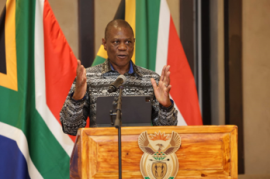
The Office of the Deputy President has released a statement denying allegations of misusing State funds related to Deputy President Paul Mashatile’s international travel.
This statement follows extensive media coverage from various news outlets and public speculation on the matter.
“Categorically, the Office and the Deputy President have not, as seems to be suggested, misused State funds or been extravagant in financing the costs of the Deputy President’s international travel,” the statement read on Tuesday evening.
According to the Presidency, the matter was first raised after a written parliamentary inquiry from Action SA, which prompted detailed disclosures regarding travel expenses.
“In light of such an expected phenomenon, the Deputy President replied to the question in full and also provided specific details, which include correct figures and breakdown of individual costs by members of the delegation supporting the Deputy President.”
The Deputy President’s Office has stressed that all international trips undertaken are in his official capacity, representing the South African government, as directed by President Cyril Ramaphosa.
“Moreover, the majority of these strategic international visits are aimed at strengthening existing bilateral, political, economic and diplomatic relations between South Africa and visited countries.”
Mashatile has engaged in several significant international working visits since taking office on 3 July 2024, including trips to Ireland, the United Kingdom and Japan, with further planned visits to France.
The Office has provided a comprehensive breakdown of the expenses associated with these trips, stressing that many figures circulated in the media are inflated.
News24 recently reported that the Deputy President’s recent trip to Japan in March cost R2.3 million, with R900 000 covering accommodation for him and his wife.
However, the Presidency stated that the Japan visit was particularly highlighted for its strategic relevance, marking the first high-level engagement between South Africa and Japan in a decade, coinciding with the 115th anniversary of diplomatic relations between the two nations.
During the Japan working visit, the country’s second-in-command was accompanied by various Ministers.
The Presidency believes that the visit was advantageous for South Africa’s African Agenda, especially considering the current overlap of South Africa’s Group of 20 (G20) chairship and Japan’s upcoming hosting of the 9th Tokyo International Conference on African Development (TICAD) in August.
“This presents a unique opportunity for South Africa to communicate its own and the continent’s position and priorities to Japan, and the expected support and role that Japan could play in this regard.”
In addition, the Deputy President’s Office stated that the claims of exorbitant costs for certain officials have been disputed, and that the actual expenditure is significantly lower.
“Regrettably, some of the figures presented by the media are significantly blown out of proportion and do not accurately reflect the cost of the trips. For example, one media liaison officer, referred to by TimesLive as the ‘most expensive supporting official’, is said to have cost R580 582 for Japan alone, when in fact, the total cost for that official is less than R66 000, including flights and accommodation.”
The Office has reassured the public that the Deputy President’s travels are conducted with fiscal responsibility and in alignment with South Africa’s commitment to global relations and investment.
“In terms of the travel policy in the Presidential Handbook, transport for the President and Deputy President during travel outside South Africa is the responsibility and for the account of the State.”
In addition, the Office mentioned that the financial responsibilities for the visits, which include travel, accommodation, and other miscellaneous expenses, are typically shared between the Department of International Relations and Cooperation (DIRCO) and other participating departments.
“In all these visits, the Office of the Deputy President has insisted on the most cost-effective provisions for the Deputy President and his delegations and has therefore not misused or extravagantly used State funds, as alluded.”

Parents arrested for alleged child pornography, sexual grooming of daughters
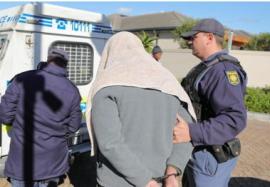
The South African Police Service (SAPS) has arrested a 47-year-old woman and a 48-year-old man in Bloubergstrand, in the Western Cape, for the alleged sexual abuse of their two daughters, aged three and eight.
“The suspects face multiple charges, including the production of child sexual abuse material (commonly referred to as “child pornography”), rape, sexual assault and sexual grooming,” the South African Police Service said in a statement.
The victims were rescued during the police operation and have since been placed in a place of safety.
“The operation was carried out by a multidisciplinary team comprising members of the national and Western Cape Serial and Electronic Crime Investigations Units, officials from the Department of Social Development supported by the FBI and Homeland Security Investigations (HSI),” the police said.
The suspects were located at a residence identified through joint investigative efforts.
Several electronic devices were seized during the arrest on Tuesday.
Police said the investigation remains ongoing.