
Government focused on resolving energy crisis

Minister in the Presidency, Mondli Gungubele, has assured South Africans that the gazetted regulations for the National State of Disaster pertaining to the impact of Severe Electricity Supply Constraints will provide government with “the extraordinary measures required to deal with our energy constraints”.
Gungubele was addressing media on Friday morning.
“The National State of Disaster emphasises our determination to support and work with all South Africans and sectors of society negatively affected by the severe electricity supply. The regulations aim to assist, protect and provide relief to the public; protect property; prevent and combat disruption; and to deal with the destructive nature and other effects of the disaster.
“We are confident that regulations will provide the extra-ordinary measures required to deal with our energy constraints. These regulations came into operation on the date of publication in the Government Gazette,” he said.
The Minister acknowledged the social and economic impact that the current electricity challenges are having on the country.
“We work hard and understand the plight all those who have been affected by the devastation of the power outages. We appreciate the cooperation from all sectors and society at large as we respond this disaster. In this way, we can all ensure efforts that yield to the end of load shedding,” he said.
Gungubele said the experience gained during the COVID-19 pandemic – which also required a declaration of a National State of Disaster – will stand government in good stead heading into addressing the current electricity crisis.
“The lessons learnt during our successful fight against the global pandemic where extraordinary measures under the auspices of the State of the Disaster legislation assisted in saving lives and livelihoods, have been at the heart of current efforts to strengthen our response as government to the deteriorating energy situation in our country.
“These regulations are to ensure that the country does not get into a state of emergency and not to undermine any social liberty or the rights of individuals or groups in any way,” he said.
The Minister emphasised and reiterated government’s stance that no State funds will be lost to corruption during the National State of Disaster and that measures are in place to protect government coffers.
“As we set out to mobilise resources to support and address the disaster, we are putting measures in place to safeguard these financial resources. Government, working with all stakeholders will ensure that all the resources we mobilise are used for their intended purposes and reach the intended recipients.
“Various oversight structures like the Auditor-General and Parliament as set out in the regulations will monitor the use of funds. Specifically, the Auditor General will undertake real time audits whilst reports to Parliament have to be submitted by respective institutions in the month where expenditure took place and also reports have to be published.
“Our focus is to ensure that there is value for money, transparency and accountability as the projects are costed and implemented,” he said.
Debt relief a boost for Eskom

Eskom interim Group Chief Executive, Calib Cassim, says government’s commitment to take on at least R254 billion of the power utility’s debt will allow it to put more focus on dealing with the current generation capacity challenges it faces.
“That decision by the Minister of Finance [Enoch Godongwana] that Eskom doesn’t have to borrow for the next three years allows Eskom to release CapEx [capital expenditure] funds three years in advance not only for generation but for transmission and distribution.
“…[With] the flexibility that we now have on procurement within the governance rules, there should be no excuses from an Eskom perspective, and from a generation perspective… [I don’t see] why load shedding [should not be] reduced going forward.
“We must not accept Stage 6 [load shedding], we need these stages to come down,” he said.
Head of the Project Management Office in the Presidency, Rudi Dicks, said the debt relief will also allow Eskom to procure more generation capacity.
“The changes that we’ve made around new generation capacity, particularly through the IRP [Integrated Resource Plan], are that Eskom is not the only entity responsible for the build of new generation capacity.
“We have the ability to procure new generation through IPPs [Independent Power Producers]. We’ve also changed schedule 2… so it’s important to understand that this is not necessarily new build by Eskom but the ability for Eskom to procure additional generation,” he said.
Turning to issues related to the National State of Disaster regulations, Dicks said the regulations allow for government to open a one stop shop for businesses to register to apply to build new generation projects in an expedited manner.
“That one stop shop is currently being formed at the Department of Trade, Industry and Competition, where there’s an existing one stop shop for registration of businesses.
“We are in the process of finalising all the necessary requirements for the establishment of that, including alignment with departments, having systems in place and ensuring that we have an agreement across the entire system of institutions, entities and government that are required to provide permitting, authorisations and requirements for registration.
“As soon we set [it up formally]… we will launch it and we will allow for smoother process for energy applications to be processed through one entry point, with a backend system to ensure a streamline and quicker process for approvals so that we can get as quickly as possible to construction and have those megawatts dispatched onto the grid,” he said.
Murder of traditional leaders an attack on the State, says Dube-Ncube

KwaZulu-Natal Premier, Nomusa Dube-Ncube, says the killing of traditional leaders and Izinduna is an attack on the State, as it threatens to destabilise an institution critical to the stability and order of society.
“It is also a symptom of the poison that has entered the core of our societal values, where crime has become the order of the day and where murders go unresolved,” Dube-Ncube said
Dube-Ncube said in a meeting with the South African Police Service in January 2022, it emerged that the police are investigating 51 murder cases going back to 2012, and to-date, 30 people have been arrested, while 18 cases are still pending in court.
“In two of these cases, the accused were found guilty. Six remain undetected,” Dube-Ncube said.
Briefing media following a Provincial Executive Council (EXCO) meeting, Dube-Ncube said possible motives behind the killings of traditional leaders include the struggle for chieftaincy, land disputes, family disputes and even taxi-related disputes.
She said the province of KwaZulu-Natal takes the safety and security of Amakhosi and Izinduna seriously, and during meetings with Provincial Commissioner, Lieutenant-General Nhlanhla Mkhwanazi, EXCO made it clear that all stops must be pulled to end these murders.
“We have asked that the Security Cluster explore the feasibility of setting up specialised units such as a Traditional Leaders’ Safety Unit, whose task will be to look after the safety of traditional leaders, especially those whose assessments reveal a security threat. We have many traditional leaders who have mobilised safety committees in their areas to work with police in the fight against crime.
“As announced in the State of the Province Address, we as the province through the Department of Community Safety and Liaison, we are establishing the Community Safety Intervention Unit which will focus on the safety of Amakhosi and Izinduna.
“This unit will conduct security analysis on Amakhosi and Izinduna; engage with law enforcement agencies to facilitate deployments and investigations. It will recommend tactical security measures to be taken and monitor intervention plans working with the SAPS,” Dube-Ncube said.
The Premier reiterated a call on all traditional leaders to collaborate and support government, as “we seek together to build a better KwaZulu-Natal for all.”
Backdated pay for Izinduna
Meanwhile, the Premier announced that the provincial government will start disbursing the funds for qualifying Izinduna, and they are going to receive their back pay.
She said the matter has been outstanding for quite some time and government has been seized with the task, not only restoring the dignity of traditional leadership institutions, but also adequately resourcing them as a way of affirming the role of traditional leadership institutions as a critical pillar of the systems of governance.
“We are moved by the fact that we have had a number of Izinduna who have passed on, who have been working with government to ensure the payment of Izinduna, even those that have passed on, receive their backdated payment.
“KwaZulu-Natal Treasury and the Department of Cooperative Governance and Traditional Affairs together with the Office of the Premier have been seized with this matter and had several engagements with national government with a view to making available the funds to meet this obligation,” Dube-Ncube said.
She said the province has about 2 229 Izinduna and are the majority in the country.
Phaahla wants alternative energy, exemptions of hospitals from power cuts sped up

Health Minister, Dr Joe Phaahla, says he hopes the alternative energy supply and exemption of essential hospitals from load shedding will be sped up after President Cyril Ramaphosa declared a National State of Disaster regarding the ongoing load shedding.
The Minister was speaking on Friday during a briefing chaired by the Minister in the Presidency, Mondli Gungubele, to communicate the gazetted regulations, which give effect to the National State of Disaster on the impact of severe electricity supply constraints.
The National State of Disaster aims to enable government to quickly deal with the ongoing crippling power cuts.
In addition, Phaahla said his Director-General has communicated with Eskom’s leadership and has formed a joint working team which has identified 213 key health facilities – mainly hospitals – to be relieved from load shedding.
He said these health facilities provide key emergencies including operations and house intensive care units (ICUs).
“So, the 213 of such facilities are a priority, not that the rest of the more than 5 000 clinics, community health centres and hospitals are not important but these were essential.”
Of these, Phaahla said, 76 are currently shielded from load shedding.
This means the country has an outstanding 137 of the top priority hospitals that are still not exempted.
“Our team has been working together to look at expanding the number of facilities which can be exempted,” he announced, adding that the remaining facilities’ cables are intertwined with community supply lines and businesses.
“They have to have a separate line installed so that they can then be exempted.”
The preliminary cost for the 45 hospitals under Eskom, according to Phaahla, came up to R300 million.
Meanwhile, he said government is still working with the provinces, districts, and municipalities on the cost plan for the remaining ones.
“We are looking forward with the declaration of disaster that this process can be speeded up because, at the current moment, our institutions are really struggling,” he admitted.
“The generators that are there in all our facilities, especially hospitals, are not meant to drive the supply of electricity for prolonged hours. They are just meant for when there is a trip in the grid and then they can keep essential services like theatres, ICU and other key services in the hospital running.”
The Health Minister told the media the department is working with the Council for Scientific and Industrial Research (CSIR) on an alternative energy supply to back up the generators at health facilities across the country.
“So, at this stage, our teams will be working under this process with Eskom and all the municipalities, which are electricity suppliers to speed up the process of acquiring all these alternative lines which can exempt many of our health facilities.”
Police Ministry calls for urgent integrated crime prevention interventions in Westbury
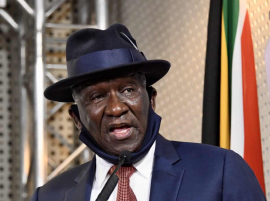
The Police Ministry has called for a “whole of government and society” approach in fighting crime and preventing the proliferation of gang violence in the Sophiatown precinct in Johannesburg, Gauteng.
On Thursday, the Minister of Police, General Bheki Cele, led a delegation of the South African Police Service (SAPS), as well as the Gauteng MEC for Community Safety, Faith Mazibuko. They visited the policing area following an escalation of gang and drug related shootings in the Westbury and Newclare townships.
In the last week, six separate shooting incidents have claimed the lives of two people and 11 others were injured.
In a statement, the Police Ministry said Gauteng SAPS have since responded to the shootings through the additional deployment of specialised units of the service. They have also increased the police footprint on the ground.
Police are “tracking and tracing” those responsible for the rampant violence that continues to threaten overall safety of residents, SAPS said.
Following his visit to the area and speaking with community leaders, Cele has ordered for more sustainable interventions to deal with crime and the causes of crime in the area.
“It is quite clear that this community is in desperate need of complimentary interventions to address the drivers of crime such as poverty, inequality, unemployment, social welfare, housing and education.
“While police have to combat and investigate crime, a ‘whole government and whole society’ solution is the only way to permanently silence the guns,” Cele said.
The Ministry said that a return visit has been planned for 7 March 2023 to further assess the policing interventions in the Sophiatown policing area.
During the visit, the Minister and his delegation will also engage the community on the multi-pronged crime prevention intervention that will be ushered in, with the support of the provincial government, in line with the Integrated Crime and Violence Prevention Strategy.
Government comes to the aid of young KZN farmer
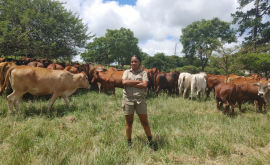
Despite the challenging odds including the floods that ravaged parts of KwaZulu-Natal, Ayanda Zulu, did not despair but continued to pursue her love for farming thanks to government’s support.
Zulu received funding through the Department of Small Business Development’s Small Enterprise Development Agency (Seda) which assisted her with equipment for the farm.
During a visit to her Kwa-Vuma Farm, in eShowe, Zulu told SAnews that had it not for government’s assistance, it was not going to be easy to continue farming.
She started Wenzokuhle Holdings in KwaNongoma in the Zululand district and thereafter started livestock farming in 2022 after moving to eShowe in March. Wenzokuhle Holdings commenced operations in 2013 but was formerly registered in 2019, specialising in crop and animal production (livestock breeding).
Having lost some of her livestock and equipment due to the floods, in 2022, Zulu approached Seda for assistance. Seda came to her rescue through its Flood Relief Scheme and her application was approved for an amount of R918 240 for equipment, machinery and livestock.
The farm employs 10 permanent employees and the number increases during the harvest and sowing period.
Zulu traces her farming roots to her grandfather’s deserted farm in Nongoma where she planted beans and also kept livestock such as goats and cows for selling.
However, she encountered challenges as the area in Nongoma is very dry and not conducive for livestock. She was then forced to relocate to eShowe, Vuma area where she bought the farm at which she is currently based.
“During the floods, it was not easy to continue farming. Floods really affected my operations, it was really bad. I thank government for their assistance,” Zulu said.
She also added climate change is a threat to livestock farming.
“Climate change is a big threat to livestock farming. But I wouldn’t change it for the world, if I had another opportunity to choose, I’ll choose farming and my ambition is to run an abattoir, invest in the food value chain, breeding, feedlots, slaughter and running multiple butcheries.
“Currently I have 165 goats and about 200 cattle, I hope to see the farm growing and having more cattle.”
Apart from livestock farming, Zulu also plants maize and beans.
Majuba College student, Nelisa Nhleka, is currently doing her internship at Wenzokuhle.
“Since I came here, I have learnt a lot about cattle and farming in general. It is important for young people to consider a career in farming so they can create job opportunities for other young people,” she said.
The Department of Small Business Development had to reprioritise its budget for the 2020/21- 2022/23 financial years as it sought to rally resources for the affected businesses during the COVID-19 pandemic, July 2021 unrests and floods.
Wenzokuhle Holdings (PTY) Ltd is amongst businesses that were funded through the Flood Relief Fund and has since emerged out of the woods and shown some resilience anchored by the support from the department and its agencies including the Small Enterprise Finance Agency (sefa) and Seda.
Fuel price increases announced
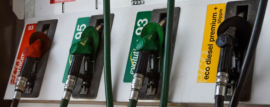
Consumers will have to tighten their belts even further after the Department of Mineral Resources and Energy (DMRE) announced price increases across the board for all grades of fuel, illuminating paraffin and gas.
The increases announced by the DMRE are as follows:
- Both 93 and 95 petrol will increase by R1.27
- Diesel 0.05% sulphur will go up by 30c
- Diesel 0.005% sulphur will increase by some 31c
- Wholesale illuminating paraffin will increase marginally by 13c
- The Single Maximum National Retail price for illuminating paraffin will increase by 17c
- Maximum retail price for LP Gas Retail Price will go up by R5.22
The new prices, effective from Wednesday, mean that a litre of 95 ULP will now cost R22.30 at the coast and R22.95 inland.
The DMRE said although the price of Brent Crude Oil decreased slightly during the period under review, other international and national factors were contributors to the higher prices.
“Petrol prices are increasing at a higher rate than diesel because of lower inventory levels globally and closures of refineries in some countries for seasonal maintenance. The impact of the EU [European Union] sanctions on diesel imports from Russia was already priced in.
“The LPGas prices increased due to higher freight rate and Propane and Butane prices during the same period. These factors led to higher contributions to the Basic Fuel Prices of petrol by 73.89 c/l and lower contributions to the BFP of diesel and illuminating paraffin by 26.48 c/l and 40.90 c/l, respectively,” the department said.
The Rand’s weak output against the US Dollar (USD) also contributed to the increases.
“The Rand depreciated, on average, against the US Dollar from R17.05 to R17.74 per USD during the period under review when compared to the previous one. This led to higher contributions to the Basic Fuel Prices of petrol, diesel and illuminating paraffin by 48.26 c/l, 52.53 c/l and 53.56 c/l respectively,” the department said.
UIF pays R22.6m to Harry Gwala, iLembe Districts former teaching assistants
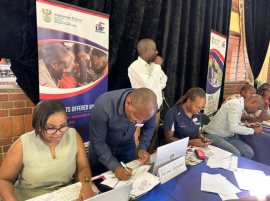
The Unemployment Insurance Fund (UIF) has paid out R22.6 million to 4 942 former teaching and general assistants, who were employed under Harry Gwala and iLembe District Municipalities in KwaZulu-Natal.
The payments were processed between 20 and 23 February 2023, when the UIF took services to clients via its mobile buses.
The campaign started in November 2022 under Amajuba District Municipality, where the Fund disbursed R7.7 million to 1 746 former educator assistants and general assistants.
It proceeded to eThekwini and Pinetown in December 2022, where R28.8 million was paid out to 6 204 beneficiaries.
It subsequently moved to Zululand, uMgungundlovu, uThukela, Ugu, iLembe and Harry Gwala Districts.
“To date, a cumulative R98.4 million has been paid out to 22 037 beneficiaries, who were employed in the aforementioned districts. From 6 March 2023, the Fund will continue with processing and paying out claims in areas around the uMkhanyakude and uMzinyathi District Municipalities,” the Department of Employment and Labour said on Monday.
The pay-out claims at uMkhanyakude District, will be processed on 6 March 2023 at Manguzi Education Centre; 7 March 2023 at Sisizakele Special School in Ngwavuma; 8 March 2023 at Sinethezekile Secondary School in Jozini, and from 9-10 March 2023 at Inkosi Mzondeni Hall in Mtubatuba near kwaMsane Clinic.
At uMzinyathi District, the pay-outs will be processed from 6-7 March 2023 at Spring Lake High School (Endumeni/ Nquthu); 8-9 March 2023 at Ukukhanya komsinga Special School in Msinga; and 10 March 2023 at Greytown High School.
The department has urged clients who wish to lodge their benefit claims to bring along a valid Identity or Passport Document, a fully charged smartphone with data, a black pen, and proof of valid banking details.
“To increase the employment prospects of former teaching and general assistants, the Department of Employment and Labour’s Public Employment Services (PES) branch will be present on-site to register the CVs of the unemployed clients on the Employment Services of South Africa (ESSA) system. This service has been a standard feature of the campaign since it started,” the department said.
ESSA is a system where work seekers can register their CVs for possible jobs and also search and apply for new job opportunities.
The system can be accessed on https://essa.labour.gov.za/EssaOnline/WebBeans/.
The former teaching and general assistants were employed as part of the Presidential Youth Employment Initiative (PYEI), which was implemented as part of the Basic Education Employment Initiative (BEEI) – across all nine provinces – to reduce youth unemployment in the country.
When their contracts ended, the former employees qualified to claim unemployment insurance benefits from the UIF.
The dates and venues for the final District, King Cetshwayo will be announced in due course on the Fund’s social media platforms and through the media.
Electricity National State of Disaster regulations gazetted
Tuesday, February 28, 2023
Cooperative Governance and Traditional Affairs (CoGTA) Minister, Dr Nkosazana Dlamini Zuma, on Monday gazetted the disaster management regulations on electricity constraints.
The gazette follows a special Cabinet meeting held on 27 February 2023.
Earlier this month, the Minister declared a State of Disaster on the Impact of Severe Electricity Supply Constraints on society. The State of Disaster was first announced by President Cyril Ramaphosa on 9 February, while delivering the State of the Nation Address at the Cape Town City Hall.
At the time, the President explained that the declaration would enable government to “provide practical measures” to assist businesses that have been devastated by the effects of load shedding.
“The State of Disaster will enable us to provide practical measures that we need to take to support businesses in the food production, storage and retail supply chain, including for the rollout of generators, solar panels and uninterrupted power supply,” he said.
The CoGTA Ministry in a statement said the objectives of the Regulations is to assist the energy generating entities to restore their capacity to generate electricity.
The regulations span an array of measures to protect and provide relief to the public and to deal with the destructive nature, and other effects of the disaster, said Ministry spokesperson, Lungi Mtshali.
These include:
(a) minimising the impact of load shedding on livelihoods, the economy, policing functions, national security, security services, education services, health services, water services, food security, communications and municipal services, amongst others;
(b) reducing and managing the impact of load shedding on service delivery to support lifesaving and specified critical infrastructure;
(c) providing measures to enable the connection of new generation supply; and
(d) providing measures to improve Eskom’s plant performance.
“Under the new regulations, the spheres of government will work closer with its social partners to enable effective co-ordination between state departments, Eskom and other relevant entities and institutions to ensure availability, integrity and security of the electricity infrastructure,” said the Ministry.
Dlamini Zuma reiterated the call by government for South Africans to observe the regulations and guidelines in order to restore the stability of the national grid.
The regulations facilitate the importation of electricity by Eskom from neighbouring countries. Funding interventions, relief schemes and benefits during the national state of disaster will also be enacted, the availability of existing funds and the scale of additional resources required, considered. Consumers will be protected from excessive pricing of goods and services and availability of the supply of goods and services will be secured during the national state of disaster.
Commenting on the newly Gazetted regulations, Minister in the Presidency, Mondli Gungubele said: “Government is confident that regulations will provide the extra-ordinary measures required to deal with our energy constraints. These regulations come into operation on the date of publication in the Government Gazette.
“The development of the regulations is the result of extensive consultations between key role players across all spheres of government. It represents the best available options appropriate to the situation the country finds itself and within the limited available resources available to address our energy challenges.”
According to the gazette, during the State of Disaster, emergency procurement for public institutions would be subject to the Public and Municipal Finance Management Acts (PFMA and MFMA) and the Preferential Procurement Policy Framework Act.
During this period, reads the gazette, the Auditor-General would conduct real-time audits and report on the accounts, financial statements and financial management of all emergency procurement undertaken during the national state of disaster.
“Accounting officers must take steps to ensure that anti-corruption measures are implemented during the emergency procurement. Any procurement undertaken using emergency provisions… must be published and reported to Parliament within the month of expenditure by the accounting officers and authorities, including the details of such procurement and the reasons for deviating from normal procurement procedures,” the gazette reads.
SA must invest in education, training to compete globally
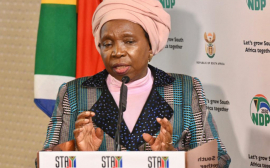
Cooperative Governance and Traditional Affairs (CoGTA) Minister, Nkosazana Dlamini Zuma, says by investing in education and training, the country will be able to develop the skills and expertise necessary to capitalise on new technologies, adjust to new industries, and successfully compete in a global economy.
Dlamini Zuma made the remarks while addressing the Eastern Seaboard Development Skills Revolution Summit on Monday.
The Summit, themed ‘From Skills Revolution to Productivity’, was held as part of the Eastern Seaboard Skills Revolution Programme that is aimed at developing a unique integration of natural, human, and capital resources within the District Municipalities of Alfred Nzo (Eastern Cape), OR Tambo (Eastern Cape), Ugu (KwaZulu-Natal) and Harry Gwala (KwaZulu-Natal).
The Summit was attended by key partners and stakeholders from multiple professional bodies; academic institutions; royal houses; faith-based organisations as well as students and learners. Also in attendance was Deputy Minister of Department of Agriculture, Land Reform and Rural Development, Nokuzola Capa; Deputy Minister of Basic Education, Dr Reginah Mhaule; Deputy Minister of Cooperative Governance and Traditional Affairs, Obed Bapela, the MEC of CoGTA in the Eastern Cape, Zolile Williams and the Acting Mayor of OR Tambo, Thokozile Sokhanyile.
In a statement, the department said the summit provided delegates an opportunity to exchange ideas on how best to bring to life the vision of the Eastern Seaboard Development for ordinary communities.
“The only meaningful participation of communities in the e Eastern Seaboard will be to see that the youth are trained and acquire skills that are necessary for the development of the region. The summit confirmed that the region’s educational and skills profile is a critical success factor in the development of this smart city,” it said.
Monday’s strategic engagement, reads the statement, was “a pivotal step change and an important milestone towards ensuring that the region embrace opportunities that will accrue from the 600km Eastern Seaboard Development”.
“With the Eastern Seaboard Development being rolled out, the region will see growth. The focus brought by the Eastern Seaboard Development will enable the District to identify priority projects that will yield economic spinoffs geared towards a rapidly growing economy and building a better life for communities,” said the department.
It was in this context that there was an explicit acknowledgement that South Africa needs to join hands and minds to generate the solutions to our challenges relating the availability of skills for development. From the summit, it was therefore clear that low or no skills perpetuate poverty and inequality.
The Department said its implementing agency, Municipal Infrastructure Support Agency (MISA) continues, to open doors of learning through the provision of education and bursary schemes, some which were handed over by Minister Dlamini Zuma on Monday.
“The summit agreed that development of skills can contribute to structural transformation and economic growth by enhancing employability and labor productivity and helping both people and the economy to get the relevant skill,” it said.
Minister emphasised that government should work with other stakeholders as one and not in silos guided by the DDM. The benefit of working together is the impact on the lives of communities.
Minister Dlamini Zuma further sounded a clarion call, indicating that youth must play crucial vanguard role in the struggle for economic emancipation and power by amassing relevant knowledge and skills through training that will support the growth economy and the development of our country.
“The Minister urged that both public and private sector should actively skill the youth and also provide them an opportunity to ply their skills across various sectors taking advantage of the natural endowments of the whole region,” reads the statement.