
Deadline for submissions on protection of CHWs extended

The Department of Employment and Labour has extended the deadline for written submissions on the protection of Community Health Workers (CHWs) in South Africa.
The submissions on the protection of CHWs were made to the National Minimum Wage (NMW) Commission in line with the National Minimum Wage Act.
The initial deadline for submissions was 31 January 2023.
The Commission has published a notice on Monday, extending the period for submission of written inputs after it announcement in December 2022 that it had started an investigation into the wages and conditions of employment in the Community Health Workers sector.
NMW Chairperson, Professor van der Walt said the Commission resolved to extend the deadline to 28 February 2023.
“The terms of reference of the investigation are to investigate the wages and conditions of employment of the Community Health Workers in the health sector, with a view to establish a sectoral determination prescribing minimum wages and conditions of employment. The NMW Commission is conducting the investigation in terms of Section 52(3) of the Basic Conditions of Employment Act (BCEA), No 75 of 1997,” Van der Walt said.
The Community Health Worker Programme (CHWP) means:
- A programme to provide public or community services through a labour-intensive programme initiated by the government and funded by public, private or donor resources;
- All projects and programmes accessing public funds, including those implemented by Non-Governmental Organisations (NGOs) and Community Based Organisations (CBOs), Faith Based Organisations (FBOs) and private companies; and
- Any other programme deemed to be part of the CHWP as determined by the National Department of Health or a provincial Department of Health.
“CHW usually includes among others adult community nursing, therapy services, specialist nursing, preventive services such as sexual health and smoking cessation clinics, and child health services including health visiting and school nursing,” Van der Walt explained.
Interested parties are given another opportunity to send their comments to the Directorate: Employment Standards, Department of Employment and Labour, Private Bag X117, Pretoria, 0001 or to SDinvestigations@labour.gov.za (link sends e-mail).
Nzimande urges action to curb GBV on campus
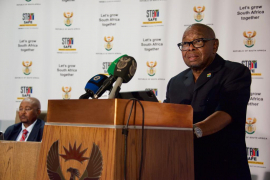
Higher Education, Science and Innovation Minister, Dr Blade Nzimande, has called on all institutions of higher learning, together with Higher Health, to continue working collectively to stem GBV.
“This includes ensuring the provision of safe workplaces, learning spaces and residences for all staff and students in our institutions,” Nzimande said on Monday.
The call follows the gruesome murder of a Tshwane University of Technology (TUT) student, Ntokozo Mayenzi Xaba, whose murder is believed to be a gender-based violence (GBV) crime.
Xaba, a third-year student who was studying towards a National Diploma in Integrated Communication at TUT, was found last Thursday with multiple stab wounds at her off-campus residence in Pretoria Gardens, after she was last seen with her ex-boyfriend the night before.
Nzimande said Higher Health must also ensure that all institutions work collaboratively with the established multi-sectoral PSET [post-school education and training] Gender-Based Violence Technical Task Team.
Nzimande has strongly condemned the incident and passed his condolences to the Xaba family, friends and the entire Tshwane University of Technology corp.
He has since directed Higher Health to join in efforts with the TUT wellness team to provide the necessary psycho-social support to the family.
Nzimande said GBV and violence against women and girls (VAWG) is a global pandemic that affects 1 in 3 women in their lifetime.
“These numbers are staggering, with global figures indicating that as many as 38% of murders of women are committed by an intimate partner, and 35% of women worldwide experience physical and/or sexual intimate partner violence or non-partner sexual violence.
“This issue is not only devastating for survivors of violence and their families, but also entails significant social and economic costs, and has dire implication to the PSET sector,” Nzimande said.
Transforming MENtalities
As part of dealing with GBV in the country’s institutions, Nzimande said he will launch the “Transforming MENtalities Initiative,” which is a multi-stakeholder partnership within the PSET sector, with a particular focus on mobilising men to be part of championing a world free of gender biases, stereotypes, violence and discrimination.
The Minister said he will soon release the Ministerial Task Team (MTT) report on sexual harassment and GBV in the university sector.
Gender Commission seeks meeting with TUT management
Meanwhile, the Commission for Gender Equality (CGE) said it will reach out to the leadership of TUT following the brutal killing of Xaba.
CGE CEO, Phelisa Nkomo, said the Commission has in the past three years conducted investigations to assess gender transformation and GBV at public universities and Technical and Vocational Education and Training (TVET) colleges to ascertain the safety of women on campuses and residences.
Nkomo said more than 15 Vice-Chancellors appeared before the commission to help the commission understand gender related problems at their institutions.
“One of the numerous recommendations we made was for the Department of Higher Education and Training to institute policies and procedures to deal with the scourge of gender-based violence at institutions of higher learning.
“We urge the department to speedily ensure the implementation of our recommendations in this area.
“We implore the criminal justice system to speedily process all GBV related cases, deny perpetrators bail and ensure a high number of convictions,” Nkomo said.
Condolences for earthquake victims in Turkey and Syria

President Cyril Ramaphosa has expressed deep sadness at the large-scale loss of life and extent of injuries inflicted by an earthquake that has affected the nations of Turkey and Syria.
At least 2 300 people have reportedly died in the two countries, which were struck by an earthquake on Monday.
“Our nation and government are deeply saddened by the unthinkable loss of life in Türkiye and Syria, and by the vast damage to social and economic infrastructure with which the two governments and populations are now confronted.
“Our hearts go out to families who have lost loved ones or are searching for relatives, and we wish injured survivors a full recovery,” the President said.
He expressed his appreciation to the South African humanitarian aid organisation, Gift of the Givers, which is joining the international response in Turkey and Syria.
Freight bottlenecks, geopolitical conflicts hampering mining sectors
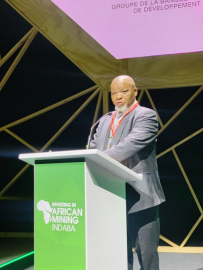
Mineral Resources and Energy Minister, Gwede Mantashe, says the country has to urgently prioritise the resolution of challenges facing freight and railways operations if the mining industry is to capitalise on the current minerals boom.
The Minister made the call while delivering the opening address at the 2023 Investing in Africa Mining Indaba in Cape Town on Monday.
Addressing delegates, he said 2022 had been a grim year for the mining industry.
“It is a year in which international and domestic factors negatively affected mining production and mineral sales.
“International factors included soaring energy prices due to the ongoing geopolitical dynamics, whereas domestic factors included the ongoing power supply disruptions (load shedding) and the logistical bottlenecks on our railways and ports.”
Mantashe said the soaring of global energy prices negatively impacted the industry’s operational costs.
“For instance, the price of crude oil averaged $100 per barrel in 2022 and as a result, mining companies had to pay exorbitant prices for fuel and electricity,” he said.
Domestically, the industry was hard hit by increased power outages.
This, Mantashe said, led to a decline in mineral production across all commodities.
“It is estimated that load shedding cost the economy about R1 billion a day. In November 2022, mining production contracted by 9%, marking a 10th consecutive month of contraction in volumes produced.
“That decline is manifesting itself in many ways. You find mines producing and keep stockpiles because those stockpiles cannot be moved to the ports. Those are the issues we need to confront. Investors, as they come here, must appreciate that we have these challenges and we have to overcome them.”
However, looking at positives, the Minister pointed to the success of Goldfields, which during this period increased production by 10%.
He said Goldfields was an example of innovation and foresight that led to different outcomes compared to the rest.
“It is our considered view that Gold Field’s performance was in part because of the reforms on embedded generation which they took advantage of following the amendments to Schedule 2 of the Electricity Regulation Act (ERA),” he said.
Last year, the Act was amended to allow the licensing requirement for generation projects for own use. The cap was increased from 1 megawatt to 100 megawatts, and ultimately removed altogether.
“This cushioned them [Goldfields] from the impact of load shedding, as they were able to generate their own energy, and thus increased and maintained production,” he said.
With the industry relying heavily on efficient transportation, Mantashe said the current logistical bottlenecks on railways and ports continue to contribute to the decline in export volumes of bulk commodities.
These include coal, iron ore, manganese and chrome.
“As a result, the country is not fully benefitting from the commodity boom of these minerals.
“Transnet is currently exploring efforts aimed at accelerating the improvement of its rail network to support the return to service of locomotives to enable the export of bulk commodities.
“We further welcome the establishment of joint structures by Transnet and the Minerals Council South Africa (MCSA) to ensure that all possible actions are taken speedily to stabilise and improve South Africa’s operation efficiencies at the ports.
“We believe this kind of cooperation between Transnet and the industry will bear fruits like we saw at the height of the Covid-19 pandemic,” Mantashe said.
At the centre of the country’s current energy challenges, he said, “is the decline in the Energy Availability Factor (EAF) from an estimated 75% to 49%”.
“Therefore, the most feasible and logical option to exercise to resolve load shedding is by arresting the decline in the EAF,” he said.
Mantashe said failure to attend to and address the declining Eskom plant performance and subsequent higher stages of load shedding “is an irritation to society and has the potential of pitting society against government”.
Curbing mine deaths
In the past year, the industry, he said, made significant inroads in reducing fatalities.
In 2022, the industry recorded 49 fatalities, which was the lowest ever in history.
The figure represents a 34% improvement year-on-year, compared to 74 fatalities recorded in 2021.
Meanwhile, the Minister told delegates that the Department of Mineral Resources and Energy and the Industrial Development Corporation have created a R500 million exploration fund to help the country unleash junior miners and the emergence of new mines.
He said the fund will be supported with geological information to de-risk the exploration activities and increase the chances of success.
“The initial phase of the implementation of this fund is deliberately kept small to prove the value of geological information to accelerate advancement along the exploration value chain trajectory to pre-feasibility stage,” he said.
Stakeholders warned against misleading Parliament committees

The Portfolio Committee on Higher Education, Science and Innovation has warned stakeholders in the higher education sector about the seriousness of deliberately misleading parliamentary committees on the real state of affairs on the ground.
The committee sent the warning during its oversight visit in Ehlanzeni District Municipality in Mpumalanga on Friday.
The committee visited Ehlanzeni Technical and Vocational Education and Training (TVET) College and Mpumalanga Community Education and Training (CET) Centre, as part of its oversight on the higher education sector’s readiness for the 2023 academic year.
During the visit in Ehlanzeni TVET College, the committee was informed that the college is ready for the 2023 academic year, with preparations started in 2022 for classes commencing on 18 January 2023.
The college noted that at one of its campuses, classes were hampered by the delay in results for students writing National Certificate Vocational exams. However, the matter has since been resolved.
The college said applications to study at Ehlanzeni College are fully online. However, if students struggle with the online application process, provision is made to accommodate in-person and on-campus registrations.
According to Ehlanzeni College, 91% of students are funded through the National Student Financial Aid Scheme (NSFAS), while 9% are funded through the Sector Education and Training Authority (SETA).
Portfolio Committee chairperson, Nompendulo Mkhatshwa, said the committee was concerned after hearing differing views on the state of affairs at Ehlanzeni College from the student representative council (SRC) and organised labour.
“The committee was also concerned about the filing of vacant funded posts and called for the college to speedily address this as a matter of urgency. The committee proposed the immediate creation of a stakeholder engagement structure that would include all role players,” Mkhatshwa said.
The committee was joined by Members of the Mpumalanga Provincial Legislature education committee members during the visit. The province committed itself to assist Ehlanzeni to deal with some of its problems so that it can function more efficiently.
The committee also held a meeting with Mpumalanga CET Centre’s regional office on its readiness for the academic year ahead.
The centre has 108 learning centres within the Ehlanzeni District Municipality. Some of the challenges it faces include insufficient funding to cover all its needs for effective service delivery and funded programmes.
The committee reiterated that a discussion is needed on the proposal to move CETs from Basic Education, and that the Department of Public Works and Infrastructure (DPWI) needs to be engaged to release unused buildings to CETs.
Some of the successes highlighted by the CET include the training of students in upholstery skills. However, the centre does not have its own facilities to train students.
The committee commended the work of the Mpumalanga CET and called for it to share its good practices with other struggling neighbouring centres.
Two cholera cases confirmed in South Africa

Health Minister, Dr Joe Phaahla, has called for vigilance as the country has recorded two laboratory-confirmed cases of cholera imported from Malawi.
According to the department, the cases were confirmed in two sisters, who had travelled together from Johannesburg to Malawi to attend a funeral service, and returned by bus on 30 January 2023.
“Both patients had developed symptoms on their return to Johannesburg. One patient presented to a local clinic and was then admitted to hospital. During the case investigation and follow-up of close contacts, the sister reported that she also developed diarrhoea whilst travelling back from Malawi but it resolved within a day and she did not seek health care.
“A close contact (household family member) of one of the cases/patients was admitted to hospital on 4 February with diarrhoea and dehydration, and is considered a possible case. Laboratory test results are pending and follow-up of close contacts is ongoing,” the department said in a statement.
The department said it is working closely with the affected province, the National Institute for Communicable Diseases (NICD) and World Health Organisation (WHO) to closely monitor the situation.
It urged all people experiencing symptoms, including diarrhoea and dehydration, with or without travel history to cholera outbreak countries, to report to their nearest health facilities for health screening and early detection.
“The World Health Organisation does not recommend any travel or trade restrictions on countries based on current available information, in line with the international health regulations. Port health officials at the ports of entry (especially land and air) will remain on alert for travellers arriving from countries experiencing a cholera outbreak,” the department said.
Cholera is an acute enteric infection caused by the bacteria Vibrio cholera, and outbreaks usually occur in settings with inadequate sanitation and insufficient access to safe drinking water. Cholera typically causes acute watery diarrhoea and can affect people of all ages.
It mainly spreads through contaminated/polluted water, and people can become infected directly through drinking contaminated water, or indirectly through eating contaminated food.
The infection is often mild or without symptoms, but can sometimes be severe and life-threatening.
“Symptoms range from mild to severe and watery diarrhoea and dehydration. The incubation period (the period from when a person ingests cholera-contaminated water/food to when they first become ill) ranges from a few hours to five days, usually two to three days.
“Most persons infected with cholera will experience mild illness or not feel ill,” the Health Department said.
Although cholera is often predictable and preventable, the department has urged people to ensure proper hand hygiene, including thorough washing of hands with water and soap before and after using the bathroom/toilet, and preparing or eating food.
The use of safe or disinfected water for preparing food, beverages and ice is recommended to prevent possible cholera transmission. Safe disposal of human excrement and nappies is recommended.
The department said cholera is not endemic in South Africa, and the last outbreak was in 2008/9, with about 12 000 cases.
“That resulted from an outbreak in Zimbabwe, which led to a surge of imported cases and subsequent local transmission in Mpumalanga and Limpopo provinces through contaminated water,” the department said.
Free State condemns viral corporal punishment incident
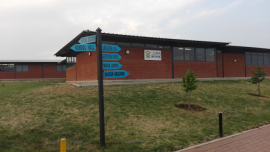
The Free State Department of Education has instituted an investigation into an alleged incident of corporal punishment administered last week by the principal of Ntsu Secondary School in Bethlehem in the Thabo Mofutsanyane District.
In a statement, department spokesperson, Howard Ndaba, said corporal punishment against any learner is condemned in the harshest possible terms.
Corporal punishment is banned and may not be used as a method of enforcing discipline in schools.
“Principals, educators, learners, parents and/or any support staff are required to report the use of corporal punishment following the prescripts contained in the protocol to deal with incidences of corporal punishment in schools.
“Harsh action will be taken against anyone who violates the prohibition on corporal punishment,” said Ndaba.
He said images depicted on various social media platforms indicate that the principal of Ntsu Secondary used corporal punishment as a way to discipline a learner who reportedly failed to comply with the detention sanction conditions at school.
“Corporal punishment is a violation of children’s rights, physical integrity, dignity, health, development, education,” the spokesperson said.
The effects of corporal punishment are far-reaching and can cause mental and physical harm to children, as well as short- and long-term aggression and antisocial behaviour in learners, even as they mature.
Crucially, Ndaba said, corporal punishment is not a solution to disciplinary problems in a school or any other setting.
The department has commenced with an investigation into the incident and will work with urgency to establish the facts.
“The department will continue to promote safety at schools and remind teachers of their responsibilities regarding the administration of discipline in schools.
“School governing bodies are requested to mobilise all stakeholders to play a meaningful role in the abolition of corporal punishment in schools,” he said.
Policy changes to address disparities between NSFAS beneficiaries

The National Student Financial Aid Scheme (NSFAS) has introduced certain policy changes for the 2023 academic year to progressively address existing disparities between Technical Vocational Education and Training (TVET) colleges and university beneficiaries’ bursary packages.
Announcing NSFAS 2023 funding eligibility and criteria during a media briefing held in Pretoria on Tuesday, NSFAS board chairperson, Ernest Khosa, said TVET college students studying occupational programmes can only be funded for the cost of tuition for the duration of the qualification.
“TVET college students,who are registered on an occupational qualification, may qualify for allowances only if in simulated training, and students registered on an occupational qualification, who have an employment contract, do not qualify for NSFAS allowances.
“TVET college graduates will be funded for a university undergraduate qualification regardless of the benefit that they would have derived from the application of the N+ rule at a TVET college level (on condition they did not exceed the TVET N+ rule),” Khosa explained.
“N” is the minimum number of years allocated to complete a qualification and the +1 refers to the extra year that a student may need to complete the qualification.
On academic eligibility, Khosa announced that as of 2023, first-time entering students must achieve a course credit pass rate of 50%, while continuing university students must achieve a progressive course credit pass rate of 55%, and returning university students must meet ongoing academic eligibility requirements in order to remain funded by NSFAS.
“The N+ rule for distance university students will be reviewed as of 2024, and academic progression criteria will increase from 55% to 60% over time. On allowances, our board directed the executive management to introduce processes that enable the entity to reduce the risk of abuse of its funds,” Khosa said.
Khosa said the payment of allowances will be made directly by NSFAS into the students’ NSFAS bank account and NSFAS funded students are required to complete the NSFAS direct payment on-boarding process to prepare for the payment of allowances into their account.
“Through direct payment, NSFAS beneficiaries will receive their allowances for food, personal care, transport etc., through a NSFAS bank account; and after being registered on the system, students will receive virtual and/or physical cards they will use to transact.
“Additionally, students will be able to make online transactions such as EFT, prepaid purchases, receive from and transfer money to other existing banks, just as with a normal bank account, and other benefits include access to value-added services, ATM cash withdrawals, as well as at retail stores,” Khosa explained.
To ensure that all NSFAS students are on board, Khosa said the scheme has assigned NSFAS teams to institutions, and its service partners will join them when visiting all institutions from February 2023 to assist with on-boarding and query handling.
“Currently, the focus of the NSFAS teams is to encourage university students to on-board the new system in the meantime, as we prepare for university implementation later in the year. I would like to request that the SRCs, together with the student unions responsible for both our TVET colleges and universities, work together with the teams to make this process seamless,” Khosa said.
SADC calls for urgent National Dialogue in Eswatini
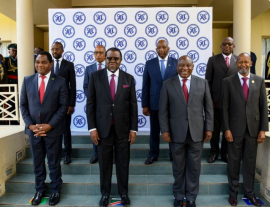
The Southern African Development Community (SADC) leaders have called on the Kingdom of Eswatini to urgently initiate a national dialogue as tensions continue to rise in that country.
This comes after the murder of a leading human rights lawyer and political activist in the Kingdom of Eswatini, Thulani Masek,o who was shot dead on 21 January 2023.
SADC leaders convened the Extra-Ordinary Organ Troika Summit of Heads of State and Government on Tuesday in Windhoek, Namibia.
The summit was officially opened and chaired by the Chairperson of the SADC Organ on Politics, Defence and Security Cooperation and President of the Republic of Namibia, Dr. Hage G. Geingob.
President Geingob urged all stakeholders in the Kingdom of Eswatini to remain calm and participate peacefully in a National Dialogue.
“The summit condemns all killings and damage to property in the Kingdom of Eswatini. The summit urges the government of the Kingdom of Eswatini to urgently initiate the process of the National Dialogue and urges all stakeholders in the Kingdom of Eswatini to remain calm and participate peacefully in the National Dialogue,” SADC Chair said.
He reiterated SADC’s condemnation of the killing of Maseko, who at the time of his death was Chairperson of the Multi-Stakeholder Forum.
SADC further urged the government of the Kingdom of Eswatini to conduct a “swift, transparent and comprehensive investigation into the killing of Maseko”.
President Cyril Ramaphosa, who is the outgoing Chair of the Organ on Politics, Defence and Security Cooperation, is attending the summit accompanied by Minister of International Relations and Cooperation, Dr Naledi Pandor; Minister of Defence and Military Veterans, Thandi Modise and Minister in the Presidency, Mondli Gungubele.
Mozambique
The summit reiterated the call for Member States to urgently respond to requests for critical capabilities to enhance the operational capability of the SADC Mission in Mozambique.
“The summit noted the ongoing investigations being undertaken by SAMIM leadership following a disturbing video clip circulating on social media depicting what appears to be SAMIM personnel burning deceased people and reiterated that the public will be informed once the investigations are completed, as communicated by the Chairperson of the Organ in his statement issued on 11 January 2023,” SADC said in a communique.
Kingdom of Lesotho
The summit also commended the government and the people of the Kingdom of Lesotho for conducting peaceful and successful elections, and congratulated the Revolutionary for Prosperity Party and the Prime Minister of the Kingdom of Lesotho, Ntsokoane Samuel Matekane.
The summit further welcomed the commitment made by Prime Minister Matekane to prioritise the implementation and completion of the comprehensive national reforms process and approved the Action Plan for the Lesotho Reform Oversight Committee to monitor the finalisation of the reforms process in the Kingdom of Lesotho.
Democratic Republic of Congo
The summit noted with deep concern the unstable security situation in the eastern part of the Democratic Republic of Congo (DRC).
SADC leaders strongly condemned the upsurge of conflicts and activities of armed groups, including M23 rebels and the support provided to the armed groups by foreign forces.
“The summit resolved to initiate dialogue amongst the Member States of different Regional Economic Communities (RECs) that have deployed forces in the DRC, with a view to establish and implement mechanisms for the effective coordination of their interventions in the DRC.”
The summit adopted the draft African Union Declaration on the USA proposed ‘Countering Malign Russian Activities in Africa Act’ and urged Member States to communicate SADC’s position, and reaffirmed the stance of non-alignment on conflicts outside the continent and the region at multilateral fora.
The summit commended President Geingob for his leadership to galvanise concerted efforts towards the attainment of lasting peace and stability in the region.
NSFAS to pay over R6bn upfront to varsities
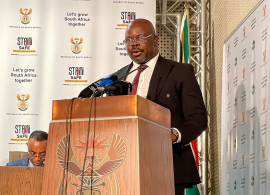
National Student Financial Aid Scheme (NSFAS) Chairperson, Ernest Khosa, says the scheme expects to make upfront payments of approximately R3.5 billion to universities and R2.7 billion to Technical Vocational Education and Training (TVET) colleges.
Briefing media on the NSFAS state of readiness for the 2023 academic year on Tuesday, Khosa said government, through the Department of Higher and Education and Training, has allocated R47.6 billion for student funding, and this includes R38.6 billion for universities and R8.9 billion for TVETs.
“The respective funding is received in four tranche payments in the months of April, June, August and October annually. This means that all qualifying students, who have been enrolled at a higher education institution, will be funded.
“Furthermore, NSFAS is in a position to provide upfront payments to institutions, to allow for the payment of allowances and minimise the financial impact on institutions due to the fact that NSFAS beneficiaries are not required to pay registration… This will assist institutions, in particular HDIs (Historically Disadvantaged Institutions) and TVET colleges,” Khosa said.
NSFAS has received 1 587 968 applications from prospective beneficiaries, and of this, 613 909 applications have been provisionally funded, 338 320 are continuing students and 275 589 are new applicants.
Highlighting the status of the applications received, Khosa said 210 679 applications are on assessment of financial eligibility, a process where funding is verified against the government R350 000 threshold.
“About 149 202 are on awaiting academic eligibility. According to the NSFAS Eligibility Criteria and Conditions for Financial Aid, students must attain the prescribed academic success in order to continue to receive financial aid from NSFAS.
“A total of 273 746 applications are awaiting evaluation. NSFAS received more than 1.6 million applications, [which] is the highest number received in the history of NSFAS,” Khosa said.
He said 98 805 applications have been withdrawn. These include applications withdrawn by students; 161 139 applications have been rejected due to not meeting funding criteria, while 1 261 appeals have already been submitted.
While immediate funding decisions have been made for qualifying South African Social Security Agency (SASSA) students, Khosa emphasised that non-SASSA students must provide documentation to prove their household income.
“NSFAS must verify and confirm each of these applications based on the information provided, and confirm using the South African Revenue Service (SARS) data,” said Khosa.
Improved systems to make real time funding decisions
Meanwhile, Khosa announced that NSFAS has improved its systems to enable it to make real time funding decisions.
He said at this stage, NSFAS is able to make real-time funding decisions for SASSA beneficiaries, while it continues to engage with SARS to enable the same for all other applicants.
“We are reviewing the design and implementation of a stable Information Communication Technology (ICT) system, leveraging modern technologies and capabilities in order to deliver the NSFAS mandate seamlessly. We are reviewing all processes [and] operating and disbursement models.
“We are also reviewing our overall governance and management design to ensure the full execution of our mandate. We have also introduced a new performance management and accountability framework in a bid to establish a high-performance culture within the organisation,” Khosa said.