
Seven arrested for possession of stolen copper cables

Police in Northam, in Limpopo, on Monday arrested seven suspects for being in possession of alleged stolen copper cables valued at R250 000.
Provincial SAPS spokesperson, Colonel Malesela Ledwaba, said the seven were apprehended while allegedly transporting suspected stolen copper cables along the Middeldrift-Koedosdorp public road.
He said police received information about suspects who were driving in a white Ford Ranger bakkie, believed to be responsible for theft of copper cables from the local farm on Sunday 22 January 2023 at about 9pm.
“A tactical joint operation in collaboration with farmers was conducted in the area and subsequently, the motor vehicle fitting the description given was spotted along the said road and was tactically stopped by the Police.
“The motor vehicle with four male occupants was searched and Police found copper cables and the four could not be able to accounted for their origin. The four male suspects were immediately arrested for possession of suspected stolen property,” said Ledwaba.
In the process, the owner of the farm arrived at the scene and positively identified the stolen copper cables.
Ledwaba said preliminary investigations revealed that the copper cables were destined to be sold at Northam RDP Section and police proceeded to the said place.
Upon arrival, police found a 42-year-old woman believed to be the buyer of the copper with two other males in possession of various bags containing newly stripped copper cables, bathroom taps and Transnet copper wires. Ultimately, the woman admitted that she was illegally dealing with copper cables and the trio were immediately placed under arrest.
“Further police investigations may possibly positively link the suspects with a series of burglaries committed in the area following theft of taps, copper pipes, air conditioners, copper pipes and crop circle motors.
“The suspects aged between 29 and 46 will appear before the Northam Magistrate court soon, facing charges of possession of stolen property valued at R250 000,” said Ledwaba.
Police investigations are continuing, he said.
Committee to ensure sustainable water service management

Water and Sanitation Minister, Senzo Mchunu, has announced that he is setting up a Steering Committee to oversee and ensure a sustainable water and sanitation services management in North West province.
Mchunu said that under the Steering Committee, to be chaired by him and North West Premier, Bushy Maape, a Technical Task Team will be established and include professional engineers from Water and Sanitation, Magalies Water Board, and all districts and local municipalities.
The Technical Task Team will carry out the technical work of assessing, planning and implementation of water and sanitation needs of the whole province.
“The technical structure will be represented by technical individuals, such as engineers because this is a purely technical committee that will be responsible for assessing every municipality, looking at available resources, analysing existing water schemes, those projects that are complete and incomplete, and all causes of stress on water in the province, and come up with solutions.
“This task team should be able to provide us with a detailed plan of what needs to be done, costs and contributions by each municipality, at a local and district level, and the Board as well as the department in order to restore water in areas where there are challenges,” Mchunu said.
Mchunu added that he is confident that the formation of these structures will yield positive results in resolving water challenges affecting most communities in the various parts of the province.
Accompanied by Deputy Minister Dikeledi Magadzi, Mchunu visited Maquassi Hills and the Ramotshere Moiloa Local Municipalities during a planned visit from 19-20 January 2023, to assess the state of water and sanitation at the two municipalities.
The Minister also received an update on the water supply interventions implemented through the Water Services Infrastructure Grant (WSIG) granted by the department.
He emphasised the need for collective planning and implementation of action plans by all role-players to ensure synergy and sustainable provision of water and sanitation services in the province.
Mchunu reiterated that one of the reasons that the work carried out by government is not able to meet people’s needs and demands is due to the “mentality of working in silos.”
While acknowledging that the issues of water in the North West do exist and are serious, Mchunu argued that they are not insurmountable.
“They are not such a big issue that they may make us put our hands on our heads and wonder how we are going to fix it, rather it needs is a collective approach. We therefore, are going to fix this ourselves as national, provincial and local government, as well as the role-players in this water sector,” Mchunu said.
The Technical Task Team is expected to report on the compressive plan to the Steering Committee during the first week of February 2023, where it will provide guidance on what needs to be done to ensure reliable water supply in the whole province.
During his Ministerial working session in the province in February last year, Mchunu visited Dinokana in Ramotshere Moiloa Municipality, which is one of his flagship projects.
The department is currently intervening in the municipality through the Rural Water Supply Project to ensure that communities have access to water.
Cele calls for harsh sentences for cop killers

Police Minister, Bheki Cele, has called on the courts to mete out the harshest possible sentence to criminals who murder police officers.
This comes in the wake of the killing of yet another policeman in Port Edward, KwaZulu-Natal, at the weekend.
Cele and South African Police Service (SAPS) management, led by National Police Commissioner, General Fannie Masemola, will visit the family of the deceased warrant officer.
Police spokesperson, Brigadier Athlenda Mathe, said Warrant Officer Roger Mavundla, alongside three family members, including his 10-year-old daughter, was shot and killed when they were ambushed while travelling in their vehicle.
“According to police reports, on the 21st of January 2023, 49-year-old Warrant Officer Mavundla and his wife and children, aged between 17 and 10, were ambushed and shot at, while inside their vehicle. The officer, his wife and two children sustained fatal wounds and died on the scene, while a third child is being treated at a local hospital,” she said.
Mathe said the visit to Port Edward will see the provincial SAPS brief the Police Ministry on the crime patterns in the policing area and interventions in place to deal with violent crime and other contact crimes. The visit will also include a comfort visit to the Mavundla family home.
A total of 22 SAPS members were killed betwee July and September 2022.
Adding to Eskom capacity a matter of “extreme urgency” for government – Ramaphosa

President Cyril Ramaphosa has moved to assure South Africans that government is using every means and resource at its disposal to get more capacity onto Eskom’s grid “as a matter of extreme urgency” with the Energy Action Plan at the core.
The President was addressing the nation through his weekly newsletter after South Africans have been experiencing a sustained period of the higher stages of load shedding.
President Ramaphosa said government is taking action to address the myriad of challenges Eskom is facing, with particular focus on improving the performance of Eskom’s ailing coal fired power stations which serve at least 80% of South Africa’s energy needs.
“A team of independent experts is conducting a diagnosis of the problems at poorly performing power stations and taking action to improve plant performance. Six power stations have been identified for particular focus over the coming months to recover additional capacity.
“Eskom is also working to connect Kusile Unit 5 to the grid by September this year. Every urgent effort is being made to restore other units at Medupi, Kusile and Koeberg with significant capacity,” he said.
The President added that Eskom is also taking steps to procure some 1000MW of energy from neighbouring countries with the power utility also aiming to “buy surplus power from companies with available generation capacity for a period of three years”.
Furthermore, government has also signed procurement deals in Bid Windows 5 and 6 of the Renewable Independent Power Producer Programme (REIPPP) which is expected to add some 2800MW of energy to the grid once completed in at least two years.
The President said government has allowed for private power producers to contribute to the strained grid.
“The licensing requirement for embedded generation projects has been removed. Since we first raised the licensing threshold to 100 MW, the pipeline of private sector projects has grown to more than 100 projects with over 9000 MW of capacity.
“We have cut red tape and streamlined regulatory processes, reducing the timeframes for environmental authorisations, registration of new projects and grid connection approvals,” he said.
President Ramaphosa announced that soon, those who have installed solar panels on the roofs of businesses and homes will also be allowed to sell their excess electricity to the grid with work already underway for a pricing structure.
Taking stock
Reflecting on the serious challenges facing Eskom, the President said “a combination of factors…years in the making” have led the power utility to where it currently is.
“Lack of investment in new generating capacity, poor power plant maintenance, corruption and criminality, sabotage of infrastructure, rising municipal debt and a lack of suitable skills at Eskom have all created a perfect storm. There can be no sustainable solution without addressing all these factors in combination.
“We should not make the mistakes of the past. For many years, critical maintenance was deferred, and our power stations were run too hard in order to keep the lights on. As a country we are now paying the price for these miscalculations,” he said.
President Ramaphosa acknowledged the destabilisation that load shedding has wrought on South Africans and businesses alike but called for patience as government implements solutions.
“As load shedding continues to wreak havoc on businesses, households and communities, the last thing South Africans want to hear are excuses or unrealistic promises. The demands for an immediate end to power cuts are wholly understandable. Everyone is fed up.
“We must be realistic about our challenges and about what it is going to take to fix them. While we all desperately want to, we cannot end load shedding overnight,” he said.
The President added that while measures are being implemented, collaboration from all quarters of society will ensure that the Energy Action Plan bears fruit.
“While we cannot end load shedding immediately, what is certain is that if we work together with urgency to implement the Energy Action Plan, load shedding will steadily become less and less severe.
“Through collective action, we will much sooner reach the point where we have enough power to end load shedding altogether,” President Ramaphosa concluded.
Correctional facilities can produce educated, skilled ex-offenders
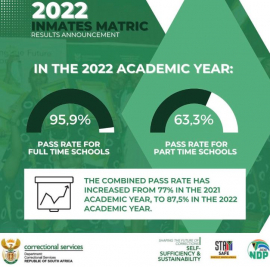
Justice and Correctional Services Minister Ronald Lamola says correctional centres can become a hub for education and skills development for all inmates.
The Minister was speaking during the release of inmates’ matric results for the 2022 academic year in a ceremony held at St Albans Correctional Centre in the Eastern Cape.
The class of 2022, both part time and full time, scored a combined 85.5% pass rate this year – up by some 10.5% compared to 2021.
“[All] the sentenced inmates must take part in education, training and skill acquiring initiatives. This will be in line with our efforts of striving towards access to education for all. We don’t have to accept a situation where inmates will refuse to be trained by proclaiming that they have a right not to participate in education.
“Let the doors of learning be opened and every inmate must be made to strive to acquire education, and move from a sense of hopelessness to a sense of saying ‘with education, I will be an upright citizen and my full potential will be unleashed.’
“All our centres must not only support learning, but they should promote it,” he said.
The Minister emphasised that inmates who receive education stand to better the communities they are released into and this can restore “inmates’ self-esteem and social competence”.
“A bright future becomes more tangible if [inmates] pursue education as a form of rehabilitation. Upon returning back to society, they become different people.
“Education in correctional centres has long term benefits for the country, ex-offenders with no or little education have lower prospects of finding gainful employment and they resort to crime as they cannot overcome the myriad of barriers they have to contend with,” he said.
Lamola urged society to refrain from “discriminating against ex-offenders and denying them opportunities in areas and trades where they are best candidates”.
Every year, the department trains inmates in skills such as plumbing, tiling, brick laying and mechanics to provide them with a skill to take into the world once they leave correctional facilities.
“Whilst we understand that employers can use their discretion when hiring people based on an objective and just criteria, we must also remember that there is no law which says we should not employ people on account of a criminal record.
“Former inmates, be upfront in your applications for jobs, state that you are someone who previously wronged the community, but show that correctional services has reformed you.
“In the same breath, those who reluctantly give opportunities to our ex-offenders to offer their labour, we say, don’t under pay them, the law has already punished them, so don’t further punish them. They deserve the same treatment as everyone else in society,” he said.
Turning to those who passed matric in the correctional services system in 2022, Lamola congratulated them for their hard work and dedication.
“I want to take this opportunity and congratulate all learners who excelled in their results. You worked hard, and you will serve as a great motivator for the 2023 class who we are hopeful will surpass your achievements.
“Your journey for education continues. We hope you will further your studies. Those who could not make it – try harder this year and you will eventually succeed,” the minister said.
Learners encouraged to consider TVET colleges

KwaZulu-Natal Premier, Nomusa Dube-Ncube, has encouraged learners to consider Technical Vocational Education and Training Colleges (TVET) as their alternative to university education.
Speaking during the announcement of KwaZulu-Natal’s matric results held in Durban on Friday, Premier Dube-Ncube noted that one of the reasons why government adopted the three-stream model in the education system was to accommodate some leaners who have skills but may find it hard to be accepted in universities.
“We are therefore encouraging leaners to also make use of the opportunity provided by TVET colleges. We have seen in the past few years a trend where industry and business is absorbing more graduates from TVETS as opposed to universities,” Dube-Ncube said.
Dube-Ncube commended the province’s Matric Class of 2022 for surpassing all expectations by achieving an 83% pass rate, exceeding the 80% pass rate benchmark set by the province.
“Last year, the floods pummelled KwaZulu-Natal causing damage to infrastructure and disrupted education. This resulted in 824 learners in eThekwini being placed among the displaced in 135 mass care centres, and later being moved into Temporary Residential Units (TRUs).
“Out of this number, at least 36 were in matric in 2022, and four had special needs. Despite these challenges, our resilience showed up. We ensured that these learners were given a fair chance and were not prejudiced by the impact of the flood disaster,” Dube-Ncube said.
The Premier said the 2022 results reflect an improvement in all the districts with Umkhanyakude being the most improved district and no school received a 0% pass rate in the province.
This follows the rollout of the Ten-Point Improvement Plan championed by provincial Education Department.
“These objectives were meant to guide all the interventions for the improvement of the performance of the matric class of 2022. The province undertook to improve performance in Mathematics and Physical Science and sought improvement in the total number of distinction passes in 2022 [and] progress was achieved in all these areas.
“Attention to special schools has also resulted in significant achievement overall. The province has worked hard to improve education of learners with learning barriers,” the Premier said.
She said the Department of Education will come up with a decisive intervention strategy to deal with the situation in the 11 schools that performed below 30%.
“We note that they were 22 in 2021 and now have reduced to 11. The Education Department must conduct an evaluation and introduce an academic improvement plan with immediate effect.
“The Executive Council will receive the report with school by school analysis and will assist with relevant interventions,” Dube-Ncube said.
The Premier also expressed her excitement about the increase in the number of Bachelor passes, as well as an improvement in the pass rate of township and rural schools that achieved 100% pass rate from 145 in 2021 to 212 in 2022.
“We are excited about the increase in the number of Bachelor passes from 37% in 2021 to 42.5% in 2022, which marks a 5.4% improvement. The province is also pleased that girl learners performed well.
“Girl learners obtained an overall pass percentage of 83.6% while the boy learners obtained 82.3%. We will continue to intervene to ensure that female learners have equal opportunities of success like male learners,” Dube-Ncube said.
Embracing the future and 4IR
The Premier also encouraged learners to take advantage of digitisation, robotics and the Fourth Industrial Revolution (4IR).
She said the provincial government is paying attention to subjects including Coding, Mathematics and Physical Science.
“The province also recently launched the Mobile Digital Analytics Skills Laboratory to ensure that young people are exposed to the Fourth Industrial Revolution. We have taken a decision as the Provincial Government that we must assess the viability of schools with a low enrolment rate.
“Our view is that some of them could be converted into Vocational Skills Centers to address among others the shortage of technical skills for the country. These include among others Artisan, Plumbers, Electricians, Construction and Carpentry,” the Premier said.
Compensation for ex-miners who suffered health injuries commences

The Department of Health will this week commence with the programme of screening, verification, medical examination and payment of benefits to eligible former mineworkers who contracted tuberculosis (TB) or silicosis between 1965 and 2019.
The countrywide programme will kick off on Monday, 23 January to Saturday, 4 February, in the northern parts of KwaZulu-Natal before moving to other provinces.
The department is calling upon all former mineworkers or their dependents to visit their nearest lodgement site in their areas.
The claimants are urged to bring along relevant documents such as a valid South African ID or Southern African Development Community (SADC) passport, industry card, service records from the mine they worked at or any available medical records.
The other documents include a deceased mineworker’s death certificate and an autopsy report, if available.
The compensation amount, according to the department, will depend on several factors including the severity of the permanent respiratory impairment suffered by the mineworkers and their employment history at qualifying and non-qualifying mines.
“However, in the case where the mine worker has passed on, the dependants are urged to submit the relevant documents including a death certificate.”
In addition, a claim for a mineworker who died before 10 December 2019 will only be eligible if the main cause of death is attributed to silicosis or TB, or there is an approved Occupational Diseases in Mines & Works Act (ODMWA) certificate or other exceptions.
Minister Zulu congratulates social grant beneficiaries on passing Matric
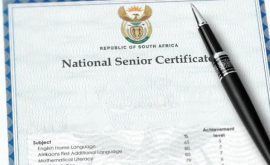
Social Development Minister Lindiwe Zulu has congratulated social grant beneficiaries who wrote their final Grade 12 examinations, amid difficult circumstances, including the COVID-19 pandemic.
In a statement on Monday, the department said the results on the performance of the 2022 Social Grant Beneficiaries (SGB) who wrote the 2022 NSC examination show an impressive increase in performance between the years, 2020/2021 and 2021/2022, in all provinces.
The overall increase now sits at 8.7 percentage points from 0.2 % in 2020/2021.
Minister Zulu has further extended a word of appreciation to parents, caregivers, social service practitioners, teachers, school governing bodies, and community structures who played an important role in guiding the class of 2022 to realise and achieve their dreams.
Minister Zulu called for caregivers and parents to equally support those matriculants who may not have done well or did not make it by providing them with a second chance.
“We want to take this opportunity to encourage the learners who did not pass to remain hopeful and not panic or give up on their dreams. It is during this period that families and friends should show support.
“For those whose results were not as good as expected, not to give up as many opportunities are still available for them to succeed. Information, advice, and guidance on what to do next is available and I would urge the learners to use these opportunities fully to improve their results.
“I also want to encourage the parents to be supportive to their children as parental involvement has long been identified as having a clear and positive relationship to the success of young people regarding educational performance as well as protection from alcohol and drug abuse,” Minister Zulu said.
Performance by Province
The ranking of the social grant beneficiaries performance by province sees Gauteng Province as the best performing province at 81.59%, followed by the Free State (76.19%), KwaZulu-Natal (75.73%), North West (74.19%), and Northern Cape (71.23%).
The three provinces with similar levels of performance are the Eastern Cape (68.66%), Mpumalanga (68.49%) and Western Cape (68.49%). Limpopo is the province with performance below the 60% threshold at 59.65%.
The department said that the previous year saw more female social grant beneficiary learners sitting for their NSC examination at 256 902, as compared to 191 490 males. A trend that has been observed in previous years.
The overall male pass rate was reportedly higher at 72.5% compared to the female, which is at 70.39%. This is observed in all provinces except in Gauteng, where 81.86% of females performed slightly better than their male counterparts who obtained 81.21%.
“These results prove that programmes that promote gender parity in performance, such as the Sanitary Dignity Programme, are interventions which encourage the retention of girls in school as well as their attendance and performance,” the minister said.
Minister Zulu has called on all Provinces to strengthen these interventions especially in rural and township areas.
She said that the academic performance highlights the critical role that social protection and pro-poor interventions play in addressing intergenerational poverty and child wellbeing.
“When comparing learners who were still receiving their grant (active recipients) in their matric year and those who whose grant had stopped (inactive recipients) due to their age, active social grant beneficiaries were found to have a substantially higher pass rate as compared to inactive social grant beneficiaries, with an overall pass rate of 87.20% and 75.22%, respectively,” the department highlighted.
This is observed in all provinces and is a trend that has been consistent in previous years, showing some evidence of the effects of social grants on children’s educational outcomes.
“The findings may be demonstrating that the impact of social grants is likely to be greater the longer the transfer duration, especially, if child-specific grants are kept active until the learner completes their Grade 12 education. Nonetheless, while the inactive pass rates are lower, it is essential to note that just about 75% of inactive social grant beneficiaries managed to pass their NSC examinations,” the department said.
The Minister also reminds the grant beneficiaries who applied and were accepted at tertiary institutions that they will not be means tested when applying for financial assistance with the National Student Financial Aid Scheme (NSFAS).
SA’s navy exercises between China and Russia to benefit nations – Modise

Defence and Military Veterans Minister, Thandi Modise, says she is confident that the multinational maritime exercise between South Africa, Russia and China that will take place over a 10-day period will benefit all three participating nations.
“The envisaged exercise will benefit all countries involved through interoperability of the naval systems, joint disaster systems management enhancement, maritime cooperation and anti-piracy exercises.”
In addition, she said the event known as Exercise Mosi II, will serve as a platform for the three nations to share operational skills, expertise and experience.
This comes after the South African National Defence Force (SANDF) announced last week that it will host the People’s Liberation Army Navy from China and the Russian Federal Navy during the multilateral maritime exercise scheduled to take place from 17 to 27 February 2023.
The maritime exercise will be held in Durban and Richards Bay in KwaZulu-Natal.
According to the department, this will be the second time such an exercise will be taking place involving the three naval forces with the first one held in November 2019 in Cape Town.
This year’s Exercise Mosi II will see over 350 SANDF personnel from various Arms of Services and Divisions participating alongside their Russian and Chinese counterparts.
South Africa, according to the department, enjoys diplomatic relations with all member states of BRICS (Brazil, Russia and China) at a bilateral level, in addition to the multilateral levels.
“We also enjoy defence diplomatic relations with several countries across all the continents of the world since we have become an integral part of the community of nations and no longer a pariah State.”
In recent months, the department said it had engagements with counterparts in the United Kingdom, China, Nigeria, Cote d’Ivoire and Ghana.
“There was no hype about any of these countries, especially about the USA wherein we held an even longer exercise, known as Exercise Shared Accord in KwaZulu-Natal last year regarding our military health capabilities,” the department added.
In addition, the department said the SANDF plans and budgets for military exercises with other nations across the globe, both at bilateral and multilateral levels.
Exercise Mosi II, according to the department is no exception, including the Exercise Shared Accord held with the United States armed forces counterparts.
Meanwhile, the biennial maritime Exercise Oxide between South Africa and France also took place in November last year at the Simon’s Town Naval Base.
“We wish to state categorically that South Africa, like any independent and sovereign state, has a right to conduct its foreign relations in line with its diplomatic relations and national interests. South Africa sees Exercise Mosi II as an opportunity to contribute towards further strengthening the strong bonds that exist between South Africa, Russia and China,” the department said.
“Contrary to the assertions by our critics, South Africa is not abandoning its neutral position on the Russian-Ukraine conflict. We remain firm in our view that multilateralism and dialogue are keys to unlocking sustainable international peace. We continue to urge both parties to engage in dialogue as a solution to the current conflict.”
Motsoaledi welcomes judgment on Atul Gupta passport status

Home Affairs Minister, Dr Aaron Motsoaledi, has welcomed a High Court Gauteng North judgment confirming that Atul Gupta is a fugitive from justice and therefore does not qualify for a South African passport, as the Department had contended.
The Court issued the judgment on Friday.
On 25 September 2018, having fled South Africa in the advent of the Gupta Leaks, Atul Gupta approached the Consul General of South Africa in Dubai to apply for a passport.
In a statement, the department said it rejected the application after receiving confirmation from the National Prosecuting Authority that a warrant of arrest was issued against him in connection with criminal offences of fraud and money-laundering related to the Vrede Dairy Project.
“In February 2021, Gupta approached the court seeking to force the department to issue him with a new South African passport. He claimed that he had a Constitutional right to a passport as a citizen of South Africa. He further said that the Constitution states that nobody should be deprived of their citizenship.
“The Department defended that court application, arguing that he was a fugitive from justice and therefore does not have a right to challenge the Department in a court of law in this country. The Department challenged Gupta to indicate if he would be prepared to come to South Africa if the court were to order him to do so,” reads the statement.
Gupta said he would have to take legal advice on the issue.
On Friday, Judge Kumalo found that “if he (Gupta) indeed is not a fugitive from justice, why would he need legal advice whether he ought to come to this country for whatever reason. This is more telling for a person who owns property and had owned businesses in this country”.
Judge Kumalo also noted that Gupta did not give a particular address in Dubai.
“All that he seems prepared to state is that he is a South African citizen resident in Dubai. Nothing further is disclosed. I am of the view that this was not oversight on the Applicant’s side but was deliberate,” reads part of the judgment.
Judge Kumalo ordered that:
- The Applicant is a fugitive from justice.
- Applicant has no locus standi to approach this court for relief in the circumstances.
- Applicant (Gupta) is to pay the cost of this application.
Welcoming the judgment, Minister Motsoaledi said the court had delivered an important confirmation that the laws of the country must be respected and they are applicable to all.
“Friday’s judgment shows that you cannot want to escape accountability in a country and seek to enjoy the use of documents that are exclusively reserved for law-abiding citizens of that country,” he said.
The Minister further welcomed the cost order against Gupta in favour of the department, saying it “ensures that public funds are kept for service delivery. Minister Motsoaledi instructed the Department to immediately start the process to recover the costs”.