
President Ramaphosa cancels WEF trip to address load shedding
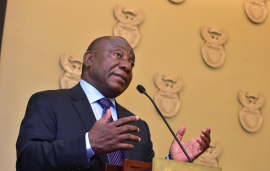
President Cyril Ramaphosa has cancelled his travel plans to Davos, Switzerland, in order to deal with the current load shedding crisis in the country.
This was announced by the President’s spokesperson, Vincent Magwenya, on Sunday evening.
The President was due to lead a South African delegation to Davos on Tuesday and participate in several events linked to the World Economic Forum (WEF) annual meeting, including the Dialogue on Economics of Women’s Health and the Annual Welcome Dinner hosted by Professor Klaus and Hilde Schwab.
“Due to the ongoing energy crisis, President Cyril Ramaphosa has cancelled his working visit to the World Economic Forum in Davos. Currently, the President is convening a meeting with leaders of political parties represented in Parliament, NECCOM [National Energy Crisis Committee] and the Eskom board,” Magwenya said.
The spokesperson said President Ramaphosa is expected to hold several briefing sessions regarding the power crisis.
“President Cyril Ramaphosa has already engaged with the leadership of Eskom and National Energy Crisis Committee (NECCOM) and those meetings will continue. More briefing sessions to key stakeholders will take place during this coming week,” Magwenya said.
The electricity supply crisis at the power utility reached crisis levels last week when the power utility announced that it would implement Stage 6 load shedding until further notice after 11 generating units broke down in one morning.
Mchunu implores KZN to work together to improve water security
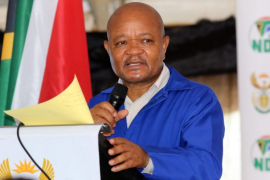
Water and Sanitation Minister, Senzo Mchunu, has implored the KwaZulu-Natal provincial and local government, Umgeni Water Board and the private sector to work together to ensure water security in the province.
Minister Mchunu was speaking during an event on recommissioning of aqueduct 1 and reservoir 3 at the Durban Heights’ Umgeni Water Treatment Works in the eThekwini Municipality.
Mchunu was joined by the KwaZulu-Natal provincial government delegation led by Premier Nomusa Dube-Ncube, eThekwini Mayor Mxolisi Kaunda and the Umgeni Water delegation.
The engagement follows the meeting that took place in December last year, where a multi-disciplinary team were set up to deal with water services issues in the eThekwini Metro and the rest of the province.
“This will provide us with an opportunity to get an update on the progress made in activating some of the decisions taken during those meetings. A technical team was also set to conduct assessments on the needs of the city and will enable us to come up with a way forward on what needs an urgent priority,” said Mchunu.
On the recommissioned repaired infrastructure, the Minister expressed satisfaction towards Umgeni Water for completing the refurbishment of aqueduct 1 on time, which will now bring back up to 350 ml/d of potable water to the residents of Durban North and surroundings who have been experiencing intermittent water cuts since last year’s floods and the subsequent refurbishment.
“I would like to express my gratitude to Umgeni for a job well done, aqueduct 1 is fully repaired, and we are excited to be commissioning it.”
This means that 90 ml/d of raw water will now flow from the dam through to the reservoir.
“This is good news as it means the water supply will be restored. Now we are looking forward to the completion of Aqueduct 2 at the end of June as per your schedule so that it also increases the volume of the much-needed water to the communities,” Mchunu said.
The Minister has also urged the leaders to caution residents to refrain from building infrastructure on servitudes and riverbanks to prevent future tragedies experienced during the floods.
“What we witnessed in April last year was sheer horror, it is something that we do not want to see ever again in our lifetime. Therefore, we would like to urge you as leaders of these communities to engage with the residents to move away from building on top of pipes and near floodplains, as this will endanger their lives and also prevent us from carrying out our work of repairs effectively in cases like now,” Mchunu added.
Dube-Ncube expressed her appreciation to the teams that worked on the repairs led by Umgeni Water under the guidance of the Department of Water and Sanitation for working tirelessly to make this day a reality.
“We appeal to residents, industries, and businesses to play their part by paying for water provision so that we can maintain and expand our water infrastructure. Let us repair leaks in our homes and report those that need to be attended by the municipality, conserve and use water sparingly, understanding that water is a critical but scarce resource,” said Dube-Ncube.
The infrastructure was recently refurbished by Umgeni Water, as the implementing agent.
The aqueduct 1 and 2 were severely damaged by rock falls on six sites due to torrential rains that caused flooding and massive landslides.
In his closing remarks, Mchunu spoke about the Hazelmere Dam wall expansion project that is nearing its completion, the construction of Smithfield and Ngwadini dams in the upper uMkhomazi, as part of the bigger Umkhomazi Bulk Water Supply Scheme to further augment the current supply of water.
Pres Ramaphosa regrets load shedding – Presidential Spokesperson

Presidential Spokesperson, Vincent Magwenya, says President Cyril Ramaphosa deeply regrets the current energy situation which has plunged the country into Stage 6 load shedding.
Magwenya was updating the public on the President’s public programme and topical issues of public and media interest.
“The President acknowledges the frustration of households, parents and learners who have commenced the school calendar year facing power shortages. The devastation to small businesses and the adverse impact to the economy remains severe for South Africa’s recovering economy,” Magwenya said during a hybrid media briefing on Thursday.
Giving an update on the National Energy Plan, Magwenya said that President Ramaphosa convened a National Energy Crisis Committee comprising of Ministers and various technical work stream leaders on 15 December.
Whilst the President acknowledged some of the progress made in the executing elements of the National Energy Plan, he further demanded more urgency and speed in the implementation of all priority areas and actions laid out in the plan.
“To date President Ramaphosa remains seized with finding a sustainable solution to the current energy crisis. The President has been regularly briefed on the situation at Eskom and on the roll out of the National Energy Plan.
“More engagements are scheduled for today and tomorrow for a review of the situation and direction on urgent measures that must be undertaken in order to mitigate against the impact of load shedding,” said the Presidential Spokesperson.
Despite the current gloomy state of load shedding, the National Energy Crisis Committee work streams continue to make progress on several areas aimed at ensuring the stability of the grid and finding additional megawatts.
World Economic Forum
On 17 January 2023, President Ramaphosa will lead a delegation of Ministers and South African captains of industry to Davos, Switzerland, where he will participate at the World Economic Forum (WEF) events, in which he will lead the promotion of South Africa as an investment destination of choice.
The theme for this year’s WEF is “Cooperation in a fragmented world”.
Ministers Naledi Pandor, Enoch Gondongwana, Ebrahim Patel, and Mamoloko Kubayi will form part of the delegation accompanying the President.
The South African delegation to WEF will add the country’s voice to discussions about global issues, with the overall aim to position South Africa as a competitive business destination.
“President Ramaphosa will participate in the Dialogue on Economics of Women’s Health, the Annual Welcome Dinner hosted Prof Klaus and Hilde Schwab. The dinner brings together Heads of State, government and international organisations as well as members of the Board of Trustees, the International Business Council and Strategic Partners,” Magwenya said.
The President will also form part of the Annual Breakfast Meeting of the African Heads of State/Government entitled Africa Continental Free Trade Area (AfCFTA). The AfCFTA is the largest free trade area in the world, by area and number of participating countries.
Once fully implemented, it will be the fifth-largest economy in the world, with the potential to have a combined GDP of more than $3.4 trillion.
Magwenya added that the engagement at WEF will explore how public-private partnerships can support the implementation of the AfCFTA.
The President will also attend the annual meeting on Investing on Infrastructure for Resilience.
The Presidency will provide details on bilateral meetings in due course.
Stage 6 load shedding impacting Tshwane infrastructure
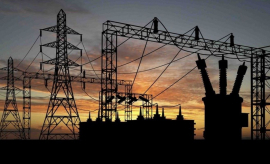
City of Tshwane Member of Mayoral Committee (MMC) for Utilities and Regional Operations, Daryl Johnston, says load shedding is a “crisis” for the City’s network infrastructure.
This as the power utility raised load shedding to Stage 6 in the evening with Stage 4 in the mornings.
“Raised levels of load shedding are a crisis for our municipality, affecting both the condition of our electricity network, as well as our ability to attend to outages.
“Stage 6 load shedding means that rolling blackouts will affect regions of our city two to three times a day for a total time without electricity at a minimum of six hours per day. Our networks were never designed for load shedding and continuously turning the network on and off has a major impact on the condition of our network infrastructure,” he said.
Johnston explained that load shedding can lead to longer outages due to overloading, vandalism and theft of infrastructure.
“[As] the frequency of load shedding increases, City resources will be stretched by just switching areas on and off. The same teams needed to perform this switching also play a critical role in electricity network repair and maintenance work and they will have significantly less time available to work on restoring electricity for non-load-shedding related outages.
“[Municipal] teams are working determinedly to face this immense pressure on our electricity network, but the reality is that our system was not designed to cope with this situation. The heavy rains we have been experiencing recently are also making this situation worse, with wet weather increasing the likelihood of equipment faults, and this situation is very serious for the entire Tshwane,” he said.
The MMC urged residents to switch off appliances during load shedding and when power returns, only turn them back on after at least 10 to 20 minutes to avoid electricity surges.
“The surges generated as power is turned back on causes areas to trip minutes after having been restored, causing extended outages in some area. Making sure not to have energy-intensive appliances on during peak times – particularly in the evening from 6pm to 9pm.
“We continue to pursue long-term interventions to see what we as the City can do to alleviate this continuous challenge. In the interim, we all need to work together to best manage this difficult time,” he said.
Economic growth facing challenges – Godongwana
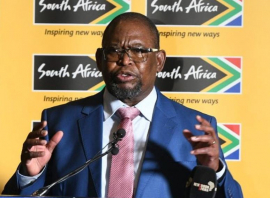
Finance Minister Enoch Godongwana says international and local challenges continue to pose as obstacles in the growth of the economy.
This as real Gross Domestic Product (GDP) grew by some 1.6% in the third quarter of 2022.
Speaking at the Pre-World Economic Forum (WEF) business breakfast held in Johannesburg on Thursday, the Minister said the impact of the COVID-19 pandemic on employment and investment continue to have an impact on growth and warned that the ongoing war between Russia and Ukraine could have a devastating impact.
“The theme [for the WEF meeting], Cooperation in a Fragmented World, captures the combination of economic, geo-political and social challenges that are facing the world. Our common challenges here at home are being compounded by all these risks.
“If the Europeans continue to impose more sanctions on Russia and the war does not come to an end, we are all likely to face a recession.
“In the face of all of these challenges, this government has been clear that rebuilding investor confidence and mobilising investment, is among the chief priorities this government must achieve for growing our economy,” he said.
Minister Godongwana said coupled with these international challenges, economic growth is also facing challenges closer to home.
“There’s a tendency in South Africa to debate…macro-economic theory and which theory is right. You can have the best policy on paper but if you can’t provide electricity, it’s useless. If you can’t deal with crime, your policy can’t work…and similarly with the logistics challenges, particularly Transnet,” he said.
Regarding Eskom, the Minister said an announcement is due to be made next month.
“We want to resolve the Eskom issues as soon as possible. Part of that resolution is to make sure that they have a healthy balance sheet so that they should be able to do what they should do best.
“In my humble view they should be prioritising what they do have…in making sure that [of] the 48 000MW at least 32 000MW are working. That is why it is critical for us to clear that balance sheet and we will make an appropriate announcement on the 22nd of February,” he said.
The Minister said some of these challenges have led to National Treasury to project a real Gross Domestic Product (GDP) growth of 1.6% until 2025 which is revised downwards from 1.8% in last year’s budget speech.
“Everybody wants investment, no doubt about that. It is critical for growth. Together we can achieve a greater growth provided we can deal with some of the issues raised.
“We have Operation Vulindlela whose main focus is structural reforms. Of particular focus on those structural reforms is networking industries. In addition, it is to deal with red tape. We are engaging these issues. I have referred to the electricity challenge and some work is being done to deal with those issues,” he said.
The Minister urged the business people who will be part of South Africa’s delegation at the WEF to work with government to resolve the challenges facing the country.
“We have got to find a solution together. I’m saying that even as we go to Davos, we must begin to say how we work together on all of these things. All these areas I’ve mentioned, there should be a possibility that we could work together,” Godongwana said.
Gas tanker explosion death toll rises
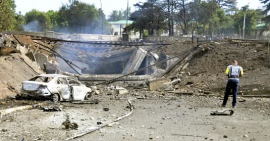
Gauteng Premier Panyaza Lesufi says the number of those that have died as a result of the tragic gas tanker explosion in Boksburg in December has increased to 40.
This includes at least 12 health-care workers who were based at the Tambo Memorial Hospital near the location of the blast.
Others are still in hospital while a further 23 have been discharged.
“There are no words to adequately convey our condolence to the affected families that are now having to deal with 2023 on matters that they didn’t foresee.
“It will take time for the wounds to heal but we are ready as the Gauteng Provincial Government, together with all components of local government, to walk this painful journey with all the affected families and further assist in whichever way we can.
“This has not been an easy period, particularly for those who have lost their loved ones. We implore our health professionals to provide the best care to those that are still on their road to recovery,” he said on Thursday.
Lesufi added that some families will be pursuing legal action against the company that owns the gas tanker.
“We really believe this is within their rights to pursue whatever means of recourse available to them within the legal system. This, however, does not mean that government must not pursue the matter to its logical conclusion.
“As government we have not abandoned our mission to protect, care and give them the necessary support. We will be the last ones on the scene and until each and every family is supported, until each and every institution is supported, I want to commit the GPG to be there until the last moment,” he said.
The Premier said trauma, debriefing services and psycho-social work continues to be offered to the families and those affected.
Infrastructure damage
Turning to the damage caused by the explosion at the Tambo Memorial Hospital, Lesufi said Gauteng’s Department of Infrastructure Development (DID) has already completed some of the work.
“The construction work for the replacement of broken windows at the hospital, including the nurses’ residence, has been completed. Some of the [other] work is almost complete following delays because of the festive season break,” he said.
Work to restore the hospital’s casualty unit, however, is expected to take longer.
“Due to the extent of the damage, the casualty unit at the hospital remains closed. The [DID] maintenance team has developed specifications and costing for this remedial work and they’ve given [this] to the Department of Health for approval and…the Department of Health has approved. The DID have subsequently appointed a contractor.
“We now anticipate the conclusion of this work in four weeks’ time so that that hospital can go back and function again,” he said.
Open tender for Transnet non-operational locomotives
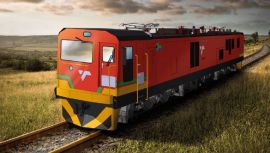
State ports and freight rail company Transnet has announced that it will issue an open tender for eligible original equipment manufacturers to step in to rehabilitate locomotives supplied by CRRC E-Loco Supply.
According to Transnet, the supplier has not provided rehabilitation for at least 161 locomotives which are currently non-operational – causing revenue losses for the state-owned company.
“This is a critical intervention not only for Transnet’s sustainability, but for the South African economy.
“The CRRC locomotives directly impact three major corridors (North, Northeast and Cape Corridors) that account for roughly 50% of Transnet Freight Rail’s revenue, and support three primary mining sector segments, namely export coal, chrome, and manganese,” a Transnet statement read.
Off the rails
Between 2011 and 2014, the controversial supplier was awarded contracts to the value of some R25 billion to provide Transnet with locomotives – contracts that were subsequently highlighted during the State Capture commission hearings.
Transnet and the Special Investigating Unit has launched a review application in the Special Tribunal to set aside those contracts.
The locomotive company has also been flagged by the South African Revenue Service (SARS) and the South African Reserve Bank (SARB) and had some R4.2 billion, paid by Transnet, frozen by the Special Tribunal.
Last year, Transnet announced that it had entered into an in principle as well as a settlement agreement with CRRC for the maintenance of at least 161 locomotives in the state entity’s possession.
“Among others, the Definitive Settlement Agreement is meant to enable rehabilitation of non-operational 22E locomotives, long-term material and reliability support to Transnet, the repayment to Transnet of unjustified profits by CRRC and the delivery of the remaining 99 locomotives at the corrected price, subject to the outcome of Transnet and the SIU’s Review Application,” Transnet said.
Now, the state-owned company says CRRC has showed an “unwillingness…to engage with the [South African Revenue Service and the South African Reserve Bank]” to normalise its operations in the country” in order for it to supply the spares.
“A key contingent requirement introduced by CRRC at the time of the In-Principle Agreement and also included in the Definitive Settlement Agreement is the normalising of CRRC’s operation in South Africa by [SARS] and the [SARB] in order to allow Transnet to give effect to the Definitive Settlement Agreement.
“As independent organs of state, both SARS and the SARB are required to follow statutory prescript in considering applications by CRRC to normalise its operations in South Africa. Transnet respects the independence and processes of these organs of State,” Transnet said.
Transnet is also expected to issue a confined tender for locomotive repairs supplied by Wabtech, Mitsui and Alstom.
“The resolution of this matter is key in supporting Transnet’s efforts to normalise its operations, enhancing the service provided to customers, and boosting the national fiscus,” Transnet said.
Nzimande confident police will nab suspects in Fort Hare killings
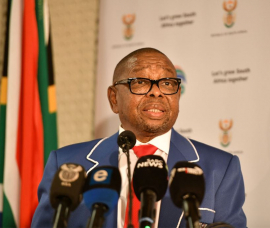
The Minister of Higher Education, Science and Innovation, Dr Blade Nzimande, says he remains confident that the police will arrest those behind the suspected assassination attempt on the University of Fort Hare Vice-Chancellor, Sakhela Buhlungu.
This comes after Buhlungu’s Executive Protection Officer, Mboneni Vesele, was shot and killed over the weekend.
Nzimande visited the University of Fort Hare on Wednesday following a pattern of assassinations and threats on staff at the university.
In March 2022, a number of attacks also took place at the homes of the Vice-Chancellor and two other senior officials from the university.
“I remain outraged by this inhumane act of disdain and strongly condemn it. I however remain more confident that the law enforcement agencies, led by the Minister of Police, Bheki Cele have already begun with investigations into this outrageous act to find and hold those responsible accountable,” Nzimande said.
Nzimande further appealed to the community to provide any meaningful information that will assist SAPS in this regard.
“This pertains to both information related to the killings of Investigation Mr Vesele’s and Mr Peter Roets who was the university’s fleet and transport manager who lost his life in May 2022.
“It is also important that I emphasise that their attack is not only an attack on the University of Fort Hare but also an attack on the entire Post School Education and Training sector,” he said.
Fight against corruption, maladministration and capture of institutions
Nzimande said his team is determined to fight any acts of corruption, maladministration and institutional capture everywhere it emerges in all Post-School Education and Training institutions, including at the University of Fort Hare.
The Minister said this includes putting appropriate safety and security measures to protect both employees and staff.
“I also once more encourage all the Vice Chancellors (VC) and TVET College Principals to engage with my department on all security related issues to enable us to engage with the Cabinet Security Cluster, particularly on security concerns that have an impact on the institutions’ ability to perform their duties,” he said.
Nzimande said that part of the interventions include working together with the sector stakeholders – namely, former administrators, researchers, university registrars, representatives from the Council on Higher Education (CHE) and Universities South Africa (USAf).
He said the aim is to develop the Guidelines for Good Governance Practice and Governance Indicators for Councils of South African Public Higher Education Institutions in order to develop governance indicators and monitor governance practices of universities.
On the attempted assassination on the VC, Nzimande said that in terms of their own assessments, these events are most likely linked to the work of the Special Investigating Unit (SIU), which has been underway since the Presidential Proclamation of 5 August 2022 (Gazette 47199).
The proclamation followed a request from the University in 2020 to the SIU and the signing of a Memorandum of Understanding between the University and the SIU in June 2020.
The terms of reference of the SIU are outlined in the gazette and include investigating corrupt and unlawful activities over a ten-year period from 2012 to 2022.
The schedule also specific focus on procurement irregularities in cleaning and gardening services (between 2012 and 2019); leasing of student accommodation since 2013; appointment of a service provider for maintenance and repair of air conditioning systems (2018); and collusion of officials and suppliers or service providers.
The schedule also focuses on alleged maladministration in the affairs of the University’s Faculty of Public Administration in the awarding of honours degrees; mismanagement of funds and sourcing of public servants to study in various programmes for individual financial gain.
“These allegations are also linked to the University’s suspension of Professor Edwin Ijeoma, who was Head of Department, and who subsequently resigned in February 2021. The disciplinary processes continued following his resignation and he was found guilty on all charges.
“There were reports of how deep maladministration was entrenched in the institution, which Professor Buhlungu had reportedly been actively rooting out since he assumed office. These endeavours saw several senior managers and staff members suspended, some resigning and others dismissed,” Nzimande said.
Team established to investigate Fort Hare murders
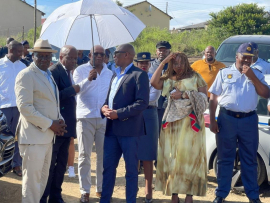
Police Minister Bheki Cele has assured the management of Fort Hare University that police are intensifying their response to the recent violent and fatal attacks at the institution.
Cele on Wednesday welcomed the heightened policing interventions by the South African Police Service (SAPS) to find those responsible for a series of attacks on university staff, which have claimed two lives.
The latest was the murder of Fort Hare University (FHU) Vice Chancellor, Professor Sakhela Buhlungu’s protector Mboneni Vesele, who was shot and killed over the weekend.
The ministerial visit comprised Cele, Higher Education and Science and Innovation Minister Blade Nzimande, Minister in the Presidency Mondli Gungubele as well as State Security Deputy Minister Zizi Kodwa.
National Police Commissioner General Fannie Masemola has established a multi-disciplinary team to investigate the pattern of threats on the lives of the staff members of the institution.
Police Ministry spokesperson Lirandzu Themba said the team, which will report directly to the office of the National Commissioner, was expected to commence its investigations into the murder of Vesele.
“Mr Vesele was a close protector and driver of Fort Hare University Vice Chancellor, Professor Sakhela Buhlungu, he was killed while inside the Professor’s vehicle. The scope of the investigative team will also include other alleged attempted hits on university staff, including the murder of Fort Hare University fleet manager, Petrus Roets, who was fatally shot last year [in] March,” said Themba.
Minister Cele says the high-level intervention was necessary and “must produce results”.
“It is quite clear that the local police are just not working fast enough in making arrests and this newly established National Team through its work, must send a strong message to criminals that this government will not be threatened or shaken and will certainly not back down or co-govern with criminals,” said Cele.
The multi-disciplinary team will include detectives, forensic analysts, crime intelligence, members of organised crime and the Directorate for Priority Crime Investigation (DPCI).
“As we start the academic year, we can’t afford to have anyone, be it a student, a lecturer and even a groundsman or cleaner of this institution feel uneasy about their safety. This is why the team must work closely with university staff and the intelligence community to crack the cases that will see the culprits go to jail.
“This, I am sure will guarantee that this respected institution is not turned into a killing field,” said the Minister.
The high-level team of Security Cluster ministers and the SAPS management on Wednesday paid a visit to Vesele’s family.
“The delegation also met with the Vice Chancellor of Fort Hare University, Professor Sakhela Buhlungu, who expressed his appreciation for ramped up police response from the National office, to prevent combat and investigate crime within the institution,” said the Police Ministry.
Back to school for learners in inland schools
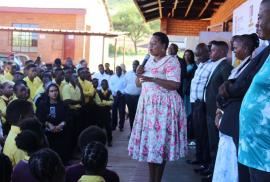
The 2023 academic school year for the majority of learners in inland schools has commenced today with a number of leaders conducting oversight visits to various schools to monitor their overall readiness.
Minister of Basic Education, Angie Motshekga, is today monitoring the opening of schools in Johannesburg, Gauteng.
The Minister is currently visiting Cosmo City Primary School, Cosmo City Secondary school, Diepsloot Primary school and Sunrise Secondary school.
Speaking at Diepsloot Primary School, Minister Motshekga welcomed learners back to school while encouraging them to study hard and focus on academics.
The Minister pleaded with parents to assist their children with homework and reading.
“I wish you a successful academic year. This is the most important phase in our education. When you get home, you must assist our learners and check if they have done their homework. When we assist each other with the teacher and school governing body, nothing will defeat us,” Motshekga said.
The Deputy Minister of Basic Education, Dr Reginah Mhaule, accompanied by MEC for Transport and Community Safety, Florence Radzilani, will be monitoring the opening of schools in Limpopo today.
Meanwhile, the Gauteng Provincial Government, led by Premier Panyaza Lesufi, will today lead the school reopening programme to mark the start of the 2023 academic year.
Premier Lesufi and Education MEC Matome Chiloane will activate the Back-to-School campaign and officiate the handover of Mapenane Secondary School in Ga-Rankuwa, Tshwane.
Members of the Executive Council are also participating in oversight visits at several schools across the province to observe the first day of teaching and learning and conduct oversight visits to Early Childhood Development Centres (ECDs) to gauge their preparedness.
In terms of learner placements, Gauteng Education MEC Matome Chiloane yesterday said the department is working as quickly as possible to place Grade 1 and 8 learners who have yet to be assigned a school.
He was speaking at a media briefing to provide an update on learner placements and the department’s readiness for the new academic year.
The department has already placed at least 290 751 learners with some 1 394 remaining.
Chiloane urged parents – especially those in “pressure areas” – to be patient as the department works through the applications.