
Eskom CEO resigns
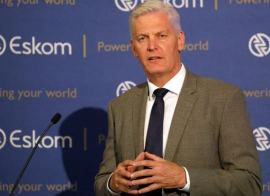
Eskom Chief Executive Officer, André de Ruyter, has resigned from the power utility.
De Ruyter has been at the helm of the ailing electricity supplier since December 2019.
“It has been an honour and privilege to serve Eskom and South Africa. I wish all the hard working people of Eskom well,” he said on Wednesday.
Eskom board chairperson Mpho Makwana said de Ruyter will serve until the end of this financial year.
“Mr De Ruyter has agreed to stay for an additional period beyond the stipulated 30-days’ notice to ensure continuity while we urgently embark on a search for his successor. His last day at Eskom will be 31 March 2023.
“On behalf of the Eskom Board, executive and the entire Eskom staff, I thank De Ruyter for his extraordinary service to the people of South Africa. I also thank De Ruyter’s family for supporting the Group Chief Executive during the tumultuous period,” Makwana said.
Public Enterprises Minister Pravin Gordhan thanked de Ruyter for his service to the country.
“André has carried an enormous burden on behalf of South Africa. I want to thank him for his sacrifice and resilience in a difficult job,” Gordhan said.
The news of de Ruyter’s resignation comes about three weeks after Eskom Chief Operating Officer Jan Oberholzer announced that he will be retiring in April next year.
This year, the power utility also accepted the resignations of its long serving head of generation Philip Dukashe, acting head of generation Rhulani Mathebula and also long serving Chief Nuclear Officer Riedewaan Barkadien.
Meanwhile, Parliament’s Portfolio Committee on Public Enterprises chairperson Khaya Magaxa said the committee noted and welcomes de Ruyter’s resignation.
“The committee appreciates the role Mr de Ruyter played at Eskom and will ever cherish it. However, the committee also recognises that his ability is not stretchable beyond the crisis point the power utility has reached notwithstanding our unwavering support as the committee to him,” he said.
The chairperson and the committee note that de Ruyter has not been able to “resolve the worsening problem of load shedding according to timeframes he had given to the committee” and called for a replacement who will be able to resolve the crippling electricity crisis.
“Eskom requires a replacement which will provide workable and practical solutions to the rising complex problems facing the power utility currently,” Magaxa said.
Coega opens boutique travel services to the public

After 14 years of providing services in the corporate travel business space, the Coega Development Corporation (CDC) has now opened its services from its boutique agency to the public.
Situated at Coega Headquarters in Gqeberha, the Coega Travel Agency (CTA) provides a 24-hour service that is connected to leading airlines, 3 to 5 star hotels around the world as well as car hire.
“The CTA offers a 24-hour service for convenience and peace of mind, accommodation and conferencing facilities at affordable rates and best value for money, visa assistance and travel insurance to connect you to the world, foreign exchange, pre-flight check-in; and we are fully Broad-Based Black Economic Empowerment (B-BBEE) compliant,” CDC Travel Services Manager Nokwanda Benya said on Wednesday.
The CDC has encouraged travelers to use the agency to benefit from packages offered during the festive season for domestic and international market, including tour packages.
The agency is accredited by the International Air Travel Association and the Association of South African Travel Agents.
“We have been in the corporate travel business for 14 years. It is not only an opportunity for Coega to add value to the entire market, but also an opportunity for our travel agents to show off their excellent customer service skills to leisure travellers during the festive season and beyond.
“Our slogan and positioning are accredited, efficient and connected. We do that little bit extra to reduce our clients’ stress and anxiety when planning trips. Flights, transfers, accommodation, tickets, and restaurant bookings are made for you.
“You’ll even be able to wait for your flights in the comfort of the executive airport lounges. With superior buying power, Coega Travel Agency can negotiate affordable rates, and help you find the most suitable travel. With Coega Travel, you’ll be in good company,” Benya said.
Holiday packages are available with the Coega Travel Agency and terms and conditions apply.
For more products and services information contact at Zoliswa.Marashula@coega.co.za or 041 403 0496.
SA to benefit from new agreement on basic, computational sciences

Higher Education, Science and Innovation Minister, Dr Blade Nzimande has welcomed a new agreement between South Africa and Italy, that will see basic and computational sciences development in South Africa.
This follows the signing of a Memorandum of Understating (MoU) between South Africa’s National Institute of Theoretical Physics (NITheCS) and Triste’s Abdus Salam International Centre for Theoretical Physics (ICTP) on the sidelines of the World Science Forum in Cape Town last week.
NITheCS Director, Prof Francesco Petruccione and ICTP Director, Prof Atish Dabholkar, signed the agreement in the presence of Nzimande.
Nzimande believes that the partnership will not only provide important support for basic science in South Africa but also serve as a model for future international collaborations in the field.
The agreement will see the two institutes working together on a range of initiatives, including the development of theoretical and computational research and education in South Africa, and the exchange of scientists and students between the two countries.
“We are thrilled to be partnering with NITheCS to support the growth of theoretical physics in South Africa,” said Dabholkar.
“This collaboration will provide valuable international opportunities for South African scientists and students and those at ICTP to work together and advance their research,” he added.
The department said the MoU is a significant step forward in the relationship between ICTP and NITheCS.
“It will have a positive impact on the development of theoretical and computational sciences in South Africa and Africa,” noted Petruccione.
The NITheCS provides a platform for research, training and engagement in theoretical physics, astronomy and astrophysics, data science, mathematics, statistics, quantitative finance, bioinformatics and quantitative biology, earth systems modelling and climate change modelling.
According to Dabholkar, ICTP is a unique institution that explores fundamental scientific questions at the highest level, promotes active engagement with scientists in developing countries, and advances international cooperation through science.
“Scientists there conduct rigorous excellent, curiosity-driven research in frontier and interdisciplinary science ranging from string theory, cosmology, and black holes to quantum computing, climate science, and quantitative life sciences.”
To learn more about these institutions, please visit www.nithecs.ac.za and www.ictp.it.
New homes for Isipingo transit camp residents
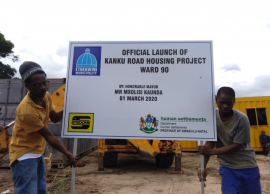
People currently residing at the transit camp in Isipingo will soon have a safe and dignified place to call home with the eThekwini Municipality, together with the national and provincial Department of Human Settlements, expected to deliver 360 residential units in the New Year.
The Kanku Road Housing Project, which commenced in March 2020, is expected to be completed in June 2023. The development includes semi-detached double story units and high-density housing units.
Project Manager, Nqobile Hadebe, said the project includes all the necessary infrastructure, with additional sites set aside to accommodate a sewer pump station, detention tank and an electricity sub-station.
All units are planned to have municipal waterborne sewage, water and electricity as well as roads and storm water infrastructure.
“The residents will be moved into the new houses after the sewer pump station is completed in January. The housing project is being rolled out in phases, with some houses nearly complete.
“Once the residents have been moved to their new houses, the transit camp will be completely demolished and the area will have its environment rehabilitated,” Hadebe said.
The Isipingo transit camp was set up as a temporary solution for families living in informal settlements while permanent houses were built.
Meanwhile, KwaZulu-Natal Premier, Nomusa Dube-Ncube, together with Human Settlements and Public Works MEC, Dr Ntuthuko Mahlaba, and eThekwini Municipality Mayor, Mxolisi Kaunda, will today facilitate the relocation of over 1 600 flood victims from community mass care shelters to new decent accommodation.
Since the flood disasters hit the province in April and May this year, the Department of Human Settlements has secured various accommodation, which will be unveiled to ensure that several remaining mass care shelters are permanently closed.
The KwaZulu-Natal provincial government has closed down 71 mass care centres since the flood disasters.
Panel report to shed light on Basic Income Support
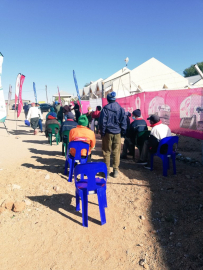
The Department of Social Development will today launch the Expert Panel Report on Basic Income Support in Kempton Park, Gauteng.
Experts and participants are expected to deliberate on the findings and the recommendations of the report.
The research on the Expert Panel Report was commissioned by the department, in collaboration with the International Labour Organisation (ILO).
Among key thematic areas for discussion by the panel members are the social outcomes of the Social Relief of Distress grant, and its economic and fiscal considerations.
The department has highlighted that poverty, inequality and unemployment continue to rise due to the current unfavourable economic climate, which is informed by, among others, the recent COVID-19 pandemic, which negatively affected the country and the world.
“As the triple challenge [of poverty, unemployment and inequality] persists, it is widely accepted that social protection is an important component of development, for both human and economic development.
“The rising rate of unemployment, together with the high uptake of the COVID-19 Social Relief of Distress (SRD) grant, are evidence that there is a gap in the provision of social protection for the working age group of 18 to 59 years.
“This necessitated the Department of Social Development to conduct studies to inform a proposal to extend social assistance for this vulnerable group,” the department said in a statement.
The department said the panel report affirms that income poverty in South Africa is extremely pervasive. More than half of households live in poverty, and the COVID-19 SRD is critical to sustain their livelihoods.
Furthermore, the department said the impact of the SRD on poverty and inequality is potentially more significant than previously understood. This is despite the relatively modest nature of the temporary relief.
At the end of the panel’s programme, it is expected that the report will be handed over to the Department of Social Development by the International Labour Organisation.
MEC commits to accelerated delivery of road construction projects

Gauteng MEC for Transport and Logistics, Kedibone Diale-Tlabela, has vowed to intervene and fast track the completion of provincial road construction projects that have been experiencing delays due to various factors.
On Monday, the MEC went on a fact-finding oversight visit to various road construction sites to assess construction progress as well as to get first-hand information on issues hampering the completion of the projects.
These include the K69 (Solomon Mahlangu Road) and K54 (Tsamaya Road), both in Mamelodi.
Diale-Tlabela said that the department can no longer allow further delays in the delivery of road infrastructure as this has a huge bearing on the movement of goods and people.
“Gauteng is one of the major contributors to the country’s economic growth and our department plays a major role in ensuring ease of mobility in the province, which is at the core of efforts for economic recovery.
“While we continue to invest in construction and upgrades of our provincial roads’ infrastructure, especially in our townships, project abandonment, delays and disruptions remain a thorny issue for us. We would like to assure the people of Gauteng that these projects are receiving our attention and intervention,” the MEC said.
The K69 road construction project, which is being upgraded into a dual carriageway, has been experiencing delays due to encroachments on the road reserve and community protests.
The K54 road project involves the upgrading and doubling of the existing single carriageway to increase capacity, safety and accessibility for existing and future developments along the Solomon Mahlangu Road.
The project was started in 2018 and was expected to be completed by April 2022. However, due to the encroachment of the road reserve, the contractor could not access the road to proceed with construction work.
Diale-Tlabela emphasised that the department is committed to delivering quality road infrastructure in support of the province’s elevated priorities.
“Ours is a people-centred economic recovery focused on improving road infrastructure to facilitate smart and convenient and movement of people and goods in the province. Project stoppages have a negative impact on our economic growth and result in untold inconveniences to road users.
“We will continue with our interventions to ensure that road construction projects are delivered without further delays, at the right quality and within budget,” the MEC said.
Motorists urged to travel during the daylight

Minister of Transport Fikile Mbalula has encouraged motorists travelling this festive season to embark on their journey during the daylight as it enhances alertness and visibility.
This comes after 13 people died and three were severely wounded in an accident involving a mini bus taxi and a heavy motor vehicle, which took place in the early hours of Monday morning.
The horror crash occurred at approximately 3:15am on the N1 between Winburg and Verkeedevlei in the Free State.
“I would like to convey my heartfelt condolences to the relatives and friends of those who lost their lives due to a fatal head on collision which took place on the N1 in the early hours of this morning. It is incredibly saddening that we continue to mourn the loss of loved ones as a result of road carnage,” the Minister said.
Law enforcement agents are investigating the cause of the accident.
“I would like to implore South African motorists to exercise great caution when driving during the night time. Road accident statistics continue to highlight to us that a lot of fatal crashes occur in the night time. I would therefore like to continue to echo the importance of daytime driving, especially for long distance trips,” the Minister said.
Treasury engaging Public Enterprises, Eskom on diesel purchase solutions
National Treasury says it continues to engage with the Department of Public Enterprises and Eskom with the aim of identifying solutions to the purchase of diesel.
On Thursday, the Treasury said it had noted the recent public interest and media queries requesting clarity about discussions to assist Eskom with the purchase of diesel.
In a statement on Thursday, it said: “The staggered nature of the budget process, which allows for the necessary legislative and executive oversight as well as for well-informed planning about how to allocate the country’s scarce financial resources, makes it difficult to consider and accommodate any ad hoc funding requests outside of this process, especially large requests that are made at short notice.
“The budget process allows for government departments and state-owned entities to follow a set process to submit their funding requests to be considered for inclusion in the Budget, which is then approved by Parliament.”
Treasury said Eskom did not apply for funding through the budget process and Eskom management should therefore take all necessary steps to ensure they secure the diesel needed to avert severe load shedding.
“That said, the National Treasury and the Minister of Finance are acutely aware of the impact that Eskom’s diesel shortages may have on already severe levels of load shedding,” it said.
Technical team to focus on government debt owed to municipalities
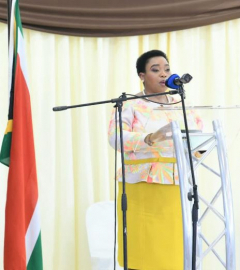
The KwaZulu-Natal Executive Council has established a technical committee to focus on the debt owed by government to municipalities.
In a statement issued on Thursday following a Provincial Executive Council meeting held this week, Premier Nomusa Dube-Ncube said the debt owed is reported at R2.8 billion and includes an amount of R420 million owed by the Ingonyama Trust Board, inter-municipal debt of R380 million, national government departments at R400 million, and Transnet’s R208 million, among others.
“The committee will explore all options available to ensure that each and every department in the province and nationally meet their rates and services obligations to municipalities,” Dube-Ncube said.
While the council welcomed that all departments are paying their consumption bills for services on time, the Premier said the provincial government is concerned about the arrears and the fluidity of the debt owed to municipalities, especially property rates.
“The provincial government has called on municipalities to provide credible billing by cleansing data and updating systems as well as to improve mechanisms to resolve disputes speedily including using inter-governmental relations processes.
“The EXCO has resolved that all departments budget and take responsibility for the payment of municipal services from their baseline budgets. The EXCO will receive regular update from the committee,” Dube-Ncube said.
District Development Model implementation
The Premier also announced that the Council has conducted an assessment of the District Development Model implementation.
The District Development Model was developed to improve coherence in planning and budgeting, which often results in poor service delivery and limited development impact in communities.
“The Provincial Government of KwaZulu-Natal noted that the province is well on target to ensure that the long-term district/metro one plan-one budget programmes are finalised,” Dube-Ncube said.
EXCO has approved that the District Development Agencies be brought on board to lead on the economic growth side in line with their mandate of attracting investments and packaging credible catalytic projects to stimulate sustainable economic growth.
“The provincial government acknowledged the need to enhance institutional capacity at district level in order to realise the accelerated implementation of the one plan/one budget for each district. The Department of Cooperative Governance and Traditional Affairs (COGTA) has been tasked to give more impetus in mobilising stakeholder to accelerate the implementation of the District Development Model and translate it into practical service delivery impact in communities,” Dube-Ncube said.
Water War Room
Meanwhile, while commending the establishment of Water War Rooms in all districts, the Executive Council raised its concerns about the poor participation and commitment of some districts in the structures tasked to ensure that people get water daily.
“EXCO has approved the establishment of the Provincial Water War Room which will attend to key water issues in districts and bring strategic support and interventions.”
Sex work amendment bill open for public comment
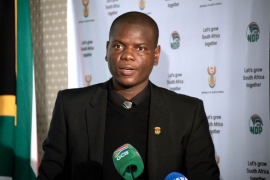
The Criminal Law (Sexual Offences and Related Matters) Amendment Bill of 2022, which seeks to decriminalise sex work, has been published and is now open for public comment.
The bill proposes the repealing of the Sexual Offences Act (previously Immorality Act), 1957 (Act No. 23 of 1957) and Section 11 of the Criminal Law (Sexual Offences and Related Matters) Amendment Act, 2007 (Act No. 32 of 2007) to decriminalise the sale and purchase of the adult sexual service.
Justice and Constitutional Development Minister, Ronald Lamola – who addressed media on progress on the bill on Friday – explained that the proposals of the bill are a response to Pillar 3 of government’s National Strategic Plan (NSP) on Gender-Based Violence and Femicide.
“Pillar 3 of the National Strategic Plan… contains a list of key interventions, key activities and indicators. One of the key activities under Pillar 3 is the finalisation of the legislative process to decriminalise sex work.
“This follows the view that the ongoing criminalisation of sex work contributes to GBVF, as it leaves sex workers unprotected by the law, unable to exercise their rights as citizens and open to abuse generally, not least when they approach State facilities for assistance,” Lamola said.
The Minister emphasised that although current legislation and municipal by-laws continue to criminalise the adult practice, this has not “stopped the selling or buying of sex, nor has it been effective”.
“If anything, [criminalisation] has led to higher levels of violence against sex workers. In addition, criminalisation affects predominantly women, with the female sex worker usually being the one who is confronted by law enforcement, but the male client isn’t. The National Prosecuting Authority has also indicated a very low percentage of cases or prosecutions for such transgressions,” he said.
As explained by Lamola, the bill has clauses that seek to:
- Repeal the Sexual Offences Act, 1957 and section 11 of the Criminal Law (Sexual Offences and Related Matters) Amendment Act, 2007.
- Deal with the expungement of criminal records of persons convicted of, engaged in, rendering or receiving sexual services from persons 18 years or older.
- Handle the transitional provisions pertaining to criminal proceedings relating to sexual services rendered or received by persons 18 years or older, which were instituted prior to the commencement of this Act.
“It is hoped that decriminalisation will minimise human rights violations against sex workers. It would also mean better access to health care and reproductive health services for sex workers, as well as compliance with health and safety and labour legislation. It would also afford better protection for sex workers, better working conditions and less discrimination and stigma,” Lamola said.
Regulation
Lamola told the briefing that the bill will follow a “two-step approach”, with decriminalisation preceding regulation of the industry.
“It [is] important to deal with decriminalisation first, so as to ensure that sex workers are no longer criminally charged. This will mean greater protection for sex workers. Decriminalisation will destigmatise sex work and enable access to basic services and protection by law enforcement agencies. Existing laws prohibiting children from selling sex and trafficking for sexual purposes remain in force.
“With regards to regulation, municipal by-laws would still be able to provide where solicitation in public spaces may or may not take place, for example, prohibiting the selling of sex in certain areas. This is similar to the prohibition on the location of taverns and shebeens, where there can be restrictions imposed to prohibit trade in residential neighbourhoods, near schools and/or religious buildings,” he explained.
Public comments on the bill can be sent on or before 31 January 2023 to the department’s Chief Directorate: Legislative Development in the following ways:
- Comments via post can be addressed to: The Director-General: Justice and Constitutional Development, Private Bag X 81, Pretoria, 0001. Marked for the attention of Tsietsi Sebelemetja.
- Comments can be e-mailed to Bills1@justice.gov.za.
- They can be faxed to 012 406 4632.
A copy of the bill can be accessed at www.justice.gov.za.