
IPID Amendment Bill published for comment

The Civilian Secretariat for Police Service has called on the public to submit comments on the Independent Police Investigative Directorate (IPID) Amendment Bill.
“The IPID Amendment Bill of 2022 proposes the entrenchment of the institutional and operational independence of IPID, making it clear that IPID must be impartial and must exercise its powers and functions without fear, favour or prejudice,” the Secretariat said in a statement.
It said this was in order to give effect to the “McBride judgement” where Judge Bosielo made certain pronouncements concerning the importance of the independence of IPID, in order for IPID to function independently.
The Constitutional Court declared as invalid certain provisions of the Independent Police Investigative Directorate Act, which authorised the Minister of Police to suspend the Executive Director, to take disciplinary steps against the Executive Director following suspension, and to remove the Executive Director from office.
The Constitutional Court then ordered Parliament to address the defects in the legislation.
The Bill also proposes a more transparent and open process for the appointment of the Executive Director and also a detailed and thorough process for integrity testing of IPID officials.
The Bill further provides for the amendment of other provisions of the Principal Act, so as to ensure that IPID executes its mandate effectively and efficiently.
The draft Bill can be found at www.policesecretariat.gov.za.
Members of the public are invited to submit their comments on or before 15 January 2022. The comments can be submitted via email to comments.IpidBill@csp.gov.za or via post for attention of Mr. M Ntwana at Civilian Secretariat for Police Service, Private Bag X922, Pretoria, 0001.
Comments can also be hand-delivered at the Civilian Secretariat for Police Service, Fedsure Forum Building, 2nd Floor, Corner of Pretorius and Lilian Ngoyi Streets, Pretoria.
General enquiries regarding the draft bill can be submitted to Mr Jacob Setouto via Jacob.Setouto@csp.gov.za.
Corruption limits opportunities to break cycle of poverty

Acting Public Service and Administration Minister, Thulas Nxesi, says corruption has caused great suffering and harm to the country and the continent.
“Corruption has often been seen as an African and developing world phenomenon, mostly because of underdeveloped governance frameworks and lax judicial systems, as compared to richer countries,” Nxesi said on the eve of International Anti-Corruption Day.
Corruption, he said, is a trans-border problem found in all societies, regardless of economic development. Its impact is catastrophic on all societies, as it stifles economic growth and development, and limits opportunities to break the cycle of poverty.
“I would like to emphasise that it also undermines the very essence of our existence and ultimately the cohesion of society itself,” Nxesi said.
Addressing the first day of the International Anti-Corruption Day Summit at UNISA in Pretoria on Thursday, the Minister said International Anti-Corruption Day 2022, observed on 9 December, is meant to create awareness about the impact of corruption on the nation.
On 18 November 2018, Cabinet approved the National Anti-Corruption Strategy (NACS), which provides a framework and action plan for South Africa.
The NACS is based on the principle that there should be prevention and combating of corruption through good governance, transparency, integrity management and accountability in society, including the early detection of potential corrupt practices to supplement the reactive measures executed by law-enforcement agencies and other anti-corruption bodies.
Nxesi said the collective effort of society as a whole as well as and an integrated approach to the fight against corruption will help mitigate the risk of costly commissions of inquiry, forensic investigations and other legal processes.
Acting Public Protector, Advocate Kholeka Gcaleka, said there was a need to provide better protection to whistle-blowers.
She conveyed her sincere gratitude to the many courageous and brave whistle-blowers who brought various allegations of fraud and corruption to the attention of the Public Protector and those who gave evidence at the State Capture Commission.
“I agree that we are indebted to the men and women who executed their functions tirelessly and honestly in our criminal justice institutions who, without fear or favour, worked to turn testimony presented to the Commission into evidence that can now be used in prosecutions.
“We are indebted to the diligent public servants and public representatives, researchers, journalists, activists, workers and businesspeople who uncovered, spoke out against and resisted State capture,” Gcaleka said.
She said conflict of interest needs to be looked at especially at leadership level. She encouraged the promotion of media freedom as part of the tool to fighting corruption.
“Ethical leadership is needed to resist the abuse of entrusted power for private gain, as well as potential interference and to protect the anti-corruption agencies’ operational independence, thus enabling good governance.”
The International Anti-Corruption Day Summit will continue on Friday.
COVID-19 vaccine for kids aged between 5 and 11 next year

Health Minister Joe Phaahla has announced that as of 2023 all children aged between five and 11 who are at risk of contracting severe COVID-19 will be able to receive the vaccine.
According to the Health Minister, these children will be offered two doses of the Pfizer vaccine, with an interval of 21 days between the two doses.
This will include children with chronic respiratory, heart, neurological, kidney, liver and gastrointestinal conditions as well as those with certain endocrine disorders, conditions associated with immunosuppression and serious genetic abnormalities.
The Minister was briefing the media in Ekurhuleni on Thursday.
Phaahla also announced that South Africa has crossed the 38 million mark for administered COVID-19 vaccines since the rollout of the programme began.
“Although the number of COVID-19 cases remains very low around the country, sub-variants of Omicron continue to be detected at low levels across the country,” he said.
He raised his concern about the continued number of COVID-19 related deaths recorded every week.
According to the Minister, the COVID-19 vaccination is now integrated into the primary healthcare services as government has closed the majority of the special vaccination sites.
He told the media that the target remains to reach 70% of the adult population with a particular focus on reaching the elderly and vulnerable groups.
“The department has been receiving enquiries on whether additional COVID-19 vaccine booster doses will be made available to provide ongoing protection against the pandemic, especially for older persons and those who are immunocompromised because they are at the highest risk of severe COVID-19 complications,” the Minister said.
He explained that adults between the ages of 18 and 49 years are eligible to receive three doses, while those 50 years and older are eligible to receive four doses.
“Consideration is being given to an additional booster dose to be offered to both age groups.”
This means adults aged between 18 and 49 years will be eligible to receive a total of four doses, while those 50 years and older will be eligible to receive five doses.
“There is little experience of ideal booster intervals and there is a high level of immunity in the community. At this stage, the intention is to provide another booster at an interval between the previous and the additional booster dose of a minimum of 180 days or six months,” he said.
“Although, this next booster will be a voluntary dose and not part of a wide community campaign. But the department reminds South Africans that the lifting of restrictions didn’t imply that the pandemic is over.”
Janusz Walus placed on parole

The Minister of Justice and Correctional Services, Ronald Lamola, has placed offender Janusz Walus on parole under strict conditions with effect from Wednesday.
This follows the judgment of the Constitutional Court handed down on Monday, 21 November 2022.
Walus was only discharged from hospital today, as he had been receiving treatment after he was involved in a stabbing incident.
He will serve two years under community corrections in line with the parole regime upon which he is released.
“There is no question that offender Walus is a polarising figure in our budding constitutional democracy, and that his release has understandably re-opened wounds among some in society, especially the family of the late struggle icon, Chris Hani.
“Offender Walus’s actions sought to derail the democratic project at its most critical, formative stage, when the choice of either setting the country on a sustainable path of peace, democracy and reconciliation on the one hand, or chaos, civil strife and blood-letting on the other, was constantly one bad decision away.
“His killing of Hani was unqualifiedly among those actions that sought to condemn the country to the latter fate, had it not been for the inspired leadership of our nation’s founders and the resolve of the people of South Africa.
“In previously denying him parole, the decision was not in the spirit of avenging a stalwart of our liberation struggle, but it has always been within the context of giving effect to the interests of justice, from the perspective of what the sentencing court sought to achieve,” the Department of Correctional Services said in a statement.
In its unanimous judgment, the Constitutional Court set aside the judgment and order of the Gauteng Division of the High Court, Pretoria, and placed offender Walus on parole.
“Our courts on previous occasions reminded us that our Constitution is located in a history which involves a transition from a society based on division, injustice and exclusion from the democratic process to one which respects the dignity of all citizens, and includes all in the process of governance.
“As such, the process of interpreting the Constitution must recognise the context in which we find ourselves and the Constitution’s goal of a society based on democratic values, social justice and fundamental human rights. This spirit of transition and transformation characterises the constitutional enterprise as a whole.
“Our parole system is not a wanton licence for unaccountability and impunity, neither does it nullify the original verdict and sentence imposed by the courts. Parole is an acknowledged part of our correctional system. It has proved to be a vital part of reformative treatment for the paroled person who is treated by moral suasion,” the department said.
Walus has been furnished with his parole conditions in terms of the Correctional Services Act. If he violates the conditions, he will be returned to a correctional centre, the department said.
FSCA revises Markus Jooste’s penalty of R20 million

The Financial Sector Conduct Authority (FSCA) has imposed a revised administrative penalty of R20 million on Markus Johannes Jooste, former Steinhoff International Chief Executive Officer (CEO) for breaching the Financial Markets Act.
In a statement, the FSCA said R1 million of the penalty was levied for encouraging Jaap du Toit to sell his Steinhoff shares.
“Notwithstanding the disclosure and encouragement, Mr Du Toit never acted on the contents of the warning SMS. The provision prohibits an insider from encouraging or discouraging another person to deal in securities which the inside information relates to.
“This penalty is payable on or before 06 January 2022. On 29 October 2020, the FSCA imposed an administrative penalty of R161 568 068 on Mr Jooste for breaches of both section 78 (4) (a) and section 78 (5) of the Financial Markets Act,” said the FSCA.
The Financial Sector Tribunal on 13 December 2021 set the FSCA’s administrative penalty aside and referred the determination of an appropriate administrative penalty for the contravention of section 78 (5) of the Financial Markets Act to the FSCA for consideration.
The Tribunal concluded that Jooste did not contravene section 78 (4) (a) of the Financial Markets Act as the information he provided in the warning SMS sent to Jaap du Toit, Gerhardus Burger, Marthinus Swiegelaar and the late Ockert Oosthuizen to encourage them to sell their Steinhoff shares, was vague and imprecise.
Section 78 (4) (a) prohibits an insider from disclosing inside information to another person.
The tribunal advised the FSCA to consider alternative dates to calculate the losses avoided by the trades of Burger and Oosthuizen.
In arriving at the amount of the new administrative penalty and in line with the decision of the Tribunal the FSCA said it considered a range of factors.
“The amounts of the losses avoided by the recipients of the warning SMS as a result of the offending transactions, Jooste’s level of cooperation during the investigation, the seriousness of the breaches, the need to deter such conduct as well as Mr Jooste’s submissions regarding the merits of the case against him including his submissions regarding an appropriate penalty, were considered,” it said.
New Companies Tribunal members announced

Trade, Industry and Competition Minister Ebrahim Patel has announced details on the appointment of new members to the Companies Tribunal.
The new members are as follows:
– Judge Dennis Davis is now the new Chairperson of the Tribunal. He previously served as head of the Competition Appeal Court and the Tax Appeal Court. Between 1991 and 1997, he was the Director of the Centre for Applied Legal Studies at the University of the Witwatersrand. He held joint appointments at Wits and UCT from 1995 – 1997.
Davis was appointed a Judge of the High Court in 1998 and as President of the Competition Appeal Court in 2000. Since his appointment to the Bench, he has continued to teach constitutional law and tax law at UCT where he is an Honorary Professor of Law.
Davis is a member of the Commission of Enquiry into Tax Structure of South Africa and was a Technical Advisor to the Constitutional Assembly, where negotiations for South Africa’s interim and final constitutions were formulated and concluded.
He hosted a television programme, Future Imperfect, which was an award-winning current affairs programme between 1993 and 1998.
He has been a visiting lecturer/professor at the Universities of Cambridge, Florida, Toronto and Harvard. He holds the following qualifications: BCom LLB from the University of Cape Town and an MPhil from the University of Cambridge.
– Minah Tong-Mongalo is the new Deputy Chairperson. She is a Commercial Law specialist, specialising in contract law, corporate commercial law, and corporate governance. She is an admitted attorney of the High Court with 20 years of post-admission experience.
Ms Tong-Mongalo is an experienced legal advisor and is pursuing her doctoral studies in the governance of State-owned enterprises. She holds an LLB and LLM (Commercial Law) qualification from the University of KwaZulu-Natal.
– Hlaleleni Kathleen Matolo-Dlepu has been in the legal profession for a number of years and is an admitted attorney, conveyancer, and notary public. She was appointed as the first chairperson of the Legal Practice Council in 2018.
Her career highlights also include her tenure as Secretary General of the Black Lawyers Association, a council member of the Law Society of the Northern Provinces and co-chairperson of the Law Society of South Africa.
In 2022, Matolo-Dlepu was named one of Courtroom Mail’s Top 100 Most Influential Women in Law in Africa. She also received a Lifetime Achievement Award at the WOZA Women in Law Awards, and was recently given a special recognition award from the Black Lawyers Association for her commitment, leadership, and contribution to the transformation of the legal profession, judiciary and the organisation.
She has a BProc and LLB Degrees from the University of the North.
– Diane Terblanche has extensive expertise in law and consumer advocacy and is an experienced managing attorney.
A former Director of the Legal Aid Clinic at the University of the Western Cape, she is skilled in business planning, operations management, law enforcement, IT strategy, and policy analysis. She served previously as chair of the Consumer Tribunal. She has a BCom Law, LLB (University of South Africa), as well as an LLM Degree from the University of Pennsylvania.
– Professor Clement Marumoagae is an Associate Professor at the University of the Witwatersrand. He is also a practising attorney specialising in pension law and family law. He lectures pension, insolvency, land and procedural law courses at post and undergraduate levels. He is a former councillor of the Legal Practice Council and the inaugural chair of its education committee.
He is currently an academic member of the Judicial Service Commission. Professor Marumoagae has focused on the development of candidate legal practitioners and conducts research that is aimed at eradicating artificial barriers meant to restrict entry to the legal profession.
He holds the following qualifications: an LLB, LLM (Wits) and LLM (NWU) and PhD (UCT), and also holds three postgraduate diploma certificates: AIPSA Diploma in Insolvency Law and Practice (UP), Postgraduate Diploma in International Economic Law and Postgraduate Diploma in Corporate law (Wits).
– Joshua Sasha Kadish is an admitted attorney of the High Court with expertise in corporate law and finance. He is a published author in various renowned legal journals.
He practiced as a Senior Associate in the Corporate Commercial Department of a large well-known legal firm before co-founding a fin-tech company which he currently manages. He holds the following qualifications: a BCom, BCom Law and LLM from Wits University.
– Richard Bradstreet is a Legal academic and an Advocate of the High Court of South Africa. He is a senior lecturer in the Department of Commercial Law at the University of Cape Town, and a member of the Cape Bar.
He is a contributor to Juta’s Commentary on the Companies Act 2008, and has published several articles in peer-reviewed academic journals on a range of commercial law topics, including company law, which he also teaches.
He holds the following qualifications: a BA LLB, LLM (Commercial Law), a PG Dip (Dispute Resolution), and a PG Dip (Intellectual Property Law) from the University of Cape Town.
– Fulufhedzani Shane Mudzunga is a director of a law firm. He has focused on commercial contracts, mediation, and negotiation. He holds the following qualifications: a BA LLB from the University of Venda and a certificate in Corporate Law and Mediation.
– Nomagcisa Cawe previously lectured in law at the Universities of Transkei and North-West and has extensive experience in dispute resolution.
She has been an Acting Judge of the Labour Court and is the Chairperson of the Special Pensions Appeals Board. She holds the following qualifications: a BA Humanities and an LLB Degree.
– Brian Jennings is a director of a well-known law firm and has extensive practical experience in mergers and acquisitions and private equity transactions.
He holds an LLB and LLM (with distinction) and was a recipient of the Adrian Paul Nathan Memorial Prize from the University of the Witwatersrand for achieving the best results in the corporate law LLM programme.
– Dr Alli Chicktay is a Senior Lecturer, School of Law, Wits University, and was the previous Chair of the Companies Tribunal. Dr Chicktay is also currently a Commissioner with the Broadcast Complaints Commission of South Africa (BCCSA) and the Community Schemes Ombud Service (CSOS).
Chicktay also trains prospective CCMA Commissioners for the Mandela Institute. Dr Chicktay holds four legal degrees: BProc, LLB, LLM, and PhD from Wits University.
More than half of the Companies Tribunal members are under 45 with the youngest being 32 years old. The average age of the Tribunal members is 48 years.
“The Companies Tribunal is made up of persons with a broad mix of skills and experience. As part of building a strong and capable state, we have sought to draw on the widest South African talent pool.
“The calibre of candidates will provide the public and business with confidence that we have a Tribunal that will be of significant benefit to our society and I wish them well in their work,” Patel said.
The new Chairperson, Judge Davis, noted that the Tribunal has significant powers in terms of the Companies Act and it is the intention of the tribunal to be a most effective mechanism to resolve disputes, which fall within its powers as efficiently and speedily as possible so that it becomes the key forum for disputes as defined in the Act.
The Companies Tribunal is established in terms of the Companies Act and facilitates the resolution of company disputes through conciliation, mediation and arbitration, potentially avoiding lengthy and costly litigation.
SASSA gold card ATM transactions suspended for December
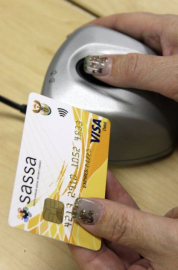
South African Social Security Agency (SASSA) grant beneficiaries using the Postbank-issued gold cards have been requested to withdraw their benefits from retail merchants this month.
This as the withdrawal of funds at ATMs has been suspended for the month of December.
The suspension of the service comes after the Postbank uncovered a series of network attacks by criminal elements on its system.
SASSA beneficiaries using the Postbank-issued SASSA gold cards are requested to withdraw their social grant monies at any retail outlets nationwide that provide the cashback functionality. These include Shoprite, Checkers, Usave, Pick n Pay and Boxer.
These SASSA grant recipients can also use the SASSA gold cards to make purchases at any place that accepts bank card transactions as the SASSA gold cards function fully within the national payments system similarly to any other bank card.
“In the recent months, Postbank has been experiencing a number of technical glitches that disrupted the smooth withdrawal of social assistance benefits.
“Following extensive investigations, we have now uncovered a series of network attacks by criminal elements determined to commit systematic ATM card fraud related crimes on Postbank payments using sophisticated modus operandi, which require further investigation.
“As a mitigating exercise, and in consultation with our partners following the resurgence of these criminal activities at the inception of the December payments, it has become necessary that Postbank suspends SASSA grant withdrawals at ATMs for those clients using the PostBank issued SASSA gold cards,” the Postbank said on Tuesday.
The Postbank has assured customers that a dedicated team of professionals, assisted by experienced external experts as well as law enforcement agencies, have been assigned to deal with this challenge.
Great progress has been made to close down all avenues used by these criminals.
“Postbank is aware of the impact that this change in payment channels will have on the social grant beneficiaries and other stakeholders, and we apologise for the inconvenience.
“Social Grant beneficiaries are also assured that the Postbank-issued SASSA gold cards are still valid and have not expired. Therefore, beneficiaries should not be misled into changing the cards unless if they wish to do so on their own accord,” the Postbank said.
Postbank will notify social grant beneficiaries when ATM transactions via the SASSA gold cards are available again.
NCOP passes five money bills
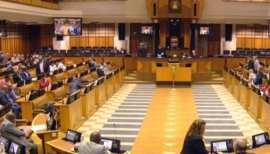
The National Council of Provinces (NCOP) passed five money bills on Tuesday during its hybrid plenary sitting.
The five bills passed include the Rates and Monetary Amounts and Amendment of Revenue Laws Bill, the Taxation Laws Amendment Bill, the Tax Administration Laws Amendment Bill, the Adjustments Appropriation Bill and the Special Appropriation Bill.
This comes after Finance Minister Enoch Godongwana last month formally tabled the 2022 Rates and Monetary Amounts and Amendment of Revenue Laws Bill (Rates Bill).
Parliament, in a statement, said the major objectives of the Rates and Monetary Amounts and Amendment of Revenue Laws Bill and the Taxation Laws Amendment Bill are largely aimed at:
– fixing the rates of normal tax;
– to amend the Income Tax Act (ITA), of 1962;
– to amend rates of tax and monetary amounts;
– to amend the Customs and Excise Act, of 1964;
– to amend rates of duty in Schedule 1 to that Act;
– to insert new tariff items;
– to delete tariff items;
– to delete rebate items;
– to insert rebate items;
– to amend the Carbon Tax Act (CTA), of 2019;
– to amend a rate of tax; and
– to amend the Rates and Monetary Amounts and Amendment of Revenue Laws Act, of 2020, among the key others.
“The key proposals in the Tax Administration Laws Amendment Bill include the imposition of understatement penalty for employment tax incentives improperly claimed, advance rulings under the Customs and Excise Act, and addressing tax compliance status system abuse,” said Parliament spokesperson Moloto Mothapo.
He said the Adjustments Appropriation Bill and the Special Appropriations Bill, on the other hand, were tabled in Parliament in terms of section 12(1) and (2) of the Money Bills and Related Matters Act as amended by the Money Bills Amendment Procedure and Related Matters Amendment Act.
“Section 12(1) of the Money Bills and Related Matters Act requires the Minister of Finance to table a national adjustments budget as envisaged in section 30 of the Public Finance Management Act. Section 12(2) of the Money Bills and Related Matters Act requires that ‘an adjustments appropriation Bill must be tabled with a national adjustments budget’,” he said.
The Adjustments Appropriation Bill provides for increases to allocations set out in the main Appropriation Act of 2022.
Total in-year spending adjustments amount to R13 billion, inclusive of the total adjusted appropriations per vote and adjusted estimates of direct charges against the National Revenue Fund (NRF). Of the total in-year adjustments of R13 billion, R7.24 billion is with respect to direct charges against the NRF.
These include, among others,
– a proposed additional allocation of R5.93 billion towards debt service costs;
– a proposed additional allocation of R48.5 million as unforeseeable and unavoidable expenditure through the Provincial Equitable Share for provincial Social Development departments for the continuation of care and protection of flood victims who were placed in shelters in KwaZulu-Natal;
– a proposed additional allocation of R306.26 million for State Owned Companies (SOEs): Denel R204.7 million and Land and Agricultural Development Bank R101.56 million; and
– a proposed additional allocation of R618.82 million for the skills levy and sector education and training authorities (SETAs).
The Special Appropriations Bill, on the other hand, proposes to Parliament to appropriate additional funds in the 2022/23 financial year for the requirements of the Vote (10) of Public Enterprises and Vote (40) Transport and to provide for matters connected therewith. This proposed additional funding is allocated to three State Owned Companies located across the Public Enterprises and Transport Votes, namely, Transnet SOC Limited (Transnet), Denel SOC Limited (Denel); and South African National Roads Agency SOC Limited (Sanral). The Bill proposes that R6, 278 billion and R23, 736 billion be appropriated from the NRF and be allocated to the Departments of Public Enterprises and Transport, respectively, for the 2022/2023 financial year.
The NCOP received the two Bills on 1 December 2022 after they were passed by the National Assembly.
Following deliberations in the House, the House agreed to adopt them without amendments.
GDP rises by 1.6%
South Africa’s gross domestic product (GDP) increased by 1.6% between July and September, Deputy Director General for Economic Statistics, Joe de Beer, announced on Tuesday.
The main attributors, Statistics South Africa (Stats SA) said, were the agriculture, forestry and fishing industries, which increased by 19.2% in the third quarter, contributing 0.5 of a percentage point to GDP growth.
During this period, said Stats SA, increased economic activities were reported for field crops and horticulture products.
“Finance, real estate and business services increased at a rate of 1.9% in the third quarter, contributing 0.5 of a percentage point to GDP growth. Increased economic activity was reported for financial intermediation, insurance and pension funding, auxiliary activities, real estate activities and other business services.
“The transport, storage and communication industry increased by 3.7%, contributing 0.3 of a percentage point. Increased economic activities were reported for land transport, transport support services and communication services,” said de Beer.
Stats SA said the manufacturing industry during this period increased by 1.5%, contributing 0.2 of a percentage point to GDP growth.
“Seven of the 10 manufacturing divisions reported positive growth rates in the third quarter. The motor vehicles, parts and accessories and other transport equipment division made the largest contribution to the increase in the third quarter.
“The food and beverages division and the basic iron and steel, non-ferrous metal products, metal products and machinery division also made significant contributions to growth.
“The unadjusted real GDP at market prices for the first nine months of 2022 increased by 2.3% compared with the first nine months of 2021,” Stats SA said in a statement.
Expenditure on GDP
Expenditure on real gross domestic product increased by 1.6% in the third quarter of 2022, the agency said.
Household final consumption expenditure decreased by 0.3% in the third quarter, contributing -0.2 of a percentage point to total growth. The largest contribution to negative growth was non-durable goods.
Stats SA said the main contributors to the decline in household final consumption expenditure (HFCE) were expenditures in the ‘other’ category (-3.8%, contributing -0.5 of a percentage point), food and non-alcoholic beverages (-0.9%, contributing -0.1 of a percentage point) and recreation and culture (-1.6%, contributing -0.1 of a percentage point).
Expenditure on restaurants, transport and housing contributed positively to growth in HFCE in the third quarter.
Final consumption expenditure by general government increased by 0.5% in the third quarter, mainly driven by increases in goods and services.
Total gross fixed capital formation increased by 0.3%. The main contributors to the increase were residential buildings (11.0%, contributing 1.4 percentage points) and transport equipment (11.0%, contributing 1.1 percentage points).
“There was a R63 billion build-up of inventories in the third quarter of 2022 (seasonally adjusted and annualised value). Large increases in three industries contributed to the inventory build-up, namely trade, catering and accommodation; transport, storage and communication; and mining and quarrying.
“Net exports contributed positively to growth in expenditure on GDP in the third quarter. Exports of goods and services increased by 4.2%, largely influenced by increased trade in mineral products; base metals and articles of base metals; vegetable products; and paper products,” Stats SA said.
Imports of goods and services increased by 0.6%, driven largely by increases in mineral products and animal and vegetable fats and oils.
Diesel prices decrease, increase for petrol consumers

There will be relief for some consumers from tomorrow when the price of all grades of diesel and illuminating paraffin decrease.
Petrol and LP Gas consumers, however, will have to dig deeper into their pockets as prices of the two are expected to increase.
The new prices, as announced by the Department of Mineral Resources and Energy (DMRE), are as follows:
- All grades of petrol will increase by at least 59c
- Diesel 0.05% sulphur will decrease by some R1.57
- Diesel 0.005% will decrease by R1.52
- Wholesale illuminating paraffin decreases by 57c
- The Single Maximum National Retail Price for illuminating paraffin will go down by 57c
- Maximum LP Gas Retail Price will increase by 95c
The department explained the factors behind the increase in petrol prices.
“Petrol prices increased due to higher demand by motorists travelling for the thanksgiving season in the US amid limited supply emanating from the Russia Ukraine conflict. Increased demand resulted in a decrease of gasoline inventories and higher prices.
“Refiners are producing more middle distillates, such as diesel, illuminating paraffin and gas to meet extra winter demand in the Northern Hemisphere and consequently producing less petrol.
“These factors led to higher contributions to the Basic Fuel Price of petrol by 64.87 cents per litre and lower contributions to diesel and illuminating paraffin by 122.47 c/l and 9.09 c/l, respectively,” the department said.
Higher gas prices has been driven by the increase in propane and butane prices.