

SAPS seizes counterfeit items valued at over R90m

The South African Police Service (SAPS) seized more than 70 000 counterfeit items valued at over R90 million in January 2025.
The police also arrested 37 suspects of various nationalities during multiple takedown operations conducted in Limpopo and KwaZulu-Natal throughout the month of January 2025.
The seized counterfeit and illicit goods included cellphones and accessories, pharmaceuticals, cigarettes, toys, clothing and consumables.
These operations were led by the National Counterfeit Goods Unit, with the support of the provincial Counterfeit Goods Units, the Department of Home Affairs, the South African Revenue Service (SARS) Customs division and brand protectors.
A Mission Action Joint Operation Centre (MAJOC) roving team — comprising SAPS members from various specialised units such as the Tactical Response Team (TRT), Public Order Policing (POP) and SAPS drone pilots deployed in Limpopo and KwaZulu-Natal as part of Operation Vala Umgodi — also formed part of the operations.
While primarily focused on combating illicit mining, these teams also target other criminal activities within the provinces.
Notably, the National Counterfeit Goods Unit was crowned overall winner in the Visible Policing Team of the Year category at the SAPS National Excellence Awards held on Sunday, 26 January 2025.
The SAPS remains dedicated to dismantling the illegal trade of counterfeit and illicit goods, which pose risks to consumers, harm legitimate businesses and undermine South Africa’s economy.
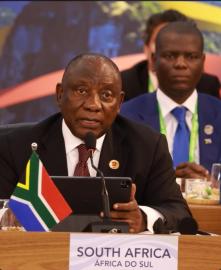
Expropriation Act: SA government looking forward to engaging Trump administration
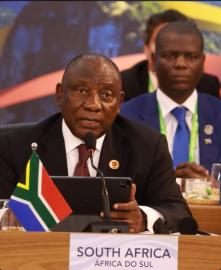
The South African government is “looking forward to engaging” with United States of America (US) President Donald Trump’s administration on bilateral relations and other issues.
This according to a statement released by the Presidency on Monday, following a post by President Trump – released on his social media, Truth Social – that the US will be cutting off funding to South Africa, pending an investigation into the recently signed Expropriation Act.
On Sunday evening, President Trump said on Truth Social: “South Africa is confiscating land, and treating certain classes of people VERY BADLY (sic). It is a bad situation that the Radical Left Media doesn’t want to so much as mentioned.
“A massive Human Rights VIOLATION (sic), at a minimum, is happening for all to see. The United States won’t stand for it, we will act. Also, I will be cutting off all future funding to South Africa until a full investigation of this situation has been completed!”
However, the new Act states that property may not be expropriated arbitrarily or for a purpose other than a public purpose or in the public interest.
The Expropriation Act, which underwent a five-year public consultation process, was deliberated in Parliament, and is in line with the South African Constitution.
The Act repeals the Expropriation Act of 1975 and allows for the state to expropriate land in the public interest – subject to just and equitable compensation.
On Monday morning, the Presidency committed to engaging the US on the new Act.
“The recently adopted Expropriation Act is not a confiscation instrument, but a constitutionally mandated legal process that ensures public access to land in an equitable and just manner as guided by the constitution.
“South Africa, like the United States of America and other countries, has always had expropriation laws that balance the need for public usage of land and the protection of rights of property owners.
“We look forward to engaging with the Trump administration over our land reform policy and issues of bilateral interest. We are certain that out of those engagements, we will share a better and common understanding over these matters,” the Presidency said.
Government has not confiscated any land
The Presidency has also refuted any allegations that land has been confiscated by the state.
“South Africa is a constitutional democracy that is deeply rooted in the rule of law, justice and equality. The South African government has not confiscated any land.
“The US remains a key strategic political and trade partner for South Africa. With the exception of PEPFAR [U.S. President’s Emergency Plan for AIDS Relief] Aid, which constitutes 17% of South Africa’s HIV/AIDS programme, there is no other significant funding that is provided by the United States in South Africa,” the Presidency said.
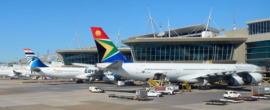
Jet fuel secured to address shortage
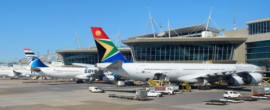
Transport Minister Barbara Creecy and stakeholders in the fuels industry have adopted a logistics plan for the transportation of jet fuel for OR Tambo International Airport (ORTIA).
The stakeholders include SASOL and the Fuels Industry Association of South Africa.
“This means that there is no longer a shortage of jet fuel for the refuelling of airlines across ORTIA,” the Transport Department said on Sunday.
READ | Jet fuel secured for OR Tambo International Airport
The logistics plan was developed by the Airports Company South Africa (ACSA) and adopted in a meeting convened by the Minister on Friday, 31 January.
On 1 February, the opening stock at ORTIA was 20.1 million litres.
“An additional 59 million litres of jet fuel have been injected into the pipeline in the last week… and this volume will arrive at ORTIA by 6 February. This volume may necessitate the removal of the current restrictions on airlines and bring the fuel supply closer to normal operations,” the department said.
The department said 71.5 million litres of jet fuel will be imported into Durban via three vessels expected to arrive on 5 February and 10 February, respectively. The imported fuel will then be transported to ORTIA via pipeline.
The total available stock in February will be 150.6 million litres.
“In addition, the fuel industry has also agreed to establish a mechanism to share across contracted airlines so that any airline whose supplier runs short is able to access from a non-contracted supplier.
“The Minister has commended the various stakeholders for their collaborative efforts. She also expressed her appreciation to all partners, airline customers, and the public for their understanding and co-operation during this period,” the department said.
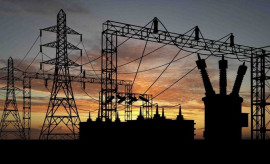
Eskom issues load shedding ‘high risk’ alert
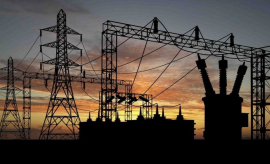
Eskom has issued an alert for a high risk of load shedding “at short notice”.
The power utility has not implemented rolling black outs for at least 10 months owing to the implementation of the Energy Action Plan and Generation Recovery Plan.
Eskom Group Chief Executive, Dan Marokane, explained that there had been several breakdowns over the past week which may result in Stage 4 load shedding over the weekend.
“This is a potentially temporary setback. Load shedding is largely behind us due to the structural improvements in our generation fleet. However, over the past seven days, we have experienced several breakdowns that require extended repair times.
“This has necessitated the use of all our emergency reserves, which now need to be replenished. Consequently, we are closely monitoring the status of our current emergency reserves, and load shedding up to Stage 4 may be implemented over the weekend,” Marokane said.

NERSA approves Eskom electricity price hike

South African consumers will have to brace for another blow to their cost of living, as the National Energy Regulator of South Africa (NERSA) has approved a 12.74% electricity price hike for Eskom, set to take effect in the next financial year.
The regulator has also approved further hikes of 5.36% for 2026/27 and a further increase of 6.19% for the 2027/28 financial year.
The decision comes as part of Eskom’s Sixth Multi-Year Price Determination (MYPD6) revenue application for the 2025/26, 2026/27, and 2027/28 financial years, which was announced on Thursday afternoon.
Tough balancing act
NERSA Board Chairperson, Thembani Bukula, described the complexity of the decision-making process as a “delicate balancing act” of “conflict” that took into account the needs of all stakeholders.
“We are required to ensure that Eskom is sustainable within the short and the long term. At the same time, we are required to ensure that the electricity services that Eskom provides are affordable.
“This is never an easy task. For inevitably, it is also influenced not just by our methodologies and rules but by the greater economic environment both locally and internationally. We remain guided and directed by the policies and the legislation of this country,” Bukula said.
A question of affordability
Last year, Eskom applied to NERSA for increases of 36% in 2025/26, 11.81% in 2026/27, and 9.1% for the financial year 2027/28.
This proposal sparked significant public and business outcry, with many deeming the increases unaffordable.
Bukula highlighted that the regulator took extensive steps to ensure that public participation inputs from all stakeholders were considered.
Stakeholder meetings and public hearings were held with written submissions also accepted by the regulator.
“During this process, we received various inputs from the stakeholders who came to our presentations as well as inputs that we got from the written comments. Top of the list was the affordability of electricity if the prices applied for by Eskom were approved. This was voiced by domestic customers as well as the business customers.
“Domestic customers stressed the fact that if these prices are approved, they then have to choose between buying food or buying electricity. Businesses on the other side made it clear that if these increases are approved, a lot of them would be forced to close their businesses,” he said.
The first price hike is set to be implemented on 1 April 2025.
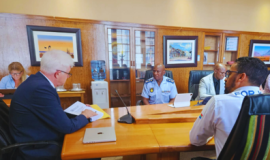
Winde hands over George building collapse report to the police
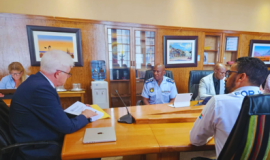
Western Cape Premier Alan Winde has officially handed over to the South African Police Service (SAPS) a report detailing the structural engineering findings of the George building collapse.
Winde handed over the report on Thursday to the province’s Police Commissioner, Lieutenant-General Thembisile Patekile, and the lead investigator from SAPS, Captain Johan de Lange.
The Western Cape Government (WCG) commissioned an independent investigation into the building collapse in George on 6 May 2024.
The incident, which occurred while the building was still under construction, resulted in the deaths of 34 people and serious injuries to many others.
Twenty-eight people were rescued alive in a multi-stakeholder disaster operation.
“At the time, the Western Cape Government understood that the event would have repercussions for human lives and livelihoods, and that an investigation into its cause would be essential.
“And so, while the multi-stakeholder operation was underway, the WCG secured the services of an independent structural engineering firm to conduct an investigation of the collapse site, simultaneous with the rescue operation,” the statement read.
The WCG stated that the peer-reviewed final report of this firm was to ensure its integrity.
“This probe is one of several that were launched, with the SAPS being the lead body responsible for investigating an incident of this nature,” Winde said.
This means the report is now under the jurisdiction of the SAPS, which must take into account both the findings of this independent report and all other evidence available during the overall criminal investigation.
The WCG believes the report’s technical findings will greatly aid the SAPS investigation in determining whether charges should be filed.
“Given the nature of the incident and the fact that 34 people tragically lost their lives, it is entirely possible that criminal proceedings may ensue.
“It is for this reason that the findings of the independent probe cannot be made public so that we do not in any way compromise the SAPS investigation and further possible proceedings,” the Premier explained.
The provincial government said the findings of the various agencies’ investigations must be consolidated to ensure an overall understanding of what transpired and to hold those responsible accountable.
Winde has acknowledged the hard work of government staff, who, along with many other partners, worked tirelessly to rescue those trapped on the site.
He thanked the independent team that came on board and concluded the investigation carefully and speedily.
“There must be consequences for those responsible for this horrific tragedy. We have now handed over the report to the SAPS, who we have been assured are working tirelessly on this case, and we will continue to monitor this matter very closely.
“I will never forget being there when our teams recovered Gabriel Guambe alive from the site over 100 hours after its collapse. It is for him, for Delvin Safers, for their peers and friends who made it out alive, and for those who succumbed, and the families of the victims, that justice must be delivered,” Winde said.
The provincial government said the Western Cape Department of Police Oversight and Community Safety Court Watching Brief Unit will closely monitor its progress.
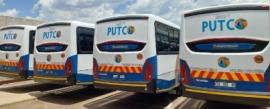
Government condemns torching of PUTCO buses
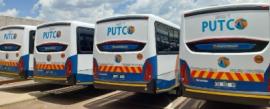
The Ministry of Transport has called on law enforcement to arrest those responsible for the torching of 50 Public Utility Company (PUTCO) buses and ensure that they are prosecuted in court.
PUTCO’s bus fleet plays a key role in moving about 200 000 commuters a day, with its biggest operation being in the province of Mpumalanga.
In a statement on Tuesday, PUTCO said that the buses were set alight on Monday night after unknown men ambushed and tied-up security guards at the Moloto depot before burning buses on site.
It added that two employees were injured during the incident and had to be treated in hospital.
“Soon thereafter, attacks were reported at the Wolwekraal and Siyabuswa depots,” it said, adding that it is closely monitoring the situation.
“Authorities are investigating the incident, and we appeal to members of the public who may have information on these coordinated attacks to contact their local police,” said PUTCO.
This as the Minister of Transport, Barbara Creecy, and Deputy Minister Mkhuleko Hlengwa have condemned the incident in the strongest of terms and described it as an act of aggression.
“The Minister and Deputy Minister have thus characterised the act as economic sabotage given the critical role that the bus industry plays in the mobility of the workforce in the country.
“The Minister has instructed the department to organise an urgent meeting with National Joint Operational and Intelligence Structure (NATJOINTS) to discuss this matter and develop necessary integrated response,” the Transport Ministry said on Tuesday.
The ministry said it fears that interfering with the company’s operations may regrettably have disastrous impact on the commuters in Mpumalanga, who rely on the bus operator to commute to as far as Gauteng on a daily basis.
“It is therefore of utmost importance that the law enforcement agencies take every possible course of action to investigate Monday’s incident and bring the perpetrators to book to face the full might of the law.
“The department will also continue to support any effort taken to prevent acts of sabotage on the country’s public transport system.
“The Minister and Deputy Minister wish a speedy recovery to the two employees who were injured in the course of the arson attack, and they have also expressed their full support to PUTCO in this period,” the Transport Ministry said.

Deadline for F1 bid extended

The Ministry of Sport, Arts and Culture, in collaboration with the Bid Steering Committee (BSC), has extended the submission deadline for the Request for Expression of Interest (RFEOI) for South Africa’s Formula 1 Grand Prix bid.
“This extension aims to give stakeholders additional time to submit comprehensive, well-structured proposals in line with RFEOI requirements. The Ministry is committed to a transparent and competitive process to secure this prestigious motorsport event,” the Ministry said on Tuesday.
The deadline for submission has been extended to18 March 2025.
“Hosting a Formula 1 Grand Prix would boost our economy, tourism and development while showcasing South Africa as a premier global sporting destination. This extension ensures bidders have the time to prepare exceptional proposals,” the Minister of Sport, Arts and Culture Gayton McKenzie said.
In December 2024, McKenzie announced a team of experts to form South Africa’s Formula One Bid Steering Committee (BSC) for the return of the international auto racing event.
READ | F1 – here we come!
At the time he said the team will be responsible for all aspects of preparing a bid for the consideration of the Formula One Group and global motorsport’s governing body, the Fédération Internationale de l’Automobile (FIA), and a phase of choosing which city and track to put forward for consideration.
Proposals must be submitted via email to bid@saf1bsc.com .
Queries can be directed to info@saf1bsc.com .
The RFEOI document is available for download on the Department’s website under “What’s New.” The document can be accessed using this link : https://www.dsac.gov.za/sites/default/files/2025-01/Request-for-Expression-of-Interest-Formula-BID.pdf

Financially “stretched” consumers cautioned against using unregistered credit providers

With the start of the year being financially demanding, the Gauteng Department of Economic Development has encouraged consumers, who will be borrowing money from credit providers, to be wise and ensure that credit providers do not violate their rights.
This as some consumers could be facing financial challenges to the extent that they might need to apply for credit to meet their financial obligations such as school fees, school uniforms, transport and rent, among others.
Consumers have been cautioned against using unregistered credit providers such as ‘Abomashonisa’ that overcharge interest, and take consumers’ identity documents and their Social African Security Agency (SASSA) cards to enforce payment.
“This is unfair business practice. Sometimes, when consumers’ credit applications decline, consumers resort to borrowing from Abomashonisa. However, this does not help the consumer because of the exorbitant interest rates that are charged by these unregistered credit providers.
“If your application is declined by all registered credit providers, it means that you have a bigger financial problem than you realise. Rather seek assistance by negotiating for lower instalments with your current credit providers, paying off and closing some accounts than accessing more credit through unregistered credit providers,” Gauteng Department of Economic Development Director for Education, Awareness and Stakeholder Relations Milly Viljoen said.
According to the Consumer Protection Act (CPA), consumers have a right to receive information in plain and understandable language.
“Consumers should read and understand the terms and conditions, and further ask questions if they seek clarity. This will allow them to understand Credit Life Insurance, which can be a lifesaver when they are unable to repay the debt due to loss of income, unemployment, disability, etc,” Viljoen said.
Consumers are urged to consider the following tips:
- Borrow only when it is necessary. Avoid using credit for consumables such as groceries.
- Verify the authenticity of credit providers, even the ones that are advertising on social media, by contacting the National Credit Regulator first before applying for credit. Unregistered credit providers will make you more financially constrained by overcharging interest.
- Understand the additional cost that comes with credit. The cost of credit includes interest rates, once-off initiation fees, monthly service fees, credit life insurance, etc. Consumers should read and understand the pre-agreement statement and quotation which will include all the costs involved.
- Do not sign immediately when applying for credit. The pre-agreement or quotation has five (5) days cooling period. Sign ONLY when you understand the terms and conditions.
- Do not sign a blank credit agreement/document. Read, understand, and ask relevant questions if you seek clarity. Sign ONLY when satisfied with the terms and conditions.
- Check your credit report often- You are entitled to a free credit report once a year. You have the right to dispute any information that is wrongfully written on your credit profile.
- Do not agree to pay an ‘upfront fee’ when applying for credit. Fake credit providers may force you to pay a fee before granting you credit.
The Gauteng Office of Consumer Affairs works with different stakeholders in consumer protection to ensure that consumer rights are protected.
Thus, consumers should contact the National Credit Regulator on 0860 627 627 or e-mail complaints@ncr.org.za to report unregistered credit providers or any credit provider that violates their consumer rights in the credit industry.
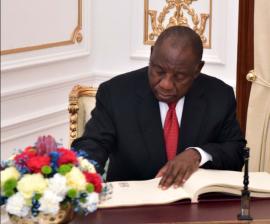
President Ramaphosa signs Expropriation Bill into Law
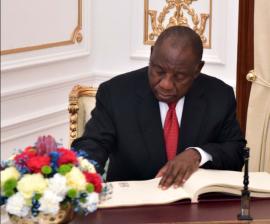
President Cyril Ramaphosa has signed into law the Expropriation Bill, which sets out how organs of State may expropriate land in the public interest for varied reasons.
In a statement, The Presidency said that the new legislation, which repeals the pre-democratic Expropriation Act of 1975 , aligns expropriation processes with the Constitution and marks the culmination of a five-year process of public consultation and Parliamentary deliberation.
“The Bill assented to by President Ramaphosa outlines how expropriation can be done and on what basis. This law will assist all organs of State – local, provincial and national authorities – to expropriate land in the public interest for varied reasons,” the Presidency said.
Section 25 of the Constitution recognises expropriation as an essential mechanism for the state to acquire someone’s property for a public purpose or in the public interest, subject to just and equitable compensation being paid.
Up to now, expropriation of property has been governed in terms of the Expropriation Act of 1975, which predates the expropriation mechanism provided for in section 25(2) of the Constitution.
“Local, provincial and national authorities will use this legislation to expropriate land in the public interest for varied reasons that seek, among others, to promote inclusivity and access to natural resources,” the statement read.
The Bill repeals the Expropriation Act and to provide a common framework in line with the Constitution to guide the processes and procedures for expropriation of property by organs of state.
“In terms of this law, an expropriating authority may not expropriate property arbitrarily or for a purpose other than a public purpose or in the public interest.
“Expropriation may not be exercised unless the expropriating authority has, without success, attempted to reach an agreement with the owner or holder of a right in property for the acquisition thereof on reasonable terms,” the Presidency said.
The Presidency further explained that an expropriating authority is therefore obliged to enter into negotiations with the owner of a property required for such purposes.
An expropriating authority must also attempt to reach an agreement on the acquisition of the property before resorting to expropriation – except in circumstances where the right to use property temporarily is taken on an urgent basis in terms of a provision in the legislation.
The law provides for disputes to be referred for mediation or to appropriate courts.