
Scrap metal export ban a boost for Transnet

Transnet says government’s ban on the export of scrap and waste metal will go a long way in the fight against metal theft.
Government recently announced that the six-month ban is aimed at making it difficult for criminals to sell stolen copper cables and other metals.
State-owned companies (SOCs) such as Transnet, Eskom and PRASA [Passenger Rail Agency of South Africa] have become a target for metal and cable thieves, costing South Africa’s economy billions of rands annually.
“We are pleased that government has acted decisively against the scourge of metal theft, which doesn’t just plague Transnet. Transnet Freight Rail [TFR] has a rail network infrastructure of 30 400 km in track, and theft and vandalism of our infrastructure results in delays on the system and possible derailments.
“TFR has long viewed this as economic sabotage. Since 1 April 2022, there have been more than 377 export coal trains cancelled due to security incidents, which is about an average of 11 trains a week. Whilst this is an improvement compared to the 2021/22 financial year, the security solution is not sustainable,” the SOC said.
Transnet revealed that since the beginning of the financial year, it has lost some 742km of cable to criminality.
“Transnet has received assistance from coal customers in funding security on the North corridor from Ermelo to Richards Bay. This allowed the company to deploy additional security task teams and drones. As a result, there has been a 30% reduction in security incidents. However, the security incidents have not reduced sufficiently to completely reduce the impact on train cancellations.
“The announcement by government will go a long way to mitigate the security challenges experienced by TFR and industry. TFR looks forward to government’s finalisation of a more permanent legislative solution to curb cable theft,” the company said.
Senior EC Education official in court for PPE corruption

A senior Eastern Cape Education Department official, his wife and a businessman have appeared at the Zwelitsha Magistrate’s Court on charges related to a R4 million PPE tender.
Supply Chain Management chief director, Marius Harmse, his wife Elanore and businessman, Sigqibo Makupula, appearted in the court on charges of fraud, money laundering and corruption. They were granted R10 000 bail each.
The arrests come after an investigation by the Special Investigating Unit (SIU) that revealed that Harmse had indirectly received some R328 000 in kickbacks for awarding the tender to Makupula’s company, Kups Trading.
“The SIU probe found that Makupula transferred a sum of R573 000.00… towards the purchase price of a vehicle, which was to be purchased by Mr and Mrs Harmse to the value of R850 000. Mr Harmse paid the balance of R277 000 to Star Motors, with the view to settle the balance of the purchase price. The vehicle was registered in the name of Mrs Harmse on 3 February 2021,” SIU spokesperson Kaizer Kganyago said.
He explained that the vehicle was then sold months later and Harmse allegedly tried to conceal the proceeds.
“Harmse approached the Sales Manager at Star Motors, Mr Hubbard, during April 2021 to place the said motor vehicle on their pre-owned stand as a consignment unit to try and sell it on Mr Harmse’s behalf. Mr Hubbard agreed . The said motor vehicle was sold on 10 May 2021 and on the instruction of Mr and Mrs Harmse, to the value of R800 000.00.
“The purchase price was paid into Mr and Mrs Harmse’s Standard Bank account in the name of Trentrade 23 (Pty). Furthermore, the SIU investigation revealed that this is where the integration took place, the purchase of the said motor vehicle and it being transferred into the name of Mr Msimango [another Star Motors employee] and not that of Mr or Mrs Harmse shows their intent to hide the proceeds and reintroduce [them] as part of the financial system,” Kganyago said.
SA needs R1.5 trillion for Just Energy Transition
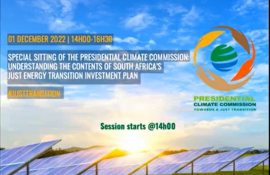
South Africa requires an initial funding of about R1.5 trillion to transition to a low carbon and climate resilient society for the five-year period 2023–2027, says Presidential Climate Commission (PCC) Commissioner Joanne Yawitch.
Addressing a hybrid Special Sitting on Understanding the contents of South Africa’s Just Energy Transition Investment Plan (JET-IP) on Thursday, Yawitch said achieving the JET IP outcomes is dependent on the scale and nature of financial support that South Africa can secure from the international community to complement domestic resources.
“At the 26th Conference of the Parties (COP) in 2021, a Just Energy Transition Partnership (JETP) was forged with France, Germany, United Kingdom, the European Union, and the United States (forming the International Partners Group [IPG]) in which the IPG undertook to mobilise US$8.5 billion (~ ZAR 128 billion) over five years to support South Africa’s Just Energy Transition.
“The initial IPG offer of US$8.5 billion is thus a catalytic contribution towards addressing the JET IP priorities,” she said.
The IPG funds will be primarily directed towards the electricity sector for the decommissioning of coal plants; the expansion and strengthening of the transmission grid and distribution infrastructure; supporting economic diversification in affected coal mining areas and the deployment of renewable energy.
The IPG US$8.5bilion offer comprises grants, concessional and commercial loans, and guarantee instruments, contributing to approximately 12% of South Africa’s JET IP funding needs for the period.
“South Africa’s dependence on fossil fuels gives rise to a range of climate, energy and transition risks, especially for affected workers, communities, businesses and exporters.
“However, embracing new economic opportunities in green technologies can drive industrial development and innovation, leading to a sustainable and resilient future with decent work, social inclusion and lower levels of poverty,” Yawitch said.
The JET IP represents the initial building blocks of managing South Africa’s Just Energy Transition and climate response, which will be a managed, phased, long-term process of economic, social, and environmental change.
It will involve multi-year, multi-sectoral, and multi-jurisdictional initiatives with many stakeholders, including significant capacity building to manage the scale of the Just Energy Transition.
“Implementation must be based on solid foundations for a sustained, focused, and visible effort across government, civil society, trade unions and the private sector that can adapt as needed over time. It will be grounded in existing South African institutions and systems and will adopt both local and global best practice,” Yawitch said.
The JET IP is premised on South Africa’s National Development Plan (NDP) 2030, with its focus on tackling the country’s systemic challenges of poverty, inequality, and unemployment.
It is in line with South Africa’s updated Nationally Determined Contribution (NDC) which was lodged with the United Nations Framework Convention on Climate Change (UNFCCC) prior to its 26th Conference of the Parties (COP 26) in Glasgow in November 2021, and South Africa’s long-term Low-Emissions Development Strategy (LEDS) submitted to the UNFCCC in 2020.
The NDC commits the country to reducing its emissions to within a range of 420-350 megatons carbon dioxide equivalent (MtCO2-eq) by 2030.
Parliament passes Adjustments Appropriation and Special Appropriation Bills

The National Assembly at its plenary sitting on Thursday passed the Adjustments Appropriation Bill and the Special Appropriation Bill.
This comes after Finance Minister Enoch Godongwana tabled the two Bills when he presented the 2022 Medium Term Budget Policy Statement (MTBPS) to Parliament on 26 October 2022.
Parliament in a statement said the Bills were tabled in Parliament in terms of section 12(1) and (2) of the Money Bills and Related Matters Act as amended by the Money Bills Amendment Procedure and Related Matters Amendment Act, 2018 (Act No. 13 of 2018).
Section 12(1) of the Money Bills and Related Matters Act requires the Minister of Finance to table a national adjustments budget as envisaged in section 30 of the Public Finance Management Act, 1999 (PFMA). Section 12(2) of the Money Bills and Related Matters Act requires that “an adjustments appropriation Bill must be tabled with a national adjustments budget”.
“The Adjustments Appropriation Bill provides for increases to allocations set out in the main Appropriation Act of 2022. Total in-year spending adjustments amounts to R13 billion, inclusive of the total adjusted appropriations per vote and adjusted estimates of direct charges against the National Revenue Fund (NRF).
“Of the total in-year adjustments of R13 billion, R7.24 billion is with respect to direct charges against the NRF,” said Parliament.
These include, among others, a proposed additional allocation of R5.93 billion towards debt service costs; a proposed additional allocation of R48.5 million as unforeseeable and unavoidable expenditures through the Provincial Equitable Share for the continuation of care and protection of flood victims who were placed in shelters in KwaZulu-Natal.
They also include a proposed additional allocation of R306.26 million for state-owned enterprises – R204.7 million for Denel as well as R101.56 million for the Land and Agricultural Development Bank. There is also a proposed additional allocation of R618.82 million for the skills levy and sector education and training authorities (SETAs).
The Special Appropriations Bill, on the other hand, was referred to the committee in terms of Section 13 of the Money Bills Amendment Procedure and Related Matters Act No. 9 of 2009 (as amended by the Money Bills Amendments Procedure and Related Matters Amendment Act, No. 13 of 2018).
The Bill proposes to Parliament to appropriate additional funds in the 2022/23 financial year for the requirements of Vote 10 – Public Enterprises and Vote 40 – Transport. This proposed additional funding is allocated to three state-owned enterprises located across the Public Enterprises and Transport Votes, namely, Transnet, Denel, and the South African National Roads Agency (Sanral).
The Bill proposes that R6.278 billion and R23.736 billion be appropriated from the NRF and be allocated to the Departments of Public Enterprises and Transport, respectively, for the 2022/2023 financial year.
The bills will be sent to the National Council of Provinces (NCOP) for consideration and concurrence.
Parliament to consider Section 89 report next week
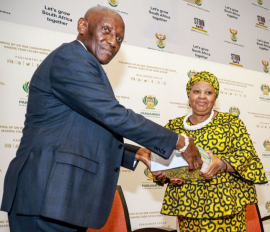
The National Assembly will consider and adopt a resolution on the report of the Section 89 independent panel into President Cyril Ramaphosa on Tuesday next week.
This was announced by National Assembly Speaker Nosiviwe Mapisa-Nqakula during the handover of the report by the panel led by retired Chief Justice Sandile Ngcobo.
The panel investigated whether there is sufficient evidence to show that President Cyril Ramaphosa violated any grounds of impeachment set out in Section 89 of the Constitution linked to his conduct related to a robbery at his Phala Phala game farm in 2020.
The section provides that a sitting President can be removed on these grounds:
- serious violation of the Constitution or the law
- serious misconduct
- inability to perform the functions of office
“The report will be communicated to members of Parliament through the next publication of the Announcements, Tabling and Committee Reports tonight. We have set aside the 6th of December for consideration by the National Assembly.
“The role of the National Assembly pertaining to this report is articulated in the rules. The House will consider the report, its findings and recommendations and adopt a resolution through a simple majority vote whether a further action by the House is necessary or not,” she said.
The Speaker emphasised that the work of political parties related to the panel has ensured the impartiality of the report.
“The ceremonial handover of the report of the Section 89 independent panel marks one of the indicative milestones in South Africa’s maturing democracy.
“The involvement of political parties in the constitution of the panel forms an essential element of checks and balances to jealously guard its independence to remove any perception of bias so that the integrity of its outcome is not brought into question,” she said.
Ngcobo emphasised that the panel followed the mandate set out by the National Assembly (NA) to the letter during its investigation.
The other members of the panel were Judge Thokozile Masipa and Advocate Mahlape Sello.
“Someone went on television and said if this panel does not call the Hawks, it would not have done its job. Let me make it quite clear…that’s not our job. Our job was to interrogate the information that members of the [National] Assembly saw fit to present to us. That’s what the rules set by the National Assembly told and required us to do.
“It is not in my blood to disregard the law. I live by the law and that’s what I have to do. So let me clear that perception once and for all. It was not our job to call whoever you wanted us to call to help us here. The rules that [the NA] made, made it quite clear and that’s what these volumes [of the report] are based on,” he said.
The report consists of three volumes with the first being the report itself and the latter being a record of proceedings. –
Eskom alleged diesel thieves arrested

Two security guards are expected to appear in the East London Magistrate Court today after their arrest at Eskom’s Port Rex power station in relation to the alleged theft of diesel worth more than R145 000.
The arrests are the fourth such incident involving criminality at power stations over the past month.
The power utility said the two were arrested while on duty after investigations found that they were paid to permit “a vehicle to collect the stolen diesel from the site during the night shift”.
“The internal investigations supported by the Bidvest Protea Coin Investigation Team and SAPS [South African Police Service] arrested the two security guards a few days after Eskom laid criminal charges for the theft of diesel incidents.
“The investigations are ongoing to identify other suspects and the outcome shall determine further actions to be taken against the contracted security company, including but not limited to loss recovery,” Eskom said.
Eskom General Manager for Security, Advocate Karen Pillay, called the incident “appalling”.
“It is appalling that the individuals entrusted with the responsibilities of safeguarding our infrastructure resort to such acts of malfeasance. These arrests are another significant step in our fight against crime in Eskom, and we shall continue in our pursuit to ensure that the perpetrators face the full might of the law,” Pillay said.
She added that security measures at power stations are working hard to rid the organisation of criminality.
“In our efforts to clean out the organisation, we shall ensure that guarding companies contracted to Eskom toe the line in screening their personnel and delivering services of a high standard.
“The persistent and excellent work by the Eskom Security Team, Bidvest Protea Coin Investigation Team, and the South African Police Services (SAPS), who are all working tirelessly to identify and disrupt the criminal networks, are an indication of our commitment to deal with criminality in Eskom,” she said.
Government welcomes jobs growth

Government has welcomed the results of the Quarterly Labour Force Survey for quarter three, which revealed that 204 000 jobs were gained between the second and third quarters of 2022.
“Government is doing all within its power to attract and create a conducive environment for investment and business to thrive in South Africa,” Minister in the Presidency Mondli Gungubele said on Wednesday.
The Labour Force Survey also revealed that the total number of persons employed was 15.8 million in the third quarter of 2022. This means that the official unemployment rate decreased by 1.0 percentage point from 33.9% in the second quarter to 32.9% in the third quarter of 2022.
The unemployment rate according to the expanded definition of unemployment also decreased by 1.0 percentage point to 43.1% in Q3:2022 compared to Q2:2022.
The largest jobs gain were recorded in manufacturing (123 000), followed by trade (82 000), construction (46 000), transport (33 000) and community and social services (27 000).
“Whilst this is welcomed news ahead of the festive season, government acknowledges that the country has a long way to go and more work needs to be done to address the challenge of unemployment in the country.
“Despite an increase of 25 000 in the number of employed youth during the third quarter, the results show that the youth (aged 15-34 years) remain vulnerable in the labour market,” the Minister said.
Gungubele said government is implementing the Economic Recovery and Reconstruction Plan to build a sustainable, resilient and inclusive economy.
“We are pleased with the growth of the employment rate but more must be done. Government together with the business sector, organised labour and other partners are committed to addressing the challenge of unemployment.
“Citizens are encouraged to support local businesses and embrace entrepreneurship. Let us work together to improve the employment rate of South Africa, leaving no one behind. But in short, we are very encouraged by these results and hope that these green shoots building upon previous quarters are starting to signify the turn in our economic outlook,” the Minister said.
Approved package to address damage caused by metal theft
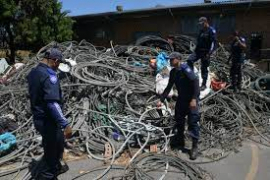
The Department of Trade, Industry and Competition (dtic) has announced the approval by Cabinet of a comprehensive package of measures to address the damage caused by metal theft to public infrastructure and the economy by restricting and regulating trade of waste.
This also includes scrap and semi-finished metals. Implementation of the policy measures will proceed along what may broadly be described as a three-phased approach.
This follows the publication in the Government Gazette on 05 August 2022, of Draft Policy Proposals on Measures to Restrict and Regulate Trade in Ferrous and Non-Ferrous Metal Waste, Scrap and Semi-Finished Ferrous and Non-Ferrous Metals Products to Limit Damage to infrastructure and the Economy (the draft policy) for public comment.
The department has received over 2 800 comments on the draft policy from across society, including business, industrial associations, organised labour, State Owned Enterprises (SOEs), government departments and individuals.
Extensive comments were received from stakeholders within the metal sector, the mining sector, downstream manufacturing, and other parts of the economy. All comments were carefully analysed and considered.
“While the measures will impact on the commercial performance of parts of the scrap-metal industry, this is justified by the need for the government to act decisively against the scourge of metal theft that plagues the Republic of South Africa,” the Department of Trade, Industry and Competition said in a statement.
Accordingly, it is envisaged that the bulk of the proposed mechanisms outlined in the draft policy will be implemented.
dtic says the theft of ferrous metals imposes significant costs on society, albeit at a lower rate compared to copper.
“In the case of other metals like aluminium and other exotic metals, the problem of theft is lower but is still of grave concern to government. In addition, general metal trading and related exports provides a cover for the export of metals like copper and steel.
“Exports of ferrous waste and scrap metal will be temporarily prohibited but exceptions will be allowed. Ferrous scrap metal will be subject to the 6-month export prohibition but, unlike in the case of copper, exceptions will be made for stainless steel and ferrous waste and scrap that is produced in the ordinary course of business as a by-product of a manufacturing process.
“It is envisaged that the other aspects of the trading regime will be identical for both copper and non-copper metals. Both buyers and sellers of scrap, and all traders of semi-finished metal products, will need to be registered,” the department said.
Government extends its gratitude to the thousands of companies, workers, industry representatives, community organisations and members of the public who provided constructive comments and helpful suggestions.
SAB multi-million investment restores hope for KZN economy
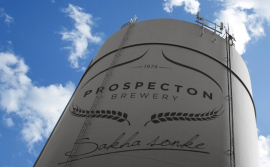
The South African Breweries (SAB) has injected a multimillion rand investment that will create over 25 000 job opportunities and rekindle the hopes of people in KwaZulu-Natal.
The SAB’s R825 million expansion project at its Prospecton Brewery in the South Durban Basin is set to expand the SAB’s operations after setbacks, including the COVID-19 pandemic and the devastating floods in April and May this year.
The investment, announced by SAB Chief Executive Officer, Richard Rivett-Carnac, will also benefit local suppliers to the tune of R652 million, as the brewery is going to procure services from them.
KwaZulu-Natal Premier, Nomusa Dube-Ncube, has described the investment as an overwhelming vote of confidence in the future of the province.
“As the provincial government, we are pleased that this injection will lead to the creation of 25 000 additional jobs throughout the value chain and we can safely say that this investment will positively impact at least 125 000 people in our province.
“There is no better pride in someone than being able to put food on the table and to be able to give dignity to a family by taking care of its needs for shelter and education,” Dube-Ncube said.
The Premier also commended SAB for showing confidence in the province, which will, over time, inject an additional R4.4 billion into the province’s Gross Domestic Product.
“Indeed, this is a major boost for the KwaZulu-Natal economy, as it goes beyond the bricks and mortar here at SAB to impact the economic growth of not only the province, but by extension, our country as well.
“This investment also has another important effect, which is to shine the spotlight on KwaZulu-Natal and to attract further investment into our provincial economy,” Dube-Ncube said.
The Premier also highlighted that SAB is already a major player in the province, with 572 direct employees, with 50% of them based in Prospecton.
“Furthermore, the South African Breweries has established a firm socio-economic footprint in KwaZulu-Natal with the company investing more than R20 million per annum in socio-economic development ventures in the province, thus making a huge impact in the development of local communities,” the Premier said.
The Premier reaffirmed that the provincial government is hard at work to rebuild the province after economic setbacks, including COVID-19, the July 2021 unrest and the flood disasters, so that KwaZulu-Natal becomes a destination of choice for investors.
Responsible drinking campaign
Dube-Ncube also commended the positive initiatives being rolled out by SAB through its campaign, which encourages responsible drinking.
“The responsible drinking campaign demonstrates that the SAB is serious about playing a role in reducing and preventing the harmful use of alcohol and in being a good corporate citizen.”
UIF welcomes arrest in COVID-19 TERS fraud
The Unemployment Insurance Fund (UIF) has welcomed the arrests of 16 suspects who are accused of swindling the Fund’s COVID-19 Temporary Employer-Employee Relief Scheme (TERS) of R2.2 million.
The suspects were apprehended in Gauteng and North West provinces by the South African Police Service’s Directorate for Priority Crime Investigation, known as the Hawks.
The Department of Employment and Labour said that during the height of the COVID-19 pandemic in 2020, three sole directors of different dormant entities applied for COVID-19 TERS funds from the UIF on behalf of respectively 47, 133, and 141 people, who were seemingly not employed by them.
At least R2.2 million in COVID-19 TERS funds was subsequently paid into the companies’ bank accounts and the money was channelled to certain individuals for personal enrichment.
Following investigations in this regard, the suspects were traced and arrested on Sunday, 27 November 2022.
UIF Commissioner, Teboho Maruping, has welcomed the latest arrests and has commended the Hawks and the Department of Employment and Labour’s Risk, Anti-Fraud and Integrity Management unit in the North West province for their relentless hard work in bringing COVID-19 TERS fraud suspects to book.
“The arrests of these 16 suspects in one operation is the biggest we have witnessed thus far, since the establishment of the COVID-19 TERS scheme. I hope this bold action sends a strong and clear message to would-be and other fraudsters that the long arm of the law will catch up with them.
“Those who have helped themselves to the funds earmarked for workers during the lockdowns must not have any peace. They must know that the net is closing in on them. We will continue to work with the Hawks in a relentless pursuit to bring all COVID-19 TERS fraudsters to book, and we will leave no stone unturned,” said Maruping.
The Commissioner also revealed that the Fund was already conducting Phase 2 of the “Follow the money” project, which entails the auditing of companies to verify if their claims were valid, and if the right amount of money was paid over to workers at the right time.
“We have appointed several forensic audit firms with over 360 auditors who are currently visiting companies that have benefitted from COVID-19 TERS funds and are suspected of fraud. Until all fraudulent funds are fully recovered and the suspects held accountable, we will not rest.
“In this regard, the UIF will continue to work with the Department of Employment and Labour’s Risk, Anti-Fraud and Integrity Management unit and law enforcement partners,” said Maruping.
In 2020, the UIF was entrusted with the responsibility of alleviating poverty in the country by providing short-term financial relief to businesses and workers in order for the economy to survive the devastating impact of the COVID-19 pandemic.
To date, 10 people have been convicted and sentenced to direct imprisonment or suspended sentences for defrauding of the COVID-19 TERS scheme.
Meanwhile, 46 suspects have been arrested thus far and the Fund anticipates more arrests as Phase 2 of the Follow the money project, which started in July 2022, continues.