
Walus stabbed in jail
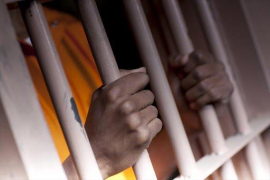
The Department of Correctional Services (DCS) has confirmed that the murderer of struggle stalwart Chris Hani, Janusz Walus, has been stabbed at the Kgosi Mampuru II Correctional Centre in Pretoria.
Walus murdered Hani in 1993 in an apparent assassination hit of the Anti-Apartheid political activist.
“A detailed incident report is to be provided at a later stage, but what can be stated at this point is that inmate Walus is stable and DCS healthcare officials are providing the necessary care. It is alleged that Walus was stabbed by another inmate from the same housing unit.
“Stabbing and other forms of disturbances are offences not warranted in a correctional environment and this case will be investigated,” the department said.
The Constitutional Court recently ordered the release of Walus on parole after he was denied parole twice by Justice and Constitutional Development Minister Ronald Lamola and former Minister Michael Masutha.
He is expected to be released this week.
Transnet diesel thieves stopped

A case of armed robbery and attempted theft has been opened with police after five suspects attempted to steal diesel at Transet Freight Rail’s (TFR) Watervalboven depot in Mpumalanga.
According to TFR, the men were caught in the act following a tip off by community members.
“At approximately 02h05am [on Monday] armed criminals managed to gain access to the TFR site with the intention to steal diesel. The criminals entered with two vehicles, including a fuel tanker, and proceeded to siphon thousands of litres of diesel into their tanker.
“The South African Police Services (SAPS) was tipped off by members of the community after noticing suspicious activity at the depot. As the police arrived, the suspects fled the scene on foot leaving behind their vehicle as well as the fuel tanker. The suspects had already transferred approximately 18 000 litres of diesel to their fuel tanker before fleeing the scene,” the company said.
TFR said the arrests were a “major breakthrough” in the fight against diesel theft.
“The crime scene was thoroughly processed to collect evidence and to possibly link the suspects to similar crimes such as the armed robbery and theft of diesel at TFR’s Lydenburg and Witbank depots.
“The Asset Forfeiture Unit has also been activated to ensure the vehicles used in the commissioning of a crime are forfeited to the State. This is regarded as a major breakthrough and it is expected that arrests are imminent,” TFR said.
The company called on communities to immediately report any suspicious activities to police.
“TFR commends the members of the community and the SAPS for their swift action and calls on all stakeholders to join the fight against fuel theft by reporting any suspicious trucks or persons selling diesel at suspiciously low prices in the communities, and more importantly, to refrain from buying fuel from unregistered traders as this only serves to exacerbate the problem by providing a thriving market for illicit trade,” TFR said.
Hawks secure 217 convictions between July, September

With 827 arrests and 217 convictions secured between July and September, the Directorate for Priority Crime Investigation’s (DPCI/Hawks) quest to make serious inroads in the fight against crime continues to gain momentum.
This was on Tuesday revealed by National Hawks Head Lieutenant General Godfrey Lebeya during a media briefing outlining the Directorate’s successes in the second quarter of the 2022/23 financial year.
During the briefing the Lt General highlighted 50 cases, which represented 5% of the Hawks successes during the three months.
With 524 arrests, the Serious Organised Crime Investigation component accounted for the majority of arrests. The Serious Commercial Crime Investigation component followed with 206 arrests, while the Serious Corruption Investigation unit secured 97 arrests.
Fraud cases, which are investigated by the Hawks Serious Commercial Crime Investigation team, recorded the highest number of arrests over all other commodities. In this regard, 222 arrests were secured across the country.
Serious commercial crime was followed by precious metals and diamonds (illegal mining activities) with 126 arrests.
The non-ferrous metal cases followed with 97 arrests and this involved copper theft, and theft of railway line and other essential infrastructure that aids economic activities in the country.
The majority of convictions stemmed from serious organised crime with a total of 128 suspects convicted and sentenced. This was followed by the serious commercial crime component 74 convictions.
A total of 15 suspects were convicted and sentenced for corruption during the period under review.
The Lt General said corruption continued to surface as one of the “biggest threats posed by criminals” to the country.
“It facilitates illicit financial funds which triggered our response to focus on money laundering charges initiated through criminal investigations.
“Corruption cases are a special breed, in that they are committed in secret by consenting parties, which requires a lot of digging to unearth such cases,” he said.
Although the number of arrests from the Serious Corruption Investigation component are the lowest, he said it was in line with the number of cases and resources assigned to deal with the phenomenon.
A number of other corruption cases also appear in the figures of the Serious Commercial Crime Investigation unit.
“We have made some strides on that front and some of the cases that required high-level, meticulous investigation carried out by our team of investigators in rooting out these corrupt elements are mentioned here,” said Lebeya.
Official unemployment rate decreases
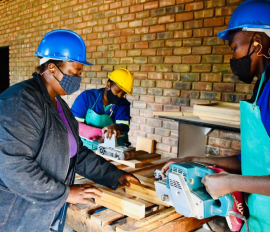
The official unemployment rate has slightly decreased by one percentage point to 32.9% in the last quarter of 2022, with some 204 000 job gains during the last quarter – a year-on-year decrease of about two percentage points.
This is according to Statistics South Africa’s Quarterly Labour Force Survey released by the agency on Tuesday.
“The number of unemployed persons decreased by 269 000 to 7.7 million and discouraged work-seekers also decreased by 54 000 to 3.5 million in the third quarter of 2022 compared to the previous quarter.
“The number of people who were not economically active for reasons other than discouragement increased by 264 000 between the two quarters, resulting in a net increase of 210 000 in the not economically active population.
“The above changes in employment and unemployment resulted in the official unemployment rate decreasing… from 33.9% in the second quarter of 2022 to 32.9% in the third quarter of 2022.
“The unemployment rate, according to the expanded definition of unemployment, also decreased by 1 percentage point to 43.1%. This is reflective of the fact that people were available for work but did not actively look for work.
“All provinces recorded a decrease in the expanded unemployment rate, except in the North West, Limpopo and Free State, where it increased by 4.1 percentage points, 2.4 percentage points and 0.5 of a percentage point respectively.
“The largest decrease was recorded in KwaZulu-Natal (down by three percentage points), followed by Western Cape and Gauteng (down by 1.8 percentage points each) and Mpumalanga (down by 1.6 percentage points),” Stats SA said.
Stats SA emphasised that although youth unemployment also recorded a 1% decrease, this group still remains vulnerable.
“The third quarter of 2022 results continue to show that the youth (aged 15 – 34 years) remain vulnerable in the labour market, with an unemployment rate of 45.5%. The total number of unemployed youth decreased by 182 000 to 4.6 million in [the third quarter]. There was an increase of 25 000 in the number of employed youth during the same period,” Stats SA said.
According to Stats SA, employment gains were recorded in several industries, which brought the total number of employed persons in South Africa up to some 15.8 million.
“[Some] 204 000 jobs were gained between the second quarter of 2022 and the third quarter of 2022. The total number of persons employed was 15.8 million in the third quarter of 2022.
“Manufacturing (123 000), Trade (82 000), Construction (46 000) and Transport (33 000) recorded the largest job gains, while job losses were recorded in Finance (80 000), Private households (36 000) and Mining and Agriculture (1 000) each. Sectors that recorded job increases were the formal and informal, with 235 000 and 6 000 respectively,” Stats SA said.
dtic relaunches scheme to stimulate agro-processing
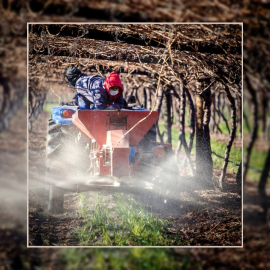
The Department of Trade, Industry and Competition (the dtic) has relaunched the Agro-Processing Support Scheme (APSS) in order to increase the uptake of the incentive, which is aimed at stimulating investment in South African agro-processing enterprises.
According to the Chief Director of Strategic Partnership and Customer Care at the dtic, Tsepiso Makgothi, the amendment of the APSS is a result of engagement with various stakeholders and businesses, where it became apparent that some companies did not have the minimum R1 million investment that was required, while others were of the view that the APSS guidelines were too onerous.
“Agro-processing remains a key priority economic sector as per the Industrial Policy Action Plan (IPAP).
“A key characteristic of agro-processing is its strong upstream and downstream linkages. Although other incentive programmes for the manufacturing sector have been effective in achieving their intended objectives, a dedicated incentive scheme has greater potential in creating an enabling environment for small and medium businesses in the agro-processing industry to participate meaningfully in the mainstream economy,” Makgothi said.
Makgothi said the APSS aims to achieve increased agro-processing capacity, employment creation, modernised machinery and equipment, improve competitiveness and productivity, and broaden participation.
“The incentive will support both brown and green field investments, with a focus on promoting economic inclusion to support equitable economic growth of production activities within the agro-processing value chain.
“Through the scheme, we are committing to increasing localisation, encouraging investment in upstream and downstream support services, as well as the expansion of infrastructure to be used by farmers and agro-processors,” Makgothi said.
The programme is a cost-sharing grant capped at R20 million over a two-year investment period for new machinery and equipment, commercial vehicles, buildings and competitiveness improvement costs.
The APSS targets six key identified sub-sectors, namely food and beverage value addition and processing, furniture manufacturing, fibre processing, feed production, fertiliser production and essential oil production.
More information can be accessed on the dtic website by clicking on the following link: http://www.thedtic.gov.za/financial-and-non-financial-support/incentives/agro-processing-support-scheme/.
Technology can assist with lowering carbon emissions

Mineral Resources and Energy Deputy Minister, Dr Nobuhle Nkabane, says South Africa must find technological solutions that can maximise the usage of minerals such as coal with “minimal carbon” emissions.
She was speaking at the 17th South African Geophysical Association conference held at Sun City on Tuesday.
“As the DMRE [Department of Mineral Resources and Energy], we have emphasised moving from higher carbon emission towards lower carbon emissions as opposed to completely abandoning coal.
“Technologies such as carbon capture usage and storage must be explored fully and so must mechanisms by which we could mix fossil energy sources with clean sources such as ammonia,” she said.
Nkabane highlighted the current historic surge in South African coal exports as an indicator of the mineral’s growing value.
“What is an astonishing irony which smacks of the highest levels of hypocrisy is that some of the countries who are funding us to move from coal to renewable energy …are in fact lobbying to buy our coal in the wake of the energy crunch they are undergoing following the damages to the Nord Stream 1 pipeline and the geopolitical conflict in general.
“As a country we surely need to highlight such double agendas because we will not allow a neo-colonial hood-wink resulting into our own underdevelopment,” she said.
The Deputy Minister emphasised that less developed countries need to make considered choices for their Just Energy Transitions.
“[If] not handled properly by the countries of the South in general and Africa in particular, we risk aggravating energy poverty in amongst economies and communities that have not even benefitted from the previous energy transition that caused climate change.”
The Deputy Minister emphasised, however, that South Africa remains committed to the Paris Agreement – an international climate change treaty.
“In this regard we have submitted our Nationally Determined Contributions which demonstrate a high ambition to partake in the global agenda to arrest climate change. Our goal is net zero emission by 2050 as globally resolved. On whether or not that is possible, we are guided by industry experts such as yourselves on what is technologically possible,” she said.
Turning to the exploration of oil and gas, Nkabane said this remains a key area for South Africa – especially in the context of the current energy crisis in Europe.
“We have set ourselves a target to attract at least 5% of global exploration budgets because we believe we have a lot to offer on our mineral endowment. [Exploration] remains an important pillar, particularly in the context of the geopolitical events taking place in Europe and Asia affecting supply and demand of energy sources such as oil and gas.
“We do believe that exploration on oil and gas amongst others will steam ahead, and that collectively we need to communicate the benefits of our mineral resources and debunk and myth that we are not concerned with environmental degradation,” she said.
Janusz Waluz granted permanent residence for parole period

The Department of Home Affairs says it has granted Janusz Waluz permanent residence in South Africa for the period of his parole with conditions to be imposed by the Minister of Justice and Correctional Services.
Walus was serving a prison sentence for assassinating the South African Communist Party leader Chris Hani in 1993.
Last week the Constitutional Court found that the decision by Justice and Correctional Services Minister Ronald Lamola to deny Walus parole in 2020 was irrational and ordered that he be released on parole within 10 days.
“In line with the undertaking made by the Minister of Home Affairs [Aaron Motsoaledi] and accepted by Mr Janusz Walus during the High Court proceedings in November 2020, the Minister has granted Mr Walus an exemption in terms of section 31(2)(b) of the Immigration Act 13 of 2002, the rights of permanent residence for the parole period and conditions to be imposed by the Minister of Justice and Correctional Services,” said the department in a statement on Monday.
The Minister granted the exemption in order for Walus to serve his parole period in South Africa and the exemption contains a condition that he may not use any travel document and/or passport issued by the Embassy of the Republic of Poland.
According to the statement, a letter addressed to Walus and a certificate of exemption have been forwarded to the Minister of Justice and Correctional Services to be delivered to Walus.
“The letter set out the exceptional circumstances requiring the granting of the exemption which, inter alia, include the fact that it would be in the interests of justice that Mr Walus serves his sentence to the fullest, including parole in the Republic of South Africa,” the department said.
The Minister, it said, has noted media speculation that Walus would serve his parole period in the Republic of Poland.
“In light of the exemption issued by the Minister, this speculation cannot be correct and the Department of Home Affairs would not be involved in any deportation process of Mr Walus to the Republic of Poland. The DHA’s stance is that Mr Walus must serve his parole period in South Africa as part of his sentence.
“The Minister of Home Affairs further believes that the heinous crime committed to the people of South Africa by murdering one of the icons of the liberation struggle makes it obligatory that Mr Walus must serve his parole period as part of sentence in the Republic of South Africa,” the department said.
Eastern Cape policeman arrested for corruption

South African Police Service (SAPS) Eastern Cape Provincial Commissioner, Lieutenant General Nomthetheleli Mene has condemned the unethical and corrupt behaviour of a warrant officer from SAPS New Brighton.
The policeman was arrested on Sunday.
Eastern Cape SAPS spokesperson Colonel Priscilla Naidu said it was alleged that on Friday the warrant officer approached a detective sergeant and offered him money in exchange for a murder docket that was currently under investigation.
“The detective reported the alleged corruption and on Sunday, 27 November 2022, the warrant officer (57) was arrested by the Anti-Corruption Unit.
“He appeared in the New Brighton Magistrate Court on Monday, 28 November 2022, and he is remanded in custody until 5 December 2022 for a formal bail application,” she said.
Lt Gen Mene reiterated that unscrupulous and dishonest actions by SAPS members had serious impact on tarnishing the image of the South African Police Services.
“We have repeatedly mentioned that police officers are not above the law and we are determined to root out corruption wherever and whenever it manifests. These corrupt officers who choose to ignore the SAPS Code of Conduct and Code of Ethics will be arrested and brought to justice. There is no room for corrupt police officers in this organisation and we will intensify our intelligence-led operations to ensure all police officers with criminal mindsets are removed from the service,” she said.
PIC adopts hydrogen investment strategy

The Public Investment Corporation (PIC) has adopted a hydrogen investment strategy aimed at unlocking value through funding and the provision of early-stage capital for the development of the hydrogen value chain.
Sekgoela Sekgoela, a Senior Investor Relations Specialist at the PIC, on Monday said the strategy further seeks to leverage on more than 200 hydrogen projects that have been announced worldwide and the more than $250 billion (approximately R4.3 trillion) required for the development of a hydrogen economy in South Africa.
“The South African government, through its Hydrogen Roadmap, has identified hydrogen as a possible investment avenue. Hydrogen promises to be the next frontier in clean energy technology due to its extensive value chain applications.
“It can be used to industrialise and create a resultant hydrogen economy. Other benefits include job creation and localised manufacturing, and the potential of turning the country into one of the largest exporters of green hydrogen in the world,” said Sekgoela.
Moreover, he said, South Africa has significant renewable energy potential, given its high solar radiation levels, as well as a large area of coastline for wind deployment.
“Hydrogen can augment renewable energy production by offering a relatively affordable way to store and transport the excess energy produced from these sources. South Africa also hosts the world’s largest Platinum Group Metals resources, which benefit significantly from increased demand that could arise from a well-developed hydrogen sector,” Sekgoela said.
The adoption of the strategy comes at a time when several countries around the world are increasingly considering making use of hydrogen as a potential clean energy source.
The Hydrogen Roadmap has identified the PIC as a potential co-investor with other finance institutions in hydrogen projects. The roadmap is one of government’s strategies and policy direction aimed at bringing together a variety of public and private stakeholders and institutions around a common vision on how to use and deploy hydrogen and hydrogen-related technologies, as part of the country’s economic development and greening objectives.
Condolences for two Limpopo matric learners

Limpopo MEC for Education Mavhungu Lerule-Ramakhanya has conveyed her deepest condolences to the families of two Grade 12 learners who passed away last week.
A learner from Tshamahansi, outside Mokopane, in the Mogalakwena District, was allegedly killed after escaping from a study camp at Ben Hlongwane Secondary School.
It is reported that the learner was found with stab wounds outside the school premises.
The circumstances of how the learner got out of the school is a subject of investigation by the department.
In another incident, a matric learner is believed to have drowned in a nearby river in Sekhukhune East. His body was retrieved on Saturday afternoon, five kilometres from where he was last seen.
The department urged parents, learners and society as a whole to work together to protect the youth and children.
“It is disturbing that in just one week we lost two Grade 12 learners under similar circumstances. The idea of affording learners extra lessons at the school premises was meant to keep them focused on their school work in an endeavour to improve the matric result.
“It is a great loss to the family and to us as the department. We have invested so much on these learners and we hope this will be the last incident,” MEC Lerule-Ramakhanya said.