
Post office offers online platform to renew car licence
The South African Post Office (Sapo) has encouraged customers who live in remote areas or lead busy lives to make use of its online platform to renew their car licence.
“The organisation launched its online platform for renewing car licences early in 2022 and more than 58 000 motorists have already used it to renew their vehicle licences,” the post office said on Wednesday.
Transactions for the car renewal platform can be done at any time on any device.
“It also saves you money. There is no charge if you collect the new licence from a nearby post office, and only R75 for delivery to your address,” the post office said.
Payment is done safely and securely through Masterpass, which the user can download from the Google Play Store for Android devices and the Apple App Store for Apple devices.
The service is available for vehicle owners in all provinces of South Africa except, the Western Cape. The post office is working to extend the service to this province as well.
“The renewal service at selected post office branches remains available. Customers who renew a vehicle Licence at a post office branch pay the Licence renewal fee and leave with the new disc immediately.
“The post office also offers bulk motor vehicle licence renewal for fleet operators and businesses. This entails the collection of all necessary documentation from company premises, taking them back to the post office for processing, printing of the discs and delivery back to the offices of the customer,” Sapo said.
To renew a car license online customers need the following:
- ID copies must be certified (certification not older than 3 months)
- The application must be signed
- Proof of address must not older than 3 months.
To renew a company-owned vehicle, the following requirements apply:
- The proxy letter must be on the company letterhead and signed by the proxy.
- BRNC form must be attached (this is the Business Register Number form – essentially, it is an ID document for businesses).
- The ID of the proxy must be certified.
- Proof of address of the company must be submitted.
Alarmingly high aggression, violence fueling murder rate

Aggression and violence are at worrying levels in South Africa, crime statistics reveal.
This reality was emphasised in the 2022 second quarter crime statistics released by Police Minister, Bheki Cele, on Wednesday.
“Violence meted not only against women and children, but violence playing out in homes, on our roads and even inside public safe spaces such as churches and schools, is staggering,” the Minister said.
The quarter, which spans from July to September, saw a record number of assault cases reported to the police in five years.
Over this period, 7 004 people were murdered in South Africa.
“Arguments, misunderstandings and incidents of road rage and provocations accounted for 956 murders in the country,” he said.
The Minister revealed that vigilantism claimed the lives of 528 people, while 362 people were killed during the commission of a robbery.
“Inanda and uMlazi police stations in KwaZulu-Natal and Nyanga in the Western Cape registered the highest counts of murder during this period,” he said, adding that 274 counts of murder were reported in those three areas combined.
He said the high murder rate can also be attributed to multiple murders, where two or more people were killed in one incident.
SAPS is investigating 250 dockets of multiple murders, with 578 victims. This included the mass shooting at Mdlalose tavern in Soweto, where 17 people were killed in July in a single shooting incident.
Police have since arrested five suspects for their role in that shooting.
The Minister said KwaZulu-Natal recorded the highest number of multiple murders, followed by Gauteng and the Western Cape.
“Equally, the police in the three provinces continue to make arrests and bring the gunmen and their handlers to book. Police operational responses nationwide, should continue to remove guns that are in the wrong hands,” he said.
During this period, 22 police officers were killed during July to September 2022, this is two members less compared to the same reporting period last year.
“It is on this note that this Ministry will never stop calling on SAPS members to defend themselves at all times from ruthless criminals whenever they are under attack. It is quite simple; police must meet fire with fire!” he said.
In the three months, Cele revealed that police investigated 85 640 assault GBH [grievous bodily harm] and common assault cases.
Of these 12 203 assault GBH cases, most took place behind closed doors – either at the home of the victim or the home of the perpetrator.
The second most likely place of occurrence for assault GBH was at public places such as streets, open fields, recreational centers or abandoned buildings.
A total of 6 662 assault GBH cases were domestic violence-related.
SAPS is clearing DNA backlog
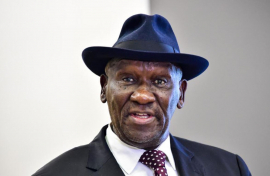
The South African Police Service (SAPS) continues to take big steps towards ending the DNA backlog at our forensic service laboratories, says Police Minister Bheki Cele.
This was on Wednesday revealed by the Minister while releasing the second quarter 2022 Crime Statistics.
Addressing reporters during a press briefing, Minister Cele said: “The prioritisation project of court ready cases, where there are outstanding forensic reports, continues to gain momentum.”
He said teams from the SAPS and the National Prosecuting Authority (NPA) were working together with agility and have, to date, processed 17 410 court ready gender-based violence and femicide (GBVF) cases.
“This is an increase of over five thousand cases, since the last crime statistics were released in August. The DNA backlog at all SAPS laboratories currently stands well below the 70 000 mark. This number is decreasing with each day, due to the strong interventions in place at forensic service labs countrywide,” he said.
He said while new DNA specimens were coming in for analysis, the assurance has been made to the Police Ministry that the SAPS would meet its deadline of clearing the DNA backlog.
“We have truly come a long way since the DNA backlog was first discovered at our forensic service laboratories in May 2021.
“Daily work and interventions continue, to ensure the SAPS never goes back to the dark days, where the DNA backlog reached levels of over 200 thousand cases,” said the Minister.
He said all hands were on deck to capacitate and empower the forensic service laboratories to deliver a quality service for all South Africans.
SARS reinstates two former employees
The South African Revenue Service (SARS) has announced the reinstatement of two of its formerly dismissed employees, Hope Mashilo and Tshebeletso Seremane.
In a statement, the revenue collector said the two reinstatements, which came into effect on 1 September 2022, is a “further milestone in reversing and repairing the adverse effects of the capture of SARS and its journey to rebuilding public confidence and trust”.
SARS acknowledged the harm caused to Mashilo and Seremane when their positions were downgraded in 2015 as a result of the infamous Bain and Co restructuring process.
“They were dictated to accept positions which were not on the approved new structure, their repeated requests for information fell on deaf ears and when they refused to take up those positions, it led to their dismissal ‘due to operational requirements’ in terms of 189 of the Labour Relations Act 66 of 1995 (the LRA), as amended.”
SARS Commissioner Edward Kieswetter said this was a complex matter and involved the interests of two former employees who were adversely affected by the actions of a SARS leadership intent on capturing SARS.
“In such a situation, not only were the former employees adversely affected by the erstwhile Commissioner of SARS but SARS too became a victim of capture,” he said.
As current Commissioner and Chief Executive of SARS, Kieswetter said he had a fiduciary duty to safeguard the integrity of the institution, the moral and legal obligation to reverse the adverse effects of the capture of SARS.
“It remains imperative that the process we follow has integrity, allows for restorative justice and healing, as well as initiate and sustain SARS’s journey to rebuilding public confidence and trust.
In this particular matter, he said he had to balance carefully the interests of the affected individuals to bring them back to SARS with dignity, whilst at the same time, protect the institution and sustain what it stands for as a strategic national asset.
“In treading this fine line, some commentators read into my caution that I was defending Mr Moyane, the erstwhile Commissioner, thus reinforcing the effects of SARS capture. As I have often stated before, I am beholden to nobody. I defend the institution and not the individuals who captured it. SARS and I will continue to do so and execute the SARS mandate without fear, prejudice and bias.
“Some have also alleged that in this matter I have been insensitive to the plight of women and single mothers. Throughout my working life, I have demonstrated unwavering commitment to manage with empathy and advance towards equality for both men and women in the workplace when it comes to equal treatment, equal social standing and equal voice. The two parties are no exception in this regard.”
SARS and the parties acknowledged the power of the Higher Purpose of SARS’s work to enable Government to build a capable State, to foster sustainable economic growth and social development that serves the wellbeing of all South Africans.
The Commissioner acknowledged that SARS’s actions at the time had a devastating and profound impact on the lives of Mashilo and Seremane and their families.
“SARS deeply regrets the hurt, pain and suffering visited on them and their families. I sincerely hope that with the conclusion of this process, the affected individuals and their families may experience a sense of closure and continue their own journey to healing and restoration,” he said.
He thanked the two for their commitment to SARS and what SARS stands for.
“On behalf of SARS, I welcome Ms Mashilo and Ms Seremane back as employees of SARS at their earliest availability to resume their duties and to participate actively in rebuilding a smart, modern SARS with unquestionable integrity that is trusted and admired,” said Kieswetter.
UK State Visit to drive economic growth, turbocharge infrastructure investment

The United Kingdom and South Africa will join forces to drive economic growth and turbocharge infrastructure investment, UK Prime Minister Rishi Sunak said on Tuesday.
The UK Prime Minister said this at the start of President Cyril Ramaphosa’s formal State Visit.
The UK government said the next phase of the UK-South Africa Infrastructure Partnership is being launched today, supporting South Africa’s economic growth through major infrastructure developments and offering increased access to UK companies in projects worth up to £5.37 billion over the next three years.
“The UK government will also confirm new grant-funded technical assistance to South Africa to help unlock green hydrogen opportunities and boost skills in this key sector.
“As an example of the opportunities for UK businesses, Globeleq – a UK company that is majority owned by British International Investment – is today announcing they have reached legal close on six solar power projects, with construction expected to kick off in South Africa next year,” the UK government said in a statement.
South Africa is the continent’s second largest economy and is already the UK’s biggest trading partner in Africa, with trade worth £10.7 billion annually. Unlocking export finance offers significant opportunities for British businesses to invest and trade.
President Ramaphosa is in London for a two-day state visit, hosted by His Majesty King Charles III.
“After attending a State banquet for the South African delegation this evening at Buckingham Palace, the Prime Minister will welcome President Ramaphosa to Downing Street for a bilateral meeting and lunch on Wednesday,” said the UK government.
Prime Minister Sunak in the statement said: “South Africa is already the UK’s biggest trading partner on the continent, and we have ambitious plans to turbocharge infrastructure investment and economic growth together.
“I look forward to welcoming President Ramaphosa to London this week to discuss how we can deepen the partnership between our two great nations and capitalise on shared opportunities, from trade and tourism and security and defence.”
He said new education and skills partnership between the UK and the South African governments would also promote “shared learning in technical and vocational education, driving youth employment”.
UK funding will build the highly sought-after technical and entrepreneurial skills in the biggest growth sectors, including green technology and electric vehicle manufacture, ensuring South Africa’s youth are benefitting from the green transition.
Foreign Secretary, James Cleverly, said the UK’s relationship with South Africa was hugely important to the country.
“Together, we are working to deliver for the British and South African people, creating jobs, enhancing trade and investment, and boosting inclusive economic growth.
“This week’s State Visit, the first under His Majesty The King, is a fantastic opportunity to celebrate our ties but also allows us to trigger greater growth, create even more opportunities for British and South African businesses alike, and further promote South Africa’s transition to green energy,” he said.
The Foreign Secretary said the South Africa Just Energy Transition Partnership, launched at COP26, also offers new opportunities to collaborate on renewable technology and green innovation.
“The UK and South Africa are today announcing the creation of a new Partnership on Minerals for Future Clean Energy Technologies to promote increased responsible exploration, production and processing of minerals in South and Southern Africa.
“Countries in the region are among the world’s leading producers of vital minerals used in clean technology, including the platinum group metals and iridium for hydrogen production and vanadium and manganese for battery storage. This partnership will utilise the UK’s expertise as the home to leading global mining houses, and financial services centre for metals to bolster sustainable and responsible production,” he said.
Trade Secretary, Kemi Badenoch, said the UK is today moving into a new era of its dynamic trade relationship with South Africa, “with exciting collaboration on infrastructure, clean technology, and renewable energy sources”.
“These new opportunities will unlock trade and investment for businesses from the Eastern Cape to East Anglia and boost growth, create jobs and future-proof our economies against a changing world,” she said.
Investigation launched into fatal SAPS trainee shooting

National Police Commissioner, General Fannie Masemola, has launched an investigation into the circumstances surrounding the fatal shooting of a police trainee at the SAPS Operational and Tactical Training Academy in Thabazimbi, Limpopo, on Sunday.
While an internal investigation is underway, the matter has been referred to the Independent Police Investigative Directorate (IPID), said SAPS spokesperson, Colonel Athlenda Mathe.
She said psychologists, social workers and chaplains from the Employee Health and Wellness component are currently providing psychosocial support to the family of the deceased and all affected.
Masemola has pledged the organisation’s full cooperation and support to the IPID investigation.
“This is an unfortunate incident. We request space to conduct a thorough investigation to be able to determine the circumstances surrounding the incident. We pledge our full support to the family of the deceased and all affected,” said Masemola.
Fight against cancer gets a boost in sub-Saharan Africa

The National Cancer Registry (NCR) has been named one of three IARC-GICR Collaborating Centres for sub-Saharan Africa by the International Agency for Research in Cancer (IARC) Global Initiative for Cancer Registry Development (GICR).
The World Health Organisation (WHO) has identified common childhood cancers and cervical cancer as global priorities.
While 80% of children diagnosed with cancer in high-income countries survive, only 20% of children with the disease in low and middle-income countries survive.
The WHO has made childhood cancer a global priority to reduce these disparities and improve cancer outcomes for children.
The NCR, a division of the National Health Laboratory Service (NHLS), said cervical cancer is the most common cause of cancer death in women in South Africa and sub-Saharan Africa.
The NCR serves as South Africa’s main source of national cancer incidence data.
The WHO has launched a global strategy to eliminate cervical cancer, which involves increasing human papillomavirus (HPV) vaccination in girls to 90%, twice-lifetime cervical screening to 70%, and treatment of cervical pre-cancer and cancer to 90%, also known as the 90-70-90 cervical cancer elimination strategy.
“As the IARC-GICR Collaborating Centre, the NCR will be responsible for building capacity for childhood cancer registration in cancer registries in sub-Saharan Africa.
“The NCR will also be responsible for training cancer registries on linking patient records from HPV vaccination registers, cervical cancer screening registers and cancer registries for monitoring the progress of cervical cancer elimination in sub-Saharan Africa,” the NICD explained.
Acting Head of the NCR, Dr Mazvita Muchengeti, said: “Our data systems for HPV vaccination, cervical cancer screening, diagnosis, treatment and death registration are fragmented.”
She believes that these need to be harmonised to accurately measure progress towards cervical cancer control and to make policies that work in sub-Saharan Africa.
“A global and regional partnership, along with the mobilisation of networks for sharing knowledge and experiences, is crucial to cervical cancer control.”
As a part of reducing global disparities in the survival of children with cancer, Muchengeti said data-driven policies are needed.
“Every child with cancer should be counted and the stage at which the cancer is diagnosed so that we can adequately allocate resources to control childhood cancer.”
Smart saving tips for Black Friday, festive season

As Black Friday and the festive season looms closer, consumers become vulnerable and tend to spend money on unbudgeted items or shop beyond their budget.
South Africa has adopted the concept of Black Friday, a colloquial term for the Friday after Thanksgiving in the United States.
Black Friday, which will be on 25 November this year, encourages local stores to offer big discounts.
The Free State government has since cautioned consumers to be wise spenders and save during Black Friday and Christmas time.
The provincial Department of Small Business Development, Tourism and Environmental Affairs (DESTEA), says the majority of consumers change their spending patterns during the festive season and overspend money that they do not even have.
“As a result, they end up spending beyond their means and signing contractual agreements, which they have not properly read.”
According to MEC Makalo Mohale, during this time, criminals also take advantage of the hype and the department is urging consumers to be vigilant at all times with their hard-earned money, car keys and bank cards.
“Lack of financial education and planning are contributing factors because most consumers continue to spend without considering growing inflation and rising interest rates,” the MEC explained.
The department is pleading with consumers to become smart during this period by saving or focusing on critical items such as next year’s school uniform, school fees and investments.
“Remember, you have rights as a consumer. Understand them. Enforce them.”
Tips to keep your spending under control this festive season:
- Draw up a budget and always plan before you spend and work out what you can afford before you swipe that card.
- Always have a festive budget – putting down your income versus daily living expenses and debt. This will help you to be realistic about what you can spend on gifts, travel, accommodation, and other entertainment over this period.
- Always pay your creditors (store accounts, insurance, and medical scheme) on time during the festive season.
- Avoid little purchases, such as eating out, movies, daily takeaways, snacks, magazines and so on. It can all add up to one big debt burden.
- Avoid spending your 13th cheque or bonus on your “wants” instead of your “needs”. For example, expensive clothes are “wants” and school uniforms are “needs”.
- Always shop around for the best deals and prices before purchasing.
- Always be careful about the “buy now and pay later” deals.
- Always remember that some bills such as electricity, water, and telephones do not go on holiday over the festive season and will need to be paid in the New Year.
- Avoid wasting money on inferior quality products because you will spend more on repairs.
- Always shop with January in mind.
President Ramaphosa embarks on UK Royal State Visit

President Cyril Ramaphosa will this week conduct a State Visit to the United Kingdom of Great Britain and Northern Ireland (UK) from 22 to 23 November 2022.
The President will honour the invitation of His Majesty King Charles III with the visit that commences on Tuesday and will end on Wednesday, 23 November.
The Presidency in a statement said Royal State Visits are in the furtherance of bilateral relations and as a symbol of respect and of the importance the UK ascribes to its relations with a particular country.
President Ramaphosa is the first Head of State to be hosted for a State Visit by His Majesty Charles III.
President Ramaphosa will convey to His Majesty King Charles III and the Queen Consort, First Lady Dr Tshepo Motsepe’s deep regret at not being able to participate in the State Visit.
Presidency spokesperson Vincent Magwenya said: “On the advice of her doctors, the First Lady could not travel on a long-haul flight due her recovery from recent surgery on her eyes.
“During the visit, President Ramaphosa will also hold official talks with Prime Minister Rishi Sunak to review a range of issues of a bilateral, continental and global nature.”
He said key sectors under consideration for mutual benefit and to support economic growth and development in South Africa include infrastructure development, mining, energy, manufacturing, agro-processing, business process outsourcing and tourism.
On Tuesday, 22 November, President Ramaphosa will be officially welcomed by His Majesty King Charles III at a ceremony at Buckingham Palace.
“Later in the day, the President will address a Joint Sitting of the Houses of Parliament, before being hosted to a State Banquet at Buckingham Palace,” Magwenya said.
On Wednesday, the President accompanied by the Earl of Wessex, will participate in a roundtable on climate change and biodiversity.
Thereafter, the President will visit the Francis Crick Institute, the largest biomedical research institute in Europe, where the President will be briefed on the partnership between South Africa and the United Kingdom in this area of science. Here the President will also interact with young South African scientists who are attached to the Crick Institute.
“This engagement will be followed by the President’s engagement with Prime Minister Sunak at 10 Downing Street.
“Following the Downing St visit, the President will participate in a bilateral business roundtable at Lancaster House where economic cooperation will be deliberated by South African and United Kingdom Ministers and Secretaries of State respectively, officials as well as business leaders,” said the Presidency.
The second day of the State Visit concludes with a banquet hosted by the Lord Mayor of London in honour of the President.
The President will be accompanied on the visit by Minister of International Relations, Dr Naledi Pandor; Minister of Higher Education, Science and Innovation, Dr Blade Nzimande; Minister of Trade, Industry and Competition Ebrahim Patel and Minister of Health, Dr Joe Phaahla.
Umalusi appoints panel to investigate matric math question
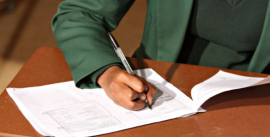
Umalusi, the Quality Council for General and Further Education and Training, has established a three-member independent panel to investigate the reasons that led to the inclusion of the “problematic” Question in the 2022 matric final Mathematics Paper 2.
The National Senior Certificate paper was written on 7 November 2022.
Umalusi on Monday said the panel was specifically tasked to investigate how the error crept in and why it was not detected between the examiners, internal and external moderators up to the printing stage.
In a statement, Umalusi spokesperson, Biki Lepota, said: “In other words, the focus is on the entire value chain: all the processes that the question paper was subjected to during the stages of its development, quality assurance and printing.
Chaired by Penelope (Penny) Vinjevold, the three-member panel inlcudes Professor Sudan Hansraj and Professor Nic Heideman.
Lepota said the panel has the mandate to fully investigate the matter and submit its final report to Umalusi.
“The report will be shared publicly on 16 January 2023 during the media briefing on the approval of the release of the 2022 examination results of the different assessment bodies,” he said.
Umalusi CEO, Dr Mafu Rakometsi, said: “Umalusi wishes to restate two points. The first is that the investigation will in no way delay the release of the NSC results. As per the approved schedule, the results will be approved on 16 January 2023 by the Executive Committee (EXCO) of Umalusi Council and the Minister of Basic Education will release the results to the public on 19 January 2023.”
Secondly, he said Umalusi “wants to reassure the public that it will do everything humanly possible to ensure that no candidate is disadvantaged by the error in Question 5.1”.
In order to allow the due process to unfold unhindered and to protect the independence of the work of the panel, Umalusi will answer questions on this matter when the report is released to the public on 16 January 2023.