
Older Persons Grant recipients face fraud charges

Two Older Persons Grant recipients are facing charges of perjury, fraud, theft and contravention of the Social Assistance Act for allegedly fraudulently receiving grants when they did not qualify.
Sarathamoney Sigamoney (66) and Salamina Khoza (68) were arraigned at the Pretoria North Magistrates’ Court on Wednesday for allegedly defrauding the South African Social Security Agency (SASSA) of a combined R275 000.
According to the National Prosecuting Authority Investigating Directorate (NPA ID) spokesperson, Sindisiwe Seboka, the two did not qualify, as they had received at least R140 million in SA Police Service tenders.
“On 13 April 2017, Sigamoney applied to SASSA, stating that she has never worked for a period of 20 years. The application was approved, and she is alleged to have received money from SASSA.
“Although she is listed as the director of KJP Traders Pty and Matthew Pillay (her son), KJP is alleged to have conducted business with the State as early as 2012, preceding her application to SASSA. Furthermore, the company is estimated to have cashed in over R80 million from the… contract,” Seboka said.
In the case brought against Khoza, it is alleged the elderly woman applied for the grant in September 2014, which was approved at least a week later on the basis that she was only eking out a living by selling perishable goods.
“At the time… she was already the sole director of three companies registered on the central supplier database (CSD) of the National Treasury. [The] three companies are recipients of various amounts of money that were paid to them by the SAPS because they had tendered with the police services. Between 01 September 2014 and 31 August 2022, she is accused of having received R152 125 from SASSA, while allegedly receiving over R60 million from her three companies.
“Khoza did not have any authority to transact on the accounts held by her companies. Mr Kishene Chetty was the sole signatory on the accounts. Khoza was fronting for Kishene Chetty, who was the beneficial owner of the three companies,” Seboka said.
Sigamoney was granted R5 000 bail and is expected back in court on 10 February, while Khoza’s case is expected back in court on March 23 for pre-trial.
Government urged to engage communities on infrastructure projects

The National Council of Provinces (NCOP) Deputy Chairperson, Sylvia Lucas, has implored the three spheres of government — national, provincial and local government — to constantly engage community members on all ongoing programmes, including incomplete projects.
Lucas made the call during public hearings on housing, roads, transport and public infrastructure.
The hearings are part of the week-long ‘Taking Parliament to the People (TPTTP)’ oversight programme, which is underway at Ugu District Municipality in KwaZulu-Natal.
At the hearing, community members across the district raised concerns about poor road maintenance, including total lack of access roads in high-lying rural and farm areas, inadequate housing, poor water infrastructure and lack of electricity.
Lucas said although the issues raised were adequately responded to by the relevant MECs and Ministers, who attended the hearings and shared their service acceleration plans for the affected areas, further public engagements are required.
“Community members seem to appreciate the services that are provided to them, but they are frustrated when government officials are nowhere to explain delays when they occur,” Lucas said.
Lucas emphasised the importance of programmes, such as the ‘Taking Parliament to the People’, as instruments that create an interface amongst the three spheres of government and provincial legislatures to ensure that elected representatives of the people take time to hear what the people have to say and respond accordingly.
“We would like to actually ask government to come back to the people, even if they are not able to immediately respond to the issues that they have committed to, but they must at least come back to the people, because this kind of exercise is showing us that people are grateful for what is done for them. People also want us to constantly respond to issues,” she said.
Held under the theme, ‘Working together to ensure faster improvement in the delivery of services to communities’, the TPTTP programme is a platform for the public to hold their leaders accountable on issues affecting them.
The programme enables the NCOP to exercise its constitutional obligation of overseeing government programmes and policies. The programme also gives ordinary citizens an opportunity to engage their elected public representatives face-to-face on issues affecting them.
The programme continues with more public hearings and further site visits to the identified key service delivery points, including water reticulation plants, farming projects, police stations, amongst others.
The programme will conclude on Friday with President Cyril Ramaphosa’s annual address to the NCOP sitting at the Ugu Sports and Leisure Centre in Ray Nkonyeni Local Municipality.
Kidnapping kingpin’s alleged accomplice nabbed with hijacked vehicle

Police have arrested a 43-year-old suspect believed to be linked to detained suspected kidnapping kingpin, Faizal Charloos, following an integrated intelligence-driven operation, led by the National Counter Crime Intelligence unit.
The unit, working together with Gauteng Provincial Crime Intelligence, Gauteng Organised Crime Investigation unit, Vehicle Crime Investigation Unit in Gauteng, Tracker Connect and private security received information that Charloos had a cell phone smuggled into his cell, and that he was using it to communicate with his alleged accomplices on the outside.
Charloos, who is behind bars, was arrested in March 2022, for his alleged involvement in a string of kidnapping cases and for terrorising businessmen in Gauteng.
Police national spokesperson, Colonel Robert Netshiunda, said at the time of Charloos’s arrest, millions of rands, believed to be ransom payments from the families of kidnap victims; stolen and hijacked vehicles – some of them fitted with blue lights, police bullet proof vests and automatic rifles were some of the items seized from his residence.
“Intelligence information pointed the police to a residence in Lenasia where Charloos’s alleged accomplice was arrested on Tuesday, 15 November 2022.
“He was found in possession of a cell phone, which preliminary investigations revealed that he was using to send money to Charloos via e-wallet and also made other payments as ordered by Charloos,” Netshiunda said.
He said the suspect was also found in possession of a white Toyota Hilux affixed with false registration plates and further investigations confirmed that the vehicle was hijacked in Lyttelton in July 2016.
“Police are following several leads and more arrests cannot be ruled out. The 43-year-old suspect will appear in court soon,” he said.
Israel’s most wanted gang leader arrested in Bryanston

The combined efforts of Interpol South Africa and the South African Police Service (SAPS) have led to the arrest of an Israeli gang leader, who has been on Interpol’s Red Notice from 2015.
The 46-year-old Israeli gang leader – attached to a criminal organisation in Israel called the ‘Abergil Organisation’ – was arrested, together with seven others at a house in Bryanston, Johannesburg.
“The Israeli gang leader has been on Interpol’s Red Notice from 2015. He is a wanted suspect in Israel for conspiracy to commit murder and attempted murder,” said the SAPS in a statement.
According to Israeli authorities, the suspect is part of a notorious gang dealing in drug trafficking, extortion and other criminal activities.
In 2003 and 2004, the wanted suspect allegedly placed an explosive bomb underneath a vehicle of a man in Israel in two separate incidents. As a result of the first explosion, five people sustained serious injuries but all miraculously survived.
In the second incident, the suspect also attempted to do the same with the same victim, where he placed a bomb on top of a vehicle. In this incident, three people also sustained serious injuries.
In the early morning raid, the team pounced on an identified address in Bryanston and found the suspect and seven others. Police seized five assault rifles, seven pistols, an amount of $40 000 and three suspected stolen motorcycles.
Policing bolstered in identified hotspots ahead of Festive Season

As the festive season approaches, the South African Police Service (SAPS) is ramping up efforts to improve service delivery to communities by injecting additional policing resources in identified high crime areas.
Police Minister, General Bheki Cele, said that if police want to flush out crime, they must operate with extra capacity.
“This display of force should serve as a warning shot to criminals but also demonstrate the commitment by this Ministry and SAPS management to support to improve police service delivery. We want this in all provinces as it will allow police to continue to respond to all opportunistic criminal elements, not only this festive season but beyond,” the Minister said.
On Tuesday, the SAPS in the Western Cape launched its Safer Festive Season campaign in Mitchell’s Plain in the Cape Flats.
Policing in the Cape Flats and other communities experiencing high cases of violent crimes such as murder, assault, robbery and gender based violence and femicide (GBVF) have received a lifeline. Additional patrol vehicles have been deployed to policing areas in and around the area.
On Monday, during a Ministerial Crime Prevention Imbizo, scores of new police patrol vans and high powered vehicles were also added to the existing vehicle fleet in order to better service the communities of Johannesburg South and surrounds.
“Mobile community service centres (CSC) – which is the first point of entry into the criminal justice system – have also been brought on board and are now stationed in identified high crime areas in the Johannesburg South in Gauteng, Cape Flats in the Western Cape and the Vhembe District in Limpopo, during the festive season and beyond. The Police Ministry remains steadfast in prioritising and bringing police services closer to communities,” it said.
The Ministry added that the resource injection comes at a time when police visibility is being heightened ahead of the holidays through the “Safer Festive Season” campaign.
These special operations have so far been rolled out in four provinces, namely Limpopo, Gauteng, KwaZulu-Natal and the Western Cape under the theme ”More boots on the ground towards enhanced police visibility”.
Cele warned against the misuse of much-needed policing resources.
“These brand new vehicles and mobile stations should not be abused and only be used for their intended purpose – which is ensuring South Africans and all those who are within our borders always have access to a police officer at all times,” said the Minister.
The Police Ministry has further urged community members to report any misuse of police resources and encourages residents to continue to work closely with police to better fight crime.
The SAPS countrywide Safer Festive Season campaign is expected to wrap up at the end of January 2023.
Save money, renew car licence at the post office

The South African Post Office (Sapo) has encouraged motorists to renew their annual car licences at its branches, as it saves customers money, since they do not charge commission for the service.
“The benefit of renewing your car licence at a post office branch is that there is no extra commission at all, unlike shops that queue on behalf of the customer. You also receive your new licence immediately; there is no need for a second trip to collect the new licence – another time saver,” Sapo said on Wednesday.
The post office said renewing the car licence at its branches would be quick and affordable.
“When you renew your car licence at a post office, you need to present your identity document and a completed renewal form. The form can be downloaded from the post office website and completed in advance. It also saves time if you hand in a copy of your identity document,” Sapo said.
Vehicles that are registered in KwaZulu-Natal need to provide proof of address that is not older than three months.
“This is because KwaZulu-Natal registration numbers indicate the town where the vehicle is registered. For fleet owners post office offers a bulk renewal service – another time saver.
“The fleet owner pays the licences by EFT, and does not need to leave his or her desk to do the renewal. If you are interested in using this service, speak to your nearest post office or send an email to SocialMedia@postoffice.co.za,” Sapo said.
The post offices website lists the branches that offer the vehicle renewal service: https://www.postoffice.co.za/Products/Domestic/mvlbranches.html.
Have your say on faecal sludge management strategy

The Department of Water and Sanitation has invited stakeholders to submit comments on the draft National Faecal Sludge Management (FSM) Strategy framework.
The National Faecal Sludge Management Strategy encourages sustainable sanitation management along the sanitation value chain to prevent health hazards and protect the environment.
It also enhances the operation and maintenance of on-site sanitation systems and prevents groundwater contamination.
The department said that sanitation has an economic value, and South Africa has recognised the need to pursue sanitation resource recovery, recycling and reuse.
“The strategy, therefore, creates a transition from treating sanitation as waste to treating it as a resource and using it to create economic activity and value, as well as job opportunities,” the department said.
On Tuesday, the department held a national stakeholders consultation workshop on Faecal Sludge Management Strategy, where various stakeholders got a chance to make inputs into the draft strategy.
The workshop aimed to obtain inputs on the draft FSM strategy for on-site sanitation systems. It also highlighted the expected impact of safely managed sanitation along the sanitation value chain.
Among the stakeholders who attended the workshop held in Boksburg were higher learning institutions, private sector, government departments affected by faecal sludge, and Non-Governmental Organisations. The stakeholders shared the lessons learned on faecal sludge management.
Professor Alfred Odindo from the University of KwaZulu-Natal opened the session with a presentation on how-to “Transition Towards a Circular Economy in Sanitation”.
Odindo said that, to transition waste to waste resources to create economic opportunities relied on the circular economy [and] this would use resources available in cascading systems, “thus creating multiple values of economic growth, and sustainability the goods of today become the resources for tomorrow”.
“The circular economy replaces the extractive ‘take-make-dispose’ linear system, which is constrained by resource availability, with the 3R approach. Definitions focus on either raw materials or on system changes,” Odindo explained.
The principle of reducing waste, reusing and recycling resources and products is often called the 3Rs.
Odindo also noted that one of the challenges that could impede implementing the strategy, would be a lack of financial capital, a sentiment echoed throughout the workshop.
The workings of the strategy will rely on the four pillars of the sanitation value chain, including capture and containment, emptying and transport, treatment and end-use, and disposal.
The stakeholders identified challenges in each of the pillars, and suggested strategic management solutions.
With capture and containment, it was discovered that technical aspects of on-site sanitation, including design, volume and location, would be a challenge. However, this maybe rectified by installing private household functions.
While discussing the emptying and transporting pillar, the stakeholders noted that more pits are being built, while the existing ones are already full, giving an impression of a lack of planning.
The meeting suggested that the Water Service Authorities (WSAs) appoint service providers or provide services themselves to clear out pits.
Written submissions on FSM should be submitted to fsmstrategy@dws.gov.za, before 5 December 2022.
Developed nations backtracking on climate change mitigation commitments
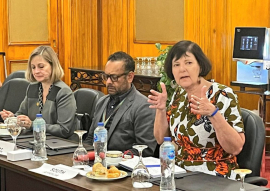
The Ministers of Brazil, South Africa, India and China have expressed concern that there has been a significant increase in the consumption and production of fossil fuels in the past year by developed countries, even as they continue to press developing countries to move away from the same resources.
“Such double standards are incompatible with climate equity and justice,” the Ministerial Joint Statement by the Ministers of Brazil, South Africa, India and China representing the BASIC Group said on Tuesday.
The Ministers met at the 27th Conference of Parties to the United Nations Framework Convention on Climate Change (COP 27) in Sharm el-Sheikh, Egypt. The meeting was chaired by Minister of Forestry, Fisheries and the Environment, Barbara Creecy.
“BASIC countries are gravely concerned that developed countries are still not showing leadership or responding with a matching progression of effort. There has been backtracking on finance and mitigation commitments and pledges by developed countries,” the BASIC Ministerial Group said.
Developing countries require predictable and appropriate support, including climate finance at the necessary scope, scale and speed and access to technology and markets to ensure and enable their sustainable development.
“In this regard, the Ministers underscored the urgent need for a fundamental transformation and modernisation of the global financial architecture, including a systematic reform of the multilateral development banks to make them fit-for-purpose in supporting sustainable development and just and equitable transitions.
“The key is to address risk aversion in investing in developing countries, to prioritise grant support and to dramatically lower the cost and conditionality on borrowing money that places multilateral support out of reach of the majority of the world’s population, including in BASIC countries,” the Ministers said.
They are concerned that climate finance provided by developed countries continues to fall short of the US$100 billion per year commitment, as it has every year since the goal was set in 2009, and despite the deep regret expressed at COP26 last year.
“This is despite the US$100 billion being only a tiny fraction of the financing which will be necessary for an economy-wide transformation and to meet the needs and priorities of developing countries.
“Developing countries, and especially the BASIC countries, have to channel many times this amount of financing from their domestic resources or from commercial loans and developing countries cannot afford to transform their economies without assistance.
“Finance to developing countries is also increasingly with unilateral conditionalities and eligibility criteria, predominantly in the form of loans rather than grants, aggravating the financial constraints faced by developing countries,” the BASIC Ministerial Group said.
Many of the pledges to the Adaptation Fund made at COP26 remain unfilled, delivering on the commitment to double adaptation financing remains unclear and there are significant outstanding contributions by developed countries to the Green Climate Fund. Adaptation financing needs to be impact based.
“The new collective quantified goal by developed countries must therefore go beyond the floor of US$100 billion per year, be significantly public funded with greater transparency and predictability, provide incentives to enhance access modalities, be periodically reviewed, and take a balanced approach towards mitigation and adaptation in light of evolving needs and priorities of developing countries. For this a clear roadmap for deliberations in 2023, including on discussions on possible timeframes, should be adopted at COP27,” the BASIC Ministerial Group said.
The Ministers expressed concern that adaptation is still not being accorded the balanced and substantive attention they deserve in the United Nations Framework Convention on Climate Change (UNFCCC) process, despite the opportunities and linkages with loss and damage.
“It is essential to maintain a systematic and continued process to work on the Global Goal on Adaptation (GGA), with a view to fully operationalising the GGA. They underscored the necessity for a special report on GGA to be produced by the IPCC to help deepen global understanding on defining and achieving the GGA. We also recognise that adaptation actions taken at the local level have an important global contribution,” the Ministers said.
They also emphasised that the Mitigation Work Programme should be guided by the objectives, goals and principles of the Convention and its Paris Agreement, being facilitative, non-prescriptive, nationally determined in nature, and aim at promoting exchange of best practices, exploring opportunities, and identifying challenges on implementation of their respective Nationally Determined Contributions (NDCs).
The Ministers said the Mitigation Work Programme should not result in an alteration of the goals as set out in the Paris Agreement, imposing sectoral targets and benchmarks, or duplication with arrangements regarding mitigation.
Employment and Labour cautions suppliers of fraudulent purchase orders scam

The Department of Employment and Labour in the Free State is cautioning existing and potential suppliers against scammers issuing fraudulent purchase orders.
This comes after the department noted with concern the reports of scammers who are contacting suppliers posing as officials, requesting quotations on various items and later issuing fake purchase orders of the said items to unsuspecting suppliers.
“Regrettably, some suppliers have fallen victim to this scam and unknowingly delivered the items to scammers without payment.
“While the department continues to investigate this fraudulent activity, suppliers are urged to guard against indicators of fraud in order to avoid falling victim to such scams,” the department said.
The following may indicate fraud:
- Incorrect domain name used to send emails and purchase orders. A valid departmental email address always ends in @labour.gov.za
- Poorly written email with grammatical errors
- Contact numbers not associated with the Department of Employment and Labour
- Large product quantities are requested.
- Hovering over the email address may reveal the originator’s email address if different from that displayed.
To authenticate the validity of a request for quotation and purchase order suppliers are urged to email Nthabiseng.tjawane@labour.gov.za or call 051 505 6239.
Updated evaluation guidelines an important tool
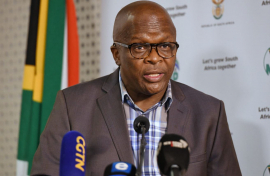
Minister in the Presidency Mondli Gungubele says efforts to continuously develop, review and update evaluation guidelines and tools is important to ensure that standard practices remain up to date.
“I must commend the recent joint work between the Department of Planning, Monitoring and Evaluation (DPME) and the South African Monitoring and Evaluation Association (SAMEA) for developing two new guidelines, one on ‘integrating a transformative equity criterion into evaluation’ and the other on ‘applying the climate and ecosystem health criterion in evaluations’,” Gungubele said.
Addressing the National Evaluation Seminar hosted by DPME on Tuesday, Gungubele said the event was an important platform for learning and engagement between DPME and all the actors in the evaluation community about the institutionalisation of the national evaluation system.
The seminar was held under the theme: Sustaining the National Evaluation System in Recent Times.
“Interactions through this seminar provides an opportunity to share knowledge and best practices in the field of evaluation and to inform what activities, methodologies, approaches and technologies can be adopted, enhanced and applied in the evolving evaluation ecosystem,” Gungubele said.
Monitoring and evaluation, he said, must give insights to help to lead and contribute to the change and also adapt to change in a dynamic way.
“The October 2022 UNDP National Evaluation Capacities Conference reminded us about the extent to which we have regressed on some of the Sustainable Development Goals (SDGs).
“As much as we are facing compounded crises, there are unlimited opportunities for us to innovate and overcome. The multiple crises we are confronted with require us to build resilient communities,” Gungubele said.
“Evaluations must offer us options to address the recurrent challenges of development we are dealing with,” he said.
Evaluation evidence also needs to be timely so that it makes contribution at the most appropriate moment when important decisions need to be made.
“Across the system, there is need to drastically improve the turnaround time from conception of evaluation concepts to the delivery of evaluation results and recommendations.
“I am encouraged to hear that we are making progress in implementing approaches of Rapid Evaluation and Evidence Synthesis to expand our evaluation toolkit,” Gungubele said.
He said at an international level, the DPME is representing South Africa in a collaborative exercise for the revision of the widely used Development Assistance Committee (DAC) Criteria for Evaluation that the Organisation for Economic Cooperation and Development (OECD) introduced in 1991.
“The value of evaluations is realised when recommendations are implemented and when the knowledge generated is applied,” he said.