
Eskom Generation acting head resigns

Eskom acting head of the generation division, Rhulani Matebula, has resigned from the power utility and is expected to leave at the end of November.
Mathebula was appointed in the acting position just six months ago, following the resignation of long serving generation head Philip Dukashe.
Eskom Chief Operating Officer (COO) Jan Oberholzer has thanked Mathebula for his service.
“Rhulani’s successor will be announced in due course pending the relevant recruitment process. Until then Thomas Conradie…will hold the fort, fully supported by all the key stakeholders.
“I’d like, on behalf of myself [and] all my colleagues at Eskom, to thank Rhulani for the service he has given to Eskom and to the country as a whole. That is sincerely appreciated and Rhulani, we wish you well in all your endeavours to come,” he said.
Meanwhile, Eskom says with older power stations reaching retirement, it is forging ahead with plans to close the energy supply gap.
The power utility says generating units at three power stations must be taken offline over the next five years as the three reach the end of licensed operation coupled with the retirement of Komati Power Station which was taken offline in October.
“To contribute to closing the supply gap, Eskom will repurpose these power stations and take advantage of the existing Transmission infrastructure in these facilities and convert these coal-fired power stations to renewable sources.
“This not only allows Eskom to continue generating much-needed electricity in these and other areas, but also to continue extending economic opportunities to the host communities under its Just Energy Transition programme,” Eskom said.
The power utility said it has already begun the process to invite independent power producers to lease some of its land to build new renewable power plants.
“Within its own scope of influence, Eskom has led initiatives that will result in four independent power producers to invest at least R40 billion in new renewable plants on land leased at four of its power stations. This will produce at least 2 000MW in new generation capacity on approximately 6 200hectares of land over the next few years.
“This is the first phase of the land lease programme, which will raise hundreds of billions in renewable energy investment without any underwriting recourse to Eskom and the taxpayer,” Eskom said.
NSFAS investigation recovers R33 million from TVET college
The Special Investigating Unit (SIU) has recovered at least R33 million from a technical and vocational education and training (TVET) college that was meant for students on the National Student Financial Aid Scheme (NSFAS).
According to SIU spokesperson, Kaizer Kganyago, the college – Northlink College – informed the unit about the money after President Cyril Ramaphosa signed a proclamation authorising the corruption busting unit to investigate the affairs of NSFAS.
“[The] college informed the SIU that it received over R33 million from NSFAS that was not allocated to students between 2017 and 2021 and had invested it without authorisation.
“The TVET college stated to the SIU that it is fully aware that the funds should have been returned to the NSFAS, but Northlink College failed to do so and instead decided to invest the funds and would return the funds on request from NSFAS,” he said.
Kganyago said the SIU is calculating interest “earned from the investment from the commencement date”. When calculated, the interest is expected to be paid into the SIU Trust account.
NSFAS Investigation
Kganyago explained that the proclamation signed by President Ramaphosa allows the unit to investigate allegations of corruption and maladministration at NSFAS and to “recover any financial losses suffered by the State through corruption and negligence”.
“The SIU investigation focuses on maladministration at NSFAS regarding two functions of the organisation. The first part will look into the management of NSFAS’s finances. The second part will investigate the allocation of loans, bursaries, and any other funding payable to students in terms of the provisions of the National Student Financial Aid Scheme Act.
“Furthermore, the SIU is also investigating related unauthorised, irregular, or fruitless and wasteful expenditure incurred by the NSFAS or the State, including the causes of maladministration. The SIU is also probing any unlawful or improper conduct by employees or officials of the NSFAS or the service providers in question, their employees or any other person or entity,” he said.
Kganyago explained that the proclamation covers a period of some six years from 2016 to August this year and will also look into allegations of “unlawful and improper conduct that took place” at the financial aid scheme.
dtic helps SA footwear companies step onto world stage
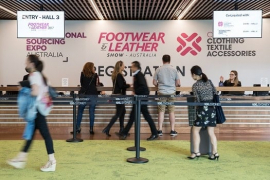
Ten South African footwear and leather companies have received a shot in the arm from the Department of Trade, Industry and Competition (the dtic) to showcase their proudly South African products at the 2022 edition of the Australian Footwear and Leather Show.
The show is taking place in Melbourne, Australia, from today till Thursday, 17 November 2022.
The Footwear and Leather show connects Australian and New Zealand trade buyers with a broad range of manufacturers and suppliers from across the globe.
With a focus on footwear and leather accessories, apparel and textiles, the event provides an efficient way for industry professionals to source internationally, take part in industry seminars and unlock business opportunities.
By having South Africa’s presence at the show, the dtic aims to create export opportunities and introduce emerging exporters to new markets.
The show provides opportunities for both volume sourcing, as well as smaller operators, including start-ups that are keen to access international suppliers.
It will also provide exposure for the South African emerging exporters, as well as an opportunity for them to learn more about the international market trends in the industry.
The dtic has set up a South African National Pavilion in which these companies will showcase their products.
The show offers South African companies an opportunity to generate trade leads, strengthen business relations with existing buyers and build a consistent presence and brand recognition of South African products and capabilities in Australia.
The companies’ participation has been made possible through the dtic’s Export Marketing and Investment Assistance (EMIA) Scheme, whose aim is to develop export markets for South African products and services, and to recruit new foreign direct investment into the country.
The South Africa-Australia total bilateral trade increased from R25 billion in 2020 to almost R29 billion in 2021.
South Africa’s total exports, as of 2021, amounted to R12. 3 billion and imports totaled R16.3 billion. The list of top 10 exports to Australia consists mainly of raw products, hence the need to promote value-added sectors such as footwear and leather.
“South Africa and Australia enjoy good relations and we are both partners in important forums such as the G20 and the Indian Ocean Rim Association (IORA). We also co-host the ground-breaking Square Kilometre Array telescope,” the dti said in a statement.
Reserve Bank warns of procurement scam

The South African Reserve Bank (SARB) has warned members of the public of a scam doing the rounds in various parts of the country, where unscrupulous people are circulating fraudulent tenders under the bank’s name.
In a statement issued by SARB, the email address and the tender documents attached to the email — calling on prospective suppliers to bid for 300 units of MRTX flashlights — is fake.
“All SARB email addresses end with ‘resbank.co.za’. Suppliers are advised to scrutinise all bids that they receive, including the email addresses of the SARB buyers, as well as other details of the SARB.
“It should also be noted that all procurement at the SARB is centralised within its Procurement Division. If a potential supplier is unsure about a tender purporting to be from the SARB, they are encouraged to contact the SARB’s procurement support desk at supplier@resbank.co.za,” SARB said.
KZN reaffirms commitment to peace, stability

KwaZulu-Natal Premier, Nomusa Dube-Ncube, has reaffirmed the provincial government’s commitment to working towards advancing peace and stability in Africa, while supporting the efforts of the African Union Peace and Security Council and the African Peer Review Mechanism to address challenges facing the continent.
Dube-Ncube was speaking during the Joint Retreat of the African Peer Review Mechanism (APRM) and African Union Peace and Security Council (PSC) in Umhlanga, on Monday
The retreat brings together African government leaders and youth peace ambassadors representing various countries, including Sierra Leon, Burundi, Namibia, Tanzania, Senegal, Cameroon, Uganda, Gambia Nigeria and Chad, among others.
“Over the last 20 years, the African Union has been true to its pan-African origins, as it has come to terms with its expanded mandate and worked hard to make the lives of Africans better for all.
“It is my belief that over the next 20 years, the African Union will continue to go from strength to strength and that we will all look upon an Africa that is thriving, free of conflict and at peace with itself,” Dube-Ncube said.
She said the province takes its lead from the national government and the sustained commitment that South Africa has to the AU project.
“This sustained commitment is reflected in South Africa serving once more as a Member of the PSC, highlighting our readiness to work with other AU Member States to find solutions to the challenges that Africa faces,” Dube-Ncube said.
The Premier said the retreat is being held at an opportune time, a few days after South Africa’s successful hosting of the Ethiopia peace talks.
“We welcome such a positive outcome and we equally hope that Ethiopia never knows conflict again. The hosting of these recently concluded peace talks is the continuation of our government’s tradition of actively participating in conflict resolution in Africa.
“South Africa has been involved in meditation and negotiations in Burundi, the Democratic Republic of the Congo, Madagascar, Ivory Coast and others. We are indeed proud to add Ethiopia to that list. My hope is that we are able to stamp out any and all threats to peace in Africa and around the world.”
Dube-Ncube also shared with delegates that the province has successfully hosted the 20th Nelson Mandela Annual Lecture over the weekend, which was delivered at Inkosi Albert Luthuli International Convention Centre by the Prime Minister of Barbados, Mia Mottley.
“Prime Minister Mottley reminded us of the umbilical cord that binds all of us as Africans, including those in the diaspora, and of the need to strengthen these bonds of friendship, and solidarity for a better world. Your presence also coincides with the celebrations of the 30th anniversary of the African Centre for the Constructive Resolution of Disputes (ACCORD), an organisation that continues to demonstrate the commitment to work for an Africa that is free of conflict,” the Premier said.
Dube-Ncube further highlighted that KwaZulu-Natal has a long and proud history of hosting African and world leaders. This includes the inaugural summit of the Africa Union hosted in Durban in 2002.
“Leaders from across the continent descended upon Durban to witness history as the Organisation of African Unity (OAU), founded as a pan-African tool to fight colonialism, was transformed into the African Union as we know it today.
“We are also proud that 10 years after its official launch in this city, in 2012, our province gave Africa its first female Chairperson of the AU Commission in Dr Nkosazana Dlamini-Zuma,” Dube-Ncube said.
The former President of Burundi and chairperson of the AU Panel of the Wise (POW), Domitien Ndayizeye, said women and youth are key in the peace dialogue and “we must include them in all discussions, listen to them”.
“We appeal to Africa to remain in solidarity with each other. We are interdependent as a continent with shared problems,” Ndayizeye.
ACCORD founder and Executive Director, Dr Vasu Gounden, said: “We use the phrase ‘conflict prevention’ more than we practice it. Prevention is cheaper…. We need to do more to put it into practice.”
Tshwane commits to upskilling officials
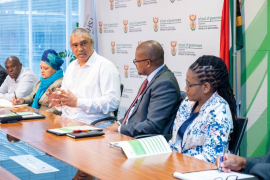
The National School of Government (NSG) and the City of Tshwane Metropolitan Municipality have signed a memorandum of agreement (MOA) aimed at formalising their relationship on the training of the city’s officials to enhance skills development.
This, according to the NSG, will in turn refine governance and service delivery within the metro.
The MOA was signed by the Principal of the NSG, Professor Busani Ngcaweni, and the City Manager, Johann Mettler, at the city’s headquarters, Tshwane House, in Pretoria.
The identified areas of cooperation include governance and leadership programmes, learning and development interventions, knowledge and information management, joint research on areas of mutual interest, impact assessments for training programmes, as well as innovation programmes.
Ngcaweni said the NSG is pleased to conclude the agreement with the City of Tshwane.
“We look forward to a stronger relationship with the city and closer cooperation in building a professional, ethical, and efficient public service. This will benefit members of the public, who desire an improved delivery of basic services from the public sector, especially municipalities,” Ngcaweni said.
Mettler said: “We welcome this important agreement, as we believe that it is vital for partners in government to create and hold spaces for reflection, learning and joint problem-solving. This will capacitate our workforce to execute the city’s development agenda and solve stubborn service delivery challenges.”
Mettler is prioritising the professionalisation of all officials of the metro in order to provide diligent and people-centred services.
The NSC and the city enjoy longstanding cooperation, with officials from the city having participated in various NSG conferences and training programmes.
The NSG has also assisted the city by assessing its knowledge management capability. These collaborative activities resulted in the intent to formalise the relationship for greater impact.
BBBEE here to stay – President Ramaphosa
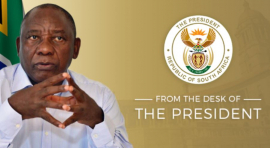
President Cyril Ramaphosa says government remains committed to transformation of the economy and empowerment.
He was addressing the nation through his weekly newsletter.
The President’s assertion follows a week where the National Treasury published a new set of Preferential Procurement Regulations.
“The new regulations are not ‘a victory for sound business practices’ as one interest group has claimed. What is unsound, unsustainable and, above all, immoral, is an economy that benefits the few at the expense of the many.
“Put plainly, we remain as committed as ever to broad-based black economic empowerment, meeting our localisation objectives and transforming an economy that, despite our best efforts, is still largely controlled by a minority. There should be no mistake or misunderstanding: broad-based black economic empowerment (BBBEE) is not under threat and is not being reconsidered,” he said on Monday.
Earlier this year, the Constitutional Court ruled that the then Finance Minister overreached when he prescribed the old regulations in 2017.
“[The Constitution] says that when public bodies contract for goods and services, they must do so in a manner that is fair, equitable, transparent, competitive and cost-effective. It also says the state must implement a preferential procurement policy that advances people who have been disadvantaged by unfair discrimination. In South Africa, this refers to black people, women and persons with disabilities.
“It is in this context that the new Preferential Procurement Regulations published by the National Treasury last week need to be understood. Government remains wholly committed to transformation and empowerment as envisioned in the Constitution,” he said.
President Ramaphosa said the new regulations comply with section 217 of the Constitution “in that they empower organs of state to develop and implement preferential procurement policies when contracting for goods and services” and will not hinder Broad Based Black Economic Empowerment (BBBEE).
“These regulations are an interim measure pending the enactment of the Public Procurement Bill, which the National Treasury will soon submit to Cabinet and Parliament. The Public Procurement Bill will maximise both value-for-money and preferential procurement objectives to enable the delivery of services and transformation.
“The new regulations have no effect on the Broad Based Black Economic Empowerment Act, as all organs of state must fully comply with this Act when developing their procurement policies. This Act remains in force as one of the most transformative pieces of legislation to come out of democratic South Africa,” he said.
Mischaracterisation
President Ramaphosa said the purpose and effect of the new regulations have been “mischaracterised” with “commentary…[claiming] that this government is back-tracking on its commitment to broad-based black economic empowerment”.
“This claim is far from the truth. Government’s policy framework has not changed with the introduction of these regulations, nor has our commitment to service delivery and black economic empowerment.
“Empowerment criteria will still be applied in government contracting and organs of state must comply with the BBBEE Act when developing their procurement policies. What has changed is that organs of state will be able to set and apply specific ‘goals’ when evaluating a tender under a preferential procurement policy,” he said.
The President reflected that “we are certainly not as far as we had hoped to be with economic transformation” despite Constitutional provision and regulatory efforts.
“As I told the inaugural meeting of the newly formed Presidential Broad-Based Black Economic Empowerment Advisory Council in July, we need to develop a new vision for black economic empowerment that builds on successes, learns from shortcomings, and that responds to local and global economic realities.
“As we reflect on 20 years since the passage of the BBBEE Act, as we remedy the shortcomings that exist and chart a new course, we call on business, labour and civil society to join us on this journey.
“We have come a long way since the days when only whites were allowed to own businesses and provide goods and services to the state. Where black businesses did exist, they were confined to townships, rural areas and the so-called homelands. We can and must do more to advance economic transformation,” President Ramaphosa said.
Remaining mass care centres to be cleared by mid-December

EThekwini Municipality Mayor, Mxolisi Kaunda has reiterated that the municipality is working tirelessly to ensure that all remaining mass care centres will be cleared and families displaced by April floods, moved to a more family-friendly accommodation by 15 December 2022.
“The City has steadily been working to rehouse families displaced by the floods earlier this year. The goal is to close all mass care centres by 15 December,” Kaunda said.
Giving an update on the relocation of displaced residents currently accommodated at mass care centres during a media briefing held recently at Conway Farm, Kaunda said that, of the 120 mass care centres occupied due to the April and May floods, 62 of them have been closed through various interventions.
The Mayor acknowledged that the relocation process has taken longer than anticipated.
“We would like to apologise to those who remain at community halls and reiterate our commitment to finalise this challenge with speed. It is our mission to create a safe and healthy environment for all residents. The remaining 58 mass care centres, which accommodate 3 448 people will be cleared,” Kaunda said.
Kaunda said the 62 mass care centres were closed through supplying material, the leasing of private buildings, utilising existing government buildings, and building of Temporary Residential Units (TRUS).
He said the City assisted 3 011 people with materials to rebuild, with R34 million allocated for the reconstruction.
To date, he said, 467 people from five hall mass care centres, including Bester, Amaoti, Dassenhoek, Cutshwayo, and Clermont, have been supplied with building material.
“In September, we set the target of closing one mass care centre per week. We are pleased that through this intervention we have been able to close mass care centres in Bester, Amaoti, Kloof, Ngoqokazi, oThongathi, Tehuis, Palmiet, Dassenhoek, La Mercy, Cutshwayo, Savannah Park, and Clermont Hall.
“Of the remaining 3 448 flood victims, 2 000 will be relocated by the end of this month and by 15 December, we will relocate the remaining 1 448 people,” he said.
Construction in land parcels expected to be completed in 2024
Kaunda also announced that eight land parcels have also been identified to build permanent structures for flood victims.
He said earthworks at the sites have begun with the construction expected to be completed in 2024. In the interim, he said flood victims will be accommodated in buildings leased by the City for 24 months.
“A total of 13 buildings have been identified and linked to mass care centres and the process of moving people to these buildings is currently underway. At Conway Farm, we will accommodate 163 families, and this has resulted in the closure of oThongathi and La Mercy halls.
“We are moving the remaining families to the Caneland Training Centre [and] families who have been relocated are thankful for the assistance from the City. Residents from the Reservoir Hills Informal Settlement were delighted to be moved to Crystal Valley in Clare Estate,” Kaunda said.
KZN unveils festive season safety campaign

KwaZulu-Natal Premier, Nomusa Dube-Ncube, has sent a stern warning to criminals that law enforcement agencies in the province are tightening the grip on all forms of crime, mainly contact and violent crimes during this festive season.
The Premier made the remarks during the official launch of the KwaZulu-Natal Integrated Safety Month and Festive Season Campaign held at Peoples Park in Durban on Friday.
Joined by Police Minister Bheki Cele, Transport, Community Safety and Liaison MEC, Sipho Hlomuka, eThekwini Municipality Mayor, Mxolisi Kaunda, and Provincial Police Commissioner, Lieutenant-General Nhlanhla Mkhwanazi, the Premier unveiled a campaign aimed at heightening the war against crime during the festive season and beyond.
She said police in the province are ready to take the war to the criminals, emphasising that the vision of government is to ensure that the people of KwaZulu-Natal live in a safe and secure environment.
“Women, children and vulnerable groups should feel protected and have confidence in the criminal justice system to effectively apprehend and prosecute criminals. We are launching this festive season campaign at a time when our country is focused on the 16 Days of Activism for No Violence Against Women and Children.
“There is a lot of work that the provincial government is doing to mobilise society to root out this scourge. There will be heightened visibility in all corners of our province including integrated crime prevention and crime combatting operations on provincial and national roads, rail environment, ports of entry and the border-line.”
The Premier assured the people of the province, including visitors and business that all law enforcement agencies working with stakeholders are on board to ensure a safe, peaceful, and incident-free festive season.
In addition, special intelligence-driven operations will be implemented in cooperation with all law enforcement agencies.
“We are encouraged to see the state of preparedness and unity of our law enforcement agencies and stakeholders. Police made numerous arrests this morning, on the streets of the Durban central business district conducting law enforcement operations and raids in various buildings that have deteriorated into drug dens and crime havens.
“We are here to unveil our plan which involves all sectors including civil society, business, the taxi industry, community policing forums, and many more joining hands to arrest crime during the festive season. We are ready to thwart all the criminal networks, we will be at their rear and flanks,” Dube-Ncube said.
Technology to enhance policing
During this period, the police will also be applying technology, including drones to monitor high crime zones and capturing footage of criminal activities.
“Technology will be employed to chase criminals using facial recognition and follow me flight mode. We can even enter into small unreachable areas to track criminals in hideouts.
“We will also be applying technology to track number plates and spot stolen vehicles. Our Smart Province concept also include smart policing. Technology overall can reduce the crime rate, improve investigation and assist in locking up offenders. It can also be used as early warning signal to prevent the deaths in disasters and properly loss.”
Truck accidents
Meanwhile, Dube-Ncube has expressed concern over the increase of road accidents that continue to claim lives.
She called on the road freight industry to attend to the issue of errant truck drivers whose negligent driving has taken many lives in the province recently.
“We remember vividly the Pongola horrific accident [and] the multiple truck accidents a few weeks ago [that] claimed more lives. Our roads cannot be turned into mass graves and places of untimely deaths.
“The Road Traffic Inspectorate has a huge responsibility to make every road user feel that when in KwaZulu-Natal you drive responsibly or face the music. We are exploring ideas around the spate of track accidents.
“This may include enforcing a curfew on freight trucks and redirecting vehicles to less busy roads. We are continuing engagements with the freight and logistics industry,” Dube-Ncube said.
The province’s safety month and festive season plan involves government and law enforcement agencies working with various stakeholders, including business, community policing forums, traditional leaders, interfaith leaders and the taxi industry.
The plan is anchored on the following actions and objectives of building safer communities:
• Strengthening the criminal justice system;
• Making the police service professional; and
• Building community participation.
Umalusi commends department for making arrangements for learners

Umalusi, the Council for Quality Assurance in General and Further Education and Training, has commended the Department of Basic Education for making arrangements for the affected candidates to be afforded the opportunity to write the examinations which were missed due to no fault of their own.
Umalusi, has expressed its concerns about the recent protest action in some parts of the country which have resulted in some candidates either missing the National Senior Certificate examination or writing it later than originally scheduled.
In the North-West Province arrangements had to be made for approximately 460 candidates to be compensated for the time lost, while just over 50 candidates in Gauteng could not write the examination due to community protests.
In Mpumalanga, approximately 1 130 candidates were prevented from accessing their examination centres where they were scheduled to write either Mathematics or Mathematical Literacy Paper 2 examination.
“Umalusi wishes to reiterate its position that it discourages communities from using national examinations as leverage for their protest actions,” Umalusi said in a statement.
While Umalusi respects the Constitutional right of every citizen to protest, candidates should also be allowed to exercise their right to education by writing the examinations without any form of hindrance.
Umalusi is equally concerned about the alleged problematic questions in the Mathematics Paper 2 question paper administered by the Department of Basic Education.
In this regard, the standard procedure for dealing with such issues is the marking guidelines or memoranda standardisation meetings during which problematic questions are moderated in consideration of candidates’ answers.
“Depending on the magnitude of the problem, the marks allocated to the question/s may be excluded from the question paper’s total marks or that alternative responses may be accepted.
“The External Moderators of Umalusi attend these meetings and take responsibility for signing off the final marking guidelines after considering the responses of candidates and the deliberations.
“The fine-grained details of how the concerns were dealt with would be submitted for the consideration of Umalusi at the end of the marking process,” Umalusi said.
Another matter about which Umalusi is concerned involves the South African Comprehensive Assessment Institute’s (SACAI) premature release of two question papers on 11 November to Umalusi.
These are the Physical Sciences Paper 2 and the Life Sciences Paper 1 which are scheduled to be written on 14 November and 18 November respectively.
“It is a requirement for assessment bodies to submit question papers to Umalusi after the writing of each paper so that Umalusi can perform its post-examination quality assurance processes prior to the standardisation of results.
“Instead of releasing Paper 1 of Physical Sciences, which was written on 11 November, the SACAI erroneously released Paper 2 which is scheduled to be written today.
Since the erroneous release of question papers has the potential to put the credibility of the examination at risk, SACAI has withdrawn the papers released in error and will substitute them with backup question papers.
Umalusi urges all the assessment bodies and stakeholders to do everything possible to ensure that the integrity of the 2022 national examinations is not compromised.