
Grant funding also needed for energy transition

Presidential spokesperson Vincent Magwenya says South Africa will need funding in the form of grants in order to implement the Just Energy Transition.
He was speaking during the weekly presidential media briefing in Pretoria on Sunday.
Magwenya revealed that South Africa will need at least R1.4 trillion over five years to transition from high to low carbon emissions.
“This money will need to come from various sources including the funding that industrialised countries have promised to developing countries and from commercial financial institutions.
“At the UN Climate Change Summit last year, France, Germany, UK, US and the European Union pledged around R140 billion to support the just transition. An initial amount of R10.7 billion has been received in low-interest loans from Germany and France.
“While South Africa welcomes low-interest (or concessional) loans, a substantial portion of this funding needs to be in the form of grants,” he said.
Magwenya said the move towards lower carbon emissions is imperative as the toll will begin to weigh heavily on South Africa’s economy.
“South Africa’s exports need to remain competitive in a global economy where goods from countries with high carbon emissions will soon attract high tariffs. Unless we reduce our emissions, many of the goods we seek to export will find key markets closed to them. Thus, South Africa’s economy will struggle to grow and create jobs.
“We need to access finance for infrastructure development and industrialisation when more and more banks are not investing in high emission industries. Our companies will struggle to get financing for infrastructure, factories and other projects,” Magwenya said.
The spokesperson emphasised government’s position that a Just Energy Transition must bear in mind the socioeconomic consequences of moving towards lower carbon emissions.
“A just transition is needed to ensure that the shift to a low-carbon economy does not negatively affect workers, communities and broader society. For example, new jobs and opportunities need to be created for workers in the old power stations that are being decommissioned and those in the coal mines that supply them. They need to be skilled and reskilled to take up positions in new industries.
“Affected communities need to benefit from the building of new renewable energy plants and new industries that produce materials for renewable energy, electric vehicles, green hydrogen and mining for minerals needed in the new economy. Community members should be able to participate directly in these industries and indirectly through the businesses that will support new economic activity,” he said.
NCOP takes Parliament to KZN
The National Council of Provinces led by Chairperson Amos Masondo will this week convene its flagship oversight programme – Taking Parliament to the People – in the Ugu District Municipality in KwaZulu-Natal.
The oversight programme, which on Monday, will be held under the theme: “Working together to ensure faster improvement in the delivery of services to communities”.
During the week delegates, including Members of Parliament, the KZN Provincial Legislature, and local municipalities, will visit various sites and conduct public meetings where members of the public will get an opportunity to draw the executive’s attention to challenges they experience with regards to service delivery.
Ministers, MECs and Members of Mayoral Committees (MMCs) will also be given an opportunity to respond to issues raised by the public.
“The programme consists of a combination of public hearings and visits to identified sites, and will culminate with the annual address by President Cyril Ramaphosa at a National Council of Provinces sitting to be held at the Ugu Sports and Leisure Centre on Friday. The public hearings and site visits will take place simultaneously,” Parliamentary spokesperson, Moloto Mothapo said in a statement.
The public hearings will be held from 9am to 5pm at Ugu Sports and Leisure Centre, Ray Nkonyeni Local Municipality.
The Ugu District Municipality consists of Ray Nkonyeni, Umdoni, Umuziwabantu and Umzumbe Local Municipalities.
“Depending on the distance between the local municipalities, the programme may be extended to other local municipalities within 80 to 100 kilometre radius. The address by the President will be delivered under the theme, “Building agile state capabilities to improve service delivery outcomes,” Mothapo said.
Policeman wins Idols

The management of the South African Police (SAPS) has congratulated Warrant Officer, Thapelo Molomo, for being crowned the Idols Season 18 winner.
“The organisation is immensely proud of the 29-year-old member who is stationed at the Brits Police Station in the North West for hoisting the SAPS flag higher,” SAPS spokesperson, Colonel Athlenda Mathe, said in a statement.
Born and bred in Mokopane in Limpopo, Molomo began his career in the SAPS as an intern within the Psychological Services Section and was later employed to serve as a trauma counsellor in the same environment.
“As a registered counsellor attached to the Employee Health and Wellness (EHW) component, the member holds a B.A (Hons) Psychology degree and is responsible for providing counselling and proactive psychological interventions to alleviate mental health ills for police members and their families,” said Mathe.
Police Minister, General Bheki Cele, who attended the finale has on behalf of the SAPS, congratulated the newly crowned winner.
“The member serves as a beacon of hope for many police officers who are on a daily basis faced with psychosocial challenges. He has illustrated to thousands of officers that hard work, determination and perseverance is the foundation of any successful human being. We are proud of him and wish him all the best. We cannot wait to have him back in office to continue serving our men and women in blue,” said the Minister.
NRF-funded postgraduate study opportunities now open for 2023
The National Research Foundation (NRF) on Friday announced the implementation of its Global Knowledge Partnerships (GKP) programme for the 2023 academic year.
The programme places exceptional doctoral students, postdoctoral fellows and early career researchers (ECRs) that are funded by the NRF at several international universities and research institutions.
The pool of these partner institutions is spread across various countries including Germany, Austria, the United States, Japan, Singapore, Canada, and universities across Africa.
The programme is aimed at accelerating the development of a diverse young researcher cohort into world-renowned experts and a globally competitive workforce.
This is done through the provision of platforms and pathways that offer opportunities for outstanding young researchers to access international networks, mentorship, global research funding streams, industry partnerships, and research infrastructure.
“The Global Knowledge Partnerships programme is one of the NRF’s most prominent initiatives. It is meant to ensure that the NRF achieves its goal to expose students it funds to scientific practices globally,” said Acting Group Executive Strategy, Planning and Partnerships, and Executive Director of Strategic Partnerships, Dr Aldo Stroebel.
According to Stroebel, international exposure for doctoral students, postdoctoral fellows and ECRs is an integral component of the NRF’s strategic goal to create an internationally competitive, transformed, and representative researcher cohort.
“The benefits of such exposure to the researchers and also to South Africa and Africa cannot be understated,” he added.
This NRF initiative, which was implemented in 2020, is also working with the higher education sector in South Africa.
The recipients spend between three and 12 months for doctoral students and up to 18 months for postdoctoral fellows and ECRs in universities, research performing entities, science councils and the industry abroad.
Criteria
- The applicant must be a South African citizen or permanent resident. However, this requirement will not apply to students funded under the NRF-MINDS scholarship programme.
- Be a currently NRF-funded doctoral student or postdoctoral fellow or ECR.
- Have a research plan developed for the time abroad, which is signed by the South African supervisor and international host supervisor.
- Produce evidence of demonstrated leadership abilities or potential guided by the questions or requirements set out in the application form (requirement is for NRF-MINDS programme only).
- Applications must be submitted through the international partner’s online portal for specific programmes.
- Meanwhile, with specific programmes, the international partner and the NRF will conduct the reviewing and selection of applications jointly.
Further details for students and their home universities are contained in the Global Knowledge Partnerships Programme Implementation Framework for the 2023 academic year, which is accessible on the NRF website at https://www.nrf.ac.za/wp-content/uploads/2022/03/Global-Knowledge-Partnerships-Implementation-Framework-for-2023.pdf.
KZN police investigating death of child

The South African Police Service in KwaZulu-Natal is investigating the circumstances leading up to the death of a disabled 12-year-old Nondumiso Zondi, who was buried without an autopsy and a death certificate.
Nondumiso, who had Cerebral Palsy, died on Saturday in Coffee Farm, KwaZulu-Natal, and was immediately buried at his home on Sunday.
His father, Mdu Zondi (31), allegedly buried him in a shallow grave and did not report the death of his son to the relevant authorities.
On Thursday, his body was exhumed by the KwaZulu-Natal Search and Rescue after a whistle-blower alerted Deputy Minister of Social Development, Hendrietta Bogopane-Zulu, about the death of the child. The body was sent to the Pinetown State mortuary.
The child’s grandmother, who was collecting a grant on his behalf, had passed away in May this year, leaving his stepmother as his primary caregiver.
The whistle blower further spoke about how the child had died on Saturday afternoon and was buried on Sunday morning. The whistle blower further reported that the family did not notify authorities about Nondumiso’s death.
Bogopane-Zulu, who visited the family along with the SAPS on Thursday, said that the disabled child had been bed-ridden for 12 years in the backyard of his family home and was not attending school.
She said that the family allegedly would leave the child in a one-room shack by himself with the TV playing on maximum volume.
“After being told about Nondumiso, I could not sleep. I kept on praying and pleading with God that there would be no truth to this story,” Bogopane-Zulu said.
According to the Deputy Minister, Nontuthuko Zondi (28), who is the child’s stepmother, confirmed that her stepson had died on Saturday after a short illness.
Due to the lack of funds, Zondi said, Nondumiso’s father and three of his friends dug a grave for him and buried him on Sunday morning at 08:00, where family members and some neighbours had attended the funeral.
Referring to the latest quarterly crime statistics, Bogopane-Zulu said that there were 243 children murdered between April and June 2022.
“This happens during Disability Right Awareness Month. Disabled children deserve a right to a dignified life – just like any other child” she said.
Disability Rights Awareness Month (DRAM) is an annual campaign that is held from 03 November to 03 December. This year’s campaign is held under the theme; “Empowering Persons with Disabilities through resourceful, sustainable and safe environment.”
Alleged Eskom coal thieves caught

Two truck drivers working for an Eskom contracted company have been arrested after they were caught with stolen coal at the Kendal Power Station on Wednesday evening.
According to the power utility, the men work for an ash transporting company.
“The trucks belonging to an ash transporting company contracted to Eskom were exiting the power station coal gate when they were stopped by security personnel conducting vehicle inspections.
“Both truck drivers resisted the searches and maintained that the trucks were empty. With the persistence of a diligent security team the trucks were searched, and the stolen coal was found in the trailers.
“These arrests are the result of persistent and excellent work by the Eskom Security Team, in partnership with the South African Police Service, who are working tirelessly to identify and disrupt the criminal networks,” the power utility said in a statement.
Eskom Security General Manger Advocate Karen Pillay called on the full might of the law to come down on those found guilty of theft from the power utility.
“Coal theft is a highly organised criminal activity and syndicates involved are being enriched through the proceeds derived from the trade in stolen coal. Eskom continues to lose billions of Rands due to the misappropriation of coal and similar commodities, which directly affects production.
“There are several illicit coal stockyards and dump sites in the province that are recipients of the stolen coal. Eskom will ensure that the perpetrators face the full might of the law,” Pillay said.
KZN Premier outraged at killing of Durban Grade 12 learner

KwaZulu-Natal Premier, Nomusa Dube-Ncube, has expressed shock and outrage at the killing of a Grade 12 learner, who was allegedly stabbed to death by a Grade 10 learner at Mandlenkosi Secondary School in Ntuzuma, north of Durban.
Dube-Ncube visited the school on Thursday, as part of the her matric exams monitoring programme.
The Premier said it is concerning that schools, which are centres of knowledge and learning, have now been degenerated into “dens of crime”.
“We came to the school to give support and prayer to the teachers and learners who are writing their examinations, following a very unfortunate and sad incident where a learner lost his life at school. We are really saddened by the incident that happened at a time when learners are supposed to be focusing on their exams, especially the matric class of 2022.
“The KwaZulu-Natal provincial government sends its condolences to the parents of the deceased learner, teachers and fellow learners, who witnessed this tragic incident on the school premises,” Dube-Ncube said.
The Premier assured all stakeholders that government will continue to offer much-needed support to the school and beef up security.
Psychosocial support is being offered to learners and teachers at the school.
“We will be approaching the Department of Health for additional support, so that more affected learners and teachers can receive counselling. We will also be reaching out to the rest of the community so that we preach to our children to value life.
“Violence is not the solution because any disagreements can be resolved through dialogue. We are approaching the police to ensure that there is visibility during exams and additional police will be deployed to KwaZulu-Natal during the festive season and beyond,” Dube-Ncube said.
Mabuza: Government committed to resolving military vets challenges

Deputy President David Mabuza has assured military veterans that government remains committed to providing them with care and other benefits, including housing and a pension, to ensure they lead a life of integrity and respect.
“It is for this reason that President Cyril Ramaphosa established the Presidential Task Team on the affairs of Military Veterans in the latter part of 2020, under the leadership of the Deputy President, to tackle the concerns raised on the livelihoods of military veterans,” Mabuza said on Thursday.
The Deputy President, in his capacity as the Chairperson of the Presidential Task Team on Military Veterans, visited the Western Cape to hold engagements with military veteran associations.
So far, the team has already visited six provinces — Gauteng, Eastern Cape, Limpopo, Free State, Mpumalanga and North West.
“In our initial meetings, all Premiers were called to assist in the amicable resolution of the challenges faced by military veterans. We believe that provinces have a critical role to play in supporting military veterans, as they are closer to where our veterans live,” the Deputy President said.
Since then, Mabuza said, they have made an effort to interact directly with military veterans in their respective home provinces to address key issues that need to be resolved.
While government has been working around the clock to cater for the veterans’ needs, Mabuza acknowledged some obstacles that caused delays in the delivery of benefits.
The Deputy President said the COVID-19 pandemic and constrained fiscal environment have had an impact on the Department of Military Veterans’ operations and performance. In addition, he said implementation of big impact projects was also awaiting approval, while the management of the department’s database posed a challenge as well.
“Despite the difficulties we have encountered, we have made significant progress in addressing some of your challenges, including those faced by military veterans in the Western Cape,” he told veterans.
Housing
Mabuza said government is currently amending the Military Veterans Act to extend the provision of housing support to widows and dependants of the deceased of those who served in the military struggle.
“We are confident that the process will be completed soon.”
In addition, he said improvements of housing floor plans and the remedial work on defective houses are underway in a number of housing projects, including in Belhar, Cape Town.
Pension
The Deputy President said a milestone was reached when the Presidential Task Team approved the Military Veterans Pension Policy.
The department has made budget provisions over the medium-term to ensure that military veterans receive their pensions.
Currently, the department is working on regulations to operationalise the implementation of the pension benefit provisions.
“We are aware of the deficit that needs to be urgently filled by this policy, and we appeal to our veterans to be patient with the ministry, which is currently preoccupied with the task,” Mabuza said.
Meanwhile, he said his team is ready to assist the department in accessing additional resources to better serve this constituency.
Private sector rallied to invest in green economy

For South Africa to meet its close-to-zero greenhouse gas emissions target, there will need to be significant private investment to facilitate this transition, says National Treasury.
This investment, Treasury said, will require both domestic and external resources, including from jurisdictions such as the European Union (EU).
“Mechanisms to encourage, simplify and facilitate the necessary cross-border capital flows for South Africa to facilitate its just transition will be critical if the country is to meet its objectives.
“Such mechanisms will need to be sufficiently comparable and interoperable to reduce the cost of cross border flows necessary for the just green transition,” the department said.
Treasury said a comparison study between the EU Green Taxonomy and SA Green Finance Taxonomy has found that SA and EU taxonomies both pursue the climate ambition of a “net-zero economy to 2050” as a core environmental objective, and have a very high degree of similarity between the criteria specified at the level of individual economic activities.
The study was undertaken by independent international experts, who were part of the EU Platform on Sustainable Finance.
Treasury said the study was intended to assist policymakers, companies, and financial market participants to understand the commonalities and divergences between the EU and the SA taxonomies, so as to ultimately foster seamless green financial flows between the EU and SA.
“This is crucial in the context of both the EU and SA achieving the net-zero goals by 2050. Overall, for the criteria of significant contribution to climate change mitigation and adaptation, the SA taxonomy has very similar and more ambitious and/or more detailed criteria compared to the EU Taxonomy for 85% of all matched economic activities (71% for significant contribution to climate change mitigation and 99% for climate change adaptation).
“The areas of divergence are primarily where adaptations were made for the SA context, which allows five or 10 years for the activity to meet the thresholds within an investment plan. This approach contrasts with the EU approach, which does not incorporate investment plans and only focuses on economic activities which are currently green.”
For green buildings, the SA Green Finance Taxonomy sets out three levels of eligibility (top-level equivalent to net-zero level, middle-level, and entry-level), while the EU Taxonomy only has one tier.
The EU taxonomy requires mandatory disclosures through the EU Taxonomy Regulation, whereas the SA taxonomy is currently voluntary, although work on incorporating the Green Finance Taxonomy into formal regulatory instruments is being undertaken.
The EU has recently taken steps to include, under specific criteria and time frames, nuclear and gas in their taxonomy, whilst these transitional elements are currently excluded from the SA taxonomy, but may be incorporated in future interactions.
Next Steps
Since the release of the SA taxonomy, the focus has been on embedding its use through raising market awareness and case studies, which are being finalised and will be released together with open access knowledge products.
The South African regulatory authorities — the Prudential Authority and Financial Sector Conduct Authority — will provide guidance and undertake assessments to inform the development of future regulatory instruments. Presentations, webinars, and additional briefing reports are available via the following link: https://sustainablefinanceinitiative.org.za/taxonomy/.
South Africa’s Green Finance Taxonomy was released in April 2022 as a catalogue or classification system that defines a minimum set of assets, projects, and sectors that are eligible to be defined as “green” or environmentally friendly.
It supports emerging national policy and voluntary private sector initiatives toward sustainable finance by reducing costs and uncertainty in classifying a core set of green activities. It takes account of the model adopted by the EU, given its comprehensive technical foundation and to ensure interoperability in global reporting.
In particular, the taxonomy focuses on the performance level of activities that make a substantial contribution to a set of six environmental objectives while doing no significant harm to any of those objectives and meeting minimum social safeguards.
Mchunu steps in to address Polokwane water crisis
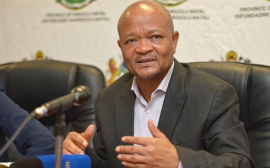
The Department of Water and Sanitation will keep a close eye on the ongoing water and sanitation projects aimed at delivering water to the people of Polokwane and surrounding areas, says Minister Senzo Mchunu.
“Rest assured, we are not going to allow anyone to make commitments and not fulfil them. Our people are in dire need of water. We want constant updates on the ongoing projects,” Mchunu said.
Mchunu met with Polokwane Municipality Executive Mayor, John Mpe and the Lepelle Northern Water Board in Mookgophong, outside Polokwane, on Thursday. This followed a recent protest where Seshego residents demanded consistent water supply. Residents also pleaded with the municipality to write off their water bills since their taps are regularly dry.
During the engagement, Mpe expressed his gratitude to Mchunu for his prompt intervention in attempting to resolve water supply challenges in Limpopo, particularly in Polokwane.
The department’s Deputy Director-General of Water Services Management, Risimati Mathye, gave a brief background on ministerial interventions for water and sanitation services in Polokwane.
“Some of the projects that need urgent intervention [include the] optimising of Polokwane and Seshego water reticulation distribution zones, 20 mega litres per day regional wastewater treatment plant, which is currently underway through Regional Bulk Infrastructure Grant (RBIG) funding, refurbishing of Dap Naude Water and Sanitation Infrastructure, and refurbishing and upgrading of existing Polokwane, Seshego and Mankweng Wastewater Treatment Works,” Mathye said.
After long discussions, the parties submitted the recommendations aimed at ending water woes in Polokwane.
The parties recommended that R120 million be made available to address short-term interventions for five groundwater projects that are under construction.
They also recommended that a further allocation of RBIG funding of R200 million in January 2023 could be made available upon appointment of service providers for Polokwane Wastewater Treatment Works.
The Minister also made an undertaking that he will write a follow-up letter to Agriculture, Rural Development and Land Reform Minister, with a view of accelerating the resolution of the letter of concern for use of the servitude for Seshego Wastewater Treatment Works and associated infrastructure.