
SA forges ahead with 4IR strategy
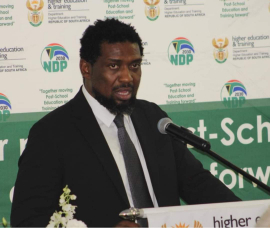
Higher Education, Science and Innovation Deputy Minister, Buti Manamela, has officially launched a Fourth Industrial Revolution (4IR) micro-laboratory at Goldfields Technical and Vocational Education and Training (TVET) college in Welkom, Free State.
Manamela described the launch of the third 4IR Centre of Excellence in South Africa as the country’s “gateway to create skills development, innovation, and entrepreneurship”.
“There is no question about the fact that 4IR is now upon us. The advent of the 4IR is not just changing the labour market, but the very world we live in and how we function within it.”
The Deputy Minister said all industries are rapidly transforming, while many occupations are becoming obsolete.
“New ones are being born in areas such as artificial intelligence, cloud computing, robotics, 3D printing and advanced wireless technologies.
“We are also seeing how these rapid advances in technology are fundamentally altering the skills requirements for various jobs.”
Citing World Bank data, Manamela said 65% of children entering primary school today would ultimately end up working in completely new jobs that do not exist yet.
“As is evident, the 4IR is all about new solutions and new technologies that can provide new, better, and faster solutions. This is why it is also anticipated that a wide range of occupations will require a higher degree of cognitive abilities, such as creativity, logical reasoning and problem solving, as part of their core skills.”
The Deputy Minister said his department has embraced President Cyril Ramaphosa’s call and the recommendations of the 4IR Commission.
“As a product of these discussions, we agreed to roll out the 4IR concept at TVET colleges in our country. We agreed to sponsor 10 TVET colleges to establish 4IR Centres of Excellence in them.”
As a result, the department has since identified several TVET colleges where these centres will be located. These include Ehlanzeni in Mpumalanga, Ikhala in the Eastern Cape, Lephalale and Vhembe both in Limpopo, Vuselela in the North West, Northern Cape Urban in the Northern Cape, Western College in Gauteng, uMgungundlovu from KwaZulu-Natal, Wes Coast from Western Cape and Goldfields in Free State.
“In rolling our 4IR centres at TVET colleges, we have adopted a multi-pronged approach.”
Industry-Partnered Learning Factories
Meanwhile, the department’s entities — the Council for Scientific and Industrial Research (CSIR) and the Manufacturing, Engineering and Related Services Sector Education and Training Authority (merSETA) — have also collaborated to establish 18 Industry-Partnered Learning Factories (IPLFs).
According to Manamela, two IPLFs in each province, at a cost of about R120 million, will support 4IR skills development, innovation and entrepreneurship.
“These learning factories will also serve as platforms for upskilling and re-skilling of the industry workforce through short courses to support the adoption of advanced technologies.”
Meanwhile, as part of this partnership, 261 students and 51 instructors have been trained, while 10 TVET colleges have been approved to offer a new stream on robotics programme from 2023.
The Deputy Minister announced that the department has also partnered with Intel South Africa to provide information and communications technology (ICT).
“The pilot project was started with Orbit College in the North West to develop a blueprint for the implementation of the project. The project consists of two aspects, which are ICT infrastructure and comprehensive 4IR training at different levels.”
He believes that the academic staff and the students here at Goldfields TVET college will benefit greatly from this investment.
“We are making significant progress in our efforts to ensure that students in the TVET colleges are empowered to respond creatively to the challenges and opportunities of the 4IR.”
Government to continue to ensure access to electricity

Department of Mineral Resources and Energy Minister, Gwede Mantashe, says government will continue to take the lead in ensuring access to and supplying electricity and not put complete responsibility on the private sector to provide additional capacity.
Mantashe was speaking during a virtual National Assembly debate of the Just Energy Transition (JET) on Thursday.
“[Energy] is a public good. The state must continue playing its role in ensuring that people have access to this public good. Hence the talk of the generation which should be a public entity that continues to develop baseload capacity.
“It must therefore be clear that Eskom is not for sale. It remains the country’s baseload energy generator. The disaggregation of Eskom into three utility divisions…forms part of our plan to secure energy supply to society,” he said.
Turning to the JET, Mantashe reiterated his stance that a “combination of energy technologies” – an energy mix – is the most “reliable solution” to addressing energy supply needs while embarking on a transition from high carbon emissions to a low carbon economy.
“We ought to guarantee baseload energy supply through a combination of gas, nuclear, coal and hydro. A pendulum swing from coal powered energy generation to renewable energy does not guarantee baseload stability. It will sink the country into a baseload crisis.
“The pressure to abandon coal instantly must be resisted and opt for a systematic step by step transition that we can afford.
“The work done by the Council for Geoscience in collaboration with the World Bank on carbon capture, utilisation and storage gives us hope that coal will continue to play a critical part in our Just Energy Transition,” he said.
The Minister emphasised that South Africa’s JET must bear in mind the livelihoods of those working in and benefitting from the coal industry.
“The Just Transition debate is a complex and contested terrain in which countries across the globe seek to advance their own national interests. We accept that a transition is a journey and not an event.
“It is a journey that must be ‘just’. Justice must be seen to be done, it must be people centred and not just about numbers and it must take into consideration socioeconomic conditions of communities that will be affected.
“It is our collective responsibility to ensure that the people of South Africa are cushioned from the dire consequences associated with the Just Energy Transition, including job losses in carbon intensive industries. Our transition must be geared towards advancing our national interests…not hinder the country’s pursuits of its socioeconomic objectives.”
Renewable energy
Although coal is expected to play a role in future energy supply, government continues to sign renewable energy power purchase agreements (PPAs) to boost the ailing national grid.
“Just [on Thursday] we signed power purchase agreements with at least three IPPs [Independent Power Producers] under bid window five which will add over 300MW to the national grid once completed over the next 12 to 18 months.
“We intend to be signing PPAs with other preferred bidders under this window,” said Mantashe.
Trade union Solidarity fails to stop preparations of NHI

The Department of Health says it welcomes the judgement delivered by the North Gauteng High Court on Thursday, in which the Solidarity trade union’s legal challenge to prevent the government from implementing the National Health Insurance (NHI), failed.
“This follows an attempt by Solidarity to interdict the department, through an urgent court application, from filling the advertised 44 vacancies as part of efforts by the department to establish a fully functioning NHI branch, while the legislative process on the NHI Bill is underway,” the department explained.
The union, according to the department, filed an urgent court application in the North Gauteng High Court on 11 October 2022, interdicting the department from making appointments of competent technical specialists to the NHI branch to assist with the preparations for the functioning of the NHI Fund.
“The judge has dismissed the application by applicant, Solidarity, with costs.”
The department explained that the objectives of the NHI are to provide universal access to quality and affordable health care for all South Africans, irrespective of their socioeconomic status by ensuring that the use of health services does not result in financial hardship for individuals and their families.
However, Solidarity argued that such advertising, while the Bill still has to pass parliamentary processes, was unlawful.
“The department’s advertisements indicate that it is recruiting competent specialists to assist with preparations for the functions of the NHI Fund. It is, therefore, obvious that the government views the passing of the NHI Bill as a fait accompli and is taking steps while the Bill to operationalise the NHI has not yet been adopted. Such an approach is irrational, unconstitutional and unlawful,” said the Head of the Solidarity Research Institute, Connie Mulder, last month.
In a statement released on Thursday, the department said, it applauds the court for ruling in the best interest of more than 84% of the population who are without medical aids and rely on the public health system to receive health services.
Call for implementation of professionalisation of the public sector framework

The National Planning Commission (NPC) has called for a sense of urgency in the execution of the National Implementation Framework towards the Professionalisation of the Public Sector.
Cabinet recently approved the Framework, which provides five pillars on interventions in professionalising the public service.
The pillars include pre-entry recruitment and selection within the public service; induction and onboarding; planning and performance management; continuous learning and professional development; and career progression and incidents.
“The focus should now be on implementation. While some aspects of the framework will need legislative amendments, ministerial directives and regulations, others can be implemented immediately,” the NPC said on Thursday.
The framework is an important milestone towards realising the National Development Plan’s (NDP) goals for a capable and developmental state. The NDP is the blueprint for socioeconomic transformation of the country.
“Ultimately, the Framework institutionalises meritocracy in the state’s human resources practices by giving effect to the NDP’s recommendations about to the type of public sector required to drive a developmental state agenda in a democratic system of government.
“Countries which have institutionalised professionalism in their public service system, especially those which are part of the Organisation for Economic Co-operation and Development (OECD) such as Australia and Estonia, and in Asia such as China and Singapore, are making significant progress in their development commitments. The NPC urges South Africa to follow suit,” the NPC said.
Amendments to legislation
The NPC has welcomed the initiative to amend the existing legislative framework so that the NDP recommendations related to building the capacity of the state are written into law, specifically through amendments to the Public Service Act (103 of 1994), the Public Administration Management Act (11 of 2014) and Public Service Commission Act (46 of 1997).
The commission has urged the finalisation of these as they are at the core of institutionalising a professional state across all spheres.
The amendments to the Municipal Systems Act (32 of 2000), which the President recently signed into law, sets the trend by, among others, barring municipal officials from holding party political office.
“The amendments to the Public Service Act are of particular importance as they aim to devolve administrative powers to Heads of Departments thereby aligning them to their financial responsibility as prescribed in the Public Finance Management Act (PFMA) (1 of 1999).
“This will free Ministers to focus on strategic policy issues. The Act, as it currently stands, assigns final accountability and authority on human resources and organisational establishment to Ministers while the PFMA assigns the powers to manage public resources to Heads of Departments.
“MISTRA’s 2013 study on the evolution of the post-apartheid state indicates that this inconsistency exacerbated conflicts between the political and administrative heads of departments across government, including at state-owned enterprises and may be the cause of the high turnover of the Heads of Departments,” the NPC said.
Expediting these amendments will contribute to the implementation of the NDP’s recommendation to stabilise the political-administrative interface.
“The NPC also welcomes the decision to designate the Director-General in the Presidency as the Head of Public Administration, nationally, and Directors-General in the offices of the Premiers, provincially, and the extension of tenures to ten years, subject to performance, as a step in the right direction towards establishing stability.
“The proposed amendments to the Public Administration Management and the Public Service Commission Acts are equally important measures for the implementation of the Framework and the proposals in the NDP,” the NPC said.
The amendments aim to create a single public service and repurpose the Public Service Commission as the custodian of norms and standards for the administration of the state including of local government and of national and provincial public entities covered by the Public Finance Management Act.
Dlamini Zuma calls for vigilance, caution amid heavy rains

Cooperative Governance and Traditional Affairs (CoGTA) Minister, Dr Nkosazana Dlamini Zuma, has called for vigilance and caution amid rains experienced in several parts of the country.
This comes after the South African Weather Service (SAWS) issued a warning for widespread rain as well as embedded thunderstorms with prospects for rainfall over much of South Africa remaining favourable, especially over the eastern half of the country.
CoGTA spokesperson, Lungi Mtshali, in a statement said: “In particular, there is a moderate to high risk of localised flooding of a disruptive nature, especially over North-West, Gauteng, the Free State, as well as adjacent parts of Limpopo, Mpumalanga and the north-eastern parts of the Northern Cape.
“The Minister calls on South Africans to be on alert and cooperate with governent by adhering to the warnings being issued especially as water moves quickly downstream, and that flooding can occur even when there is no rain.”
The department has also issued safety tips.
Safety tips:
- People living in low-lying areas must take special care during storms, as sudden floods might affect them. They should monitor the rising water levels and evacuate the areas to a safer place or higher spot when the water level rises.
- Do not cross through flooded roads or bridges: use other routes.
- Avoid crossing low-lying bridges, streams and rivers.
- Never try to walk, swim or drive in swift-flowing water. Even if the water is 15cm deep, it can sweep you off your feet;
- Motorist must be very careful and avoid driving through flooded areas.
- Drive to and park at safer areas.
- The public must monitor weather alerts on radio and television.
- The public should contact their municipal disaster management centres or the nearest police station or call the national emergency numbers (112, 10177 or 107) when faced with threats.
- Do not try to drive over a low-water bridge if water is flowing strongly across it and the ground is not visible.
- Teach your children about the dangers of floods.
- Keep your important documents in a water-resistant container.
- Keep your cell phone in close proximity to you and have emergency numbers at hand.
- Be especially vigilant at night. It is harder to recognise potentially deadly road hazards.
- Do not camp or park your car along rivers or washes, especially during heavy rains or thunderstorms.
- If you are on foot, be aware that low-moving water can also be dangerous during flood conditions. If you come upon moving water, do not walk into it.
- Where possible, communities are encouraged to try to avoid contact with any flood waters. The water may be contaminated with raw sewage, oil or other dangerous substances, and may also be charged with electricity from fallen power lines.
KNP beefs up security at Kruger this festive season

The South African National Parks (SANParks) is increasing surveillance at Kruger National Park (KNP) entry gates as part of the festive season anti-crime prevention.
According to KNP, there will also be increased spot checks of vehicles inside the park to check for amongst others, park offences such as contraband and verification of identities booking receipts of occupants inside vehicles.
Other technologies being implemented include vehicle number plate recognition, remote vehicle monitoring, radar surveillance as well as night flying with specialised infrared cameras.
“In addition to the normal ranger and security services patrols as well as the dedicated dog units with tracking hounds being deployed on poacher tracks, these will be enhanced during the festive season,” Acting KNP Managing Executive, Dr Danny Govender, said.
The SANParks Environmental Investigative Unit (ECI) which has been successful in operations outside of the KNP will be joining hands with other law enforcement agencies in tackling criminals in adjoining villages.
These operations will be targeted at those supplying rifles, ammunition,and recruiting poachers to commit crime. These are also the next level of poachers who transport and sell onward to their buyers.
The operations are assisted by community members who often give good tip-offs to authorities which lead to arrests and convictions.
In addition, ongoing collaboration with the Mozambican authorities is continuing to yield positive results with some of the elusive kingpins now behind bars.
There are regular meetings at the boundary to assess the threat from that country and to implement plans to mitigate against the threat. The sharing of intelligence has resulted in successful arrests of poachers before they kill an animal.
These measures are necessitated by the recent spike in poaching, especially snaring and poisoning which is indiscriminate and kills any animal that gets in contact with those elements.
There has been an increase in snares inside the park which have resulted in serious injuries to animals which necessitated the intervention of Veterinary Wildlife Services.
The SANParks Honorary Rangers have also been hard at work every weekend removing up to a thousand snares from the boundary which could have resulted in the loss and injury to animals.
“Our data on the rhino poaching has indicated a downward trend and we want to keep it that way. We have introduced smart camera technology systems at most hotspots; it has helped in the apprehension of suspected poachers and the confiscation of high calibre hunting rifles and ammunition.
“Our dedicated rangers are also motivated and encouraged by the recent successful arrests and convictions of poachers. We will not let our guard down as the battle to safeguard our natural heritage is far from over,” Govender said.
These measures have already yielded success and in the last quarter, from July – September 2022 a total of 10 suspected poachers were apprehended and six firearms confiscated.
Labour declares zero tolerance for corruption

The Department of Employment and Labour has welcomed the arrest of one of its officials in Germiston for allegedly demanding “spot fines” from a construction company for alleged “failure to comply”.
Employment and Labour Director-General, Thobile Lamati, said the department will accelerate internal processes for consequence management and enforce good governance principles to ensure that corrupt individuals face consequences within the department.
“The department regards this as a critical and effective step towards eliminating fraud and corruption within the department.
“It is unfortunate that the case against the department official is related to corrupt practices. However, rest assured that the department is doing everything in its power and authority to bring whoever is responsible to justice,” Lamati said.
He urged citizens to report corrupt activities.
“We envision a society in which all members have a zero tolerance for corruption. This is a vision that can be realised if we band together in a social compact to combat this enemy on all fronts with practical measures and targeted efforts.
“The department has zero tolerance for corruption and extortion, particularly if the perpetrator is a department employee, and we are fully committed to our international obligations to mobilise the global community to fight corruption on all fronts,” Lamati said.
102 small businesses trained as part of Coega development programme
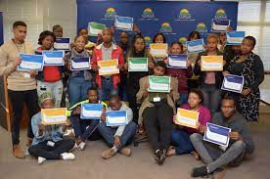
More than 100 small, medium, and micro-enterprises (SMMEs) have received training as part of the Coega Development Corporation (CDC) programme in the first half of the 2022/23 financial year.
“Over the six-month period (April – September 2022), a total of 102 SMMEs received training, as part of Coega’s SMME Development Programme, which implements developmental initiatives to grow SMMEs. The Programme has proven very successful since its inception in 2014, having trained over 2 500 SMMEs over the years,” the CDC said on Wednesday.
During the first and second quarter of the current financial year 2022/23, Coega’s SMME training included bespoke new venture training, pricing, and tendering workshops.
The New Venture Training module aimed to assist SMMEs with business administration, while Pricing and Tendering Workshops aimed to guide SMMEs on the tendering process, which will assist them to properly prepare and respond to bids/ tenders.
The training covered the Tshwane Automotive Special Economic Zone (TASEZ) Programme and the Coega Special Economic Zone (SEZ) Zone 10 – Bulk Infrastructure Project.
Coega has reaffirmed that a strong SMME sector is crucial to achieve the country’s objectives for economic development.
“The ability of Coega to promote long-term, sustainable corporate growth while simultaneously improving people’s quality of life through the provision of opportunities forms the basis of the company’s overall strategic plan. Of the 102 individuals that received SMME training, 32 completed the New Venture Skills Programme and 70 completed the Pricing and Tendering Workshops,” the CDC said.
Coega SMME beneficiary, Cynthia Ndika from Savela Cleaning Services, said the SMME development initiatives have improved the reputation and image of her business.
“Coega is a reputable corporation, which motivates my employees to put in the extra effort to meet its standards,” Ndika said.
She expressed gratitude to Coega for giving her a platform as a small business as this has allowed her business to differentiate itself from other cleaning businesses, particularly in the Gqeberha area.
“Working with Coega was a positive experience; service delivery was quick and effective. We are appreciative to Coega SEZ for the chance to support our growth, which ultimately led to our company receiving an upgrade to a 5pe CIDB grading. The project team and Coega provided excellent and highly competent support,” Britney Charles from Motheo Construction said.
Nompilo Dube, whose company provides plumbing services, expressed her appreciation for Coega’s trust in her and for going above and beyond in renewing their company’s contract.
“I appreciate the opportunity Coega has provided, and to be introduced to new clients as a result of our collaboration, as well as the ongoing communication with Coega, and the advice provided through the administration learnings,” Dube said.
CDC SMME Training and Development Manager, Ziyanda Kalani, said training is a crucial component in ensuring that we expand our SMMEs and that SMMEs that are a part of the CDC SMME Development Programme are well-trained through Services Sector Education and Training Authority (Services SETA) accredited interventions as well as on-the-job training when on construction sites.
Earlier this year, Coega announced that it had spent R1.5 billion on SMME procurement spend during the past financial year, ending 31 March 2022, which was targeted at businesses owned by Women, especially Black Woman, Black Youth, and Persons with Disabilities.
Coega’s policy is to ensure 33% SMME involvement in all projects; this cuts across the different sectors where Coega operates. The organisation also offers mentorship opportunities for emerging contractors and entrepreneurs.
Deputy President’s Office responds to Free State allegations
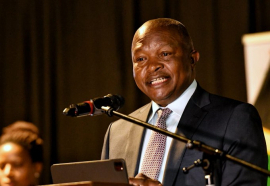
The Office of Deputy President David Mabuza says it has noted the unfortunate and misleading statement issued by the Congress of South African Trade Unions (COSATU) in the Free State.
This comes after COSATU accused Mabuza’s office of neglect amid ongoing water and electricity outages in Maluti-a-Phofung Local Municipality and the provision of other basic services to the residents of Phuthaditjhaba and surrounding areas.
“While the frustrations on the ground as a result of the disruption of basic services and livelihoods are understandable, the statement by COSATU bears misrepresentations around this matter,” the Deputy President Office’s statement read on Wednesday.
“It lacks basic facts on the chronology of events and the work that has been done in dealing with issues of provision of basic services in the municipality.”
In its statement, the Deputy President’s Office said COSATU “unfairly” attacks the second-in-command and disregards ongoing negotiations towards the finalisation of the Active Partnering Agreement between Eskom and the municipality.
“This agreement is aimed at assisting the municipality with the maintenance of infrastructure and revenue collection to enable payment of the bulk electricity account and reduce escalating debt while restoring reliable electricity and water supply.”
The Deputy President’s statement further stated that the “unfortunate” assertions lack appreciation for intergovernmental relations and their complexities.
“The provincial and national CoGTA departments have a constitutional mandate to intervene in the event of a municipality’s collapse. However, the legislation is also clear on a need to first identify the challenges facing a municipality in order to provide the necessary support, before rushing to interventions.”
In the case of Maluti-a-Phofung Local Municipality, the Office said the role of the convener is to bring together the key players to look at the best ways to assist the municipality to get back to full operation so that it can serve the people and meet the needs of the community.
“That is why the Deputy President began by holding engagements with the Premier and the Municipal Council at the time, including various local stakeholders, community representatives, business leaders, labour leaders and traditional leaders.”
In these engagements, the Office said it was established that the municipality had a myriad of challenges that had brought municipal operations to a halt, leading to sporadic protests and unrest.
Resolving challenges
Meanwhile, Mabuza has also appointed a multi-sectoral team of technocrats under the auspices of the then Eskom Political Task Team to facilitate a resolution on the challenges in the municipality as raised by Parliamentarians.
“This intergovernmental process entailed a series of engagements by the three spheres of government to implement measures to mitigate service delivery challenges in Maluti-a-Phofung Local Municipality, while a sustainable solution to the municipal debt was being finalised.”
The adopted immediate intervention measures and roadmap to stabilise the situation and address governance and operational deficits include an electricity supply improvement framework and a better mechanism to deal with the Eskom debt.
In addition, government is also looking at a water supply intervention framework, revitalisation of the industrial parks and special economic zone, and promoting commercial, solidarity economy, and informal business initiatives.
“Interventions on the electricity supply are at an advanced stage, including the construction of a new substation.”
These efforts both at political and technical levels were premised on fostering collaboration between government and social partners in order to get the municipality to full operation.
“The Deputy President remains committed to the process, as evidenced by the three visits to the municipality with a delegation that included the Premier of the Free State, members of the provincial and national governments, and senior executives of Eskom and the affected water boards.”
Former Transnet official in the dock for fraud, money laundering

Transnet Freight Rail (TFR) former legal department head Kenneth Diedricks, and two others, have appeared in the Johannesburg Specialised Commercial Crimes Court where their corruption and money laundering case was postponed.
The two other accused – Charles Pretorius and Refiloe Martins – former employees of rail maintenance company Polyzomba – did work for the state entity.
According to National Prosecuting Authority (NPA) spokesperson Phindi Mjonondwane, the case stems back to 2006 when TFR awarded a R64 million tender to Polyzomba “for the replacement of turnouts/track panels on the railway network” for a duration of five years.
“After the expiry of the TFR and Polyzomba contract, the latter lodged a contractual dispute with TFR for the payment of an ancillary contractual payment to the total value of R25 million.
“Before a settlement between TFR and Polyzomba could be concluded, the consultation approval and signatures of Diedricks, the General Manager of Rail Network as well as that of the Principal Engineer were required.
“On 19 December 2011, Diedricks and the said General Manager co-signed and approved the settlement of over R25 million as payment to Polyzomba without consultation, knowledge, approval and signature of the engineering department of TFR, nor the Principal Engineer,” she said.
Mjonondwane said the three are expected back in court next year.
“All accused were released on R10 000 bail after the court heard an unopposed formal bail application on condition that they should notify the investigating officer 14 days in advance of travelling out of South Africa, as well as provide the officer with a full itinerary of their travelling arrangements.
“All accused will return to court on 7 March 2023 for disclosure of the contents of the docket to the defence team,” she said.