
Skills audits for public servants in the KZN administration
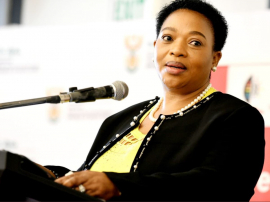
KwaZulu-Natal Premier, Nomusa Dube-Ncube, says skills audits are being conducted for all public servants in the provincial administration, including municipalities, which have more than 200 000 employees.
Dube-Ncube said the skills audits are aimed at delivering high quality services to citizens, while building a capable and competent workforce.
“The skills audit will assist us to ascertain whether as the KwaZulu-Natal provincial administration we have the required skills set to deliver services to our people. The skills audit in all the municipalities has been finalised, while the skills audit in government departments will be finalised in 2023,” Dube-Ncube said.
The Premier was speaking during the first day of the Government Capacity and Performance Review Conference, which is underway at the University of KwaZulu-Natal (UKZN).
The three-day conference, being held from 7 – 9 November 2022, is informed by the 10-year anniversary of the adoption of the National Development Plan (NDP) developed in 2012.
Hosted by the Department of Public Service and Administration (DPSA), in partnership with the KwaZulu-Natal Office of the Premier, University of KwaZulu-Natal and the National Planning Commission, the conference is centred on this commitment by the government over the last 10 years through the NDP.
It seeks to ascertain the extent to which government has manifested this commitment 10 years later.
Chapter 13 of the NDP commits government to building its own capacity for the efficient and effective delivery of services, and to close the trust deficit between the government and citizens.
Addressing the delegates, Dube-Ncube said the conference confronted the challenge of uneven implementation that arises out of capacity inadequacy across the state and manifesting in uneven outcomes at local, provincial and national government.
“We are clear that these skills gaps lead to, and are also a result of weak accountability, persistent corruption emanating from a leadership skills deficit. A functional and integrated government requires a professional, responsive and meritocratic public service cadre that is obsessed with efficiency and citizen-focused delivery,” Dube-Ncube said.
She emphasised that to be able to lead a state that is capable of playing a developmental and transformative role, public service must be immersed in the development agenda, but must be insulated from undue political interference.
“These factors must interact together in one direction to achieve the National Development Plan goals, and to lead the thorough-going transformation of our country at all levels,” the Premier said.
In addressing this challenge in KwaZulu-Natal, the Premier said at least 100% of municipal officials have been audited for skills and revealed training needs for senior managers in financial management; strategic capability and leadership; risk management; change management; policy development; and monitoring and evaluation, among others.
Framework for Mentorship and Coaching
She said the province has developed a Framework for Mentorship and Coaching to address the findings of the skills audit.
Councillors are currently being capacitated on the complexities of the District Development Model, through the Integrated Councillor Induction Programme and Sector Based Councillor Orientation Workshops.
“The capacity development of public servants has been conducted with 791 officials already trained. The repositioned Provincial Training Academy is prioritising key skills and capacity building interventions to improve service delivery in partnership with the National School of Governance (NSG) and other institutions.
“Our partnerships are not only ensuring that the curriculum offered in universities responds to the economy and skills needed by the province but to partner with university and NSG in the skilling, reskilling and upskilling of public servants,” Dube-Ncube said.
The Premier announced that the Provincial Anti-Corruption Implementation Plan has been drafted based on the National Anti-Corruption Strategy that was approved in 2020.
In addition, the Office of the Premier, together with the Department of Cooperative Governance and Traditional Affairs, the Special Investigations Unit, the Hawks and National Prosecuting Authority are working together as a forum in conducting the ethics and anti-corruption awareness campaigns.
The conference brings together a variety of stakeholders working in the field of state capacity and government performance. These include academics from across South African universities, researchers, public servants and cabinet leaders.
Public hearings into water agency bill kick off

Water and Sanitation Director-General, Dr Sean Phillips, has emphasised that the National Water Resource Infrastructure Agency (NWRIA) is not the solution to the current challenges facing the country, but it would work simultaneously with other projects to alleviate water issues.
Phillips was speaking during a public consultation held in Boksburg to present the draft National Water Resource Infrastructure Agency (NWRIA) Bill.
The Director-General recently kicked off the national public consultation for the draft NWRIA Bill for public comment and input from sector stakeholders.
The Bill seeks to establish the NWRIA, which will result in the bulk water infrastructure, its asset management and revenue collection functions integrated, owned, and managed under one entity and be able to raise finance for requisite further infrastructure development.
The NWRIA is to be registered as a State-owned company in terms of the Companies Act, 2008 (Act No. 71 of 2008) and listed as a major public entity in terms of schedule 2 of the PFMA.
Phillips said the aim of agency is to get a better method of funding than what the department is currently managing.
He said an agency would be better positioned to raise funds from sources other than the fiscus, from which the department is currently dependent.
“In terms of Public Finance Management Act (PFMA), listing and authority, credit rating and condition of assets, the agency could raise commercial and development finance, domestically and internationally, while for some projects, it could also enter public-private partnerships.
“Other rationale for the establishment of the agency include governance and transparency. Establishing the NWRIA will strengthen governance and transparency in the water sector by separating the roles of player and referee. The NWRIA will [also] address the current fragmentation of asset management and revenue collection functions for national water resource infrastructure,” Phillips explained.
The mandate of the NWRIA is to:
- Implement water resource management infrastructure as identified in water resources planning processes within Department of Water and Sanitation;
- Manage national water resources infrastructure of both economic and social nature;
- Generate and collect revenue from the sale of water as its primary source of income;
- Develop options to increase the sources of revenue, e.g., recreational use of assets and hydropower;
- Raise commercial funding on the strength of its balance sheet and operational cash flows (actual and projected) for commercially viable projects; and
- Facilitate public-private partnerships.
Phillips said the department is also planning and implementing a range of major projects to augment national bulk water resource infrastructure, these including Lesotho Highlands Phase 2 and uMkhomazi projects, amongst others.
“This, coupled with the addressing of non-revenue water at municipal level and improving billing and revenue collection across the water value chain, among many others,” said the DG.
The draft bill has been published for public comments before being sent to Cabinet for approval.
Prosecutor in court for failing to report sexual offence

A National Prosecuting Authority (NPA) prosecutor has appeared in the Humansdorp Magistrates’ Court for failing to report a sexual offence against a child.
NPA regional spokesperson, Luxolo Tyali, said the prosecutor was released on a warning and will be back in the court later this month.
“A 54-year-old regional court control prosecutor, Vicky Rossouw, appeared in the Humansdorp Magistrates’ Court, charged with contravention of Section 54(1)(a) of the Sexual offences Act, 32 of 2007.
“[The Act] provides that a person who knows that a sexual offence has been committed against a child must report the alleged offence to the police. The State is alleging that she had knowledge that an offence of rape, incest and sexual assault was committed against a child, but she failed to immediately report it to the police,” Tyali said.
He said the NPA is also pursuing internal processes regarding the prosecutor’s alleged behaviour.
“The NPA views this case in a very serious light and has commenced internal labour relations processes against the prosecutor. The enrolment of this case against one of our own is a clear indication that if there is enough evidence of a commission of a crime against anyone, the NPA will prosecute without fear, favour or prejudice,” Tyali said.
Meanwhile, a 38-year-old police official has been refused bail in the Pretoria North Magistrates’ Court for the alleged rape of a 15-year-old boy.
NPA regional spokesperson, Lumka Mahanjana, said the man – Sergeant Elvis Hlungwani Mihloti – is attached to the SAPS’ Rapid Railway Response Unit.
“It is alleged that… while the minor was with his friends, Mihloti allegedly took the child and drove with him to different taverns and later went to Vicks Tavern in Soshanguve. While at the tavern drinking, it is alleged that Mihloti asked the boy to accompany him to check if his car was still parked.
“When they arrived at his car, the boy passed out and when he regained consciousness in the wee hours of the morning, he found himself in Mihloti’s bed, where Mihloti was busy raping him. He then instructed him to get dressed and promised to drop him off at home. On their way to the victim’s home, Mihloti stopped on the M17 and pulled the boy out of the car and drove off,” Mahanjana said.
She explained that the man was arrested after the incident was reported to the Independent Police Investigative Directorate (IPID).
“The uncle took the boy to hospital after he overheard the boy telling his male neighbour, who is said to be a close friend of the accused, what had happened to him and later reported the matter to the police,” she said.
Mihloti has been denied bail and is expected back in court on December 7.
Non-payment of municipal debt affect Eskom liquidity
Eskom says large electricity supply debt racked up by municipalities is negatively affecting its financial performance.
This after the high court in Pretoria handed down a R1.3 billion order against the Emfuleni Municipality for failing to pay its Eskom current account and arrears.
“The overdue debt is impacting negatively on the public utility’s liquidity, financial performance and sustainability, leaving the public utility no option but to borrow in order to meet its financial commitments,” Eskom said.
According to Eskom, the Emfuleni municipality has failed to pay some of its account “despite the municipality’s healthy revenue collection of about 90%” from customers.
“[Eskom] has started with the execution steps against the municipality to recover some of the municipality debt including attaching the local authority’s bank accounts and moveable assets. Emfuleni Municipality is currently indebted to Eskom to the amount of R5.3 billion despite several litigations brought by the power utility since March 2018 to get the municipality to service its account,” Eskom said.
Furthermore, the power utility said it has served the municipality a summons for non-payment of its R3.4 billion bulk electricity supply bill.
“This resulted in Eskom and the municipality’s customers applying to the court to transfer the municipality’s electricity distribution license or part thereof to Eskom. This application is to be heard in March 2023 and would set a precedence for municipalities failing to pay their Eskom debt and complying with the Electricity Supply Agreements (ESA),” the power utility said.
Meanwhile, Eskom says stage two load shedding will now be implemented all day, from 9am on Tuesday (today) until further notice.
The power utility had night load shedding on Monday.
“This is necessitated by a breakdown of a Duvha generating unit and a delay in returning to service another Duvha unit. Eskom will provide a further update as soon as any significant changes occur,” the power utility said.
Evening load shedding until further notice

Eskom has announced that load shedding will be implemented from 4pm to 5am every evening “until further notice”.
This as the power utility continues to battle breakdowns at power stations and for the recovery of emergency generation capacity.
“The nightly implementation of load shedding is mainly due to the need to preserve emergency generation reserves owing to a high level of breakdowns. Eskom will publish a further update as soon as there are any significant changes.
“Load shedding is implemented only as a last resort in view of the shortage of generation capacity and the need to attend to breakdowns,” the power utility said.
By Sunday afternoon, some 14 107MW of capacity was offline due to breakdowns with a further 4963MW out on planned maintenance.
“[On Sunday morning] a generation unit at Kriel Power Station was returned to service while the return to service of a unit at Majuba Power Station has been delayed,” Eskom said.
President Ramaphosa to participate in climate summit in Egypt

President Cyril Ramaphosa will participate in the Sharm El-Sheikh Climate Implementation Summit scheduled from today until tomorrow in the Arab Republic of Egypt.
President Ramaphosa is at the summit on the invitation of the President of the Arab Republic of Egypt, Abdel Fattah El-Sisi.
“President Ramaphosa will on 07 November 2022 Co-Chair the High Level Roundtable on Just Transition, which will allow discussions on innovative approaches to address climate change in the context of Just Transition, inspired by the South African Just Energy Transition Partnership (JETP),” the Presidency said in a statement.
On Sunday during the special sitting of the Presidential Climate Change Commission(PCC), President Ramaphosa unveiled government’s Just Energy Transition Investment Plan (JET-IP) outlining government’s comprehensive priority investment and financing interventions required to achieve decarbonisation commitments and ensure an equitable and just transition.
The 2022 United Nations Framework Convention on Climate Change (UNFCCC) COP27, is held from 06 to 18 November 2022, at the Sharm El-Sheikh International Conference Centre.
With COP27 taking place in Africa, it presents an opportunity to advance African priority issues, namely:
• Recognition of Africa’s special needs and circumstances;
• Raising the ambitions on mitigation, adaptation and support to developing countries.
• Advance financing arrangements for loss and damage.
• Build on progress made in Glasgow on the importance of Just Transitions.
• Advance discussions on the special needs and circumstance of Africa.
Climate summits provide a platform to make announcements of new climate ambition, political direction and momentum for the UNFCCC negotiations, as well as to address broader issues related to climate change mainly to guide climate change negotiators (beyond the mandate and scope of the UNFCCC negotiations).
The programme for the participation of Heads of State and Government (HOSG) will include an official opening ceremony, high-level round tables, delivery of national statements and high-level side events organised by World Leaders.
During the summit, the Government of Egypt will convene 6 high-level Round Tables on Just Transition; Food Security; Innovative Finance and Climate Development; Investing in Future of Energy; Climate Change and Sustainability of Vulnerable Communities and Water Security.
These roundtables will be attended by the HOSG, Heads of observer organisations and specially invited guests.
On Tuesday, President Ramaphosa will deliver a national statement during the high-level segment of the summit.
The summit further provides a platform for discussing how climate actions can be supportive of broader Just Transitions imperatives, highlighting the need for the COP to agree on a Just Transition Financing Framework under the mitigation work programme as a potential model for supporting energy transition in middle income countries.
“The high-level segment for Heads of State and Government during the summit signifies the importance for World Leaders to implement and transform key climate related decisions into concrete actions and credible plans, continue raising ambition, building up from previous Conference of the Parties, including the Glasgow COP 26 outcomes.
“The segment also keeps the high level commitment on climate change issues, with an aim to fight back climate emergency and promoting coordinated action to tackle climate change,” the Presidency said.
South Africa’s UNFCCC negotiating positions on climate change, are fully aligned to the African common position, as adopted by the African Union’s Committee of African Heads of State and Government on Climate Change (CAHOSCC) and the African Ministerial Conference on the Environment (AMCEN).
The President will be supported by the Minister of International Relations and Cooperation, Ms Naledi Pandor; Minister of Forestry, Fisheries and the Environment, Ms Barbara Creecy.
World Bank loan to help SA decarbonise, says Godongwana

The R9 billion concessional loan the World Bank granted to Eskom last week for the repurposing of the Komati Power Station will go a long way to ensure that government moves towards decarbonisation, says Finance Minister, Enoch Godongwana.
Godongwana and Public Enterprises Minister, Pravin Gordhan, on behalf of the South African government, on Sunday met the President of the World Bank, David Malpass, at the power plant in Mpumalanga.
The visit came after the loan approval for the power plant, which is set to become the country’s flagship Just Energy Transition (JET) project.
Malpass was on a short visit to South Africa while en route to the COP27 Summit in Egypt.
Gordhan and Malpass were welcomed in Mpumalanga by Premier Refilwe Mtshweni-Tsipane and received at the Komati Power Station by the Eskom Board chairperson, Mpho Makwana and Eskom CEO, Andre de Ruyter.
Godongwana, who met with Malpass on Saturday evening, said government is in partnership with a range of social partners to ensure a just energy transition.
“The financing Eskom is receiving from the World Bank will go a long way in assisting us to meet the ambitious targets relating to decarbonisation and the just energy transition that we have set for ourselves.
“The repurposing of Komati is a critical first step in a long journey, one that we cannot walk alone if we are to strike the urgent balance between our environmental, economic and energy imperatives.
“We will continue to mobilise capital, internationally and domestically, to finance the transition, in the interest of the lives and livelihoods of our people,” said Godongwana after the meeting.
Komati is set to be converted into a site for renewable energy generation, as the country gradually transitions from fossil fuels to clean energy resources.
It seeks to make a major contribution to mitigating climate change and ensuring energy security while supporting a range of economic initiatives for local communities in the Komati area.
Announcing the loan facility, Malpass expressed his confidence in South Africa embarking on the JET.
“Reducing greenhouse gas emissions is a difficult challenge worldwide, particularly in South Africa, given the high carbon intensity of the energy sector. Decommissioning the Komati plant this week is a good first step toward low carbon development. We are cognizant of the social challenges of the transition, and we are partnering with government, civil society, and unions to create economic opportunities for affected workers and communities,” said Malpass.
Gordhan said Malpass’s visit was an expression of confidence in South Africa’s ability to implement a JET in a way that minimises any negative impacts on local communities, which have over the years developed around coal stations.
“This project will greatly assist Eskom, South Africa and the international community to develop a deeper understanding and appreciation of how the processes of decommissioning and repurposing of coal-powered stations can be done in a manner, which mitigates the socio-economic impacts for workers and communities; before we scale up the move of the power sector into a low carbon path. Crucially, it will provide training in new skills and for new jobs,” Gordhan said.
The last unit of the Komati Power Station was decommissioned and switched off on 31 October 2022, signalling the end of its operating life as a coal-fired power station.
The Komati plant will be converted into a renewable generation site powered with 150MW of solar, 70MW of wind and 150MW of storage batteries, adding generation capacity to the grid, thereby continuing to put the site and its associated transmission infrastructure to good use.
A containerised micro-grid assembly factory has already been established on site. This will help prolong the usefulness of the infrastructure and provide economic opportunities to the community.
Eskom has developed a comprehensive JET Strategy, which places equal importance on the ‘transition to lower carbon technologies,’ and the ability to do so in a manner that is ‘just’ and sustainable. The employees remaining at Komati at the time of the decommissioning will become part of the Repowering and Repurposing project.
The Komati Training Facility is already under development. It will facilitate the reskilling, retraining, and upskilling of Eskom employees and members of the community, as appropriate.
Eskom has signed a partnership agreement with the South African Renewable Energy Technology Centre (SARETEC) of the Cape Peninsula University of Technology, and the Global Energy Alliance for People and Planet (GEAPP) to develop the training facility.
Parliament warns of scam using National Assembly Speaker’s name

Parliament has warned members of the public about a scam designed to mislead unsuspecting victims using an email address and WhatsApp number purporting to be that of the Speaker of the National Assembly, Nosiviwe Mapisa-Nqakula, to defraud victims.
In a statement issued by Parliament on Sunday, the modus operandi is that the scammer sends an email from a Gmail account, appearing to be that of the Speaker, asking potential victims their WhatsApp contacts to initiate a conversation.
“Once the email chat migrates to WhatsApp, the scammer, whose targets thus far have been several staff members of Parliament, then requests potential victims to urgently purchase them an iTunes voucher.
“The WhatsApp number used bears the name of the Speaker but the profile picture is that of the National Council of Provinces Chairperson, Amos Masondo. Anyone who receives such an email is urged to ignore it,” Parliament said.
KZN Premier calls for swift arrest after spate of mass shootings

KwaZulu-Natal Premier, Nomusa Dube-Ncube, has called on police to leave no stone unturned in finding the gunmen involved in the spate of mass shootings, which claimed the lives of 11 people over the weekend.
According to police reports, the latest incident happened on Saturday at 1:30pm in Ndwedwe Mission, north of Durban, where unknown assailants opened fire on a group of men, who were sitting on the veranda of a tuck shop.
The gunmen fled the scene immediately. Four men were declared dead at the scene, while three others were taken to hospital for medical attention. One of the men later died in hospital.
In a separate incident that took place at 10:30pm on Friday, six people were shot dead and one was left injured at an informal settlement in Clermont, when unknown gunmen started shooting randomly. The gunmen fled the scene.
Dube-Ncube has expressed outrage after learning about the heartless mass shootings in the province, and sent her deepest condolences to the families of all those who lost their lives due to the senseless murders.
“We unreservedly condemn in the strongest possible terms the brutal murder of 11 people in Ndwedwe and Clermont at the weekend, and call on the police to scour every nook and cranny of the province, and to strain every nerve in their bodies to find the perpetrators of this horrendous act so that they can be brought to book.
“As we are approaching the festive season, police have been tasked to identify all crime hotspots in the province as part of our comprehensive Festive Season Integrated Safety Plan and deploy additional officers in order to beef-up visibility. We will not allow a situation whereby citizens live in fear,” Dube-Ncube said.
The Premier reiterated that the provincial government has a zero-tolerance stance towards all types of crime, especially murder.
She also called on members of the community to come forward with information that can assist police in the investigation.
“Issues pertaining to safety and security require an integrated approach from all sectors of society. Government, business, civil society, including community policing fora, need to work together to address criminal activities and instability in order to ensure a safe society and thriving economy.
”We will never win the war against crime if community members continue to protect criminals,” Dube-Ncube said.
The Provincial Organised Crime Unit is investigating cases of murder and attempted murder.
President hands in Section 89 submissions
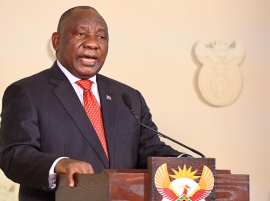
President Cyril Ramaphosa has made submissions to Parliament’s Section 89 independent panel assessing his conduct following a robbery at his Phala Phala game farm in February 2020.
The panel is headed by former Chief Justice, Sandile Ngcobo, with other members of the panel being Judge Thokozile Masipa and Advocate Mahlape Sello.
“On Sunday, 6 November 2022, President Cyril Ramaphosa delivered his submission made in terms of rule 129g(1)(c)(iii) of the National Assembly rules, to the independent panel appointed in terms of rule 129d of the National Assembly rules. The President’s submission affirms his committed cooperation with due process,” the Presidency said in a statement.
The Presidency emphasised that the President is committed to the rule of law and reiterated his position that he committed no wrongdoing.
“President Ramaphosa has always made certain that throughout his tenure as President, he abides by his oath of office and set an example in his respect for the Constitution, its institutions, due process and the rule of law.
“President Ramaphosa categorically denies that he violated this oath in any way and denies that he is guilty of any of the allegations made against him,” the statement read.