
Investigation leads to arrest of government employee

Gauteng South African Police Service (SAPS) Commissioner, Lieutenant General Elias Mawela, has commended the investigation that led to the recent arrest of a Department of Employment and Labour employee for corruption and extortion.
This comes after the team of investigators on Friday nabbed a 35-year-old suspect in Germiston on charges of corruption and extortion following an intelligence-driven operation.
Provincial spokesperson, Lieutenant Colonel Mavela Masondo, said a team comprising members from SAPS Gauteng Provincial Head Office Organised Crime Investigations: Anti-Gang Unit, Kidnapping Unit and Tracking Team operationalised information they obtained on criminal activities involving the said employee.
“The employee allegedly regularly demanded “spot fines” from a construction company for alleged non-compliance. The matter was brought to the attention of the police by the complainant where after the investigation immediately commenced.
“The suspect visited the construction site again on Friday to collect money from the complainant then subsequently the team apprehended the suspect. He was found in possession of cash he had demanded from the complainant,” said Masondo.
In another incident, two members of the Tshwane Metropolitan Police Department (TMPD) were on Sunday arrested for allegedly soliciting a bribe from a member of the public for driving above the speed limit in Centurion.
Further investigation is still underway while the suspects are expected to appear before a Magistrates’ court soon.
“Police in Gauteng have a zero tolerance policy against corruption and extortion, especially if the perpetrator is a government employee. Our members will leave no stone unturned in bringing any perpetrator of corruption to book,” said Lt Gen Mawela.
SARS concludes participation in ATAF, BRICS meetings
The South African Revenue Service (SARS) has participated in two multilateral meetings to cement international tax co-operation in Africa and among the BRICS [Brazil, Russia, India, China and South Africa] countries.
In line with its strategic objectives of working with stakeholders and building public confidence and trust, SARS said it had been progressively working to rebuild its international partnerships with key organisations. These include the Organisation for Economic Co-operation and Development (OECD), Global Forum on Tax Transparency, African Tax Administration Forum (ATAF), World Customs Organisation (WCO), Southern African Development Community (SADC), Southern African Customs Unit (SACU), United Nations and the International Monetary Fund (IMF), as well as bilaterally with other tax and customs administrations.
SARS said it actively participates and contributes constructively in these fora.
The first meeting was the hybrid 7th Annual General Assembly of the ATAF in Lagos, Nigeria last week. This was followed by the virtual meetings of BRICS, hosted by the State Taxation Administration (STA) of China as the current BRICS Chair. This comprised BRICS Tax Experts and Heads of Tax Authorities on 2 and 3 November 2022.
ATAF
During the 7th Bi-annual ATAF General Assembly, Togo and South Africa were re-elected as Chair and Vice Chair of ATAF, respectively.
Under the theme, ‘Rethinking Revenue Strategies: The Human Face of Taxation’ hybrid event saw more than 500 attendees, representing 33 tax administrations and 15 partner organisations.
“The meeting discussed various tax-related issues, including the importance of domestic resource mobilisation to development financing, technology and human capital, the Two-Pillar Solution aimed at addressing the tax challenges arising from the digitalisation of the economy, reforms to enhance fiscal resource mobilisation, the maximisation of natural resource rents, as well as curbing illicit financial flows,” said SARS.
Another highlight of the meeting was the launch of the Handbook on the Future of Resources Taxation.
Ten ideas are put forward in this handbook on how the current system of mining taxation could be improved and resource-rich countries could maximise returns from mineral wealth.
Commissioner Edward Kieswetter set the scene during his presentation on the subject of Tax and Technology – Human Centered Socially Responsible Automation. In his address, the Commissioner highlighted the progress made in building a “smart, modern SARS”.
He further emphasised the importance of humanisation and reminded the audience that “the smarts that we employ in our tax administrations, the technology and data that we deploy, is ultimately are about people”.
“It is about the citizens that we serve. It is about the taxpayers whose contributions we honour, and it is about our employees who make all of this possible,” said Kieswetter.
BRICS
The highlight of the Heads of Tax Authorities meeting was the endorsement to launch the first issue of the BRICS Tax Best Practices compilation, a collection of insightful administration case studies from BRICS Tax Authorities.
South Africa will assume the chairmanship of BRICS at the beginning of 2023 and will subsequently host the BRICS Tax meetings in 2023.
“International cooperation is crucial in enabling SARS to deliver on is mandate. Working with and through stakeholders to improve the tax system is implicit in our strategic direction.
“We endeavour to have effective and beneficial partnerships with all stakeholders, both local and international, in the tax ecosystem that deliver maximum benefits for the taxpayers and traders, government and the public. We leverage each other’s strengths to resolve tax administration challenges and improve voluntary tax compliance,” said Kieswetter.
Eskom loan “significant step” for Just Energy Transition

Eskom board chairperson Mpho Makwana says the R9 billion concessional loan approved for the repurposing of the Komati Power Station is a “significant step” for South Africa’s transition towards clean energy.
The coal fired power station was shut down last week after serving the South African public for at least 60 years and it is set to become South Africa’s first station to be repurposed into a renewable energy site.
“This is a significant development for South Africa’s Just Energy Transition to renewable energy as it brings the much-needed funding to enable Eskom to train its employees and members of the host communities to empower them to continue playing a central role in the provision of clean energy for the country,” Makwana said.
According to Eskom, the loan will be guaranteed by National Treasury with the repurposing project already approved by the Eskom board.
“The loan facility will cover three main components: decommissioning of the Komati Power Station, repurposing and repowering of the station and other elements of the Just Energy Transition, including provision for the training of Eskom employees, community development and stakeholder initiatives.
“The first phase of the repurposing will install 150MW of photovoltaic, 70MW wind generating capacity, 150MW of Battery Energy Storage System and synchronous condenser,” the power utility said.
A just transition
Eskom CEO Andre de Ruyter said the power utility’s recent agreement with the South African Renewable Energy Technology Centre (SARETEC) to educate, reskill and upskill former Komati Power Station workers and qualifying surrounding community members is critical in ensuring that they are not left behind in the energy transition.
“This is in line with Eskom’s drive to ensure that we prepare our people and have a pipeline of local skills ready for the inevitable transition, which will be just.
“Given the accelerated global movement towards investment in a clean energy transition, there is a need in South Africa to upskill, retrain and develop a workforce to take full advantage of the opportunities presented by this transition. To achieve this Eskom is working with its recognised labour unions and representatives of the host community,” de Ruyter said.
Cele launches 2022 safer festive operations
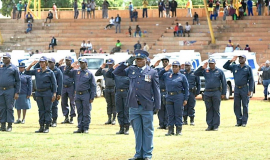
Police Minister Bheki Cele has launched the 2022 safer festive operations under the theme “more boots on the ground towards enhanced police visibility.”
He launched the campaign in Thohoyandou, Limpopo, on Thursday.
The national launch serves as a precursor to the provincial launches, ushering in a season of heightened visibility countrywide; coupled with intensified, integrated crime prevention and crime combatting operations, as the South African Police Service (SAPS) strives to ensure the well-being and safety of all residents and tourists in our country, during the festive season and beyond.
With the campaign running through to the end of January 2023, the campaign aims to mobilise maximum resources with the view of stamping the authority of the State to ensure that communities are and feel safe and secure.
Speaking at the event, Acting National Commissioner of the SAPS, Lieutenant General Tebello Mosikili, handed over the safer festive season operational plan to the Minister.
The plan entails six focus areas which will be prioritised by the SAPS throughout the festive season.
All nine provinces will conduct operations in line with the National Policing Strategy, focussing on these priorities:
- On the first focus area, the SAPS will intensify campaigns and police actions towards addressing the scourge of Gender Based Violence and Femicide which include, intimate crimes committed against women, children and other vulnerable. This will include the tracing of wanted gender-based violence and femicide (GBVF) perpetrators.
- In the second focus area, the SAPS will intensify efforts to combat aggravated robberies, such as carjacking, robberies at residential premises and business robberies.
- The third focus area will be enhancing border security which will be characterised by search operations on suspicion of stolen property being smuggled out of the country; illegal crossing of borders; human trafficking; drug trafficking; and tracing of wanted suspects.
- The fourth focus area will centre on the enforcement of legislation in our strife to deal decisively with the proliferation of illegal firearms. We will also be enforcing legislation applicable to Liquor, Second-Hand Goods; as well as the safety of the sports and recreational events.
- The fifth and sixth focus areas will focus on enforcing by laws and ensuring the enforcement of road safety together with metro and national traffic law enforcement officers.
The Acting National Commissioner says heightened police visibility will be the order of the day.
“Blitz operations will be conducted across all provinces on days and times aligned to the crime pattern and threat analyses. These crime prevention and combatting operations will run through to the end of January 2023,” said Lt Gen Mosikili.
During the launch, the Minister of Police, General Bheki Cele, handed over 20 new motor vehicles and two mobile Community Service Centre’s (CSC) to the Limpopo province to ensure the province is well-resourced to respond to crime.
Tacking rape, business robberies
“These vehicles and mobile CSCs must assist in ensuring that you address rape and business robberies in areas like Thohoyandou. It is a concern that between April and June 2022, Thohoyandou Police Station was the fifth Police Station which recorded the highest number of rape cases in the country and provincially it was number one. This situation requires an all hands on deck approach and more boots on the ground to ensure increased visibility,” said Cele.
While the SAPS ensures heightened police visibility throughout this festive period, communities are also urged to remain extra vigilant of their surroundings in a bid to ensure they do not become victims of crime.
World Bank approves SA’s $497m request for Komati power plant’s decommission, repurposing

The World Bank has approved South Africa’s request for a $497 million project to decommission and repurpose the Komati coal-fired power plant using renewables and batteries.
In a statement, the World Bank said the project would also create opportunities for the affected workers and communities.
“This is in line with the government’s efforts to transition the country toward a low carbon development path with reliable, affordable, and sustainable energy for all. Addressing energy poverty and transitioning toward lower carbon development requires a reliable power sector to underpin inclusive economic growth,” said the Bank.
The Komati Project aims to help mitigate climate change, enhance energy security, and support economic opportunities in the Komati area. The project is aligned with the country’s Just Transition Framework, which aims to minimise the socio-economic impacts of the climate transition, improve the livelihoods of those most vulnerable, and embrace the opportunities stemming from the transition.
The Bank said the decommissioning and repurposing of the Komati coal-fired plant was a demonstration project that can serve as a reference on how to transition fossil-fuel assets for future projects in South Africa and around the world.
The project will provide learning experiences through a cycle of piloting, monitoring, assessing, documenting and information sharing.
“Reducing greenhouse gas emissions is a difficult challenge worldwide, and particularly in South Africa given the high carbon intensity of the energy sector,” said World Bank Group President David Malpass.
“Closing the Komati plant this week is a good first step toward low carbon development. We are cognisant of the social challenges of the transition, and we are partnering with the government, civil society, and unions to create economic opportunities for affected workers and communities.”
The decommissioning of the Komati coal-fired plant will result in reduced carbon emissions and improvement of ambient air quality in the vicinity of the plant. The power sector is a major contributor to greenhouse gas emissions in South Africa, accounting for 41 percent of its CO2 emissions.
This is due mainly to Eskom’s fleet composition. Its 15 coal-fired power plants, with an average age of 41 years, provide 38.7 GW of the country’s 52.5 GW installed capacity.
“This project is critical to our understanding of the sustainability of decommissioning, repurposing, and mitigating the socio-economic impacts for workers and communities before we scale up the move of the power sector into a low-carbon path,” said South Africa Minister of Public Enterprises, Pravin Gordhan.
“It is part of implementing the country’s Integrated Resource Plan 2019 to gradually retire 12 GW of our old and inefficient coal-fired power fleet by 2030 and to scale up private sector-led renewables of 18 GW during the same period.”
The repurposing of the plant will enhance energy security in South Africa with the installation of a combination of 220 MW renewable energy solutions (including 150 MW solar PV solar and 70 MW wind) and 150 MW batteries, which together will help to improve the quality of electricity supply and grid stability.
Under the Komati project, the workers will be supported through a comprehensive transition plan, elaborated jointly with inputs from staff and unions.
Options for the affected workers will include transfers to other Eskom facilities, re-skilling, and upskilling for deployment to the renewable energy plants.
A portion of project financing will be devoted to creating economic opportunities for local communities, which is expected to benefit approximately 15 000 people.
Community-driven projects, skills training, incubation support, and business development services for new and existing micro, small, and medium enterprises are expected to create jobs in agriculture, local manufacturing, and digital technology.
Activities will be carried out in coordination with local government, civil society organizations, and the private sector.
The Komati Just Energy Transition Project is financed jointly through a $439.5 million World Bank loan, a $47.5 million concessional loan from the Canadian Clean Energy and Forest Climate Facility (CCEFCF), and a $10 million grant from the Energy Sector Management Assistance Program (ESMAP).
Reserve Bank modernises to improve payment ecosystem

South Africa’s financial sector has taken another huge step towards modernising the country’s payment ecosystem.
This comes after the South African Reserve Bank (SARB) on Thursday announced the adoption of a new global messaging standard by its domestic real-time gross settlement (RTGS) system, participant banks and other financial market infrastructures (FMIs).
South Africa is one of the first countries on the continent to adopt the International Organization for Standardization (ISO) financial messaging standard ISO 20022, which is expected to underpin all high-value payments in reserve currencies by 2025.
In a statement, the central bank said the ISO 20022 – being driven through the Society for Worldwide Interbank Financial Telecommunication (SWIFT) – will introduce a harmonised message exchange mechanism for payments across the globe, allowing for richer, better quality data in payment processing and settlements.
“SWIFT has set a 2025 deadline by which all users in its network must have transitioned to this messaging standard,” the SARB said.
The move was necessitated by the rapid development of disruptive technology, evolving cyberthreats, increased regulation and demands from customers for faster, more cost-effective payments.
“The adoption of the ISO 20022 standard is expected to improve compliance and transparency, increase efficiency and interoperability, enhance customer experience, and speed up payment systems harmonisation.
“At the heart of this change is the switch from the legacy proprietary messaging format known as Swift Message Type (SWIFT MT) to the ISO 20022 Extensible Markup Language (XML).
“The adoption of XML – a language and file format for storing, transmitting and reconstructing information – will allow for the exchange of richer, more granular data, including the details of the remittance, the purpose of the payment, the original source and ultimate beneficiary along with any relevant supplementary data,” the SARB said.
The ISO 20022 migration, the bank said, represents a change in the global payments landscape.
“Its adoption in South Africa is a pivotal marker in the country’s efforts to renew and modernise its domestic payments infrastructure, including our RTGS system – the South African Multiple Option Settlement (SAMOS) system.
“Having guided the domestic ISO 20022 adoption, the SARB will be supporting this change through the Southern African Development Community (SADC), as the operator of the SADC-RTGS. The switchover for participants in the SADC-RTGS is expected to be completed by October 2023,” said the SARB.
The SARB, which owns and operates SAMOS, participating banks and other FMIs went live with the ISO 20022 adoption over the weekend of 17 – 19 September 2022.
“The EFT debit system has already embedded the ISO 20022 format, with the introduction of the DebiCheck service that enables consumers to authenticate early debit orders attached to their accounts.
“The migration will also pave the way for faster payments through the introduction of the Rapid Payments Programme (RPP), which is expected to be launched in 2023. The RPP, to be launched under the brand Payshap, is an industry-led initiative under the leadership of BankservAfrica and the Payments Association of South Africa (PASA).
“When rolled out, the RPP will offer a cost-effective instant payment service across banks, a proxy service to embed user banking details, a request to pay service as well as support for several known retail payment use cases,” said the bank.
In the retail payments space in the SADC region, the Transactions Cleared on an Immediate Basis (TCIB) system, operated by BankservAfrica, was implemented in August 2021, using the ISO 20022 message standard. The TCIB is a cross-border, low-value payment scheme that enables the immediate clearing of single credit ‘push’ transactions, settled on a deferred basis.
The scheme is open to all banks and authorised non-banks across the SADC, with integration points into other African regions, including the East African Community (EAC) and the Common Market for Eastern and Southern Africa and East African Community (COMESA).
Treasury clarifies Eskom debt matter

Finance Minister Enoch Godongwana has denied reports that the National Treasury’s plan to takeover a portion of Eskom’s debt will be linked to conditions that the power utility builds new coal, gas and nuclear plants.
In a statement, Finance Ministry spokesperson Mfuneko Toyana said this was “untrue” and a misunderstanding of the argument the Minister was making.
“Minister Godongwana’s point was that South Africa’s energy transition will not be an immediate and wholesale abandonment of the country’s existing electricity sources, but a phasing-out of fossil fuels that may also involve transitional measures to maintain current coal and nuclear plants, and also the use of transitional sources like gas,” he said.
Toyana said government’s key planning instrument, the Integrated Resources Plan (IRP), envisions a combination of energy sources, including solar, wind, coal, gas and nuclear, to maintain the security of electricity supply at the most affordable cost to South Africans.
“Further, his point was that the fundamental purpose of the National Treasury’s plan to takeover a portion of Eskom’s debt is to allow the utility to focus on and invest in increasing its generation capacity,” he said.
He said Godongwana was fully committed to the government’s Just Energy Transition framework, and the balance it envisions of accelerating investment in new generation capacity while protecting the communities that will be worst-affected by the move away from coal and other fossil fuels.
Minister Godongwana was clear about these principles in his Medium-Term Budget Policy Statement (MTBPS) last Wednesday, he said.
The MTBPS said the debt takeover, once finalised, together with other reforms, would ensure that Eskom was financially sustainable.
“The programme will allow Eskom to focus on plant performance and capital investment and ensure that it no longer relies on government bailouts,” said the Minister.
Toyana said the debt-relief relief programme was one of a suite of government interventions with the simple, but critical goal of securing South Africa’s short and long term energy supply needs.
“Chimney” failure shuts Kusile Unit one
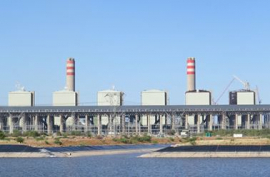
Eskom says investigations are underway following a flue gas duct [FGD] – or chimney – failure at Kusile Power Station’s unit one.
The power utility said the failure occurred last month while the unit was on a forced shutdown for repairs.
“Investigations and assessments are in progress to establish the cause of failure and to ascertain the extent of the damage, as well as the recovery scope of work. While it is uncertain at this point, it is anticipated the unit may remain offline for a few months and this duration shall become clearer over the next few weeks. Access to the area has also been restricted as part of precautionary measures.
“Consultations with various specialist stakeholders, including the Original Equipment Manufacturer, are in progress to determine best course of action to restore the plant as quickly as possible,” the company said.
Eskom explained that as a result of the failure, Kusile’s unit two has been put offline as a precautionary measure.
“The failed section of the Unit 1 flue gas duct [FGD] is located inside the flue chimney. The ducts are made from steel sections welded together and surrounded by a windshield, which is made of reinforced concrete that also houses the Unit 2 and Unit 3 flue gas ducts.
“Unit 2 was off load at the time while Unit 3 was generating electricity. Unit 4, whose FGD duct is housed on a separate flue chimney, is currently on load, generating full load to the national grid.
“As part of precautionary measures put in place, the return to service of Unit 2 has been put on hold while Unit 3 continues to run at stable load,” Eskom said.
Parliament seeks answers on Kinnear murder report

Parliament’s Police Portfolio Committee has requested a comprehensive progress report on internal steps taken to implement the recommendations contained in the Independent Police Investigative Directorate’s report into the murder of Lieutenant-Colonel Charl Kinnear.
The request was on Wednesday made to Police Minister, Bheki Cele, National Police Commissioner, General Fannie Masemola and Hawks head Lt-General, Godfrey Lebeya.
In a statement, the committee said it received a detailed report on the process followed in classifying that report.
“The committee was critical of the failure by the South African Police Service (SAPS) leadership to respond to IPID [Independent Police Investigative Directorate], as per Section 30 of the IPID Act. The committee considers disregarding the report’s recommendations as undermining the commitment made to the Kinnear family to find justice for his murder.
“The committee believes the tabling of the progress report next week in its meeting will reassure South Africans and the Kinnear family that work is being done to seek justice, as promised. In that meeting, the committee will receive a comprehensive report on the recommendations and progress in implementing them,” the committee said.
Meanwhile, the committee said it was seriously concerned by IPID’s revelation that due process, in terms of minimum information security standards, was not followed in classifying the IPID report.
“This implies that due process was not followed and renders the classification moot. This might impact on the investigation and prosecutions going forward. The committee has instructed the IPID Executive Director to prevent such lapses in future and to remedy the current defect in adherence to process.”
Regarding the Protection of Constitutional Democracy against Terrorist and Related Activities Amendment Bill (B15-2022), the committee resolved to study the updated submissions, which will be subjected to full consideration in its next meeting.
The committee said it remains committed to concluding the process in reasonable time and inclusive of views from the public consultation process.
AU welcomes truce agreement to stop Ethiopia’s civil war
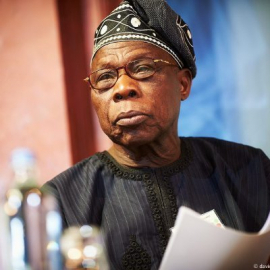
The African Union (AU) has welcomed the Ethiopian government and the northern Tigray region’s agreement to end a two-year war that has claimed thousands of lives and caused many to flee.
“Today marks two years – less than two days – since violence and war broke out in the Northern Ethiopian region of Tigray,” the High Representative of the Chairperson of the AU Commission, Olusegun Obasanjo, said on Wednesday.
Obasanjo was briefing the media in Pretoria regarding the AU-led negotiations to resolve the conflict in Ethiopia.
He described the truce as a beginning of a new dawn for Ethiopia, and Africa as a whole.
“Let me hasten to thank God for this new dawn. We are seeing in practice and actualisation what we have tried to achieve for ourselves over the years – African solutions for African problems.”
The Chairperson said he views the peace agreement signing exercise as the implementation of Agenda 2063 – which embodies silencing the guns in Africa.
“The two parties in the Ethiopian conflict have formally agreed to the cessation of hostilities as well as to systematic, orderly, smooth, and coordinated disarmament, restoration of law and order, restoration of services, unhindered access to humanitarian supplies, protection of civilians especially women, children, and other vulnerable groups, among other areas of agreement,” he explained.
According to the BBC, the conflict started on November 2020, when Ethiopian Prime Minister Abiy Ahmed ordered a military offensive against regional forces in Tigray.
The Prime Minister, according to Sky News, accused the region’s ruling party, the Tigray People Liberation Front (TPLF), of attacking the base and later the Ethiopian military bombed the facility in retaliation.
Soon after, the broadcaster said, massacres were blamed on the TPLF and militia from the neighbouring Amhara region of Ethiopia, which were supporting government troops.
“The agreement also ensures security for all concerned within and outside Ethiopia,” said the Chairperson.
Obasanjo, who was appointed as High Representative for the Horn of Africa to promote peace, security and stability, visited Ethiopia several times and went to the Tigray region eight times.
Over the last 14 months, he also consulted regional leaders and stakeholders in Ethiopia, Intergovernmental Authority on Development (IGAD) Member States, Africa and outside the continent.
“Only last month, and for the exercise that has brought us here, the Chairperson of the AU Commission appointed former President Uhuru Kenyatta and former Deputy President, Phumzile Mlambo-Ngcuka, to join me in moving the process forward.”
He also congratulated the two warring sides on what they had achieved.
“This moment is not the end of the peace process but the beginning of it. Implementation of the peace agreement signed today is critical to the success of the process,” he said on Wednesday.
Obasanjo also appreciated President Cyril Ramaphosa and his government for being a “wonderful” host during peace talks held in South Africa.
He also thanked three observers, the UN, IGAD and the United States, and the many that were not in the room during the briefing.
“We particularly thank the African Development Bank and the European Union for their financial support and the United Nations (UN) for their logistical support.”
The UN-backed investigators found that the Ethiopian government committed crimes against humanity of murder, torture, rape and sexual violence during the civil war.
Bloomberg cited research from Belgium’s Ghent University that estimates half a million people have died since the war broke out, between 50 000 and 100 000 from the fighting, 150 000 to 200 000 from starvation and more than 100 000 from the lack of medical attention.
Meanwhile, Obasanjo believes that the eyes of the world will now shift from the talks to the implementation.
“The leaders of both sides have supported the delegates to achieve what has been achieved. Finally, let me once again congratulate all the delegates,” he added.
“You have made all Ethiopians at home and abroad winners in this agreement. Please positively move on, move up and move forward leaving the past behind. Ethiopia is a great nation and shall continue to be a great nation and pride to all Africans.”