
Seized goods donated to flood victims

An initiative by the South African Revenue Service (SARS) and the Department of Trade, Industry and Competition (the dtic) to donate tons of seized clothing, blankets and footwear to flood victims in KwaZulu-Natal has entered its second phase.
Dubbed Project Sizani (“we all help), the initiative is backed by both business and labour.
Project Sizani took shape after the declaration of a state of disaster by President Cyril Ramaphosa, in response to the floods in KZN in April this year. Over 400 people lost their lives, with an estimated 8 500 houses destroyed.
Some parts of the Eastern Cape, North West and Free State provinces also experienced devastation due to the floods.
“While the project is aimed at minimising the material impact of the affected people, it is also intended to restore dignity to those who were left almost naked by the disaster.
“Humanity is what drives this gesture more than anything else,” said Patrick Moeng, an Executive of the Focused Investigative Audit Unit: Syndicated Tax and Customs Crime Division at SARS, and leader of Project Sizani.
The initiative involves the distribution of some of the millions of tons of goods from the clothing, textile, footwear and leather industries (CTFL) that have been seized by SARS since 2018.
These items would otherwise have been destroyed in accordance with the Customs Act, Act 91 of 1964, as well as a 2009 and 2020 NEDLAC agreement stipulating that seized goods must be destroyed so as to avoid disruption to the South African market.
During the first phase, which started in June this year, the donation of blankets commenced in KZN, where hundreds of flood survivors are still living in community halls.
The second phase comprises the donation of clothing and footwear to flood victims identified in the various district municipalities of the KZN, Eastern Cape and North West provinces.
A Governance Task Team, which comprises members from SARS, the dtic, organised labour and the CTFL industry, is responsible for the execution of the project. Other role players in the execution of the project are the National Disaster Management Committee, the Department of Social Development, and the Offices of the various Premiers in the impacted provinces.
To date, more than 28 000 blankets have been delivered to specific individuals at approximately 174 sites in KwaZulu-Natal.
The KZN phase 1 (blanket distribution) pilot paved the way for the rollout of the second phase of the project. This is an even more intricate and tightly controlled process, as the footwear and clothing items are wrapped in individual packages for specific individuals in specific shelters before they are handed over for distribution.
This second phase of the project is currently underway in KZN after a pilot at the two smaller shelters in Inanda and one in La Mercy offered a chance to develop and refine the process even further.
According to Moeng, 25 698 items of clothing have so far been donated to the first 31 of 74 sites in KZN.
The packing, sorting and distribution to shelters continues to take place, as more shipments of seized clothing arrive from Gauteng, courtesy of many shipping lines that extended their hand of goodwill to assist in transporting the containers of seized items to different parts of the country.
The project is earmarked to be concluded in KZN at the end of November 2022, with the North West and Easter Cape to follow.
Minister Mbalula welcomes Supreme Court of Appeal judgement on PRASA contracts

Minister of Transport Fikile Mbalula has welcomed the judgment handed down by the Supreme Court of Appeal against Siyangena Technologies.
The Appeal Court dismissed with costs an application brought by Siyangena Technologies appealing against the Gauteng High Court in Pretoria ruling, that had set aside and declared the Integrated Security Access Management System’s (ISAMS) contracts awarded to the company for various stations as irregular.
“The Siyangena Technologies case is one that has prolonged its course. This judgement bolsters confidence in our efforts to uproot all forms of corruption and instil a culture of consequences management in our passenger rail system,” Mbalula said on Wednesday.
The Siyangena matter concerns the awarding of a contract to Siyangena Technologies by Passenger Rail Agency of South Africa (PRASA) to supply and maintain an integrated security access management system at various train stations.
The equipment included public address facilities, speed gates and electronic display boards, intended to enhance the safety, access and efficiency of the Public Rail Commuter System, which PRASA is under a statutory duty to provide and maintain.
The deal was then discovered to have been unlawfully and irregularly awarded to Siyangena and that there was misconduct by certain officials of PRASA in the awarding of the contract.
PRASA brought a review application to the Gauteng High Court and was successful in setting aside the contract. Siyangena took this on appeal and the application was dismissed with cost on Tuesday 01 November 2022.
The ruling has the potential to save PRASA billions of rands pending the evaluation and audit of the work done is concluded.
In accordance with the High Court directive, PRASA said it will look into the aspects of appointment of an independent engineer to determine the value of the work done and whether Siyangena was paid for the value of the work.
This will determine whether Siyangena was overpaid and owes PRASA any money or whether PRASA owes Siyangena Technology money for the work done.
“We are hard at work to rebuild our rail infrastructure and modernise the system. A great deal of this will entail tackling corruption and malfeasance that has undermined massive investments towards the modernization programme.
“We are pleased with the court judgement as it brings finality to the matter. This will therefore enable us to proceed with the implementation of critical elements of the modernization programme, which include securing access to stations and the network,” the Minister said.
PRASA said it hopes the judgment brings the matter to finality in order for the agency to complete the disciplinary hearing and criminal proceedings against all individuals implicated in the deal.
Do right by women and children, urges Zulu

Social Development Minister, Lindiwe Zulu, has challenged South Africa citizens to hold unresponsive officials accountable when dealing with the scourge of gender-based violence and femicide (GBVF).
“We are here because we need to hold each other accountable. We need to pull our energies together and make sure that we do the right thing by the women of South Africa in ending GBVF,” Zulu said.
To solve the problem, Zulu said principals need to go house to house, street to street and community to community to get to the root causes of GBVF.
“If we were to ask every woman and man in this room [about] the pain they feel on a daily basis – when they wake up in the morning or walk down the streets – all of us walk in pain. We are not perfect, but we wake up in the morning, we show up and do the best that we can,” Zulu said.
Zulu made the remarks on a second day of the Presidential Summit on Gender-Based Violence and Femicide held in Midrand on Wednesday.
GBV command centre
Highlighting some progress registered by the department in the implementation of the National Strategic Plan on Gender-Based Violence and Femicide (NSP on GBV), Zulu said through the services of the Gender-Based Violence Command Centre, the department continues to be accessible to victims of gender-based violence across the country.
She said throughout the COVID-19 lockdown period, the centre reached 184 462 clients, compared to the 2019/20 financial year, where 61 573 clients were reached.
“The Gender-Based Violence Command Centre continues to provide gender-based violence victims with holistic services, such as psychosocial counselling, on a 24/7 basis. Between April 2021 and March 2022, 70 353 people accessed these services,” Zulu said.
The department has also deployed a total of 100 GBVF ambassadors in hotspots to conduct education and awareness campaigns. These include the employment of 250 social workers focusing on GBVF.
Policy to improve payment of NPOs
Regarding funding for non-profit organisations, the Minister said through the inter-governmental MinMEC processes, the department has developed and approved the Sector Funding Policy, which puts in place mechanisms to facilitate planning, prioritisation, programme targeting and budgeting.
In addition, the department is currently developing the NPO Online Funding System, which complements the funding policy and addresses the delays in the processing of transfers to NPOs.
“The online funding system will automate our NPO-funding application processes. When fully implemented, the system will initially complement the manual application process. However, over time, it will become the preferred mode of applying for funds by NPOs,” the Minister said.
She said a total of 963 NPOs are registered as rendering victim empowerment services and are supported by 1 238 NPOs that are registered as providing family services.
Zulu said all the registered NPOs are accountable in terms of the NPO Act, and 60% of them are not compliant with the NPO Act, as they do not submit their annual reports, due to non-filing.
Meanwhile, 30 properties were identified across the country as suitable for GBV shelters, with the majority of them implemented by civil society organisations funded by the department.
A total of 146 organisations, including the National Institute Community Development and Management, Lifeline SA and the National Shelter Movement, are funded by the department at a cost of approximately R191 million.
Estina Farm project case transferred to Bloemfontein High Court

The fraud and corruption case related to the controversial R280 million Estina Dairy farm project has been transferred to the Bloemfontein High Court from the Bloemfontein Regional Court on Wednesday.
The accused that appeared in the regional court this morning are:
- Former Mineral Resources Minister, Mosebenzi Zwane.
- Former Free State head of Department for Rural Development (FSDoRD), Peter Thabethe.
- Former Chief Financial Officer, Seipati Dhlamini.
- Former Chief Director District Services, Takisi Masiteng.
- Former Sahara employee, Ugeshni Govender.
- Islandsite former Director, Ronica Ragavan.
- Estina Director, Kamal Vasram, was added to the case, as well as eight companies.
According to the National Prosecuting Authority Investigating Directorate (NPA ID) spokesperson, Sindisiwe Seboka, the accused face charges of contravention of the Public Finance Management Act (PFMA), fraud, corruption and money laundering emanating from the “alleged looting of the Free State Department of Agriculture through a company called Estina”.
Seboka explained that in 2012, Estina and the Free State Agriculture Department entered into an agreement to establish and implement a dairy farm project for the benefit of emerging and previously disadvantaged farmers in the Vrede area.
“In terms of the agreement, Estina was to provide a capital injection of R228 million. Paras Dairy – a company incorporated in India – was presented as Estina’s partner in the Vrede Dairy Project.
“The agreement further stipulated that the department was to contribute R342 million including VAT over a period of three years. Estina received R280 million from July 2012 to April 2014.
“Investigations also revealed that no proper tender procedures were followed with regards the decision to fund the proposed Vrede Dairy Project. Estina did not adhere to its obligations in terms of the agreement as only the department paid its contribution into bank accounts held by Estina,” Seboka said.
The accused are expected to next appear in the Bloemfontein High Court on 25 January 2023.
MDDA to unveil brand new Thetha FM studios
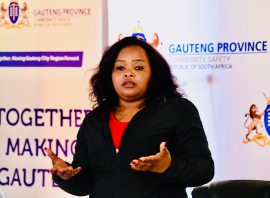
The Media Development & Diversity Agency (MDDA), led by the Deputy Minister in the Presidency, Thembi Siweya, will on Friday unveil the brand-new state-of-the-art broadcast studios at Thetha FM 100.6, in Golden Gardens, Sedibeng District Municipality in Gauteng.
Golden Gardens is a township located approximately 59km from Johannesburg in Gauteng. It is the Southernmost township of the City of Johannesburg Metropolitan Municipality.
Thetha FM was established in 1997 by a group of young and enthusiastic community members, who wanted to make a difference in their community.
They saw radio as a tool to educate those around them, motivate people to change their situation and stimulate economic growth and community development.
After six years of organising and negotiating, Thetha FM was granted a four-year broadcasting license in September 2003 by the Independent Communication Authority of South Africa (ICASA).
The community radio station’s first official broadcast across the region on the frequency 100.6 MHz was on 15 November 2005.
Thetha FM is based at Golden Gardens. The community radio station’s payoff line is, ‘Your Soul Connection’. Its geographic licence area covers Orange Farm, Evaton and other peri-urban areas, but also has listeners in the North West, Free State and Mpumalanga provinces.
The community radio station’s broadcast format is 60% talk and 40% music. The broadcast languages are 30% IsiZulu, 30% Sesotho, 15% Setswana, 15% IsiXhosa and 10% English.
The station broadcasts a total of 80 minutes of news per day, 40 minutes is dedicated to local news, 25 minutes to national news and 15 minutes to international news.
The new state-of the art studios will elevate the quality of broadcasting, making it appealing to potential partners and propel Thetha FM 100.6 to even greater heights.
Rand Water lifts water restrictions

Rand Water has announced the lifting of water restrictions, with immediate effect.
Following high water consumption brought on by high temperatures and subsequent restrictions, reservoir levels in the Rand Water systems have stabilised, increasing from 30% to above 60% currently.
“Stabilisation of the systems, assisted by good rains, has been a joint and collaborative effort by Rand Water and the three metros,” Rand Water said.
In consultation with the metros, a philosophy has been agreed to, which will ensure that water management practices are left in place to keep systems stable throughout the coming months.
“Through these collaborative efforts, the metros have managed to reduce consumption and manage own systems effectively and efficiently. Therefore, reduced consumption and leak repairs will be the new order.
“Rand Water would like to thank the metros and its citizens for their cooperation during this time and hope that this is watershed moment will lead towards permanent wise use of portable,” Rand Water said.
Durban opens more beaches as water quality improves

The City of Durban announced on Tuesday that it has reopened more beaches following improved water quality.
This comes after many beaches had a high level of E.coli that eThekwini Municipality pointed the finger at the sewage infrastructure damage due to the April floods.
“The decision to open these beaches was taken after recent water tests conducted by experts confirmed that beach water is at an acceptable level for recreational activities,” the city said.
Beaches that are open for swimming include Point, uShaka, Addington, South, Wedge, North, Bay of Plenty, Battery, Country Club, Brighton, Reunion, Pipeline, Toti Main, and Warner.
Meanwhile, some of the beaches remain closed until further notice. These include Westbrook, Bronze, Laguna, Thekwini, Umhlanga, Umdloti and Umgababa beaches.
“The municipality is continuously monitoring water quality at all beaches to ensure the safety of residents and visitors.”
Eskom welcomes proposed government intervention

Eskom says addressing its debt challenges is key to its turnaround strategy.
This after Finance Minister Enoch Godongwana announced in the Mid-Term Budget Policy Statement (MTBPS) that government will be taking over a portion of the power utility’s R400 billion debt.
“Addressing Eskom’s debt levels is a key component to the turnaround plan envisaged under the Department of Public Enterprises’ ‘Roadmap for Eskom in a Reformed Electricity Supply Industry’ and as noted in the MTBPS, a debt takeover by government (together with other reforms at Eskom and in the South African electricity sector) will ensure the long term financial sustainability of Eskom.
“The implementation of a debt relief solution and such reforms to the electricity sector will allow Eskom to undertake the much needed capital and investment programmes to ensure the stability and security of supply of electricity in the country without relying on further government bailouts,” Eskom said.
The power utility said it will consult with government and stakeholders in due course.
“As the Minister of Finance noted in the MTBPS, the government is working to finalise details of the proposed solution – including the quantum of proposed relief, the relevant debt instruments to be included and the method for effecting the transaction – and it intends to provide further details in its 2023 Budget.
“Eskom looks forward to working closely and collaboratively with the government in the coming weeks in order to develop a solution that ensures Eskom is restored as a financial independent, transparent and operationally efficient company.
“Eskom very much appreciates the ongoing support and cooperation of its investors and stakeholders and will engage and consult with them on the debt relief solution at the appropriate time,” the electricity supplier said.
Meanwhile, the company says it is continuing its work in the unbundling of its transmission division as part of its turnaround plan.
“The unbundling programme envisaged under the Department of Public Enterprises’ Roadmap remains of critical importance to the long term sustainability of Eskom’s business and to the supply and distribution of electricity in the country.
“[Accordingly], Eskom will continue to engage with the National Energy Regulator of South Africa
and the relevant creditors as applicable in order to satisfy those suspensive conditions and implement the Transmission unbundling as soon as possible,” Eskom said.
President calls for the mobilization of resources
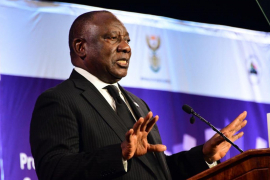
President Cyril Ramaphosa has called for the mobilisation of resources required for effective behavioural change programmes that link up with efforts of social partners in communities to address the attitudes and actions of men.
“We need to reach out to boys and young men to develop masculinities that value respect, understanding and accountability,” President Ramaphosa said.
The President said the country is confronted with an immensely difficult task to turn the mindsets of the men of our country around.
He said that the country needs to be united in the fight against gender-based violence and femicide, as government, civil society, and organisation cannot do it alone.
“These are men who are intoxicated often with their sense of masculinity, intoxicated with the sense that they are superior to the women of our country, and intoxicated with patriarchy believing that they are much more important than the women of our country.
“This is the task that we have on our hands and this is a task that we need to win together. The road ahead will be long [and] will also be challenging, but it is a road that we must walk together…..it is a road that we must walk together with determination so that women and children of this country may live in safety, peace and happiness,” the President said on Tuesday.
He also emphasised the need for organising the men’s dialogues in every part of society, including the workplace, schools colleges and universities, government departments, municipalities, and in every community.
Delivering his key note address during the Second Presidential Summit on Gender-Based Violence and Femicide (GBVF), currently underway at Midrand, the President commended the project by Prime Stars, which, in collaboration with government focuses on redefining masculinity among young men, as a good example.
“This programme needs to be rolled out to all the schools in the country. We need to see the President, Ministers, Premiers, religious leaders, sports people, artists, educators, business leaders and many others participating in various dialogues, outreach and awareness-raising activities.”
Private sector called to join hands in availing more resources
The President also called on the private sector, in particular, to join hands with government, as they did with the Solidarity Fund – to make more resources available where they are needed the most.
During the Joint Sitting of Parliament in 2019, the President called for government departments to allocate the necessary resources to combat gender-based violence.
As a result, in February 2021, government announced the allocation of approximately R21 billion over three years to implement the various components of the National Strategic Plan (NSP).
A significant portion of these funds has been committed to advancing the empowerment of women through procurement, business support and access to economic opportunities.
“Funds have also been directed to expanding support to survivors, strengthening the response of the criminal justice system and undertaking prevention programmes. The Department of Planning, Monitoring and Evaluation has been tracking expenditure of the R21 billion allocated over the medium-term.
“We need to ensure that our resources are being directed to where there is the greatest need and where they have the greatest impact. Last year we established a private sector-led Gender-Based Violence and Femicide Response Fund 1, which received a commitment of R162 million and has to date funded 112 grant partners,” the President said.
Seasonal rainfall expected to continue this week

Most parts of South Africa are expected to experience rainfall with scattered to widespread thundershowers from Tuesday until Saturday.
“Most parts of South Africa have, for the past week or so, been experiencing seasonal rainfall, some of which were severe in places. This trend is set to continue for the rest of the week, as a cut-off low pressure system dominates the central and eastern parts of the country,” the South African Weather Service (SAWS) said.
Associated with this large-scale weather system, is a possibility of flooding, especially over the central interior on Tuesday and Wednesday.
“The risk of flooding will gradually progress eastwards during the week, and will affect KwaZulu-Natal, Gauteng, and Mpumalanga by Friday. In addition, there is also a possibility of severe thunderstorms, and warnings for the possible affected areas will be issued accordingly,” SAWS said.
The weather system is expected to exit the country in the north-east late on Saturday.
The South African Weather Service will continue to monitor this weather system and updates to forecasts and severe warnings will be made regularly through the regular channels. Weather warnings are available at https://www.weathersa.co.za/home/warnings.