
Health Department concludes placement of medical interns

The Department of Health announced on Tuesday that it has completed the process of allocating all eligible medical interns and community service applicants to Internship and Community Service Programme (ICSP).
The programme will run in the next annual intake scheduled to commence in January 2023.
According to the department’s statement, it placed all 9 647 eligible South African citizens and permanent residents who applied. Of these, 2 402 will occupy medical internship opportunities, while 7 245 were successfully allocated for community service to enhance the public health sector as part of the last phase of their academic programme.
“Almost 96.75% of the total applicants were allocated in their first five priority choices and only 3.25% were allocated outside their preferred five priority options,” the department said.
Meanwhile, the department has allocated 73.96% of applicants to health facilities based in rural and semi-rural areas, while the remaining 26.04% will work in urban areas. This is part of government efforts to prioritise rural and underserved areas in the country.
The ICSP system, according to the department, has a functionality that allows applicants to swap or exchange their allocated posts.
In addition, the department said the online applications were processed between 14 and 28 October 2022, as per the Internship and Community Service Placement guidelines, Public Service Regulations of 2016, the Public Service Act, and the Immigration Act of 2002.
“The first priority was given to South African citizens who studied in local and foreign institutions of higher learning, who met the minimum requirements, followed by permanent residents and lastly foreign nationals, depending on the availability of resources and funded posts.”
The department said the final results of allocation will be signed-off and sent to the Provincial Departments of Health, South African Military Health Services and Department of Correctional Services for further processing and finalisation, which entails issuing appointment letters to successful applicants.
SAPS seize R18m assets, more suspects arrested in drugs haul case

The South African Police Service (SAPS) in the Western Cape has seized assets valued at over R18 million owned by suspects linked to a R400 million drugs haul case in June 2021.
This comes as a further eight suspects on Tuesday appeared in the Bellville Magistrates Court on preliminary charges of dealing in drugs.
The eight are David Michael Banister (52), Allister William Jackson (33), Marinus van Niekerk (31), Jacobus Hendrik Slabbert (41), Mario Mark Joseph (44), John Frederieck Roodman (47), Andre Welgemoed (44) and Anthony Trevor Tarrs (42).
Their case was postponed to 8 November 2022, where they will appear in the Pretoria Magistrates Court for formal bail application.
Hawks spokesperson, Colonel Katlego Mogale, said: “Their case is part of an ongoing investigation into the proliferarion of drugs in the country. Previously, assets including a bakkie, trailer, three boats with a combined value of more than R18.6 million, together with drugs with an estimated value of R400 million and cash seized on the N1 highway, were finally forfeited to the state by the Gauteng and Western Cape High courts respectively.”
Niel Pieter Van Zyl (40) was also arrested on 2 June 2021 while driving a bakkie pulling a trailer carrying a consignment of drugs, 805 kilograms of cocaine hidden inside the hull of the ski-boat on the N1 highway in Pretoria.
Eight more suspects, including Rafiek Baderoen (45), Rashied Baderoen (49), Michael Norman (39), Tenikaitis Valdas (58), Jaco de Kock (49), Izak Strydom (46) and Hugh Stam (48) were arrested.
Mogale said the suspects were identified as the members of an international drug trafficking syndicate, allegedly involved in the smuggling cocaine between South Africa and Brazil.
“They are expected to be back in court on 6 December 2022. These arrests and seizures which dismantled an international drug cartel stems from an extensive collaborative project driven investigation by the Directorate for Priority Crime Investigation (DPCI), Australian Federal Police (AFP) and Federal Bureau of Investigation (FBI),” she said.
Israeli national, Ahmed Isa, also known as Mickey, along with two Lithuanian nationals, Donates Jukna and Jonas Zulpa are still at large.
Mogale said more arrests and seizures of property used in cocaine smuggling are imminent.
Second Presidential Summit on GBVF kicks off

The second Presidential Summit on Gender-Based Violence and Femicide (GBVF) has kicked off at the Gallagher Convention Centre in Midrand, where President Cyril Ramaphosa will deliver the keynote address this afternoon.
The two-day summit is being held under the theme: “Accountability. Acceleration and Amplification, NOW!”.
The summit will reflect on the work undertaken since the first Presidential Summit on GBVF in November 2018, report on key successes and challenges, and outline clear strategies to overcome them.
The objectives of the summit are:
- To demonstrate continued high-level commitment and state accountability for the national response to GBVF;
- To accelerate actions and accountability by key government departments and all stakeholders, including civil society, the private sector and labour;
- To be a platform through which to share areas of progress by government, civil society, the private sector, labour and other sectors to inspire similar actions across all stakeholders; and
- To provide a space for wider collaborative engagement between all stakeholders to strategise on strengthening the overall response to and prevention of GBVF in the country, bringing the -whole-of society approach strongly into focus.
Cabinet Ministers attending the summit include Minister in the Presidency responsible for Women, Youth and Persons with Disability Minister Maite Nkoana-Mashabane; Cooperative Governance and Traditional Affairs (CoGTA) Minister Dr Nkosazana Dlamini Zuma; Minister in the Presidency Mondli Gungubele; Police Minister Bheki Cele; Social Development Minister Lindiwe Zulu; and Basic Education Minister Angie Motshekga, among others.
The summit will also be attended by Speaker of the National Assembly, Nosiviwe Mapisa-Nqakula, and members of civil societies.
Celebrating South Africa’s rich history

Exclusive letters that were written by President Nelson Mandela from Pollsmoor Prison will be showcased at the upcoming International Philately Exhibition, which is expected to celebrate South Africa’s rich history leading to a democratic dispensation.
Deputy Minister of Communications and Digital Technologies Philly Mapulane said the event is aimed at celebrating South Africa’s rich history leading to a democratic dispensation through showcasing stamps designed and collected throughout the world depicting events, heroes and heroines leading to South Africa’s democracy.
He made these remarks at the media launch of the International Philately Exhibition, which served to give members of the media background on the international event and provided an opportunity for the media to interact with Mapulane as well as various stakeholders.
The event is scheduled to take place from 08 – 12 November 2022 in Cape Town under the theme: “South Africa’s Road to Democracy”.
“Since 1994, when freedom was ushered in our beautiful Republic following the first ever democratic elections, we embarked on a journey of building a united nation after our ugly historic past characterised by colonialism and apartheid.
“We embarked on a journey of reconciliation, which demonstrated to the world that humanity can embark on a journey of recognising that there is indeed only one race,” the Deputy Minister said.
It is expected that about 1 500 delegates from about 60 countries are expected to participate at the exhibition which will showcase 1 600 frames of stamps from all over the world as well as exclusive letters written by Mandela.
The Department of Communications and Digital Technologies will be hosting the international community of philately and philatelic material collectors and exhibitors in Cape Town, at the Cape Town International Convention Centre.
“The focus of the exhibition as contemplated in 2021, would be to promote greater investment in education on philately in South Africa and globally. Philately, despite its long history, has enjoyed little popular attraction as a hobby.
“It has also faced transformation challenges especially among the majority black Africans. With this event, we also aim to demystify philately by popularising it among the disadvantaged communities.
“This will be done by, among others, hosting school children from around local townships to attend the exhibition daily,” the Deputy Minister said.
The department also seeks to leave behind a legacy project with the establishment of the Philately Museum of South Africa (PMSA). This will be done in collaboration with the South African Post Office.
“The museum will display the philatelic development history of South Africa, since the 1800s. It will also serve as a reminder to many, of the importance of philately in preserving the social and historical journey of the country.
“Our hope and wish is for you members of the media, to join us on this journey of promoting philately as an important preserver of history. In line with the theme for the 2022 exhibition, a special exhibition stall will be erected around the theme “The Road to Democracy”, providing philatelic and non-philatelic material depicting critical moments in the history of South Africa leading to democracy,” the Deputy Minister said.
Stats SA launches Income and Expenditure Survey

Hundreds of statistics collectors will be going into South African households over the next year for data collection for the Income and Expenditure Survey (IES).
The survey will begin this month and will run until the end of 2023 and is critical to measuring poverty and inequality in the country.
At the launch of the survey, Statistician General Risenga Maluleke, said although the survey comes nearly seven years after the first, it comes at a ideal time for the country.
“The funding and preparation of the IES comes at a time when there is an ever-increasing demand for data in South Africa to determine the impact of the COVID-19 pandemic on household finances and the economy at large.
“This will be the first expenditure survey to be conducted by Stats SA since 2014/15, following allocation of specific funding by National Treasury,” Maluleke said.
As well as providing essential insights needed to measure poverty and inequality, the survey will provide information to help government reach the National Development Plan 2030 goals of reducing the bounds of the poverty line to zero and reducing the Gini coefficient to 0.6.
“We will update and reweight our Consumer Price Index basket of goods and services. On the economic side, we will profile the household economy. [The survey will help] make inputs for the development and maintenance of the national public accounts and of course life circumstances like service delivery and poverty.
“We will [also] make sure that we deal with updating the multidimensional and subjective poverty profile and of course updating the profile on issues of inequality in the context of poverty,” he said.
Collectors will gather information from some 31 000 households on all purchases, consumption, spending and income earned.
Statistics South Africa (Stats SA) explained that households will participate in the survey over a period of four weeks.
“During this time, a household questionnaire containing four modules will be administered (i.e. one module per week) and respondents will also be asked to keep a weekly expenditure diary supplied by Stats SA to record their daily acquisitions and purchases for a period of two weeks.
“The IES survey will also help South Africa better understand the impact of social grants in reducing poverty,” the institution said.
Practice real cultural norms of protecting women and children: Nkoana-Mashabane
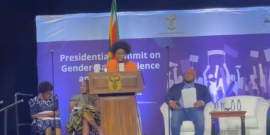
Women, Youth and Persons with Disabilities Minister, Maite Nkoana-Mashabane, has called on citizens to practice the real cultural norms they know and love, which protect women and children.
“There’s no culture that says you must kill women and kill children. We need to practice the real cultural norms we know,” Nkoana-Mashabane said.
Nkoana-Mashabane made the remarks at the Second Presidential Summit on Presidential Summit on Gender-Based Violence and Femicide (GBVF), currently underway at Gallagher Convention Centre in Midrand.
The Minister argued that there is no need for South Africa to have many women and children dying as the country is not facing any war.
“South Africa is not a war country, so, there’s no need for children to feel unsafe in the streets and women feel unsafe in their bedrooms.”
According to the Minister, the National Strategic Plan on Gender-Based Violence and Femicide (NSP on GBV)) is the only way to deal with GBVF.
The NSP on GBVF (https://www.justice.gov.za/vg/gbv/NSP-GBVF-FINAL-DOC-04-05.pdf) provides a strategic roadmap and sets out specific plans for a multisectoral approach to end GBVF and build a society where women, children, and the LGBTQIA+ community are safe from violence directed at them because of patriarchal stereotyping.
The NSP is outlined in six pillars, which include accountability, coordination and leadership; prevention and rebuilding social cohesion; justice, safety and protection; response, care, support and healing; economic power; and research and information management.
Filling of forensic analysis vacancies
Highlighting progress made since the first Presidential Summit on GBVF held in November 2018, Police Minister Bheki Cele said the filling of 34 vacancies for forensic analysis is underway and at an advanced stage to capacitate the Eastern Cape with 28 analysts, and six for the Western Cape.
He also noted that the department has able to address backlog in DNA tests from 241 000 last year to 71 000 this year.
“In terms of training and development, 22 forensic analysts from the Eastern Cape Biology Laboratory are undergoing training in DNA Analysis. The Western Cape and Gauteng FS laboratories have been equipped with additional thermos shakers, centrifuges, crime index lanes, and genetic analysers,” Cele said.
Correctional Services Minister, Ronald Lamola, said the number of Thuthuzela Care Centres (TCCs), have been increased from 55 to 61, with the National Prosecuting Authority’s Sexual Offences and Community Affairs Unit redesigning the centres to allow the survivors of rape to report the cases direct to the Thuthuzela Care Centres.
The Thuthuzela Care Centres are one-stop facilities that have been introduced as a critical part of South Africa’s anti-rape strategy, aiming to reduce secondary victimisation and to build a case ready for successful prosecution.
Women also have rights to life
National Assembly Speaker, Nosiviwe Mapisa-Nqakula, emphasised that the Bill of Rights talks to the right to life, and “as women we have the right to life.”
Mapisa-Nqakula also warned that if women are not being attended to at the police stations when coming to report the cases of abuse, the number of women who are serving life at the correctional facilities, will keep on increasing.
“Scores of women are serving life because they have been subjected to gender-based violence and at some point they had to retaliate and ended up killing their abusive partners,” Mapisa-Nqakula said.
N Cape community applauded for helping police apprehend suspects

Provincial Commissioner of the Northern Cape, Lt Gen Koliswa Otola, has commended the police and the Onseepkans community for their assistance in apprehending and arresting six alleged armed robbers.
In a statement, she reiterated that partnership policing reaps great successes.
SAPS spokesperson Lt Col Sergio Kock said: “On Monday morning, one armed man entered a shop in Augrabies with a firearm and robbed the cashier of an undisclosed amount of cash and cigarettes. A patrolling police vehicle spotted the robber as he jumped into a Toyota SUV with five other male occupants inside and sped off.
“Police followed and the robbers started shooting at the police vehicle. The suspects then stopped the vehicle and fled on foot into the veld close to the N14 in the direction of Pofadder. Highway Patrol, Springbok and Upington K9 as well as Upington POPS and local police members were activated for assistance.”
Local farmers also assisted SAPS with a drone and a light aircraft, he said.
Kock said all six male suspects were arrested at different locations in the area.
“Three firearms and ammunition were seized during the apprehension of the suspects. No injuries or fatalities were reported.
“The six males between the ages of 22 and 30 were arrested and charged for attempted murder, business robbery and possession of unlicensed firearms. The vehicle was also seized as it was used in the commission of a crime. The suspects will soon appear in court,” he said.
Four of the suspects are foreign nationals while the other two are South Africans.
General Otola warned criminals that their space will be squeezed to zero as there will be boots on the ground to enhance police visibility during this period and beyond.
SARS records R19.70bn trade balance surplus

The South African Revenue Service’s (SARS) trade statistics for September 2022 recorded a preliminary trade balance surplus of R19.70 billion.
These statistics include trade data with Botswana, Eswatini, Lesotho and Namibia (BELN), SARS said in a statement.
“The year-to-date (01 January to 30 September 2022) preliminary trade balance surplus of R175.42 billion is a deterioration from the R346.88 billion trade balance surplus for the comparable period in 2021. Exports increased by 22.0% year-on-year whilst imports increased by 27.1% over the same period,” said the revenue collector.
SARS said the R19.70 billion preliminary trade balance surplus for September 2022 was attributable to exports of R191.56 billion and imports of R171.86 billion.
“Exports increased by R17.37 billion (10.0%) between August and September 2022 and imports increased by R3.88 billion (2.3%) over the same period. Exports for the year-to-date (01 January to 30 September 2022) increased by 12.8% to R1 519.02 billion from R1 346.54 billion over the same period during 2021.
“Imports for the year-to-date of R1 343.60 billion were 34.4% more than the R999.66 billion imports recorded during the same period in 2021. The cumulative trade balance surplus for 2022 is R175.42 billion. On a year-on-year basis, the R19.70 billion preliminary trade balance surplus for September 2022 was a deterioration from the R21.82 billion trade balance surplus recorded in September 2021.”
Exports of R191.56 billion, said SARS, were 22.0% more than the R157.03 billion exports recorded in September 2021. Imports of R171.86 billion were 27.1% more than the R135.21 billion imports recorded in September 2021.
August 2022 preliminary trade balance surplus was revised downwards by R0.98 billion due to the ongoing Vouchers of Correction (VOC). The revision was from the preliminary trade balance surplus of R7.18 billion to the revised trade balance surplus of R6.20 billion.
The trade data excluding BELN for September 2022 recorded a preliminary trade balance surplus of R8.62 billion.
SARS said the R8.62 billion preliminary trade balance surplus for September 2022 was as a result of exports of R174.54 billion and imports of R165.92 billion.
“Exports increased by R16.76 billion (10.6%) between August and September 2022 and imports increased by R3.02 billion (1.9%) over the same period. The preliminary cumulative trade balance surplus for 2022 was R90.86 billion compared to R271.72 billion trade balance surplus during 2021,” reads the statement.
“Co-opetition” set to get Transnet to the top

Transnet National Ports Authority (TNPA) Captain, Thokozani Mthethwa, says collaboration, or “co-opetition” is one of the ways the continent will achieve the goals set out in the 2050 Strategy.
“Each port has its own Master Plans and Port Development Framework Plans to adequately respond to and plan for future growth. These plans guide how capacity will be increased over the short- to long-term to respond to the anticipated demand,” Mthethwa said.
Taking part in the Webinar on Progress Report: 2050 Africa’s Integrated Maritime Strategy, organised by the Government Communication and Information System (GCIS) – in partnership with Mail & Guardian – Mthethwa said in order to implement the new TNPA Operating Model, they need an operating structure that is fit for purpose and capacitates the relevant teams to build a “reimagined TNPA”.
The 2050 Strategy is themed, ‘Think Africa Above All’.
“Our structure acknowledges that the ports/operations are the drivers of the strategy and need to be resourced accordingly,” Mthethwa said.
Mthethwa said Transnet’s mandate is to assist in lowering the cost of doing business in South Africa, and “ensuring the security of supply by providing appropriate port, rail and pipelines in the most cost effective and efficient manner, within acceptable benchmarks”.
This, she said, will stimulate a transformed maritime economy through adaptable infrastructure that is fit for purpose.
Cooperate Affairs South African Maritime Safety Authority (SAMSA), Vusi September, said the mandate of SAMSA is to ensure the safety of life and property at sea, and to “promote the Republic’s maritime interests, and prevent and combat pollution of the marine environment by ships”.
Mthethwa said this also includes monitoring coastal and offshore activities, managing maritime communication system, and regulating coastal and inland waterways .
Mthethwa said the vision of SAMSA is to develop an African-driven solution, a solution that is overarching, multi-layered, all Inclusive, multi-disciplinary and coherent.
“The long-term vision is to address Africa’s multi-faceted maritime challenges and opportunities,” he said.
Cosatu Parliamentary Coordinator, Mathew Parks, said with South Africa remains most unequal nation.
“Rising levels of poverty. Declining levels of state capacity to enforce law and difficulties of enforcing laws at seas,” Parks said.
Parks also mentioned that wholesale defiance of labour laws by some employers especially at sea still a problem faced with.
“Unions need to expand footprint in ports, rail, transport and especially in fishing and maritime. Employers need to allow union access,” he said.
HSRC appoints Prof Sarah Mosoetsa as new CEO
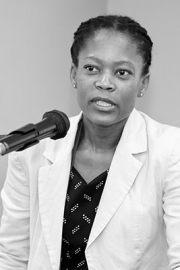
The Human Sciences Research Council (HSRC) Board announced on Monday the appointment of Professor Sarah Mosoetsa as Chief Executive Officer (CEO) of the Council, effective 1 February 2023.
Mosoetsa vacates her role as CEO at the National Institute for the Humanities and Social Sciences (NIHSS) to take up this new position at the HSRC.
“She was instrumental in establishing and setting up the NIHSS in 2013 and held the position of CEO at the institute since 2014,” the HSRC said.
The Professor holds a Doctorate in Sociology from the University of the Witwatersrand.
She is an Associate Professor of Sociology at the same university and the author of several publications. These include ‘Eating from one pot: Dynamics of Survival in poor South African households’ (Wits Press) and co-editor of ‘Labour in the Global South: Challenges and Alternatives for Workers (ILO)’, and co-editor of ‘Precarious Labor in Global Perspective’ (Cambridge University Press).
Mosoetsa has worked for various organisations, including the Society, Work and Politics Institute, the HSRC, and the Development Bank of Southern Africa.
Prof Mosoetsa sits on various boards and committees inter alia, the National Minimum Wage Commission, the National Research Foundation Board, the University of South Africa Council, the University of Venda Council and the Advisory Board for the Southern Centre for Inequality Studies.
She is passionate about the humanities and social sciences in South Africa, the continent, and the globe, and their contribution to societies grappling with challenges of poverty and inequality, economic transformation, and redress.
HSRC Board Chairperson, Dr Cassius Lubisi, congratulated Mosoetsa on her appointment as CEO.
“The HSRC is proud to welcome her and to share in and benefit from her thought leadership, her pursuit of excellence and her people-centric approach to organisational culture, and we look forward to working alongside her over the next five years,” he said.
Meanwhile, the board thanked Prof Leickness Simbayi for his capable and enduring leadership as interim CEO since the departure of the former CEO, Prof Crain Soudien.