
Government notes US terror alert
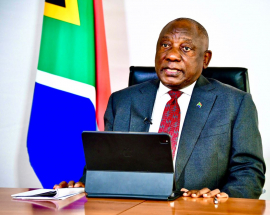
The Presidency has moved to assure South Africans that law enforcement agencies are monitoring any threats to the public.
This after the Embassy of the United States of America issued a security alert to its citizens in South Africa that terrorists “may be planning to conduct an attack targeting large gatherings of people” in Sandton.
In a statement, the Presidency said it noted the alert.
“The South African government has noted the terror alert issued by the US Embassy on its website. This is part of the US government’s standard communication to its citizens.
“It is the responsibility of the South African security forces to ensure that all people within our country feel safe,” the statement said.
The Presidency said any threats are “acted upon”.
“Law enforcement agencies continue to monitor for any threats to our citizens, our nation and our sovereignty.
“Threats are assessed continuously and are acted upon to ensure the safety of all. Should the need arise, the South African government will be the first to inform the public about any imminent threat,” the statement said.
Minister Mbalula welcomes decision on funding of e-tolls

Minister of Transport Fikile Mbalula has welcomed the announcement made by the Minister of Finance in respect of the funding and the future of the Gauteng Freeway Improvement Project and the e-tolls.
In June 2022, Mbalula publicly pronounced that consultations with Finance Minister Enoch Godongwana were at an advanced stage to finalise the decision on e-tolls, which would be announced in the Medium-Term Budget Policy Statement (MTBPS).
“It has taken protracted consultations between the National Treasury, the Department of Transport and Gauteng government to make a firm determination on the future of e-tolls and a funding model for the Gauteng Freeway Improvement Project.
“We therefore welcome the pronouncement by the Minister of Finance that the Gauteng provincial government has agreed to contribute 30% towards the settling South African National Roads Agency SOC Ltd (SANRAL) debt and interest obligations, while national government covers 70%.
“The allocation of R23.7 billion in the adjustment budget will go a long way in ensuring that SANRAL is able to meet its debt repayment obligations and maintaining a healthy balance sheet,” the Minister said on Wednesday.
In the coming week, Minister Mbalula and the Gauteng Provincial Government will provide detailed information on the road ahead for the e-tolls and the Gauteng Freeway Improvement Project.
President Ramaphosa to host Prime Minister Sánchez of Spain
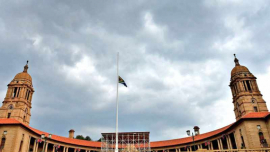
President Cyril Ramaphosa will tomorrow host Prime Minister Pedro Sánchez Pérez-Castejón of Spain on an Official Visit at the Union Buildings in Pretoria.
Prime Minister Sánchez, who is the President of the Government of Spain, will be accompanied by the Spanish Minister for Industry, Trade and Tourism, Ms Reyes Maroto, and a business delegation.
According to the Presidency, the visit to South Africa will solidify the already strong relations between South Africa and Spain.
The visit will highlight the existing cooperation between the two countries and will focus on the implementation of agreements intended to benefit the citizens of both countries.
The visit also seeks to create opportunities for various South African sectors to meet with their Spanish counterparts and to deepen cooperation in trade and investment, science and innovation, arts and culture, sports and education.
“The visit, which is Prime Minister Sánchez’s first to South Africa since he assumed office in 2018, is expected to translate the long-standing bilateral relations between the two countries into tangible projects that would stimulate greater interest from Spain in South Africa, especially regarding trade, investment, tourism and cooperation in other identified sectors.
“For South Africa, the engagement between the two leaders is directed towards addressing the triple challenge of poverty, unemployment and inequality and to boost South Africa’s economic recovery and reconstruction efforts following the impact of the COVID-19 pandemic,” the Presidency said.
Over the past 10 years, there has been steady investment in South Africa by Spanish companies. The bulk of the investment is in the renewable energy sector.
South African companies have also looked to Spain as an investment destination in the real estate sector.
More than 150 Spanish companies have invested in South Africa creating over 20 000 jobs, largely in the following sectors: Infrastructure Development, Renewable Energy, Financial Services, Tourism, Textiles, IT & Software, Metals and Mining.
Bilateral trade between South Africa and Spain almost quadrupled in the past 10 years. In 2021, Spain was South Africa’s 4th largest export destination in the EU and 5th largest source of imports from the EU. Trade between South Africa and Spain increased over the 2-year period 2020 and 2021.
Exports from South Africa to Spain increased consistently for the 10-year period.
For the last two years, exports increased from R14.9 billion in 2020 to R28.5 billion in 2021.
In 2019, the Spanish government launched its Third Africa Plan, a long-term strategic document that guides Spain’s relations with the African continent. The plan identifies South Africa as one of the three “anchor” countries (together with Nigeria and Ethiopia) for Spain’s foreign policy in Africa.
Following a welcome ceremony at the Union Buildings, the President and Prime Minister will attend and address the SA-Spanish Business Forum, which seeks to foster further and closer collaboration between South African and Spanish companies in a number of key sectors.
Basic Education ready for 2022 NSC Examinations

The Department of Basic Education (DBE) has confidently stated that it is fully prepared to administer the November 2022 examinations based on the principles of fairness, reliability, validity and integrity.
The DBE was briefing the Portfolio Committee on the state of readiness for the National Senior Certificate Examinations on Tuesday.
The DBE and provincial education departments (PEDs) are currently preparing for the administration of the November 2022 National Senior Certificate Examinations.
Grade 12 learners will be sitting in earnest for the NSC Examinations from 31 October 2022 to 7 December 2022 in all nine provinces.
The DBE told the Committee that there has been a gradual increase in the number of fulltime enrolments in 2022, compared with previous years.
The number of full-time enrolments increased from 733 198 in 2021 to 755 981 in 2022.
This is an increase of 22 783 candidates and this allays the concern that there would have been a significant dropout of learners post the COVID-19 pandemic.
The number of part-time learners has also increased from 163 965 in 2021 to 167 479 in 2022.
A total of 193 question papers will be administered at 6 912 examination centres.
A total of 52 811 markers are appointed for the marking of the November 2022 NSC Examinations. This marks an increase of 11 215 markers, compared to 41 596 markers in 2021.
The department said the increase in markers is in keeping with the increase in learner enrolments.
DBE Director-General, Mathanzima Mweli, said that despite the best efforts of the Department of Basic Education, they are nonetheless aware of the negative impact of load shedding on the performance of learners writing this examination.
“Difficult as it is the department has given guidelines on how to deal with this and appreciate the innovation and creativity employed by schools.
“DBE is fully aware of the predicament of learners during this very important examination and therefore the DBE will take all the necessary steps to ensure minimum disadvantage to our learners,” Mweli said.
The Director-General said that load shedding not only affects the actual writing of the examination in the classroom, but also learner’s preparation for the examination and to a large degree their anxiety levels before the examination.
Mweli told the Committee that the Grade 12 DBE senior management had a meeting with the senior management of Eskom on 14 October 2022 and at this meeting the priority requirements of the Department in relations to the Grade 12 examinations was outlined to Eskom Senior Management.
In addition, the DBE has a rewrite opportunity for both Computer Applications Technology (CAT) and Information Technology (IT) on 7 December 2022.
This will allow learners that faced disruption during the examination and could not attempt or complete the examination, to be allowed a second opportunity.
In addition, Mweli said that the DBE liaises closely with all nine PEDs to identify any challenges or security risks in a timeous manner to ensure that no candidate is disadvantaged in any manner and to ensure the security of question papers.
Ensuring irregularity-free examination
To ensure an irregularity-free examination, the DBE told the Committee that it has stepped up its security across all points in the question paper chain, based on a continuous review of all examination processes.
In addition, all learners sitting for the NSC examinations and their parents will sign a ‘Commitment Agreement’ to maintain honesty and not to participate in irregularities during the writing of examination.
“The Commitment Agreement binds the learners and parents to follow the rules relating to the examination. In line with this agreement, learners and parents are obliged to make any irregularity related information immediately available to the school principal or the DBE hotline.
“They are also expected to surrender cell phones and any other related device if there is an allegation of involvement in an act of dishonesty,” Mweli said.
The learners are briefed on all the rules and regulations pertaining to the examinations and on the consequences, should they be implicated in irregularities.
The DBE said that it continues to liaise closely with Eskom, the security cluster, PEDs and other relevant stakeholders to manage the risks posed by load shedding and other security related matters.
“In view of the current situation the Provincial Education Departments (PEDs) have requested schools, where possible, to procure alternative lighting mechanisms for our examination centres and power generators, where funds are available,” the department said.
HODs’ tenure increased to 10 years
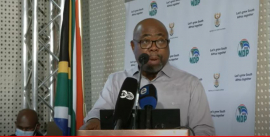
Acting Public Service and Administration Minister, Thulas Nxesi, says Cabinet has resolved that the tenure of Heads of Department be increased to 10 years.
This, according to Nxesi, will be subject to rigorous processes for recruitment, selection, training and development, performance management and reviews, and consequence management for non-compliance.
Addressing media in Cape Town on Monday during the release of Cabinet approved National Framework Towards the Implementation of the Professionalisation of the Public Sector, Nxesi said this is aimed at ensuring administrative stability in public sector institutions, which is critical to service delivery.
The framework provides that only qualified and competent individuals be appointed into positions of authority.
Cabinet approved the framework at its meeting of the 19 October 2022. The document has been in development for two years and on 18 November 2020 Cabinet approved the publication of the draft Framework for public consultation.
“This is part of overall efforts to improve the retention of HODs and create stability at the HOD level, with the objective of improving capacity of government to deliver on public services,” Nxesi said.
He said a revised performance management framework for HODs will be presented by the Minister of Public Service and Administration (MPSA) to Cabinet by end of November 2022. The MPSA will issue guidelines on the implementation of this decision.
Nxesi said with regard to the performance assessments of Directors-General and Heads of Department, Cabinet resolved that the Public Service Commission (PSC) should play a role in performance evaluation of all HODs to strengthen objectivity and introduce a comprehensive approach that should link the performance of the individual to that of the institution they lead.
Nxesi said to stabilise the political-administrative interface challenges experienced, Cabinet has resolved that the Director-General in the Presidency will be designated as Head of Public Administration (HOPA).
“In the provinces, this function will be designated to the Directors-General in the Office of the Premier.
“The HOPA will assist the President and Premiers in the management of career incidents of Heads of Departments and serve as a mediation mechanism in order to stabilise the political-administration interface,” Nxesi said.
Building state capacity towards a capable, ethical and developmental state remains the foremost priority of the current administration. Professionalising the public sector, as advocated in the National Development Plan, is a strategic intervention towards building state capacity.
R19 million handed to KZN small businesses
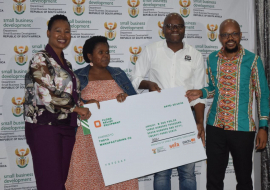
Minister for Small Business Development, Stella Ndabeni-Abrahams, has handed over cheques worth R19 million to 45 small businesses in KwaZulu-Natal that were affected by floods earlier this year.
This is according to the Department of Small Business Development (DSBD) Twitter account. The handover is part of a series of provincial roadshows in uMgungundlovu, eThekwini and Ugu districts by the Minister and Deputy Minister Sidumo Dlamini.
The roadshows, which started on Tuesday and are expected to end on Friday, are aimed at assisting business in the province that were hit hard by rampant looting during the riots in July 2021 and those that were affected by floods early this year.
This happened just as the small business sector was trying to recover from the devastating effects of COVID-19.
“Trying to uplift businesses and assist them to recover from the above challenges will be some of the issues that will be discussed when Ndabeni-Abrahams and Dlamini lead a series of provincial roadshows in the uMgungundlovu, eThekwini and Ugu districts from 25-28 October 2022.
“They will be joined by the department’s entities, the Small Enterprise Finance Agency (sefa) and the Small Enterprise Development Agency (Seda), as well as other key stakeholders,” the department said.
In addition, the Minister and Deputy Minister will be handing over equipment to identified beneficiaries from the Msunduzi, eThekwini and Ray Nkonyeni Local Municipalities alongside with the Mayors, Members of the Mayoral Committees (MMCs) responsible for Local Economic Development and Infrastructure and other SMME key stakeholders.
Nxesi says 7.5% average increase “still available”

Acting Public Service and Administration Minister, Thulas Nxesi, says the final offer of an average of 7.5% by government remains available and has not been withdrawn, as it has been purported in the media.
“All parties to the Public Service Coordinating Bargaining Council (PSCBC) have been advised of the need to engage and settle the matter of wages,” Nxesi said.
Addressing media in Cape Town earlier this week, Nxesi said is important to ensure that any risk to the integrity of the fiscus is managed and agreements are incorporated into the public finance budgeting framework.
Nxesi said to ensure that public servants are not disadvantaged and to safeguard the fiscal health of the country, the draft agreement has to be implemented before the tabling of the 2022 Medium Term Budget Policy Statement (MTBPS) by the Minister of Finance.
“As government, we remain committed to respecting organised labour, safeguarding the collective bargaining processes and promoting labour peace,” Nxesi said.
The Minister said all action will be taken to ensure that the bargaining process is protected.
“As a last resort, DPSA has requested facilitation by the CCMA in order to break the deadlock and safeguard the collective bargaining process.
“Any announcement of industrial action remains premature. The PSCBC General Secretary and CCMA Director have confirmed interest in facilitating this request by government and we will work with them,” Nxesi said.
Nxesi said the current round of negotiations commenced with pre-negotiations session at the PSCBC where the timetable for negotiations was adopted in an attempt to fast track the 2022/23 round of negotiations to conclude earlier and commence immediately with the 2023/24 negotiations so as to align the negotiations with the planning cycle of government.
“This is important to ensure that any risk to the integrity of the fiscus is managed and agreements are incorporated into the public finance budgeting framework,” the Minister said.
Earlier this month, the Public Service and Administration Director-General said government has been negotiating in good faith and the door of government is still open for labour to consider accepting the offer.
During the negotiations, there have been numerous rounds of discussions, with offers and counteroffers between the employer and the unions, including areas of significant disagreement.
As part of negotiating in good faith, government proposed a facilitation process as part of deadlock-breaking mechanisms. Facilitation took place on 26 – 30 August 2022.
Government had earlier proposed that employees continue to be paid a non-pensionable cash gratuity, which amounts to an average of R1 000.00 after tax to all employees across salary levels 1 – 12.
This amounts to an average of 4.5% of the R20.5 billon allocated for salaries in the 2022/23 compensation budget.
Organised labour rejected this offer.
State capture cannot be allowed to happen again – President Ramaphosa
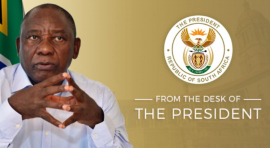
President Cyril Ramaphosa says government is making great strides in the fight against corruption and has called on all parts of society to help government ensure that State capture never happens again.
The President was addressing the nation through his weekly newsletter a day after he revealed government’s plans to implement recommendations made in the State Capture Commission report.
“We have made great progress in the fight against State capture, all due to the efforts of the people of South Africa. The path ahead will be challenging, but if we work together in implementing the recommendations of the State Capture Commission, we will succeed in building the society and State we want.
“This moment of renewal is upon us and urges us to restate the vision of our National Development Plan of “a South Africa that has zero tolerance for corruption, in which an empowered citizenry has the confidence and knowledge to hold public and private officials to account and in which leaders hold themselves to high ethical standards, and act with integrity’,” the President said on Monday.
He said although the State Capture Commission showed how corruption had taken root in the State, the reaction of South Africans shows the “nation’s disdain for corruption.
“During four years of public hearings, our nation was saddened, outraged and left in disbelief by testimony of how a criminal network in government, public institutions and private companies had raided State coffers and vandalised institutions of our democracy.
“Amid the depressing testimony, people’s anger at the events that had unfolded and citizens’ demands for consequences, retribution and restoration was a clear signal that South Africans are prepared to fight to preserve their values.
“Upon closer consideration, the process of uncovering crimes against our democracy gave us more reason for hope than despair,” he said.
Added to that, President Ramaphosa assured the public that the law is catching up with those who corruptly benefitted from State coffers.
“Almost daily now, we read reports of people being arrested and appearing in court on charges related to State capture. We read about misappropriated assets being frozen and property being seized. The scenes that are unfolding in our courts today are because investigators and prosecutors are living up their professional obligations and the expectations of the nation they serve.
“While we prosecute state capture suspects and recover stolen funds, what is required on the part of all South Africans is our conscious, daily examination of our own values, beliefs and behaviours and the motives and actions of others,” he said.
The President is calling on all parts of society to come together and ensure that the corruption that milked the state of its resources never happens again.
“The recently established National Anti-Corruption Advisory Council will play an important part in mobilising all sectors of our society towards the attainment of a country defined by integrity, honesty and accountability.
“Following the submission of our response to the State Capture Commission, government is poised to work with social partners and communities on this great undertaking, which will be passed on from generation to generation into our future,” he said.
SA should invest in innovative technology to defend borders
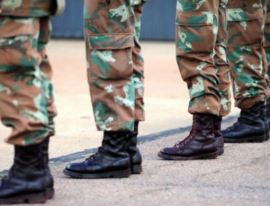
The Joint Standing Committee on Defence has emphasised the significance of investing more in innovative technological interventions as force multipliers to enhance the work of the South African National Defence Force (SANDF) to safeguard South Africa’s borders.
The committee made the remarks after receiving an update on the implementation of Operation Corona, which has the mandate of defending South Africa’s territorial integrity.
Co-Chairperson of the committee, Cyril Xaba said the committee is acutely aware of the serious capacity challenges affecting the operation negatively, but supports fully the intention to incrementally bring into play sensors and radars as a force multiplier in the medium term.
Xaba said the challenge of lengthy procurement has been highlighted as a general impediment to the SANDF’s work.
“The committee urged SANDF senior leadership to work with the National Treasury to find solutions to ensure that this ongoing problem is resolved and that capabilities are made available to deploy soldiers on the ground,” Xaba said.
The committee also highlighted the need for SANDF to work with related government departments at all levels to find solutions to the infrastructure challenges on the border, which include poor fencing, patrol roads and access routes.
“A collaborative effort is necessary to remove the impediments that make it difficult to safeguard our borders. Deployed soldiers’ morale should also receive proper attention, as these impacts negatively on operations.
“In line with this and in full awareness of funding shortcomings, the committee called for improved facilities within the deployment area to enhance morale,” Xaba said.
Signing and implementation of operational protocols welcomed
The committee has also commended the signing and implementation of operational protocols between the Department of Defence and the Border Management Authority to regulate effective cooperation at borderlines.
The committee further welcomed an assurance that the cooperation has been effective thus far and urged further cooperation.
“The porous nature of our borders requires cooperation by all stakeholders to ensure success. The committee has called for enhanced cooperation within the security cluster to find solutions and ensure efficiencies at the borderline,” said Committee Chairperson, Elleck Nchabeleng.
The committee acknowledged the work done by the security cluster at the borderline despite varied challenges, and emphasised the need for continuous improvements to ensure South Africa’s territorial integrity on land, air and maritime borderlines.
KZN Premier unveils bold plans to advance digital economy

As the economy of KwaZulu-Natal recovers post COVID-19, the civil unrest and flood disasters, Premier Nomusa Dube-Ncube has unveiled an ambitious plan for the province to emerge stronger and be recognised as an economic and technology powerhouse.
Dube-Ncube launched the Mobile Digital Analytics Skills Laboratories, which aim to expose learners and youth to Fourth Industrial Revolution (4IR) technologies, and empower them with the entrepreneurial acumen to be part of the multitrillion-dollar digital economy.
Launched recently at Orient Heights Primary School in Pietermaritzburg, the Mobile Digital Analytics Skills Laboratories are part of the broader Connected Smart Province Project, driven by the Premier.
The Connected Smart Province Project is anchored on the pillars of broadband connectivity; 4IR skills development; innovation incubation; technology production; commercialisation of innovation, and solving social issues with smart business processes and technology.
Unveiling the mobile lab, Dube-Ncube said the province has a skilled population and massive potential to grow the digital economy, which are key catalysts for a thriving province.
To take advantage of the digital economy, the Premier said young people must start working on the technology gadgets in the lab, which are linked to robotics, drone technology, mechatronics and other technologies.
“As we unveil this project, we want to expose our learners from a young age to a world of new horizons of work and careers, which are broadened to include Space Technology, Data Analytics, Multimedia Production l and 9D Technology. This is one of the ways that the province of KwaZulu-Natal plans to position itself as a technology hub with youth and women at the centre,” Dube-Ncube said.
She added that in a world characterised by technological disruptions, which has resulted in the biggest companies globally coming from the Information and Communications Technology (ICT) sector, the provincial government believes that it has to assist children from primary school phase so that they are ready for careers of the future.
“And that future starts today, as we ready our youth and learners to enter what is conservatively estimated as being a multitrillion rand digital economy globally. This will give us the edge and ensure that we remain globally competitive as KwaZulu-Natal.
“The digitalisation of education in the province has been at the forefront of our agenda and the use of technology has been further spurred by COVID-19 which forced us to learn and engage virtually through online platforms,” said Dube-Ncube.
The mobile lab is completely off the grid, as it is solar powered and has back-up generators to ensure that learning and teaching is not affected during power outage.
The Premier said that over the coming months, similar labs will be launched in the rest of the province, district by district.