
ECD centres critical to nurturing SA’s future leaders
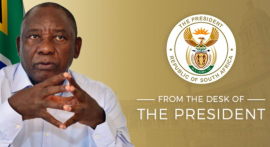
President Cyril Ramaphosa says Early Childhood Development (ECD) centres play a critical role in laying solid foundations for South Africa’s future leaders.
The President was addressing the nation through his weekly newsletter just days after opening the Little Flower ECD centre in Bizana, in the Eastern Cape.
The President emphasised that children in these centres must be nurtured.
“The young children in these centres are the next generation of South Africans who must be able to live up to their full potential as responsible, capable and outstanding citizens.
“They must be able to pursue their dreams so that we all may achieve our shared dream of a free, prosperous and happy nation,” he said.
The President added that although government does what it can to assist ECD centres, society also has a role to play in the development of South Africa’s youngest citizens.
“Preparing our youngest citizens with the tools they need to succeed in life is a responsibility we must collectively shoulder. We must continue to do all we can, as government, the private sector and development organisations, to support early childhood development.
“With the many valuable services it provides, whether it is educating our children, providing childcare for working parents or creating opportunities for entrepreneurs, ECD makes a huge contribution to the achievement of many of our developmental goals,” he said.
The President emphasised that ECD centres also contribute immensely to the upliftment of society.
“Early childhood development centres don’t just prepare our country’s youngest citizens to succeed in school; they are also an important source of entrepreneurship and job creation. These centres are an important part of the care economy. They sustain livelihoods, especially for women, which contributes to job creation in many communities.
“Since the care economy is mainly driven by women, such support goes a long way towards helping women, especially in disadvantaged communities, to become financially secure and independent,” he said.
President Ramaphosa highlighted that government has recognised the importance of ECD centres and taken steps to ensure that these centres are given the tools needed to succeed.
“As government, we have taken up the task to improve the standards of care and make resources available for ECD centres to run suitable activities for young children to prepare them for formal education. In April this year, we completed the move of the ECD function from the Department of Social Development to the Department of Basic Education.
“This is to link early childhood development to the formal school curriculum and to provide training, education and development to staff in ECD centres around the country,” he said.
Employment Stimulus Package reaches 1 million job opportunities milestone

The Presidential Employment Stimulus Package (PESP) employment programme has created one million job opportunities since its inception in the late 2020.
The Department of Public Works and Infrastructure (DPWI) contributed to the PESP and was granted an amount of just over R158.8 million to participate in job creation under the PESP.
The funding was for 1 560 participants in the 2020/21 financial year effective from 1 November 2020 – 31 March 2021.
A total number of 1 886 beneficiaries participated in DPWI PESP programme of which 1 113 were females and 773 were males.
The aim of the programme was also to equip beneficiaries with experience and skills to strengthen their employability opportunities.
The recruitment of beneficiaries was decentralised to regional offices and the opportunities were advertised nationwide. The department’s unemployed database skills for infrastructure was utilised to source additional beneficiaries where required. The recruitment was further aligned to the District Development Model.
“As DPWI, we were able to employ graduates in various projects in the department as part of the PESP,” the Department of Public Works and Infrastructure said in a statement.
This included the employment of graduates for the Welisizwe Rural Bridges Programme, as well as artisans and professionals in facilities management and waste management.
“The Presidential Employment Stimulus Programme has encouraged real innovation in how we deliver public employment programmes across government, from how we recruit participants to the type of work that is supported.
“We must continue to take valuable lessons from this programme and expand it to continue creating much needed jobs for our people including highly skilled jobs.
“Our youth have a major role to play in building South Africa back better and we must continue to invest in them every day by providing them with the skills and work experience so that they are better equipped for the job market,” the department said.
Beneficiaries recruited by DPWI included engineers, town planners and architects. Many of these graduates were able to secure external employment since being part of the PESP.
Some of the programme outcomes as a result of the work of the PESP beneficiaries included:
– Water and Energy Efficiency Facilities Management work: energy and water audits were conducted at 15 facilities
-Water and Sanitation Facilities: 17 water treatment plants operated and maintained
– The Welisizwe Rural Bridges Programme: 350 sites identified for technical assessments and 400 desk top assessments conducted while 12 rural bridges were completed.
– Facilities Management: Conditions assessments were conducted on 113 state facilities and 53 technical maintenance tasks completed.
– Real Estate Management: 698 rates verification of client’s accounts and 177 immovable assets updated on the register
– In house construction projects: 8 feasibility studies conducted, 3 sketch plans developed, 56 site visits conducted
-Public Private Collaborations: 35 water treatment plants operated and maintained
The programme forms part of the Strategic Integrated Projects (SIPs) and the Infrastructure Investment Plan – a vehicle within the Economy Reconstruction and Recovery Plan.
The PESP participants were part of teams which identified high risk sites where Welisizwe Rural Bridges can be constructed.
A total number of 350 sites were physically identified and 400 were identified through the desktop exercises. These technical assessments are critical for planning and roll out of the programme.
The professionals that were appointed under the PESP played a major role in capacitating DPWI with the technical skills. They were involved in the in-house designs and feasibility studies which saves 10% of the consulting fees. The professionals further monitored the works of consultants to ensure that they don’t overcharge the state.
The town planners formed part of the in-house team that executed town planning services 100% in house. The architects are designing the Correctional Services Centre to be built in the Free State. The design is done 100% in-house.
DPWI continued to create employment opportunities in the 2021/22 financial year allocating funding from within the department and jobs were created under the Economy Reconstruction and Recovery Plan (ERRP) skills programme.
The department re-appointed PESP beneficiaries into the ERRP – Skills Development Programme effective from July 2021 till 31 March 2022. The total number of beneficiaries that participated on ERRP – Skills programme was 1 230 across all nine provinces. Of the 1 230 beneficiaries, 719 females and 511 males.
The beneficiaries were placed in the following programmes:
– Facilities Management (Water & Efficiency, Conditions Assessments, Call Center, Technical Workshop, and Water Treatment Plants)
– Welisizwe Rural Bridges Programme
– Real Estate
– Construction Project Management
– Project Administrators are appointed to provide Administration support to the ERRP – Skills Development Project.
The department said the COVID-19 pandemic has had a devastating economic impact, threatening the jobs and livelihoods of many South Africans – especially the most vulnerable.
“The Presidential Employment Stimulus sought to confront this impact directly, as part of government’s broader economic recovery agenda. It aimed is to use direct public investment to support employment opportunities.”
Transnet, unions to meet at CCMA

Transnet and organised labour are expected to meet at the Transnet Bargaining Council (TBC) today in an effort to resolve the current wage negotiation impasse between the two.
The two parties have been engaged in negotiations since May this year which have culminated in trade unions at the state rail and ports company taking to the streets in protest.
In a statement, Transnet said the mediated meeting at the TBC will be held under the auspices Commission for Conciliation, Mediation and Arbitration (CCMA).
“Transnet continues to engage with organised labour to find an amicable solution to the ongoing industrial action which has a profoundly negative impact not only on employees and the company but on the economy as well.
“We are hopeful that the meeting will bring parties closer together in reaching an agreement which balances the needs of the workers while protecting Transnet’s continued sustainability,” Transnet said.
Labour unions at Transnet have tabled requests for increases between 12% and 13.5% while Transnet has offered the workers:
- A 3% increase to guaranteed pay, with effect from 1 April 2022.
- The back-pay for the April to September 2022 period will be made in three equal amounts beginning January, February, and March 2023.
- From the end of October 2022, the new salary reflecting the 3% increase will be paid.
- A once-off ex gratia payment to each employee, which amounts to R7 600 before tax, to be paid at the end of the financial year.
“Salary costs make up 66% of total operating costs, which is not sustainable. Our broad objective remains to drive investment and growth which ultimately is the only way to sustainably reduce household financial insecurity as it would increase opportunities for more South Africans to find work in a vibrant and growing economy.
“We urge workers and union leaders to seriously consider the offer currently on the table,” Transnet said.
Concerted effort needed to curb brutal violation of minors

The Commission for Gender Equality (CGE) has called on law enforcement agencies to work together to stop the brutality and violation of the rights and dignity of minor children.
The call follows reports of 150 girls between the ages of 10 – 14 having given birth in Free State hospitals in the past five months.
The commission said these statistics call upon society to be on high alert over the growing rape culture of underage children in South Africa.
“The CGE is concerned about the escalating number of girls who lose their future by dropping out of school while those who impregnated them continue with their normal lives. The impregnation of children in the age bracket 10-14 constitutes statutory rape, as they have not reached the legal age of consent.
“The commission calls on the South African Police Service, National Prosecuting Authority (NPA), Civil Society Organisations (CSOs) and like-minded institutions to work together to stop the brutality and violation of the rights and dignity of minor children,” the commission said.
It also warned the families of affected children not to take these pregnancies lightly or be misled into protecting the perpetrators “even if they are close relatives, family bread winners or other known persons”.
Establishment of 80 sexual offences courts welcomed
The commission added that it is cautiously optimistic after learning that the establishment of 80 sexual offences courts across the country, as part of the fight against gender-based violence is at an advanced stage.
“The commission welcomes this confirmation by Minister of Justice and Correctional Services, Ronald Lamola, and is confident that this will enable the criminal justice system to speedily prosecute rape cases,” it said.
Parliament condemns torching of EC mayor’s home

Parliament’s Select Committee on Cooperative Governance and Traditional Affairs (COGTA), Water and Sanitation and Human Settlements, has expressed disappointment at the torching of the house belonging to Port St Johns’ Local Municipality Mayor.
Committee Chairperson, China Dodovu, in a statement called on the police to heighten security around Mayor Nomvuzo Mlombile-Cingo and “intensify investigations leading to the arrest and prosecution of the cowardly perpetrators of this heinous act”.
He said it was concerning that the burning of the house, which happened last week, follows the threats allegedly directed at the mayor and some fellow councillors.
“What is even more concerning is the allegations that the basis of these threats and the burning of the mayor’s house were used as a ploy to influence recruitment of senior managers within the municipality. This is unacceptable and points to the criminal element that would want unfettered access to the resources of the municipality,” Dodovu said.
The Committee in a statement said, in various interactions with municipalities, the committee had highlighted the importance of a credible and capable administration to improve municipal governance.
“Furthermore, the blueprint for South Africa’s development, the National Development Plan, advocates for the state to be capacitated with the skills necessary to drive development. It is in this context that the efforts of nefarious elements to attempt to control recruitment should be stamped out.
“Furthermore, a country experiencing high levels of gender-based violence cannot idly accept such acts, as they undermine women’s leadership. The police and society at large must jointly stand against such acts, as they threaten the running of the municipality,” it said.
Dodovu called on the Eastern Cape Provincial Cooperative Government and Traditional Affairs departments to work hand-in-hand with the South African Police Service to find, arrest and prosecute the perpetrators of this act.
Home Affairs announces new fees for passports, travel documents

Home Affairs Minister, Dr Aaron Motsoaledi, has announced new fee amendments for South African passports and travel documents in terms of section 4(1)(e) of the South African Passports and Travel Documents Act, 1994 (Act No. 4 of 1994), and in consultation with the Minister of Finance.
The amended fees, which were published in the Government Gazette No. 47256 (attached) on 06 October 2022, come into operation on 1 November 2022.
Section 4(1)(e) of the South African Passports and Travel Documents Act, 1994, enables the Minister of Home Affairs to make regulations regarding the fees payable for the issuance of a South African Passport or Travel Document, in consultation with the Minister of Finance.
The changes to passport and travel document fees were informed by the outcome of a bench-marking exercise with other countries which found that South African tariffs were up to three times lower.
The decision was also informed by the fact that production costs are much higher than what people are paying for passports. This means the Government is heavily subsidising passport holders when such a subsidy is not realised for ordinary ID applicants.
“We believe that the people who are able to travel out of the country are financially better off than ordinary citizens and they don’t need to be subsidised in the manner we have been doing,” said Minister Motsoaledi.
The fees payable for the issuing of South African passports and travel documents were last adjusted in 2011.
There are different fees for applications made in South Africa and those coming from abroad.
The fees payable in respect of applications for a South African passport or travel document made within the Republic are as follows:
• Adult passport R600 for 32 pages (current fee R400); R1 200 for 48 pages (maxi, current fee R800).
• Child passport R600 (current fee R400).
• Official passport R600 (currently no charge).
• Diplomatic passport R600 (currently no charge).
• Document for travel purposes R600 (current fee R300).
• Crew member certificate R600 (current fee R350).
The fees payable in respect of applications for a South African passport or travel document made outside of the Republic, at Missions, Embassies or Consulates, are as follows:
• Adult passport R1 200 for 32 pages (current fee R400); R2 400 for 48 pages (maxi, current fee R800).
• Child passport R1 200 (current fee R400).
• Emergency travel certificate R140 (current fee R140).
“Once more, we wish to advise our people that there is nothing called an emergency passport. The emergency travel certificate mentioned above is a document available only to South Africans stranded abroad. It helps them to come back home and when they arrive, the usefulness of the document lapses.
“There is no emergency travel certificate for South Africans who need to travel abroad,” said Minister Motsoaledi.
Six bodies found in Joburg CBD building, one arrested

Police in Johannesburg have apprehended a 21-year-old man for murder following the discovery of six bodies in a building in the CBD on Sunday.
Gauteng SAPS spokesperson, Brigadier Brenda Muridili, in a statement said the grim discovery was made after police were called to the building due to a foul smell coming out of one of the rooms.
“That is when a body of a woman was found. A preliminary investigation led the police to the suspect, believed to be the last person seen with the deceased woman.
“It is reported that on 02 October 2022 at 20:00, the suspect was seen with the deceased woman. She was never seen again until her body was discovered on Sunday morning. The clothes she was wearing matches the description of one of the missing persons reported recently.”
She said upon questioning the suspect, the police went back to the building and five more bodies were discovered outside the building where there is a makeshift workshop and rubbish dumpsters.
“Unfortunately, the other five bodies are at the late stage of decomposition. They will be subjected to Forensic analysis for identification.
“The suspect will be charged with six counts of murder and the Provincial Murder and Robbery unit is investigating.”
Stage two load shedding to return
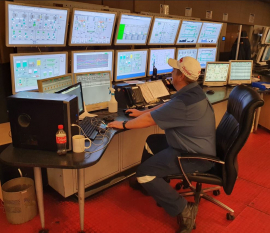
Eskom has announced that stage 2 load shedding will be implemented from 4pm to midnight every evening until Wednesday.
This as the power utility lifted load shedding over the weekend for the first time in at least three weeks after recovering some generation capacity.
Eskom said the load shedding will allow it to further replenish its reserves.
“To the extent possible, Eskom will endeavour to limit load shedding to night-time to have minimal impact on the economy and population. The load shedding will be used to replenish emergency generation reserves during the night to bolster generation capacity. Eskom will publish a further update on Wednesday afternoon, or as soon as any significant changes occur,” the power utility said.
By Sunday afternoon, Eskom had lost some 14 061 MW of energy due to breakdowns with a further 5 487MW offline due to maintenance.
The energy producer said, however, that some generation capacity has been brought back online over the weekend.
“Since Saturday two generation units at Kriel and a unit each at Kendal, Komati, Lethabo, Majuba and Matla power stations have returned to service. A generating unit each at Kendal and Kusile power stations were taken offline for repairs.
“Loadshedding is implemented only as a last resort in view of the shortage of generation capacity and the need to attend to breakdowns,” Eskom said.
Reprieve at petrol pumps

Motorists will breathe a sigh of relief at the pumps this week as the price of all grades of petrol is set to come down by between 89 cents and R1.02 a litre.
This marks the third consecutive month of decreases following increases experienced this year.
The Department of Mineral Resources and Energy (DMRE) on Monday announced that the price of petrol (both 93 ULP & LRP) will come down by 89 cents a litre while the price of petrol (both 95 ULP & LRP) will come down by R1.02 cents a litre.
The adjustment means that a litre of 95 ULP, which currently costs 23.38 in Gauteng, will now cost R22.36 as of Wednesday.
However, the price of diesel (0.05% sulphur) will increase by 10 cents a litre while the price of diesel (0.005% sulphur) will go up by 15 cents a litre.
The wholesale price of illuminating paraffin will decrease by 61 cents per litre.
The price of illuminating paraffin (SMNRP) will come down by 82 cents, while the Maximum Retail Price for LPGAS will increase by 19 cents per kilogram.
The DMRE said average Brent crude oil prices decresed from $94 per barrel to $89.79 per barrel during the period under review.
SASSA encourages non-smart phone owners not to choose EFT payment method
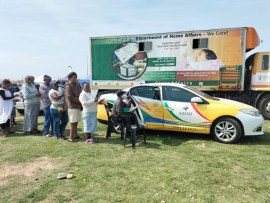
The South African Social Security Agency (SASSA) has appealed to all special SRD-R350 grant beneficiaries or applicants who do not own a smart phone not to choose the EFT payment method.
In a statement on Tuesday, the agency said the EFT payment method requires smart phones with the corresponding apps for such transaction.
“The customer care unit in Mpumalanga has received numerous complaints from beneficiaries where they fail to process the EFT payment.
“The agency has discovered that all those beneficiaries who cannot process their EFT payment, it is because their phones have little to no computing or internet capacity. The agency is cautioning beneficiaries to choose a suitable method of payment to avoid any inconvenience,” SASSA said.
All the applicable methods of payment can be accessed on the SASSA official website on https://srd.sassa.gov.za.Beneficiaries.
Applicants can choose to receive payment through official selected merchants and financial institutions.
“Beneficiaries or applicants must ensure that they update personal information such as cell phone numbers, surnames and financial accounts, if there are any changes. This will guarantee the right recipient and avoid payment disapproval,” the agency said.
SASSA has also urged beneficiaries to avoid asking for assistance from strangers when updating their personal information.
The agency said strangers can use the beneficiary’s personal details for fraudulent activities.
For more information, applicants can contact the agency’s toll free number: 0800 60 10 11 or [013] 754 – 9428/9363 from 08:00 – 16:00 during weekdays.