
DPE welcomes Toto Investment judgment
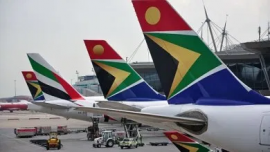
The Department of Public Enterprises (DPE) has welcomed the Western Cape High Court judgment on Monday, dismissing with costs Toto Investment Holdings’ application to halt the sale of South African Airways (SAA).
Toto approached the court in a bid to force Public Enterprises Minister, Pravin Gordhan, and the DPE to make records of the sale public and to interdict the sale of the shares.
“Toto Investments wanted to interdict the implementation of the transaction for the introduction of a strategic equity partner in SAA, pending the finalisation of the review application. But the court dismissed the application with costs, including the costs of two counsels,” the DPE said on Monday.
In addition, the department said the State Attorney suggested the confidentiality regime before the matter went to court. However, the investment firm rejected it and requested that all documents be disclosed on a non-confidential basis.
“The court ordered that certain documents be disclosed on a confidential basis, while others should be disclosed on a non-confidential basis. The judgment is in line with the suggestions that the State Attorney made to Toto Investments before the matter was heard in court.”
According to News24, Toto, an unsuccessful bidder for some of the assets of SAA, has launched an application to have the sale to Takatso Consortium’s parent company, Harith, set aside. This application is set to be heard at the end of January 2023.
“We welcome the judgment, as we have stated in our affidavit that the transaction is governed by confidential undertakings and the department was not at liberty to disclose to third parties certain documents related to the transaction, unless under a confidentiality regime.
“Unfortunately, Toto had to press ahead with this ill-fated strategy after we discussed with them at length about the confidentiality nature of the transaction,” said Gordhan.
The judgment, according to the department, paves the way for the department to proceed with the implementation of the SAA-Takatso transaction.
The judge has ordered that the main review application be placed under judicial case management until the matter is heard in January 2023.
However, since the interdict application was dismissed, the department said it can now continue taking steps to implement the transaction.
The DPE said it will comply with the court directive to provide a non-confidential version of the record of the transaction and the confidential version of the record within the 20 days stipulated in the court order.
According to the judgment, “the non-confidential record will contain all documents forming part of the record, save for the confidential information, which shall be expunged there from”.
This means that confidential information related to the transaction cannot be disclosed for public consumption and only non-confidential records may be shared with the public.
“It is interesting to note that certain political parties want to intervene in this matter with nefarious intentions. It is clear that this is a political agenda, which is intended to setback and disrupt the reforms of State-owned entities,” the department said, adding that it will facilitate further corruption.
“Furthermore, the question is who is Toto Investments? Who are the people involved and what is their interest in the matter? Toto Investments must be open and transparent about who they are and who they represent.”
Meanwhile, the department said it remains committed to ensuring that this transaction is implemented soon and that “disruptive forces” will not deter their efforts in ensuring that a restructured, agile and competitive national airline emerges.
Developed nations urged to prioritize climate change adaptation

Minister of Forestry, Fisheries and the Environment, Barbara Creecy, has called on developed countries to meet their commitments towards climate change adaptation.
“We need everybody to show progress in the implementation of their Nationally Determined Contributions (NDCs) and need new finances for our Just Transitions, including direct budget support for developing countries to build adaptation and resilience, and to address losses and damages brought about by climate change,” the Minister said on Monday.
Addressing the Pre-27th Conference of the Parties of the UNFCCC (COP27) negotiations in the Democratic Republic of the Congo, Creecy noted with disappointment the failure by developed countries to meet their commitment of mobilising US$ 100 billion by 2020.
She emphasised the importance of developing nations delivering the $100 billion per year, from now through to 2025, for building trust and faith in the multilateral process.
“Our call for developed countries to deliver on their commitments to meet their goal and ensure progression of efforts in the ongoing mobilisation of climate finance is a fair one.
“COP27 needs to be a watershed moment for implementation by securing the Means of Implementation, in the form of climate finance, technology transfer and capacity building, for African and other developing countries. This is important if we are to transition from negotiations to implementation,” the Minister said.
The government of the Arab Republic of Egypt will host COP27 with a view to building on previous successes and paving the way for future ambition to effectively tackle the global challenge of climate change.
The Minister said the urgent need is to adapt now, while nations build resilience for the future.
She appealed for focus to be placed on the most vulnerable people and communities in order to support health and well-being; food and water security; infrastructure and the built environment, as well as ecosystems and linked services.
“COP27 is thus a critical moment for all of us in Africa. This COP, which is taking place on African soil, must deliver meaningful and substantive progress on adaptation; loss and damage, and means of implementation support for African and other developing countries. COP27 further needs to focus on supporting a people-centred, just and equitable transition in the developing world.
“For too long, these issues of critical importance to Africa have seen only process-related outcomes in the United Nations Framework Convention on Climate Change (UNFCCC) negotiations, due to the mitigation-centric approach of developed countries,” the Minister said.
Creecy said COP27 must ensure that the outcome on Global Goal on Adaptation (GGA) increases the actual resilience of the population to the adverse impacts of climate change by at least 50% by 2030 and by at least 90% by 2050.
“We also need an outcome on a key set of adaptation finance goals as part of the GGA, focusing on core adaptation support in a range of sectors, and also as part of the deliberations on a new collective quantified goal on finance, and present a clear roadmap to deliver on the Glasgow decision to double adaptation finance by 2025.
“This roadmap, as stated in the AMCEN Dakar decisions, should include projected annual contributions, the timing of such contributions, and the multilateral institutions that will channel these resources to developing countries.
“We need everybody to show progress in the implementation of their NDCs and need new finances for our Just Transitions, including direct budget support for developing countries to build adaptation and resilience, and to address losses and damages brought about by climate change,” the Minister said.
Manhunt launched for German tourist murderer

The South African Police Service (SAPS) in Mpumalanga has launched a manhunt following the murder of a German tourist in Masoyi, near White River.
Provincial SAPS spokesperson, Brigadier Selvy Mohlala, said the tourist was fatally shot by a group of ruthless criminals on Numbi Road at around 4.30pm.
“According to the report, at that time, four tourists from Germany were traveling in a Hyundai H1 on Numbi Road, enroute to Numbi Gate at Mdluli Safari Lodge. They were then stopped by three armed suspects, who were driving in a VW Caddy.
“The suspects are said to have instructed the tourists to open the doors of their vehicle but when the driver reportedly locked all the doors, apparently one of the suspects shot him in the upper body through the window. It is further said that the victims’ vehicle drove in reverse for about 100 meters before crashing into the wall of Heroes Academy.
“Unfortunately, the driver died on the spot as a result of the shooting. The suspects reportedly sped off in their vehicle without taking anything from the tourists.”
Mohlala said police in Masoyi, as well as other role players in the Emergency Services, were alerted to the incident. A murder case was opened with an immediate launch of a manhunt for the suspects.
No one has been arrested as yet and police urge anyone with information that may assist in apprehending the perpetrators to immediately call the Crime Stop number on 08600 10111 or send information via MySAPS App. All received information will be treated as confidential and callers may opt to remain anonymous.
Provincial Commissioner of the SAPS in Mpumalanga, Lieutenant General Semakaleng Daphney Manamela, has condemned the incident.
“This is really cruel and uncalled for, given the economic challenges that our country is facing. When one has tourists, then it means the tourism sector is benefitting in a way that will in turn boost our struggling economy.
“We call on our good citizens, who might have seen or heard anything about these criminals or the VW Caddy they were driving, to come forward, and we promise to swiftly act so that they are brought to justice,” urged the General.
SARS records significant R7.18bn trade surplus

The South African Revenue Service’s (SARS) trade statistics for August 2022 recorded a preliminary trade balance surplus of R7.18 billion.
These statistics include trade data with Botswana, Eswatini, Lesotho and Namibia (BELN), the revenue collector said in a statement.
“The year-to-date (01 January to 31 August 2022) preliminary trade balance surplus of R163.36 billion is a deterioration from the R325.06 billion trade balance surplus for the comparable period in 2021. Exports increased by 11.9% year-on-year whilst imports increased by 44.9% over the same period,” said SARS.
The R7.18 billion preliminary trade balance surplus, was attributable to exports of R175.37 billion and imports of R168.19 billion.
During this period, SARS said exports decreased by R1.83 billion (1.0%), while imports increased by R15.80 billion (10.4%) over the same period.
“Exports for the year-to-date increased by 11.8% to R1 330.18 billion from R1 189.46 billion over the same period during 2021. Imports for the year-to-date of R1 166.82 billion were 35.0% more than the R864.40 billion imports recorded during the same period in 2021.
“The cumulative trade balance surplus for 2022 is R163.36 billion. On a year-on-year basis, the R7.18 billion preliminary trade balance surplus for August 2022 was a deterioration from the R40.61 billion trade balance surplus recorded in August 2021. Exports of R175.37 billion were 11.9% more than the R156.71 billion exports recorded in August 2021. Imports of R168.19 billion were 44.9% more than the R116.10 billion imports recorded in August 2021.”
The July 2022 preliminary trade balance surplus was revised upwards by R0.05 billion due to the ongoing Vouchers of Correction (VOC). The revision was from the preliminary trade balance surplus of R24.76 billion to the revised trade balance surplus of R24.81 billion.
South Africa an investment value proposition

Trade, Industry and Competition Minister, Ebrahim Patel, has opened the 9th session of the South Africa-Saudi Arabia Joint Economic Commission (JEC) and the South Africa-Saudi Arabia Trade and Investment Forum in Pretoria.
The forum aims to provide South African and Saudi Arabian companies with a strategic platform to engage on bilateral trade and investment opportunities in both markets, while simultaneously affording them access to senior decision-makers and stakeholders.
Patel told the forum – which was attended by delegations of business people from both countries – that South Africa presents an array of investment areas, from manufacturing to pharmaceuticals.
“South Africa is a strong value proposition for investments from many parts of the world. Last year, the Ford motor company decided to invest $1 billion in expanding the auto production plant in South Africa. The decision led, in turn, to 10 large component suppliers of Ford deciding to bring their investments to South Africa.
“Last October, we launched the new Toyota Corolla Cross – the first hybrid vehicle produced at commercial scale on the African continent. Mercedes Benz rolled out the new C-Class series produced locally. Aspen… has been producing the J&J COVID-19 vaccine in South Africa.
“I raise these examples… to show the capability in the South African market, ranging from advanced manufacturing to industrial innovation. To scale these up, we look for partnerships, investment partnerships from Saudi businesses.
“I will be finalising discussions with my counterpart on a joint investment fund that we hope to announce at the time of the planned State visit,” he said.
Patel said South Africa presents opportunities for investors to reach other markets through the country.
“South Africa has a free trade deal with the European Union and the United Kingdom, and we have duty-free access for a large number of products to the United States market. We are busy completing the African Continental Free Trade Area, which will be a large free trade agreement knitting together some 54 African countries.
“When you invest in South Africa, you are investing in an opportunity to reach that much wider market,” he said.
The Minister said although South Africa and Saudi Arabia maintain strong trade links, it is important to bring more balance to the trade surplus between the two countries.
In 2021, trade between South Africa and Saudi Arabia stood at R66.15 billion.
South African exports stood at some R5.54 billion, with imports from Saudi Arabia amounting to at least R60 billion.
“We want to focus on improving trade and investment links [between the two countries], so that we can increase [exports and imports] further.
“Saudi Arabia has a trade surplus with South Africa due to its large oil exports. We can help to improve the trade balance with greater manufacturing and food product exports both to the Saudi market and using Saudi as a… gateway for exports to the rest of the Middle East.
“We can buy more fertilisers, as well as the derivatives of petroleum products. We see an opportunity for significant new investment from Saudi Arabia in a number of South African value chains in manufacturing, in hotels, and entertainment, working through joint ventures and with the investment fund that the two governments are working on,” he said.
The forum continues on Tuesday.
Shortage of healthcare workers crippling global health system, says Phaahla
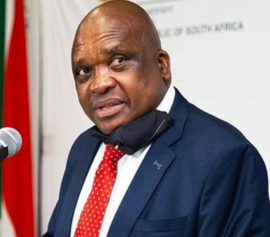
Health Minister, Dr Joe Phaahla, says the shortage of healthcare workers is threatening the quality and sustainability of health systems in Africa and worldwide.
“Health care is a fundamental human right. But without health workers, there cannot be health services,” he said on Sunday.
The Minister was speaking at an official opening of the 24th Association of Medical Councils of Africa (AMCOA) international conference under the theme ‘The Health Workforce of the Future and its Regulation’ at the Sun City Resort, North West.
AMCOA is a membership-based organisation with over 30 country members from all regions of Africa and strives to promote best practices among the continent’s regulatory authorities and to respond to their current and future needs.
Phaahla told delegates that the world has been grappling with a “serious” shortage of healthcare workers, even before the devastating COVID-19 pandemic.
He said the under-investment in education and training and the mismatch between education and employment strategies in relation to health systems and population needs were some of the contributing factors to this catastrophe.
Phaahla described the “crisis in human resources” as one of the most pressing global health issues of our time.
In addition, Phaahla said the undersupply is concurrent with globalisation and the liberalisation of markets, which allow healthcare workers to offer their services in countries other than those of their origin.
He said workers based in rural and poor areas often move to cities for better working conditions and environments, while the urban-based leave the public sector for the private sector.
“Finally, these professionals and their colleagues in the public sector eventually immigrate to more developed countries to obtain greater pay, better working conditions, the overall better quality of life and improved opportunities for themselves and their families.”
He warned that migration to “greener pastures”, particularly in the case of professionals with exportable skills, has always occurred and will continue.
The Minister has since urged regulators to deal with other associated challenges and problems.
Meanwhile, the demand for health services is increasing in light of the ageing population and the prevalence of infectious, non-communicable diseases and multimorbidity.
According to the Minister, these have created greater demand for health and care workers in primary health in particular.
These shortages, he said, continue to undermine access to and provision of health services, particularly in primary care settings.
“This is the most critical challenge to achieving universal health coverage,” he said.
“Without the availability of a competent and appropriately skilled health workforce, adequate numbers and proportionately distributed, many citizens of our continent struggle to get access to the services they need.”
In addition, he noted the countries’ shrinking health budgets due to subdued economic growth.
“This certainly puts a lot of pressure on the whole health ecosystem.”
COVID-19
He also highlighted the impacts of the COVID-19 pandemic that has challenged the essential health systems development and provision.
The Minister noted that health workers are often the most vulnerable to infectious diseases when outbreaks strike.
In the early months of the pandemic, he said health professionals made up 14% of all new COVID-19 cases, while about 80 000 to 180 000 healthcare workers are said to have died from the virus between January 2020 and May 2021.
Gender
He also recognised the importance of gender dynamics in this sector, with women constituting 67% of the health and care workforce globally.
Phaahla said improving gender equity is essential to strengthening workforce numbers, distribution, skill mix, and human resource policy and planning failures.
“We are aware that women still encounter gendered issues such as occupational segregation, pay inequality and underrepresentation in leadership and decision‐making in many countries.”
He has called on the delegates to reflect on these complex matters.
“This conference needs, as I argued before, to reflect on the kind of regulatory mechanisms needed for the scopes of practice to deliver health services in our modern societies.”
National Council on Gender-Based Violence and Femicide Bill gazetted

Minister in the Presidency for Women, Youth and Persons with Disabilities, Maite Nkoana-Mashabane, has published the gazetted National Council on Gender-Based Violence and Femicide (NCGBVF) Bill, 2022.
The Minister intends to introduce the Bill in Parliament, in terms of section 73 of the Constitution.
Nkoana-Mashabane said the gazetting of the Bill is a major step forward in driving a multi-sectoral, coherent strategic policy and programming framework to ensure a coordinated national response to the crisis of GBVF by the government of South Africa and the country as a whole.
She said the National Council on Gender-Based Violence and Femicide, once established, will be the custodian of the National Strategic Plan on GBVF (GBVF-NSP) and will be responsible for driving its implementation.
“Currently, the implementation of the NSP on GBVF is being driven by the End GBVF Collective – a volunteerism-based collective of government, civil society, development partners, business individuals, who have banded together under the pillars of the National Strategic Plan on GBVF to respond to a stubborn pandemic that continues to impact the lives of women and girls daily,” Nkoana-Mashabane said.
She said the process of developing this legislation is in line with the declaration of the Presidential Summit Against GBVF, held on 1 and 2 November 2018 and the GBVF-NSP.
Nkoana-Mashabane, in her capacity as the chairperson of the Inter-Ministerial Committee on Gender-Based Violence and Femicide, welcomed this step, saying that the National Strategic Plan envisages a National Council on Gender-Based Violence and Femicide that is based on a multi-sectoral approach.
“Once established and operational, the council will work with key government departments, civil society organisations and the private sector. This will contribute to building ongoing national, provincial and local accountability for urgent, comprehensive and all-inclusive response to Gender-Based Violence and Femicide.
Director-General of the Department of Women, Youth and Persons with Disabilities, Advocate Mikateko Joyce Maluleke, commended the gazetting of the Bill as critical step in realising the goals set out in the NSP on GBVF.
Maluleke said as far back as 1998, the South African government promulgated the Domestic Violence Act, which covered a wide range of abuses, from physical and sexual, to economic, psychological, stalking, and damage to property, amongst others.
“More recently… the Department of Justice and Constitutional Development [made] amendments to the Criminal Law (Sexual Offences and Related Matters) Amendment Bill (NRSO), Domestic Violence Bill, and the Criminal Matters Amendment Bill.
“The Department of Social Development also opened up the Victim Support Services Bill for public comment.
“Amongst its scope, this Bill also proposes to make it a legal requirement that all service providers deal with victims of abuse in a professional manner, ensuring the dignity of the victim is preserved at all times during the process. These Bills strengthen the legal environment that provides justice for survivors of GBVF,” said Maluleke.
Drafting of the Bill
Government drafted the Bill in consultation with multiple stakeholders, in line with the Development of Public Policy and Subordinate Legislation guidelines.
Between June and September 2020, the department held public consultation webinars to share the status quo with regards to establishing the NCGBVF, and government’s thinking on the NCGBVF’s Terms of Reference (TOR).
During the webinars, the department also shared the legislative framework and government’s representation on the NCGBVF. This was also an opportunity for civil society to share its thinking on the NCGBVF’s TORs, the legislative framework and all other matters related to the NCGBVF.
In September 2020, Nkoana-Mashabane met with business associations to deliberate on the process of establishing the National Council on Gender-Based Violence and Femicide.
The webinar solicited inputs on the draft Terms of Reference and the selection criteria for members to form part of the National Council on Gender-Based Violence and Femicide, as well as other measures to speed up the implementation of the National Strategic Plan.
In October 2020, the department held a roundtable discussion to engage on realising the outcomes of the NSP on GBVF.
The roundtable centred on the Terms of Reference for establishment of the NCGBVF.
In October 2021, the department published the Bill in the government gazette to solicit public inputs and comments. In addition, in November and December 2021, provincial consultations were held to solicit inputs into the Bill.
The Bill has been supported by the National Economic Development and Labour Council.
The Bill was certified as constitutionally sound by the Office of the Chief State Law Adviser and having met all legal drafting requirements.
Nkoana-Mashabane has thanked the stakeholders who worked on drafting the Bill, made contributions, and worked with the department in reaching this milestone.
The National Strategic Plan on Gender-Based Violence and Femicide can be found at: https://www.dwypd.gov.za/index.php/resource-centre/gender-based-violence-femicide; and the National Council on Gender-Based Violence and Femicide Bill (NCGBVF) can be found at: https://www.dwypd.gov.za/index.php/resource-centre/gender-based-violence-femicide.
You can also learn more about how a Bill becomes a Law at: https://pmg.org.za/page/legislativeprocess.
SIU welcomes SAP R81m ruling

The Special Investigating Unit (SIU) welcomes the Special Tribunal order for the Systems Applications Products (SAP) to payback the Department of Water and Sanitation (DWS) more than R81 million.
In March 2022, the Special Tribunal ordered SAP to repay DWS R413 million, which is the total amount paid by DWS to SAP between 2015 and 2016 for software licence and support contracts.
The contracts value was over R1 billion. However, SAP disputed an amount of R83 million for third party costs it incurred.
In a new order, dated 29 September 2022, the Special Tribunal ruled that SAP pays DWS the full outstanding amount in the sum of R81 502 073.62 within five days after the court order.
The Special Tribunal ruling comes after SIU investigations revealed that the department the contracts between the department and SAP were irregular and unlawful. The court then set aside these contracts.
The SIU is empowered by the Special Investigating Units and Special Tribunals Act 74 of 1996 to institute civil action in the Special Tribunal or the High Court to correct any wrongdoing it uncovers in its investigation.
Where evidence points to criminal conduct, the SIU refers the evidence to the National Prosecuting Authority for further action.
Fraud and corruption allegations may be reported via the following platforms: siu@hotline.co.za / hotline: 0800 037 774.
Policeman faces disciplinary hearing over viral video

The management of the South African Police Service (SAPS) has instituted a departmental investigation into the conduct of a police constable, following an incident captured in a video clip that is circulating on social media.
National SAPS spokesperson, Colonel Athlenda Mathe, said according to preliminary reports, the member – who is attached to the police’s Rapid Railway Unit (RRU) – reported for duty on Saturday morning, 1 October 2022, under the influence of liquor.
The hearing, Mathe said, would be in line with the SAPS 2016 Disciplinary Regulations. She said the commander immediately booked the constable off duty, based on his condition.
“The member was also immediately disarmed and sent back home.
“It was later discovered that the constable proceeded on his own accord to Orlando Stadium in Soweto, and gained access to the stadium, after which he can be seen in a video clip, dancing on the soccer pitch,” Mathe said.
She said the status and dignity of the SAPS badge and uniform must at all times be safeguarded and protected with pride, especially by police officers.
“Therefore, the management of SAPS views the unbecoming behaviour of the said member in a very serious light. SAPS will not hesitate to act against its own when found to be on the wrong side of the law,” she said.
SAA not scaling down operations

State-owned airline, South African Airways (SAA), has moved to assure customers that it will continue to service the routes it currently offers.
This after reports suggested that the International Air Services Licencing Council revoked 20 of the airline’s domestic and international route rights.
“SAA continues to operate its current network and schedule, with six regional and three domestic destinations. Currently, the airline has deployed additional capacity on the Cape Town route to meet demand, and we have increased the aircraft size on the Harare route.
“SAA made a representation to the International Air Services Licensing Council (The Council) on its current route allocation and the decision by the Council to review some of the frequencies on the routes that the airline is currently not serving,” SAA said in a statement.
The aviation company added that it will be ramping up operations with additional equipment being purchased for its current fleet.
“The first addition arrived on [Tuesday]. SAA has taken delivery of an Airbus 320 which allows the airline to continue to gain momentum with the intention to resume full regional and international services.
“There is no doubt that SAA still retains a high brand equity and customer loyalty, demonstrated by successfully operating six in-demand routes on our Continent, high occupancy rates on domestic routes, and robust increase of Voyager members,” SAA said.
Earlier this month, the airline celebrated a year of operations after it faced an uncertain future after it was grounded for at least 16 months and underwent business rescue.