
SARS improves service offering for trusts

The South African Revenue Service (SARS) is increasing its focus on trusts by embarking on a journey to modernise and improve service offerings to this segment of taxpayers.
In a statement on Wednesday, SARS said the improvements are aimed at making it easy and simple for trusts to comply with their legal obligations.
“Pursuant to the above, SARS has conducted a detailed current state analysis of tax compliance by trusts and their beneficiaries to determine whether all trusts and their beneficiaries are registered with SARS for tax purposes and whether all trusts and their beneficiaries have filed their annual income tax returns.
“If so, whether such returns fully and accurately reflect their actual tax status and their payment obligations have been fully met. SARS is working hard to increase and expand the use of data.”
Through this process, SARS has identified a significant number of beneficiaries of trusts who have received distributions but have not submitted income tax returns in line with their legal obligation as per the annual public notice under section 25 of the Tax Administration Act 23 of 2011.
These beneficiaries consist of companies, individuals and trusts who must submit their outstanding income tax returns immediately.
Failure to remedy this non-compliance, SARS will invoke the provisions of the law, which may include actions such as raising estimated assessments, imposition of interest and penalties as well as civil and criminal sanctions.
“In line with its strategic objectives of providing clarity and certainty to enable taxpayers to comply with their legal obligations as required by law, an interim online registration platform (SOQS) is available to assist and enable Trusts to register with SARS,” the revenue service said.
This platform can be accessed via the following hyperlink: SARS Online Query (2.0.0.0 (Prod))
“SARS will invoke all measures provided for in legislation if trusts taxpayers and their beneficiaries intentionally negate their legal obligations.
“However, trust taxpayers and their beneficiaries may still regularize their tax affairs by making use of the SARS Voluntary Disclosure Program (VDP) which is available and accessible on the eFiling platform,” SARS Commissioner Edward Kieswetter said.
SA contributes vaccines to West Africa
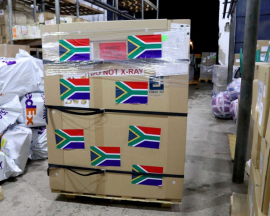
Deputy Minister of International Relations and Cooperation, Candith Mashego-Dlamini, will hand over vaccines in Liberia and Sierra Leone this week.
“It is envisaged that South Africa’s contribution of 79 200 doses of the COVID-19 Johnson & Johnson vaccines shall deepen the mutually beneficial cooperation with Liberia and enhance our friendship and relations with the people and government of Liberia,” the Department of International Relations and Cooperation said.
The Deputy Minister’s travel started on Monday and will conclude on Friday.
Government has signed an agreement with the African Vaccination Acquisition Trust (AVAT) to contribute a total of 2 030 400 doses of the Johnson & Johnson COVID-19 vaccine to African countries. The agreement was signed through the African Renaissance Fund (ARF).
AVAT was formed following the establishment of the African Union’s COVID-19 African Vaccination Acquisition Task Team (AVATT) in November 2020 by President Cyril Ramaphosa as the then Chairperson of the AU.
The contribution, which will be made to the people of Liberia by the South African government, was produced at the giant pharmaceutical manufacturing plant in Gqeberha, South Africa, operated by Aspen Pharma.
The department said South Africa and Liberia enjoy strong bilateral relations.
Stern warning to NSFAS fraudsters

Higher Education and Training Minister, Dr Blade Nzimande, has sent a stern warning to people who continue to defraud the National Financial Aid Scheme (NSFAS).
Briefing media on the opening of the 2023 NSFAS application process on Tuesday, Nzimande welcomed the proclamation signed by President Cyril Ramaphosa to allow the SIU to investigate maladministration and fraud at NSFAS.
He said the department, together with law enforcement agencies, is following all the cases where there are suspected instances of fraud and corruption.
“NSFAS has committed to cooperate fully with the process to ensure that any actions, which threaten the appropriate provision of funding to deserving students, are dealt with and perpetrators are brought to book.
“I also wish to point out that there is no chaos at NSFAS or any tender irregularities, as claimed by OUTA [Organisation Undoing Tax Abuse]. Instead, NSFAS is continuing to make the country proud by giving the children of the working class and the poor the opportunity to access and succeed in the post school education and training,” Nzimande said.
Comprehensive student funding model
The final report of the Ministerial Task Team (MTT) to review the sustainability of the Post-School Education and Training (PSET) student financial aid system was submitted to Cabinet on 14 September 2022, with the recommendations.
“One of the recommendations put forward by the MTT is for the development of a well communicated 10-year plan to outline how a comprehensive, differentiated model student financial aid system would be phased in to a fully functioning, sustainable, affordable and regenerative financial aid scheme, drawing on diverse financial sources,” Nzimande said.
However, Nzimande said, in the immediate term, government will develop mechanisms to address, through partnerships, the gaps in funding, particularly of the missing middle and postgraduate funding.
“It is our intention to implement these immediate measures in the 2024 academic year, following consultations with our stakeholders, which include student formations, the South African Union of Students (SAUS), South African Technical and Vocational Education and Training Student Association (SATVETSA), Universities South Africa (USAf), South African College Principals’ Organisation (SACPO), the Chancellors’ Forum (SAUCF), and the trade unions.
“We will further engage other interested parties in this matter, including the Chapter 9 and 10 Institutions, as well as religious formations. Part of the consultations will include international benchmarking of best practices before the final proposal is tabled to Cabinet,” the Minister said.
Student accommodation portal
On student accommodation for NSFAS beneficiaries, Nzimande announced that in 2023 academic year, NSFAS will roll out a student accommodation portal, which will ensure efficiency in areas such as grading and accreditation of accommodation, costs, paying of private accommodation providers, small accommodation providers (“backrooms”) and increased student accommodation capacity.
Nzimande said the NSFAS board and management conducted site visits to universities and TVET colleges across the country to witness first-hand the issues regarding accommodation.
“They identified, among other issues, insufficient beds to accommodate students, both private and institution-owned accommodation not conducive for student accommodation and learning, and private accommodation providers not properly regulated.
“It was evident from those visits that the allocation of student accommodation for NSFAS beneficiaries has to be streamlined and centralised,” the Minister explained.
He said the process to increase the capacity of accreditation providers is underway.
Over 6 000 TVET graduates employed
Meanwhile, Nzimande announced that 6 779 graduates have now been placed in workplaces.
This is in line with the department’s commitment to place 10 000 unemployed Technical Vocational Education and Training (TVET) college graduates in workplaces from April 2022.
Nzimande said he will be meeting with all the Chairpersons and CEOs of Skills Education Training Authorities (SETAs) and the National Skills Fund (NSF) to ensure that they meet the target, as announced by President Ramaphosa.
“I, however, still want to call upon the industry to open their work spaces to our TVET students and those who graduate through all our skills institutions,” Nzimande said.
NSFAS 2023 application cycle opens

The National Financial Aid Scheme (NSFAS) 2023 application cycle has opened.
Higher Education, Science and Innovation Minister, Dr Blade Nzimande, made the announcement of Wednesday’s (28 September) opening of the application process at a briefing on Tuesday.
Briefing the media, Nzimande said the scheme resolved to open the application cycle early, as opposed to the previous year, in order to give prospective applicants enough time to submit their applications and supporting documents.
Giving an update report on NSFAS funding for the 2022 academic year, Nzimande said a budget of R43 billion was allocated to the scheme towards the beneficiaries’ tuition fees, including food and travelling allowance, and study material.
He said 985 672 applications were received with approximately 140 636 application unsuccessful.
Of the applications received, 739 526 applications were provisionally funded pending registration from their respective institutions.
“[The] majority of unsuccessful applicants failed to provide sufficient evidence to support their application for funding; exceeded the financial eligibility threshold; already achieved the highest level of qualification that NSFAS funds, exceeded the N+ rule and being non-compliant to the academic pathways of the TVET college sector,” Nzimande explained.
Over 200 000 SASSA beneficiaries received instant approvals
As part of the system’s improvements, Nzimande said NSFAS introduced real-time response to funding applications from applicants who are beneficiaries of South African Social Security Agency (SASSA), and 287 217 of those applicants received instant approvals because “beneficiaries in the SASSA category often receive automatic qualification for funding.”
“Currently, approximately 708 147 applicants are being funded by NSFAS across our 26 public universities and 50 Technical Vocational Education and Training (TVET) colleges. We are also working with the National Treasury to ensure that we align the Post School Education and Training (PSET) calendar with government funding calendar to ensure that NSFAS has reserve funds prior to the reopening of PSET institutions.
Improving the application system
In a bid to improve its application system and process to simplify it for prospective applicants, Nzimande said this year, NSFAS has implemented a number of enhancements to the system to ensure a seamless application experience.
He said the NSFAS online application portal was redesigned to be more user friendly and closer to other platforms that prospective applicants are accustomed to such as WhatsApp, Twitter, Facebook, Instagram.
“The application process itself has been simplified and the questions asked are easier to understand by the public. Additionally, applicants can pause the process and continue at a later stage without restarting from scratch, something that was not possible in previous cycles.
“Over and above the enhancements, NSFAS developed additional channels of application to cater for applicants from diverse backgrounds, also keeping in mind that most of the prospective applicants are young people who embrace the digital way of doing things,” Nzimande said.
The new channels include a mobile App, USSD and WhatsApp, where one can apply for NSFAS funding, track application status and cancelling applications amongst other things, which is normally done through the web portal.
Furthermore, to ensure that no applicant is left behind, Nzimande said NSFAS will embark on an outreach campaign, to ensure that individuals who do not have access to technological devices that enable them to apply online are given the necessary resources and support to apply.
How to access NSFAS bursary
You qualify for a NSFAS bursary if you are a South African citizen who plans to study in 2023 or you are already studying at a public university or TVET college and you meet the following requirements:
- You are SASSA grant recipients or
- Your combined household income is not more than R350 000 per year or
- If you are a person living with a disability, your combined household income should not be more than R600 000 per year or
- If you are a student who begun their university studies before 2018 and their household income is not more than R122 000 per year.
Visit the NSFAS website at www.nsfas.org.za for more information on the required supporting documents and the application process.
Kimberley gets R4m day care centre

Social Development Deputy Minister Hendrietta Bogopane-Zulu, in partnership with Airports Company South Africa and CIPLA Foundation, has handed over a R4 million day care centre to the residents of Greenfield in Kimberley, Northern Cape.
The handover on Monday was part of government’s efforts to accelerate service delivery through public private partnerships (PPP).
During her address, the Deputy Minister thanked the Sol Plaatjie Local Municipality for availing land and water by constructing the newly built day care centre for the benefit of children.
“We thank both National and Provincial Departments of Social Development for their relentless efforts in ensuring that children are put first. It is befitting to also extend a word of appreciation to team ACSA, which has partnered in funding many programmes previously and most recently contributed towards the building of Kutlwano Day Care Centre,” Bogopane-Zulu said.
One of the parents, whose child is attending at Kutlwano Day Care Centre, Janice Brown, said she was delighted that children in the area will have a new crèche, which is a safe environment and suitable for children to learn and grow.
“The centre caters for our needs and provides a sense of love and care. The facilities of the crèche are in a safe and good condition for our children to play and learn without being exposed to any form of danger,” she said.
The centre was once a corrugated iron shack and was now refurbished into a disability-friendly facility.
Meanwhile, on Tuesday the Deputy Minister will facilitate an engagement with sex workers, government, civil society, developmental partners and the general public about challenges that continue to face the sex work trade.
The Department of Social Development calls for the decriminalisation of sex work as criminalisation poses a myriad of challenges against interventions designed for sex workers.
The department said that criminalisation of the trade is intricately linked to the ongoing human rights violations and inadequate access to social, justice and health services.
The sex work dialogue will take place this morning at the Platfontein Lodge, in Kimberley, Northern Cape.
Good governance leaves little room for corruption
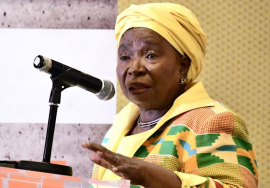
If unethical practices continue to plague local governance, the country will not be able “investigate and prosecute” away crippling government corruption, says National Director of Public Prosecutions, Advocate Shamila Batohi.
Batohi was addressing the launch of the Local Government Anti-Corruption Forum (LGACF) and the Local Government Ethical Leadership Initiative by Cooperative Governance and Traditional Affairs (CoGTA) Minister, Dr Nkosazana Dlamini Zuma.
The LGACF was established in October 2020 under the chairship of the Special Investigating Unit (SIU), supported by the Department of Cooperative Governance (DCOG) as the Secretariat.
The forum was formed with the intention to foster collaboration and coordination amongst the various stakeholders at the local government level on anti-corruption matters.
Delivering the keynote address, the Dlamini Zuma said where there is good governance, there is “little room for corruption”.
“If there’s accountability, you minimise corruption. If there’s integrity, you minimise (corruption). If you are value-driven, you also minimise corruption. So we can’t just talk about the end result, you must talk about the whole value chain.
“If the value chain is right, the end result will be right. If the value chain is wrong, then the end-result will be wrong. We must have ethics, integrity, accountability and good governance,” she said.
Corruption, she said, was “an end result of an unethical behaviour, bad governance and non-accountable leadership”.
She urged leaders across society to “do the right thing”.
“As leaders, we must be the conscience of the organisation. We must make sure that in the organisation, the right thing is done. You must make sure that there is accountability.
“At the end of the day, you must be prepared to take responsibility for the wrongdoing. It is people who do wrong, it is not local government as a sphere. It is not government as an institution, it is people who do wrong,” said Dlamini Zuma.
She said it is critical for society to be ethical, disciplined and transparent.
On law enforcement, she said agencies should be accountable and impartial.
She decried the time it takes for cases to be finalised in court after the initial arrest of suspects, saying this has the potential to discredit police investigations and prosecutions.
“It erodes the trust in (law enforcement systems),” she said.
Special Investigating Unit (SIU) head, Adv. Andy Mothibi, said corruption is prevailing in every sector of society, and not just local government.
An anti-corruption vulnerable sector risk assessment conducted by the National Anti-Corruption Local Government Ethical Leadership Initiative (LGELI) found that corruption is perverse in all sectors of society.
The exercise identified risks in the health, local government, infrastructure, border management, State-owned entities, education, NPOs, and energy sector, among others.
Batohi said while government has good crime fighting strategies, the country often does not implement these.
“Together in law enforcement, we are working really hard on the reactive side of fighting corruption. But let us [face facts]: the root cause – particularly in the local government space – is a lack of good governance and ethical leadership. That is where we need to focus,” she said.
The NDPP reiterated that the country cannot “investigate and prosecute” itself from the problem of corruption, “as long we do not attend to the root cause”.
“If you look at our anti-corruption strategy, there is a huge part of it that deals with the preventative side, which requires a huge range of government stakeholders to come to the party,” she said.
Former Lotto Commission exec’s pension frozen

The Special Investigating Unit (SIU) has obtained a preservation order against the R2.8 million pension payout of former National Lotteries Commission (NLC) chief operating officer, Philemon Letwaba.
This as the corruption busting unit instituted an investigation into allegations of corruption and maladministration at the NLC and the conduct of officials.
According to SIU spokesperson, Kaizer Kganyago, the investigation has thus far revealed that Letwaba allegedly “personally benefitted” from NLC funding directed to at least six non-profit organisations.
Letwaba allegedly “used friends and family businesses and trusts” to receive the money.
“In one of several NLC funded projects investigated by the SIU, it was revealed that a Limpopo-based NPO received approximately R25 million for the refurbishment of a torched school in Vuwani.
“Twelve days after the NPO received the money, it allegedly transferred approximately R4 million to Unbrand Properties without evidence of work being done and in violation of the funding agreement,” Kganyago said.
The preservation order, the spokesperson said, was filed on an urgent basis at the Special Tribunal.
“The Special Tribunal order… interdicts Liberty Group — the pension administrator — from paying out pension benefits to the value of approximately R2.8 million due to Mr. Letwaba, pending the final determination of an application to be brought by the SIU against Mr. Letwaba within 60 days.
“The SIU approached the Special Tribunal on an urgent basis to freeze the pension benefits of Mr. Letwaba after he resigned from the NLC, pending the institution of a disciplinary hearing into his role in the distribution of NLC funds to several NPOs,” Kganyago said.
In June this year, the SIU obtained a freezing order against the R27 million luxury property owned by former NLC board chairperson, Prof Alfred Nevhutanda’s investment company, Vhuthanda Investment.
Nevhutanda allegedly bought the home with grant funding monies from NPOs.
GDP decreases to 7.6%

After two consecutive quarters of positive growth, real gross domestic product (GDP) decreased by 0.7% in the second quarter of 2022 (Q2: 2022), Statistics South (Stats SA) said on Wednesday.
During this period, the GDP decreased from 7.8% to 7.6%, the agency said.
The period, it said, was characterised by the devastating floods in KwaZulu-Natal and load shedding, weakening an already fragile national economy, which had just recovered to pre-pandemic levels.
Manufacturing biggest drag on GDP
Stats SA said the floods had a negative impact on a number of industries, most notably manufacturing.
“Manufacturing is the largest industry in KwaZulu-Natal, according to 2019 data, accounting for a fifth of national manufacturing production. The damage to factories and plants, and disruptions to logistics and supply chains, pulled national manufacturing output down by 5.9%.
“The biggest drags on growth were petroleum and chemical products, food and beverages, and transport equipment.”
Statistician General Risenga Maluleke said trade, catering and accommodation were negatively impacted by both the floods in KwaZulu-Natal and power cuts across the country.
“The industry recorded a contraction of 1.5%, as floods damaged retail outlets and storage facilities. There was also a loss of trading hours due to load shedding. Mining production was dragged lower by gold, coal and diamonds, with the decrease in coal production caused partly by the flooding. Mining output was also negatively affected by load shedding.
“Economic activity in the electricity, gas and water supply industry was hampered mainly by load shedding due to lack of generation capacity. There were disruptions to water supply too, caused by both the floods in KwaZulu-Natal and drought in Eastern Cape,” he said.
During this period, agriculture, forestry and fishing activity decreased by 7.7%, pulled lower by a decrease in the production of animal products. Electricity outages and the spread of foot-and-mouth disease contributed to the decline.
On the upside, Stats SA said: “The finance, real estate and business services industry made the biggest positive impact on GDP growth in Q2: 2022, rising by 2.4%. Growth was driven by increased activity in the banking sector, as well as in insurance and pension funding.”
Economic recovery from COVID-19: Not all industries are equal
The agency said the economy took almost two years to recover from the impact of COVID-19, with real GDP reaching pre-pandemic levels in Q1: 2022.
“The recovery was short-lived, with the 0.7% decline in Q2: 2022 dragging GDP back below the Q4: 2019 pre-pandemic level of R1 148 billion.
“Six industries have not yet recovered, with construction currently in the worst shape. The construction industry is 24% smaller than it was before the pandemic.
“Mining briefly recovered in Q2: 2021 but has since remained below its Q4: 2019 level.”
National School of Government rolls out courses for public servants

The National School of Government (NSG) is inviting public servants to sign up for the new Championing Anti-discrimination in the Public Service and Managing Performance in the Public Service courses.
The courses are currently available on the e-learning platform, at no cost.
According to the NSG, the Championing Anti-Discrimination in the Public Service course targets senior managers, while the Managing Performance course is for middle managers, who want to better understanding the public service performance management and development system.
The NSG said it has waived the fees for the Championing Anti-Discrimination in the Public Service to enable a speedier self-enrolment and access by public servants. The participants will study at their own pace online.
The Championing Anti-Discrimination in the Public Service course, according to the NSG, was developed explicitly to empower public servants with information and tools to end discrimination in the public service amongst public servants, and by public servants against the public.
Meanwhile, the Managing Performance in the Public Service course is designed to assist employees, who are not part of the Senior Management Service, to manage their performance and abide by the public service performance management system prescripts.
It will also enable them to, amongst other things, write performance goals that are measurable, clear, achievable and aligned to organisational objectives, assess performance continuously, identify gaps and compile a suggested plan of action, and revise performance objectives where required.
NSG principal, Professor Busani Ngcaweni, said the courses will help public servants to critically reflect on their own beliefs, attitudes, thought patterns, and behaviour.
“They will identify and apply relevant strategies and principles to challenge discrimination in all contexts, examine legislation that addresses discriminatory processes and plan how these principles can be applied.
“They will also be able to assess their departmental policies and practices in light of global anti-discrimination standards. Importantly, they will be empowered to initiate and support anti-discriminatory behaviour in the public sector,” he explained.
He has called on senior managers to undertake the course.
The NSG is mandated with the responsibility of ensuring that public servants comply with the provisions of established legislation, regulations and systems, and can exercise proper discretion and innovation in solving routine and complex delivery problems.
“The courses have been deliberately converted to free courses that are easily available on our e-learning platform so that public servants can enrol themselves easily and quickly, and be able to undertake the courses at their pace and convenience,” said Ngcaweni.
How to enrol for the courses:
- Go to the NSG website (https://www.thensg.gov.za/).
- Click on “Open eLearning courses” under the eLearning tab on the NSG website.
- Follow the on-screen instructions to register an online profile (if they have not done so yet).
- For enquiries contact: elearning@thensg.gov.za.
43 crisis-hit municipalities in urgent need of intervention

While 151 municipalities are teetering on the brink of collapse, 43 have already collapsed and require urgent intervention to rescue them, National Treasury told Parliament on Wednesday.
Senior officials from Treasury painted a bleak picture when they appeared before Parliament’s Standing Committee on Appropriations.
Members of Parliament were briefing on local government underspending in respect of the Municipal Revenue Management Improvement Programme, and progress on the implementation of the Integrated Financial Management System (IFMS).
In a synopsis, Treasury Deputy Director-General for Intergovernmental Relations, Malijeng Ngqaleni, said local government finances are rising indebtedness and creditors.
Elaborating on the unsavoury state of affairs, Sadesh Ramjathan, Local Government Budget Analysis Director at National Treasury, said of the country’s 257 municipalities, only 58 presented unfunded budgets for the 2022/23 financial year.
“This immediately suggests that 98 municipalities plan to spend more than the revenue they collected, which may include the inability to meet financial obligations. There are 175 municipalities that we’ve identified that are in financial distress and these are municipalities that might be in the brink of a crisis,” he said.
A total of 219 municipalities meet the section 138 and 140 triggers – suggestive of financial problems and eminent crisis with service delivery failures.
Above this, 151 municipalities are deemed “bankrupt and insolvent”, and are unable to pay creditors and third parties, include the South African Revenue Service and pension funds.
“The group that will receive attention are the 43 municipalities in crisis, deemed to be beyond the section 154 support and require corrective mode of intervention to rescue them. National Treasury is driving this process, in collaboration with the provinces,” Ramjathan said.
He said the results of the fourth quarter of the 2021/22 financial year reiterated the dismal state of affairs.
The country’s municipalities, he said, are owed R255 billion by customers.
“In turn, creditors – which include Eskom and water boards – (are) owed just under R90 billion. You’d agree that these numbers don’t paint a good picture for local government.”
At the heart of the failures to collect what is due and pay for services received are “revenue management failures”.
These failures, Ramjathan said, are cut across the entire revenue value chain, with both political and administrative leadership unable to enforce the proper implementation of policies and legislation, and encourage the culture of paying for services consumed.
He said this has been perpetuated by weak controls.
Municipalities, he said, cannot expect to generate revenue if they do not deliver reliable services, and improve the generation of own revenue by local government to become self-sustainable.
To achieve this, Ramjathan said municipalities should ensure that revenue sources are optimised.
Above this, Treasury said councils should introduce initiatives aimed at improving efficiency within the revenue value chain.
Ramjathan said several setbacks, including the COVID-19 pandemic and procurement delays, also contribute to revenue collection.
He said Treasury has also had to pull the plug on the issuing of transversals for smart prepaid meters.
“The problem in local government far exceeds the funding. We had to ensure that the projects and initiatives are carefully chosen and targets the areas of biggest impact,” he said.
Achievements
Despite the challenges, Treasury said some progress and achievements have been recorded.
“Economic and financial viability studies were undertaken in the North West, Gauteng, Eastern Cape and the Northern Cape. This exercise informed us of the potential revenue that can be derived from potential customers and customer base,” said Ramjathan.
Treasury has developed a user-friendly tariff-setting tool, with a guideline and methodology, to assist municipalities to set cost-reflective tariffs in a phased approach.
Other tools include the budget assessment instrument to address the large liability that go to creditors.
“A tool was developed to reconcile the valuation roll to the billing system to ensure completeness of revenue,” Ramjathan said.
Above this, Treasury introduced a revenue monitoring masterclass to assist the crisis-ridden municipalities with best practice procedures and processes to optimise and improve the revenue base.
Ramjathan said it is critical for catalytic projects to be identified. These, he said, will have the biggest impact on revenue for municipalities.
Ngqaleni said a lot of challenges that local government faces emanate from governance and weak administration, which has significant impact on their ability to even absorb the support that is being given.
“In a way, that tends to limit interventions because it is the factors that impact on the work that we do, which we can’t do much about,” she said.