
National Assembly approves Fazel for Inspector-General of Intelligence
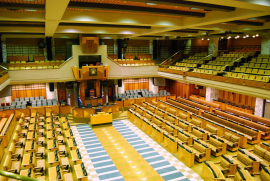
The National Assembly (NA) has approved the nomination of Imtiaz Ahmed Fazel for appointment as the Inspector-General of Intelligence (IGI) of South Africa.
In a statement, Parliament said: “The [Intelligence Services Oversight] Act mandates the Joint Standing Committee on Intelligence (JSCI) to recommend a candidate for approval by at least two thirds of the National Assembly Members.
“Once the House approves the recommendation, the name is then sent to the President of the Republic of South Africa to consider the nominee for appointment as an IGI. The IGI position became vacant on 15 March 2022.”
Parliament said JSCI embarked on a thorough appointment process, which included the publishing of an advertisement in national and local newspapers in all official languages on 2 June 2021.
“A number of inquiries were received after the closing date and necessitated the committee to extend the closing date to enable those who missed the advertisement an opportunity to apply for the position.
“The committee extended the deadline to 30 September 2021 to ensure maximum public consultation and participation on the work of Parliament, as it was cognisant of the importance of the position.
“The committee received a total of 25 applications for the position, which, following a thorough screening process, were found to meet the requirements, in terms of the Intelligence Services Oversight Act.
“The JSCI shortlisted 12 candidates for interviews in relevant areas regarding the role and functions of the IGI, based on the Constitution, the Act, other relevant legislation, and other matters such as the High-Level Review Panel report.”
Following deliberations, the JSCI resolved by a simple majority of members present to nominate Mr Imtiaz Ahmed Fazel for approval by the National Assembly, and for recommendation to the President for appointment as the IGI.
The sitting also approved a report of the Portfolio Committee on Communications for the appointment of four candidates to serve on the Independent Communications Authority of South Africa (ICASA) Council in terms of f section 5(1B) of the Independent Communications Authority of South Africa Act (Act No 13 of 2000).
The four candidates are: Ms Nompucuko Nontombana, Ms Dikeledi Mushi, Ms Thabisa Faye and Ms Ntombiza Sithole.
Public comment sought on minimum wage adjustments

The National Minimum Wage Commission is inviting written representation from interested stakeholders in preparation for the 2023 national minimum wage adjustments.
In a statement, the Department of Employment and Labour said the Commission will publish its annual report and recommendations concerning possible adjustment to the national minimum wage to the Minister of Employment and Labour later in 2022.
“Before releasing its report and recommendations, the National Minimum Wage Commission, invites all interested parties to submit written representations concerning possible adjustments to the national minimum wage,” the department said on Tuesday.
The recommendations will be considered by the Commission before it publishes its annual report and recommendations on the annual review of the national minimum wage later in the year.
“These written representations will be forwarded to the Minister of Employment and Labour together with the Commission’s report – to use in the determination of the new adjustment.”
The current national minimum wage announced by Minister Thulas Nxesi in February was adjusted from R21.69 (2021) to R23.19 (2022) for each ordinary hour worked with effect from 01 March 2022.
The representations should reach the directorate: Employment Standards, Department of Employment and Labour, Private Bag X117, Pretoria, 001 or be sent to nmwreview@labour.gov.za by 1 October 2022.
Former KZN Treasury head loses application to appeal sentence

Former KwaZulu-Natal (KZN) Provincial Treasury head, Dumisani Shabalala, has lost an application in the Pietermaritzburg High Court for leave to appeal the conviction and sentence made against him last week for several counts of fraud, corruption, money laundering and contravention of the Public Finance Management Act (PFMA).
The sentences will run concurrently, effectively handing him a 15-year prison sentence.
According to National Prosecuting Authority (NPA) regional spokesperson, Natasha Ramkisson-Kara, Shabalala was convicted of receiving a R1.5 million kick back from Intaka Investments for government’s “acquisition of ‘Wataka’ water purification plants”, valued at some R44 million.
“The offence occurred between 2004 and 2007 when Shabalala formed a relationship with Uruguayan businessman, Gaston Savoi, and the company, Intaka Investments. Shabalala then travelled to Brazil to view the purification equipment.
“On his return… he wrote to the then MEC Dr Zweli Mkhize, recommending that monies be allocated from the poverty alleviation fund for the acquisition of the water purification plants from Intaka.
“The process culminated in the awarding of a contract for 22 ‘Wataka’ plants. Shabalala was the chairperson of the procurement committee that awarded the contract,” Ramkisson-Kara said.
She said the KZN Director of Public Prosecutions, Advocate Elaine Zungu, welcomed the refusal of Shabalala’s application for leave to appeal.
“This is evidence that KZN is making strides in our fight against corruption. We will continue with our mandate of rooting out corruption, especially in the government sector. We commend the stellar work done by the prosecution team and the investigation team from the Hawks,” she said.
JSCI concludes investigation into Phala Phala theft matter

Parliament’s Joint Standing Committee on Intelligence (JSCI) report, has exonerated State Security Deputy Minister, Zizi Kodwa, of any transgression in the department’s role in the Phala Phala game farm theft matter.
This came after National Assembly Speaker Nosiviwe Mapisa-Nqakula on 5 August requested the JSCI to investigate specific allegations.
These included:
- “that the Deputy Minister in The Presidency responsible for State Security knew about the Phala Phala robbery and opted to keep the matter a state secret, rather than reporting the matter to the appropriate authorities. It has also been alleged that Kodwa accompanied Major General Wally Rhoode, the head of the Presidential Protection Unit, during secret interactions between the South African and Namibian authorities; and
- that reports emerged that a secret Crime Intelligence Fund was used to finance the undercover operations, which traced the thieves, with the goal of recovering the stolen money. It has been alleged that almost R2 million a month from this fund was spent to send an elite special task force to guard President Ramaphosa’s private game farm. Should this be true, this would constitute a flagrant abuse of our taxpayer’s money”.
Informed by section 3 (h) of the Intelligence Services Oversight Act 40 of 1994 which states that the committee may “consider and make recommendations regarding any matter falling within the purview of this Act and referred to it by the President, the Minister or Parliament”, Schedule B of the Rules of the JSCI, and its established procedures.
The JSCI ensured that the matter was handled with the appropriate urgency, given its importance and the associated public interest,and the JSCI considered the matter.
During interactions with the JSCI, Deputy Minister Kodwa denied having prior knowledge of the alleged matter and all allegations against him.
The Committee said that SAPS National Commissioner General Fannie Masemola, stated that no funds from the South African Police Service Crime Intelligence (SAPS-CI) Secret Services Account were utilised in relation to the theft at Phala Phala.
The committee found that there was no independently verifiable information to support the allegations against Kodwa and the use of funds from the Secret Services Account of SAPS-CI, Parliament said in a statement on Tuesday.
Committee Chairperson Jerome Maake said the investigation was conducted in terms of the oversight mandate of the committee as set out in the Constitution and in the Act.
Parliament said whilst the matter was considered in line with the relevant legal framework, however, it does not have any bearing on any other organ of state currently engaged with the same matter.
“The JSCI’s findings should not be construed as an endorsement or exoneration of any of the affected parties in the Phala Phala game farm theft,” read the statement.
Dlamini-Zuma calls for policy coherence across government
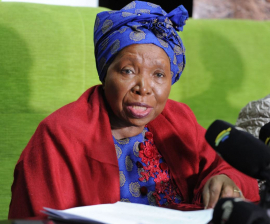
Cooperative Governance and Traditional Affairs Minister, Dr Nkosazana Dlamini-Zuma, has appealed for policy coherence that includes joint planning, monitoring and evaluation – by all the three spheres of government – for the advancement of the developmental agenda of the country.
She made the call while delivering a keynote address at the two-day Local Government Week 2022 at the Lagoon Beach Hotel in Cape Town on Tuesday.
The week, which was launched in 2012, is hosted by the National Council of Provinces (NCOP), in partnership with the South African Local Government Association
Addressing delegates, the Minister said government’s District Development Model (DDM) seeks to achieve policy coherence, as it helps municipalities comply with legislation and further aims to professionalise the sector.
She said the DDM seeks to ensure professionals occupying strategic positions in this sphere of government have the requisite skills in ongoing policy and legislative consideration. The DDM also seeks to meet the corporate needs of municipalities and high-level standards of service delivery.
According to the Minister, in many municipalities, government is the biggest source of jobs, economic opportunities, and any prospect of upward social mobility.
She said the only means by which we can realise common prosperity is by having a strong and vibrant economy in each local area that harnesses the local endowments for its residents.
Dlamini-Zuma contended that collective oversight and accountability, through the local sphere of government, can bear the desired impact when the oversight is cross-sectional.
NCOP Chairperson, Amos Masondo, lauded the Municipal Systems Act as a legal weapon to professionalise the municipal sector.
The Act, which sets procedures and criteria for the appointment of municipal officials, empowers municipalities to meet their constitutional mandate of service delivery outcomes and bring about a new chapter of development.
Masondo underscored the failure of municipalities to acquire the necessary capacity to function optimally as a breach of their constitutional mandates. He called on local government practitioners to pull all the stops to ensure that the local sphere of government receives the required support and has the capacity to carry out its functions.
He said the support given to municipalities must include the empowerment of the people to help influence and ensure the kind of development they would like to see in their respective communities.
The programme is intended to provide a platform for sharing experiences and best practices, and is an opportunity for national reflection on issues affecting local government.
The overall mission was to deliberate on the ways and means to improve the lives of the people by taking the appropriate steps to strengthen local governance to enhance service delivery.
Masondo also conceded that with the benefit of hindsight in designing the local government structures, certain assumptions were made which ought to be revisited. These include assumption that municipalities would have the capacity to raise revenue to fund their services.
He said: “We know now that some of our municipalities do not have a meaningful revenue base – that some have no tax base at all. Yet, they still need resources to fulfil their constitutional responsibilities towards citizens, irrespective of the circumstances.”
However, he agreed that the audit regressions recorded by the Auditor-General’s report in 61 municipalities are telling of the capacity and accountability challenges that municipalities are faced with in upholding expected service standards prescribed in the Constitution.
He further highlighted the continued support that Parliament gives to municipalities through various committee activities, among them the Provincial Week, which was held in April this year under the theme ‘Assessing the State Capacity to Respond to the Needs of Communities’.
The programme continues on Wednesday with the NCOP House Chairperson, Jomo Nyambi, Secretary to Parliament, Xolile George, and a number of MECs among the speakers and panellists on a range of topics.
Government concerned about GDP figures

Minister in the Presidency, Mondli Gungubele, has expressed concern at the results of the Gross Domestic Product for quarter two, which show that the GDP decreased by 0.7% after two consecutive quarters of positive growth.
“As a country, we have experienced slow growth and rising unemployment. Nonetheless, in the midst of these difficulties, our general public and economy has shown to be strong,” Gungubele said on Tuesday.
The Statistician-General attributed the contraction of the GDP to a number of factors that include load shedding, the floods in KwaZulu-Natal and Eastern Cape, as well as the higher cost of living and inflation.
“As indicated by Stats SA, manufacturing is the largest industry in KwaZulu-Natal and the damage caused to factories and plants, and disruptions to logistics and supply chains, decreased national manufacturing output by 5.9%.
“It was also a heightened period during which the globe experienced slow economic growth. South Africa, like many countries around the world, experienced increases in the prices of food, housing and fuel, which were events beyond the control of government,” the statement issued by the Government Communication and Information System (GCIS) said.
Although the GDP contracted, Gungubele noted that there are signs that the economy is on the road to recovery.
“The latest employment figures, specifically, bear testament that our plans are beginning to bear fruit,” the Minister said.
According to the latest results published by Stats SA, 648 000 jobs were gained between the first quarter of 2022 and the second quarter of 2022.
“The figures indicate that the priority areas of the Economic Reconstruction and Recovery Plan, such as mass public employment, economic reform and infrastructure development, are having an impact on job creation,” GCIS said.
Since the national energy plan was announced, government has been working with various stakeholders on implementation and policy reform.
The proposed amendment to remove the licensing threshold for electricity generation facilities has been published for public comment.
“Government is hard at work to increase our energy capacity through private sector generation, which will ensure that the country has constant supply at affordable prices.
“In addition, government’s drive to create black industrialists is gaining momentum through sectoral masterplans, which drive localisation that benefits black-owned businesses.
“As part of government’s Poultry Masterplan, 10 black contract growers have been established, with an investment of R336 million. The Black Exporters’ Network further connects black-owned companies in food, engineering products, auto components and beauty products,” GCIS said.
Furthermore, to alleviate the burden on motorists, government introduced the temporary suspension of the general fuel levy to assist in the impact of higher fuel prices during the second quarter.
Government extended the temporary reduction of the general fuel levy by R1.50 per litre, which allowed the economy to adjust to the new reality of higher fuel prices from rising crude oil prices.
“We also welcome the decrease of the fuel prices, as announced by the Department of Mineral Resources and Energy. This was because of lower oil prices and a stronger rand against the dollar. The news will make it slightly easier for consumers, on the cost of logistics in the country, and provides an opportunity to boost local tourism,” Gungubele said.
The GCIS said while only moderate, these gains show that the economy remains robust and that interventions such as the Economic Reconstruction and Recovery Plan (ERRP) are working.
“The country’s macro-economic interventions have been crucial in restoring financial stability through better revenue collection and fiscal prudence. Government remains confident that through collaborative efforts, and implementation of the ERRP, we can improve our economic growth.”
KZN Education condemns torching of Durban school
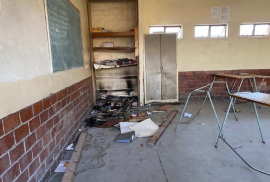
The KwaZulu-Natal Department of Education has condemned the torching of classrooms and vandalism that took place at Ndengetho High School in KwaNdengezi, Durban.
According to the school’s report, learners were reacting to the search and seizure operation conducted by the South African Police Service (SAPS) last week Thursday, which led to cell phones, weapons and drugs being confiscated.
“According to the school’s code of conduct, learners are not allowed to take cell phones into the school premises, hence cell phones were also confiscated by the police,” KwaZulu-Natal Education MEC, Mbali Frazer, said.
Frazer commended the work of the police, noting that it forms part of the agreement signed by the department with SAPS.
She said SAPS and the department have a protocol agreement signed more than 10 years ago, which is implemented by provinces, and search and seizures in schools form part of crime prevention and awareness campaigns, which happen on a regular basis.
“Members of SAPS, who conduct search and seizures in schools, are acting in line with the agreement, which is aimed at eradicating crime in schools. In terms of the agreement, every school is linked to a police station, and at the moment, 18 000 schools in the country are directly assigned a police station to ensure that all schools are crime free zones.
“We applaud the work of the police and we are encouraged to see that our agreement with SAPS is bearing fruit, as there are many other schools where such operations by SAPS are taking place,” Frazer said.
Frazer also reminded school management teams, working with school governing bodies, to ensure that the schools codes of conduct are adhered to at all times to ensure school functionality, as it provides the basis for quality teaching and learning.
Eskom recovers R30m paid to EPPF

Eskom has announced it has successfully recouped the R30 million “unlawfully” paid to the Eskom Pension and Provident Fund (EPPF) for the benefit of former Chief Executive Officer Brian Molefe in 2016.
In a statement released on Wednesday, Eskom said it was “pleased” to make this announcement.
The payment follows a North Gauteng High Court judgment in July this year that reaffirmed a 2018 high court ruling that had reviewed and set aside a 2016 early retirement agreement between Molefe and Eskom.
According to Fin24, the July court ruling directed him to pay R9 985 540 plus interest calculated from 31 October 2019 up to the date he pays.
“In terms of the agreement, Eskom paid to the EPPF approximately R30 million to boost Mr Molefe’s early retirement pension payout,” the statement read.
South Africans urged to explore their own backyard
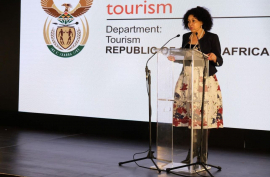
Tourism Minister Lindiwe Sisulu has called on South Africans to travel domestically to get a better understanding of the affordable, exciting and world class attractions that are available on our own doorstep.
“It also serves as an opportunity to promote domestic tourism and create a culture of travel amongst South Africans,” Sisulu said.
Speaking at the launch of Tourism Month in the Western Cape, Sisulu said the country celebrates Tourism Month to highlight and bring to the fore the importance of the tourism sector, its contribution to the economy and the potential it has to transform the trajectory of the country.
“Tourism Month is in line with our country’s vision to ignite inclusive economic growth, sustainable job creation, and transformation, which are all critical for our industry and we need to aim to continue with our collective efforts in driving this,” Sisulu said.
Sisulu explained that Tourism Month aims to generate awareness of the enormous contribution that the tourism industry makes to provincial and national economic growth and job creation.
“This is also the month that we host our annual domestic campaign, Sho’t Left Travel Week, to encourage South Africans to travel and explore their country at discounted rates. We do this by partnering with tourism trade, to negotiate the best rates for South Africans, making tourism accessible to them.”
The Minister said South Africans supported and sustained the tourism sector when the world was not coming.
She added that domestic tourism has been leading the sector’s recovery.
“This recovery is evident in the domestic tourism performance figures for the first half of 2022, with holiday trips increasing tremendously.
“Domestic travel figures have exceeded 2019 which is really fantastic and in the first half of the year, South Africa recorded over a 100% increase in domestic trips compared to the same period in 2021.”
The Department of Tourism recently put out the Draft Framework for Community Participation in Tourism (FCPT) for public comments and is in the process of finalising it.
“The FCPT in line with the Tourism Sector Recovery Plan, emphasises the importance of developing and reinforcing domestic, regional, and local tourism that is inclusive and prioritises community well-being.
“The objective is to ensure that tourism provides maximum benefit to communities where tourism serves as a catalyst.
“The goal of this FCPT is to guide the department, provincial tourism departments, and other key tourism stakeholders in their efforts to encourage community participation in the tourism sector and, as a result, to increase the positive impact tourism can have on local economic development and community quality of life,” Sisulu said.
BRICS urged to work collectively in global food, fuel crisis

The Speaker of the National Assembly, Nosiviwe Mapisa-Nqakula, has emphasised the need for a collective solution from the Brazil, Russia, India, China and South Africa (BRICS) bloc to mitigate the global food, fuel and financial crisis.
“Food security and nutrition of our vulnerable populations are under threat, and legislatures of all BRICS nations, in particular, occupy a unique place to foster cooperation and people-people relations through public diplomacy, where there could be strategic direction of multilateralism and mutual development,” Mapisa-Nqakula said.
Mapisa-Nqakula was speaking at the 8th BRICS Parliamentary Forum (BRICS PF) virtual meeting held on Tuesday.
Mapisa-Nqakula led a multi-party Parliamentary delegation to the meeting hosted by the National People’s Congress of China, under the theme, ‘Leveraging the role of the legislature to foster high-quality BRICS partnership’.
The Speaker commended the 14th BRICS Summit Strategy on Food and Security Cooperation, which is aimed at stabilising global food production and contributing positively to global food security infrastructure.
Mapisa-Nqakula also applauded the establishment of the BRICS Vaccine Research and Development, saying that it was an important BRICS milestone, which will further enhance BRICS countries’ capabilities to respond to future health emergencies.
“Through our oversight function as Parliaments, we have to ensure that the BRICS Vaccine Centre has the resources and the capacity to build a much-needed line of defence against infectious diseases,” the Speaker said.
She said the BRICS PF has a key role to play in strengthening the broader BRICS partnership, and BRICS countries must reconnect with their objective of strengthening cooperation.
She said through sustained parliamentary cooperation, BRICS can create responsive governments to address the current crises.
The BRICS Parliamentary Forum is constituted by the National Congress of the Federative Republic of Brazil, the Federal Assembly of the Russian Federation, the Parliament of the Republic of India, the National People’s Congress of the People’s Republic of China, and the Parliament of the Republic of South Africa.
The forum was founded to strengthen and promote contacts at the leadership level of chambers, committees and groups of parliamentarians; perform inter-parliamentary exchanges and hold regular expert consultations, and create and develop new inter-parliamentary cooperation mechanisms.
China is currently chairing the forum and South Africa is next in line to chair and host the 9th BRICS PF in 2023.