
Government to implement affordable housing programme in mining communities
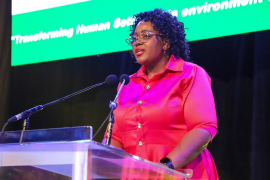
The Department of Human Settlements will in this financial year implement its affordable housing programme in mining communities in partnership with mining companies.
Human Settlements Minister, Mmamoloko Kubayi, made the announcement during a Human Settlement and Exhibition Indaba currently underway at Durban Exhibition Centre.
Held under the theme, ‘Transforming Human Settlements environment through accelerated planning, implementation and public-private partnership’, the two-day Indaba, which started on Sunday, aims to mobilise private investors, academia, NGOs and traditional leaders to partner with government to accelerate the delivery of sustainable human settlements across the country.
Addressing the delegates, Kubayi said to strengthen partnership with mining companies, the department is currently developing a partnership framework between government and mining companies that will guide the joint design and implementation of partnership projects in identified municipalities.
Over R500m to support bulk infrastructure projects
The Minister announced that a total ring-fenced budget of R548 million has been allocated to provinces in the 2022 DORA (Division of Revenue Act) Framework to support the implementation of bulk infrastructure projects in mining communities.
In the context of competing developmental priorities and funding constraints, Kubayi said that a revision of policies, grant architecture and funding mechanisms is required to improve funding sources within State housing programmes.
“Necessarily, this undertaking will require an analysis of the grant architecture and project pipeline. An analysis of the current grant architecture, funding streams spend and allocation will reveal to what extent existing grants are being utilised, underutilised, and optimally used.
“The mapping of allocation and spend patterns will provide valuable insights into identifying specific intervention areas. In addition, the analysis can provide insight into whether the relevant grant frameworks need amendments or improvements, or overhaul of the entire housing and human settlement government grant and funding structure,” Kubayi said, adding that the process has already started.
Improving quality of current project pipeline
The Minister also emphasised a need to significantly improve the quality of current project pipeline, to address the existing housing backlog.
She said an analysis of the pipeline is necessary in determining how the quality of projects in different stages can be improved.
“Through this analysis projects in planning, shovel ready projects and projects in implementation can be identified for targeted interventions and improvements. This will also provide insight into areas where institutional arrangements can be strengthened to accelerate delivery.
“The Department of Human Settlements and its entities are working closely with the Infrastructure Fund and the Development Bank of South Africa to improve the quality of the pipe line and this work already yielding results,” the Minister said.
She added that the Integrated Residential Development Programme (IRDP) is challenged with bulk infrastructure constraints and attracting private sector funding, noting that “it is only when a project matures that it is able to overcome these challenges”.
One of the interventions identified for accelerating delivery within this programme is to fast track the implementation of the bulk infrastructure required by these developments at scale. The Bulk Infrastructure Funding and Financing intervention can be developed and implemented in the short term, 6 months to 1 year.
“The reality is that the rapidly rising rate of urbanisation will continue to put pressure on the housing delivery system in cities and also lead to the increasing number of informal settlements. Our Informal Settlements Upgrading Programme is currently underperforming and there is a need to think about better ways to implement this programme,” Kubayi said.
Beyond the pressing need for the provision of basic services in a manner and speed that does not violate human rights is the rising need for urban land for human settlement, she added.
Fallen police officers honored
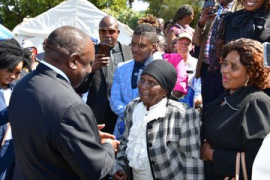
President Cyril Ramaphosa says the SAPS National Commemoration Day should serve to not only pay tribute to the fallen men and women in blue but also to mobilise society against the killing of officers.
The President said no society can remain silent when criminals have clearly declared war on the police.
“Our men and women in blue represent the authority of the State and any attack on them is a direct attack on the State and an attack on the people. If criminals bother to read history, they must know that no one has ever defeated the people.
“Those responsible for police killings, who have not yet been arrested, must know that wherever they are, they will be found and they will face the full might of the law,” the President said.
President Ramaphosa was delivering the keynote address at the South African Police Service (SAPS) Commemoration Day at the Union Buildings in Tshwane on Sunday.
The event celebrated the lives of SAPS members who had fallen in the line of duty from April 2021 until March this year.
This year, 33 police officers’ names were engraved on the national memorial wall where the President and bereaved family members laid wreaths.
President Ramaphosa said among those who were being honoured, some were targeted by criminals for their firearms, others were involved in shootouts with criminals, and others were killed by reckless drivers who failed to stop when pulled over.
“Let us spare a thought for our police men and women and what they must feel each time they leave their homes to enforce the law.
“Yet, even knowing the risks, our officers continue bravely and relentlessly, on a daily basis and with a stern determination to prioritise the safety and security of the people of this country.”
President Ramaphosa urged the Police Ministry to drive the process of ensuring that SAPS is adequately resourced to prevent, combat and investigate police killings.
He said all the perpetrators of these attacks on police must be brought to book.
“If we are to win the war against crime and police killings, we need to build healthy, stronger relations between the police and the communities they serve. In any community where crime happens, somebody always knows something. Some of our people remain silent for fear of victimisation.
“It is for this reason that we are always striving to make it easier for citizens to anonymously report crime or suspicious activities.”
The President further urged communities to take responsibility for each other’s safety, adding that the fight against crime cannot be won by the police on their own.
“As we remember our fallen heroes and heroines, let us salute all police officers for the love they have for our country and its residents, and for their patriotic spirit and resilience in the face of brazen criminals.
“Let us demonstrate that we value our law enforcement officers who make a deliberate choice to take up policing as a calling rather than a mere job,” the President said.
The President urged the country to avenge the deaths of the slain officers by making sure that “we fulfil their dream of a society that is safe and secure, where all people live in peace”.
SANParks National Parks Week draws near

The South African National Parks (SANParks), in partnership with TotalEnergies Marketing South Africa and First National Bank (FNB) has announced that the 17th annual South African National Parks Week kicks off in a week.
The free access week will run from 12 to 18 September 2022.
“SA National Parks week is aimed at linking the South African national parks system to the communities and to showcase the best of our country’s national parks. During the week, all South African citizens are allowed to enter most national parks for free for a day visit,” said SANParks General Manager: Media, PR & Stakeholder Relations, Reynold Thakhuli.
“The week in partnership with TotalEnergies Marketing South Africa and FNB is meant to cultivate a sense of pride in South Africa’s natural, cultural and historical heritage, protected by the national parks system which is the basis for the established theme ‘Know Your National Parks’. It’s important for South Africans to visit and know the importance of national parks,” Thakhuli said.
This year SANParks will open the week in Augrabies Falls National Park.
The feature element of this campaign is the free access granted to all South African day visitors carrying their official Identity Documents. Young persons under the age of 16 will be allowed free access without proof of identity.
The free access to the parks will not include accommodation and commercial activities in the park such as guided safaris in vehicles or guided walks.
Kruger, Addo Elephant, Augrabies, Agulhas, Table Mountain and |Ai-|Ais/Richtersveld Transfrontier Park will only have free access until Friday 16 September. Namaqua National Park and Boulders Penguin Colony and the Cableway in Table Mountain National Park are not included in the free access.
“Every year SANParks aims to increase the number of citizens that are granted free access to national parks during this time. Since we started the programme in 2006, some 619 252 South Africans have been afforded the opportunity to enter national parks, and we want to see these numbers grow, especially after the last two years which halted travel around the world,” Thakhuli said.
SANParks encourages all South Africans and especially the youth to diarise these dates and plan a visit to a national park nearby.
“The survival of the South African national parks system and our natural and cultural heritage lies in the people of South Africa,” said Thakhuli.
Government condemns discrimination based on nationality in healthcare
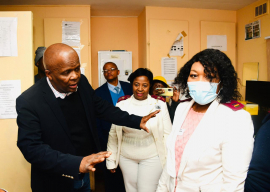
Government has condemned the actions of citizens who have been preventing people from other countries accessing healthcare services at Kalafong Hospital in Atteridgeville, Pretoria.
“These actions by a few are infringing on basic human rights. They go against the tenets of hard fought democracy,” government said in a statement.
In South Africa, the right to access basic health services is a basic human right that is guaranteed by the Constitution.
“South Africa is governed by the rule of law, which makes provision for every person in the country, regardless of their nationality or documentation status to access healthcare.
“The victimization of patients and hospital employees, who are suspected of being foreign nationals should be condemned by all.
“The Southern African Development Community Agreements, to which South Africa is a party, allows foreign nationals from member states to receive the same care as all South Africans.
“Preventing access to healthcare can have dire consequences to patients and have a negative impact on the public health system and to citizens at large.
“We understand that the public health system is overburdened because of a myriad of challenges, however, doctors and healthcare workers have an obligation to provide healthcare to those in need,” said Minister in the Presidency, Mondli Gungubele.
Gungubele said the Hippocratic Oath guides the actions of doctors, which includes them not withholding services because of religion, nationality, race, politics or social standing.
“Government is hard at work to improve our healthcare system and deal with challenges. South Africa subscribes to its constitutional principles which protect the human rights of all people leaving in the country.
“South Africans should strive to live in harmony with fellow Africans and be part of building a better South Africa and a better Africa,” Gungubele said.
DPSA announces funded courses for public servants

Public Service and Administration acting Minister, Thulas Nxesi, on Wednesday announced the roll out of a suite of funded courses for public servants offered by the National School of Government to be delivered at no cost to government departments.
The courses will be delivered as part of promoting the professionalisation of the public service and improving the performance of public servants in their respective roles and responsibilities in the three spheres of government, which are national, provincial and local.
These courses will be allocated and shared per province and national departments.
The following funded courses are available for immediate enrolment by public servants in the three spheres of government:
- Citizen-centred Service Delivery: This programme will help public servants to re-engineer their relationship with the public and reflect on how they are delivering services to the citizens.
- Art of Facilitation for progressive realisation of socio-economic rights: Empower Traditional Leaders to act as economic change agents in their communities and be able to create sustainable jobs and community wealth while also building an active rural citizenry who participate in and support economic development. It will also support Traditional Leaders to identify and utilise local natural resources in an environmentally sustainable way.
- Art of Facilitating Participatory Community Engagement: To build active citizens who know and assert their rights and can hold government accountable and to promote societal progress through building an understanding among government officials on how to engage communities.
- Youth Development (Personal Mastery): To prepare young people, especially interns for work beyond government with generic employability skills such as self-management, emotional intelligence, critical thinking and decision-making, networking as well as applying for jobs in the public service.
- Supply Chain Management for Public Service: To develop public sector supply chain management skills in order to accelerate service delivery and alleviate adverse supply chain management related findings in departments and public entities.
- Avoiding Irregular, Fruitless and Wasteful Expenditure: Empower public officials with skills required for managing government expenditure in order to prevent irregular, unauthorised, fruitless and wasteful expenditure.
- Programme and Project Management: To empower public servants to design and deliver programmes aimed at advancing the National Development Plan Vision 2030.
- Coaching for Leadership Development: To empower public servants with coaching skills and tools to enhance management individual development skills sets as well as organizational development.
- Evidence-Based Policy Making and Implementation: To empower officials with technical skills to be able to use a range of tools to support policy development and implementation processes.
Minister Nxesi emphasised the need for ongoing education, training and development of public servants.
“Government is serious about building a capable state and a public service that has the requisite skills to serve the public efficiently, effectively and with courtesy.
“We will continue to invest in the training and development of public servants so that they can fulfil their tasks empowered by the necessary knowledge and expertise. We invite government departments in the three spheres to make use of this opportunity and enrol officials for this much-needed training,” said Minister Nxesi.
Enquiries on the courses should be made to the following email address: fundedprogrammes@thensg.gov.za.
Celebrating the magic of women

With Women’s Month drawing to a close today, South African women continue to carry the torch for a better tomorrow.
Businesswoman Khosi Kumkani says that there’s an innate magic to women.
“We are creators and we should start thinking like that, even in the business space. We have so much magic inside us,” she told SAnews.
Kumkani is the owner of RenewablesZA a drop shipping platform for suppliers and manufacturers that offer products of bioenergy like wood pellets and bricks for heating applications.
The mother of two urged women to not let gender be an obstacle to finding success in business.
“Business has never been a gender issue. I have learnt that women can be successful in any kind of business about which they are passionate,” she said of the company she started in 2017.
In his Women’s Day address earlier this month, President Cyril Ramaphosa said women entrepreneurs need companies, departments, and customers to buy their products and services.
Government, he said, has committed to set aside 40% of public procurement spend to women-owned businesses. This is in addition to workshops being held countrywide to equip women with skills to do business with both government and the private sector.
In addition, government will not spare any effort to build a non-sexist society in which men and women have equal opportunities and prospects.
Kumkani adds that things are not easy for women to scale up their businesses. This as many women still shoulder the majority of household responsibilities.
”There is a subtle but strong belief and expectation that the woman will be the parent who raises the children, while the man works. The oldest daughter is often given the role of the childminder, particularly in rural areas.”
She added that while government has done a lot in promoting woman in business, women’s responsibilities and a lack of support at home are often major obstacles to running a business.
“We need support beyond just funding,” she said.
The President said the country commemorated Women’s Month deeply aware of the many challenges that women are confronted with on a daily basis. Poverty, discrimination and violence continue to hold back the progress of the country’s women and girls.
Throughout the month, government has held various events highlighting the successes that women continue to make in their communities while also taking cognisance of the challenges that continue to beset women.
The year’s Women’s Month marked the 66th anniversary of the march of approximately 20 000 women to the Union Buildings to petition against the pass laws of the country at the time.
The month’s programme is based on the ongoing interventions across the work of government, civil society and the private sector within the context of the national priorities outlined by government.
Hosted under the theme, ‘Women’s Socio-Economic Rights and Empowerment: Building Back Better for Women’s Resilience!’, this year’s Women’s Month was a call to action to all of society, government and partners to take tangible steps forward in responding to the most persistent challenges affecting the lives of women and girls.
IsiXhosa Gender Terminology booklet launched in SA

The Commission for Gender Equality (CGE) has unveiled an isiXhosa Gender Terminology booklet that contains the newest gender and sexuality terminologies in the Xhosa language.
CGE Acting Head of Public Education and Information, Rabbuh Raletsemo, said the CGE has started the roll out of the gender terminology project in all nine provinces, to translate English official gender terminologies into indigenous languages.
Raletsemo said the national project follows the organisation’s recognition and acknowledgement that language is a tool used by people in their day to day to communicate and can be used to create a conducive environment where human dignity is upheld, and human rights are protected.
The isiXhosa Gender Terminology booklet provides a comprehensive list containing hundreds of translated gender-related terms.
“Terminologies such as Lesbian, Gay, Bisexual, Transgender, Queer, Intersex, Asexual (LGBTQIA), sexual harassment, gender equality, abortion, gender parity, gender mainstreaming and gender stereotypes, sexual orientation, are commonly recognised in English vocabulary but not necessarily in all other official languages.
“The gender terminology project aims to mainstream gender equality through incorporation of gender sensitive terminologies in all South African official languages. This language development project is in line with our mandate to educate, inform and empower the public with gender terminologies that uphold human dignity and protect human rights,” Raletsemo said.
Raletsemo added that the commission has already launched Sesotho and Afrikaans gender terminology booklets and is preparing to launch booklets in other languages.
The booklet was launched on Wednesday at the Eastern Cape Provincial Legislature in Bisho, in conjunction with the Pan South African Language Board (PANSALB), Eastern Cape Department of Sport, Recreation, Arts and Culture, Eastern Cape Provincial Language Committee, as well as the Eastern Cape House of Traditional Leaders.
The booklet will be made available on the commission’s website, www.cge.org.za.
North West rolls out rabies vaccination campaign

The North West Department of Agriculture and Rural Development will embark on a mass rabies vaccination rollout.
The vaccination rollout will start from Thursday, 1 September 2022.
This as the department has called on pet owners across the province to take precaution and take their pets to the nearest State veterinary clinics for vaccination.
“The theme for this year’s campaign is ‘Zero by 30: Our catalytic response’ and is part of the global goal of zero human dog-mediated rabies deaths by 2030, worldwide,” the department.
Although rabies is 100% preventable, the department warned that it is estimated that at least 59 000 people die annually from rabies.
“That is one person every nine minutes of every day, 40% of whom are children living in Africa and Asia.”
The disease is caused by a virus that affects the nervous system of the affected animal and human being, resulting in death. The virus enters the body from saliva of infected animals through a bite wound or infected saliva getting direct access to mucous membranes of victim animals or human beings.
“The exposure may include bites, but it is important to note that small nicks that break the skin or even licks of the eyes, nose and mouth are regarded as exposure,” the department noted.
Clinical signs in a positive rabies case include a dysfunctional nervous system, and they are classified either as “dumb form” or “aggressive form”.
In the dumb form, the animals show signs of lethargy and progress to facial paralysis, whilst in the aggressive form, they show signs of extreme aggression and as they are paralysed in the face, they tend to produce a lot of infective saliva.
Some animals may simply show hindquarter paralysis.
“Experts say that it is important for communities to note that all domestic animals and human beings are susceptible to rabies and that human beings are extremely susceptible to the disease,” the department said.
Community members are also advised to report any suspicious human symptoms of rabies to any health facility in the province.
Hold the corrupt accountable – Minister Gordhan
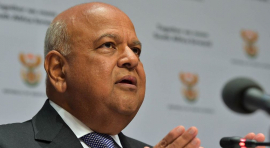
Public Enterprises Minister Pravin Gordhan has reinforced government’s stance that corruption will not be tolerated in all spheres of the public sector.
This after the arrest and court appearance of high ranking Transnet executives, Brian Molefe and Anoj Singh, together with two other people.
The four appeared in the Palm Ridge Specialised Commercial Crimes Court on charges relating to the multi-million rand Transnet locomotives tender scandal dating back to 2012.
“Now that the former Transnet executives [have been] arrested and appeared in court, it is a signal that government will not tolerate corruption and fraud at our state-owned enterprises, including the public sector.
“The department has long held the view that those that conspired and were associated with the state capture project to damage our SOEs should be brought to book to account for their actions. There are no long fake news narratives to avoid accountability. We are now waiting for the state to prove its case so that we can finally see people being locked up,” Gordhan said.
The department said the fight against corruption and state capture is to be commended.
“The department welcomes the latest high profile names added to the charge sheet, as the damage inflicted on our SOEs is still felt today which deprived many South Africans of the much needed services that are provided by fully functional state entities.
“The road to fix the damage left by former executives to our SOEs has been hard and frustrating, punctuated by denialism and the fake news narrative and misinformation campaigns. However, we have worked diligently to ensure we turn around the SOEs so that they become instruments of transformation and provide the much needed services to all South Africans,” the department said.
The accused in the matter are expected back in court in October with warrants of arrests issued for two more suspects.
Five die in SAPS aircraft crash
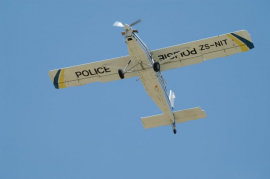
Five people died when a South African Police Service (SAPS) aircraft crashed at the Rand Airport in Gauteng on Tuesday.
“On board were five passengers and a pilot. All five passengers have sadly lost their lives. The pilot is critically injured and has been taken to a nearby hospital for further medical care,” said SAPS spokesperson, Athlenda Mathe, in a brief statement.
Shortly after the crash, authorities combed the scene to establish the cause of the accident.
“The details of the deceased and injured pilot will be released once their next of kin have been informed,” said Mathe.