
Former Msukaligwa municipal managers arrested for fraud, theft

Two former Mpumalanga municipal managers have been released on R5000 bail after they were arrested on Monday for contravening the Public Finance Management Act (PFMA).
Theron Zwelishe Shongwe (47) and Thusi Hezekiel Kubheka (65) who were employed by the Msukaligwa Municipality in Mpumalanga, were arrested by the Hawks alongside the Municipality’s former community service manager, Masego Mmabatho Matsheka (51).
They appeared before the Ermelo Magistrate’s Court on Monday after their arrest by the Nelspruit based Hawks’ Serious Corruption Investigation team for fraud, theft and contravention of the PFMA.
Hawks spokesperson Captain Dineo Lucy Sekgotodi said: “It is alleged that between 2014 and 2018, the former municipality officials contravened the PFMA by selling and exchanging the property belonging to the municipality which included the reservoir and the water pump which are meant to serve the basic needs of the community. “
They also exchanged the municipality properties with higher value to the property of lower value to benefit the private person without considering the essential benefits towards the community.”
She said the matter was reported to the Hawks in March 2020 for further probing.
“During the investigation, it was established that the correct procurement processes were not followed and that the properties which were sold belonged to the municipality for the benefit of the community,” she said.
The case against the trio was postponed to 06 October 2022 for further investigation.
More arrests are imminent, said Sekgotodi.
President to update Parliament on key national issues
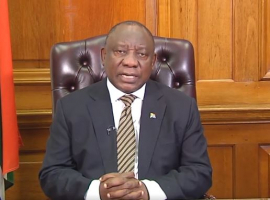
President Cyril Ramaphosa will this afternoon appear in the National Assembly to reply to oral questions on a wide range of key national issues, including South Africa’s response to illegal migration and actions at local government and community level to combat the prevalence of rape and other forms of gender-based violence.
The President will also outline the importance of the recent Presidential Social Sector Summit in enabling civil society to be effective in tackling poverty and inequality as part of the national effort to overcome the many social ills that confront communities.
In a statement, The Presidency said the President will interact with Members of Parliament on a virtual platform during the hybrid session due to his preparation in Gauteng for public and other engagements during the course of this week.
“As part of his replies, the President will brief Parliament on how Eskom is preparing to integrate renewable energy capacity into the national grid as part of increasing energy supply and reducing the risk of load shedding.
“Members of Parliament have also submitted questions on the investigation by law enforcement agencies into allegations around the President’s Phala Phala game farm, as well as whether the South African National Defence Force has a role to play in combating criminality in the country,” the statement read.
Water dept ups collaboration with private sector
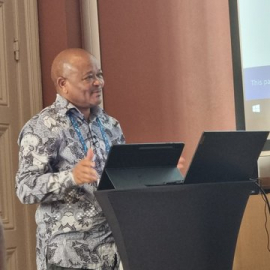
The Water Partnership Office will play a key role in facilitating collaboration between government and the private sector when they undertake projects aimed at boosting water infrastructure in the country.
Water and Sanitation Minister, Senzo Mchunu, says the office — established by the Department of Water and Sanitation (DWS) with the assistance of the Development Bank of Southern Africa (DBSA) — serves as a “special purpose vehicle” to facilitate partnerships and manage joint accounts for specific funding for projects implemented through collaboration in the water and sanitation sector.
The office also manages special programmes such as water conservation and demand management (particularly reducing non-revenue water), water reuse, wastewater treatment improvement and seawater desalination, among others.
“The demand for water and sanitation infrastructure development and refurbishment in South Africa has been increasing due to both population and economic growth.
“We also envisage that by the year 2030, there will be a 17% deficit in availability of water and the projected demand at that stage,” Mchunu said.
The Minister is at the Stockholm World Water Week conference, where he participated in a panel discussion titled, ‘How can the private sector finance wastewater treatment in Africa’, on Monday.
Mchunu said the South African government is in support of private sector collaboration, which is meant to ensure water security and the treatment of wastewater.
He said the current rate of infrastructure development has to be increased to sustain and support growth in the country.
“It is for this reason that we felt that collaboration with the private sector presents a mutually beneficial path towards achieving this goal.
“It was quite enlightening to behold the enthusiasm from the private sector to be a partner in projects and programmes towards improving the water sector.”
While acknowledging that collaboration between government and the private sector is still in its infancy, the Minister said great strides are being made.
“The Water Partnership Office is in the process of being adequately capacitated with the necessary skills to ensure that both public and private sector are served well.
“This means that government will benefit from this additional capacity to manage partnerships,” the Minister said.
Water and agriculture
The department is also engaging the agricultural sector with a special focus on collaboration in investing in the refurbishment and upgrades of strategic canal systems to sustain food production in the country.
Mchunu said the benefits of private sector collaboration entail off-set programmes to allow the private sector to assist municipalities with water conservation and demand management, and availing the savings for economic development within communities.
The panel members on private sector investment on wastewater included Diego Rodriguez from the World Bank, Bernice Ndaitwah from Windhoek Wastewater Recycling Project, as well as Anton Earle from Stockholm International Water Institute (SIWI), among others.
Mchunu is expected to participate in other discussions scheduled to take place during the week, which will explore political commitment and leadership required to transform and improve the investment outlook for climate resilient water security and sustainable sanitation for a prosperous, peaceful and equitable African society.
Learners get water wise
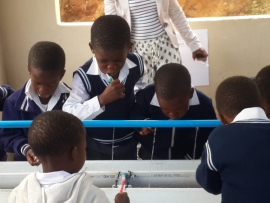
Learners will get an opportunity to learn to improve the way they use water and protect water resources through the Water and Sanitation Education Programme (WSEP).
Launched by the Department of Water and Sanitation (DWS) at Bukhosibetfu Inclusive Primary School in Driekoppies, Mpumalanga, the programme aims to educate learners about water use efficiency, protection of water resources, health and hygiene, and invasive alien plants.
The programme engages learners and educators on various educational projects where they identify water and sanitation related challenges in their schools and communities, conduct research, come up with recommendations and implement solutions.
WSEP is one of the most important initiatives in ensuring that water and sanitation education is achieved within the public schooling system to encourage water literacy, and change the attitudes and behaviour of learners towards wise water use and value water.
WSEP replaces the 2020 Vision for Water and Sanitation Programme.
The WSEP is implemented through the projects, including Baswa Le Meetse, Aqua Enduro, Public Speaking, Curriculum Support, Intervention Projects, Career Promotion and Celebration of Special Days.
The Water and Sanitation Education Programme also responds to the National Water Resource Strategy II (Chapter 15), Strategic Action 15.5.4 and National and Sanitation Master Plan Chapter 11 (Key Action 2.3.8) in that it creates public awareness and teaches water literacy, with a particular focus on efficient water use and management.
It further lays a foundation for the development of critical skills and exposure to emerging innovations in the water sector.
Director at the Department of Water and Sanitation, Curtis Mabena, further highlighted the key successes of the 2020 Vision for Water and Sanitation Programme, as a benchmark going forward.
“We have mobilised and supported 3 500 schools, 800 bursaries have been awarded for learners to pursue careers in the water and sanitation sector, and 55 media classrooms were awarded through a partnership with the MTN Foundation for Baswa Le Meetse national winners,” Mabena said.
The programme was also recognised for its achievement by the United Nations and awarded the Water for Life Best Practice Award in 2015.
Mabena also called on learners not to play with water, especially on Spring Day.
“Learners, I know you have the tendency of pouring water on each other on Spring Day. South Africa is a water scarce country and every drop counts. I am begging you not to play with water,” Mabena said.
MT Khoza, from the Department of Education in Khulangwane Circuit, said the department fully supports the Water and Sanitation initiative brought to the learners and educators.
Khoza said she hopes the information brought with the launch of the programme will spread to other schools in the circuit, and the whole of Nkomazi Local Municipality and Mpumalanga province.
“We appreciate that the programme will assist learners and educators to understand the importance of water…. The message must be [communicated] every day in order to sink in,” Khoza said.
Treasury tables bill to tackle money laundering

Reiterating government’s commitment to nip illicit money flows, Finance Minister Enoch Godongwana has tabled in Parliament the Anti-Money Laundering and Combating Terrorism Financing Amendment Bill.
This comes after Cabinet approved the tabling of the Bill in Parliament at its meeting on 17 August 2022.
In a statement, the National Treasury said the approval was a demonstration of government’s commitment to the fight against corruption, money laundering and terror financing.
“This signifies a significant step towards addressing the deficiencies identified by the Financial Action Task Force’s (FATF’s) Mutual Evaluation Report (MER) of South Africa, published by the FATF in October 2021,” the Treasury said in a statement.
When enacted into law, it will improve South Africa’s adherence to international best practices in combating financial crimes and corruption.
“The Amendment Bill seeks to strengthen the country’s Anti-Money Laundering and Combating of the Financing of Terrorism (AML/CFT) laws, and makes significant changes to many relevant laws related to fighting against financial crimes.
“The proposed amendment of five pieces of legislation which are administered by different Ministers seeks to fully satisfy the technical compliance deficiencies (deficiencies relating to the adequacy of laws and legal frameworks related to the 40 FATF Recommendations) that were identified in the Mutual Evaluation Report.”
South Africa received a poor ratings assessment in its mutual evaluation, and as a result has been placed in an enhanced follow-up process which involves more frequent reporting to the FATF until the country has addressed all identified deficiencies.
The Treasury said: “South Africa was also placed in a one-year observation period (from October 2021 to October 2022). In terms of the follow-up process, South Africa is required to submit its first follow-up report to the FATF at the end of August 2022, and a second report in October 2022, in preparation for the February 2023 FATF Plenary.”
This follow-up process requires demonstrating improvements in the legal framework (technical compliance) and effectiveness in combating financial crimes.
Grey listing
An FATF grey listing was “likely to have the effect of increasing the cost of doing business for South African businesses with foreign trading partners”.
Following the publication of the Mutual Evaluation Report, Treasury has been working closely with officials from the Departments of Justice and Constitutional Development, Trade, Industry and Competition, Social Development, the Financial Intelligence Centre, the Companies and Intellectual Property Commission and the South African Revenue Service through an interdepartmental and agency committee on AML/CFT. It is chaired by the Director-General of National Treasury in preparing an action plan to prevent grey listing, including the development of the draft Bill.
“The South African authorities have also secured technical assistance from the World Bank and the European Union, to learn the lessons of other countries on how to strengthen the AML/CFT system to better tackle financial crimes and corruption, and to prevent the country from being grey listed.
“To ensure that the necessary laws are enacted as soon as possible in line with the need to show progress in our report back to the FATF, all amendments across several Acts are incorporated in one omnibus bill.
Addressing deficiencies
In parallel, the Protection of Constitutional Democracy against Terrorist and Related Activities Amendment Bill, 2022 (administered by the Minister of Police) is currently before Parliament and is expected to be enacted by November 2022.”
The amendment bill seeks to address deficiencies in at least 14 of the 20 recommendations, including an appropriate enhancement of powers and procedures for regulatory authorities. A separate bill, the Protection of Constitutional Democracy against Terrorist and Related Activities Amendment Bill, 2022, deals with two further (and core) recommendations. The outstanding four deficient recommendations will be dealt with via policy processes and mechanisms to be developed by October/November 2022.
The Amendment Bill proposes to amend the following laws:
- Trust Property Control Act, 1988: Minister of Justice and Correctional Services
- Nonprofit Organisations Act, 1997: Minister of Social Development
- Financial Intelligence Centre Act, 2001: Minister of Finance
- Companies Act, 2008: Minister of Trade, Industry and Competition
- Financial Sector Regulation Act, 2017: Minister of Finance.
Treasury said it should be noted that aside from successfully addressing all or most of the 20 technical deficiencies by the end of the year, South Africa will have the harder task of demonstrating the effectiveness of its AML/CFT laws and frameworks.
“This includes demonstrating that the country has credible national risk assessments to deal with money laundering and terror financing, that its supervisory authorities in both the financial sector and in non-financial sectors like the legal profession, gambling sector, estate agents all have appropriate risk-based approaches, and most importantly, that the country’s investigative and prosecuting authorities are able to demonstrate speedy investigations, prosecutions and asset forfeitures for financial crimes and corruption,” said Treasury.
Parliament will guide on the process for considering the Bill, including the timing for taking public comments, convening hearings, making amendments and the passing of the Bill.
Gauteng suspends two senior officials

Gauteng Premier David Makhura says the provincial government is determined to root out any public official alleged to be involved in corruption.
This after the provincial health department’s chief financial officer (CFO) Lerato Madyo and Tembisa Hospital chief executive officer (CEO) Ashley Mthunzi were put on immediate precautionary suspension on Friday.
Serious allegations of alleged improper payment and procurement of suppliers at Tembisa Hospital with possible links to the killing of whistle-blower and provincial health chief director Babita Deokaran have been flagged for due investigation.
The Gauteng Provincial Government confirmed that “given the seriousness of the allegations” the Special Investigating Unit (SIU) has been brought in to conduct a forensic investigation.
“We want all those responsible for plotting and carrying out the killing of Babita Deokaran to be brought to book. We want the corrupt in government and their cahoots in the private sector to face the consequences of their evil deeds.
“We have been taking steps to strengthen measures to prevent, detect, investigate and institute both disciplinary action and civil claims against public officials and service providers involved in corrupt procurement practises,” Makhura said.
Makhura revealed that a criminal case has also been opened after the provincial health department’s current head of department (HOD) Dr Nomonde Nolutshungu received threats.
“The HOD, Dr Nomonde Nolutshungu, brought to my attention the threats she received through an email. I immediately directed the Gauteng Provincial Commissioner of the [South African Police Service] Lieutenant General Elias Mawela to take appropriate steps to address these threats and find those responsible.
“The state has a duty to protect whistle-blowers and upright public servants. We will never surrender to the crooks and corrupt elements and will do everything in our power to fight corruption and state capture with every iota of our being,” the premier said.
Domestic workers urged to report employers not complying with minimum wage

The Department of Employment and Labour has called on domestic workers, who continue to be paid below the national minimum wage (NMW), to report such violations to the department.
The department’s Deputy Director: Advocacy and Stakeholder Relations, Caroline Kwetepane, said three years since the introduction of the NMW, some employers are still exploiting and violating the law by underpaying domestic workers.
“In addition to being underpaid, domestic workers are still not given contracts of employment, not handed payslips, not registered for injuries on duty, not registered for Unemployment Insurance Fund benefits and not extended leave benefits, among other violations,” she said.
Kwetepane was speaking during the department’s domestic worker seminar held at the weekend at Atteridgeville Community Hall in Tshwane.
The workshop is part of the department’s Inspection and Enforcement Services (IES) branch advocacy programme to educate stakeholders on labour laws and promote compliance.
The theme of the seminar was ‘Paying the National Minimum Wage is the Right Thing to Do’.
The programme focused on compliance with the Basic Conditions of Employment Act (BCEA) Sectoral Determination, including the National Minimum Wage Act; compliance with the Unemployment Insurance Fund; Compensation for Occupational Injuries and Diseases, and the referral of disputes to the Commission for Conciliation, Mediation and Arbitration (CCMA).
The NMW Act of 2018 came into effect on 1 January 2019. The introduction of the policy intervention was in line with the International Labour Organisation (ILO) conventions to improve the living standards of vulnerable domestic workers.
When it was introduced in 2019, the NMW was fixed at a level of R20 per hour, which has increased since then.
Employment and Labour Minister Thulas Nxesi announced that the NMW has been reviewed and adjusted from R21.69 (2021) to R23.19 for each ordinary hour worked for the year 2022, with effect from 1 March 2022.
In terms of the NMW Act of 2018, the policy framework is a binding law of the country and a floor level below which no employee should be paid.
“It is also illegal and an unfair labour practice for an employer to unilaterally alter hours of work or other conditions of employment in implementing the NMW. The NMW is the amount payable for ordinary hours of work and does not include payment of allowances (such as transport, tools food or accommodation), payments in kind (board or lodging), tips, bonuses and gifts,” Kwetepane said.
CCMA Commissioner, Matome Selapisa, said compliance in the sector is crucial.
Selapisa said the NMW is law and must be paid, noting that exemptions can be applied for if employers qualify.
According to Selapisa, the CCMA has since April 2022 adjudicated over 538 cases related to the implementation of the NMW and Basic Conditions of Employment Act in the domestic worker sector.
He said these related to applications to make a compliance order an arbitration award; dismissal for operational reasons related to the NMW Act; claims for failure to pay any amount owing; disputes relating to compliance orders; claims for failure to pay any amount owing in terms of the NMW Act; requests to make a written undertaking an arbitration award; unilateral changes to terms and conditions of employment ,and any other dismissal related to NMW.
Selapisa said in the previous period (from April 2021 to 31 March 2022), the CCMA adjudicated over 1 215 cases in the domestic worker sector.
He also encouraged domestic workers to report their grievances relating to the NMW with the CCMA.
He said in terms of BCEA matters regarding non-payment, these can be referred directly to the CCMA if one earns below the ministerial threshold of R224 080.48 per annum.
The term domestic work means work performed in or for a household or households. It can also include a gardener, a person employed by a household as a driver, and a person who takes care of children, the aged, the sick, the frail or the disabled.
SARS seizes crystal meth worth R236 million

Customs officers at the weekend pounced on a 785 kg crystal meth consignment valued at R236 million at the OR Tambo International Airport, said the South African Revenue Service (SARS).
In a statement, SARS said the intercepted pelleted cargo was destined for Australia.
“The consignment which was declared as multi-purpose anti-slip mat was upon physical inspection, found to be have been used to conceal crystal meth weighing 785 kg with the street value of R236 million,” said the revenue collector.
After this success, the South African Police Service’s Directorate for Priority Crime Investigations (Hawks) was informed about the detection and seizure and the goods were handed over to them for further investigation.
SARS Commissioner Edward Kieswetter commended customs officers for stopping the dispatch of the drugs.
“I want to send a clear warning to the criminal syndicates that are using our ports of entry/exit to commit this type of crime, that our officers are alert and working very hard to stamp out such criminality.
“The excellent cooperation with other law enforcement agencies at these ports is enabling all of us to deal a deadly blow to these illegal activities,” he said.
Government school assistant programme changing lives
President Cyril Ramaphosa has commended the impact made by the Youth Employment Programme not only in terms of job creation but also in how it has added value in the school sector.
At the end of this month, at least 245 000 youth will complete their 10-month stint in government’s school assistant programme.
“The school assistants have either supported teachers in the classroom or performed school maintenance, security, food garden production and other upkeep activities.
“Updates sent by participants to the Department of Basic Education show the impact the initiative has had on more than 22 000 participating schools around the country. There are images of new libraries and reading corners.
“There are before-and-after pictures of barren school grounds now bursting with cabbages and of once dilapidated classrooms gleaming with new paint. There are videos of newly-trained sports enrichment coaches running exercise classes and participants at laptops doing school administration,” the President said in his weekly newsletter.
Since its launch in 2020, at least 600 000 young people have participated in the programme and according to the President, most of those young people have gone on to improve their living conditions beyond the programme.
“There are stories of young South Africans who had been struggling to find work, and now have been able to make modest extensions to their homes, start small businesses or further their studies. One young participant with a mild mental disability said that he had been surviving off a disability grant and never thought he would be considered for the programme.
“Beyond the monthly stipend, the programme has provided young people with work experience and skills. They have received accredited training across several disciplines, ranging from digital literacy to basic bookkeeping, from child and youth care to bricklaying, plastering and plumbing,” he said.
President Ramaphosa explained that following their time in the school assistant programme, government – through the Youth Employment Service – strives to place participants in “work experience positions” in the private sector. For those who are entrepreneurial, the National Youth Development Agency assists them with their business ideas.
“Participants [also] get information on scholarships and bursaries for further study and organisations in the wider education sector are looking to absorb participants into literacy and library programmes,” he said.
The President called on the private sector to participate in the growth and recovery of the economy by harnessing “the energies, talent, skills and experience of these young people”.
“The quality work experience and training provided by this programme addresses the concerns of many businesses that young applicants lack skills and experience. We call on businesses to participate in this process by taking advantage of the Employment Tax Incentive to hire more young people and create learnerships.
“They can use the SAYouth.mobi platform to publicise opportunities that exist in their companies.
“As we build on the successes of this programme and bring opportunities to more young South Africans, I call on all of society – whether as businesses, community-based organisations or places of learning – to be part of building a new future for our young people.
“Let us all do what we can to help these young people build their confidence, find decent work and bring dignity to their lives,” President Ramaphosa said.
Over 2000 arrested in Gauteng over the weekend

Over 2000 suspects were arrested across Gauteng in police operations aimed at rooting out crime.
Police officers were hard at work at the weekend tracing wanted suspects, conducting roadblocks, raiding taverns and performing stop and searches, among other crime prevention initiatives.
The South African Police Service’ (SAPS) Lieutenant Colonel Mavela Masondo said that during the operations, 485 suspects were arrested in Ekurhuleni where the Provincial Commissioner of the police in Gauteng, Lieutenant General Elias Mawela, led the integrated Operation O Kae Molao.
“This operation included the roadblocks in Ivory Park on Saturday evening, 20 August 2022, where 32 suspects were arrested for being undocumented foreign nationals, 28 for driving while under the influence of alcohol, one for possession of an unlicensed firearm, three vehicles [were] impounded, three unlicensed shebeens [were] closed down and seven [were] arrested for dealing and possession of drugs.
“Other suspects were arrested during the tracing of wanted suspects who committed offences that include rape, murder, assault, housebreaking and theft, armed robbery, fraud, sexual assault and assault with intent to cause grievous bodily harm,” said Masondo.
Furthermore, 770 people were arrested in the Johannesburg District, 435 in the Tshwane District, 184 in the West Rand District and 182 in the Sedibeng District, he said.
Some of the suspects were released after paying admission of guilt fines while others are expected to appear before various Magistrates’ Courts from Monday.