
SIU welcomes arrest of transport officials in R60m corruption case

The Special Investigating Unit (SIU) has welcomed the arrest of six government officials in Mpumalanga for fraud and theft of over R60 million.
The six government officials were arrested by the Hawks in Mpumalanga for various charges including fraud, theft, money laundering and contravention of section 6 of the Prevention of Organised Crime Act (POCA Act).
In a statement, SIU spokesperson, Kaizer Kganyago, said five of the accused were employed at the Mbombela Traffic Department (MTD), and one at Mbombela Local Municipality (MLM). The accused appeared in the Mbombela Magistrate Court on Monday.
“The officials were involved in over 10 000 illicit transactions and cost the Department of Transport a combined loss of approximately R60 million,” said Kganyago.
The arrested officials are Thembi Milicent Zulu-Motlohi, Agnes Nozipho Ndzinisa, Xoliswa Ngcelwane, Nompumelelo Winny Nxumalo, Allman Masuku and Nkosinathi Gumede.
Kganyago said charges that the six suspects face emanate from a SIU investigation, which was authorised in terms of Proclamation R.37 of 2017.
“The SIU was authorised to investigate, amongst others, unlawful or improper conduct by employees, officials or agents of the Institutions or any other person, which relate to the – (a) registration and licensing of motor vehicles; (b) registration of motor vehicle ownership or licensing details; (c) issuing of driving licenses, learner’s licenses or professional driving permits.
“The SIU probe uncovered that the accused officials manipulated the eNaTIS system in what is known as ‘money dumping of fees’. They would recruit companies or individuals whose Motor Vehicles (M/V) are heavily in arrears in terms of M/V licensing and penalties incurred due to failure to pay licensing,” he said.
Kganyago said the suspects would then dump those fees by changing the ownership of the affected M/V to unsuspecting individuals, deceased individuals or dormant companies.
“Some fees are also dumped on government vehicles using a GG authority code. Only government vehicles are licensed using the GG authority code.
“In line with the Special Investigating Units and Special Tribunals Act 74 of 1996, the SIU referred evidence pointing to criminal conduct that was uncovered during the investigation to the attention of the National Prosecuting Authority (NPA) for further action,” he said.
SA records over 500 new COVID-19 cases, four deaths

South Africa detected 550 new COVID-19 cases on Wednesday, bringing the total to 4 001 444 laboratory-confirmed cases.
According to the National Institute for Communicable Diseases (NICD), most cases were recorded in Gauteng after 262 people were confirmed to have contracted the virus.
Meanwhile, 121 cases were recorded in the Western Cape, 59 in KwaZulu-Natal, 28 in the Eastern Cape, 27 in Mpumalanga and 23 in Free State, while the rest of the provinces logged less than 20 infections.
The Department of Health said four people lost their lives to COVID-19, of which three occurred in the past 48 hours.
This means the country now has a death toll of 101 939 to date.
The latest data also show that there are currently 1 038 patients who are receiving hospital treatment, with 11 admitted since the last reporting cycle.
The department administered 13 941 COVID-19 vaccine doses of which 1 656 were given to children in the last 24 hours, bringing the total to 37 077 459.
Global view
Globally, during the week of 11 to 17 July 2022, the number of weekly cases plateaued, with just under 6.3 million new cases after an increasing trend for the past five weeks.
According to the World Health Organisation (WHO), the reported number of new weekly deaths increased by 11 000.
At the regional level, the WHO said the number of new weekly cases increased in the Western Pacific region, the region of the Americas and the South-East Asia region, while it decreased in Africa and Europe.
Meanwhile, the number of new weekly cases in the Eastern Mediterranean region was similar to the figure reported during the previous week.
“Current trends in reported COVID-19 cases and deaths should be interpreted with caution as several countries have been progressively changing COVID-19 testing strategies, resulting in lower overall numbers of tests performed and consequently lower numbers of cases detected,” the agency explained, adding that data is continuously updated to incorporate regular changes made by countries retrospectively.
At the country level, the highest numbers of new weekly cases were reported from the United States (866 479), France (757 830), Italy (718 925), Germany (602 930), and Japan (559 111).
The highest numbers of new weekly deaths were recorded in the United States (2 345), Brazil (1 751), Italy (784), Spain (610), and China (576).
As of 17 July 2022, over 559 million confirmed cases and over 6.3 million deaths have been reported globally.
Former acting Gauteng Human Settlements head nabbed for fraud

A former acting head of the Gauteng Department of Human Settlement was arrested on Wednesday for allegedly fraudulently receiving R7 million payments from a supplier in the Free State government asbestos project.
This was on Wednesday announced by the Hawks in a statement.
Captain Christopher Singo said the 56-year-old suspect was arrested in Alberton Gauteng by the Hawks’ Serious Corruption Investigation team based in Bloemfontein.
He said: “It is alleged that during the period of 2014 and 2017 an irregular contract was awarded to a service provider for the eradication of asbestos roofs by the department of Human Settlement, Free State.
“The suspect who was the Acting HOD of the department of Human Settlement in Gauteng also authorised the same service provider irregularly in Gauteng. She then fraudulently received an amount of more than R7 million from the service provider.”
He said the matter was reported to the Hawks’ Serious Corruption Investigation team for further investigation, which culminated to the arrest of the suspect.
“Twelve other accused including five companies have already been arrested regarding the asbestos case. The suspect is expected to appear before the Bloemfontein Magistrates’ Court on Thursday, 21 July 2022 whilst the other twelve are expected to appear before the Bloemfontein High Court on the 23 September 2022,” he said.
Surve allegations against President, Gordhan ‘malicious’
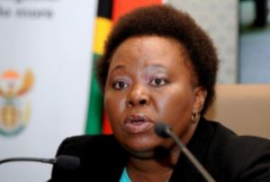
Government has rejected what it termed as malicious allegations made by Independent Media Group’s head, Iqbal Surve, about President Cyril Ramaphosa and Public Enterprises Minister, Pravin Gordhan.
In a video, Surve alleged that President Ramaphosa and the Minister had applied political pressure and were using the banks to silence the media.
“The Independent Group’s allegations are devoid of truth and seek to bring the President and the Minister into disrepute. Furthermore, the country has a formal banking system, which is highly regulated and accountable to regulators and industry bodies,” said Government Communication and Information System (GCIS) Director-General, Phumla Williams.
Williams said the Constitution entrenches the right to freedom of expression, including media freedom, which is an integral part of democracy.
“Since 1994, government has been resolute in the belief that an independent and free media are vital partners in strengthening any democracy.
“Government on an annual basis joins the media industry in commemorating Media Freedom Day, which resulted in legislative guarantees of press freedom and editorial independence,” she said.
Minister in The Presidency, Mondli Gungubele, said: “This is not the first time that the Independent Group has cast aspersions on Cabinet Ministers. The media has been free of State control since the advent of democracy.
“Government enjoys a cordial relationship with media in the country through structures such as SANEF and the Press Club. The media is an important partner and stakeholder of government, and we confirm our commitment to upholding media freedom in South Africa”.
CPI soars to 7.4%
South Africa’s annual consumer price inflation (CPI) reached 7.4% in June 2022, Statistics South Africa (Stats SA) says.
This is a 0.9% increase from the 6.5% recorded in May 2022.
Statistician General Risenga Maluleke on Wednesday said this was the highest rate since May 2009 when the rate was 8.0%.
“The consumer price index increased by 1.1% month-on-month in June 2022. The main contributors to the 7.4% annual inflation rate were food and non-alcoholic beverages; housing and utilities; transport; and miscellaneous goods and services,” he said.
Food and non-alcoholic beverages increased by 8.6% year-on-year, and contributed 1.5 percentage points to the total CPI annual rate of 7.4%, said Stats SA.
“Housing and utilities increased by 5.1% year-on-year, and contributed 1.2 percentage points. Transport increased by 20.0% year-on-year, and contributed 2.7 percentage points. Miscellaneous goods and services increased by 4.0% year-on-year, and contributed 0.6 of a percentage point. In June, the annual inflation rate for goods was 11.0%, up from 9.5% in May; and for services it was 3.9%, up from 3.6% in May,” it said.
More South Africans receiving municipal services, says Stats SA

The number of consumer units receiving services from municipalities increased between 2019 and 2020, says Statistics South Africa (Stats SA).
Releasing the 2020 Non-Financial Census of Municipalities on Tuesday, Stats SA said for the period under review, sewerage and sanitation showed the highest percentage increase (4.3%), followed by water (3.9%), then electricity and solid waste management (both with 2.3%).
It said: “With the exception of electricity services, the free basic services (FBS) provided to consumer units decreased in all other services between the 2019 and 2020 financial years.
“According to 2020 estimates, there were 3.6 million indigent households as identified by municipalities, an increase of 6.4% from the 2019 financial year.”
Of the 3.6 million identified indigents, 2.7 million indigent households benefited from the indigent support system for water, while 2.1 million benefited from free basic electricity provided by municipalities.
Stats SA said: “Furthermore, 2.0 million indigent households benefited from the indigent support system for sewerage and sanitation and 2.4 million indigent households benefited from the indigent support system for solid waste management.”
The census revealed that bucket toilets provided by municipalities to households increased by 4 696 (11.1%) consumer units from 42 434 to 47 130 between 2019 and 2020 financial years.
“The number of people employed by municipalities decreased by 6.6%, from 333 412 in 2019 to 311 364 in 2020 (inclusive of funded vacancies),” reads the report.
SA records records 263 new COVID-19 infections

South Africa now has 4 000 894 laboratory-confirmed COVID-19 cases since the outbreak, of which 263 were added on Tuesday.
According to the National Institute for Communicable Diseases (NICD), Gauteng recorded the most cases after 102 people were confirmed to have contracted the virus.
The province is followed by 77 infections in the Western Cape, 30 in KwaZulu-Natal, while the rest of the provinces logged less than 20 cases.
Meanwhile, the latest data reveals that the country lost 13 more patients to COVID-19, one in the past 48 hours.
This means the country now has a death toll of 101 935 since the first case was reported on 5 March 2020.
Meanwhile, nine more people were admitted to hospital in the past 24 hours, pushing the number of hospital admissions to 1 034.
The information is based on the 25 893 612 tests in both the public and private sectors.
In addition, the Department of Health said 13 435 vaccine doses were administered in the past 24 hours, bringing the total to 37 060 820 since the rollout programme began last year.
Data also show that 20 214 165 adults have now received the COVID-19 vaccines in South Africa, while 2 614 505 vaccine doses have been given to children between the ages of 12 and 17.
Globally, as of 19 July 2022, there have been 561 156 416 confirmed cases of COVID-19, including 6 365 510 deaths, reported to the World Health Organisation.
High Court dismisses Motsoeneng’s leave to appeal application

The Special Investigating Unit (SIU) has welcomed the dismissal of former SABC Chief Operations Officer Hlaudi Motsoeneng’s application for leave to appeal an order compelling him to pay back at least R11.5 million to the SABC.
In December last year, Motsoeneng was ordered to pay back at least R11.5 million in a “success fee” paid to him by the SABC in 2016.
SIU Spokesperson Kaizer Kganyago explained that Motsoeneng will have to pay back the money with interest backdated to 2016.
“In December 2021, the court declared that the 19 August 2016 decision by the then SABC Board to pay Motsoeneng a success fee amounting to over R11.5 million for clinching a Multi Choice deal was unlawful and invalid. The Multi Choice deal gave the pay television service provider access to the SABC’s archives.
“The SIU together with the SABC approached the High Court to review and set aside a decision by the former SABC Board to pay Motsoeneng a success fee and recover financial losses suffered by the SABC. The court action was informed by the SIU investigation in the affairs of the SABC, which revealed that the SABC irregularly paid monies to individuals and entered into contracts to the detriment of the public broadcaster,” Kganyago said.
He said the investigation into the public broadcaster was authorised following a proclamation by President Cyril Ramaphosa.
“The SIU investigated the SABC in terms of Proclamation R29 of 2017, authorised by President Cyril Ramaphosa, to investigate allegations of corruption, maladministration, malpractice and payments made by the SABC together with the conduct of its employees.
“Where required, the SIU was authorised to institute civil proceedings, refer evidence pointing to criminality to the National Prosecuting Authority (NPA) for prosecution in line with the Special Investigating Units and Special Tribunals Act 74 of 1996,” Kganyago said.
Government institutions urged to pay suppliers on time
The National Treasury has urged government institutions to pay their suppliers on time and not contribute to the dire effects of the COVID-19 pandemic that has already put a strain on the financial sustainability of SMMEs.
This comes after the Treasury’s annual report on non-compliance with payment of suppliers’ invoices revealed that government departments had made a 63% improvement on the payment of suppliers’ invoices. The department released the report on Monday.
“The late and/or non-payment of supplier’s invoices have a negative impact on socio and economic challenges that our country is facing. To ensure that supplier operations continue without strain and financial difficulties, government institutions are urged to pay their suppliers on time,” the Treasury said in a statement.
The report shows that there was an improvement in the payment of invoices by government to service providers within 30 days in the 2021/22 financial year.
It said the number of invoices paid after 30 days by national and provincial departments in the 2021/2022 financial year amounted to 401 691 invoices with the Rand value of R 33.7 billion.
“The number of invoices older than 30 days and not paid by national and provincial departments at the end of March 2022 amounted to 67 862 with the Rand value of R 6.1 billion.
“There was a 63% improvement in the number of invoices older than 30 days and not paid at the end of the 2021/2022 financial year, which amounted to 134 invoices to the Rand value of R5 million when compared to 358 invoices to the Rand value of R426 million reported at the end of the 2020/2021 financial year,” said the Treasury.
There was, however, a noticeable regression in the number of invoices paid after 30 days by national department and a regression in the number of invoices older than 30 days.
National Treasury has recommended:
- Payment of invoices within 30 days be included in the performance agreements of accounting officers, chief financial officers and other officials working in this area;
- Disciplinary actions against officials who fail to comply with the requirements to pay invoices within 30 days and who undermine the systems of internal control be taken;
- Accounting officers take steps to ensure that the information to be submitted to the relevant treasury is duly signed off and submitted to the relevant treasury as per the timeframes stipulated in the National Treasury Instruction Note number 34;
- Accounting officers and chief financial officers address the root causes of the late and/or non-payment of invoices to improve compliance with the requirement of Treasury Regulation 8.2.3;
- Payment of suppliers within 30 days be a standing agenda item for discussion at every EXCO meeting of departments; and
- Accounting officers consider recommendations provided to improve the level of compliance with the requirement to pay supplier’s invoices within 30 days.
The department said the purpose of the annual report was to keep the relevant stakeholders abreast of non-compliance with the legislative requirements to pay supplier’s invoices within 30 days.
The report provides a trends analysis of what transpired in the 2021/2022 financial year when comparing with previous financial year analysis.
“The annual report also provides common reasons recorded by departments for late and/or non-payment of invoices and the continuous efforts taken by the National Treasury to improve compliance with the requirements to pay invoices within 30 days,” it said.
The National Treasury said Instruction Number 34 issued in 2011, requires departments to submit 30 days exception reports to the relevant treasuries by the 7th day of each month, with details of the number and Rand value of invoices paid after 30 days from the date of receiving invoices, the number and Rand value of invoices that are older than 30 days which remained unpaid, and the reasons for the late and/or non-payment of these invoices.
“The National Treasury continues to monitor the level of compliance with the requirement to pay supplier’s invoices within the prescribed period in terms of section 38(1)(f) of the Public Finance Management Act (PFMA), 1999 (Act No. 1 of 1999) and Treasury Regulation 8.2.3,” reads the statement.
Security Cluster Ministers to engage Khayelitsha residents

Ministers in the Security Cluster will on Monday visit Khayelitsha, in Cape Town, to respond to the community’s safety needs.
In a statement, the Police Ministry said the community engagement is a response to high incidents of contact crimes that have been reported in the township in the Western Cape.
The most recent being the multiple shootings that have claimed the lives of 11 people over the weekend.
During Monday’s meeting, the community will have an opportunity to engage the Ministers, senior management of the South African Police Service (SAPS) and officials from the Department of Community Safety and City of Cape Town, on the work done by the national departments and provincial government to address their crime concerns.
Ministry spokesperson Lirandzu Themba said Police Minister Bheki Cele and Home Affairs Minister, Dr Aaron Motsoaledi, will during the community engagement, provide cross sectoral and cross departmental solutions emanating from the Khayelitsha Response Summit, which last met on 16 June 2022.
The first phase of the meeting will be an inspection of an operational SAPS parade at 35 Squadron in Belhar.
This will be followed by the destruction of liquor at the same address.
The Ministers will then hold a Ministerial Imbizo at the Desmond Tutu Community Hall, in Khayelitsha, at 10am.