
18 SARS branches close over strike

The South Africa Revenue Service (SARS) has announced that 18 of tax branches would not be in operation on Tuesday as its staff embark on a wage strike.
In a statement, SARS said: “(We) apologise for any inconvenience caused but due to Industrial Action taking place across SARS, we are experiencing delays in servicing our taxpayers.”
The revenue collector urged the public to continue to make use of its digital services during this time.
SARS staff first embarked on strike in May, when labour and the employer could not settle on a wage agreement.
According to reports, unions have rejected a proposed wage increase of 1.39%.
In May, SARS said it simply did not have the resources to meet the labour demand of CPI plus 7%.
The following tax branches and customs offices are closed:
Gauteng
- Edenvale
- Benoni
- Randfontein
- Springs
- Boksburg
KwaZulu-Natal
- Richardsbay
- Pietermaritzburg
- Durban
Western Cape
- Cape Town
- Mitchellsplain
- Paarl
- Beaufort West
Mpumalanga
- Mbombela
Eastern Cape
- Mthatha
- Uitenhage
- East London
Northern Cape and Free State
- Upington
- Qachas (Border post)
Suspects nabbed for R55 000 stokvel theft

Limpopo Provincial Police Commissioner Lieutenant, General Thembi Hadebe, has applauded the prompt arrest of suspects responsible for the alleged robbery of R55 000 in stokvel money in Madibong, outside Jane Furse, on Friday.
Limpopo SAPS spokesperson, Brigadier Motlafela Mojapelo, said members of the Limpopo Highway Patrol (LHP) in Sekhukhune were performing normal patrol duties when they received a backup call from the police in Jane Furse about a robbery.
“They immediately went to the scene and upon arrival, they established that about 10 suspects, armed with pistols, allegedly robbed stokvel ladies an amount of cash estimated to be around R55 000. One of the suspects was allegedly caught by members of the community and was stoned to death.
“It was further revealed that the community members continued to chase another suspect, who then entered Jane Furse hospital and held security personnel hostage at gunpoint. Members of the Highway Patrol, together with Operational Respond Services (ORS), joined forces to rescue the security guard and the 26-year-old suspect was arrested on the spot,” Mojapelo said.
Other suspects fled the scene using a bakkie, which was later found abandoned at Mamone village. The hunt for the remaining suspects continues.
“The speedy reaction by the members, which led to the arrest of the suspect, is highly commendable. The remaining suspects must be hunted down and be brought to book. We, however, strongly warn community members to desist from taking the law into their own hands and must instead work with the police to fight crime,” said Hadebe.
Mojapelo urged stokvel members to refrain from withdrawing and handling large amounts of cash for the purposes of dividing it amongst themselves but must, wherever possible, resort to bank transactions.
Cases of murder, armed robbery and possession of illegal firearm and ammunition were opened. The suspect is expected to appear in the Sekhukhune Magistrate’s Court on Monday, 11 July 2022, facing charges of armed robbery and possession of illegal firearm and ammunition.
Anyone with information, which can lead to the arrest of the suspects involved in both incidents, should contact Detective Warrant Officer Enoch Mashilo on 082 319 9526 or the Crime Stop number 08600 10111 or the nearest police station.
Department kicks off raw water tariff consultations

Consultations between the Department of Water and Sanitation and key stakeholders across the country are underway to determine bulk water tariffs for the 2022/23 financial year.
Department’s Director for Institutional Establishment in the Northern Cape, Tenda Rasikhanya, said two stakeholder engagement meetings, are scheduled for the Northern Cape.
“We are meeting with stakeholders in Upington at the Desert Palace on 20 July 2022 and the Kimberley engagement is scheduled at the Kimberley Garden Court for the 21 July 2022,” Rasikhanya said.
Rasikhanya noted that supplying water to all people at an acceptable level of assurance and quality, costs money, both in terms of capital investment in infrastructure, and the operation and maintenance associated with water treatment, bulk water distribution and reticulation in human settlements.
In terms of the National Water Act of 1998, the department is required to establish an annual raw water pricing strategy after consulting widely with different water users, including mines, industries, agriculture, energy and domestic users.
The Act states that the Minister of Water and Sanitation is required to establish a pricing for raw water charges.
The pricing of water is based on the Pricing Principles, including user pay, polluter pay, ecological sustainability, differentiated charges, accountability and governance.
SA records 702 new COVID-19 cases, four deaths

South Africa now has 3 997 975 laboratory-confirmed COVID-19 cases, 702 of which were reported on Monday.
Data show that Gauteng accounted for most of the cases after 364 patients were confirmed to have contracted the virus, followed by 107 in KwaZulu-Natal and 92 in the Western Cape.
According to the National Institute for Communicable Diseases (NICD), this increase represents a 3.5% positivity rate.
The Department of Health said four people lost their lives in the past 24-hour reporting cycle, pushing the death toll to 101 880.
Meanwhile, 13 people have been admitted for COVID-19 related illness, increasing the number of hospital admissions to 1 135.
The information is based on the 25 826 822 tests that have been conducted in both public and private sectors to date.
Globally, as of 11 July 2022, there have been 552 504 629 confirmed cases of COVID-19, including 6 347 816 deaths, reported to the World Health Organisation.
As of 3 July 2022, a total of 12 037 259 035 vaccine doses have been administered across the globe.
WHO calls emergency meeting as monkeypox cases rise

The World Health Organisation (WHO) announced its plan to reconvene the Emergency Committee on monkeypox under the International Health Regulations as infections continue to soar globally.
In June, the WHO’s Emergency Committee resolved by consensus the outbreak does not constitute a global public health emergency at this stage.
However, addressing the media on Wednesday, WHO Director-General, Dr Tedros Adhanom Ghebreyesus, said he remains concerned by the scale and spread of the virus.
Speaking to the media, Ghebreyesus said there are now more than 6 000 cases recorded in 58 countries.
In addition, Ghebreyesus said testing remains a challenge and suspects some infections are not being “picked up”.
“Europe is the current epicentre of the outbreak, recording more than 80% of monkeypox cases globally,” Ghebreyesus revealed.
“My teams are following the data. I plan to reconvene the Emergency Committee so they’re updated on the current epidemiology and evolution of the monkeypox outbreak and the implementation of countermeasures. I’ll bring them together in the week of 18 July or sooner if needed.”
Meanwhile, he told the media that the agency is working with countries and vaccine manufacturers to coordinate vaccine sharing, which is currently scarce and desperately needed for people at higher risk of contracting the viral disease.
“WHO is also working closely with civil society and the LGBTQI+ community, especially to break the stigma around the virus and spread information so people can protect themselves.”
He commended those posting videos on social media talking about their symptoms and experiences.
“This is a positive way to break down the stigma about a virus that can affect anyone.”
According to the latest epidemiological update, from 1 January to 4 July 2022, 6 027 laboratory-confirmed cases of monkeypox and three deaths have been reported to WHO from 59 countries in five WHO regions.
Since 27 June 2022, 2 614 new cases (77% increase) and two new deaths have been reported, while nine new areas have reported infections.
“The clinical presentation of monkeypox cases associated with this outbreak has been atypical, as many cases in newly-affected areas are not presenting with the classically described clinical picture for monkeypox, that is, fever, swollen lymph nodes, followed by a centrifugal rash.”
Data shows that among the cases who reported at least one symptom, 81% presented with systemic rash (widespread rash on the body), 50% presented with fever and 41% presented with genital rash.
Offenders revamp Bushbuckridge school sports field

Justice and Correctional Services Minister, Ronald Lamola, is expected to hand over a sports field revamped by offender labour to Mchaka High School in Bushbuckridge on Friday.
“Some of the renowned sport icons were identified at school sport tournaments. It is our hope that our work of developing sport fields will revive the vibrant school sport culture and yield more champions,” Lamola said.
The department said the field was revamped and developed for the school by offender labour, and will cater for sports such as football and netball for children in the area.
Entertainment company Mutlichoice also partnered with the Minister to provide much needed resources for the sports field upgrade.
“Minister Lamola has often lamented the poor sporting infrastructure in public schools, which deny young people opportunities to take part in sport.
“To mitigate this challenge, the Department of Correctional Services (DCS) has utilised offender labour to develop and revamp sporting infrastructure at schools.
“This has resulted in some schools in Gauteng, Western Cape and Northern Cape boasting sporting infrastructure that will make it possible for school sport to flourish,” the department said.
According to the department, at least 40 000 youth are incarcerated in correctional centres, with some “lured into crime due to failure to channel their youthful energies to positive activities like sport and recreation”.
The department said providing facilities for the youth is an opportunity to create positive hobbies and pastimes.
“Projects of this nature are thus aligned to DCS’ Self Sustainability and Sufficiency Framework, by means of partnering with strategic stakeholders like Multichoice in order to rollout infrastructure in disadvantaged communities.
“Such work will serve as a catalyst to promote sport, leading to positive lifestyles among the youth,” the department said.
Meanwhile, DCS Deputy Minister, Nkosi Phathekile Holomisa, is expected to handover a refurbished house to an elderly woman in Swellendam in the Western Cape also on Friday.
“Through its Community Corrections Office, the [department] identified a 69-year-old woman, Ms Hendricka Claassen… who was residing in a dilapidated house thus in need of a dignified shelter.
“In embracing the District Development Model, the DCS, in collaboration with the Local Municipality of Swellendam, as well as other stakeholders, refurbished the home of Ms Claasen using the expertise of offenders from the area. This was in line with the DCS objective of allowing offenders to use their skills to pay back for the harm they caused to society,” the department said.
While there, the Deputy Minister will also launch a new Incinerator at the Helderstroom Correctional Facility.
“[The launch] is part of the DCS long-term facilities strategy to ensure the establishment and maintenance of facilities that are consistent with human dignity, health and safety for both offenders and officials, while also ensuring that all facilities are legally compliant with all policies and standards of the country.
“This is a modern state of the art incinerator from a design and size perspective with low emissions in all classes. Incinerator is a machine designed for burning waste material, especially industrial waste at high temperature,” the department said.
Unconventional Gas Regulations hearings kick off in N Cape

The Department of Water and Sanitation (DWS) will next week kick-off public engagements on Unconventional Gas Regulations in the Northern Cape.
The published Unconventional Gas Regulations, which were developed in line with Section 38 of the National Water Act of 1998, prescribe requirements and procedures when using water for unconventional gas activities.
The department said it has met with internal and external stakeholders on the published Unconventional Gas Regulations, and public engagements are now getting underway particularly with affected communities where unconventional gas activities are being piloted or are envisaged for future use.
“The Department of Water and Sanitation will meet with the community of Richmond and surrounding areas in the Northern Cape next week on 12 July 2022 as part of engagements with the public on the published Unconventional Gas Regulations.
“Information brochures will be distributed to the public and inputs and comments solicited through meetings and recorded comments. Communities in the affected areas are expected to make inputs before the final gazetting of the regulations,” department spokesperson, Sputnik Ratau, said.
The public engagements will take place from 11-20 July 2022 in the following communities:
11 July 2022 – Theunissen in the Free State
12 July 2022 – Richmond in the Northern Cape
13 July 2022 – Beaufort West in the Western Cape
18 July 2022 – Lephalale in Limpopo
19 July 2022 – Volksrust in Mpumalanga
20 July 2022 in Matatiele in the Eastern Cape.
Municipalities receive R33.9bn tranche for basic services

Municipalities across the country have received their share of the R33.9 billion first tranche of the Local Government Equitable Share (LGES).
Cooperative Governance and Traditional Affairs spokesperson, Lungi Mtshali, said the tranche was transferred to the primary bank accounts of the municipalities.
In a statement, the ministry said the LGES allocation will be transferred in three tranches during the current local government financial year, which begins in July.
The transfer of the LGES to all municipalities is premised on Section 216 of the Constitution. The section provides for national government to transfer resources to municipalities in terms of the annual Division of Revenue Act (DORA) to assist them in exercising their powers and performing their functions.
Mtshali said the equitable share provides funding for municipalities to deliver free basic services to poor households and subsidises the cost of administration. It also covers other core services for those municipalities with the least potential to cover these costs from their own revenues.
“The basic services component of the LGES provides a subsidy of R488.42 per month in 2022/23 for the cost of providing basic services to each of these poor households,” said Mtshali.
The subsidy includes funding for the provision of:
– Free basic water (six kiloliters per poor household per month) (R168.22 per household below the affordability threshold).
– Energy (50 kilowatt-hours per month) (R107.04 per household below the affordability threshold).
– Sanitation (R115.95 per household below the affordability threshold).
– Refuse removal (R97.20 per household below the affordability threshold).
“The allocation to municipalities will assist them in, amongst other things, delivering free basic services to poor households through, for example, indigent support programmes.
“These programmes ensure that qualifying households, who are unable to pay for certain basic services, and have access to water, electricity, sanitation and refuse removal receive these services for free or at greatly reduced rates,” said Mtshali.
He said COGTA Minister, Dr Nkosazana Dlamini Zuma, called on those households who are unable to pay for basic services to contact their local municipalities to determine if they qualify to be beneficiaries of their local indigent support programme.
The Minister has further urged municipal councils to ensure that Municipal Public Accounts Committees (MPACs) are established and fully functional to facilitate the proper oversight of expenditure in municipalities, as stipulated in the Municipal Structures Act.
Mtshali said the department will continue to coordinate national and provincial government support for local municipalities to deliver basic services and to put in place better audit mechanisms, as this is a major challenge facing the sector.
The department, he said, “is coordinating and collaborating with sector departments to support municipalities, as envisaged by Section 154 of the Constitution, through the District Development Model (DDM) approach”.
“Notwithstanding the transfer of the LGES to municipalities, revenue collection remains a critical determinant of the financial viability of municipalities. Citizens are still responsible for paying municipalities for the services they receive.
“We urge citizens to pay for the services they receive so that municipalities can collect revenue and provide quality services to the communities, as municipalities need to have access to adequate sources of revenue to enable them to undertake the functional responsibilities assigned to them,” he said.
SA logs 657 new COVID-19 infections, with 12 deaths
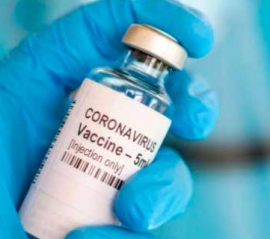
South Africa now has 3 996 441 laboratory-confirmed cases of COVID-19 after 657 people tested positive on Wednesday.
Most new cases in the past 24 hours were reported in Gauteng after 52 citizens were confirmed to have contracted the virus, followed by 13 in the Western Cape, eight in the Eastern Cape and seven in KwaZulu-Natal. Meanwhile, the other provinces reported less than five cases each, while the Northern Cape had zero infections.
According to the National Institute for Communicable Diseases (NICD), this brings the positivity rate to 4.8%.
In addition, the National Department of Health reported that 12 people succumbed to COVID-19, of which three occurred in the past 24 to 48 hours.
According to the latest statistics, this means the death toll now stands at 101 859 to date.
The data shows that there has been an increase of 14 hospital admissions in the past 24 hours, while the seven-day moving average daily number of cases has gone up slightly.
The information is based on the 25 789 955 tests conducted in the public and private sectors since the outbreak.
Global view
Globally, the number of new weekly cases increased for the fourth consecutive week after a declining trend since the last peak in March 2022.
According to the World Health Organisation (WHO), during the week of 27 June to 3 July 2022, over 4.6 million cases were reported, a figure similar to that of the previous week.
At the regional level, the number of new weekly cases increased in the Eastern Mediterranean, South-East Asia, European and the Western Pacific regions, while the areas of Africa and the Americas recorded a drop.
Meanwhile, the number of new weekly deaths dropped by 12% compared to the previous week, with over 8 100 fatalities recorded.
At the country level, the WHO reported that the highest numbers of new weekly cases were logged in France (603 074), Germany (555 331), Italy (511 037), the United States (496 049) and Brazil (334 852).
In addition, as of 3 July 2022, over 546 million confirmed global cases and over 6.3 million deaths had been reported.
Winter initiation season records 8 deaths in EC

Eight initiates have died in the Eastern Cape since the beginning of traditional male circumcision season on 17 June 2022.
The development was this week confirmed by the Parliament’s Portfolio Committee on Cooperative Governance and Traditional Affairs (COGTA) during an oversight visit to two initiation schools in Port St John’s, which is part of the OR Tambo District Municipality.
The committee was briefed about initiation challenges in Port St John’s Local Municipality, Ngquza Hill Local Municipality, King Sabatha Dalindyebo (KSD) Local Municipality, Nyandeni Local Municipality and Mhlontlo Local Municipality.
The National Initiation Oversight Committee, established by the Minister of Cooperative Governance and Traditional Affairs and the Eastern Cape Provincial Initiation Coordinating Committee, formed part of the team that is accompanying the committee on the oversight visits.
Committee chairperson Fikile Xasa said the deaths occured in the KSD Local Municipality and Mhlontlo Local Municipality.
“The committee will be visiting the KSD municipality tomorrow as part of its oversight programme. The committee will be provided with additional information on the cause of these deaths,” he said.
Furthermore, he said, the committee was informed that there were 66 confirmed legal initiation schools and 68 illegal initiation schools in the OR Tambo District.
“The committee was also informed that the closure of illegal initiation schools was complicated by the fact that there are no hospital beds available for the initiates that are rescued from these illegal schools and that the erstwhile rescue centres are no longer operational due to the COVID-19 pandemic and depletion of resources.”
The Customary Initiation Act, he added, is clear on what action needs to be taken against illegal schools and they need to be closed down.
“The committee expects traditional surgeons and nurses who are part of these illegal schools to be arrested and charged.
“The committee is clear that law enforcement agencies should not tolerate any lawless behaviour from communities that protect illegal traditional surgeons and nurses. Additionally, the police informed the committee that they have made 8 arrests and opened 21 cases for the current season,” he said.
The committee commended the decision taken by Matatiele in the Alfred Nzo District Municipality not to open any initiation schools this winter season due to poor weather conditions.
The committee will today meet with local houses/traditional councils in KSD and visit initiation schools in Mthatha.