
Marikana judgement welcomed

President Cyril Ramaphosa has welcomed a ruling by the high court in the Sivuka vs Ramaphosa civil matter which relates to the events of at Lonmin Mine at Marikana in the North West where striking miners tragically lost their lives.
The matter was brought to the high court by family members of those miners and sought to have President Ramaphosa – who was part of the Lonmin Mine board at the time – bare legal duty for the events that transpired on that day.
The High Court in Johannesburg handed down judgement on the matter last week.
In a statement, the Presidency clarified pertinent matters in that judgement.
“First, the high court agreed with the President’s arguments and held that the plaintiffs had not established that the President bore any legal duty in relation to the Marikana tragedy. Furthermore, the court made no finding that the President was in fact the cause of harmful conduct.
“Second, the court rejected the plaintiff’s argument that certain email communications from President Ramaphosa sought to call for the murder of the striking workers. The judgement stated that the plaintiffs’ argument against the President ‘is not only far-fetched but also irreconcilable within the context of the email communication contents as a whole…,” the Presidency said.
Furthermore, the Presidency said the court proceedings were “not a trial and…the court was merely engaged in a legal debate regarding the plaintiffs’ allegations” against President Ramaphosa.
“[The] high court agreed with the President that there was no factual basis pleaded for the allegation that collusion between the President, the government and the senior police would have led to deaths of workers.
“[On] the allegations that the President Ramaphosa owed a duty of care to the plaintiffs due to his role as director of Lonmin, the high court agreed with the President that the allegation was incorrect as a matter of law. In the judgment the court said, “… The allegations pleaded do not show that the first defendant owed the plaintiffs legal duties, and he therefore cannot in law incur liability to the plaintiffs in delict in his capacity as director of Lonmin, or ‘in pursuit of his personal interests and those of Lonmin’,” the Presidency said.
The Presidency said the events of the tragic day remain a sorrow for the country.
“The tragic events of August 2012 in Marikana that led to the death of 34 people remain one of the most distressing moments of the post democratic era and a blight in South Africa’s contemporary history that will be forever etched in our hearts and minds.
“10 years later our hearts still go out to families who lost their loved ones. The violence and the killings that occurred should have never happened. We are still resolute and united in our condemnation of the brutal acts we witnessed,” the Presidency said.
Protect children from alcohol, drug abuse

President Cyril Ramaphosa has called on civil society, government and communities to come together to fight the scourge of underage drinking in South Africa.
This in the wake of the tragedy in which 21 young people – some as young as 13 – died at the Enyobeni Tavern at Scenery Park in the Eastern Cape in the early hours of Sunday morning, recently.
In his weekly letter to the nation this morning, the President said the growing trend of underage drinking is not only illegal but also psychologically and physically detrimental.
“The increased social acceptability of young people drinking alcohol has become a serious problem in a country where the majority of the drinking population are already classified by the World Health Organisation as binge drinkers.
“Alcohol use amongst adolescents is associated with impaired function, absenteeism from learning, alcohol-related injuries, suicidal thoughts and attempts, and risky behaviour,” he said.
Investigations into the tragedy by the South African Police Service and the Eastern Cape provincial government are already well underway.
“We must come together to combat this vice that is robbing our young people of the best years of their lives and making them susceptible to alcohol addiction.
“As families it means having open and frank conversations about alcohol and setting boundaries. Children under the age of 18 consuming alcohol is against the law.
“As adults we should refrain from practices such as sending minors to buy alcohol for us or capitulating to requests to buy these young people alcohol,” President Ramaphosa said.
The President acknowledged that the abuse of alcohol by children “is a form of escapism” in communities where “opportunities for safe and age-appropriate recreation are few”.
“In the wake of the tragedy, the community has pointed out that there are no viable sports grounds, community libraries or youth centres in Scenery Park.
“As government at national, provincial and local level we need to respond to the pleas of this community and those of other communities by developing more recreational spaces, facilities, programmes, and projects for our young people in disadvantaged areas in the province,” he said.
President Ramaphosa reiterated his call for all South Africans to come together against alcohol abuse in children.
“As communities we must work with our Community Policing Forums, with our civic organizations and with our school governing bodies and play a more active role in the lives of our children and in ensuring their safety and well-being.
“Let us work together to protect our precious future generation from the ravages of alcohol and drug abuse and their effects.
“Let us work together to ensure that those who put profit before the lives of our children are not allowed to operate. Let us also set a positive example in our own relationship with alcohol,” he said.
Various stages of load shedding for the week

Eskom has announced that various stages of load shedding will be implemented throughout the week with generation capacity shortages expected.
The power utility has been battling to keep the lights on with violent strikes at its power stations exacerbating the electricity supplier’s troubled circumstances.
“As the generation capacity shortages persist over the next few weeks, load shedding will continue to be implemented at various stages. Eskom cautions the public that it will still take a few weeks for the power generation system to fully recover to pre-strike levels,” Eskom said.
By Monday morning, Eskom reported that it currently has more than 21 000MW of energy unavailable due to planned maintenance and breakdowns.
“Depending on several possibilities, including the workforce fully returning to work to conduct much-needed repairs to equipment, it is anticipated that load shedding will gradually be lowered to Stage 2 by the weekend. Of course, Eskom will communicate and implement any changes as may be necessary,” Eskom said.
For Monday, stage 4 load shedding will be implemented until 4pm with stage 6 immediately following that until 10pm this evening.
From 10pm until midnight, stage 4 load shedding will return.
On Tuesday stage 2 will be in force from the early hours of the morning to 5am.
Stage 4 will then be implemented until 4pm, also followed by stage 6 until 10pm and a drop down to stage 4 once again until midnight.
“Eskom would like to remind the public that load shedding is implemented only as a last resort to protect the national grid. We therefore urge all South Africans to continue using electricity sparingly, especially during these uncertain times on the power system.
“Eskom thanks all workers who have reported for duty and who continue to perform diligently under extremely challenging conditions,” the power utility said.
Report an opportunity to break with the era of state capture

State capture was an assault on South Africa’s democracy and violated the rights of every man, woman and child in the country.
This is according to President Cyril Ramaphosa who on Wednesday received and publicly released the final part of the report of the Judicial Commission of Inquiry into Allegations of State Capture, Corruption and Fraud in the Public Sector at the Union Buildings in Pretoria.
The commission was appointed to investigate the corruption that took place during the state capture era.
“Through the various reports released by the commission, we have come to understand what happened, who was involved, and what effect state capture has had on our state, our economy and our society… The report is far more than a record of widespread corruption, fraud and abuse; it is also an instrument through which the country can work to ensure that such events are never allowed to happen again.”
WATCH | 
In line with the directive of the High Court, the President will within four months formally present to Parliament the full report of the commission together with an indication of his intentions on the implementation of the commission’s recommendations.
He said it has been arranged for the administrative work needed to secure the archive of the work done by the commission, and ensure relevant institutions have access to the extensive evidence it has collected.
“This report provides us with the opportunity to make a decisive break with the era of state capture. I call on you, one and all, to support the measures that all the structures of state will take to return our country to the path of integrity, transformation and progress,” said President Ramaphosa.
He said the nation owes a great debt of gratitude to the Chairperson of the Commission, Chief Justice Raymond Zondo, for the monumental task that he and the evidence leaders, the investigators, the lawyers and the researchers have all undertaken over these past four years in the service of their country.
He also thanked the Secretary of the Commission Professor Itumeleng Mosala and the other commission staff for the valuable contribution they have made to the national effort to confront state capture.
“I wish to thank the many people who gave evidence before the commission, and to the whistle-blowers, academics, investigators and journalists whose work contributed to uncovering many of the matters before the commission.
“I wish to acknowledge the critical contribution of Adv Thuli Madonsela, whose courageous and unflinching investigation set in motion the process to uncover these misdeeds,” said the President.
The submission of the final report today brings to an end the work of the commission and marks the fulfilment of the weighty mandate given to Chief Justice Zondo in January 2018, said the President.
Meanwhile, following the release of Parts V and VI of the final report of the Judicial Commission of Inquiry Into Allegations of State Capture, the Presidency’s website has been affected by high volumes of visitors.
The report is, however, available on various social media platforms as well as www.gov.za – https://tinyurl.com/4dhmpyck and www.gcis.gov.za – https://tinyurl.com/7yv469w9.
Cabinet commends moves to enforce immigration laws

Cabinet has welcomed the recent arrest of a Home Affairs official stationed at the Benoni office for issuing a fraudulent passport to a Bangladeshi national.
The official, Sibongile Simelane, was granted R5 000 bail in the Benoni Magistrate’s Court on Tuesday, and the Bangladeshi national, Fahim Kazi, was arrested while trying to leave the country on 12 May 2022, under the name of Lebogang Ndlovu.
The Department of Home Affairs (DHA) has also recently deported Lithuanian actress, Leva Andrejevaite, who sought to abuse South Africa’s refugee management regime when she fabricated a story of wanting to apply for asylum because of the “war in Ukraine”.
Speaking during a post-Cabinet media briefing on Thursday, Minister in the Presidency, Mondli Gungubele, said that cabinet commends the work being done by the DHA’s Counter Corruption Unit.
“It applauds and encourages ordinary South Africans to continue to report such criminal acts. The unlawful acts of South Africans who sell their identities have far-reaching negative implications for the country’s security and socio-economic status.”
Gungubele emphasised that government will continue to deal harshly against anyone involved in illegal acts that undermine South African immigration laws, without fear or favour.
Cabinet has also welcomed the recent conviction and sentencing of a Durban teacher, Nomusa Precious Gabuza (37) – who was sentenced to three years’ correctional supervision and four years’ imprisonment, wholly suspended for three years, in the Umlazi Regional Court in KwaZulu-Natal – for contravening the Local Government Municipal Electoral Act, 2000 (Act 27 of 2000).
As a teacher at the school which was used as a voting station during the Municipal Elections in October 2021, Gabuza pleaded guilty for fraudulently casting 24 votes, including 12 for the Municipal Elections and 12 for the Ward Elections.
Cabinet said that the conviction and sentencing underscored the Electoral Commission of South Africa’s commitment to intervene timeously and apply consequence management.
“This is also a strong affirmation of the electoral systems, which have since been strengthened with the introduction of the Voter Management Device that prevents double voting.
“Cabinet affirmed that elections are the cornerstone of our democracy and must be protected at all costs,” said the Minister.
Cabinet welcomes the action plan to deal with road blockages
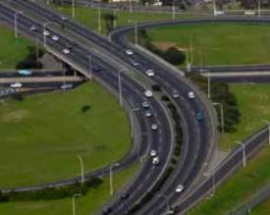
Cabinet has welcomed the 11-point action plan set up to deal with road blockages and the recruitment of foreign nationals as truck drivers.
The plan, which was developed by the Road and Freight Inter-Ministerial Committee (IMC) in partnership with road and freight industry stakeholders, promotes the enforcement of visa requirements and compliance with labour laws, among other things.
The IMC was formed to deal with the escalating road blockages and protests by disgruntled South African truck drivers.
“Protests and road blockages adversely impact mobility, scare foreign investors and most importantly, negatively impact the economy and essential supply chains which use affected corridors,” said Minister in The Presidency Mondli Gungubele at a post-Cabinet media briefing in Pretoria on Thursday.
At a media briefing on Monday, Minister of Employment and Labour, Thulas Nxesi, said the action plan was derived from a culmination of a series of meetings held with the industry and will form part of a blue print to be announced once approved by all parties.
The Implementation Plan consists of the following actions:
- Facilitate the appointment of the task team;
- Enforcement of the VISA requirements;
- Need for consideration of all foreign driving licenses;
- Registration and compliance with labour laws;
- Registration of operators in term of Section 45 of the National Road Traffic Act (NRTA);
- Review of the Traffic Register Number;
- Review of the Cross-Border Road Transport Legislation;
- Amendment of the National Road Traffic Regulation;
- Integrated joint multi-disciplinary law enforcement operations;
- Implement Driver Training Programme; and
- Consideration of the introduction of Operating Licenses for the industry.
Each organization participating in the process will be represented by two delegates and monthly report meetings will be held by the IMC to review progress on actions being implemented, Nxesi said.
The Department of Home Affairs have conducted over 21 joint multi-disciplinary law enforcement operations and inspections to assess the extent of use of foreign and at times illegal truck drivers.
“These multi-disciplinary and joint enforcement operations conducted across the country saw 213 arrests of foreign truck drivers found to be in contravention of immigration laws with 19 of those in possession of fraudulent documentations,” said the Minister.
Meanwhile, Cabinet welcomed the intervention by the Department of Water and Sanitation (DWS) in the Nelson Mandela Bay Metropolitan Municipality in the Eastern Cape to avert “Day Zero” as the province is facing severe water shortages which started in 2015.
The department is working with the province to implement short, medium and long-term measures to address and mitigate the potential impact of the drought.
“Cabinet further urged the residents of NMB to adhere to water restrictions imposed by local municipalities to ensure water security.
“Overall, water use must be reduced by 50 million litres per day, from the current level of 280 million litres per day, down to 230 million litres per day,” Cabinet said.
PRASA awards contract to maintain ageing trains
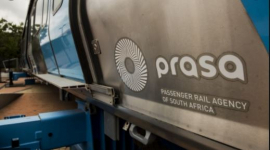
The Passenger Rail Agency of South Africa (PRASA) has announced the awarding of the five-year General-Overhaul contract that will now allow for the heavy maintenance and repairs of train-sets which will help clear the backlog.
“Under the General Overhaul programme, about 380-400 coaches will undergo heavy maintenance and rehabilitation work every year for the next five years,” PRASA said on Wednesday.
The contract was awarded to five contractors nationally.
“Many of our train sets are out of commission due to the lifespan of our coaches and the vandalism of our coaches, making our trains hazardous and unsafe for our commuters.
“Therefore, this is a positive development for PRASA and commuters because we can now start maintenance and refurbishment work and increase the availability of trains as we recover our lines,” PRASA said.
The lifespan of a coach is about 40 years. However, the majority of PRASA’s fleet is generally over 50 years old.
In the asset lifecycle of trains, individual coaches need to undergo general maintenance every 9 to 10 years.
The General Overhaul programme not only supports the Corporate Strategy to provide a safe, reliable, and comfortable service to commuters, but also supports PRASA’S Modernization Programme.
“As we transition to the new electrical trains manufactured at the Gibela manufacturing plant, the current fleet needs to be maintained until new electrical motor units are finally acquired and fully incorporated into service by estimated 2033.
“The current fleet is expected to still be operational and systematically phased out by then. The economic benefit of this R7.5 billion contract cannot be understated as this has breathed new life into an industry that was almost left decimated,” PRASA said.
This contract has the potential to revive and ignite our economy as over 2 000 direct jobs are expected to be created.
“This is a true testament that we at PRASA, move beyond our primary mandate of transportation. This milestone has given our ageing fleet a new lease of life and set to increase productivity, boost confidence and staff morale within our organization. This also gives PRASA an opportunity to innovate as we expedite the deployment of the new electrical trains,” the agency said.
COVID-19 regulations cancelled

Health Minister, Joe Phaahla, on Wednesday repealed the several COVID-19 regulations relating to the wearing of face masks, gatherings and persons entering the country.
The regulations were promulgated by the Minister on 4 May in the Regulations Relating to the Surveillance and the Control of Notifiable Medical Conditions. President Cyril Ramaphosa in a national address in April said the regulations would be eased gradually.
The gazetting of the regulations means that the wearing of face masks in any public-use indoor space or when on public transport to contain the spread of COVID-19 fell away, as was required.
On gatherings, people congregating in public spaces will no longer be limited to certain numbers.
The regulations stipulated that a maximum of 50% of the venue capacity may be occupied, provided that every attendee must be vaccinated against COVID-19 and produce a valid vaccination certificate. Alternatively, they could produce a valid certificate of a negative COVID-19 test obtained not more than 72 hours before the date of the gathering.
Where the sub-regulation (3) was not complied with, then attendance at the indoor gathering had to be limited to 1000 people or 50% of the capacity, whichever is smaller.
For any outdoor gathering, a maximum of 50% of the venue capacity could be occupied.
This was provided that every attendee was vaccinated against COVID-19 and produced a valid vaccination certificate. Otherwise, they could produce a valid certificate of a negative COVID-19 test which was obtained not more than 72 hours before the date of the gathering.
Regarding limitations on people entering the country, the regulations required that any person entering the country be vaccinated against COVID-19 and produce a valid vaccination certificate.
Alternatively, this group of people needed to produce a valid certificate of a negative PCR COVID-19 test not older than 72 hours before the date of departure.
CPI reaches 6.5%

Annual consumer price inflation (CPI) reached 6.5% in May, Statistics South Africa (Stats SA) has revealed.
The figure is a 0.7% increase from the 5.9% in April and March.
Stats SA said the increase breaks through the upper limit of the South African Reserve Bank’s monetary policy target range.
This is the highest reading since January 2017 when the rate was 6.6%, it said.
The impact of fuel prices
In a statement, the agency said transport and food and non-alcoholic beverages (NAB) accounted for just over half of the annual rate, with sharp price increases recorded in both categories.
“Fuel, in particular, continues to be a major contributor. If the impact of fuel is removed from the CPI reading in May, the headline rate falls to 5.1% from 6.5%.
“Diesel prices jumped by 8.1% between April and May, taking the annual rate to over 45%. The average price of a litre of diesel in May 2021 was R16.20 – meaning it cost R729 to fill a 45-litre tank. Twelve months later, with the average price at R23.67 per litre, filling the same tank cost R1 065.”
Petrol prices moderated between April and May, edging lower by 0.7%. Despite this decline, petrol is almost 27% more expensive than it was in May 2021, reads the statement.
Cooking oil prices continue to soar
During this period, prices for food and NAB jumped by 2.1% between April and May, representing the largest monthly increase since February 2016 when the monthly rise was also 2.1%. At that time, the country was experiencing a severe drought.
“The oils and fats product group continues to witness sustained levels of high inflation. The annual rate was 26.9% in May, representing the 17th month that the rate has been above 10% (since December 2020). Prices jumped by 10.1% between April and May, representing the first time since 1997 that the monthly rate was above 10%.
“Sunflower oil, the product with the highest weight in the oils and fats group, is almost 40% more expensive than it was a year ago. Prices jumped by 16.1% between April and May,” said Stats SA.
The monthly rate for bread and cereals was 3.4%, taking the annual rate to 8.4%. Maize meal recorded a monthly increase of 5.1% and a loaf of white bread was 3.7% more expensive.
Stats SA said annual meat inflation remained above the 6% mark since November 2020, with the reading for May 2022 at 9.4%. Prices for individually quick frozen (IQF) chicken portions and stewing beef increased by 13.7% and 12.2%, respectively, in the 12 months to May.
Stage 2 load shedding until midnight

Eskom says due to the breakdown of four generation units this morning, contributing to the capacity constraints, Stage 2 load shedding will be implemented today from 10:00 until midnight.
Starting tomorrow until Sunday night, Stage 2 load shedding will be implemented from 05:00 until midnight.
According to Eskom, there is likelihood that the stage of load shedding might need to be increased during the evening peaks.
“Eskom will continue to closely monitor the system, adjust and communicate any changes as may be necessary. We appeal to all South Africans to help limit the impact of shortages by continuing to reduce the usage of electricity and to switch off all non-essential items,” Eskom said in a statement.
A generation unit each at the Kendal and Matimba, as well as two units at the Matla Power Station broke down this morning. This reduced generation capacity by 2 400MW adding to the ongoing capacity constraints.
There has been a delay in returning to service a unit at Kusile Power Station which is now expected to return to service tomorrow.
“We currently now have 3 630MW on planned maintenance, while another 2 277MW of capacity is unavailable due to breakdowns,” Eskom said.
Eskom cautioned the public that as the shortage of generation capacity persists, the system will continue to be constrained with an elevated risk of load shedding over the coming weeks.
“We would like to remind the public that load shedding is implemented only as a last resort to protect the national grid. We therefore urge all South Africans to continue using electricity sparingly especially between 05:00 – 10:00 in the mornings and 16: 00 – 22:00 in the evenings,” Eskom said.