
PRASA addresses concerns of traders
The Passenger Rail Agency of South Africa (PRASA) says it is clamping down on traders who lease out their allocated space at its stations to people who should not be trading.
This comes after allegations made in the media by someone who purports to be a member of Operation Dudula claiming that South Africans are excluded from trading opportunities at its various premises/stations.
In a statement on Tuesday, PRASA said it works with various informal trading associations to provide informal businesses and micro entrepreneurs with trading opportunities at various PRASA stations.
“Informal Traders belong to an association that liaise with PRASA on behalf of its members. Demarcation and allocation of trading space is done by PRASA. To trade at our facilities one would need to be registered with an association.
“It has also come to our attention of a practice where some traders lease out their allocated space to people who should not be trading on the spaces. We are clamping down on this practice through our own internal processes,” the agency said.
Recently the PRASA board approved the PRASA Informal Trading Policy, which seeks to further regulate the allocation of demarcated spaces and improve on the spatial areas where informal trade is allowed within the confines of the laws of the country and the Conditions of Carriage that set out the Terms and Conditions of using our premises.
“We are currently engaging all relevant stakeholders about the policy. PRASA supports economic development initiatives and will not discriminate micro entrepreneurs based on their race, gender, or nationality.
“However, only people who meet the criteria can operate on our spaces and the policy will ensure that any acts of illegality or criminality are prevented. PRASA has no control over trading spaces on other public spaces outside of our premises.
“It is within the ambit and jurisdiction of the said Metros and Municipalities to regulate public spaces outside of PRASA’s jurisdiction,” the agency said.
PRASA to resume rail services in the Eastern Cape
The Passenger Rail Agency of South Africa (PRASA) has announced that final preparations are underway to resume limited services in the Eastern Cape on the East London and Gqebherha corridors.
This comes after the line was closed in January due to severe vandalism rendering the network unable to operate.
The limited service is scheduled to resume from 23 June 2022 for both corridors, running one train in the morning going to the CBD and one train in the afternoon returning from the CBD.
An adjusted train timetable has been created to cater for the limited service.
“The region originally operated both diesel and electric trains. However, the severe vandalism left the region unable to operate due to cable theft.
“As an interim measure, PRASA has made available diesel locomotives in order to return the service while repair works continue on the lines,” the agency said on Tuesday.
This is part of PRASA’s strategic commitment to return services in all its operational regions through key interventions such as operating non-electric trains in the interim.
“We are recovering our services Corridor-By-Corridor. Train drivers are currently busy with conversion training classes in both East London and Gqeberha that is expected to take five days.
“The testing of the operational lines commenced last Monday and took seven days to complete as part of passenger and employee safety,” PRASA said.
President to receive final Judicial Commission on State Capture report

President Cyril Ramaphosa will later today formally receive the fifth and final Judicial Commission of Inquiry report, into allegations of State Capture, corruption and fraud in the Public Sector, including organs of State.
“The Presidency will publish the final report shortly after it is presented to the President by the Chief Justice and Commission Chairperson, Judge Raymond Zondo. The handover of the report will take place at the Union Buildings at 4pm,” the Presidency said in a statement on Wednesday.
President Ramaphosa has thus far received Part One to Part Four of the reports. The first part of the report was handed over to the President by the Chief Justice, on 4 January 2022.
The second, third and fourth reports were handed over on 1 February, 1 March and 29 April 2022 respectively to Director-General in The Presidency, Phindile Baleni.
SA records 1 087 new COVID-19 cases
South Africa on Tuesday recorded 1 087 new COVID-19 cases bringing the total number of laboratory-confirmed cases to 3 987 979.
This increase represents a 7.8% positivity rate, said the National Institute for Communicable Diseases (NICD).
In addition, the National Department of Health reported 20 deaths and of these, three deaths occurred in the past 24 to 48 hours.
“The cumulative COVID-19 deaths are 101 640 to date. A total of 25,618,427 tests have been conducted in both public and private sectors as per the table below,” said the NICD.
The cumulative number of recoveries now stands at 3 872 768, with a recovery rate of 97.1%.
A breakdown of the new cases indicates that the majority were from Gauteng (37%), followed by Western Cape (21%). Kwa-Zulu Natal accounted for 16%; Eastern Cape accounted for 9%; Free State accounted for 5%; Mpumalanga and North West each accounted for 4% respectively; Northern Cape accounted for 2%; and Limpopo accounted for 1% of the new cases.
Over the 24 hours, there was an increase of 39 hospital admissions.
No request for assistance from Namibia, says Justice Ministry

The Ministry of Justice and Correctional Services says there is no official record of the Namibian Police Force concerning a request for mutual legal assistance in respect of a suspect by the name of David Imanuwela.
Imanuwela is allegedly linked to a robbery that reportedly took place at President Cyril Ramaphosa’s farm in February 2020.
In a statement, the Ministry said there are established procedures for serving requests for mutual legal assistance.
The first service process was the requesting State submitting the request at the South African Embassy or High Commission in that particular State.
“The South African Embassy or High Commission would then submit the request to the Department of International Relations and Cooperation (DIRCO). DIRCO then provides a proof of receipt and then transmits the request to the Central Authority, being the Director-General of the Department of Justice and Constitutional Development,” said Ministry spokesperson Chrispin Phiri.
The second service process, he said, sees the requesting State serve the request for mutual legal assistance via its Embassy or High Commission in the State from which it seeks information or assistance.
“The requesting State’s Embassy or High Commission will serve the request on DIRCO. DIRCO then provides proof of receipt and transmits the request to the Central Authority.
“When reference is made to diplomatic channels, these are the processes that are being referred to.”
To date, he said, all requests for mutual legal assistance have followed these processes without any complications between the two states of Namibia and South Africa.
“South Africa and its sister Republic Namibia continue to work together in a collaborative manner on issues of mutual legal assistance in accordance with the Southern African Development Community Protocol and other related bilateral treaties. So far there has not been any development that necessitates any change of approach when dealing with matters of this nature,” said Phiri.
Presidency rejects judicial interference amid State Capture report delay
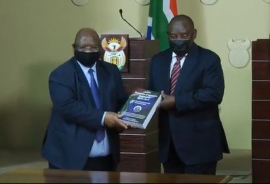
The Presidency has rejected claims that President Cyril Ramaphosa has in any manner interfered with the work of the Judicial Commission of Inquiry into Allegations of State Capture of the judiciary as speculated by some opposition parties.
In a statement, which the Presidency said to avoid any confusion or misunderstanding on the matter, the Presidency had outlined the sequence of events with respect to the submission of the final part of the report of the commission.
It confirmed that, as at 11pm on Monday, it had still not received any form of copy of the final report from the commission.
The final part of the commission’s report was due to be handed over to President Cyril Ramaphosa by 15 June 2022. The commission chair, Chief Justice Raymond Zondo, communicated to President Ramaphosa on Thursday the delay and undertook to finalise the report as soon as possible.
The Presidency said this led to the media statement from the commission dated 18 June 2022 in which the commission stated that it was “not able to submit the final volume of its Report to the President on 15 June 2022, due to certain “challenges”.
“The commission further stated that the electronic report will be submitted to the President on the evening of the 19th of June 2022. This did not unfortunately happen.
“In the morning of the 20th of June 2022, President Ramaphosa and Chief Justice Zondo held a brief telephone call in which the Chief Justice offered reassurance on the delivery of the report and discussed the coordination for the handover ceremony,” reads the statement.
The commission’s team had informed the Presidency that the report would be finalised after the sitting of the Judicial Service Commission on Monday 20 June 2022 but not in time for the promised handover at 6pm on the same day.
“No handover of the report can take place until and unless the Chief Justice has finalised his work,” the Presidency said.
A tentative date of Wednesday 22 June 2022 was therefore agreed due to this further delay, and to President Ramaphosa being scheduled to deliver the eulogy at the Official Funeral of King Zanozuko Sigcau on Tuesday, 21 June 2022 in Flagstaff, Eastern Cape.
The Presidency added that in its communication on Monday, the commission stated that “due to challenges in processing Part V and VI of the Report on time for the handover to the President by 18h00 today, 20 June 2022, it has been agreed to move the event to Wednesday, 22 June 2022 the original handover date in Cape Town”.
The Presidency said therefore it rejected claims that the President had in any manner interfered with the work of the commission or the judiciary as speculated by some opposition parties.
Communication between the Chief Justice and the President has been over the delays in the delivery of the report and finalising the date for the official handover of the report.
President Ramaphosa has thus far received Part One to Part Four of the reports. The first part of the report was handed over to the President by the Chief Justice on 4 January 2022.
The second, third and fourth reports were handed over on 1 February 2022, 1 March 2022 and 29 April 2022 respectively to Director-General in The Presidency, Phindile Baleni.
The Presidency said it would make an announcement once it has received the final report of the Judicial Commission of Inquiry into Allegations of State Capture.
291 new COVID-19 cases recorded
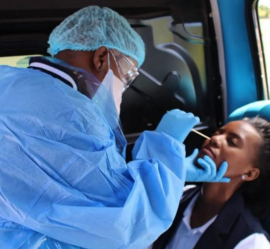
South Africa has reported 291 new COVID-19 cases, bringing the total number of laboratory-confirmed cases to 3 986 892.
This increase represents a 4.1% positivity rate.
On Monday, the Department of Health reported 16 deaths and of these three deaths occurred in the past 24 to 48 hours.
The cumulative COVID-19 deaths are 101 620 to date.
The majority of new cases are from Gauteng (40%), followed by the Western Cape (15%).
KwaZulu-Natal accounted for 13%; North West accounted for 11%; Free State accounted for 8%; Eastern Cape accounted for 5%; Mpumalanga accounted for 4%; Northern Cape accounted for 2%; and Limpopo accounted for 1% of new cases
“The proportion of positive new cases/total new tested today is 4.1%, and is lower than yesterday (7.1%). The 7-day average is 7.9% today, and is lower than yesterday (8.1%),” the National Institute for Communicable Diseases (NICD) said.
There has been an increase of 31 hospital admissions in the past 24 hours.
South Africa has to date conducted 25 604 409 tests in both public and private sectors.
Alleged Home Affairs fraudster to appear in court
A Department of Home Affairs official is expected to appear in the Benoni Magistrate’s Court for a bail hearing on Tuesday on allegations of corruption.
The Home Affairs Counter Corruption Branch, working with the Hawks and other law enforcement agencies, on Monday nabbed the official for fraudulently issuing a passport to “Lebogang from Bangladesh”.
The official worked at the Benoni Home Affairs office and is on suspension while her disciplinary hearing is scheduled to take place this week.
If she is denied bail, the Department of Home Affairs will arrange with the Department of Correctional Services for the hearing to be held at their premises.
Fahim Kazi, known as “Lebogang from Bangladesh”, was arrested while trying to leave the country on 12 May 2022.
At the time of Kazi’s arrest, Home Affairs Minister Aaron Motsoaledi, said the clampdown on the use of fraudulent South African documents was bearing fruit as the department knew which corrupt official issued the fraudulent passport because the official had been on the radar of the counter corruption branch.
The Minister also assured the country that the official would be arrested and face the full might of the law.
“We are determined to root out corruption in all its forms in Home Affairs. We will stamp out the use of fraudulent documents by people who do not deserve them. We will continue to arrest citizens and non-nationals who engage in the production of fraudulent documents,” said Minister Motsoaledi.
SALGA to engage N Cape municipalities
The South African Local Government Association (SALGA) National Executive Committee (NEC) will on Wednesday engage with municipalities in the Northern Cape on a range of issues facing local government, which require immediate attention.
SALGA in a statement said the planned engagements are as a result of the NEC’s resolve to intensify regular interaction between SALGA and its member municipalities. SALGA uses a rotating system of convening scheduled NEC meetings throughout the nine provinces.
The meeting will take place at the Mittah Seperepere Conference Centre in Kimberley.
In tomorrow’s meeting, each district municipality will be expected to present on the state of the municipalities.
This will be in the areas of:
- Leadership: Role of political and administrative leadership in the district.
- State of service delivery in the district.
- Audit outcomes of municipalities for last financial year and the related financial accountability and sustainability challenges.
- Legal and regulatory compliance, including state of litigation against each municipality in the district.
- List of advocacy or support requests from SALGA.
- State of municipalities under Section 139 intervention or Section 106 investigation.
World Bank approves SA’s R7.6bn loan for COVID-19 vaccines
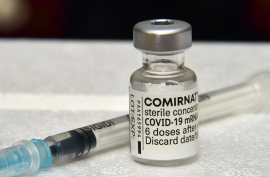
The World Bank has approved a €454.4 million (R7.6 billion) loan to South Africa for the country’s COVID-19 Emergency Response Project.
Approved by the Bank’s Group Board of Executive Directors on Monday, the loan comes following a request by the Government of South Africa for assistance in financing vaccine procurement contracts.
In a joint statement by the World Bank and the National Treasury, the entities said, specifically, this project will retroactively finance the procurement of 47 million COVID-19 vaccine doses by the GoSA.
They said: “South Africa is the epicentre of the COVID-19 pandemic in Africa, with the highest cumulative numbers of infections and deaths. By supporting the country’s COVID-19 vaccination program, the project will help the government better cope with the pandemic, as the country experiences its fifth wave, and support the GoSA to create the fiscal space needed to strengthen its health system and ensure financial and institutional sustainability”.
The country’s robust vaccination program has seen 36.4 million doses having been administered, with about 50.3% of adults and 29.9% of 12 to 17-year-old adolescents vaccinated, as at 13 June.
However, they said, more can be done to increase vaccine coverage, curb the spread of the virus, and boost the country’s economic recovery.
Along with the Genomic Surveillance Project, the COVID-19 Emergency Response Project forms part of World Bank’s expanded support for South Africa’s response to the pandemic.
Surveillance Project seeks to improve the capacity to identify variants of SARS-CoV-2 in South Africa and the Africa region.
Government welcomed the loan approval, saying it would support COVID-19 vaccination as the spread of the virus continues to pose a threat to South Africa’s citizens, health system, and economic recovery.
Treasury said the loan forms part of government efforts to reduce debt service costs by making use of cheaper sources of funding through multilateral development banks, whilst supporting the health system to respond to COVID-19 through the roll-out of vaccines, critical research, and treatment measures,” says Ismail Momoniat, National Treasury Acting Director-General.
In addition to providing vital support to South Africa’s health system, this new low-interest loan contributes to the government’s fiscal relief package while reinforcing South Africa’s decisions on how best to provide relief to the economy and those worst affected by the crisis.
The loan complements support by the International Monetary Fund, the African Development Bank, and the New Development Bank as part of the Government of South Africa’s broader financing strategy to access external financing from international financial institutions.
As at 16 May 2022, the World Bank Group COVID-19 Response had deployed $20 billion to support vaccine procurement and roll out enabling the affordable and equitable access to COVID-19 vaccines needed to reverse the pandemic’s massive health, social, and economic impact.
The financing is helping 96 operations (including MPA Vaccine operations) in 73 countries, more than half of which are located in Africa, by supporting countries’ vaccination programs.