

Petrol prices increase in December

With the public gearing up for the festive season, consumers will have to dig deeper into their pockets as the price of all grades of petrol has increased by 17 cents a litre.
The Department of Mineral and Petroleum Resources (DMPR) announced the price increase of 93 (ULP & LRP) and 95 (ULP & LRP) by 17 cents on Tuesday.
As of Wednesday, a litre of 95 petrol now costs R21.47 in Gauteng from the R21.30 seen in November.
In the coast, a litre of 95 petrol now cots R20.68 from R20.51 seen in November.
Diesel (0.05% sulphur) has increased by 54.88 cents per litre while the price of Diesel (0.005% sulphur) has increased by 55.88 cents per litre.
The price of Illuminating Paraffin (wholesale) has risen by 48.88 cents per litre and the Single Maximum National Retail Price for illuminating paraffin (SMNRP) has increased by 66 cents per litre. Meanwhile, the maximum LPGas retail price has increased by R1.72.
The department said the average Brent Crude oil price decreased from 73.28 US Dollars (USD) to 72.70 USD during the period under review.
“The main contributing factors are the OPEC+ decision not to increase production in December and increased production from non-OPEC countries amid stagnant economic growth globally,” said the department.
In a statement, the department added that the average international product prices of petrol were affected by lower demand, a switch to cheaper winter gasoline as well as higher inventories.
“On the other hand, diesel and illuminating paraffin increased because of higher seasonal demand given the upcoming winter season in the Northern Hemisphere. LPG prices increased due to the increase in the prices of propane and butane. These factors led to higher contributions to the Basic Fuel Prices of petrol, diesel and illuminating paraffin by 19.69 c/l, 23.83 c/l and 16.86 c/l, respectively.”
“The Rand depreciated on average, against the US Dollar (from 17.53 to 17.93 Rand per USD) during the period under review when compared to the previous one. This led to higher contributions to the Basic Fuel Prices of petrol, diesel and illuminating paraffin by 22.35 cents a litre, 23.74 cents a litre and 23.62 cents a litre, respectively.”

SA eyes increased trade relations with Nigeria

International Relations and Cooperation Minister, Ronald Lamola, has emphasised to his Nigerian counterpart the necessity for both nations to elevate investment and trade relations to a higher level.
“One of the overriding imperatives of our bilateral relations is the need to increase our investment and trade relations to higher levels.
“The relatively large sizes of our economies logically dictate that our economic collaboration should be yielding much bigger results,” Lamola said on Monday.
The Minister was speaking in Cape Town, where he co-chaired the Ministerial Meeting of the Bi-National Commission (BNC) with the Nigerian Minister of State for Foreign Affairs, Ambassador Bianca Odumegwu-Ojukwu.
To enhance economic cooperation and build on established sectors that both investors have in the markets, Lamola said identifying bankable projects, especially in infrastructure development, is a key priority they should pursue together.
Lamola stressed the importance of expanding trade relations between South Africa and Nigeria, as well as utilising opportunities within the African Continental Free Trade Area (AfCFTA).
“Our bilateral trade needs to reflect the enormous potential that is abundant in our countries,” he added.
Lamola said strengthening people-to-people relations is essential for fostering understanding, friendship, and shared values.
He is of the view that this approach also promotes tourism, creative industries, sporting events, and collaboration in education and science.
“This will also allow our citizens to appreciate the rich tapestry of diverse cultures and heritage that exists in our respective countries.”
South Africa and Nigeria are this year marking 30 years of diplomatic relations, established in February 1994.
This morning’s session focused on strengthening relations and reviewing and evaluating the progress made in implementing the decisions from previous meetings.
“As we deepen bilateral collaboration, our countries cannot avoid the historical responsibility bestowed on us to be responsive to the challenges in our regions, the continent, and the international sphere,” Lamola said.
Nigeria has consistently advocated for an international system focused on peace in global relations among nations, Lamola said.
“Nigeria, like South Africa, puts a high premium on the promotion of dialogue and peace in resolving disputes among countries.
“[Nigeria’s] current and previous leadership of ECOWAS [Economic Community of West African States] illustrates this track record of highlighting the supremacy of diplomacy over confrontation.”
Lamola expressed concerns about the state of peace and security in some parts of Africa and globally.
“The world is becoming fragmented and fragile, challenging the foundations that are important for anchoring a peaceful world.
“Multilateralism is under threat as the temptation to resort to force is becoming a feature of inter-state relations in certain regions. Our continent is also grappling with a few conflict and war situations in some regions.”
As leaders seek to strengthen global institutions to be responsive to the needs of all States, Lamola said reform of some institutions has become paramount.
“It is important that progress is realised in the current engagements aimed at reforming the United Nations Security Council. This organ of the United Nations needs to be more inclusive.”
He also assured his counterpart that South Africa’s Group 20 (G20) Presidency, which the country assumed on Sunday, is committed to ensuring that African developmental priorities are highlighted.
“Once again, Minister Odumegwu-Ojukwu, I welcome you and your delegation with open arms of friendship as we open this Ministerial segment.
“I look forward to the report of the officials and hearing your insights and perspectives on the matters we are about to deliberate upon.”
President Cyril Ramaphosa will co-chair the 11th Session of the BNC between South Africa and the President of Nigeria Bola Ahmed Tinubu on Tuesday.

KZN announces bold interventions to tackle food poisoning, spaza shop safety
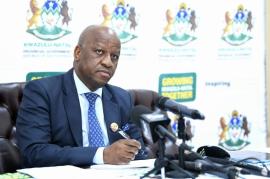
KwaZulu-Natal Premier Thamsanqa Ntuli has outlined a series of government interventions in a bid to curb food safety challenges affecting vulnerable communities across the province.
This follows weeks of heightened reports of food poisoning incidents, particularly impacting children.
Outlining a series of government interventions during a media briefing recently, Ntuli said the provincial government commits to tackle the root causes of the problem, which include poor regulation of the informal food sector, inadequate hygiene standards and insufficient waste removal systems.
“The safety and health of our communities, especially our children, are priorities we cannot compromise on. We are moving swiftly to implement measures that will restore public confidence in the safety of our food supply,” Ntuli said.
Steps to improve community safety
Ntuli said the provincial government is rolling out a multi-pronged approach to address the issue, through interventions, including enhanced monitoring and inspections; trader education and awareness campaigns, strengthened municipal oversight; community collaboration, and coordination with national efforts.
Through enhanced monitoring and inspections, a provincial task team, in collaboration with local municipalities, will conduct routine inspections and surprise spot checks at spaza shops and informal food outlets to enforce compliance with hygiene and safety standards.
The provincial government will also launch a campaign to educate informal traders about food safety practices, waste management, and the importance of adhering to licensing requirements.
To strengthen municipal oversight, Ntuli said the municipalities will play a significant role in enforcing the newly gazetted by-law, ensuring that all food outlets meet safety and hygiene benchmarks.
“Communities are encouraged to report unsafe practices and suspicious food products to local authorities. This feedback will help officials take swift action against non-compliant vendors. The province will align its strategy with the national government’s initiatives, ensuring that local interventions complement broader regulatory efforts,” Ntuli said.
The Premier’s briefing follows the national government’s gazetting of a draft municipal by-law aimed at standardising food safety regulations across municipalities. The by-law seeks to address critical gaps in oversight and provide a consistent framework for monitoring spaza shops and informal food outlets.
Recent food poisoning incidents have highlighted systemic challenges in the informal food sector, where regulation and enforcement have been uneven. Children, particularly those relying on meals purchased at or near schools, have been disproportionately affected.
While acknowledging the severity of the crisis, Ntuli expressed optimism about the steps being taken.
“These interventions are not just reactive but designed to create a lasting solution that prioritises public health,” the Premier said.
He also called on all stakeholders, including informal traders, law enforcement agencies, and municipal officials, to work together to ensure food safety standards are upheld.
“Protecting the health of our people is a shared responsibility. Together, we can safeguard the lives of our children and restore trust in the food sector,” Ntuli said.
The provincial government has vowed to closely monitor the implementation of the measures, with plans to evaluate progress and address shortcomings.
Ntuli said public feedback will be central to refining the province’s approach and ensuring its effectiveness.
“KwaZulu-Natal’s efforts to tackle food poisoning and spaza shop safety represent a broader commitment to improving the living conditions and well-being of its citizens. The measures announced signal a proactive stance in addressing challenges that have long plagued the informal food sector, with a firm focus on public safety and health,” Ntuli said.

NMB Deputy Mayor commends demolition of crime den building
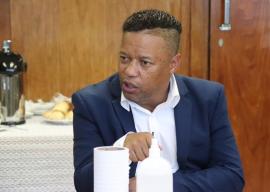
Nelson Mandela Bay (NMB) Municipality Deputy Mayor, Gary van Niekerk, has described the demolition of a hijacked building and crime hotspot at 35 Clyde Street, Central, as a major step towards addressing problem buildings.
Once a quaint, historic building, the hijacked building had become a den for crime, where illicit activities thrived in the dilapidated structure.
The door to the murky world was firmly shut when Stu Davidson Plant Hire and Demolition started their work on Friday morning (29 November).
Van Niekerk was alerted to the criminal activities at 35 Clyde Street during a visit to a closed-circuit television (CCTV) control room of a private security company in November last year when he was mayor.
According to Van Niekerk, a memorandum was signed to fast-track the demolition of the eyesore that used to be a historic gem occupied by the Community Chest, a non-profit organisation in the welfare sector.
Van Niekerk said the owner of the building was tracked down and encouraged to apply for a demolition certificate.
“He [owner] did, and we got municipal officials around the table to ensure that the process is fast-tracked to demolish the building. We only lacked a budget to get the job done and this conundrum was solved at the launch of the Mandela Bay Development Agency’s CCTV control room launch earlier this month.
“We discussed this matter with a representative of the Central Special Rating Area (SRA) and an agreement was reached. This resulted in Stu Davidson & Sons agreeing to demolish the building at a reduced cost as part of their corporate social investment portfolio,” Van Niekerk explained.
The Deputy Mayor said the SRA will only have to pay for a third of the cost.
“We are excited that this initiative will bring immediate relief for the residents of that street, as a major crime hotspot has now been removed,” Van Niekerk said.
Residents have commended the initiative, saying they will now be able to move freely at night and not be concerned about thugs robbing and attacking them from the site.
In November 2021, four people were killed and five wounded during a shootout at the site.

Five suspected ATM bombers killed in shootout with police in Emalahleni

Five suspected ATM bombers have been killed and one arrested during a shootout with police in Emalahleni, in Mpumalanga.
The suspects were shot and fatally wounded in a shootout with the Tactical Management Operational Section (TOMS) of the Hawks, the South Africa Police Services (SAPS) Special Task Force (STF), and Falcon Risk Security in the early hours of Monday.
National Head of the Directorate for Priority Crime Investigation, Lieutenant General Godfrey Lebeya, said the team was following up on information received regarding a potential ATM bombing in the Witbank area.
“Information was operationalised leading the team to Schoongezicht in Emalahleni where the group was reported to be converging at an alleged safe house. The multi-disciplinary team were strategically posted to be on the lookout for the white Toyota Hilux received in the intelligence information.
“The identified vehicle was spotted driving out from the area and when the team attempted to stop the vehicle, suspects opened fire, and a shootout ensued. Five suspects were fatally wounded and one injured,” Lebeya said.
Lebeya said a R5 rifle, a hunting rifle with a scope, and three 9mm pistols, as well as explosives, were recovered on the scene.
The bakkie in which the suspects were travelling in, was subject to further investigation.
Lebeya has commended the work of the law enforcement agencies.
“A call is made to potential robbers to withdraw from such activities as this always attracts dire consequences. The team shall always be on alert,” Lebeya said.

Arrest of Nongoma mayor commended

KwaZulu-Natal Cooperative Governance and Traditional Affairs MEC, Thulasizwe Buthelezi, has commended the arrest of the Mayor, Deputy Mayor and Speaker of Nongoma Local Municipality on charges of fraud and corruption.
Buthelezi said the arrests send a strong message that corruption will not be tolerated and demonstrate government’s commitment to rooting out corruption and restoring accountability within the municipalities.
The MEC made the remarks during a meeting held this week at the council chamber of the Nongoma Local Municipality, where he met with all councillors and introduced Mpumelelo Bongani Mnguni as the new Acting Municipal Manager.
Mnguni’s appointment follows a recent High Court judgment, which set aside the previous appointments of the Acting Municipal Manager and Acting Chief Financial Officer.
The court judgment highlighted the significant financial strain on the municipality due to frivolous legal battles.
“The municipality faces significant financial challenges, with employee costs exceeding 50% of the budget, an overdraft, and exhausted project grants. The Acting Municipal Manager has been tasked with stabilising the financial situation and ensuring uninterrupted service delivery,” Buthelezi said.
The MEC reassured his commitment to supporting all municipalities in the province and will continue to take decisive action to uphold the law and ensure that municipalities deliver on their mandate.

City of Tshwane warns service providers of fraudster

The City of Tshwane has warned the public of a fraudster that is sending emails to service providers impersonating the City’s Chief Financial Officer about the appointment of a tender.
According to the City, the scammer is sending emails purporting to be the city’s Chief Financial Officer, Gareth Mnisi, and requesting that service providers contact them regarding the appointment of a tender to supply, deliver and off-load printing paper, files and envelopes for a period of three years, as and when required.
“The email is clearly manufactured by a fraudster and should be ignored. The public and potential service providers of the city are warned to not fall for such requests communicated via email or any other platform. The City’s tenders are advertised in various newspapers,” the city said on Thursday.
The City said it will be registering a case docket with the South African Police Service and ask them to escalate the matter to the Hawks.
“The City hopes that the fraudster will be apprehended and prosecuted for committing crime using the name of the metropolitan’s CFO,” the city said.

License examiner held for bribing anti-corruption investigators
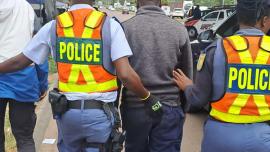
A 59-year-old license examiner at the Temba driving license testing centre in Hammanskraal has been arrested after allegedly bribing anti-corruption investigators.
The official was under investigation by the Road Traffic Management Corporation’s national traffic anti-corruption unit and the Hawks – following allegations that he was involved in corrupt practices involving the fraudulent issuing of driving licences at the centre.
“It is alleged that the official offered a R50 000 bribe to investigators to sweep the investigation under the carpet. An entrapment order was obtained, and the investigators proposed that the official should meet them at a nearby shopping mall.
“The official allegedly approached the investigators carrying a white bag. He allegedly placed the bag inside the vehicle the investigators were travelling in declaring that it was R50 000 divided into two stacks,” the Road Traffic Management Corporation (RTMC) said on Friday.
He was immediately arrested and detained at Temba police station.
The man is expected to appear in court on Monday for bail application.

Mayor welcomes judgement on unlawful occupiers from Walmer Airport Valley

Nelson Mandela Bay Municipality Mayor Babalwa Lobishe has welcomed the Gqeberha High Court judgment, which mandates the eviction of unlawful occupiers from municipal properties in the Walmer Airport Valley and Temporary Residential Units (TRUs) in Walmer 1948.
The judgment passed on Thursday addresses the pressing issue of unlawful structures on municipal land, and empowers the Nelson Mandela Bay Municipality to take decisive action against illegal occupiers.
Lobishe said the ruling is a significant victory for the rightful beneficiaries of the project to develop decent human settlements for Walmer residents, and ensure that municipal resources are allocated fairly and lawfully.
“This judgment is a crucial step towards restoring order and fairness in our community. It reaffirms our commitment to upholding the law and protecting the rights of our residents and project beneficiaries,” Lobishe said.
Lobishe said the municipality will act swiftly to implement the court’s decision and ensure that all municipal properties are used for their intended purposes.
The municipality will also work closely with law enforcement agencies to carry out the evictions and remove any unlawful structures.
“This action is necessary to maintain the integrity of municipal land and to provide the rightful beneficiaries with the housing and resources they deserve,” Lobishe said.
Section 5 of the Prevention of Illegal Eviction from and Unlawful Occupation of Land Act 19 of 1998, provides for urgent proceedings for eviction.
The Act also allows for the immediate removal of unlawful occupiers if the court is satisfied that there is a real and imminent danger of substantial injury or damage to any person or property if the unlawful occupier is not evicted; the likely hardship to the owner or any other affected person if the unlawful occupier is not evicted exceeds the likely hardship to the unlawful occupier if they are evicted, and there is no other effective remedy available.
Lobishe reassured that the Nelson Mandela Bay Municipality remains dedicated to serving its community and ensuring that all actions are taken in accordance with the law.
The mayor also urged all residents to respect the court’s decision and cooperate with the authorities during this process.

Citizens urged to allow spaza shop owners to register for permits

Government has appealed to South Africans not to block those people who want to register their spaza shops.
This follows President Cyril Ramaphosa’s call for all spaza shops and food-handling facilities to register with their respective municipalities as part of decisive measures to address the recurring foodborne illnesses that have claimed the lives of children across the country.
The interventions, the President explained, include getting hazardous pesticides off the street, protecting children from exposure to these substances, and the prevention of future outbreaks.
To ensure compliance, the President ordered that all spaza shops and food-handling facilities must register with their respective municipalities within 21 days.
Speaking during a media briefing hosted by Ministers leading the multidisciplinary teams in government responsible for the national response to instances of foodborne illnesses, Cooperative Governance and Traditional Affairs (COGTA) Minister, Velenkosini Hlabisa, appealed to the people of South Africa not to take the law into their own hands.
“We know some of them might have seen something wrong being done by South Africans assisting foreign nationals to register the spaza shops, but our call and our request [is] let us not take the law into our hands,” Hlabisa said.
Hlabisa assured that the system was not going to allow a spaza shop to be operated by a foreign national, even if the spaza shop is registered by a South African and given to a foreign national to operate.
“A person whom we registered as the owner of a spaza shop, is the one who must operate the spaza shop. If a person opts to allow another person to operate his or her spaza shop, [they] will have to go back to the municipality and get the approval.
“That is why we are appealing to the law enforcement agencies to assist in dealing with those who want to take the law into their hands…but that must be the last thing to do,” Hlabisa said.
READ I Government simplifies the process to apply for spaza shop permits
Hlabisa maintained that the 21 days given to the owners to register their businesses is sufficient.
“It takes only one day to register a business [and] people must not wait until the last day to register. If you want to do it on day 21, you might have some outstanding documents and cannot register.
“Twenty-one days is enough, but the call is go and register your business today, not tomorrow, then you won’t have a problem in terms of 21 days…it will be done,” the Minister assured.
The government has introduced a new standard draft by-law for township economies, which offers a simplified permitting and registration process.
The move is aimed at creating an enabling environment for small businesses in townships and supports conomic inclusion, job creation and community empowerment.
The by-law was issued in accordance with the Local Government: Municipal Systems Act of 2000 by the Minister of Cooperative Governance and Traditional Affairs on 7 November 2024.