
Gupta brothers arrested in the UAE

The Department of Justice and Correctional Services has confirmed the arrest of alleged State Capture masterminds Rajesh and Atul Gupta at Dubai in the United Arab Emirates (UAE).
Last year, the National Prosecuting Authority (NPA) confirmed that the International Criminal Police Organization (Interpol) had issued red notices for the two brothers.
Now, discussions on the extradition of the brothers back to South Africa are expected to get underway.
“Discussions between various law enforcement agencies in the UAE and South Africa on the way forward are ongoing. The South African government will continue to co-operate with the UAE,” the department said.
According to an NPA statement released in July last year, the brothers are wanted in South Africa in relation to the R25 million Nulane Investment fraud and money laundering case.
“The case relates to procurement fraud involving R24.9 million, paid between November 2011 and April 2012 by the Free State Department of Agriculture (FSDoA) to Nulane Investment 204 (PTY) LTD, a company owned and controlled by Iqbal Sharma.
From there, the funds were diverted to Islandsite Investments 180 (Pty) Ltd (Islandsite), a company owned and controlled by the Gupta family.
“The R24.9m was purportedly paid to Nulane to conduct a feasibility study for the Free State Province’s flagship Mohoma Mobung project, on the basis that Nulane had unique skills to perform the work.
“The group is charged together with three companies, Nulane Investment 204 (Pty) Ltd, Wone Management (PTY) LTD, Pragat Investment (Pty) LTD, Islandsite Investments Pty Ltd,” the NPA said at the time.
The other accused in the case are former government and state entity officials, former Transnet board member Iqbal Sharma, former Free State head of Department for Rural Development Peter Thabethe, former head of FSDoA Limakatso Moorosi, former FSDoA Chief Financial Officer, Seipati Dhlamini and Nulane Investment employee Dinesh Patel.
General fuel levy temporary suspension extended to August

Government has offered much-needed short-term reprieve to motorists by extending the temporary reduction in the general fuel levy of R1.50 per litre.
Initially, the Ministers of Finance and Mineral Resources and Energy had on 31 March 2022 jointly announced a temporary reduction in the general fuel levy of R1.50 per litre from 6 April 2022 until 31 May 2022.
This was to provide limited short term relief to households from rising fuel prices following the Russia/Ukraine conflict.
On Tuesday, the two departments said relief was to be funded by a liquidation of a portion of the strategic crude oil reserves.
“Since this announcement, the continuation of the Russia/Ukraine conflict, supply chain bottle-necks and a tightening of global monetary policy have led to further unfavourable changes in the two key drivers of the regulated petrol price, the exchange rate and the global oil price.
“These events have led to even larger increases in fuel prices compared to a few months ago when the temporary fuel levy relief was introduced. The withdrawal of the temporary relief in the general fuel levy on 31 March 2022, as per the original announcement, would contribute to an increase in petrol prices of close to R4 per litre, and push prices of 95 octane unleaded petrol (ULP) to above R25 per litre, an increase of just under 20 percent next month.”
The departments said due to this significant monthly price increase, Finance Minister Enoch Godongwana on Tuesday submitted a letter to the Speaker of the National Assembly, requesting the tabling of a two-month proposal for the extension of the reduction in the general fuel levy.
“This will take the form of a continuation of the relief of R1.50 per litre for the first month, from 1 June 2022 to 6 July 2022, and then a downward adjustment to the relief for the second month to 75c per litre from 7 July 2022 to 2 August 2022,” they said.
They added that the temporary relief would be withdrawn from 3 August 2022.
The Chair of the National Council of Provinces was also been informed of this proposal.
The departments said the revenue foregone from the extension of the relief was estimated at R4.5 billion.
“Unlike the previous announcement, this proposal is expected to have an impact on the fiscal framework as it will not be fully funded through a sale of strategic oil stocks.
“Government remains committed to the fiscal framework outlined in the Budget 2022. The proposed temporary reduction in the fuel levy will be accommodated in the current fiscal framework in a manner that is consistent with the fiscal strategy outlined in the Budget. Any changes, if required, will be announced at the time of the 2022 Medium Term Budget Policy Statement.”
The temporary reduction in the general fuel levy was expected to only smoothen the impact of persistently higher fuel prices on consumers and businesses, as the economy would need to adjust to the new reality.
They added: “As announced on 31 March 2022, government will also take further measures to help reduce fuel prices in a more sustainable manner. From 1 June 2022, the DMRE will remove the demand side management levy of 10c per litre that has been applied to inland 95 ULP.”
After a review and consultation by the DMRE, it is proposed that the basic fuel price also be decreased by 3c per litre in the coming months.
Government intends to continue with consultations and proposals to remove the price cap on 93 ULP, which will partially deregulate the market and introduce more competition to lower pump prices.
The departments said a review on the Regulatory Accounting System would be completed by the DMRE to assess the potential to lower margins over the medium term.
The DMRE will publish further details within the next hour on the actual adjustment of fuel prices with effect from 1 June 2022.
Former PRASA employee found guilty of cable theft

The Passenger Rail Agency of South Africa (PRASA) has welcomed the sentencing of a former employee who was found guilty of cable theft by the by the Scottburgh Regional Court in KwaZulu-Natal.
Two PRASA security guards patrolling the rail reserve caught Sphiwe Mngadi and an accomplice in April 2018 with an estimated R1 million worth of copper. He could not explain why he was in possession of the 12 rolls of copper weighing approximately 192 kilograms.
“The security guards spotted him on our railway reserve in a PRASA marked vehicle. When the security guards noticed that the copper cables were removed they confronted him,” PRASA said on Wednesday.
The court found him guilty of tampering/destroying of essential infrastructure in the Mkhomazi area.
“Though the sentence is below the prescribed minimum sentence of 15 years’ imprisonment, it does send a strong message to some of our rogue employees who think they can continue stealing critical rail infrastructure unabated with no consequences.
“Indeed the tide is turning against cable theft. To date, 454 suspects have been arrested for vandalism and theft, a total of 118 court cases have been finalised amounting to a combined 764 years’ imprisonment,” PRASA said.
The agency commended the work of the National Prosecution Authority (NPA), the prosecution team and the South African Police Service (SAPS) investigation team for the successful conviction.
“We welcome the NPA’s commitment to put more focus on copper cable theft given the critical role that passenger rail plays in our economy. Only a partnership between our law enforcement agencies will we be able to fight cable theft.
“PRASA would like to also commend the security guards for reporting this crime and testifying in court to ensure that the perpetrator is brought to book. PRASA does not condone any acts of criminality within the organisation and we have strengthened our internal processes and investigations to root out employees who are hampering and sabotaging the business,” the agency said.
UIF invites employers to appeal COVID-19 TERS payment, application outcomes

The Unemployment Insurance Fund (UIF) is calling on employers, who are dissatisfied with their COVID-19 TERS application or payment process, to lodge a dispute or appeal with the fund in order for cases to be reviewed by a dispute committee.
According to UIF Assistant Director: Provincial Operations in the Western Cape, David Matibidi, some employers could not cope with the quality standard due to many changes and controls that have been implemented on the self-service portal, and that process cannot be compromised as part of the requirement.
Matibidi was addressing employers attending the UIF employer advocacy session in Paarl on Tuesday.
The Department of Employment and Labour introduced the Temporary Employer/Employee Relief Scheme (TERS) on 27 March 2020 to compensate employees that were adversely affected by the COVID-19 lockdown period, which resulted in many workplaces shutting down operations.
“The kind of disputes employers can appeal relates to failed bank verifications, password reset/access to the TERS platform, payment of unverified foreign nationals, CSV failures, including for periods prior to the closure date, declarations, unprocessed claims where error messages have been provided, but corrective action was not taken by the employer,” Matibidi said.
Disputes and appeals are open for the following lockdown/claim period and sectors:
- 16 October 2020 to 31 December 2020 – hospitality, liquor and tourism
- 01 January 2021 to 15 March 2021 – hospitality, liquor and tourism
- 16 March 2021 to 27 June 2021 – events management/stadiums/golf course
- 28 June 2021 to 25 July 2021 – hospitality, liquor and tourism
Employers can lodge disputes via the call centre on 0800 030 007 and will be required to submit a dispute form, which will be accompanied by the relevant supporting document and motivation for not lodging the claim timeously.
Assistant Director on Compliance, Shaka Dladla, said the fund is now moving from manual processes and is encouraging employers to utilise its online systems to register, declare and make contributions to the fund using the uFiling system.
Dladla said employers can now access the e-Compliance Certificate (eCC) system for free online, which completely replaces the manual application of compliance certificates.
“The UIF has implemented the online eCC system with a view to improve services to our clients and other related matters. Employers, agents or tax practitioners can easily use the eCC system to apply for compliance documents online and validate the authenticity of compliance certificates,” he said.
He urged employers to ensure that monthly contributions are paid either to SARS or the UIF on or before the 7th of each month to avoid incurring interests or penalties.
Rail services resume in Durban after floods

The Passenger Rail Agency of South Africa (PRASA) has announced the resumption of services between Durban and Merebank after the service was suspended due to the impact of the floods that damaged rail infrastructure.
A limited service using diesel traction was reintroduced on Wednesday morning.
Meanwhile, final preparations are underway to restore services between Dalbridge and Tongaat, and KwaMashu and Dalbridge.
“The recovery of these lines forms part of our efforts to recover more services that were suspended either due to vandalism and theft or the floods that hit KwaZulu-Natal recently.
“The lines on the North-coast corridor, owned and maintained by Transnet, have been rehabilitated and restored by Transnet for the reintroduction of services,” PRASA said.
The work done to recover services includes repairing and installation of rail infrastructure, and the removal of rubble following the floods.
PRASA said the resumption of services will be a huge relief to commuters who rely on the cost-effective services.
“Metrorail is one of the most affordable and convenient modes of transport. The recovery of these lines supports PRASA’s recovery programme and strategy of rebuilding the rail network corridor by corridor,” PRASA said.
PRASA security is on high alert following threats of criminality and violence on some sections of the Northern Corridor.
“In the past three months, our signaling cables, over-head track equipment (OHTE) and rail assets have been under constant attack by criminals. Just recently, about R3.5millions worth of station assets had been stolen and vandalised, and some of our peace officers attacked,” PRASA said.
To date, several raids have been conducted with law enforcement agencies at nearby informal settlements.
Nineteen suspects have been arrested and are facing prosecution.
“Repairing and restoring the infrastructure comes at a huge cost to PRASA, hence additional security to protect the infrastructure will be deployed once the work has been completed.
“Measures have been put in place to mitigate further attacks on the rail infrastructure on that section of the network,” PRASA said.
The agency has appealed with communities to report any suspicious activity on the rail network.
Bursary applications for water sector now open

The Department of Water and Sanitation (DWS) has called on young South Africans, who want to pursue careers that are in line with water and sanitation core business, to apply for the department’s bursary programme for 2023 academic year.
The department provides bursaries annually, through its Learning Academy, to stem the shortage of skills in the water and sanitation sector.
The external bursary scheme aims to attract exceptional young and innovative talent to the department.
DWS spokesperson, Sputnik Ratau, said the sector is in dire need of passionate and hardworking young minds that will change the country’s landscape in matters relating to water and sanitation.
“As a sector, we have a long way to go regarding fulfilling the constitutional mandate to deliver water and sanitation services to the people of South Africa by 2030 and beyond. Fresh, willing and ready to learn young minds will mean moulding a new generation that will elevate the sector to different heights,” Ratau said.
The bursary programme application opens on 1 June 2022 until 31 October 2022.
The comprehensive bursary programme covers full tuition fees, accommodation and food, as per university guidance, books and stationery allowance and a monthly stipend.
Ratau explained that the bursaries will be allocated based on a balanced consideration of outstanding academic performance, financial need and the relevant skills set for the water and sanitation sector.
For 2023, the department will consider applications only for first and second year of study in the following qualifications:
- BSc/BEng in Civil; Mechanical and Electrical
- BSc (Hons) in Civil; Mechanical and Electrical
- BSc in Hydrology; Geohydrology; Environmental Management; Project Management, Environmental Sciences, Environmental and Water Sciences
- BSc (Hons) in Hydrology; Geohydrology; Environmental Management; Project Management, Environmental Sciences, Environmental and Water Sciences
- National Diploma/BEng Tech in Civil Engineering, Mechanical Engineering; Electrical Engineering (Heavy Current); National Diploma in Water Care and Environmental Management and Biochemistry
Ratau said through the department’s Learning Academy, students who previously benefited from the bursary programme, have since been provided with employment contracts during which the bursars get relevant workplace exposure and additional training, until they are ready to register as professionals with their relevant professional bodies.
The bursary application forms can be sent by email to bursaries@dws.gov.za.
For more information, students are encouraged to visit the department’s website and social media pages.
Social grants process improved to benefit orphaned children
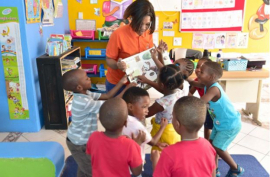
The Department of Social Development has gazetted the proclamation of the Social Assistance Amendment Act, effectively improving the social assistance programme to benefit orphans and vulnerable children.
Social assistance is one of the country’s biggest child protection programmes, currently reaching just over 13 million children.
In a statement on Wednesday, the department explained that the Social Assistance Amendment Act specifically seeks, among other things, to make provision for additional payments linked to social grants, including the implementation of the extended Child Support Grant (CSG) policy for orphans in the care of relatives (CSG Top-Up).
“This policy intervention empowers the Minister of Social Development, in concurrence with the Minister of Finance, to make provision for a top up of 50% more on the child support grant for orphans in the care of relatives, who are eligible for the CSG.
“These children will receive their basic CSG, which is currently R480, plus an additional amount of R240 (50% of the basic CSG), bringing the total amount to R720,” the department said.
It said that this provision is an important part of the comprehensive legal solution to the foster care challenge, as it will enable relatives caring for orphans to get a social grant quickly by going directly to SASSA without first needing a social worker’s investigation, report and a court order.
“The CSG Top-Up alleviates the burden on social workers contending with high foster care caseloads by reducing the number of new applications and two-yearly extensions. This will free them up to provide responsive child protection and care services to all children in need of care and protection. This is not a new grant but rather builds on the existing CSG system in the form of a ‘top-up’ amount,” the department said.
The CSG is one of government’s most successful social protection interventions for children living in poverty.
The CSG Top-Up will expand on this successful programme, with a focus on the most vulnerable children – orphans living with adult relatives and orphans living on their own in child-headed households – who will now be able to access the benefit for themselves.
This policy expands child care and protection for these vulnerable groups of children.
The department said orphaned children living in poor families and children living in child-headed households, who are not adequately financially supported, warranted a policy intervention for additional income support.
“This intervention strengthens and supports the safety net of orphaned children through a specifically defined additional accessible cash benefit.
“It will enable relatives caring for orphans to provide for their basic needs and support required within their extended family environment without removing them from the households they are familiar with,” the department said.
This comes as the country commemorates Child Protection Week, which was launched in Lusikisiki, Eastern Cape, on Sunday and is expected to close in KwaZulu-Natal on 5 June 2022.
The commemoration is meant to raise awareness on the high incidence of teenage pregnancy, abuse and exploitation, focusing on the reduction and prevention of teenage pregnancy through prevention and early intervention programmes.
The campaign further strengthens partnerships with various stakeholders, most importantly parents, families and communities.
During Child Protection Week, the department highlights service offerings and promotes the rights, well-being and protection of children.
Furthermore, children are given an opportunity to voice issues that affect them and propose solutions to them.
In order to receive this benefit, applicants are required to prove that a child is an orphan by providing:
– certified copies of the death certificates of the child’s parent/s; or
– where the death certificate of one of the parents of the child cannot be obtained by the applicant, a certified copy of the death certificate of one parent and an affidavit by the applicant attesting to the unknown status of the child’s other parent.
The amendment will also facilitate online applications for CSG and CSG Top-Up, which will also alleviate the burden of primary caregivers having to travel long distances or queuing at SASSA offices to lodge an application. This will also reduce their risk of exposure to COVID-19.
Caregivers who are eligible can now apply for the CSG Top Up at any of SASSA local offices and online as of today, 1 June 2022, which is also International Children’s Day.
Applicants will also be able to track the status of their applications using the online portal. Notifications of the outcome of their online application will be sent by SMS or email.
Three in court for alleged Mpumalanga PPE fraud, corruption

The Special Investigating Unit (SIU) has welcomed the arrest of three people – including a high ranking Mpumalanga Department of Cooperative Governance and Traditional Affairs official – in relation to alleged Personal Protective Equipment (PPE) corruption amounting to at least R5.9 million.
The three, Deputy Director Raymond Manzini, his brother Chris Manzini and businessman Moses Ndlovu were arrested on Monday and were each granted R15 000 bail at the Mbombela Magistrate’s Court where they appeared on charges of fraud and corruption.
According to SIU spokesperson, Kaizer Kganyago, the arrests come after the unit investigated the department.
“SIU investigation … revealed that Gatjeni Trading [owned by Ndlovu] was solely requested to quote for the supply and delivery of PPE in March 2020. However, after the PPE contract was awarded, Ndlovu approached Chris Manzini to take over the purchase without the approval of the department.
“SIU investigation further revealed that Chris Manzini, also approached his brother Raymond Manzini, who is a government official, to provide funding for the purchase and delivery of PPE. Raymond Manzini allegedly financed the purchase, in contravention of the provisions of Prevention and Combatting of Corrupt Activities Act 12 of 2004,” Kganyago said.
According to Kganyago, the department official allegedly received money from the company shortly after payments from the department were made.
“Gatjeni Trading handed an invoice to Raymond Manzini, the financial provider, for the Department to effect payment. Immediately after payment was received, a significant sum of money was transferred to Raymond Manzini’s bank account,” he said.
The case is expected back in the Mbombela Magistrate Court on 28 July 2022.
Lamola requests reopening of inquest into Abdullah Haron’s death

Justice and Constitutional Development Minister, Ronald Lamola, has requested the Western Cape Division of the High Court to reopen the inquest into the death of anti-apartheid activist and Muslim cleric, Abdullah Haron.
In a statement, the department said the decision to reopen the case was made in terms of Section 17 A of the Inquest Act No. 58 of 1959.
Haron – who was also known as Imam Haron – died while in police custody following his detention by the then apartheid government.
The court’s original finding was that Haron died as a result of falling down a flight of stairs.
“Mr Imam Haron died whilst in police detention on 27 September 1969 after being held incommunicado for 122 days.
“He was detained by the security branch, in terms of section 6 of the Terrorism Act and died at Caledon Square police station, Cape Town. The apartheid regime held an inquest in 1970. The findings of the apartheid regime were primarily based on reports from medical experts and police witnesses,” the statement read.
The department explained that the reopening of the case follows an “application by the National Prosecuting Authority (NPA) for the reopening of the inquests”.
“The renewed investigation into the apartheid crime will consider expert reports from a State pathologist and an aeronautical engineer, and trajectory expert will provide a new perspective into the probable cause of the death of Imam Haron.
“An inquest must be so thorough that the public and interested parties are satisfied that there has been a full investigation into the circumstances of the death,” the department said.
In 2014, Haron was posthumously awarded the Order of Luthuli in Gold by the South African government for his work “exceptional contribution to raising awareness of political injustices”.
SA records 2 809 new COVID-19 cases

South Africa on Tuesday recorded 2 809 new COVID-19 cases, says the National Institute for Communicable Diseases (NICD).
Representing a 12.6% positivity rate, the figure brought the total number of laboratory-confirmed cases to 3 957 777. In the reporting period, National Department of Health has confirmed 5 new COVID-19 related deaths.
“The cumulative COVID-19 deaths are 100 190 to date,” the NICD said in a statement.
The Institute said 25 264 922 tests had been conducted in both public and private sectors.
A provincial breakdown of the statistics reveals that the majority of new cases on Tuesday were from Gauteng (29%), followed by Western Cape (25%).
“KwaZulu-Natal accounted for 18%; Eastern Cape accounted for 11%; Free State accounted for 5%; Mpumalanga and North West each accounted for 4% respectively; Northern Cape accounted for 3%; and Limpopo accounted for 2% of today’s new cases,” said the Institute.
However, it is lower than Wednesday’s 22.6%. The 7-day average is 23.3%, higher than the previous day’s 23.1%.
“The 7-day average is (24.7%) today, and is lower than yesterday (25.1%),” read the statement.
On hospital admissions, the Institute said there had been an increase of 150 hospital admissions in the past 24 hours.
The 12.6% proportion of positive new cases/total new tested was higher than Monday’s (9.4%). “The 7-day average is 12.7% today, and is lower than yesterday (13.1%),” said the NICD.
The Institute recorded an increase of 103 hospital admissions in the past 24 hours.