
No extension on driver’s Licence grace period

With only a week left to the final deadline for the extended grace period for the renewal of driving licence cards, Transport Minister, Fikile Mbalula, has encouraged all those who have yet to come forward to renew their licences to do so immediately.
This applies to driving licence cards that expired between 26 March 2020 and 31 August 2021.
“There will be no further extension of the grace period beyond this period. We will step up our law enforcement interventions in order to penalise those who wilfully disregard the law and fail to renew their expired licences, while assisting those with genuine challenges,” the Minister said on Thursday, at a briefing at the Grasmere Toll Plaza, Gauteng.
He made these comments during the release of the preliminary statistics for the Easter weekend, where he also provided an update on the grace period for expired licences.
To deal with the expected increase in the demand for services, the Department of Transport is working with the Road Traffic Management Corporation, provincial and local authorities to implement an extensive plan to assist those who will be seeking to renew their licences.
This plan is already operational in all provinces and entails the following elements:
- Extending the daily operating hours of driving licence centres by two hours during the week, including opening on weekends (both Saturdays and Sundays) until 31 May 2022.
- Allowing walk-ins in addition to online bookings in Gauteng and the Eastern Cape, where online bookings are operational, until 31 May 2022. In essence, this means that a motorist who shows up at a Driving Licence Testing Centre (DLTC) to renew their licence will not be turned away merely because they have not made a booking on the online system.
- Provinces will undertake a robust communication drive to encourage motorists to renew their licences and call on those with online bookings to honour their slots.
- Enhancing the processing and production of driving licence cards through the introduction of the smart enrolment project, which will provide online driving licence renewal capability.
Currently, the country has a backlog of 1.3 million expired driving licence cards that have yet to be renewed.
An analysis of the backlog by age of drivers, who have not renewed their driving licence cards, shows that motorists between the ages of 25 and 50 years constitute 68% of drivers who have yet to renew their licences.
“Motorists must understand that they have to utilise their booked slots to help us tackle the backlog in a meaningful way. We urge these drivers to ensure that they honour their commitment and take up the slots, which would ordinarily have been used by others who have difficulty in finding slots closer to where they live.
“We have overcome the capacity constraints that delayed the production of driving licence cards due to the machine that broke down last year. The Driving Licence Card Account (DLCA) trading entity is now working 24-hour daily shifts to clear the backlog of driving licence cards,” he said.
By 27 April 2022, government had produced a total of 789 600 driving licence cards.
“This leaves the backlog of cards to be printed at 596 513. The backlog that resulted from the breakdown of the machine in November 2021 has since been cleared. The DLCA has ramped up its production capability and will be able to clear the current backlog of cards to be printed by the end of June 2022,” the Minister said.
Government has done everything to remove obstacles that were an impediment in the renewal of driving licences.
“It is now up to the motoring public to overcome their inertia and comply. Our law enforcement authorities will be extremely ruthless in dealing with drivers who flout the law and drive without a valid driving licence card and cannot produce evidence that they have renewed their licence and are awaiting its issue,” he said.
Decline in Easter weekend road fatalities
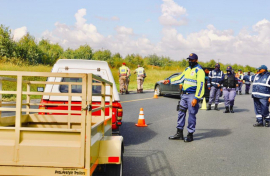
The preliminary statistics for the Easter weekend shows that the number of crashes declined by 28.6% resulting in a 31.5% decline in the number of fatalities on South African roads.
“A total of 162 people perished on our roads this year compared to 235 last year, resulting from 134 fatal crashes this year compared to 189 the previous year. Most of the crashes occurred on Friday and Saturday,” Transport Minister Fikile Mbalula has said.
The Minister made these comments during the release of the preliminary statistics for the recent Easter weekend where he also provided an update on the driver licence extension of the grace period.
“The success we have achieved this Easter will add momentum to our efforts to reduce road fatalities by 25% by 2024. Improving our law enforcement capability and visibility, as well as upscaling public safety campaigns will continue to gain traction.
“We have made a commitment to make a telling difference in our law enforcement interventions by ensuring that our officers act without fear or favour while maintaining constant high levels of visibility 24 hours a day, seven days a week,” the Minister said at a media briefing at the Grasmere Toll Plaza.
Mbalula said all provinces recorded a decline in fatalities, except for the Western Cape and Mpumalanga.
The Western Cape recorded a 30.8% increase from 26 fatalities in 2021 to 34 this year while Mpumalanga recorded a 27.8% increase from 18 road fatalities the previous year to 23 this year.
Other provinces recorded a decline in road fatalities in the following manner:
- KwaZulu-Natal registered a 61.1% decline from 54 road deaths the previous year to 21 this year.
- Northern Cape registered a 57.1% decline from seven road fatalities the previous year to three this year.
- Free State registered a 53.8% decline from 13 deaths the previous year to six this year.
- North West registered a 45% decline from 20 deaths the previous year to 11 this year.
- Limpopo registered a 44.1% decline from 34 deaths the previous year to 19 this year.
- Gauteng registered a 33.3% decline from 36 deaths the previous year to 24 this year.
- Eastern Cape registered a 25.9% decline from 27 deaths the previous year to 20 this year.
“Our analysis shows that while the trend of fatalities per time of the day continues to show that most fatalities occur at night, a new phenomenon was noted this Easter with fatalities showing a sharp spike in the early hours of the morning between 4am and 5am,” the Minister said.
This includes the bus crash that occurred on the N1 near Leeu Gamka on Good Friday.
A total of 2 395 traffic fines were issued for speeding this year compared to 5 923 last year while 3 494 motorists were fined for operating unlicensed vehicles compared to 5 677 the previous year.
Meanwhile, 2 134 drivers were fined for driving without fastening seatbelts this year compared to 2 351 the previous year.
SA records 6372 new COVID-19 cases

South Africa has recorded 6 372 new COVID-19 cases in the past 24 hours, bringing the total number of laboratory-confirmed cases to 3776298.
According to data provided by the National Institute for Communicable Diseases (NICD), this increase represents a 21.1% positivity rate.
“The proportion of positive new cases/total new tested today is 21.1%, and is higher than yesterday at 18.4%. The 7-day average is 18.0% today, and is higher than yesterday at 16.9%,” the NICD said on Wednesday.
The majority of new cases are from Gauteng at 49%, followed by Kwa-Zulu Natal at 23%.
The Western Cape accounted for 14%; Free State and Eastern Cape each accounted for 4% respectively; Mpumalanga accounted for 3%; North West accounted for 2%; and Limpopo and Northern Cape each accounted for 1% respectively of the new cases.
The National Department of Health (NDoH) has reported three deaths that occurred in the past 24 – 48 hours, which brings the total fatalities to 100,351 to date.
In terms of hospital admissions, the NDoH said that there has been an increase of 62 admissions in the past 24 hours.
The cumulative number of recoveries now stand at 3 638 087 with a recovery rate of 96.3%.
The total number of vaccines administered in the last 24 hours stands at 10, 469 bringing the total number to 34 739 327.
Jet fuel supply at OR Tambo airport stabilized
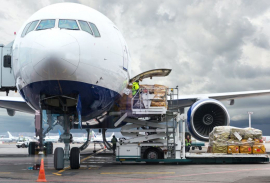
Government has worked tirelessly to resolve the jet fuel shortage experienced at OR Tambo International Airport.
This challenge was a consequence of the recent floods in KwaZulu-Natal that affected transport infrastructure and disrupted supply chains.
“We are pleased that the Airports Company South Africa (ACSA) has worked tirelessly to resolve this challenge, working with relevant stakeholders and other organs of state. The jet fuel supply to OR Tambo International has now been stabilised,” Minister of Transport Fikile Mbalula said on Wednesday.
The matter was resolved after Mbalula’s engagements with the Minister of Mineral Resources and Energy and ACSA. These entities, including the Department of Transport, were mandated to put measures in place to address the jet fuel shortage matter.
“We also welcome the Notice to Airmen (NOTAM) issued by ACSA, advising all airlines, both international and domestic, on measures being implemented to obviate disruptions to air services. The aviation sector is a critical enabler of economic activity which requires our support in ensuring that it makes its contribution to economic recovery in the aftermath of the COVID-19 devastation,” Mbalula said.
The Minister has assured the aviation sector that there is adequate fuel at OR Tambo International Airport and at all national airports.
“ACSA is doing everything within its power working closely with oil suppliers to ensure there is adequate fuel stock at all times. We further encourage the airlines to communicate with ACSA, in order to clear any uncertainty on this matter, rather than resorting to drastic measures such as cancelling flights,” he said.
Cost recovery for KZN floods estimated in the billions

The Passenger Rail Agency of South Africa’s (PRASA) preliminary assessment of the rail infrastructure that was damaged during the floods in parts of KwaZulu-Natal has been estimated at between R2.6 billion and R2.9 billion.
“A multidisciplinary Disaster Management Response Team comprising of various divisional heads, senior managers and PRASA’s engineering team was set up to assess the extent of the damage to the rail network and develop a recovery plan,” PRASA said on Tuesday in a statement.
This was after recent floods affected several parts of the province, wreaking havoc and causing extensive damage to the PRASA rail infrastructure leading to the suspension of train services.
Metrorail in the province has experienced substantial damage to its facilities, rail infrastructure as well as rolling stock.
“Under difficult circumstances, the team concluded its initial investigations. According to the collated data and photographic evidence of inaccessible areas, the direct cost of the recovery in the region is estimated to be between R2.6 billion and R2.9 billion,” PRASA said.
The preliminary investigation identified about nine sections that have been severely affected by the floods.
Restoring services will require rehabilitation and replacement of perway (tracks); repair of electrical infrastructure and substations damaged by the floods; replacement of signalling equipment; replacement of damaged fibre cables and Uninterruptible Power Supply (UPS) equipment; and repair of the drainage system and Illovo Bridge.
However, some areas are still inaccessible, and a geotechnical and detailed design assessment and costing must be conducted once water levels have decreased and weather permits.
“As part of the team’s recovery efforts, the team has divided the work into two phases: Phase 1 concerns work that needs to be performed to ensure trains are able to travel safely through the flood-affected sections, while Phase 2 focuses on the overall rehabilitation of the infrastructure.
“Additionally, the loss of fare revenue due to the suspension of train services is estimated at R50 million. This highlights the importance of the teams working quickly to restore services,” PRASA said.
The work of the Disaster Management Response Team has begun in earnest.
Last week, mud, rubble, debris, water, and sewage were removed from 14 affected stations in the region as part of a clean-up campaign.
“As a consequence of the damage, commuters who rely on affordable rail transport are inconvenienced greatly, and the suspension of train services is a blow to people trying to rebuild their lives.
“Ultimately, the safety of commuters is our top priority, and services can only be resumed once all repairs have been completed and trains can run again.
“In KwaZulu-Natal, the safety of PRASA employees remains paramount, and all work will be conducted within the confines of occupational health and safety regulations,” PRASA said.
UN team visits KZN to offer assistance in areas affected by floods

A technical team of the United Nations (UN) in South Africa is currently in KwaZulu-Natal to assess the damage in the parts of the province that were affected by the recent floods.
“We have been supporting the province following the floods in 2019 and the civil unrest of 2021. We will continue to support rebuilding efforts to ensure that no-one is left behind as part of the Memorandum of Understanding that we have in place with the provincial leadership in that province,” Acting Resident Coordinator for the UN in South Africa Ayodele Odusola said in a statement.
Represented by a technical team comprising of members from various UN agencies, the technical team, commenced with its assessment on Monday and its work will be concluded on Thursday.
The technical team is expected to meet with the Provincial Disaster Management Centre and the eThekwini Municipality to assess the areas of support by the United Nations Development System.
“We stand committed and ready to assist where needed,” Odusola said.
Treasury’s Bounce Bank Support Scheme takes effect

The National Treasury has announced the commencement of the Bounce Bank Support Scheme aimed at providing additional funding to qualifying businesses in order to grow the South African economy and to facilitate job creation.
The Scheme was first signalled in Finance Minister Enoch Godongwana’s Budget Speech in February.
In a statement on Tuesday, Treasury said the Scheme is expected to facilitate the recovery and bounce back of businesses beyond the COVID-19 pandemic lockdowns.
“The Scheme will also help those businesses recovering from the July 2021 civil unrest in KwaZulu-Natal and Gauteng, as well as the current ongoing flood-related disaster. In June 2020, the COVID-19 Loan Guarantee Scheme was established to help ease financial pressures experienced by qualifying businesses negatively affected by low economic activity following lockdown restrictions to reduce the spread of COVID-19.
“The Guarantee Scheme formed part of a package of regulatory and direct support measures which provided significant financial support and helped preserve many jobs and kept businesses afloat.”
The Bounce Back Support Scheme benefits from lessons learnt from the 2020 Loan Guarantee Scheme to provide for greater take-up including development finance institutions (DFIs) and non-bank small and medium enterprise (SME) finance providers.
The Bounce Back Support Scheme comprises a loan guarantee mechanism of R15 billion and a smaller equity linked scheme which will be facilitated by National Treasury and DFIs. The smaller equity linked scheme will be introduced later in the year as a complementary tool of R5 billion.
Access
Accessing the Bounce Back Support Scheme loans will be accessible through participating banks (banks which have opted to use the scheme for their customers).
“Access for DFIs and non-bank SME finance providers to the Bounce Back Support Scheme will be facilitated through participating banks, and such participating banks will still have to perform due diligence in accordance with regulatory standards.
“Access to the equity linked tool is expected to be introduced later this year and more details will be communicated once they are finalised.”
Features
Scheme loans are to be granted at a preferential capped rate (repo plus 6.5%). Government and lenders (participating banks, DFIs and non-bank SME finance providers) are sharing the risk of non-repayment of these loans with government taking the first 20.5% of losses.
The Treasury added that businesses will be required to repay the loan over a period of up to five years after any deferred interest period agreed to by the lenders.
It said loans could have rescheduling options at the discretion of the lenders (pay as you grow), for up to a period of 10 years from the first draw down in the event of businesses being initially unable to pay any repayment due.
Eligibility
Businesses with a maximum turnover of R100 million per annum will be eligible to access the scheme. The maximum loan amount will be set at R10 million per businesses (and a minimum loan amount of R10 000).
“In the case of small and medium enterprises, the turnover cap is a maximum turnover of R100 million with a maximum loan amount of R10 million whilst for non-bank lenders, loans may be made for a maximum amount of R100 million per non-bank lender subject to the approval of the lender.
“Eligible businesses should contact their primary or main banker for further information on the Scheme and the qualifying criteria,” read the statement.
South Africa records 1 954 new COVID-19 cases

South Africa has in the past 24 hours recorded 1 954 new COVID-19 cases, bringing the total number of laboratory-confirmed cases to 3 764 865.
The National Institute for Communicable Diseases (NICD) said this increase represents a 19.3% positivity rate.
“The majority of new cases today [Monday] are from Gauteng (55%), followed by KwaZulu-Natal (23%). Western Cape accounted for 11%; Free State accounted for 3%; Eastern Cape, Mpumalanga and North West each accounted for 2% respectively; and Limpopo and Northern Cape each accounted for 1% respectively of today’s new cases,” the NICD said.
Thirty deaths were also reported, and of these, two occurred in the past 24-48 hours, bringing the total fatalities to 100 333 to date.
The Department of Health reported that a cumulative number of recoveries now stand at 3 634 446 with a recovery rate of 96,5%.
As at 19:00, 34 659 733 vaccines were administered.
Eskom “cautiously optimistic” about lifting load shedding on Friday evening

Eskom says after making some ground in recovering generation capacity, it may lift all stages of load shedding on Friday evening.
The power utility has been battling generation unit failures throughout the past week, which have tipped the country into the more stringent stage four load shedding – dropping down to stage three on Wednesday evening.
Eskom CEO Andre de Ruyter said the power utility is recovering some of the lost capacity back into the system.
“We were sitting way in excess of 16 000MW of unplanned losses earlier in the week, so the system is recovering. We are seeing some big units coming back as planned. Demand for this evening’s peak is 30 011MW and our available capacity is 28 022MW. [This] therefore explains why we have to maintain load shedding stage three until after evening peak tonight.
“We intend to drop [load shedding] to stage two and then by after evening peak on Friday, we will be hopefully in a position to lift load shedding in its entirety, depending how the system performs. We will continue to return units to service over the next two days so that we will be in a position – if all goes well, given the risks – that we can then lift load shedding by the weekend,” he said.
The generation units that the power utility has been able to reconnect to the system are Arnot power station unit two and six, Kendal power station unit three, Matimba power station unit five and Majuba power station unit three.
De Ruyter said reserve generation capacity at the power utility’s open cycle gas turbines is also recovering sufficiently.
Despite progress in the recovery of generation units, De Ruyter reported that there were other unplanned breakdowns and an enforced outage from Mozambique’s Cahora Bassa Hydroelectric power station, which feeds into Eskom.
“We did lose Grootvlei [power station unit] two… due to a boiler tube leak. There is a loss of 270MW due to maintenance done on the line from Cahora Bassa. This maintenance is being conducted in Mozambique by our partners on that line, so we are doing everything we can to assist them in order to complete that maintenance.
“We unfortunately did lose Tutuka six this morning… due to a submerged scraper chain that got stuck. This chain clears the ash at the bottom of the boiler and when we cannot clear the ash, we have challenges running the boiler. That leads to a loss of about 365MW,” he said.
The week ahead
De Ruyter was cautiously optimistic about a low forecast for load shedding next week.
“At the moment… we don’t anticipate load shedding for next week. However, that is dependent on the stability of our generating units. We are all aware that there are risks in the system that are difficult to forecast and predict.
“Depending on how we perform over the weekend and depending on rain that is forecast for the Mpumalanga area… where the majority of our coal plants are located, we may potentially see further impacts and that may have an impact on availability of generating capacity particularly for Monday next week.
“But after that, if we can bring those units back that are currently planned to return to service and if we can get additional reduction in partial load losses, we should be okay. So we don’t plan for load shedding next week but we must emphasise that there is always a residual risk,” he said.
China donates R1 million towards KZN flood relief
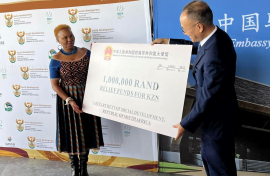
Social Development Minister, Lindiwe Zulu, has received a donation of R1 million from the Ambassador of the People’s Republic of China to South Africa, Chen Xiaodong, on Wednesday.
The donation is aimed at bolstering the reach of government’s ongoing humanitarian relief efforts in the flood-stricken KwaZulu-Natal.
The donation follows the declaration of the National State of Disaster on Monday after various municipal areas of KwaZulu-Natal and the Eastern Cape were ravaged by extreme weather conditions, including a fire disaster in Langa, Western Cape, that left scores of people displaced.
Zulu said the donation will support emergency humanitarian and recovery efforts in the affected areas.
“On behalf of the people and the government of the Republic of South Africa, we extend our deepest gratitude to the government of the People’s Republic of China for this generous donation. [It] will enable us to meet the immediate needs of hundreds of families affected by the recent floods, including people who are displaced from their homes, to get back on their feet,” Zulu said at a ceremony held in Pretoria.
On Tuesday, the Minister visited the flood-stricken Ndwedwe and Mandeni Local Municipalities under iLembe District Municipality to provide the much-needed relief to families affected by the disaster.
These two municipalities are among the worst hit by the disaster that left a trail of destruction, resulting in the loss of over 400 lives, including three members of the Mdletshe family in Ndwedwe.
During her visit, Zulu interacted with affected families, local community-based organisations, community leaders and social service professionals deployed to provide psychosocial support services in the area.
She once again offered her condolences to victims and families of the deadly floods.
“Our thoughts and prayers are with those who have lost their loved ones and those who are uncertain about the fate of their loved ones. We have deployed psychosocial support teams where our services are needed most. We are also working with a number of partners to support humanitarian relief efforts,” she said.