

Government establishing joint fund to support township, rural businesses
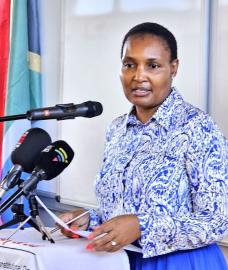
Work to establish a R500 million joint fund to support township and rural businesses – including local convenience shops – is underway.
This is according to Minister of Justice and Constitutional Development Thembi Simelane who briefed the media on interventions to mitigate the uptick in foodborne illnesses in South Africa.
She said the departments tasked with overseeing the joint fund are already hard at work drafting standard operating procedures and guidelines on the use and accountability of the fund.
This work is expected to be completed within the next two weeks.
“In the short term, approved rural and township businesses will be supported through this fund to improve their infrastructure, regulatory compliance and capacity building.
“The operational fund application and disbursement process will commence as soon as the registration process is completed and will be subjected to ongoing auditing processes as an early warning system against potential anomalies and fraudulent activities,” she said.
The Minister explained that to qualify for the fund, a business owner must, among others, be “a South African citizen operating within the borders of the country and serving local communities”.
“The business must be registered with local municipality in accordance with the relevant by-laws and have valid registration with SARS. Funding will prioritise entrepreneurs between the ages of 18 and 35 years old with much emphasis on female-owned businesses.
“The Department of Small Business Development has started a process to create a nerve centre with geo-mapping capacity to centralise data on the township and rural economy.
“A national database of registered small businesses and spaza shops will strengthen our capacity to regulate the sector and to ensure effective compliance to avoid the recurrence of future outbreaks,” she said.
Delving further into the issue of the registration of small businesses and spaza shops, Simelane emphasised that lawfully, “every shop owner who is a legitimate trader and meets the legal requirements” is allowed to conduct business.
“In processing these applications for registration, the government will make every effort to ensure that account is taken of every legal prescript that allows people to do business in the country,” she said.
Since the announcement by President Cyril Ramaphosa that all spaza shops must be registered within 21 days, reports have surfaced of South Africans registering these localised shops on behalf of illegal foreign nationals.
This, Simelane said, is a concern.
“This is clear fronting, and we would like to warn everyone who is involved in this illegal activity to stop. The Immigration Act prohibits any person from aiding, abetting, assisting or enabling an illegal foreigner to obtain a licence on his or her behalf, to conduct any business or carry on any profession or occupation.
“Landlords are obliged by law to ensure that those who rent their premises to conduct businesses, comply with the provisions of the Immigration Act and the standard by-laws regulating local business in the municipalities in which they operate,” she said.
Turning to allegations that civil servants are also involved in the fraudulent processing of registrations, Simelane warned that the law would take its course.
South Africans are urged not to interfere with spaza shop registrations.
“The law enforcement agencies will clamp down heavily on extortionists who want to use this process to enrich themselves. Members of the public are urged to report any suspected corrupt activities through the National Anti-Corruption Hotline 0800 701 701.
“We want to appeal to the members of the public not to disturb the process of registration by blocking certain shop owners from participating in the process. This includes conducting unlawful inspections by members of the public, and other unauthorised bodies,” she said.

Eskom saves R13.7 billion on diesel

Due to load shedding being suspended for over seven months, Eskom’s diesel savings have reached R13.7 billion year-on-year.
In a statement on Friday, Eskom said load shedding has remained suspended for over seven months (219 consecutive days) since 26 March 2024.
“Investments in the Generation Recovery Plan have been instrumental in maintaining a stable power supply across South Africa, driving efficiencies, and achieving R13.7 billion in year-on-year diesel savings.
“On Monday, 28 October 2024, Eskom achieved a significant milestone in operational efficiency, moving closer to its goal of a 70% Energy Availability Factor (EAF) by end March 2025.
“This achievement is marked by a reduction in unplanned outages, which are measured by the Unplanned Capacity Loss Factor (UCLF) and Other Capacity Loss Factors (OCLF), to 7 299MW. The last time Eskom reached a comparable UCLF milestone was four years ago,” the power utility said.
This achievement follows Eskom’s recent milestone of delivering the longest stretch of uninterrupted power supply in five years, reaching Day 206 of loadshedding suspension on Saturday, 19 October 2024.
“The reduction in unplanned outages means that more generation capacity is available to meet the country’s electricity demand. Additionally, it provides Eskom with the necessary capacity to conduct more planned maintenance activities, which are crucial for further improving the reliability and stability of the generation fleet,” Eskom said.
Eskom’s EAF increased to an average of 65 % over the past week and 63.1% year-to-date, with top-performing stations — including Grootvlei, Camden, Medupi, Lethabo, and peaking facilities — achieving over 70% EAF.
Five other power stations recorded EAFs above 60%.
“By Monday evening, an additional 4 030MW is expected to return online, with six units on cold reserve this weekend to manage supply and demand balance,” Eskom said.
In August, Eskom shared its Summer Outlook for the period from 1 September 2024 to 31 March 2025, predicting a likely scenario of a load shedding-free summer due to structural generation improvements. This outlook remains unchanged.
Illegal connections
While load shedding remains suspended, Eskom continues to face network overloading issues in certain local areas due to illegal connections, vandalism, meter tampering, unauthorised network operations, theft of network equipment, and purchasing electricity from unlicensed vendors.
“To prevent public safety hazards and the risk of network overloading which can lead to load reduction measures and extended unplanned power outages, Eskom strongly urges customers to avoid illegal connections, as this can negatively impact the entire local community. It is also essential for customers to ensure they purchase electricity only from authorised vendors,” the power utility said.
Eskom urged the public to help protect the integrity of the power network by reporting any illegal activities to the Eskom Crime Line at 0800 112 722 or via WhatsApp at 081 333 3323.
Meter updates
In addition, as the 24 November 2024 deadline approaches, Eskom has reminded customers to update their pre-paid meters to avoid them expiring and losing electricity.
READ | Eskom calls on prepaid customers to update meters before 24 November deadline
The simple, DIY process involves buying credit tokens from authorised vendors. Customers will receive two 20-digit codes to enter into their meters for the update.

Mpumalanga High Court to open for business

The Department of Justice and Constitutional Development (DOJ&CD) has advised the public that the Mpumalanga High Court will be open for business on Monday.
The Mpumalanga High Court was recently closed after an inspection by the Department of Labour and the subsequent findings that highlighted health and safety issues with the building.
On Saturday, the DOJ&CD met with the Departments of Employment and Labour (DEL), Public Works and Infrastructure (DPWI), Independent Development Trust (IDT) and the Office of the Chief Justice (OCJ) to determine a course of action in response to issues identified during a recent inspection of the Mpumalanga High Court conducted by DEL.
The prohibition notice was issued on 30 October 2024.
“Following representation made by the departments in relation to the areas identified to be addressed, it was resolved that the prohibition notice shall be suspended for a period of seven working days commencing on Monday, 04 November 2024.
“The suspension of the implementation of the prohibition notice will provide an opportunity for the department to address the issues raised in the prohibition notice,” DOJ&CD said.
The concerns raised by DEL relate to the following specific three areas:
• Ensuring proper ventilation.
• Provision of a report confirming the integrity of the structure.
• Provision of the occupancy certificate.
The departments provided extensive feedback to DEL on matters relating to the prohibition notice and progress thereof.
“It is on the basis of the above that the extension was granted. The department remains committed to resolve the issues raised by DEL including ensuring the safety of staff, judiciary and members of the public.
“The discussions are still ongoing between the parties including the exchange of expert and technical reports to find a long-term solution to matters that were raised. During the suspension period, the department wishes to advise the public that the court will remain open on Monday, 04 November 2024,” DOJ&CD said.

Committee welcomes prevention of R3.47 billion in financial losses

The Standing Committee on the Auditor-General (AG) has welcomed the recovery and prevention of the R3.47 billion in financial losses by the Office of the Auditor General (AGSA) through the Material Irregularities (MIs) process.
This as the committee received a briefing from the Auditor-General of South Africa (AGSA) on its integrated annual report for the 2023/24 financial year.
“The AG has recovered R1.55 billion in financial losses; R1.14 billion in financial losses in the process of recovery and has prevented the financial loss of R0.78 billion for government departments, municipalities and entities.
“These successes show the importance of the execution of the new powers of the AG obtained through the amended Public Audit Act. In the year under review, the AG identified 626 MIs on non-compliance and suspected fraud,” the Chairperson of the Standing Committee on the Auditor-General Wouter Wynand Wessels said on Friday.
This resulted in 500 MIs on material financial loss, 51 MIs on substantial harm to the general public, 66 MIs on substantial harm to public sector institutions and 9 MIs on misuse on material public resource.
An MI is any non-compliance with legislation, fraud, theft or breach of fiduciary duty that could result in a material financial loss, misuse of public funds or substantial harm to a public sector institution or the public.
The amended Public Audit Act introduced the concept of MIs and expanded the powers of the AG to refer the MIs to relevant bodies for investigation if the accounting officer or authority does not take appropriate action to address them.
“The committee welcomes the AGSA’s culture shift strategy. This entails plotting auditees not only according to mere compliance, but also focusing on service delivery performance. This shows that 23% of government departments and entities and 45% of municipalities are currently doing harm, while 40% of departments and entities and 43% of municipalities are not doing the basics.
“The committee commends the AG for receiving a clean audit opinion for the year under review. A functional office of the AG is important as it results in a positive shift towards accountability and public sector performance,” Wessels said.

Man sentenced to life in prison for raping relative

Limpopo Provincial Commissioner of the South African Police Service (SAPS), Lieutenant General Thembi Hadebe, has welcomed the life imprisonment sentence handed down by the Giyani Regional Court to a 31-year-old man for raping his 10-year-old relative.
The court heard that the victim’s mother left her daughter with her cousin whilst going to a local shop.
“The mother returned from the shop and found her daughter naked. Upon questioning her, she told her that the accused took her (daughter) to his bedroom… forcefully put his private part into her mouth and thereafter raped her.
“The matter was immediately reported to the police and a case of rape was registered and transferred to Giyani Family Violence, Child Protection and Sexual Offences Unit for further investigations,” the SAPS said on Saturday.
The case docket was allocated to Detective Sergeant Maropeng Mashapa. The accused was traced and successfully arrested.
The accused was sentenced on Thursday for raping his cousin at Phikela village in Giyani on 13 November 2020.
Subsequent to police investigations, the accused was found guilty of all charges against him and sentenced to life imprisonment for rape.
“We commend the investigating officer for tirelessly working on the case and all other role players who participated, for the job well done,” said Lieutenant General Hadebe.

Operation Shanela nets over 15 000 suspects
The South African Police Service (SAPS) has arrested 15 298 suspects through Operation Shanela.
The arrests were made between Monday, 21 October and Sunday, 27 October. The recorded arrests are 2 479 more than the previous week.
Operation Shanela includes tracking operations, roadblocks, high visibility patrols, stop and searches, as well as tracing of wanted suspects.
All Shanela operations are led by the Provincial Commissioner of each province.
The following arrests were made:
- 3 015 wanted suspects were arrested, representing 1 042 more wanted suspects behind bars than the previous week. These suspects were wanted for various crimes such as murder, attempted murder, rape, business and house robberies.
- 146 suspects were arrested for murder. The majority of these suspects were arrested in the Eastern Cape (37), followed by Gauteng (33) and the Western Cape (30).
- 74 suspects were arrested for attempted murder.
- 213 suspects were arrested for rape. KwaZulu-Natal arrested the majority of these suspects (89 arrests).
- 1 380 suspects were arrested for assault GBH [grievous bodily harm] during this period.
- 197 drug dealers were arrested.
- 1 314 suspects were arrested for being in possession of drugs, with 646 of these suspects being arrested in the Western Cape.
- 123 suspects were arrested for being in the illegal possession of firearms. The majority of these suspects were arrested in the Western Cape (36), followed by KwaZulu-Natal (27) and Eastern Cape (24).
- 492 suspects were arrested for illegally dealing in liquor, with Mpumalanga arresting 124, while KwaZulu-Natal arrested 123 suspects.
- 478 drivers were arrested for drunken driving. The majority of these suspects were arrested in Gauteng (110), followed by the Western Cape (89).
Under recoveries and confiscations, police registered the following successes:
- 132 firearms were confiscated in the past week; 26 handguns were confiscated during police operations in the Western Cape; 23 were confiscated in KwaZulu-Natal, while 19 were confiscated in the Eastern Cape.
- 3 443 rounds of ammunition were confiscated.
- 78 hijacked and stolen vehicles were also recovered, which is 21 more vehicles recovered during

President Ramaphosa appoints new arms control committee
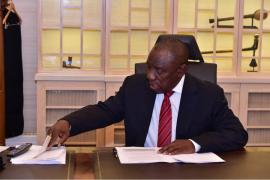
President Cyril Ramaphosa has appointed a new National Conventional Arms Control Committee (NCACC) to oversee South Africa’s arms trade, in line with international standards.
The committee, chaired by Minister in the Presidency, Khumbudzo Ntshavheni, includes 11 Ministers and Deputy Ministers, who will serve a five-year term, with Deputy Minister of Justice and Constitutional Development, Andries Nel, as the Deputy Chairperson.
In a statement on Monday, the Presidency said the appointments were made in terms of Section 5(1) of the National Conventional Arms Control Act of 2002.
In terms of Section 4 of the Act, the mandate of the NCACC is to implement government policy regarding trade in conventional arms in order to establish, apply and ensure a legitimate, effective and transparent control process, which conforms to international law, and the guiding principles and criteria set out in the same law.
“The committee is responsible for the control and regulation of trade in conventional arms, and the protection of South Africa’s economic and national security interests by ensuring adequate control of trade in conventional arms,” the Presidency said.
The NCACC is also tasked with fostering national and international confidence in South Africa’s arms control procedures.
The committee may conduct investigations, inspections and research related to conventional arms trade within or outside the country as needed.
President Ramaphosa has assigned these responsibilities to the newly appointed National Conventional Arms Control Committee which comprises:
– Khumbudzo Ntshavheni, Minister in The Presidency (Chairperson);
– Andries Nel, Deputy Minister of Justice and Constitutional Development (Deputy Chairperson);
– Angie Motshekga, Minister of Defence and Military Veterans;
– Ronald Lamola, Minister of International Relations and Cooperation;
– Thembi Simelane, Minister of Justice and Constitutional Development;
– Senzo Mchunu, Minister of Police;
– Dr Blade Nzimande, Minister of Science, Technology and Innovation;
– Parks Tau, Minister of Trade, Industry and Competition;
– Gen (Ret) Bantu Holomisa, Deputy Minister of Defence and Military Veterans;
– Dr David Masondo, Deputy Minister of Finance, and
– Alvin Botes, Deputy Minister of International Relations and Cooperation.
President Ramaphosa has extended his best wishes to the committee in fulfilling their mandate and contributing to South Africa’s commitment to responsible arms control.

Africa urged to act now against climate change
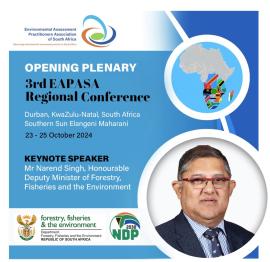
With climate-driven events such as droughts and floods disrupting agricultural production across the continent, and leading to increasing food insecurity, government has called on the Southern African Development Community (SADC) to act now against climate change.
“To counter this, it is essential to promote sustainable agricultural practices, improve irrigation systems, invest in agricultural research and technology, and develop resilient crop varieties,” Deputy Minister of Forestry, Fisheries and the Environment, Narend Singh, said on Wednesday in Durban.
He pointed out that Africa’s reliance on natural resources, rain-fed agriculture, and inadequate infrastructure makes it particularly vulnerable to the impacts of climate change.
The Deputy Minister was addressing the Environmental Assessment Practitioners Association of South Africa (EAPASA) Regional Conference, which is taking place under the theme: “SADC Sustainable Synergies”.
Singh said integrated environmental management and social tools provide a comprehensive framework for sustainable development, one that balances economic growth, environmental conservation and social equity.
“This integrated approach is vital for addressing the many environmental challenges our continent faces, while simultaneously promoting inclusive growth and resilience. By embracing this method, we ensure that development is not only sustainable but also equitable, benefiting both present and future generations.
“The time to act is now. The environmental challenges we face do not respect borders or timelines, and every day we delay, the cost to our region and our people increases.
“As we transition our key economic sectors towards low carbon, climate resilient and a just society, it is important that our strategic, integrated and environmental impact assessments pay attention to the balance in social, economic and environmental aspects of sustainable development path and ultimately the achievement of our Nationally Determined Contribution (NDC),” the Deputy Minister said.
He emphasised the importance of prioritising a sustainable just transition path that pays attention to addressing the challenges of poverty, unemployment and inequality.
South Africa’s just transition path
He said South Africa’s Just Energy Transition (JET) programme has emerged as a crucial response to the climate crisis, setting an ambitious course for the nation to shift away from coal, while building a low-carbon, climate-resilient economy.
“The JET programme has already made strides in diversifying our energy mix by investing in renewable energy sectors such as solar, wind, and green hydrogen.
“We have closed some coal plants and retrained workers, ensuring that the transition is just and inclusive. This transformation is more than just an energy strategy; it is a fundamental reimagining of our future, one that presents profound opportunities for collaboration with SADC countries.
“By working together on cross-border energy projects, technology sharing, and capacity building, we can build a united front that not only mitigates climate change but also spurs economic growth and energy security across the region,” the Deputy Minister said.
He touched on the significance of regional cooperation, which is essential in the quest to balance environmental sustainability with economic development.
“This year marks six years since the Department of Forestry, Fisheries, and the Environment appointed EAPASA as the sole registration authority under Section 24H of the National Environmental Management Act (NEMA).
“It is truly remarkable to witness how, in just six years, this young organization has successfully convened SADC members for the third time in such a short period. This achievement speaks to the tremendous commitment to our region and the greater cause of environmental stewardship.
“As we implement our individual laws and regulations, we must remain mindful that our true success will be measured by how well we collaborate. I urge you to envision the SADC region as a unified entity, one where our systems are integrated and harmonised to enable development that benefits not only our generation but those to come,” the Deputy Minister said.

Department rebukes rape culture targeting teenagers

The Department of Women, Youth and Persons with Disabilities has urged communities to report cases of abuse of women, youth and people with disabilities to their nearest police stations.
The department reiterated the call following the disturbing number of rape cases that are being reported at different police stations across the country.
According to recent crime statistics, between April and June this year, a total of 9 309 rape cases and 6 198 murder cases were registered.
“These statistics call upon society to be on high alert over the growing incidences of rape and murder of young girls and children in South Africa,” department spokesperson, Cassius Selala, said.
At the weekend a 16-year-old girl in Madikana village, in Limpopo and a 19-year-old girl in Hammanskraal, in Tshwane were found murdered.
“Women’s rights are fundamental human rights, which include the right to be free from violence and discrimination. Government has put in place systems, such as the Constitution and legislation, aimed at fighting crime in our country.
“Advocacy for women’s rights and gender mainstreaming are both important strategies for achieving gender equality and social justice through solid partnerships with communities, NGOs and community policing forums, as well as faith-based organisations,” Selala said.
Selala emphasised a need to join hands in defending and protecting the rights of all South Africans, particularly women and children.
The SIU welcomes the arrest of former Transnet CEO

The Special Investigating Unit (SIU) welcomes the arrest and court appearance of former Transnet Group Capital (TGC) Chief Executive Officer Herbert Msagala.
He appeared before the Johannesburg Specialised Commercial Crime Court on fraud, corruption, theft and money laundering charges.
Following his first appearance, Msagala was granted R60 000 bail.
The arrest and court appearance follows a thorough investigation by the SIU, which uncovered that Msagala unduly benefited from kickbacks worth over R26 million from IGS Consulting Engineering, which he allegedly used to purchase properties and vehicles.
The SIU’s investigations focused on contracts totalling over R194 million that TGC awarded to IGS Consulting Engineering.
These contracts were related to maintaining and upgrading high-pressure pipeline infrastructure as part of the New Multi-Product Pipeline project, which transports various fuel products from Durban to Gauteng.
Msagala improperly benefited from kickbacks exceeding R26 million from IGS Consulting Engineering. The SIU investigated under the authorisation of Proclamation No. 11 of 2018.
In line with the Special Investigating Units and Special Tribunals Act (SIU Act), where the SIU finds possible criminal evidence, it must refer the evidence to the National Prosecuting Authority for further action.
In 2020, the SIU made criminal referrals against Msagala and others, which led to him being charged alongside two individuals and IGS Consulting Engineering being charged as an entity. While the individuals are yet to appear in court, the Directorate for Priority Crime Investigation (Hawks) is actively tracing their whereabouts.
In July 2020, the SIU obtained a preservation order from the Special Tribunal to preserve Msagala’s pension benefits and assets. The assets included 35 luxury vehicles and five properties, which comprised two farms and houses in gated estates, valued at over R18 million.
Msagala attempted to overturn the order but lost his appeal in November of that year. As a result, his properties and pension fund have been forfeited to the State.
The SIU is authorised, under the SIU Act, to initiate a civil action in the High Court or a Special Tribunal in its name to address any wrongdoing identified during its investigation resulting from acts of corruption, fraud or maladministration.
The criminal case has been postponed to 19 November 2024, to allow for further investigations and to trace the outstanding suspects.
The SIU will continue to support the prosecutorial process and ensure that all individuals implicated in corruption are brought to justice by the law.
The prosecution of Msagala is part of implementing the National Anti-Corruption Strategy, which sees law enforcement agencies coming together to eradicate corruption in South Africa and ensure the continued cleaning up of government departments from corruption.