

Massive budget increase for TERS

In a bid to cushion companies in distress and prevent job losses, the Department of Employment and Labour has significantly increased its Temporary Employer-Employee Relief Scheme (TERS) budget from R400 million to R2.4 billion for the current financial year.
In a statement issued on Sunday, the department said this significant boost aims to assist companies in distress and prevent employee layoffs amid unstable economic conditions, as revealed by Employment and Labour Minister Nomakhosazana Meth.
TERS is an intervention by the department that provides financial assistance to companies in distress for up to 12 months. The scheme enables employers to retain employees by covering their salaries while the company focuses on implementing a turnaround strategy to remain operational.
During this period, employers are only required to cover employee social costs such as provident fund and medical aid contributions.
Productivity SA, an entity under the department, offers turnaround strategy solutions to companies in distress.
Minister Meth urged companies experiencing financial challenges to participate in the scheme as soon as they notice signs of distress.
“The nature and degree of distress will be objectively measured through indicators including but not limited to a decline in revenue. The application process for TERS begins at the Commission for Conciliation, Mediation and Arbitration (CCMA) and is entirely free of charge. There are no application, initiation, or administration fees required,” said Meth.
A single adjudication committee administered by the CCMA evaluates all TERS applications for eligibility using a combination of indicators.
Rationale for the budget increase
The expanded budget comes in response to the country’s ongoing economic challenges, which have resulted in significant job losses across various sectors.
Recent reports from the CCMA reveal that while 14 887 jobs were saved through interventions during the 2023/2024 financial year, over 22 500 employees were still retrenched.
The number of job losses, particularly in key industries, necessitated an adjustment in the budget to enhance TERS.
“The increase in the TERS budget is a proactive response to volatile economic trends that threaten the livelihoods of impoverished workers and the sustainability of businesses. Our goal is to preserve jobs and support companies facing financial difficulties.
“Furthermore, the increase in the scheme’s capacity, aims to reduce the risk of further retrenchments and support economic stability,” Meth said.
The highest number of job losses were recorded in the following sectors:
• Mining: 5 153 job losses.
• Manufacturing: 2 125 job losses.
• Telecommunications: 1 680 job losses.
Since its inception, TERS has been instrumental in supporting a wide range of industries severely impacted by economic challenges.
The following sectors have notably benefited from the scheme:
• Hospitality and tourism: hotels, restaurants, and travel agencies affected by decreased tourism.
• Manufacturing: factories experiencing reduced demand and supply chain disruptions.
• Retail: non-essential retail businesses facing reduced consumer spending.
• Transportation: bus services, and logistics companies dealing with decreased operations.
TERS has facilitated the retention of hundreds of thousands of jobs by providing salary support to employees who might otherwise have been laid off. It continues to play a significant role in stabilising the economy during turbulent times, ensuring a quicker path to recovery by alleviating the financial burden on companies.
Application requirements
Employers seeking to participate in the TERS scheme will be required to provide documentary evidence for evaluation:
• Audited Annual Financial Statements for the past two financial years.
• Independently Reviewed Annual Financial Statements for companies not legally required to be audited, covering the past two financial years.
• Independently Reviewed Management Accounts with comparative figures if the latest financial statements are older than three months.
• Termination of Contract and Bank Statement for individual applicants.
• Business Case outlining the triggers for distress and proposed remedial actions.
With the expanded budget, the department said it hopes that more businesses will participate in the scheme, preventing further job losses and helping to build resilience within South Africa’s economic landscape.
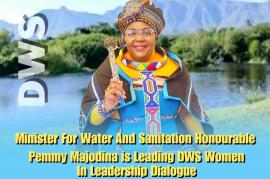
Leaders challenged to ensure women enjoy full access to water, sanitation
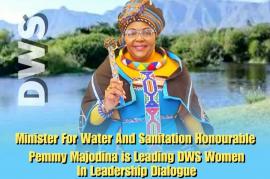
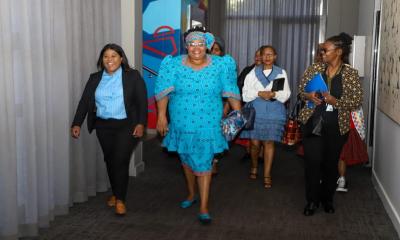
Minister Pemmy Majodina has challenged women leaders in her department and its entities to ensure that the rights enshrined in the Constitution, especially access to water and sanitation, become the lived experience for all women in South Africa.
“The Constitution guarantees access to water and basic sanitation as a fundamental human right,” Majodina said.
Majodina, the Minister of Water and Sanitation, was speaking at the Women in Leadership Dialogue held in Pretoria on Friday, 4 October.
The dialogue was hosted by the Department of Water and Sanitation (DWS) for women in leadership positions in the department and its entities. It aimed to reflect on the strides made by women and the role played by women in leadership within the sector to uplift women, and expand access to basic services, especially water and sanitation.
Majodina said women and girls are the hardest hit by lack of access to clean water and basic sanitation.
The Minister noted that while significant strides have been made to empower women and promote gender equality since 1994, “the stark reality is that the majority of people living in conditions of poverty are women and the poorest households are headed by women”.
She said women are the hardest hit by a lack of access to clean water.
“Collecting water by carrying 25 litres on the head or pushing wheelbarrows while pregnant can cause health complications. Giving birth in a setting without safe drinking water or sanitation poses a serious risk for the survival of both mother and child.
“Lack of access to water and sanitation at home and school impacts negatively on girl children. They have to spend time collecting water or finding a safe place to relief themselves in the open,” Majodina said.
If there is no water and sanitation facilities, the Minister said, women dignity and self-esteem are affected.
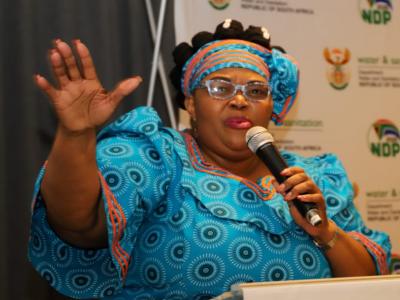
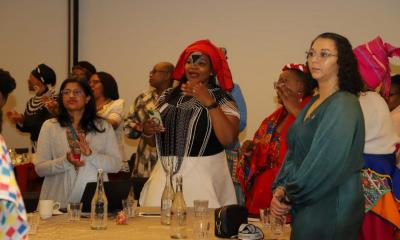
PHOTOS | DWS Women in Leadership Dialogue
 |
 |
 |
The Minister also noted that women are vulnerable to harassment and violence when they have to travel long distances to fetch water, use shared toilets or relieve themselves in unsafe places.
She stressed the importance of leaders in the water and sanitation sector understanding the negative impact of lack of water and sanitation, so that they are well-positioned to make a difference.
“Let our programmes and practices be inspired by the values and vision of a truly equal and non-sexist society. Let us ensure that a gender perspective permeates all decision-making processes and programmes of the department,” Majodina said.
She further called on the Director-General and senior leadership of the department to ensure that the department and its entities create a conducive environment for women employees to work and thrive.
“[Senior leadership] carries a responsibility to ensure that the department becomes a safe space for women, where their rights are promoted and protected,” the Minister said.

Another drug mule nabbed

Every week in the last month, the South African Police Service (SAPS) has arrested at least one drug mule at OR Tambo International Airport, with the 14th drug mule to be arrested in recent weeks, nabbed on Sunday.
“Every week in the last month, SAPS has arrested at least one drug mule at OR Tambo International Airport. This week alone, police arrested three drug mules, including two Dutch traffickers, who were found with 80kg of Khat. Today’s (Sunday’s) arrest is the 14th drug mule to be arrested in recent weeks,” the police said in a statement released at the weekend.
In Sunday’s arrest, the SAPS in collaboration with officials from the South African Revenue Service (SARS), arrested a 43-year-old drug mule from Paraguay who had landed from São Paulo when he was arrested by police officials at the airport.
“A medical examination confirmed that he had swallowed multiple foreign objects and has so far released more than 20 bullets suspected to contain cocaine. This brings the total number of drug mules arrested at this airport in the last couple of weeks to fourteen,” said the SAPS.
Last month, a 21-year-old South African woman became the eleventh person arrested for drug trafficking at the OR Tambo International (ORTIA) Airport.
At the time, the police said she was intercepted as she was arriving on a flight from São Paulo, Brazil.
She was taken to a local hospital where an X-ray confirmed that she had foreign objects in her stomach.
In that arrest, the National Commissioner of Police, General Fannie Masemola, commended the vigilance of members of SARS and SAPS at the airport.
On Sunday, 22 September 2024, a 30-year-old Namibian drug mule was arrested after arriving from São Paulo.
READ | South African woman arrested for drug trafficking at OR Tambo
On Friday, 13 September 2024, a Nigerian drug mule was arrested after he was found in possession of cocaine that was concealed in aircraft head phones. He had just landed from São Paulo.

Three suspects linked to extortion, murder cases killed in shootouts with KZN police
Thursday, October 3, 2024
Three suspects, who were wanted for a string of extortion and murder cases in the eThekwini district, were shot and fatally wounded in two separate incidents of shootouts with police in KwaZulu-Natal on Wednesday afternoon and the early hours of today.
On Wednesday afternoon, police followed up information regarding the whereabouts of a suspect, who was wanted for at least four cases of extortion and another four counts of murder, which he allegedly committed in the KwaNdengezi and Mariannhill areas.
When police arrived at a house at Gilebe in Inanda, the suspect fired shots at the police and during the shootout, the suspect was shot and fatally wounded. He was found in possession of a 7.65 pistol with four rounds of ammunition.
In another incident today, police operationalised intelligence which uncovered the hideout spot of two suspects, who were also wanted for extortion and murder cases.
The suspects were cornered at Edabe informal settlement in Tshelimnyama, Mariannhill, and the suspects shot at the police from inside the house.
In self-defence, police returned fire and during the shootout, the two suspects were shot and fatally wounded. They were found in possession of two firearms.
All recovered firearms will be taken for ballistic testing to ascertain if they are linked to other crime scenes.
The three deceased suspects had linkages to the six suspects, who were shot and fatally wounded in a shootout with police at a holiday accommodation in South Beach, Durban, in the beginning of September 2024.
UK investors encouraged to establish their business operations in SA

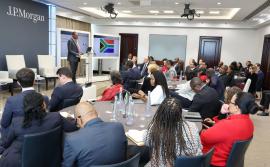
Deputy President Paul Mashatile has encouraged United Kingdom businesspeople to establish their presence in South Africa to penetrate the rest of the African market.
“South Africa is often referred to as a gateway to the African market and offers several economic opportunities.
“I officially encourage UK businesses to visit our lovely country for business objectives as well as tourists to appreciate the beauty of our country,” the Deputy President told the JP Morgan-hosted event attendees in London.
The country’s second-in-command is in the United Kingdom for the second leg of his working visit to improve trade and investment relations between the two nations and woo investors.
The Deputy President said he was confident that the visit would forge new partnerships and unlock new opportunities for collaboration between the United Kingdom and South Africa.
“Together, we can build a stronger, more prosperous future for our nations and contribute to the economic prosperity of our regions.”
He stressed the importance of collaboration which, he believes, is the key to unlocking new opportunities, mitigating risks, and delivering better outcomes for all stakeholders involved in the financial sector.
“As we look around us, we see how interconnected and interdependent the global financial ecosystem has become.
“No longer can any single entity, whether it be a bank, a fintech company, a regulatory body, or a government, hope to address the complex challenges we face on its own,” he added.
He told the attendees that the South African government believes in the power of collaboration.
“By working together with our industry partners, regulators, and stakeholders, we have been able to drive positive change, innovate our products and services, and create value for our customers.”
However, he acknowledged that the State has a significant amount of work ahead.
The Deputy President urged all stakeholders to commit to a more collaborative approach in tackling the pressing issues facing the financial sector such as enhancing cybersecurity measures, promoting financial inclusion, or developing sustainable investment strategies. “We must be willing to share knowledge, resources, and expertise to achieve our common goals.”
He reminded the attendees that collaboration is not just about working together but about leveraging collective strengths, embracing diversity of thought and building trust, and transparency.
“By fostering a culture of collaboration, we can drive positive impact, foster innovation, and create a more resilient and inclusive financial sector for all.”
The Deputy President stressed that the global economy is rapidly evolving and that adapting and innovating are crucial to seizing these opportunities more than ever before.
He took the opportunity to tell potential investors that South Africa was committed to creating an enabling business environment that attracts investment, spurs economic development, and creates much-needed job opportunities.
“We understand the significance of collaboration with countries like UK, which share our values and aspirations for a better future.”
As a country, he said government was pushing ahead with enhancing exports of valuable goods and services to the United Kingdom.
“It is admirable that the two countries already trade in food and beverages. However, I must admit that the global pandemic has hindered our trade partnership, leading to only modest progress.
“We must identify measures to expedite international trade and investment. I firmly believe that we have the potential to significantly boost the volume and value of various products, including those produced.”
Meanwhile, he pointed out that there were “real signs” of early-stage entrepreneurial growth in the country and that there was already a lot of awareness of the potential partnerships and benefits to both countries.
“Already, there are large numbers of foreign companies setting up service operations in South Africa. We’re hoping to see more UK companies in our country,” he added.
He encouraged foreign companies to invest in South Africa and benefit from the free movement of goods, services, and people from South Africa to other parts of Africa.
Police rescue hijacked, kidnapped victim in Krugersdorp
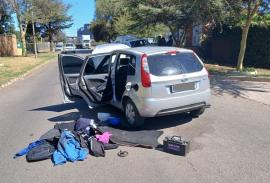
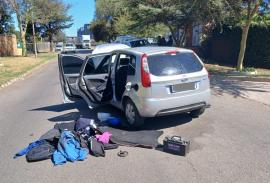
An alleged kidnapped victim was rescued and three suspects were arrested in Krugersdorp on Tuesday.
According to police, two Sergeants were driving from Leratong Hospital when they noticed a suspicious looking vehicle.
“Upon trying to stop the vehicle, one of the occupants pointed a firearm at them and the members shot back, resulting in the suspects stopping their vehicle. When searched, the police found two suspects and one man with his hands tied to the back.
“It was later established that the victim was hijacked and kidnapped in the morning at Centurion,” said the police.
Preliminary investigations then led the police to a third suspect in Naledi who was found in possession of the victim’s hijacked bakkie.
The victim was rescued, and all three suspects were arrested and are expected to appear before court soon on charges of attempted murder, kidnapping, hijacking and possession of an unlicensed firearm.

Thabo Bester Public Protector report noted

Correctional Services Minister, Dr Pieter Groenewald, has noted the Public Protector’s report regarding the infamous escape of convict Thabo Bester in 2022.
The report found, among other things, that allegations that there was “undue delay by the functionaries of the Department of Correctional Services to act in compliance with the regulatory prescripts and procedural requirements on information received regarding the escape of Mr Bester from Mangaung Correctional Centre is substantiated”.
The DCS said the officials involved have been “reassigned to alternative positions and issued final written warnings for their failure to promptly report the escape”.
“While the Minister acknowledges that the officials were slow to report the escape, he firmly asserts that G4S bears significant responsibility for this incident. G4S was tasked with ensuring that such an escape did not occur.
“Minister Groenewald emphasises that such behaviour is unacceptable and assures the public that stricter consequence management will be implemented to prevent similar incidents during his tenure,” the department said.

TV producer appears in court on charges of tax fraud

Well-known television producer and businessman, Dumakude Mayivuke Ndlovu, has appeared in the Palm Ridge Specialised Commercial Crime Court, together with two others, on charges of tax fraud.
The three who appeared in court on Tuesday, are facing 18 charges of tax fraud relating to Ndlovu’s personal and company income tax valued at approximately R26 million.
The South African Revenue Service (SARS) said that registered tax practitioner, Rodney Mutsharini, allegedly assisted Ndlovu with his Personal Income Tax (PIT) and Maxwell Mloyi, who is an unregistered tax practitioner also assisted Ndlovu with his Company Income Tax (CIT).
“The three were arrested on 30 September 2024 and formally charged for their alleged offences. Mutsharini and Mloyi made a brief appearance on the day of their arrest and their matter was postponed to Tuesday, 01 October 2024, for formal bail application.
“Ndlovu made his first court appearance on Tuesday and made a formal bail application. The court granted Ndlovu R100 000 bail while Mutsharini and Mloyi were granted R50 000 bail each.
“The matter was postponed to 11 November 2024 for further investigations. The court ordered Mloyi and Mutsharini to surrender their travel documents, report to their nearest police stations every Monday and should they wish to travel outside the borders of the country they should make an application with the court,” the SARS said.
Ndlovu was ordered to report to the Sandton police station in Gauteng every Monday or Wednesday, notify the clerk of the court of his KwaZulu-Natal change of address and should submit an application to the court should he desire to travel outside the borders of South Africa.
Their arrest and court appearance are as a result of strengthened collaboration between the revenue service and the Investigating Directorate Against Crime (IDAC) of the National Prosecuting Authority (NPA), which uncovered an alleged collusion between the three in misrepresenting the personal tax affairs of Ndlovu and that of his company.
Following the appointment of President Cyril Ramaphosa as the President of the Republic on 15 February 2018, he established the Commission of Inquiry into the Tax Administration and Governance by SARS and subsequently appointed Judge Robert Nugent as the Commissioner.
“On 25 May 2018, Judge Nugent made recommendations for investigations to be conducted into the allegation of suspected fraud, corruption, and procurement irregularities with reference to the contravention of the Public Finance Management Act within SARS.
“Subsequently, IDAC authorised an investigation into the awarding of contracts by SARS, and the Commissioner of SARS was notified of these investigations with a view of mutual co-operation and information sharing,” SARS said.
The collaborative investigations between the two entities discovered that a company which formed part of the investigations, Bain and Company, was contracted by SARS to render services.
“This company allegedly sub-contracted Ambrobite (Pty) Ltd, now known as Kanoboya Consulting (Pty) Ltd, owned by Ndlovu, to render strategic and project management services between the period November 2013 to September 2016.
“This was however misrepresented by Ndlovu and his tax practitioner, Maxwell Mloyi, when submitting tax returns to SARS. Mloyi together with Ndlovu declared to SARS that the company was dormant and that it never traded during the tax period 2013 to 2017, resulting in a financial loss to SARS.
“In relation to his personal income tax, it was discovered that he together with Rodney Mutsharini misrepresented his personal income tax return for the period 2016 to 2019,” SARS said.
Furthermore, they submitted his personal income tax return for the year 2020 and 2022 but neglected to make a submission for the year 2021, which resulted in another financial loss to SARS.
The total financial loss to SARS due to these alleged offences is estimated at approximately R26 million.
“IDAC and SARS will continue to collaborate. Such partnerships enable law enforcement to deal with matters wholistically,” the revenue service said.
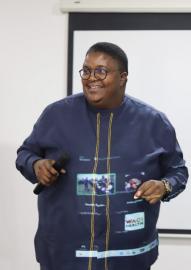
Civil society must advocate for access to human rights
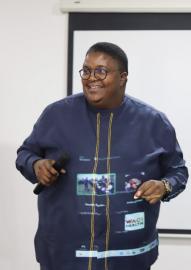
Civil society must, in real terms, advocate for the advancement of access to human rights, which will lead to the socio-economic development of those most vulnerable to society’s ills.
Deputy Minister in the Presidency for Women, Youth and Persons with Disabilities, Mmapaseka Steve Letsike, made the remark when addressing global civil society organisations and movements united (C20), held at Lakefield, Benoni on Tuesday.
The Civil 20 (C20) has been an official Engagement Group of G20 since 2013.
Since then, the C20 initiative has grown stronger every year, to ensure that world leaders listen to the recommendations and demands of organised civil society, to protect the environment and to promote social and economic development, human rights, and the principle of leaving no one behind.
In her address, Letsike argued that a woman is paid less for work of equal value than a male counterpart.
“A young girl who identifies outside the binary understanding of gender identity and sexual orientation in a ‘conservative society’ must not fear to walk the streets because there is a threat of corrective rape or even victimisation from a legal system that criminalises relationships outside the binary.
“Census data should no longer paint the face of poverty, inequality, and unemployment as young, Black and female.”
Letsike emphasised that financial systems’ lending practices must not disenfranchise women, thereby enabling an emergent female entrepreneur in any part of the world without collateral because of historical, social, and cultural structural barriers to access to finance at affordable rates.
“Access to basic services and amenities should not be gendered. Education, healthcare, safe drinking water, sanitation, housing, food security, safety and transport should adopt a gender responsive lens that will ensure women have equitable access.
“This is the ideal, where all people, including women, girls, LGBTQIA+ [ lesbian, gay, bisexual, transgender, queer or questioning, intersex, asexual, and more] persons, persons living with disabilities, and those from low socio-economic backgrounds have an inherent right to access whatever amenities are necessary to participate meaningfully in all areas of human endeavour,” Letsike explained.
Disproportionate challenges facing women
The Deputy Minister also acknowledged the disproportionate challenges faced by women including a United Nations Office on Drugs and Crime (UNODC) report which revealed that approximately one woman or girl is killed intentionally every 11 minutes globally.
Meanwhile, the International Finance Corporation (IFC) report showed that women are considerably less likely to access finance on account of collateral requirements such as land and property as men have a disproportionate control of these assets in most societies.
“The global conviction rate for rape stands at about 5% or less, meaning that the vast majority of cases that are reported do not lead to a conviction. Many more cases go unreported. Women in the LBGTQIA+ community continue to face compounded discrimination on account of their social indicators such as being Black women, persons with disabilities, or women from lower socio-economic backgrounds. These intersections intensify the challenges faced, as we experience both racism, ableism, or classism alongside homophobia,” Letsike said.
The World Health Organisation (WHO) has also estimated that around two billion people lack access to safe drinking water, with women and girls disproportionately affected by the burden of water collection.
The organisation further reported that in low- and middle-income countries, women face barriers to healthcare access, with one in three women lacking access to essential health services, particularly reproductive health services.
“With the advancements in modern medicine, it is appalling that so many women continue to experience higher mortality rates related to childbirth.”
The C20 initiative aims to secure increased investments for the Global Fund (GF) and prioritise the health needs of communities on the global health agenda.
The upcoming C20 process hosted by South Africa in 2025 presents a crucial opportunity to amplify civil society voices on issues critical to global health and make a call towards the G20 member states to commit ambitious financial pledges towards the 8th Global Fund Replenishment.
‘New era of opportunity’ for China, South Africa cooperation
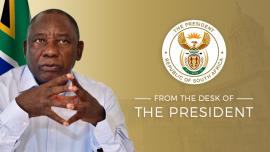
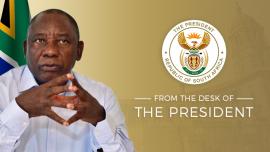
President Cyril Ramaphosa says the relations between South Africa and China have entered a new “era of opportunity”.
The President was addressing the nation through his weekly newsletter following an official State Visit to the People’s Republic of China last week.
“During the state visit, China and South Africa agreed to upgrade our relationship to an All-Round Strategic Cooperative Partnership in a New Era. This signifies the strengthening of the political, economic and social ties between the two countries.
“The strengthening of ties with major trading partners like China continues to yield benefits for the South African economy and people. It is clear that relations between South Africa and China have entered a new era of opportunity.
“Our visit has strengthened trade and investment ties and cemented our shared commitment to grow our economy, create jobs and advance prosperity for the people of our two countries,” he said.
Trading partners
The President revealed that during the visit, Chinese President Xi Jinping expressed that he would like to see more finished goods from South Africa entering Chinese ports.
The Asian country is South Africa’s largest trading partner but, President Ramaphosa pointed out, there is an “imbalance in the structure of our trade”.
“South Africa exports mainly minerals and agricultural products to China and imports largely manufactured products from China.
“During our discussion, Chinese President Xi Jinping expressed his support for the development of South Africa’s manufacturing capacity and to receive greater volumes of finished goods from South Africa.
“President Xi has committed China to open its markets to more South African products and would seek to further broaden the frontiers for Chinese investment in the South African economy,” President Ramaphosa said.
The President added that government is buoyed by potentially increased cooperation between the two countries in “pursuit of low-carbon, climate resilient economic growth” and infrastructure.
“For example, South Africa has investment opportunities in the electric vehicle sector, renewable energy, green hydrogen and energy storage – and China has a proven track record in developing innovative solutions in these areas.
“There is also great potential, and much interest, for Chinese private commercial firms, state-owned enterprises and banks to invest in our country’s infrastructure build programme. This aligns with our plans to modernise our infrastructure by investing in the expansion of ports, rail and road networks,” he said.
Beyond our shores
President Ramaphosa emphasised that enhanced relations between China and South Africa can bring opportunities beyond the two countries.
While on the State Visit, the President attended the Forum on China-Africa Cooperation (FOCAC) where the African Continental Free Trade Area (AfCFTA) and its potential were discussed.
“The [AfCFTA], which will provide access to a market of over 1.3 billion people, provides an even greater incentive for investment by China and other countries in Africa’s manufacturing capacity.
“This was underlined during the FOCAC summit attended by more than 50 African countries, where President Xi announced ten partnership actions that China would take together with African countries to support the modernisation of their economies. These actions cover areas like trade, industrial development, agriculture, health and infrastructure.
“At a time when African economies are growing closer together, China’s technological capabilities can support Africa’s industrialisation and enable the continent to export more than just raw commodities,” the President said.