

RTMC probes two deadly accidents

The Road Traffic Management Corporation (RTMC) has assigned a team of investigators to investigate the cause of a crash that has claimed five lives and left 12 others injured when a minibus taxi overturned in Mgwenyane, Libode, in the Eastern Cape.
“The RTMC is also investigating the crash that occurred on Saturday 31 August 2024 on the R723 between Parys and Koppies in the Free State. The crash occurred when the driver of a vehicle lost control and the vehicle overturned resulting in five fatalities and six others injured,” RTMC said.
The corporation extended its deepest condolences to the families and loved ones of those who lost their lives in the heartbreaking accidents.
“We also send our best wishes for a speedy recovery to the individuals currently hospitalised with injuries. RTMC officials are working closely with local authorities to assess the cause of both accidents. The RTMC will also examine whether factors such as vehicle roadworthiness, driver behaviour, or road conditions played a role in the crashes.”
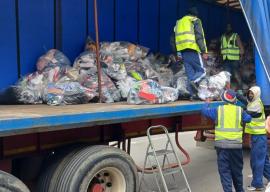
Police seize counterfeit goods worth more than R94 million
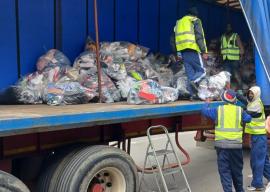
The National Counterfeit Goods Unit has led multiple intelligence driven takedown operations that has led to the arrest of five people and the seizing of counterfeit goods worth more than R94 million.
In a statement on Thursday, the South African Police Service (SAPS) said it along with its crime fighting partners, remain relentless in efforts to disrupt and dislodge illicit trade in counterfeit and contraband goods.
The teams comprised of various internal and external stakeholders that included, among others; SAPS members from various specialised units, the Directorate for Priority Crime Investigation (DPCI – “Hawks”), Department of Home Affairs, South African Revenue Services (SARS), Traffic, Metro Police Departments and Brand Protectors as well as force multipliers such as private security companies.
On 16 August 2024, police found and seized counterfeit clothing and sneakers worth over R37 million in a self-storage facility in Gauteng’s Doornfontein.
On 25 August 2024, police also seized counterfeit goods that included sneakers, clothing, watches and backpacks worth more than R41 million at a shopping centre in Bellville, Western Cape.
“On 29 August 2024, counterfeit sanitary pads, deodorants and other consumables worth over R4.8 million were seized at a self-storage facility in Mayfair, Johannesburg.
“On the same day, counterfeit sanitary pads, hair extensions, toothbrushes and other consumables worth over R9.3 million were seized at a small holding in Bredell, Kempton Park, Gauteng.
“The team also seized branded packaging, labels, machinery and other equipment used to manufacture counterfeit goods. Five Malawian nationals were also arrested for the contravention of both the Counterfeit Goods Act and the Immigration Act,” the statement read.
Furthermore, on 2 September 2024, police seized counterfeit shoe polish, deodorant, toothbrushes and other consumables worth over R2 million at a self-storage facility in Bonaero Park, Benoni.
“Police will continue to combat the illicit trade in counterfeit goods, protecting legitimate businesses and consumers who are subjected to substandard products that pose health and safety risks,” the SAPS said.
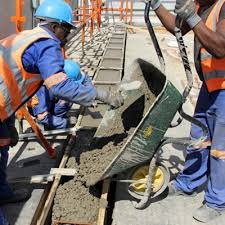
Police making significant progress in dealing with construction mafia, says DP Mashatile
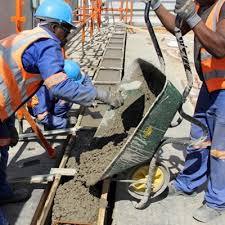
The South African Police Service (SAPS) has taken significant steps to deal with construction mafia through a coordinated and multi-disciplinary response to criminal activities.
“Investigative capacity has been established to address extortion and violence at construction sites across the country, with a particular focus on KwaZulu-Natal, the Eastern Cape and other areas where similar problems have been reported,” said Deputy President Paul Mashatile.
The Deputy President was engaging Members of Parliament (MPs) in the National Assembly on matters related to his delegated responsibilities.
In March this year, the Deputy President addressed the Criminal Justice System Review Conference where, amongst other important matters, criminality in the construction sector was highlighted.
“When delivering the keynote address, I stated the following: ‘Murderous construction mafia have brought many companies to their knees, and we must fight back to safeguard this industry’.”
Mashatile believes that a concerted effort from all is necessary to unravel the complex web of construction site disruptions, which endanger lives and impede government’s objectives of transforming the nation into a massive construction site that generates employment and expands the economy.
He told MPs that the police have partnered with various stakeholders, including State-owned entities (SOEs), government departments, private security companies and civil society to enhance their efforts in combating these criminal networks.
Mashatile reiterated government’s, commitment to addressing this challenge through the introduction of policies that will curtail and eliminate mafia in the construction sector.
These include the National Infrastructure Plan, the Critical Infrastructure Programme, the Social Facilitation Programme, and the Infrastructure Built Anti-Corruption Forum.
The Infrastructure Built Anti-Corruption Forum (IBACF), the Deputy President said, was another intervention that is yielding positive results in stopping criminal activities by the so-called “construction mafia”.
He explained that the IBACF was formed in 2020 and is aimed at monitoring infrastructure projects and putting systems in place to detect and prevent corruption.
The forum comprises civil society, representatives from the built environment, and various arms of government, including the Special Investigating Unit (SIU).
In addition, the Department of Public Works and Infrastructure, through the application of the Social Facilitation Concept which was approved by Cabinet in 2021 is conducting pilot projects like the Salvokop Precinct Strategic Infrastructure Project (SIP), which serves as a test case for integrating social facilitation into construction practices.
He explained that lessons learned will help further calibrate the framework.
“Given all the interventions I have outlined above, the challenge remains that the actual number of crimes committed by these mafias may be underreported, as witnesses and victims are often reluctant to come forward.
“It is crucial for communities, organisations, and businesses to work together with the South African Police Service to bring these criminals to justice.”
Meanwhile, he said top-class detective and crime intelligence work must be intensified to produce airtight prosecutions and see these crime bosses evicted, locked up and their proceeds of crime seized.
“The impact of these construction mafia on our nation’s development cannot be underestimated. The existence and activities of construction mafia significantly undermine the concept of a developmental State, as envisioned in the National Development Plan 2030.”
The Deputy President told Parliamentarians that these criminal organisations pose serious threats to public safety and the integrity of construction projects, which are essential for driving economic growth and development.
“As government, at all levels, we are committed to addressing this issue through independent investigations and partnerships with organisations like Business Against Crime South Africa, but most importantly with civil society organisations who live around and know these criminals.
“Let us stand together in the fight against these criminal organisations and work towards a safer and more prosperous South Africa for all living in it.”

Mayor welcomes re-opening of the Hilton Hotel in Durban
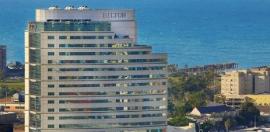
eThekwini Municipality mayor, Cyril Xaba, has welcomed the re-opening of the Hilton Hotel Durban, which will significantly benefit the City’s tourism economy.
Xaba noted that the reopening of the hotel is timely as it comes at the start of Tourism Month, which is celebrated annually in September.
“The hotel’s re-opening will add to the luxury executive accommodation inventory of Durban. The phased re-opening of the hotel will also strategically amplify the city’s business case when bidding to host national and international conferences,” the mayor said.
Apart from enhancing the tourism experience for visitors in the city, Xaba said the re-opening of the hotel will contribute to job creation.
“The Hilton Hotel is also a great added advantage for the Inkosi Albert Luthuli International Convention Centre (Durban ICC), which is situated near the hotel.
“When the Durban ICC conducts their product promotion, it will be characterised by the easy accessibility to prestigious accommodation which further instils business travel confidence.
“The convenient accessibility is also an advantage for dignitaries and high security risk patrons as there is no long-distance travel as all business travel purpose facilities are within easy reach. We are excited that our drive to attract investment in the city, through our Inner-City Regeneration Programme [which] is beginning to yield positive results,” he said.
The Hilton is situated in a prime location of the city’s business tourism meetings, incentives, conferences, and exhibitions precinct.
This is where the Durban ICC and the Durban Exhibition Centre are conveniently housed.
Registration for the Durban Business Fair opens
Meanwhile, the eThekwini Municipality has reminded small, medium and micro enterprises (SMMEs) to register to exhibit at the upcoming South regional Durban Business Fair (DBF).
To revitalise township economies, eThekwini Municipality said the city is reviving the regional Durban Business Fairs, which has been hailed for their important role of showcasing area-based business products, empowering entrepreneurs with skills and availing networking opportunities.
Chairperson of the Economic Development and Planning Committee, Thembo Ntuli said SMMEs are pillars of the city’s economy and drive job creation.
“Unlocking rural and township economic growth remains an integral part of our strategy to promote inclusive economic growth and create more jobs. It is therefore practical to create and coordinate programmes that promote entrepreneurship and small business growth to upscale the revitalisation of rural and township economies,” Ntuli said.
Exhibitor registration for the DBF which will take place from 25 to 27 October 2024, at KwaMnyandu Shopping Centre, is now open.
To book to showcase at this signature business exhibition, register before the deadline of 30 September 2024.
The registration form can be found on the link: https://bit.ly/SouthForm, or email admin@lomes.co.za and request a form.
Alternatively, registration forms can be collected from the security desk at the Embassy Building, 199 Anton Lembede Street.
You can also download the forms from the eThekwini Municipality website: www.durban.gov.za browse under government tab and scroll down to the Durban Business Fair sub-tab.
For more information, the business community can call 031 266 9938.
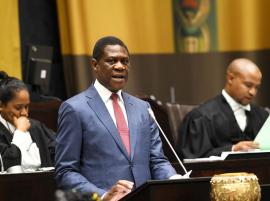
Deputy President laments police continuing to die at the hands of criminals
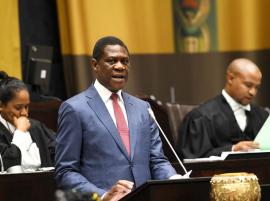
Government says with so many police officers continuing to lose their lives at the hands of criminals, it can not be business as usual.
“This is unacceptable,” said Deputy President Paul Mashatile on Thursday, as he engaged Members of Parliament (MPs) in the National Assembly on matters related to his delegated responsibilities.
The country’s second-in-command provided an update on measures taken to prevent further loss of life considering the incidences of exchange of fire and fatal shootings between members of the South African Police Service (SAPS) and alleged criminals.
The Deputy President spoke at the SAPS National Commemoration Day at the Union Buildings in Pretoria on Sunday where government honoured the 39 women and men in blue who died in the line of duty between April 2023 to March 2024. Their names have been engraved on the SAPS memorial wall at the Union Buildings as a symbol of gratitude for the sacrifices made in serving and protecting the nation.
Yesterday, he cited Police Minister Senzo Mchunu’s ministerial statement released last week which reported that Gauteng, KwaZulu-Natal, Western Cape and Eastern Cape currently carry 73% of crime levels in South Africa.
“The gravity of these crimes alone, including extortion, is of serious concern to us over and above their concentration,” he added.
The Minister outlined the State’s approach to fighting crime, which includes initiating the signing of cooperative agreements with provincial and local governments with operational plans seeking to integrate resources against crime.
“Equally, Minister Mchunu and General [Fannie] Masemola have confirmed to me that the Police Operational Plan currently being rolled out in Cape Town will be replicated in all metros in the country,” he told Parliamentarians.
The plan includes partnering with Community Policing Forums (CPFs) and private security companies.
“Honourable Speaker, having appreciated the magnitude of the levels of criminality in the country, especially in KwaZulu-Natal, the National Commissioner of Police issued National Instruction 1 of 2016 on the use of force in effecting an arrest, to regulate the use of force by police officials during arrests.
“This instruction clearly sets out the legal requirements that must be followed to ensure that the conduct of a police official is lawful and reasonable. The police are required to prevent, combat, and investigate crime; maintain public order; protect and secure the Republic’s inhabitants and property; and uphold and enforce the law, as outlined in Section 205 of the country’s Constitution.”
However, fighting crime should not only be the responsibility of SAPS alone. “Ourselves in this House as well as communities are expected to work with the police to fight criminal activities and help to identify criminals.”
The Deputy President told his colleagues that criminals are people who live in communities and residents know where they live.
“We urge all community members to inform the police of criminals’ whereabouts to enable them to promptly respond and arrest all criminal elements in our communities to avoid the current shoot-out between police and criminals.
“In this regard, we call on communities to work together in strengthen CPFs.”
SA increases imports to China
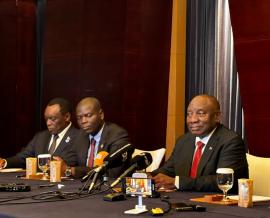
Beijing, China – With the agreements that South Africa has signed with China in relation to trade, the country will see an increase in the imports of agricultural and manufactured products to China.
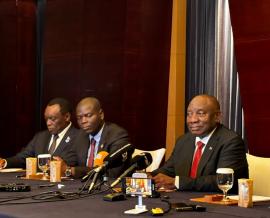
“We were able to sign eight agreements, many of which have to do with increased trade between the two countries and that has led to the opening up of the Chinese market for South African products, particularly with regards to beef,” President Cyril Ramaphosa said on Thursday in Beijing, China.
Addressing members of the media on the conclusion of his visit to the People’s Republic of China, Ramaphosa said the importation of beef into the Chinese market kept fluctuating as a number of areas in South Africa were affected by livestock diseases such as foot and mouth disease.
“That is a great achievement because it will lead to the increase of our agricultural products coming into China and we should see increased production in South Africa. Whenever such an occurrence would happen, they would ban the whole country, and we were able to reach an agreement that if there is an outbreak of foot and mouth disease it would just be restricted to one area in the country.
“That is a great achievement because it will lead to the increase of our agricultural products coming into China and we should see increased production in South Africa.
“The other area is for manufactured goods and products, to have an easier entry into China. With the agreement that we signed we were able to ensure that China would enable more manufactured goods from South Africa to be brought in. That for us is an important development,” the President said.
Agreements
He noted that China has achieved enormous development in technological development.
“We were able to reach an agreement on science, technology and innovation in terms of cooperation in relation to innovation research and we were able to have good discussions.
“We were able to reach agreements on aspects of our energy security. South Africa has been going through a huge challenge of energy security. China’s assistance in this regard is going to stand us in good stead so therefore our other objective was achieved.
“We also wanted enhanced cooperation on international issues in relation to our cooperation in BRICS is consolidated and solidified and in other multilateral organisations such as the United Nations and financial institutions that there needs to be reforms,” the President explained.
Relations with China
He said at a state level, South Africa has achieved a great deal during the visit to China.
“Our visit has been hugely successful. We will see a lot of progress in the country in developing our relationship with China, remembering that China is the second largest economy in the world. For us as South Africa it is important for us to promote our relations with China.
“China is our biggest trading partner, and we want an all-round cooperative strategic partnership in the new era to take it to a higher level. President Xi Jinping is at pains when he talks about not having enough manufactured goods from South Africa. He wants to see more goods in China from South Africa.”
To this end, President Xi opened the Chinese market for African countries to come and exploit the Chinese market.
“As the most industrialised country on the continent South Africa stands to benefit immensely from this relationship. This is an important market for us as South Africans. This is a county that is willing to deal with us at a very serious, economic and political level.
“This is an important market, and we have seen increased trade between our two countries. At the moment, the trade is imbalanced and in favour of China, rather than in our favour and it is this that we are focusing on, to correct that imbalance.
“That is why we welcome the opening up of the Chinese market for more and more finished goods from South Africa.
“We want to upgrade that economic activity to a higher level, so we are able to bring in more finished mineral goods, products or commodities into China and more finished agricultural products,” the President said.
Justice Minister to appear in Parliament over VBS allegations
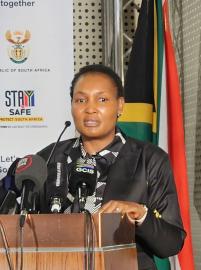
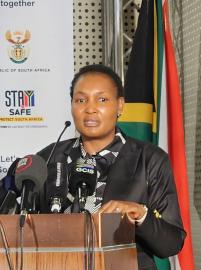
Minister of Justice and Constitutional Development, Thembi Simelane, is expected to appear before Parliament’s Portfolio Committee on Justice and Constitutional Development this week following reports that she indirectly benefited from the VBS Mutual Bank scandal.
Last week, allegations surfaced in the media that Simelane, while she was Mayor of Polokwane Municipality in Limpopo, received at least R500 000 in a loan from an individual intimately linked to VBS bank.
Portfolio Committee on Justice and Constitutional Development Chairperson, Xola Nqola, said the allegations have a bearing on the perception of South Africa’s fight against corruption.
“The committee has noted with grave concern the serious allegations in media reports regarding an alleged loan to the Minister. These types of allegations are damaging to the image that South Africa is trying to portray as a country ridding itself of any form of corruption.
“We therefore thought it prudent to call the Minister speedily to a committee meeting where she can take Parliament and South Africans into confidence regarding these allegations,” he said on Monday.
During a question and answer session in the National Assembly last week, Simelane committed to appearing before Parliament.
“Permit me to start by making a commitment to this house on my availability with regard to the response, if any is needed by the house, or the committee or the Public Protector on the issues that are doing the rounds,” she said at the time.
The Minister is expected to appear before the committee on Friday.
Following the allegations last week, the Presidency said President Cyril Ramaphosa has requested a “detailed report and briefing from the Minister on the matter”.
READ | President requests briefing and report from Justice Ministe
Government working ‘urgently’ to resolve logistics challenges
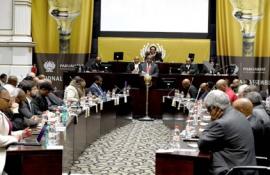
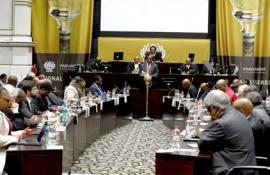
Government remains confident that the implementation of the Freight Logistics Roadmap will enable investment in South Africa’s ports and rail systems, said President Cyril Ramaphosa.
The President was speaking during a question and answer session in the National Assembly (NA) on Thursday.
“We are confident that through…efforts, and by implementing the Freight Logistics Roadmap, we will enable massive new investment in our ports and rail system. This will unlock economic growth and create jobs.”
The President said an “an efficient and well-functioning logistics system” is critical for the growth of South Africa’s economy.
He acknowledged that for many years, the system was underdeveloped and that standards declined.
“That is why we have focused on the logistics sector as part of our broader agenda for economic reform. For many years, our rail system and ports have suffered from underinvestment in infrastructure, equipment and maintenance. This has contributed to deteriorating performance.
“This trend was exacerbated during the state capture period. Funds were diverted away from pressing infrastructure needs. The poor condition of our rail network and the inefficient operation of our port terminals now represent a binding constraint on economic growth and job creation.
“This has implications for key sectors such as mining, agriculture and manufacturing,” he explained.
Collaborative efforts
The President informed the NA that government is now working “urgently to restore our logistics system to world-class standards” by among others, joining hands with the private sector.
This began during the sixth administration through the implementation of Operation Vulindlela which commissioned research that found that there is an appetite for private investment in ports and rail.
Operation Vulindlela is a joint initiative of the Presidency and National Treasury to accelerate the implementation of structural reforms and support economic recovery. It aims to modernise and transform network industries, including electricity, water, transport and digital communications.
At Thursday’s session the President assured the nation that as government and the private sector begin to work together, the state will retain ownership of infrastructure.
“Private sector participation is being introduced in container terminals. This is starting with an equity partnership between Transnet and an international terminal operator for the Durban Pier 2 Container Terminal.
“A dedicated Private Sector Participation Unit has been established by the Department of Transport to identify and develop further opportunities for private investment. These opportunities would be realised through concessions, joint ventures and other models.
“At the same time, we have made it clear that port and rail infrastructure will remain in public ownership, even as competition is introduced in operations,” he said.
In the rail system, a draft statement has been published which seeks to allow private rail operators to “access the network for the first time”.
The full Freight Logistics Roadmap is available for download here: https://www.transport.gov.za/wp-content/uploads/2023/02/Roadmap-for-the-Freight-Logistics-System-in-South-Africa-FINAL-FOR-RELEASE.pdf
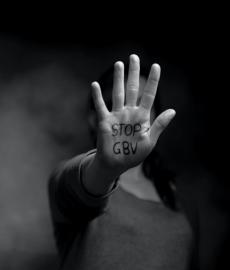
Tolashe condemns brutal killing of Limpopo mother
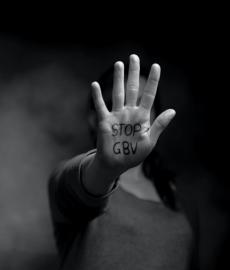
Social Development Minister Sisisi Tolashe has strongly condemned the brutal killing of a 45-year-old mother of four, whose body was found by the police together with two other victims at Sebayeng village in Limpopo.
The Minister said the incident happened as the country commemorates Women’s Month under the theme: “Celebrating 30 Years of Democracy Towards Women’s Development”.
“I am deeply saddened and disturbed by the violence and brutal killings of women, particularly, during the month of August where we expect women to be embraced, protected, and celebrated,” Minister Tolashe said.
She said August should be the month when all South Africans celebrate women as active agents of change and social transformation. This should be done by reflecting on the achievements of women over many years, as well as their transformation and development of the past 30 years.
“This month coincides with the country’s commemoration of 30 Years of Freedom and Democracy, making this year’s Women’s Month an important juncture for collective reflection on how we have empowered and advanced the rights of women on our democratic journey.”
The Department of Social Development in Limpopo, through its social workers, conducted a visit to the home of the deceased, Maria Matsobane Makgato, in the village of Kotishing, in Polokwane.
It was discovered that the deceased was unemployed and supported her family through the child support grant which she received for her children.
The three of her children are attending school and the youngest is registered at an early childhood development centre. The eldest is 22 years old and employed as a casual worker at a local farm with her contract ending in December this year.
“Social workers are greatly assisting the family and an assessment of the needs of the family was conducted to determine how best they could be supported. Counselling was provided as part of the basket of psychosocial support services the department provides to victims who have suffered trauma and loss,” the Minister said.
The social worker appointed to the case will continue with psychosocial support and aftercare services.
A report will be compiled to determine a suitable person to care for the children and the family will be provided with a Social Relief of Distress grant while awaiting the post-mortem results so they can finalise the burial service of the deceased.
As the country celebrates 70 years of the Women’s Charter this year, Minister Tolashe said the country was duty bound to work together as a society to defeat the primitive agenda of a patriarchal system that denies women fundamental human rights and seek to promote equality across all genders.
Smaller scale farmers are being supported
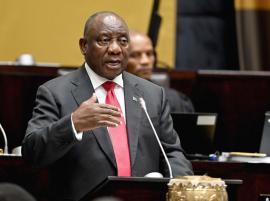
Government is prioritising support for the growth of smaller scale and previously disadvantaged farmers in South Africa.
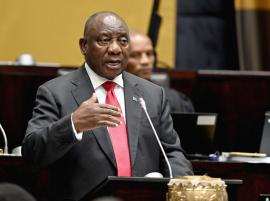
This is according to President Cyril Ramaphosa who addressed Parliament’s National Assembly (NA) on Thursday.
The President told the members of the NA that the Agriculture and Agro-processing Master Plan addresses the challenge of the concentration of ownership, production and market access in certain hands.
“The Master Plan aims to build an agriculture and agro-processing sector that is inclusive, competitive, job-creating, sustainable and growing.
“Pillar 5 of the Master Plan specifically seeks to facilitate market expansion, improve market access and promote trade. This will be achieved through, among other things, strengthening partnerships with established industry associations to ensure SMMEs can access existing networks that facilitate exports,” he said.
Further, government – with the assistance of the Perishable Products Export Control Board – is assisting small scale and previously disadvantaged farmers to comply with food safety regulations and standards.
“The ability of previously disadvantaged farmers to consistently supply the markets is also as a result of low throughput. It is for this reason that the Master Plan has prioritised producer support as one of its critical pillars. This support includes financing and extension and advisory services.
“By 2030, the Master Plan aims to increase the share of black producers in production of grains from four percent to 20 percent, in livestock from 32 to 40 percent, in fruits from two to 10 percent and in vegetables from 15 to 29 percent,” he said.
Meanwhile, the President said the different spheres of government are working together and committed to “delivering housing solutions and improving the living conditions of the people of Alexandra”.
He was answering a question from a member of the NA on progress made in providing housing solutions for the people of that area.
“Plans are underway to build approximately 40 000 houses in Frankenwald and Linksfield, benefiting Stjwetla residents and others in Alexandra.
“One of the urgent tasks is to relocate approximately 8000 households who are in the flood lines of the Jukskei River. An enumeration process to establish which households will be affected has been completed.
“Various land parcels have been identified for relocation. Studies on the suitability of the land have been completed on secured land portions. One project, known as the Linksfield Development, has secured township proclamations for a proposed 10 000 units,” the President said.
Another project, the Frankenwald Development, is expected to yield at least 30 000 units while work to unblock and complete stalled housing projects is also underway.
“Progress has been made on projects like the Helen Joseph Hostel and KwaNobuhle Hostel, with design approvals and beneficiary administration processes underway.
“The City of Johannesburg has obtained an evacuation order to relocate households in flood-prone areas of Stjwetla. Environmental assessments are underway to identify affected households and efforts are being made to secure land for relocation. Units have been constructed in other smaller projects, like Marlboro Gardens, Marlboro 2nd Avenue and Madala Hostel,” he said.
The President highlighted that there were specific challenges to housing development in Alexandra but assured that government would not leave the people of that area behind.
“These challenges require a multi-faceted approach and collaboration between various stakeholders to overcome them.
“Progress is being made. And government remains committed to delivering housing solutions and improving the living conditions of the people of Alexandra,” President Ramaphosa said.