

Gauteng Department of Roads and Transport warns against scammers

The Gauteng Department of Roads and Transport has warned the public of an email scam targeting individuals and companies that have submitted bids for tenders.
“The department urges the public not to fall for this scam, which instructs bidders to call a specific cell phone number to arrange a meeting.”
The department explained that the tender process is transparent.
“Once a bid is closed, there will be no further correspondence with bidders unless clarification is needed, which will be provided in the form of a written letter on official letterhead.
“Additionally, any response will be delivered in writing, not through meetings in person at random venues. Successful bidders will receive a formal letter before any official meetings are arranged to discuss awarded work,” the department said on Thursday.
Anyone who has received such email correspondence is urged to contact the department’s risk office on e-mail: duduzle.malebo@gauteng.gov.za.

Northern Cape road maintenance projects to create opportunities for five years
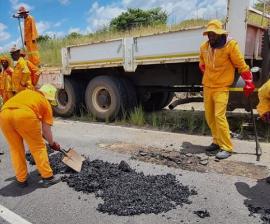
Two new Routine Road Maintenance (RRM) contracts in the John Taolo Gaetsewe (JTG) District of the Northern Cape will create scores of opportunities for subcontracting and local labour over a period of five years, the South African National Roads Agency SOC Limited (SANRAL) has announced.
SANRAL is currently evaluating tenders received for these contracts and hopes to appoint contractors later this year.
Speaking at a recent stakeholder engagement session with small business owners in Mothibistad, just outside Kuruman, SANRAL Project Manager Rudi Joubert unpacked the significant opportunities for project participation, job creation, skills development, training and enterprise development that come with projects of this magnitude.
“The work will focus on maintenance of the N14 and will include grass cutting, removal of alien vegetation, cleaning of culverts (a tunnel carrying a stream or open drain under a roadway), clearing of litter at rest areas and keeping the road reserve and the fences clean.
“Maintenance of the N14 will be done on an ongoing basis and small, medium and micro enterprises (SMMEs) should prepare to take advantage of the opportunities for subcontracting,” Joubert said.
The first of the two projects runs between Olifantshoek and the North West border and spans about 250 kilometres.
The second project starts between Danielskuil and Kuruman, through Kuruman, past Hotazel, continuing to the Botswana border.
“Both projects will be solely focused on RRM, so they do not deteriorate over time. If there is a pothole, it will be fixed and if there are cracks, they will be sealed,” Joubert said.
Everything you need to know about Mpox disease
As the number of Mpox cases continues to rise, the Department of Health has urged everyone with symptoms to immediately visit their nearest healthcare facilities for help.
This week, this department announced that the country recorded three more infections and one death.
The latest figure pushes the total infections to 16 and three deaths since the first case was reported last month.
Of the 16 infections, eight are from KwaZulu-Natal, seven are from Gauteng, and one is from the Western Cape.
All individuals involved in the cases are male and aged between 23 and 43 years old.
What is Mpox?
Mpox, formerly known as monkeypox, is an infectious disease caused by the monkeypox virus.
It can be transmitted to a person through contact with the virus from an animal, human, or materials contaminated with the virus.
Person-to-person transmission of the virus could be through close contact, which can be via prolonged face-to-face contact, kissing, sharing clothes or bedding with someone who is infected.
Entry of the virus is through broken skin, the respiratory tract, or mucous membranes (eyes, nose, or mouth).
According to the National Institute for Communicable Diseases (NICD), a person is contagious from the onset of the rash or lesions through the scab stage. However, once all scabs have fallen off, a person is no longer contagious.
Mpox is preventable and manageable, and treatment for both mild and severe cases is available. People at high risk include those living with chronic conditions such as HIV, tuberculosis (TB) and diabetes.
Anyone can contract the disease regardless of age, gender, sexual orientation and race.
Most people with Mpox will recover within two to four weeks.
Symptoms
Symptoms of the disease include fever and headache.
Other symptoms are:
- muscle aches
- backache
- chills
- exhaustion
- swelling of lymph nodes as well as
- skin lesions or rash that usually develops between one to three days and spread all over the body.
Diagnosis
According to the World Health Organisation (WHO), identifying Mpox can be difficult as other infections and conditions can look similar.
However, the WHO said it was crucial to differentiate Mpox from chickenpox, measles, bacterial skin infections, scabies, herpes, syphilis, other sexually transmissible infections, and medication-associated allergies.
Mpox’s rash begins as a flat sore, which develops into a blister, filled with liquid and may be itchy or painful.
In addition, the agency said that people with the disease may also have another sexually transmissible infection such as herpes, while a child with a suspected infection may also have chickenpox. It is for this reason that the WHO believes testing is key for people to get treatment as early as possible and prevent the further spread.
Self-care and prevention
The WHO is recommending steps to take to help the symptoms and prevent infecting others. These are:
- Stay at home and in your room if possible.
- Wash hands often with soap and water or hand sanitiser, especially before or after touching sores.
- Wear a mask and cover lesions when around other people until your rash heals.
- Keep skin dry and uncovered unless in a room with someone else.
- Avoid touching items in shared spaces and disinfect shared spaces frequently.
- Use saltwater rinses for sores in the mouth.
- Take sitz baths or warm baths with baking soda or Epsom salts for body sores.
- Take over-the-counter medications for pain like paracetamol or ibuprofen.
Department of Health’s response
The department, working with provinces and other stakeholders in the sector, has embarked on health education with funeral parlours on how to handle the human remains of suspected and confirmed cases.
It has also urged travellers from Mpox endemic countries to seek healthcare if they are ill and to alert health officials about their travel for clinical guidance.
Citizens are also encouraged to support all those who are showing symptoms to present at their nearest healthcare facilities immediately for screening and diagnosis, instead of self-diagnosis and using over-the-counter medication.
Last week, the department said it has received a batch of Mpox-specific treatment, Tecovirimat – also known as TPOXX or ST-246, for the treatment of patients who experience severe health complications because of Mpox disease.
The department said it is in the process of securing more treatment, including vaccines.
However, according to the department, all mild cases will continue to be managed with supportive treatment used to manage complications like fever, pneumonia and skin infections.

President Ramaphosa mourns the death of two SANDF members

President Cyril Ramaphosa has expressed deep sadness at the deaths of two South African National Defence Force soldiers, following a mortar attack at their base in Sake in the eastern Democratic Republic of Congo (DRC).
Twenty other soldiers sustained injuries.
As Commander-in-Chief of the South African National Defence Force (SANDF), President Ramaphosa has offered his deep condolences to the families of the fallen troops as well as their commanders and colleagues.
The President’s thoughts are also with the SANDF members who are recovering from their injuries.
“As we mourn the deaths and casualties inflicted on our soldiers, we value and are humbled by the sacrifices they have made for the cause of peace and stability in our region, and they shall not be forgotten,” the President said in a statement on Thursday.
The President also assured the bereaved families and the injured troops that the SANDF will take the utmost care to provide the necessary logistical and psychosocial support to all those affected.
South African forces are part of the Southern African Development Community (SADC) Mission in the Democratic Republic of Congo (SAMIDRC) which was deployed on 15 December 2023 to support the Government of the DRC to restore peace and security in the eastern DRC.
This was in response to an increase in conflicts and instability caused by the resurgence of armed groups.
Strengthening the fight against child labour
Children are the future, and it is our responsibility to ensure their safety and well-being by enabling them to grow and develop in a nurturing environment. The sad reality is that many children across the world face a daunting prospect of being drawn into work at a young age often under harmful conditions.
South Africa values the rights of children and has over the past 30 years sought to protect them from harm and promote their development. Protecting children from violence, exploitation and abuse is not only a basic right but an obligation set out in our Constitution.
This is in conjunction with other legislation such as the Children’s Act and Basic Conditions of Employment Act which makes it a criminal offence to employ a child younger than 15 or children who are of school going age. The Children’s Act also discourages children from working in mines, factories or in hazardous occupations.
In June, South Africa joined the international community in observing the World Day against Child Labour, under the theme: “Let’s Act on Our Commitments: End Child Labour”. The key commitments to end child labour are contained in the Durban Call to Action – a document adopted by various Member States, including South Africa at the 5th Global Conference on Ending Child Labour that was hosted in Durban in May 2022. The document outlines strong commitments to end child labour through making decent work a reality, ending child labour in agriculture, strengthening the prevention and elimination efforts, realising children’s rights to education, achieving universal access to social protection, and increasing financing as well as international cooperation. It is in this regard that this year’s commemoration raised awareness against child labour practices across the world and promoted initiatives to help put an end to this scourge.
In marking the day on 12 June 2024, our country reaffirmed its commitment in the fight against child labour. The day also coincided with the 25th Anniversary of the Adoption of the Worst Forms of Child Labour Convention which sets out to protect children against all forms of child labour. It also aims to prevent the use of children in armed conflict, prostitution, pornography, drug trafficking and participating in hazardous work.
The commemorations gave us an opportunity to reflect on the progress made as well as reaffirm our commitments to put an end to child labour. Despite the significant strides made over time to reduce child labour across the world, much still need to be done to fully eradicate the practice of child labour.
According to the International Labour Organisation (ILO), child labour has for the first time in 20 years increased globally. It is noted that the agricultural sectors such as farming, fishing, aquaculture, forestry and livestock farming account for 60 percent of child labourers aged five to 17 years.
In our fight against this plight, South Africa has endorsed the United Nations Convention on the Rights of the Child in 1995 and the African Charter on the Rights and Welfare of the Child in 2000 to affirm its commitment to the realisation of children’s rights.
In addition, the Department of Employment and Labour in collaboration with the International Labour Organisation launched the Prevention and Elimination of Child Labour in South Africa project to prevent and eliminate any forms of child labour in the agricultural sector in the country. The project is being piloted in the Western Cape and KwaZulu-Natal.
Delivering the keynote address at the launch, former Minister of Employment and Labour Thulas Nxesi expressed concern on the increase of child labour in the agricultural sector.
He said: “The agricultural sector is the backbone of our economy, providing food security and sustenance, as well as livelihood to millions. Yet, it is disheartening to note that some of the very hands that cultivate the crops and tend to the livestock belong to children who should be in schools, not in the fields. This situation is unacceptable and demands our immediate attention and concerted efforts.”
Despite our best efforts to protect children from abuse, neglect and exploitation, many children remain vulnerable. Tackling the scourge of child labour requires interventions on many fronts, and it is a reality that government on its own cannot curb. As such, businesses have a responsibility to the elimination of child labour by carrying out due diligence in their operations and supply chains and ensuring responsible and sustainable business practices that address the root causes of child labour.
Let us all work together to prevent and eliminate child labour by reporting such acts of crime to the Department of Employment and Labour, or alternatively to the police.
*Khethani Hlongwa is Director: Office on the Rights of the Child; Department of Social Development
Strengthening the fight against child labour
Children are the future, and it is our responsibility to ensure their safety and well-being by enabling them to grow and develop in a nurturing environment. The sad reality is that many children across the world face a daunting prospect of being drawn into work at a young age often under harmful conditions.
South Africa values the rights of children and has over the past 30 years sought to protect them from harm and promote their development. Protecting children from violence, exploitation and abuse is not only a basic right but an obligation set out in our Constitution.
This is in conjunction with other legislation such as the Children’s Act and Basic Conditions of Employment Act which makes it a criminal offence to employ a child younger than 15 or children who are of school going age. The Children’s Act also discourages children from working in mines, factories or in hazardous occupations.
In June, South Africa joined the international community in observing the World Day against Child Labour, under the theme: “Let’s Act on Our Commitments: End Child Labour”. The key commitments to end child labour are contained in the Durban Call to Action – a document adopted by various Member States, including South Africa at the 5th Global Conference on Ending Child Labour that was hosted in Durban in May 2022. The document outlines strong commitments to end child labour through making decent work a reality, ending child labour in agriculture, strengthening the prevention and elimination efforts, realising children’s rights to education, achieving universal access to social protection, and increasing financing as well as international cooperation. It is in this regard that this year’s commemoration raised awareness against child labour practices across the world and promoted initiatives to help put an end to this scourge.
In marking the day on 12 June 2024, our country reaffirmed its commitment in the fight against child labour. The day also coincided with the 25th Anniversary of the Adoption of the Worst Forms of Child Labour Convention which sets out to protect children against all forms of child labour. It also aims to prevent the use of children in armed conflict, prostitution, pornography, drug trafficking and participating in hazardous work.
The commemorations gave us an opportunity to reflect on the progress made as well as reaffirm our commitments to put an end to child labour. Despite the significant strides made over time to reduce child labour across the world, much still need to be done to fully eradicate the practice of child labour.
According to the International Labour Organisation (ILO), child labour has for the first time in 20 years increased globally. It is noted that the agricultural sectors such as farming, fishing, aquaculture, forestry and livestock farming account for 60 percent of child labourers aged five to 17 years.
In our fight against this plight, South Africa has endorsed the United Nations Convention on the Rights of the Child in 1995 and the African Charter on the Rights and Welfare of the Child in 2000 to affirm its commitment to the realisation of children’s rights.
In addition, the Department of Employment and Labour in collaboration with the International Labour Organisation launched the Prevention and Elimination of Child Labour in South Africa project to prevent and eliminate any forms of child labour in the agricultural sector in the country. The project is being piloted in the Western Cape and KwaZulu-Natal.
Delivering the keynote address at the launch, former Minister of Employment and Labour Thulas Nxesi expressed concern on the increase of child labour in the agricultural sector.
He said: “The agricultural sector is the backbone of our economy, providing food security and sustenance, as well as livelihood to millions. Yet, it is disheartening to note that some of the very hands that cultivate the crops and tend to the livestock belong to children who should be in schools, not in the fields. This situation is unacceptable and demands our immediate attention and concerted efforts.”
Despite our best efforts to protect children from abuse, neglect and exploitation, many children remain vulnerable. Tackling the scourge of child labour requires interventions on many fronts, and it is a reality that government on its own cannot curb. As such, businesses have a responsibility to the elimination of child labour by carrying out due diligence in their operations and supply chains and ensuring responsible and sustainable business practices that address the root causes of child labour.
Let us all work together to prevent and eliminate child labour by reporting such acts of crime to the Department of Employment and Labour, or alternatively to the police.
*Khethani Hlongwa is Director: Office on the Rights of the Child; Department of Social Development

Hawks seize cocaine worth R8 million

The KwaZulu-Natal Directorate for Priority Crime Investigation (Hawks) Provincial Head, Major General Lesetja Senona, has welcomed the seizure of 20 cocaine bricks that were destined for the Free State.
This as Hawks members from the Pietermaritzburg Serious Organised Crime Investigation unit seized the cocaine bricks worth R8 million at an industrial park near Pietermaritzburg on Wednesday.
The officers had received information about a truck that was carrying a chemical crop sprayer tractor from Durban Harbour heading to the Free State province.
“A disruptive operation was swiftly conducted, and members proceeded to the said industrial park.
“The said truck was traced and found stationary. A search was conducted and members found 20 bricks of cocaine hidden inside the chemical sprayer bin. A detailed statement was obtained from the driver and no arrest has been made at this stage. The investigation continues,” said the Hawks in a statement on Thursday.
Major General Senona has congratulated the officers for the good work done.

City of Johannesburg, City Power ordered to pay Eskom debt

Eskom has obtained a court judgement against the City of Johannesburg (CoJ) and City Power for the payment of their R1.073 billion debt.
According to Eskom, the city and its local power utility have been defaulting on their account since October last year.
“When the matter was heard on 4 June 2024, the total amount owed to Eskom by CoJ/City Power was R3.4 billion.
“The city in response to Eskom’s application, brought a counterclaim against Eskom for R3.4 billion alleging potential over-billing and that as a result it has applied an automatic set-off against Eskom electricity account.
“Furthermore, the court dismissed the counterclaim by the city with costs, consequently dismissing the automatic set-off claim.
“Eskom has written a letter to COJ/City Power demanding payment of the full amount of R3.4 billion by 21 June 2024 and we hope they will respect the court decision and settle all outstanding debts to Eskom,” the national power utility said.
Last month, Eskom said it had been left with “no choice” but to approach the courts to have the debt paid.
“The debt owed by City Power has reached unprecedented levels, exacerbating Eskom’s already strained financial situation.
“This dire situation not only undermines Eskom’s financial sustainability but also threatens its ability to maintain essential infrastructure, invest in new technologies and meet the growing energy demands of the province,” Eskom said.
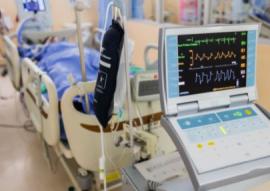
Mpox cases rise to 13
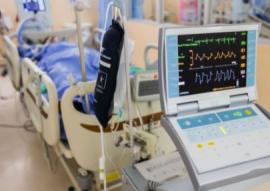
South Africa has identified six additional laboratory-confirmed cases of Mpox, taking the total number of cases from seven to 13 since the first case was reported last month.
The Department of Health reported new infections in Gauteng and the Western Cape. The death toll is still at two.
The first case of Monkeypox, now known as Mpox, was reported in South Africa on 9 May 2024, when a 35-year-old male living in Gauteng tested positive.
In the latest statement, the department said it has received a batch of Mpox-specific treatment, Tecovirimat – also known as TPOXX or ST-246, for treatment of patients who experience severe health complications because of Mpox disease.
“The process to secure more treatment, including vaccines, is underway in case the need arises. However, all mild cases will continue to be managed with supportive treatment used to manage complications like fever, pneumonia and skin infections,” the department explained.
READ | Mpox cases rise to seven in SA after new infection recorded in W Cape
Government is urging all people regardless of gender, age, or sexual orientation, with suspected Mpox symptoms or who had physical contact with known cases to present themselves at a healthcare facility because anyone can contract this preventable and treatable disease.
The department stated that hand hygiene is one of the effective ways to protect people from getting sick and prevent transmission of diseases.
“People are reminded to always wash hands with soap and water, or use an alcohol-based hand sanitiser, especially before eating or touching your face and after you use the bathroom.”
Some of the common symptoms of Mpox include a rash, which may last for two to four weeks, fever, headache, muscle aches, back pain, low energy and swollen glands.
“The painful rash looks like blisters or sores, and can affect the face, palms of the hands, soles of the feet, groin, and so on.”
Operation Shanela nets 1 287 suspects
Operation Shanela has resulted in the arrest of over 1 200 people in the North West.
Police operations, in conjunction with other law enforcement agencies and role players aimed at preventing and combatting crime, resulted in the arrest of 1 278 suspects for various offences over the 3 – 9 June period.
“The suspects were, among others, arrested for crimes such as rape, murder, assault with intent to do grievous bodily harm (GBH), house and business robberies, malicious damage to property, burglary at residential and business premises, possession of drugs, theft out of/from motor vehicle and driving under the influence of alcohol or drugs,” said the South African Police Service (SAPS).
Of the 1 278 suspects, 379 were apprehended during raids and 52 suspected undocumented persons were taken in for processing by immigration officials.
The arrests were effected during stop and searches, road blocks, patrols, vehicle check points, visiting and inspecting of licensed liquor premises and second-hand goods dealers and tracing of wanted suspects, among others.
During the operations, a variety of drugs, 17 cell phones, six firearms, 18 rounds of ammunition and other items were confiscated.
As part of enforcement of the Liquor Act, 1989, a total of 24 illegal liquor outlets / shebeens were shut down.
North West Provincial Police Commissioner, Lieutenant General Sello Kwena, thanked all role players for their continued efforts to ensure safer communities.
Since inception in May 2023, Operation Shanela consists of regular stop and searches, roadblocks, vehicle check points, high visibility patrols including foot patrols, the tracing of wanted suspects with a focus of murder and rape suspects, compliance inspections at liquor outlets and second hand good dealers.