

400 Junior Border Guards to be deployed to country’s ports of entry

The Border Management Authority (BMA) will on Thursday host a pass out parade for 400 new recruits who have completed their training at the South African Police Training College in Pretoria West.
The Junior Border Guards are to be deployed at the various ports of entry throughout the country.
They will be officially assigned as law enforcement officers with the responsibility to arrest and deport illegal migrants across all ports of entry.
“This important event comes during South Africa’s 30 years of democracy following years of struggle to curb illegal movement at ports of entry and along the borderline. In the backdrop of an ever-challenging border environment, these border guards are expected to stand firm, protecting the country’s borders with vigilance and valour,” said the BMA in a statement.
It said being a border guard in South Africa requires one to “have unwavering dedication to the nation, displaying commitment by being patriotic and having an indomitable spirit of rejecting negative persuasion”.
“Our nation’s borders are complex and therefore require discipline and courage to carry out the border management mandate. In other settings, daily you are faced with illegal migrants attempting to enter the country or smuggle illegal goods in or out of South Africa,” the BMA said.
Commissioner of Border Management Authority, Dr Michael Masiapato, said: “On the day, the nation will witness the culmination of the physical and mental training, with displays expected to be done on the ground during the event.
“We will celebrate not only their achievements but also reaffirm our steadfast support to the border guards. They are to be officially adorned not just as defenders of borders; they are the guardians of our freedom, the sentinels of our sovereignty.”
More than 100 border management response vehicles will also be displayed at the passing out parade.
President Cyril Ramaphosa officially launched the Border Management Authority in Musina last year
At the time, he said the authority will provide a sustainable solution to the structural challenges of border security, control and coordination.
The Border Management Authority is now the third armed service in South Africa after the South African National Defence Force and the South African Police Service.

SIU welcomes court appearances of alleged TERS fraudsters

The Special Investigating Unit (SIU) has welcomed the arrests by the Hawks and subsequent start of the prosecution of four people linked to the alleged defrauding of the Temporary Employer/Employee Relief Scheme (TERS) in the Eastern Cape.
The scheme, which was administered by the Unemployment Insurance Fund (UIF), was created by government to assist employers and employees that were distressed during the COVID-19 pandemic.
According to the SIU, the four accused allegedly claimed benefits that were not due to them and were exposed following an investigation by the unit.
The four accused are Nomvuzo Melody Kupiso, Tlotliso Molaba, Lehlohonolo Class Motaung and Lelokonyana Isak Letseng.
The corruption busting unit said Kupiso, through her company, Khayathi, unlawfully applied for TERS benefits on behalf of individuals who were no longer employed at Khayathi “through misrepresentation and intending to defraud the UIF”.
“Khayathi and Kupiso unlawfully and falsely made or created the proof of payments, which appeared to have been signed by the ’employees’ on receipt of the TERS benefit at the height of the COVID-19 pandemic. The individuals have not been employed at Khayathi since 2015. The UIF released the total payment in the amount of R216 905.95 to Khayathi.
“On 23 January 2024, the SIU referred the matter to the relevant prosecuting authority. On 18 April 2024, Kupiso was arrested and appeared on the same day before the King Wiliams Magistrates Court, Eastern Cape, on fraud, forgery, and uttering allegations. Kupiso was released on R1 500 bail,” the SIU said.
In the case of Molaba, Motaung and Letseng, the SIU alleges that the three – through their companies, Afrikhan Source (Pty) Ltd owned by Molaba and Motaung and Izuz Gibbor (Pty) Ltd owned by Letseng, “applied for the COVID–19 TERS online during two different periods”.
“Between March 2020 and October 2020, Afrikhan Source applied for COVID–19 TERS on behalf of individuals allegedly affected by the COVID–19 pandemic. The UIF made nine payments amounting to approximately R1 396,053,40 to the company’s account between September 2020 and December 2020.
“Between July 2020 and October 2021, Izuz Gibbor made applications for COVID-19 TERS on behalf of certain individuals who claimed to be affected by the pandemic. The company received nine payments from UIF, amounting to an estimated total of R101 555.92, in this period. However, it was discovered that the applicants never worked for either of the two companies.
“The SIU referred the matter to the prosecuting authority. The suspects were arrested in Bloemfontein and Phuthaditjhaba, Free State, on 25 April 2024. They were granted R10 000 bail each and the matter has been postponed to 11 June 2024,” the SIU said.

Mashamba Traditional Council set to benefit from 71.92 hectare plantation

Deputy Minister of Forestry, Fisheries and the Environment (DFFE) Makhotso Sotyu has handed over the management of the Mabama plantation to the beneficiary communities of Mashamba Traditional Council in Limpopo.
The handover of the 71.92 hectares plantation aims to empower communities living around the plantations, enabling them to manage the asset effectively and participate meaningfully in the forestry economy.
Addressing the handover ceremony on Tuesday, the Deputy Minister said the transfer of the management of this plantation will go a long way to improve the livelihoods of communities within Mashamba Traditional Council.
The plantation, with predominantly eucalyptus, plays a vital role in sustainable forestry management and is essential for the transformation agenda that is emphasised in the Commercial Forestry Sector Masterplan.
“The Department of Forestry, Fisheries and the Environment takes cognisance of the fact that these plantations are not necessarily in a condition that is ideal for timber production purposes and require a lot of work and resources to turn them around.
“I would like to make a commitment on behalf of the department that we will provide the community with the necessary support that is required to make these plantations productive in future.
“It must be noted that these plantations are categorised as woodlots, and the department will work with the affected communities to develop a plan that will ensure the management of these resources in a sustainable manner going forward,” she said.
The department has committed to undertaking initiatives such as site species matching to determine the ideal species that can grow well in this area, provision of technical and advisory support services and training of beneficiaries to empower them with knowledge and skills of sustainable forest management.
“Furthermore, the department can provide seedlings that will be needed to re-establish the plantations. These commitments are further outlined in the post settlement support package that is in the process of being finalised by the department.
“Where feasible, we will also try to link communities with strategic partners who will then assist with additional expertise and resources to recapitalise the plantations. The success of this project depends on the commitment of the communities in ensuring that the land is kept under forestry production,” Sotyu said.
Should a need arise for multiple land use, the department has finalised the piloting of such systems like Agroforestry, which can be employed for such a purpose without reducing the area under forestry.
Best practice guidelines are being developed in this regard for both land users and practitioners. The department has been leading a process to develop the Commercial Forestry Sector Masterplan.
“The masterplan is essentially the growth, investment and transformation plan for the sector.
“The plan was approved for implementation during November 2022. Part of the deliverables of the masterplan is the transfer of plantation resources such that government focuses on policy and regulation, as well as creating an enabling environment for the sector to thrive,” the Deputy Minister said.

E Cape introduces technology to fight stock theft

Eastern Cape Premier Oscar Mabuyane has stated that the widespread stock theft in the province has led government to introduce a technology-based system to help combat the scourge.
This crime has been causing emerging rural farmers to lose millions of rands.
Mabuyane made these comments during the launch of the Livestock Identification and Traceability System (LITS) in Tsolo on Tuesday.
The Premier was joined by the Rural Development and Agrarian Reform (DRDAR) MEC Nonkqubela Pieters and Transport, Community Safety and Liaison MEC, Xolile Nqatha.
LITS is a technology-based ear tag device that the government is distributing to 120 cattle farming enterprises, benefiting 30 000 cattle across the province.
Mabuyane reported that more than 18 000 animals, valued at over R58 million, have been stolen in the province recently.
“You can imagine what that is doing to the economy. When you talk about the province being the home of livestock, you are talking about subsistence rural farmers. We have a problem of livestock theft, and it has been with us for some time now. We are trying to tackle that,” Mabuyane said.
He believes the electronic ear tag device will also ensure that animals are not only branded but their origins would be traced.
“We are trying to introduce a more organised and commercial way of handling these animals. This is part of us trying to fight and curb livestock theft. We are sending a message to all the thieves out there that we will go after you in a better and more organised manner. You cannot sleep today and wake up with a kraal full of cows that you can’t account for,” he stressed, adding that the system will be rolled out across the province.
The Premier stated that government wants to see all animal populations being branded properly and given the ear tag to make sure they are monitored better.
Pieters said LITS will assist farmers in Tsolo, which is one of the municipalities with a high rate of stock theft and assist the police to identify the rightful owner of the cattle.
“Even if you sell the animal to somebody else, you will be able to trace the origin. If there are diseases, you can trace the origin of the cow. Farmers are going to be trained to keep records of their cattle to make sure that if it was sick, when was it sick, what type of medication has been used, how many times have you dipped your herd of cattle,” Pieters explained.
Nqatha said the launch adds the instruments needed in the fight against crime and government will ensure that all those who are responsible are held accountable.
Arrests
“Already we have been able to recover the stolen livestock, we have already been able to effect arrests. One of the things we were able to do was to assess our stock theft unit and its location between Qumbu and Sulenkama so that the capacity of the police is located nearer to the hotspot to facilitate our responsiveness,” said Nqatha.
According to the MEC, the community should work with the police to fight against stock theft, adding that animal branding and ear tagging will assist in this collaboration.
One of the farmers whose animals were ear-tagged and branded, Sabatha Mnjunju said he hoped the system would be able to track livestock and they would be easily identified when stolen.
Another farmer, Mzimeli Yelo, who even though was sceptical about the LITS, welcomed the system.
“It will help us but the chances of it helping are small because ear tags can be removed. Thieves know how to remove them. But where I think it can help is if you lose animals today when they had not succeeded in removing the tags and you report it on time, it can help trace the animals that way,” said Yelo.
Collaboration and training
According to the province, all the ear-tagged animals and the identities of their owners are registered into a central database where animal movement is recorded to make it easy to trace the animal back to the owner.
DRDAR is implementing this national policy through collaboration with the Agricultural Research Council (ARC).
Currently, the department trained and registered more than 250 veterinarians, scientists, animal health technicians and extension advisors to lead the implementation of the system.
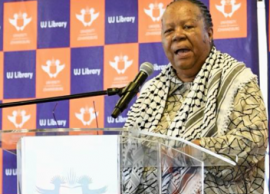
Pandor condemns killing and silencing of journalists in Palestine
The capacity of journalists to report on events in real-time is crucial, and intimidating or killing members of the media must not be permitted to persist without consequences.
This is according to International Relations and Cooperation Minister, Dr Naledi Pandor, who spoke at the second Shireen Abu Akleh Memorial Lecture at the University of Johannesburg (UJ) on Wednesday.
Abu Akleh was a prominent Palestinian-American journalist, who worked as a reporter for Al Jazeera. She was killed by an Israeli soldier while wearing a blue press vest and covering a raid on the Jenin refugee camp in the Israeli-occupied West Bank.
The lecture, organised by the Faculty of Humanities at UJ, centred on the role of academic institutions during periods of genocide.
WATCH |
Pandor said the lecture occurs against a “troubling” backdrop of an evident decline in media freedom.
She is of the view that academics and institutions must allocate more time to address the decline and the escalating threat to free expression.
“In the past, journalists knew they would enjoy robust and active protection from fearless colleagues, who would risk their lives to protect them. The decline we are witnessing cannot simply be explained away by citing wireless, social media or other technologies.”
This week marks two years since the assassination of Abu Akleh, who Pandor described as a beloved veteran journalist, who dedicated her life to the pursuit of justice and truth.
“To date, no one has been held accountable for her death despite the global outrage, and there has been no reported progress in the investigation at the International Criminal Court (ICC) and silence with regards to any other investigation,” the Minister said.
She cited the United Nations (UN) Independent International Commission of Inquiry on the Occupied Palestinian Territory, which “concluded on reasonable grounds that Israeli forces used lethal force without justification under international human rights law” when they shot and killed the journalist, violating her right to life.
Pandor bemoaned the situation for journalists in the Occupied Palestinian Territories, which she said has become increasingly grave over the past seven months.
She cited Committee to Protect Journalists data which revealed that as of 23 April this year, at least 97 journalists and media workers are among the 35 000 that have been killed in Gaza since 7 October 2023.
Pandor is of the view that the targeting of journalists in the Occupied Territories is part of a pattern of silencing the free press and is an outright contravention of international law.
“International human rights law obligates an occupying power to allow for freedom of expression and protests. The ability of journalists to cover events as they take place is essential, and efforts to intimidate and assassinate members of the media should not be allowed to continue with impunity.”
International human rights law, Pandor said, obligates an occupying power to allow for freedom of expression and protests.
“If Shireen were alive today, she would have been in the trenches in Gaza, reporting day and night on the atrocities taking place in the hopes that the world would take notice and show their solidarity with the Palestinian people.”
Pandor believes that Abu Akleh would have been devastated by the destruction of civilian life in Gaza and the global tolerance of the unending suffering of the Palestinian people, many of whom have died agonising deaths trapped under rubble.
“She would have been reporting on the immense suffering of survivors in Gaza, who are now battling unprecedented hunger and starvation, as well as continuous military assaults by the Occupying Forces.”
Despite the International Court of Justice ruling, the Minister said the Israeli state has continued its murderous assault on the people of Gaza with impunity, killing more civilians, injuring thousands, the continued bombing of homes and other buildings and infrastructure, affecting every possible avenue of life of the residents of Gaza.
“The lack of accountability by Israel is increasingly clear.”
Crimes against humanity
The Minister said the evidence of the mass killings of civilians points to the perpetration of war crimes, crimes against humanity.
International humanitarian law prohibits attacks on civilians and non-combatants, underlining the need to protect human life during times of war, Pandor said.
She stressed that South Africa continues to call on the ICC to prosecute these war crimes and to issue arrest warrants for those leaders in Israel who have ordered and presided over these crimes.
“The slowness to investigate and prosecute those responsible for these war crimes necessitates greater mobilisation among the youth and civil society around the globe to ensure that justice for the Palestinians is realised.
“It is time for collective action and for us to champion the call for the implementation of UN resolutions and rulings of the world’s highest court. We owe this to the people of Palestine and the memory of Shireen Abu Akleh,” Pandor said.

Divorce Amendment Bill signed into law

President Cyril Ramaphosa has signed into law the Divorce Amendment Bill, which amends the Divorce Act of 1979 to recognise Muslim marriages and safeguard the interests of Muslim women and children of Muslim marriages in the event that marriages are dissolved.
Currently, Muslim couples who choose to marry according to Islamic law can only be afforded the statutory protection of the South African legal system as it pertains to civil spouses if they, in addition to their marriage under Islamic law, register a civil marriage.
“The amended legislation addresses shortcomings in the Divorce Act of 1979, which differentiated between people married in terms of the Marriage Act and people married according to Muslim rites, especially women.
“The amendments enacted by the President provide for a definition of a Muslim marriage in the Divorce Act of 1979; the protection and safeguarding of the interests of dependent and minor children of a Muslim marriage; the redistribution of assets on the dissolution of a Muslim marriage and forfeiture of patrimonial benefits of a Muslim marriage,” the Presidency said on Thursday.
The new legislation is a response to an earlier Constitutional Court judgment that recognised the need for and importance of protecting Muslim women and children of Muslim marriages, particularly when a Muslim marriage is dissolved.

Shearing shed to take local market to new heights
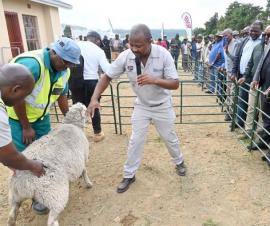
Eastern Cape Premier, Oscar Lubabalo Mabuyane, says the provincial government understands the importance of the agriculture sector in economic development and hence proper infrastructure is being provided to communal farmers.
Mabuyane said this when he handed over a shearing shed to communal wool growers at Jongabantu, in Ngqamakhwe, on Wednesday.
“Agriculture is very important to the economy of our province [and] that is what we preach every day. As the Premier of the province, I am proud and delighted about the good work done by the sheep farmers here, which produce a lot of wealth,” Mabuyane said.
He encouraged sheep farmers to improve the quality of their sheep so that they can sell to the market for meat production.
The shearing shed, which will be owned by the Mbiza Wool Growers Association, was constructed by the provincial Rural Development and Agrarian Reform Department, as part of ongoing programmes to build suitable agricultural infrastructure in rural communities.
All the shearing sheds constructed by the department have a dip plunge (sheep dip tank); fencing; small stock handling facilities; water pump; two PVC tanks and shearing equipment, including a wool presser, sorting table, classing bins, shearing scissors, offices, and ablution facilities.
The Premier said he had heard about the harsh conditions the sheep farmers worked under when they sheared their sheep in garages and roundavels, which affected their wool production.
He said the R1.2 million investment for the shearing shed is aimed at supporting farmers to reach the next level of production.
Since 2019, the provincial government has completed a total of 905 agricultural infrastructure projects, including the fencing of productive lands, stock-water systems, dip tanks, stock handling facilities and sheds.
These projects supported 33 783 smallholder farmers and created 4 946 jobs through their implementation.
“In Ngqamakhwe area alone, the department has completed four shearing sheds worth R4.8 million while another one worth R1.2 million is under construction. Wool production in communal areas, such as Ngqamakhwe, and Dutywa, doubled from two million tons in 2004 to 5.5 million tons in 2021.
“The significance of this growth in monetary terms means incomes have increased from R18 million to more than R250 million in the same period.
“The government is assisting farmers in Ngqamakhwe and across the province though a livestock improvement scheme where farmers are provided with high quality breed livestock,” Mabuyane said.
The provincial government has also provided over 90 Dohne Merino Rams to farmers in Ngqamakhwe and is confident this will improve the quality of wool produced.
“Today’s handover of the shearing shed is the fulfillment of our commitment to ensure rural farmers are beneficiaries of the government programme for the small farmer and a gesture of support.
“It is a catalyst for economic empowerment and a step towards self-sufficiency for our subsistence farmers,” the Premier said.
Mbiza Wool Growers Association Chairperson, Sindisile Cekiso, said the association was formed in 2005 and has 111 members. He thanked officials for their assistance and support.
Amathole District Eastern Cape Communal Wool Growers Association Chairperson, Sikhumbule Nyengule, commended the department for taking care of communal farmers.
“The association is very happy by how government is working and delivering services. We are commercialising our product and we want sheep that are of high breed hence we are working together with government to achieve this goal,” Nyengule said.
Court orders “stolen land” to be transferred back to provincial department
Monday, May 6, 2024
The Special Investigating Unit (SIU) has welcomed a forfeiture order by the High Court of South Africa: Gauteng Division, in Pretoria, to the SIU and Asset Forfeiture Unit (AFU) linked to the fraudulent transfer of government land to private entities and individuals.
The total value of the recovery is R53 million, the investigative unit said in a statement on Monday.
The order, dated 18 April 2024, orders that Farm 33 Zuurfontein, in Ekurhuleni, Gauteng, must be transferred to the Gauteng Department of Infrastructure Development as the original title deed owner and RIC Development to pay that department R12 million.
“The order follows an SIU investigation which revealed that a syndicate of individuals and private entities defrauded the Department of Rural Development and Land Reform and the respective Deeds Registries in Vryburg, Johannesburg and Pretoria by fraudulently transferring government property to individuals and private entities for their benefit.
“The SIU’s investigation looked into fraud and corruption committed between January 2008 and February 2022.
“As part of the investigation, numerous affidavits were obtained by the SIU from internal Rural Development and Land Reform Department and Deeds Registry staff members, external witnesses and/or transferring attorneys,” said the unit.
The SIU was, in terms of Proclamation R 7 of 2014 as amended by Proclamation R 599 of 2015 and Proclamation R 32 of 2017, authorised by the President to investigate allegations of corruption and maladministration relating to the transfer of government land to individuals and private entities and to recover the loss the state has suffered.
“In line with the SIU Act, the SIU referred evidence pointing to criminal conduct to the National Prosecuting Authority (NPA) for further action.
“The referral resulted in a criminal case being registered with the Directorate of Priority Crime Investigations (Hawks),” it said.
The forfeiture order is for the following:
- Farm 33 Zuurfontein which was meant for the development of low-income housing and a school in the community. The land is worth R41 million.
- A payment of R12 million representing the property known as Holding Beverley Agricultural Holdings, which was bought by RIC Development from the government land theft syndicate.
The unit said RIC Development bought land from the “land thieves” and developed it without knowing that it was stolen.
“This forfeiture order is part of the implementation of the National Anti-Corruption Strategy by law enforcement agencies to strengthen its fight against corruption,” said the SIU.

High-risk people encouraged to get flu vaccination

As South Africa enters the winter season, Gauteng Health and Wellness MEC, Nomantu Nkomo-Ralehoko, has encouraged the public, especially people at high risk of severe influenza, to visit their nearest public clinics or healthcare providers to get the flu vaccination.
Nkomo-Ralehoko urged people, especially those at high risk such as adults aged 65 years and older, people with underlying illness such as heart and lung disease, people living with HIV and tuberculosis, as well as pregnant people, to visit their nearest public clinics or healthcare providers to get the flu jab.
“Getting vaccinated is a safe and effective way to protect yourself and those around you from influenza,” Nkomo-Ralehoko said.
The MEC made the call on Sunday, as the department joined the global community in observing World Hand Hygiene Day to raise awareness about the importance of hand hygiene in preventing the spread of diseases.
World Hand Hygiene Day is observed annually on 5 May to improve hand hygiene standards at home and the workplace – thereby protecting health and care workers, as well as communities from infections and curbing the spread of harmful germs.
The 2024 World Hand Hygiene Day was observed under the theme: “Promoting knowledge and capacity building of health and care workers through innovative and impactful training and education, on infection prevention and control, including hand hygiene”.
Nkomo-Ralehoko emphasised the importance of hand hygiene to stop the spread of respiratory infections.
“It is critical that health and care workers and the public at large make hand hygiene a non-negotiable routine in their daily lives as a simple, yet powerful tool to safeguard their wellbeing. Through advocacy and education, we can foster these good habits that help prevent the spread of diseases,” Nkomo-Ralehoko said.
Nkomo-Ralehoko noted that hand hygiene has proven effective as a preventive measure during the COVID-19 pandemic and the recent Cholera outbreak.
“Hands should be washed with a soap or alcohol-based sanitiser for a at least 20 seconds, covering all surfaces of the hands, including the palms, back of hands, between fingers, back of fingers, thumbs, fingertips, and wrists.
“As we enter the winter months – which often sees an increase in cases of flu infections – the message around hand hygiene is even more urgent as a proactive measure to protect ourselves and loved ones and stop the spread of respiratory infections such as influenza,” Nkomo-Ralehoko said.
In an effort to raise awareness, the department’s health facilities will from 5 to 10 May 2024, embark on a handwashing campaign targeting healthcare workers, patients, and the public about the significance of hand hygiene.

Administrator addresses alleged outstanding payments for private student accommodation

National Student Financial Aid Scheme (NSFAS) Administrator, Freeman Nomvalo, has assigned staff to urgently address concerns around the outstanding payments for private student accommodation.
This follows complaints brought to the Administrator’s attention regarding alleged outstanding payments for private student accommodation and reports of students being locked out by landlords in some areas.
“We anticipate that these should be resolved during the course of the month of May 2024,” Nomvalo said.
To ensure that the issues do not further disrupt teaching and learning, the Administrator has urged the affected landlords to cooperate with the established NSFAS process to address all concerns.
Nomvalo said a dedicated email address has been established to process all disputes or concerns from landlords. All disputes and concerns regarding alleged outstanding payments for private student accommodation must be submitted to NSFASAccomProv@nsfas.org.za.
“All landlords are encouraged to deposit their disputes or concerns only in so far as outstanding payments are concerned. Submissions must be received not later than 10 May 2024,” Nomvalo said.
The Administrator apologised to all affected institutions, including students and landlords, and committed to a speedy resolution.
“We are committed to working with all the stakeholders to find workable solutions for the betterment of the post school education and training system,” Nomvalo said.