
Call for public comments on money laundering regulations
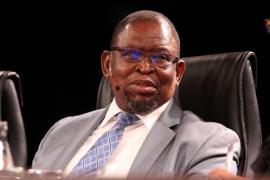
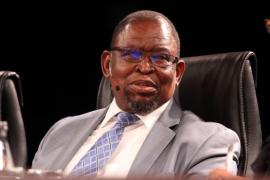
Finance Minister Enoch Godongwana has invited public comments and written submissions on draft amendments to the Money Laundering and Terrorist Financing Control Regulations.
“The draft amendments aim to strengthen South Africa’s system to combat money laundering and terrorist financing by enhancing the reporting of the conveyance of cash or bearer negotiable instruments into or out of the Republic,” National Treasury said on Tuesday.
The invitation for comments was published on 8 April 2024 via Gazette Notice 50450 no 4712.
The draft amendments are in terms of section 77(5)(a) of the Financial Intelligence Centre Act, 2001 (Act No. 38 of 2001 – ‘the FIC Act’).
“The draft amendments are proposed to be made in terms of section 77(1) of the FIC Act, read with section 30 of the FIC Act, to the Money Laundering and Terror Financing Control Regulations.
“Section 30 of the FIC Act provides for a requirement to report the conveyance of cash or bearer negotiable instruments into or out of the Republic to the FIC,” National Treasury said.
The objective of section 30 of the FIC Act is to ensure that information relating to the cross-border movement of cash and bearer negotiable instruments is made available to the FIC.
The FIC currently receives reports on cross-border electronic funds transfers (section 31 of the FIC Act).
In addition, the FIC receives reports on large cash transactions (section 28 of the FIC Act), suspicious or unusual transactions (section 29 of the FIC Act) and property that is linked to persons or entities who are subject to targeted financial sanctions (section 28A of the FIC Act).
“The proposed draft amendments are aimed at strengthening the country’s financial system and improve its resilience against abuse by money launderers and terrorist financiers. It is critical to the effectiveness of the FIC’s operational capabilities that the information it receives concerning cross border financial flows be expanded to include cross-border movement of cash and bearer negotiable instruments.
“This is envisaged to strengthen the FIC’s ability to detect possible suspicious or unusual activity and to disseminate the relevant information to investigating and prosecuting authorities. Section 30 of the FIC Act empowers the Minister to prescribe a threshold amount that will trigger reporting under this section.
“The Minister sets this amount through regulations that will support the implementation of reporting under section 30 of the FIC Act. The Minister proposes that the threshold for reporting under section 30 of the FIC Act be set at R24 999.99,” National Treasury said.
This means that persons who convey R25 000 or more into or out of the Republic will be required to report this under section 30 of the FIC Act.
Section 30 of the FIC Act also empowers the Minister to prescribe the information that must be included in a report on the conveyance of cash or bearer negotiable instruments.
“This information must be sufficient to provide the FIC with the necessary transparency and traceability information concerning the cross-border movements of cash and bearer negotiable instruments.
“A report under section 30 of the FIC Act must be made to a person who is authorised by the Minister to receive such a report. The Minister, after consulting with the South African Revenue Service (SARS), has determined that reports under section 30 can be integrated in reporting under the Customs and Excise Act of 1964,” National Treasury said.
To this end, the Minister intends to authorise Customs Officers to receive reports on the conveyance of cash or bearer negotiable instruments, either physically at ports of entry and exit, or electronically through the traveller declarations system that SARS has developed for this purpose.
The proposed Regulations:
(a) prescribe a threshold amount that will trigger reporting under section 30 of the Act;
(b) prescribe the information that must be included in a report on the conveyance of cash or bearer
negotiable instruments; and
(c) specify the person who is authorised by the Minister to receive a report under section 30 of the Act.
A copy of the Regulations and the Explanatory Memorandum are available on the National Treasury website: www.treasury.gov.za.
Written comments and submissions may be submitted to: Commentdraftlegislation@treasury.gov.za no later than 19 April 2024.
Home Affairs clarifies misunderstanding on visas
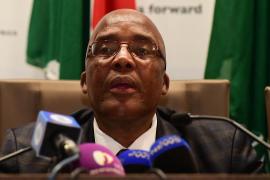
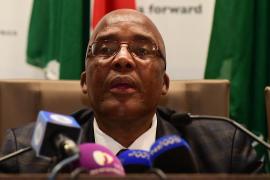
Home Affairs Minister, Dr Aaron Motsoaledi, has moved to clarify a misunderstanding on the gazetted regulations recommendations on the Critical Skills and General Work Visas.
This comes after some media reports had stated that the department had done away with the Critical Skills Visa in favour of a point-based system.
Briefing the media on the Second Amendment of the Immigration Regulation 2014 on Tuesday, Motsoaledi pointed out that section 19(4) of the Immigration Act states that a Critical Skills Work Visa may be issued by the Director-General to an individual possessing such skills or qualifications determined to be critical for the Republic from time to time by the Minister by notice in the gazette.
However, section 19(2) of the Act states that a General Work Visa may be issued by the Director-General to a foreigner not falling within the category contemplated in sub-section 4 and who complies with prescribed requirements.
“Sub-section 4 is the one dealing with critical skills [and] this means general work is anything that is not covered in the critical skills list. The prescribed requirements mentioned in the Act are found in regulation 18 (3) of the previous regulation before the amendments.” Motsoaledi said.
He emphasised that the department has not cancelled the Critical Skills Work Visa but has changed the manner in which the visa was previously operating.
“In the past, a critical skills list visa was issued every four years, and the Minister of Home Affairs is supposed to gazette skills that are critical to the economy of the country. But Home Affairs does not have the capacity, nor the knowledge, nor the skills to know what is required.
“What Home Affairs does is go to the Department of Higher Education and Training (DHET). The DHET usually asks the Human Sciences Research Council (HSRC), and the council will work with other institutions, including labour market surveys, to put up a list of skills which they think are critical for the economy of the country,” Motsoaledi explained.
The Minister also noted that critical skills are not necessarily referring to important skills or prestigious skills like some people believe.
“A critical skill is that which is critical for the functioning of the economy but there are few South Africans who can do that work, and so we are forced to go beyond the borders of this country to look for those people with such skills.
“Once the profession we have got appears on that critical skills list, which would have been gazetted by the Minister of Home Affairs, you get a letter of employment, then Home Affairs is forced to give you a Critical Skills Work Visa,” Motsoaledi explained, adding that the visa is one of the easiest to give, as it only requires a profession.
On the General Work Visa amendment, Motsoaledi said employers are no longer required to go to the Department of Employment and Labour, but the visa would be approved through a point-based system.
“We are going to give you points, and on the basis of that point you have to reach a particular mark, then you get your visa,” the Minister said.
The Minister said the point-based system will consider at least six criteria, including age; qualifications; language skills, work experience; offer of employment; and the ability to adapt within the Republic.
However, Motsoaledi said the department is considering replacing the ability to adapt within the Republic with income or salary being offered to an individual.
New work visa regulations withdrawn
Meanwhile, Motsoaledi announced the withdrawal of the new work visa regulations, which were gazetted on 28 March 2024 for public comments, a day before the closing date for public comments on the draft policy.
This follows the National Economic Development and Labour Council (NEDLAC) meeting held last week, where the process was questioned and NEDLAC demanded the withdrawal of the regulations.
“These regulations are being withdrawn in the government gazette, simply to rectify this small error, not that we are going to change them. In the process we will change other smaller issues which we have picked up which may not [have] been understood,” he said.

Woman sentenced for R16m theft

Lizette Marielle Steyn, 56, has been sentenced to at least 12 years imprisonment after being found guilty of 85 counts of theft.
The former Finance and Administration Manager of AgriCAD was sentenced in the Pretoria Specialised Commercial Crimes Court.
National Prosecuting Authority spokesperson Lumka Mahanjana explained that Steyn was arrested in July last year.
“Steyn was employed by AgriCAD [and her] responsibilities, amongst others, were to load the creditors for payment on the business bank account monthly and do the day-to-day bookkeeping and accounting. As such Steyn had full access to the AgriCAD ABSA bank accounts.
“During her employment, Steyn would change the details of one of the AgriCAD ABSA bank accounts and replace it with her six different personal Capitec accounts.
“From 27 October 2020 until 09 May 2023, 85 different payments of over R16 million for the company were paid into her personal bank accounts. With the funds, Steyn installed solar panels in her house and bought luxury items, a caravan, and a vehicle for her son-in-law. She also paid for her daughter’s wedding, and her family’s weekends away and holidays,” she said.
Mahanjana said Steyn pleaded guilty to charges against her and explained that she “stole the money to pay debts because her husband lost his job”.
The thief then asked the court to consider leniency upon sentencing due to her ill-health and the fact that she is a first time offender.
“However, the prosecutor, advocate Rachelle van der Walt, argued that as much as Steyn was a first-time offender, her offences were committed over three years. Furthermore, Steyn was in a position of trust, her employer trusted her, but she betrayed that trust and was not hesitant to hide her dishonest conduct.
“She opened Capitec accounts in her name which she used to receive the stolen money for luxurious items and extravagant lifestyles. Therefore, Adv van der Walt asked the court to consider long-term imprisonment when imposing the sentence.
While delivering the sentence, Magistrate Ignatius du Preez said Steyn was left with no option but to plead guilty.
“Her change of heart and acknowledgement of her criminal conduct originated from being caught and not from her true inner feelings of regret. Therefore, she had no choice but to concede defeat.
“Steyn committed the offence when she was at an age where it was expected of her to be able to distinguish between right from wrong, but she failed dismally. Furthermore, courts are increasingly faced with the situation where offenders with medical challenges commit serious offences, and such illness cannot be used as a license to commit crime,” du Preez said.
SANDF dismisses claims that South African soldiers have ‘surrendered’ to M23 rebels

The South African National Defence Force (SANDF) has refuted reports claiming that two South African soldiers deployed as part of the Southern African Development Community Mission in the Democratic Republic of Congo (SAMIDRC) have surrendered to M23 rebels.
According to a statement released on Wednesday, this misinformation was found in various media reports, including the National Security News.
The same publication went further to report that the SANDF soldiers are now being held as hostages by M23.
“We want to state categorically that all SANDF members deployed in the DRC have been accounted for.
“The convoluted article published by the faceless Washington correspondent is dismissed with the contempt it deserves. This is not the first time such unfounded and baseless news articles have been written about the SANDF since its deployment in the DRC under SAMIDRC,” the SANDF said.
The SANDF soldiers are part of SAMIDRC deployed to support and assist the government of Africa’s second-largest country to restore peace, security and stability.
“We view such attempts to discredit the Defence Force in the most serious light by faceless people, and will not stand and allow its good name to be tarnished.
“The SANDF, as the authority for the deployed members, shall at all times inform the South African public about the situation and safety of its members in the DRC,” the SANDF said.

AFU cops R43 million preservation order against former DRC defence attaché

The Asset Forfeiture Unit (AFU) has secured a R43 million preservation order emanating from a case of fraud and theft opened by the Democratic Republic of Congo (DRC) Embassy against that country’s former Defence Attaché to South Africa, Brigadier Ngoy Timothee Makwamba.
The order was handed down in the Pretoria High Court and is to preserve four properties and two bank accounts.
According to the National Prosecuting Authority spokesperson, Lumka Mahanjana, one of Makwamba’s duties as the defence attaché was to purchase weapons from South Africa’s state-owned defence, security and related technology company, Denel.
“The DRC embassy then made a payment of R49.6 million to the Denel group. However, the Denel Group could not process the order and arranged to pay back the money to the DRC Embassy.
“In December 2022, the DRC government terminated Brigadier Ngoy’s contract, and was no longer mandated to represent the country. Instead, Brigadier Ngoy fraudulently and unlawfully represented himself to Denel as the delegated representative of DRC. He was still a signatory of the Defence account of the DRC and had the authority to instruct them on where to make the refund payment.
“Brigadier Ngoy then provided the Denel Group with bank account details belonging to Johan van Heerden Attorneys where the Denel Group paid the refund of R49.6 million on 13 April 2023,” Mahanjana said.
She explained that the money was then transferred to bank accounts and used to purchase properties in the names of Ngoy’s children.
“Investigations by the Financial Intelligence Centre revealed the flow of funds which led to the identification of two bank accounts. After obtaining the preservation order on 02 April 2024 the Sheriff accompanied by the Curator Bonis as well as representatives of AFU attended to the four properties to serve the preservation.
“The four properties are now placed under the control of Curator Bonis. The next step is to apply for the final forfeiture order. After obtaining the final forfeiture order, the properties will be sold at a public auction and the money returned to the DRC,” Mahanjana said.

914 suspects arrested in North West

Over 900 suspects have been nabbed in the North West province during police operations, which were conducted between Monday, 25 March and Sunday, 31 March 2024.
Under Operation Shanela, 914 suspects were netted through various actions, which included stop and searches, roadblocks, vehicle check points, visiting and inspecting of licensed liquor premises and second-hand goods dealers, as well as the tracing of wanted suspects.
The suspects were, amongst others, arrested for rape, murder, assault GBH [grievous bodily harm], malicious damage to property, burglary in residential and business premises, possession of drugs, theft out of/from motor vehicles, and driving under the influence of alcohol or drugs.
Of the 914 suspects, 114 were arrested for contact crimes such as murder, attempted murder, rape, assault with intent to do grievous bodily harm and common assault, while 432 suspects were arrested during the detectives’ suspect raiding operations.
The operations also culminated in the confiscation of a variety of drugs, dangerous weapons, cell phones, precious metals, ammunition, firearms, liquor and four vehicles, while 51 shebeens were shutdown.
The Provincial Police Commissioner, Lieutenant-General Sello Kwena, applauded the members who worked tirelessly during the Easter weekend to ensure the safety of visitors and citizens in the province.

SARS collects R2.155 trillion in taxes
While South Africa’s economy continues to face challenges of load shedding and impaired port and logistics operations, the South African Revenue Service (SARS) has collected a gross tax revenue of R2.155 trillion for the 2023/24 financial year.
Addressing a media briefing on the preliminary revenue outcome for the 2023/24 financial year, SARS Commissioner Edward Kieswetter said this amount was in line with the revised estimate representing a year-on-year growth of 4.2% against a nominal gross domestic product (GDP) of 4.9%.
“Net revenue, which is the revenue after refunds have been paid to tax payers amounts to R1.741 trillion, which exceeds the revised estimate set by the Minister of Finance by some R10 billion, representing a year on year growth of 3.2% (or R54.2billion) more than last year.
“This revenue performance translates to a tax-to-GDP ratio of 24.7% and a provisional tax buoyance ratio of 0.9% at gross level and 0.7% at net revenues,” Kieswetter said.
The revenue service refunded taxpayers with an amount of R414 billion, representing a year-on-year growth of 6%, which is the highest quantum of refunds paid out in the history of SARS. It increased by R33 billion from the prior year.
Vat refunds amounted to R343 billion, which represents a growth of 7.5% since the prior year.
“Noteworthy is that those refunds represent about 6% of GDP. It is therefore pleasing that R120 billion of these refunds were directed to Small, Medium and Micro Enterprises (SMMEs) and R37 billion to individuals. This is good for when business and individuals remain cash strapped. Refunds are often a form of funding during troubled times.
“Whilst we are pleased that the R414 billion returned into the hands of taxpayers is good for the economy, I remain concerned about fraud and abuse of our refund system. In the period under review, SARS was able to prevent the outflow of R101 billion of impermissible or fraudulent refunds and secure a number of successful prosecutions,” he said.
In trade facilitation for the period under review, SARS Customs facilitated a total of R8.5 million trade transactions amounting to R3.96 trillion. Exports amounted to just over R2 trillion, whilst imports were R1.937 trillion, resulting in a trade balance surplus of R11 billion.
“Our programme for Authorised Economic Operators (AEO), which is designed to give traders a green lane experience should they be accredited and maintain the high level of compliance, this year we added R145 new licensees, bringing the total number to 304 AEO.
“In our compliance environment, an encouraging trend is that we have increased our voluntary compliance index from 61.6% to 63.9%. This index was developed in 2020 in support of our strategic intent of our voluntary compliance and measures the overall compliance behaviour of tax payers across the compliance value chain of registration, filing declaration and payment,” the Commissioner said.
Revenue by tax products
Compared to the 2022/23 fiscal year, total tax revenue increased by R54.2 billion (3.2%), driven by personal income taxes of R49.5 billion (8.2% year on year or y/y) on the back of higher than estimated compensation of employees, as well as higher domestic VAT of R39.3 billion (8.1% y/y).
“Net Personal Income Tax, which accounts for 37.3% of total revenue, grew by R49.5 billion 8.2% in 2023/24, as employment improved year-on-year from and average wage settlement rates improved from an annual average of 6.0% in 2022 to 6.3% in 2023. PAYE collections from incentives and bonus payments predominantly from the finance sector also boosted PIT revenue.
“Net Corporate Income Tax (CIT) contracted by R31 billion (-8.9%) in 2023/24, while the mining sector saw a decline R42 billion, which is lower than the PY by 49.0%. The CIT contribution of large businesses contracted by 17.5%, while the contribution from small businesses increased by 8.8%. CIT collections accounted for 18.0% of total revenue,” he said.
The Net Value-added Tax (VAT) growth of R25.4 billion (6.0%) is largely attributable to Domestic VAT (up by R39 billion (8.1%), import VAT (higher by R10.0 billion (3.9%) and higher outflow of VAT Refunds R23.9 billion (7.5%).
“SARS is determined to make it hard and costly for taxpayers who willfully fail to meet their obligations. The SARS compliance programme contributed R293.7 billion as at end of March (preliminary). This is an increase of R61.9 billion (26.7%) from the previous year’s R231.8 billion,” the Commissioner said.
Since its inception, SARS has collected R21.6 trillion in net tax revenues.
“The R21.6 trillion tax collections represents a compound growth of 9.9% per year since the inception of SARS in 1997. This has funded the South African democracy and touched the lives of millions who would be destitute without government support and services.
“We, who have the privilege to work at SARS, are justly proud of these achievements because these efforts contribute directly to nation-building and sustain our democracy,” Kieswetter said.
He said the revenue achievements of the past 30 years would not have been possible if it were not for the effective and beneficial partnerships established by working with compliant stakeholders in the tax and Customs ecosystems that deliver maximum benefits for taxpayers, traders, government, and citizens.
“Ultimately, we are augmenting the work of our employees, with the investment in data science, technology, and artificial intelligence, towards the goal of making the fulfilment of tax obligation a seamless process,” Kieswetter said.

Call to use child car seats

In anticipation of the increase in traffic volumes this Easter long weekend, the Road Traffic Management Corporation (RTMC) has called for an investment in child car seats and restraints to ensure the safety of children in vehicles.
“The RTMC calls for greater cooperation from motorists to reduce the number of children who are injured or killed on the roads,” RTMC Spokesperson Simon Zwane said on Wednesday.
South African regulations state that (a) all adults must use seat belts if available; (b) the driver must ensure a child aged between three to 14 uses a child restraint, if available, or seat belt if available; and (c) infants under three must be strapped into a car seat where possible. Drivers may be held accountable for failure to comply.
“We know that seatbelts save children’s lives, because every day we see children who are severely disabled or who die due to road accidents because they were not wearing a seatbelt.
“Children who are not properly restrained in a car are catapulted out of the car on impact, and the consequences can be devastating; nothing but a seatbelt/car seat can prevent that. Making sure a child is properly restrained is the easiest thing parents can do to ensure their child’s safety,” Associate Professor Ursula Rolhwink of the University of Cape Town (UCT) Neuroscience Institute and spokesperson for the African Brain Child Initiative said.
Executive Director and Spokesperson for ChildSafe South Africa Zaitoon Rabaney said the number of lives lost on the roads, particularly among children, is unacceptable and preventable.
“This Easter, we urge drivers to reflect on their road behaviour and commit to making the necessary changes. By simply buckling up, respecting speed limits, and ensuring our children are safely secured in appropriate car seats, we can dramatically reduce the risk of fatalities and severe injuries,” Rabaney said.
The World Health Organisation Road Traffic Injury fact sheet 2022 shows the use of a seat belt reduces the risk of fatal injury by 40 – 50% for drivers and front-seat occupants and by up to 25% for rear-seat occupants.
According to the African Brain Child’s report, 96 out of every 100 children who are admitted to ICU because they were involved in a motor crash have a moderate or severe injury to the head because they were not wearing a seat belt.
KZN man sentenced to four life terms for murdering family members

A police investigation has secured four terms of life imprisonment for 35-year-old Nthutuko Mthethwa for the murder of three Mkhize family members at their home in Umntilombo, Eshowe, in April 2023.
The Mtunzini High Court found him guilty of the murders of three family members.
On the evening of 12 April 2023, the Mkhize family was attacked by two armed suspects who shot at six family members.
Three people were pronounced dead at the scene while the other three were taken to hospital for medical attention.
An investigation led the police to Mthethwa who was arrested the following day. The Investigating Officer successfully opposed the accused’s several bids for bail and he was kept behind bars until his sentencing on Wednesday.
Mthethwa was sentenced to a life term imprisonment for each murder and another life term behind bars for attempted murder, as well as an additional 22 years in prison.
The Provincial Commissioner of KwaZulu-Natal, Lieutenant-General Nhlanhla Mkhwanazi, applauded the investigating team for working around the clock to arrest the suspect as well as for presenting a strong case in court, which led to the attainment of a maximum sentence.
“Our mandate is to prevent and combat crime, however, if a crime happens, our reactive capacity should dig deep to bring justice to the families of the victims.
“We applaud the Investigating Officer and all those that he worked with in ensuring that justice was served and bring closure to the family,” said Lieutenant-General Mkhwanazi.
Police are still searching for Sicelo Dambayi Sikhakhane, 33, who is believed to be the second suspect on the matter.

Presidency releases Energy Action Plan update

The Presidency has released the 18-month update on the implementation of the Energy Action Plan (EAP).
The EAP was introduced by President Cyril Ramaphosa in July 2022 and is coordinated by the National Energy Crisis Committee under the leadership of Electricity Minister, Dr Kgosientsho Ramokgopa.
The EAP’s key interventions are to:
- Fix Eskom and improve the availability of existing supply.
- Enable and accelerate private investment in generation capacity.
- Fast-track the procurement of new generation capacity from renewables, gas and battery storage.
- Unleash businesses and households to invest in rooftop solar.
- Fundamentally transform the electricity sector to achieve long-term energy security.
The President’s spokesperson, Vincent Magwenya, said the EAP update highlights “significant progress” made.
“The detailed update on the Energy Action Plan shows that significant progress has been achieved over the last six months in implementing government’s plan to end load shedding.
“Government is working towards the full implementation of the Energy Action Plan to bring an end to load shedding once and for all,” he said.
Magwenya highlighted some of the milestones made over the past six months.
“Some of the achievements achieved in the past six months include the return of the three units at Kusile Power Station months ahead of schedule, the amount of rooftop solar installed by businesses and households, more than doubling to over 5 000MW, helping to reduce demand on the grid.
“In December, three further Independent Power Producer [IPP] bid windows were released for 7 615MW of new capacity from solar, wind, gas and battery storage,” Magwenya said.
Other key milestones reached include the following:
- Eskom has launched the Cross Border Standard Offer Programme (CBSOP), which will procure up to 1000 MW in additional power from neighbouring countries for a period of three years.
- The first project from Eskom’s Battery Energy Storage System (BESS) programme has been connected to the grid, and will provide 100 megawatt hours (MWh) of storage capacity. Seven other projects are in construction as part of Phase 1 of the programme, which will together provide a total of 833MWh of capacity.
- An additional 3 400MW of grid capacity has been immediately unlocked in the Cape region through the implementation of curtailment, which enables Eskom to fit more generation capacity onto the grid.
The full report can be accessed on this link https://rb.gy/0ebd2b.
Meanwhile, Eskom has suspended load shedding until Sunday.
“Due to the sustained available generation capacity and the planned return to service of 2 300MW of generation capacity by Friday, along with the anticipated low demand over the long weekend, load shedding will remain suspended until Sunday at 4pm.
“Eskom will provide an update for the week ahead on Sunday afternoon or communicate should any significant changes occur,” the power utility said on social media platform, X.