
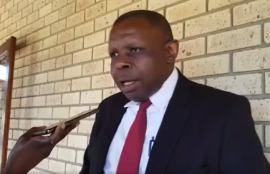
President affirms removal of Judges Hlophe and Motata
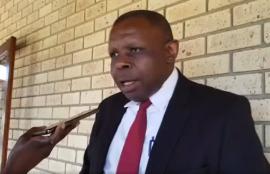
President Cyril Ramaphosa has officially removed Judges John Mandlakayise Hlophe and Nkola Motata from judicial office following the National Assembly resolutions to remove them.
In a statement, the Presidency said the Constitution states that a judge may be removed from office only if the Judicial Service Commission finds that the judge suffers from an incapacity, is grossly incompetent, or is guilty of gross misconduct and the National Assembly calls for that judge to be removed, by a resolution adopted with a supporting vote of at least two thirds of its members.
Secondly, the Constitution states that the President must remove a judge from office upon adoption of a resolution calling for that judge to be removed.
“The President accordingly removed Judge President Mandlakayise Hlophe of the Western Cape Division of the High Court from judicial office following the National Assembly resolution to remove Judge Hlophe, as stipulated in section 177 (1) (b) of the Constitution,” the Presidency said on Thursday.
A total of 305 Members of Parliament voted for the removal of Judge Hlophe from judicial office, with 27 members voting against his removal.
The Judicial Service Commission referred the matter to Parliament after the Judicial Conduct Tribunal (JCT) concluded that Hlophe’s conduct breached the provisions of section 165 of the Constitution by improperly attempting to influence the two Justices of the Constitutional Court to violate their oaths of office.
The JCT established that Hlophe’s behavior seriously threatened and interfered with the independence, impartiality, dignity and effectiveness of the Constitutional Court and further undermined public confidence in the judicial system.
President Ramaphosa has also removed Retired Judge of the Gauteng High Court Division, Justice Nkola John Motata following the National Assembly resolution to remove him, as provided for in section 177(1) (b) of the Constitution.
A total 296 Members of Parliament voted for Judge Motata’s removal from office, with one voting against, and thirteen members being recorded as having abstained.
Retired Judge Motata was found guilty of gross misconduct following a drunk driving conviction in 2009.
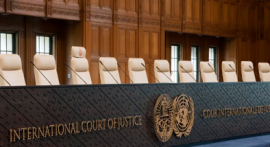
SA requests ICJ to act to prevent famine in Gaza
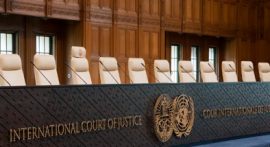
South Africa has urgently asked the International Court of Justice (ICJ) to enforce additional emergency measures against Israel to prevent a famine in the Gaza strip.
A statement released by the Presidency on Wednesday detailed that South Africa approached the ICJ with an urgent application for the provisional measures the court ordered on 26 January 2024 to be strengthened.
According to the Presidency, the urgent application has been necessitated by widespread starvation in Gaza, which has claimed the lives of at least 15 children in the past week alone, with the actual numbers believed to be much higher.
It added that the United Nations (UN) experts have warned that the number of deaths will increase exponentially unless military activities are halted and the blockade is lifted.
“The situation is urgent. South Africa has no choice but to approach the Court for the strengthening of the Provisional Measures in place to try prevent full-scale famine, starvation and disease in the Gaza Strip, which experts predict may result in more than 85 000 deaths in the next six months, if nothing is done,” the statement read.
South Africa’s move comes on the back of warnings by the UN General Assembly, and an unprecedented number of UN bodies and human rights experts that have recognised that the only way to avert such a catastrophe is by an immediate cessation of hostilities to enable full and effective delivery of humanitarian aid.
“Time is running out for the Palestinians. It is already too late for the 30 000 people who have lost their lives in Gaza since the start of the conflict. The world has an obligation to do whatever can be done immediately to stop further suffering and loss of life. The threat of all-out famine has now materialised.
“The Court needs to act now to stop the imminent tragedy by immediately and effectively ensuring that the rights it has found are threatened under the Genocide Convention are protected. The people of Gaza cannot wait,” the statement read.
Details of the request
In its application, South Africa has officially called for the indication or modification of several provisional measures related to the ongoing conflict.
The requested actions include an immediate cessation of all fighting and hostilities, the prompt release of hostages and detainees, and the compliance of all parties to the Convention on the Prevention and Punishment of the Crime of Genocide with their obligations.
Additionally, South Africa urged the parties to refrain from any actions that may undermine the rights of Palestinians in Gaza to be protected from genocide and related prohibited acts.
The State of Israel is specifically called upon to take swift and effective measures, including suspending military operations in Gaza, lifting the blockade, and revoking any hindrances to Palestinians’ access to humanitarian assistance.
Furthermore, Israel is required to provide urgently needed basic services and humanitarian aid, addressing issues like famine and adverse living conditions in Gaza. This entails ensuring access to food, water, fuel, shelter, clothing, hygiene, sanitation, and medical assistance.
Lastly, the state of Israel must submit an open report to the Court within one month detailing the actions taken to implement all ordered provisional measures up to the present date.
ICJ order
On 29 December 2023, South Africa approached the ICJ, as a State Party to the Convention on the Prevention and Punishment of the Crime of Genocide (‘Genocide Convention’), seeking an order to prevent Israel from committing genocide against the Palestinian people who, along with all other distinct national, racial and ethnical groups, are protected by that Convention.
On 26 January 2024, the Court ruled that South Africa’s claim met the standard of plausibility and, on the request of South Africa, ordered Israel inter alia, to take action to prevent and punish genocide, incitement to genocide, and to enable the immediate and effective provision of basic services and humanitarian assistance to besieged Gaza.
READ | President welcomes ICJ ruling
These ‘Provisional Measures’ were issued by the Court to prevent irreparable and irreversible harm to the rights of Palestinians pending the Court’s final decision on the case.
“Regrettably, Israel has not complied with the Court’s binding order, but has instead escalated its genocidal acts against the Palestinian people. On 15 February 2024, following a letter to the Court from South Africa in response to Israel’s threatened assault on Rafah, the Court reminded Israel that ‘the perilous situation [in Rafah] demands immediate and effective implementation of the provisional measures indicated’ by it on 26 January 2024, which included Israel’s obligation to ensure ‘the safety and security of the Palestinians in the Gaza Strip’,” the statement said.
South Africa added that Israel’s ongoing failure to “immediately and effectively implement the Court’s Order and comply with its obligations under the Genocide Convention, as well as its contempt for the Court, is manifest”.
“As a result, the dire situation of Palestinians in Gaza that gave rise to that Order has worsened in all respects. The world has watched in horror as over two million people in Gaza face famine.”
South Africa further highlighted that under the Genocide Convention, deliberately inflicting conditions of life calculated to bring about the destruction of Palestinians including through mass starvation and destruction of food systems amounts to genocide.
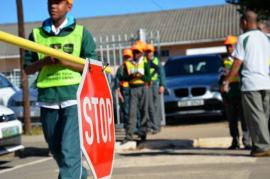
Road safety initiative for children launched in Gauteng
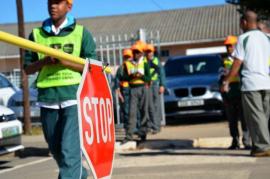
The Road Traffic Management Corporation (RTMC) has partnered with Santam on an initiative to reduce the high proportion of children who lose their lives in road-related incidents.
Santam Head of Market Development, Neptal Khoza, said they have identified a need to roll out scholar patrol projects in townships where many children walk or commute to school without adult supervision and often need to cross dangerous, multi-lane roads.
The scholar patrol initiative will be set up in at 10 schools in the Sedibeng District Municipality in Gauteng.
Safety patrollers on duty will be trained effectively, given the appropriate uniform and equipment, including umbrellas and rain ponchos during the rainy season.
Patrollers will also receive certificates of recognition for their participation. The initiative will provide much-needed temporary employment opportunities for the surrounding communities.
Post-matric, unemployed youth will be recruited as patrollers in a bid to contribute towards the government’s objective to provide an avenue for labour absorption and income transfers to poor households in the short- to medium-term.
“The project has the potential to prepare youth for future careers in road safety, traffic police and general law enforcement. This project is one of many initiatives that we will plug into the existing community enhancement structures in achieving our broader goal of building communities that are more resilient. We foresee that learners, as well as their families and communities, will benefit immensely form this service.
“We call on other corporate and private sector entities to join us in partnering with the public sector in ways that can benefit greater society and ultimately provide existing initiatives with the boost they need to reach their full potential,” Khoza said on Wednesday.
The World Health Organisation (WHO) Global Status Report on Road Safety of 2023 cites that road traffic injuries remains the leading cause of death for children.
“Pedestrian safety remains the most significant road safety challenge in South Africa. Our records as the RTMC indicate that on average 10.2% of pedestrian fatalities are of the 0 to 14 age brackets. For the past three years, 47% of fatal crashes involved pedestrians, with Gauteng as one of the main contributors to the high pedestrian fatality rate.
“Funding for road safety remains a challenge for the RTMC. There has been continuous effort to engage the private sector for collaboration on the implementation of road safety initiatives. The school intervention by Santam in the road safety programme will go a long way in creating safer communities and save more lives,” said RTMC spokesperson Simon Zwane.
ChildSafe spokesperson and Executive Director, Zaitoon Rabaney, said they will continue to advocate for the 30 km/h speed restriction around schools, as well as environmental modifications that influence driver behaviour to adhere to slower speeds in school areas.
“Equipping our children and their families with the necessary knowledge and skills to navigate roads safely is paramount. Through educational programmes, campaigns and targeted outreach efforts, such as the scholar patrol initiative, we can foster a lasting positive impact on the safety culture on our roads, especially around schools.
“These alarming statistics, however, highlight the urgent need for comprehensive road safety measures, particularly those focused on protecting our most vulnerable road users – children,” Rabaney said.

Four questioned about missing Joslin Smith

Detectives in the Western Cape are currently questioning four individuals as part of an extensive investigation into the disappearance of six-year-old Joslin Smith from Diazville in Saldanha Bay.
The investigation saw a team of detectives visiting several places within the West Coast town and interviewing several other persons.
The search for Joslin brought individuals, NGOs, community activists, police officials, neighbourhood watches and representatives from different spheres of government together in the quest to find the missing girl. For days they searched identified vast areas in Saldanha Bay.
It is expected that as the investigation unfolds, light will be shed on her whereabouts or what happened to her.
“The four persons being interviewed by the team of investigators are two men and two women aged between 26 and 34. With the investigation gaining momentum arrests are on the cards,” said the police in a statement.
Early this week, the South African Police Service (SAPS) assured the community where Joslin went missing that they remain committed to finding the little girl and reuniting her with her family.
Police Minister General Bheki Cele on Saturday met with the family, as well as the residents of the broader Saldanha community.
READ | Police committed to finding Joslin Smith
Joslin has been missing since 19 February 2024 and the search to locate her is ongoing.
Government welcomes slight GDP growth
Government has welcomed the release of the latest Gross Domestic Product (GDP) figures by Statistics South Africa, which show a slight growth of 0.1% in the fourth quarter of 2023.
“This growth is particularly encouraging as it surpasses pre-pandemic levels. This indicates a resilient economy showing signs of recovery, and bettering previous strength,” Minister in the Presidency, Khumbudzo Ntshavheni, said on Wednesday.
In the fourth quarter, real GDP reached R1 158 billion, marking continuous improvement from the pre-COVID-19 level of R1 150 billion, although still below the peak recorded in the third quarter of 2022.
READ | GDP increases by 0.1% in the fourth quarter of 2023
“The increase, though slight, signifies continued progress in the country’s economic recovery. It signifies the resilience of our economy and the positive impact of government interventions. We are particularly pleased to see the transport, storage and communication industries leading the growth.
“This modest uptick in GDP is testament to the concerted efforts of various sectors and stakeholders in navigating the complexities that were posed by the COVID-19 pandemic and other domestic and global challenges,” Ntshavheni said.
The Government Communication and Information System (GCIS) said the modest growth signifies a positive turning point.
“Government remains committed to implementing policies that foster a conducive environment for further economic expansion, and to continue to invest in infrastructure development, support small businesses, and create an environment that attracts investment. Working together, we can build a stronger and more inclusive South African economy for all,” GCIS said.

Petrol price increases
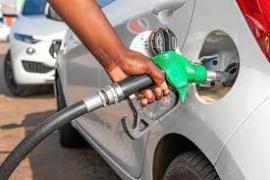
The Department of Mineral Resources and Energy (DMRE) has announced that all grades of fuel will increase by at least R1 from today.
The following are the increases have been announced:
- Petrol (93 ULP & LRP): R1.21 increase.
- Petrol (95 ULP & LRP): R1.21 increase.
- Diesel (0.05% sulphur): R1.05 increase.
- Diesel (0.005% sulphur): R1.18 increase.
- Illuminating paraffin (wholesale): 64 cents increase.
- Single Maximum National Retail Price for illuminating paraffin: 85 cents increase.
- Maximum LP Gas retail price: 41 cents increase
The increases mean that a litre of 95, which used to cost R23.24 in Gauteng, now costs R24.45 a litre.
The DMRE said a number of factors influenced the increases, including:
- The average Brent Crude oil price increased from 82.03 US Dollars (USD) to 82.50 USD during the period under review.
- The average international product prices of petrol, diesel and illuminating paraffin increased in line with the higher crude oil prices.
- The Rand depreciated slightly on average, against the US Dollar from 18.77 to 19.20 Rand per USD during the period under review. This led to higher contributions to the Basic Fuel Prices of petrol, diesel and illuminating paraffin.
- The DMRE Minister, Gwede Mantashe with the concurrence Minister of Finance, Enoch Godongwana approved an increase from 0.1 c/l to 1.0 c/l in the IP Tracer Dye Levy that is applicable to Diesel with effect from the 6 March 2024. This increase is temporary until the 5th of March 2025.
“South Africa’s fuel prices are adjusted monthly, informed by international and local factors. International factors include the fact that South Africa imports both crude oil and finished products at a price set at the international level, including importation costs,” the department explained.
Police seize counterfeit goods, dismantle illegal crossings near Beitbridge
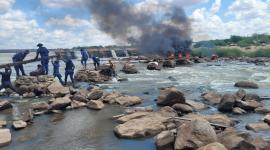
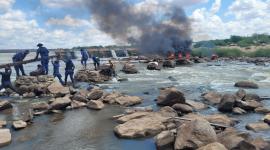
A successful operation conducted by a border police team at Musina near the Beitbridge Port of Entry on Sunday has resulted in the seizure of counterfeit goods.
The team also recovered an inflatable boat believed to be used for illegal crossings of the Limpopo River between Zimbabwe and South Africa.
“During the operation, members of the SAPS OR Tambo International Airport Border Police intercepted a smuggling attempt and seized one inflatable boat, 25 litres of diesel, counterfeit cigarettes and liquor that were being smuggled between South Africa and Zimbabwe.
“Despite some suspects managing to evade arrest by fleeing on foot and crossing the Limpopo River, homemade wooden bridges used for illegal crossings were successfully dismantled during the operation,” said the police in a statement.
In a separate incident, nine male Zimbabwean nationals were apprehended by the Vhembe District Proactive Police for contravening the Immigration Act during a separate Vala Umgodi operation.
These individuals were arrested less than 10km from Beitbridge.
The Department of Home Affairs Immigration Office was engaged for immediate deportation of the illegal immigrants.
Task team established to clear alien invasive plants in Vaal River
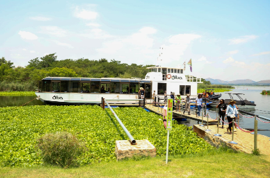
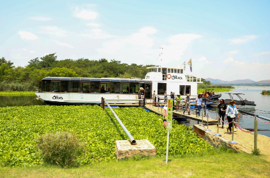
The Ministers of Water and Sanitation, Senzo Mchunu, and Forestry, Fisheries and the Environment, Barbara Creecy, have established a Technical Task Team to identify interventions with clear outcomes to manage the clearing of alien invasive plants at the Vaal River.
This follows public concerns relating to the use of the chemical, glyphosate, to clear alien invasive plants from the Vaal River by Rand Water.
In a joint statement, the departments said the task team, led by the Directors-General of the two departments and Chief Executive Officer of Rand Water, have identified immediate short- and long-term interventions with clear outcomes to manage the situation.
The immediate short-term interventions identified by the task team include the revision of the integrated control approach, which will assess the use of an herbicide that is registered with the Department of Agriculture, Land Reform and Rural Development.
In the medium-term, compliance and enforcement interventions will be intensified against the sources of pollution that are driving this situation, while the long-term interventions include the review of the Vaal River Catchment Strategy relating to invasive alien aquatic species, in order to implement a strategy that will holistically address the situation.
“Lastly, the refurbishment of the Rietspruit, Sebokeng and Leeukuil Wastewater Treatment Works will be fast-tracked to reduce pollution that is also contributing to the high eutrophication of the Vaal River System.
“Multiple control strategies deployed simultaneously (biological, chemical and manual removal of alien invasives) are currently under investigation by the task team since a sustainable solution is required to manage the situation,” the departments said.
The spraying of glyphosate over water hyacinth choking up the Vaal River has been stopped due to safety concerns.

SANDF deployment not done without planning

By Siphiwe Dlamini
The deployment of a contingent of the SA National Defence Force (SANDF) as part of the SADC Mission to the Democratic Republic of Congo (SAMIDRC) and the subsequent tragic deaths of Captain Simon Mkhulu Bobe and Lance Corporal Irven Thabang Semono have provided plenty of grist to the opinion mill.
It should. We are a democracy and this is a people’s defence force – and its role and its use should be debated.
There are major and justifiable concerns about budget implications. The lack of sufficient air cover for the mission and that this deployment might be fatally overstretching the SANDF’s capacity has been raised by some as a concern.
None of these are new concerns; successive chiefs of the SANDF have raised these precise issues in the past, along with their chiefs of service.
But these concerns ignore the reality that this deployment was not done in haste, nor without the requisite planning. There have been numerous discussions at the highest echelons of government about the need to support the SANDF in all its needs, including funding. There is a real commitment to do this.
We should also not forget three critical points in the current discourse, well intentioned or otherwise, about the SANDF.
The first is that the mission in the DRC is not solely a South African tasking but a request from the greater Southern African Development Community to ensure the stability of the region as the United Nations began its well-publicised drawdown of Monusco, its 20 year-long mission to stabilise the DRC, in December last year.
Secondly, there are other countries that will be also contributing to this mission, some of whom will be able to directly address the issue of air cover through the capabilities of their own air forces.
Thirdly, the SANDF has been part of Monusco since its inception, commanding the mission and regularly providing commanders for the smaller three-battalion strong multinational Force Intervention Brigade, the only UN force mandated to use force offensively.
The biggest issue of all though is peacekeeping. SA is a continental leader and has never shied away from the often onerous responsibility to lead these processes, participating from the front, if necessary, putting its money and its troops where its mouth is.
This is not an easy decision and it is not without risks, all of which weigh very heavily upon our commander-in-chief, President Cyril Ramaphosa; the political head; Defence and Military Veterans Minister Thandi Modise; and chief of the SANDF, General Rudzani Maphwanya, before deploying these national assets.
These soldiers are not conscripts, they are volunteers, but all of us know the risks that they will face in the field – and the sacrifices they may well be asked to make – to keep this peace.
It is easy for the keyboard warriors to argue that our horizons should be limited to our land, sea and air borders, but the reality is that the beating of a butterfly’s wings in Kivu or Goma could very well create an unstoppable tsunami in Johannesburg or Cape Town.
It’s too late to deal with an insurgency not just on your doorstep but within your borders. This is part of the rationale for the SANDF’s participation in the SADC Mission in Mozambique (Samim) to keep the insurgency in Cabo Delgado at bay.
That is the apex threat – of war and terror in our cities and countryside, but there are other threats, too, of even more refugees seeking a better life in SA, potential economic and criminal risks which put further strain on our law enforcement agencies, the home affairs department, the department of social security and, indeed, our fiscus.
It is said that a stitch in time saves nine. It doesn’t help to just create nonporous borders, where the SANDF is already performing a yeoman and unheralded service as part of the ongoing Operation Corona.
We have to try to resolve issues and create the conditions that are crucial to allowing a sustainable and enduring state of peace on the continent that could otherwise threaten the way of life we aspire to, even though they are not our direct neighbours.
It is this philosophy that has guided the SANDF ever since the days of our first commander-in-chief Nelson Mandela, when he worked tirelessly to bring peace to the Great Lakes Region.
*Siphiwe Dlamini is Head of Communications at the Department of Defence.
**This article first appeared in The Citizen on 1 March 2024.
Operation Shanela nets 1 154 suspects in North West
The South African Police Service’s Operation Shanela has nabbed 1 154 suspects for numerous crimes between Monday, 26 February and Sunday, 3 March 2024 in the North West province.
Of the total arrests made, 58 were drug related offences, 31 were for illegal dealing in liquor, 17 for driving under the influence of liquor, eight for illegal possession of firearms and ammunition, 37 for burglaries, 53 for malicious damage to property, while 67 suspected undocumented persons were handed over to the Department of Home Affairs for further processing.
On Tuesday, 26 February, the Vryburg K9 and Mahikeng Vehicle Crime Investigation Unit (VCIU) stopped the driver of a Toyota Etios Sedan in Moffat Street.
The vehicle was inspected and it was found to have been stolen in April 2023 in Silverton. The driver, Makatise Joseph Khuabo (42), was immediately arrested and appeared before the Vryburg Magistrates’ Court on Thursday, 29 February for being in possession of a presumed stolen vehicle.
He was remanded in custody until his next court appearance, which is today, for a formal bail application.
In another incident reported last Thursday, information received by Taung police was operationalised, leading them to a premises where a 32-year-old suspect was found in possession of an illegal firearm.
Lesedi Nthutang was arrested and appeared before the Taung Magistrates’ Court on Friday. He was granted R500 bail and his next court appearance before the same court will be on Friday.
Arrests were also made for serious and violent crimes including 10 for murder, 193 for assault with the intent to do grievous bodily harm (GBH), 111 for assault common and nine for rape.
During the operation, 293 suspects were arrested, who were wanted for various charges. All suspects will make their respective court appearances in various courts this week.
Provincial Commissioner of North West, Lt Gen Sello Kwena, commended the police and all other role players for their continued collaborative efforts, saying it will send a clear message that crime will not be tolerated in the province.