

SA works on exiting FATF grey list

National Treasury has noted that whilst South Africa is on track to address all the outstanding action items by the Financial Action Task Force (FATF) with regards to the country’s grey listing, it remains a challenge to address all 17 of the remaining action items by February 2025.
“All relevant agencies and authorities will need to continue to demonstrate significant improvements, and also for such improvements are being sustained,” National Treasury said on Thursday.
The FATF is the international standard-setting body that oversees global compliance with anti-money laundering rules.
“The February 2024 FATF Plenary adopted a report by the Joint Group, confirming that five of the 22 action items are now addressed or largely addressed. These relate to the legal provisions criminalizing terrorist financing and underpinning South Africa’s targeted financial sanction regimes related to terrorism financing and proliferation financing, increasing the use of financial intelligence from the Financial Intelligence Centre to support money laundering investigations, and increasing the resources of AML/CFT [Anti-Money Laundering and the Combating of the Financing of Terrorism] supervisors,” National Treasury said.
The FATF grey listed South Africa at its February 2023 Plenary meetings where a jointly agreed Action Plan was adopted listing 22 action items linked to the strategic deficiencies identified in the AML/CFT regime.
The FATF grey list refers to the FATF’s practice of publicly identifying countries with strategic AML/CFT deficiencies. The FATF maintains two such lists with one being jurisdictions under “increased monitoring” that are actively working with the FATF to address strategic deficiencies in their regimes” and secondly “high-risk jurisdictions subject to a call for action” that are not actively engaging with the FATF to address these deficiencies.
South Africa is required to address all 22 to exit the FATF grey list.
“The deadlines for addressing the action items fall between January 2024 to January 2025. Should South Africa be assessed to have largely addressed all 22 Action Items in February 2025, the FATF will schedule an onsite visit in April/May 2025, to confirm that assessment and make a recommendation to the June 2025 FATF plenary.
“In this cycle of reporting, the FATF also considered that two further action items that were previously not addressed, have now been partly addressed, confirming that 14 of the 17 outstanding action items have now been partly addressed.
“Three action items still have not been addressed as yet. The deadline for South Africa to address (or at least largely address) four of the outstanding action items in the Action Plan, is May 2024,” National Treasury said.
The FATF will consider South Africa’s progress on these action items at its plenary meeting in June 2024. A further eight action items are due in September 2024, and the final five items are due in January 2025.
The process in addressing effectiveness deficiencies is distinct from the process in addressing technical compliance deficiencies (related to the adequacy of the country’s AML/CFT laws and policy frameworks).
“The October 2023 FATF plenary formally re-rated 18 of South Africa’s 20 deficiencies, based on the progress made by the South African authorities in the two-year period following the 2021 mutual evaluation. Of these, 15 were upgraded to a point where they are no longer deficient, as 14 Recommendations are now fully or largely compliant, and one Recommendation was deemed to be inapplicable to South Africa.
“Following these re-ratings, South Africa is now deemed to be fully or largely compliant in 35 of the 40 FATF Recommendations, including in five of the six core FATF Recommendations. South Africa will apply for further re-ratings of technical compliance deficiencies, for the consideration of the October 2024 FATF Plenary,” National Treasury said.

690 000 houses built in KZN since democracy
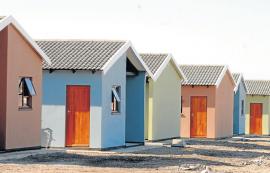
KwaZulu-Natal has made strides in the delivery of housing units, with a total of 690 000 housing units having been built since the dawn of democracy in 1994.
This is among the province’s achievements highlighted by Premier Nomusa Dube-Ncube, delivering the State of the Province Address on Wednesday.
“We have built 690 000 housing units in KwaZulu-Natal, which means more than 2.8 million KZN citizens live in houses built by this democratic government. This excludes the 130 000 sites that have been made available over the same 30-year period,” Dube-Ncube said.
Reflecting on the strides made towards the provision of decent housing and housing opportunities, Dube-Ncube said a total of 52 974 fully subsidised houses were built for qualifying destitute families in various parts of the province, with 36 400 of the housing units replacing mud houses.
Dube-Ncube also noted the breakthroughs made in the delivery of houses for military veterans, as well as 16 973 serviced sites that were made available to people who could afford to build their own top structures.
She said the 19 social housing projects have delivered 2 532 rented units, targeting people that can afford to pay rent in the social housing schemes.
This is in addition to 1 116 rental units that were delivered in community residential units (CRU).
The 22 priority development areas were declared to support targeted areas, including KwaDukuza Town/Hyde Park-Nonoti Area, Empangeni, Richards Bay, eSikhaleni Vulindlela Corridor, Msunduzi North and East Development Areas, uMlazi/Austerville, Ladysmith Development Area and Newcastle, among others.
“In order to address the upgrading of informal settlements and farm workers’ challenges, vast land parcels have been acquired in areas, including 51 6817 hectares in Emadlangeni; 132 6170 hectares in Newcastle (Farm Boschhoek); 57 2682 hectares in Abaqulusi, and 86 5623 hectares in lnkosi Langalibalele, among others,” the Premier said.
Dube-Ncube also announced that the rented buildings, known as Transitional Emergency Accommodations (TEAs), have been closed in all other municipalities, except eThekwini Metro.
During the 2023 SOPA, Dube-Ncube reported that all 135 halls (Mass Care Centres) were closed prior to the deadline of 2022 Christmas eve.
The Premier reported that the so called “Truro Hall Northdale Flood Victims” are now happily integrating with the community of Copesville where their permanent homes are being provided.
“Through subsidised housing, our cities are slowly being transformed while we are addressing the formation of informal settlements and providing housing for our military veterans. One of these projects is the Vulindlela Rural Housing Project, at R2.4 billion, which has created over 1 832 jobs,” Dube-Ncube said.
Households vulnerable to hunger drop to 12%
Noting another milestone since the advent of democracy, Dube-Ncube said the number of households in the province that are vulnerable to hunger has decreased to 12%.
“A total of 50% of the province’s households were vulnerable to hunger in 2004, but this figure dropped to 12% in 2022. Since 2019, the Department of Agriculture and Rural Development supported 17 266 smallholder producers and through the Multi-Planting Season programme, 150 000 hectares were planted for food production across the province to support food production.
“Through the One Home One Garden, Seed and Seedlings Multiplication Programme, and other food security interventions, the department supported 128 205 food insecure households from 2019 to date, and supported a total of 79 142 subsistence producers,” Dube-Ncube said.
The Premier said she has tasked the Agriculture and Rural Development MEC to set up a special purpose vehicle, and transfer the Agri-Hubs and Commercial Mechanisation Programme to speed up implementation.
“This special purpose vehicle will attract investment, increase production, and create domestic and export markets for our farmers and be self-funding.”

KZN economy back on its feet, Premier

KwaZulu-Natal Premier, Nomusa Dube-Ncube, says despite various challenges, including floods that hit the province, the provincial economy is back on its feet.
The province is gradually addressing the damage which is estimated in the region of R33 billion.
“At times, we felt we were on the verge of collapse while at other times we felt we could touch the sky. The circumstances around the sixth administration tested our steely resolve and we chose to soldier on,” Dube-Ncube said as she delivered the State of the Province Address (SOPA) at the Oval Cricket Stadium in Pietermaritzburg.
The Premier said following the destructive floods in April 2022 and the July 2021 civil unrest, government implemented a package of recovery programmes to rebuild a number of infrastructure, including shopping malls and factories, which were torched or looted.
She said the South African Special Risk Insurance Association (SASRIA) has spent over R20 billion rebuilding shopping malls and businesses affected by the social unrest, with more than R2 billion spent on rebuilding economic infrastructure damaged by the floods, resulting in over 192 000 jobs being saved.
“The Department of Trade, Industry and Competition (DTIC) relief measures implemented through the National Empowerment Fund (NEF) and the Industrial Development Corporation (IDC) Critical Infrastructure Reconstruction Programme, saw a total of 118 applications from affected businesses approved with a value of R1.9 billion.
“The IDC further partnered with the province in allocating R30 million support to SMMEs [Small, Medium and Micro Enterprise], township and rural businesses affected by the civil unrest. IDC allocated R10 million to support the informal businesses that were impacted by the floods of 2022,” Dube-Ncube said on Wednesday.
Furthermore, the KwaZulu-Natal Department of Economic Development Tourism and Environmental Affairs allocated R67 million towards flood relief for businesses affected by the 2022 and 2023 floods.
The Premier also acknowledged President Cyril Ramaphosa for visiting Richards Bay in November 2023. The President visited the Port of Richards Bay to assess the state of the port and efforts underway to address congestion.
Following the President’s oversight visit to the port, Dube-Ncube said the province has witnessed a significant decrease in road truck traffic leading to the Port of Richards Bay as congestion decreased.
The Premier attributed this to a collective achievement to the introduction of the Truck Management Strategy, championed by the Ports Authority.
“At the Port of Durban, after having received word on the introduction of the container surcharge by shipping lines because of the container backlog in our ports, we are delighted to report that the number of vessels at anchorage has reduced from more than 60 ships in mid-November, to just 12 ships at the end of January 2024.
“We recognise, with appreciation to the role played by the industry, as well as local businesses in ensuring our ports are held accountable and deliver on their intended mandate of facilitating international trade.”
Dube-Ncube also highlighted that the provincial government is strengthening its support for businesses, by ensuring that enterprises doing business with government are paid on time.
She said a province-wide programme, Operation Pay on Time, assists with resolving payment queries from suppliers that do business with government.
“From April 2023 alone, the total number of cases and queries received is 288. Of this number 216 were resolved with a value of R281 million paid to suppliers,” she said.

Suspects in AKA murder case to appear in court

The six suspects arrested in the murder case of musician Kiernan Jarryd Forbes, known as AKA, and his friend Tebello “Tibz” Motsoane are due to appear in court on Thursday.
The suspects were arrested on Tuesday evening. They face charges of murder, conspiracy to commit murder, attempted murder, unlawful possession of firearms and ammunition, among others.
The announcement was made by KwaZulu-Natal Police Commissioner, Lieutenant-General Nhlanhla Mkhwanazi, at the SA Police Service provincial headquarters in Durban.
The briefing was also attended by the police top brass, including Police Minister Bheki Cele and National Police Commissioner General Fannie Masemola.
Mkhwanazi said Forbes was the main target of the shooting, and not Motsoane, who was “at the wrong place at the wrong time”.
“The six suspects have played different roles during the operation. We have the coordinator, who is the master of everything. We have two shooters that we all saw on social media. We have two spotters. One of the spotters was inside the restaurant observing Mr Forbes and his friends, as well as the organiser of firearms and vehicles used as getaways,” Mkhwanazi said.
Mkhwanazi said the spotter initially followed Forbes from the airport to the hotel and to the restaurant where he was fatally shot.
Forbes was gunned down in Durban’s Florida Road on 10 February 2023 as he was leaving the Wish restaurant. Motsoane was also murdered.
According to Mkhwanazi, some of the cars used at the time of the murder were rented.
On 22 April 2023, the first suspect was arrested in Belhar, Cape Town. He was the alleged organiser who hired vehicles and guns. He was also in police custody for several unrelated murders.
On 24 October 2023, the second suspect, who was an alleged spotter, was arrested. He was linked to another unrelated murder in the Berea area.
Mkhwanazi said the suspects were linked to the AKA murder through four vehicles that were used in the planning, spotting and getaway, including a Mercedes Benz, BMW, Hyundai i10 and VW Polo.
Two of the vehicles had been rented and have since been returned to their owner, who has furnished the police with a statement.

Murder of Soweto doctor condemned

The Gauteng Provincial Legislature’s Portfolio Committee on Community Safety has strongly condemned the recent tragic murder of a medical doctor in Dobsonville, Soweto.
Well-known Dr Michael Isabelle was tragically shot during an armed robbery at his medical facility and succumbed to his injuries at a nearby hospital on Saturday.
“It is deeply troubling that he lost his life simply for refusing to surrender his laptop and phones to the suspects,” the committee said.
The committee has described the incident as utterly unacceptable and regrettable.
“This heartbreaking incident serves as a sad reminder of the pervasive violence that plagues our communities, with innocent individuals bearing the brunt of heinous crimes.
“Despite concerted efforts by government and civil society to combat crime in Gauteng and across the nation, criminals continue to wreak havoc and instill fear among South Africans.”
The committee has urgently called upon law enforcement agencies to swiftly apprehend those responsible for this senseless act of violence and ensure that they are brought to justice.
“It is imperative that we send a resounding message that senseless crimes of this nature have no place in our society and that perpetrators will be held accountable for their actions.”
The committee also extended its heartfelt condolences to Isabelle’s family.
“We stand in solidarity with them during this difficult time and recognise doctors’ invaluable role in saving lives and providing essential medical care to those in need.
“We urge the entire nation to unite in condemning violence and reaffirming our commitment to building safer communities for all.”
According to TimesLive Premium, Isabelle was also attacked and shot in the stomach soon after he qualified in Katlehong, Ekurhuleni, 20 years ago.
A family spokesperson who spoke to the publication said Isabelle was a jazz lover, who was generous and principled with an uncompromising work ethic.

R1 billion investment to boost tugboat availability

Transnet National Ports Authority (TNPA) is injecting a R1 billion investment in its marine fleet renewal programme through the acquisition of seven tugboats aimed at enhancing marine operations at its commercial seaports.
“The seven tugboats will replace marine craft that has reached its operational lifespan at the ports of Durban [in KwaZulu-Natal] and East London [in the Eastern Cape]. TNPA has awarded two contracts to a shipbuilding company, Damen Shipyards Cape Town, to deliver the seven tugboats from April to August 2024,” Transnet said on Tuesday.
From this procured tug fleet, the Port of Durban has been allocated five tugboats and two will go to the Port of East London.
“This investment demonstrates TNPA’s ongoing commitment in providing reliable marine craft at our South African ports, which will enable us to effectively service the marine industry and respond to global shipping demands,” TNPA Chief Harbour Master, Captain Rufus Lekala said.
The procured tugboats boast the latest hull design and propulsion, as well as a 60-ton bollard pull, which is a much-needed improvement from the bollard pull of the existing tugboats that will be replaced that ranges between 32 and 40-ton bollard pull.
“The 60-ton pollard pull meets international standards and makes the craft highly manoeuvrable while guiding larger and newer vessels safely in and out of the ports.
“TNPA’s marine fleet programme demonstrates a reimagined focus in ensuring that the Ports Authority delivers on its mandate of providing a competitive port system in its role as an enabler of economic growth,” Transnet said.

Transnet expands port to meet industry demands

In its ongoing drive for port expansion and operational performance improvement, the Transnet National Ports Authority (TNPA) is repositioning its Western Region ports of Cape Town, Mossel Bay and Saldanha for the provision of world-class port infrastructure to support the regions’ booming shipping demand.
Projects in the pipeline include Phase2B of the Cape Town Container Terminal expansion at the Port of Cape Town.
“As part of the project, TNPA is currently finalising a detailed design of the rail infrastructure upgrade – a key deliverable that will enable the construction phase. The design work will be completed by December 2024. The project scope also includes container stack upgrade as well as a truck staging area and automation.
“The expansion will see a capacity increase from 1 million TEU (Twenty-foot Equivalent Unit) to 1.4 million TEU, with an investment value of approximately R1.775 billion. Project commencement is planned for September 2025,” Transnet said on Monday.
TNPA is also reviewing and finalising precinct plans for the Culemborg Intermodal Logistics Precinct Development in the Port of Cape Town, and that will be followed by a request for proposals during the 2024/25 financial year.
“This project will culminate in the development of land parcels near the port to create additional back of port capacity. Key projects at the Port of Saldanha include the extension of the multi-purpose terminal and the development of berth 205, which will cater for rig repairs. The new berth will also provide additional capacity for break bulk operations,” Transnet said.
Meanwhile, strategic initiatives in the Port of Mossel Bay include the construction of the cruise reception facility to enable international cruise vessels to call to the port. The slipway rehabilitation project planned for 2024/25 financial year will increase the port’s slipway and cradle capacity from 200 to 500 tons.
“The execution of these projects is not only a demonstration of our commitment to investing in the creation of addition port capacity, but also critical for the Ports Authority to respond to the need to improve operational performance of the South African ports,” acting TNPA Managing Executive for the Western Region ports, Captain Vernal Jones said.
African nations adopt digital and social media guidelines
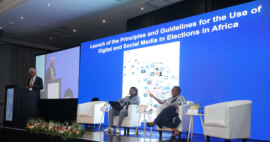
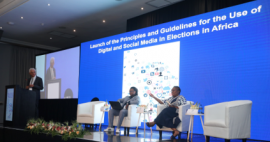
The Association of African Election Authorities (AAEA) has launched a set of principles and guidelines aimed at getting the most out of digital and social media, while mitigating its potential harms.
The guidelines, launched on Tuesday, emphasise the dangers of social media abuse, and call for responsible use and accountability from both platform owners and users.
The launch event was attended by 16 African Election Management Bodies (EMB) from countries that will hold elections in 2024 and 2025.
The guidelines encourage African EMBs to develop a clear and comprehensive plan for responsible social media use during election campaigns. It emphasises the critical roles governments and regulatory bodies can play in safeguarding electoral processes across Africa.
In addition, the guidelines encourage African states and regulatory authorities to refrain from imposing measures that might disrupt access to the internet, and to digital and social media.
Furthermore, they call on social media operators to treat political parties and candidates equitably and ensure that their online messaging, including that of their supporters, does not undermine electoral integrity or contravene human rights.
Speaking at the launch in Johannesburg, the AAEA President, who is also the Chairperson of the Mozambique National Election Commission, Reverend Carlos Simao Matsinhe, said the guidelines are an invaluable resource for protecting elections integrity and credibility.
He said the fight against disinformation is critical because left unmitigated, it can have a deleterious impact on the credibility of elections. He urged EMBs to socialise the guidelines in their respective countries.
South Africa, through grant funding by the African Renaissance and International Cooperation Fund, played an important role in developing the guidelines.
In his keynote address, South Africa’s Deputy President, Paul Mashatile, pledged the country’s support for socialising the principles and guidelines.
“The reality is that the political environment during elections is tense and volatile, and we should use social media with responsibility to ensure that the content we share is credible and accurate. I urge political parties that participate in robust debate on social media to uphold ethical standards and refrain from going too far in being unjust, deceptive, or hateful,” said Mashatile.
The Chairperson of the Electoral Commission of South Africa, Mosotho Moepya, urged all stakeholders to play their role in ensuring that the guidelines are widely socialised and implemented, not only to increase voter confidence and trust in electoral processes, but also to ensure the deepening of democratic values.
Echoing Moepya’s sentiments, the representative of the African Union Commission (AUC), Ambassador William Awinador-Kanyirige, said the adoption of the guidelines will play a huge role in the transformation and handling of elections in Africa.
“The existence of these principles and guidelines will go a long way in inspiring other countries to follow the same steps, thus promoting peaceful elections,” he said.

SARS takes legal action against Sasfin Bank

The Commissioner for the South African Revenue Service (SARS), Edward Kieswetter, has confirmed that the revenue service has instituted legal proceedings against Sasfin Bank.
SARS has conducted a thorough investigation into various South African taxpayers who had not made true and accurate tax disclosures to it.
“The investigation revealed that the taxpayers had colluded to expatriate funds offshore in a manner that obscured tracing the expatriated payments and jeopardises the recovery of tax in South Africa.
“The Commissioner’s position is that it is inappropriate to comment on the question of liability and compensation for the fiscus’ loss, as these are legal issues that are now before the South African judicial system. Given this development, SARS will not be making any further comment,” SARS said on Tuesday.
The Commissioner affirmed his commitment to pursue the enforcement and recovery of taxes without fear, favour or prejudice in the interest of upholding the fiscal integrity of the South African tax system.
Meanwhile in an announcement on Tuesday, shareholders of Sasfin Holdings Limited were advised that Sasfin Bank, a wholly owned subsidiary of Sasfin Holdings, was served a civil summons for a total amount of R4,872,327,649.27 plus interest and costs in the form of a damages claim, instituted by SARS.
“This summons, which was received on 9 January 2024, arises from SARS’ purported inability to collect income tax, value added tax and penalties allegedly owed by former foreign exchange clients of the bank.
“Former foreign exchange clients of the Bank operated as a syndicate that ran an unlawful scheme to facilitate the expatriation of money out of South Africa and colluded with former employees of the bank who operated outside the scope of their employment.”
Sasfin Holdings Limited also added that the bank took decisive action when it became aware of this unlawful scheme, including instituting an expanded investigation led by an independent forensic consultancy.
This resulted in the termination of relationships with the implicated clients and employees and the opening of criminal cases against them.
“Subsequent to receiving the summons, Sasfin Bank engaged transparently with the relevant regulators on the matter and obtained a legal opinion from ENS, authored by Professor Dale Hutchinson, Professor Michael Katz and Aslam Moosajee and endorsed by Adv. Wim Trengove S.C.”
“The legal opinion is unequivocal that the claim falls outside of the recognised parameters of applicable law and has a very remote likelihood of success. On the basis of this legal opinion, Sasfin Holdings concluded that the claim will not result in the recognition of any liability.”
In the SENS announcement, the board of directors of Sasfin Holdings “remains of the view that SARS’ claim has no merit and has little chance of success.”
“The Bank will therefore defend the claim, and given that this involves a defended trial action, the matter is only likely to come to trial in several years’ time,” said Sasfin Holdings.
Gauteng has enough food for the needy- MEC Hlophe
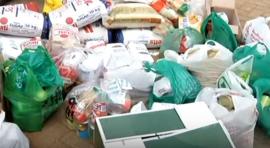
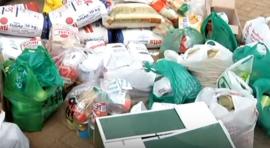
The Gauteng Department of Social Development has assured residents that there’s enough food for the needy in the province.
This follows a statement by the Democratic Alliance earlier this month creating an impression that the department is failing to provide food security for the destitute.
Hlophe said the Gauteng City Region Urban Poverty and Elimination Strategy remains the lodestar pillar in driving the provincial elevated priority of eliminating poverty and inequality for poor and vulnerable citizens.
“To this end, an array of food security programmes which are not only limited to food within our food bank are being implemented,” said the MEC.
Hlophe said non-profit organisations (NPOs) are tasked with the care and aid of the elderly, HIV/Aids patients, the homeless and indigent through Community Nutrition and Development Centres (CNDCs) as well as drop-in centres.
These NPOs, said Hlophe, provide daily nutritious warm meals and food parcels in line with approved dietary standards to beneficiaries.
“Steadfast to its commitment to the vulnerable groups, the Department of Social Development and the Department of Agriculture, Rural Development and Environment embarked on a food expansion programme which saw the establishment of backyard gardens and the provision of food for the needy in December 2023,” explained the MEC.
The DA said food banks in the province continue to receive payments from the department without being assigned the responsibility of distributing food, leaving the poor and vulnerable to starve.
On this matter, Hlophe said it was indicated to the Gauteng Portfolio Committee of Social Development that following the recent data which revealed growing poverty and unemployment levels in the province and country, the department took a strategic decision to alter the specifications in the food parcel tender to include the supply of seeds for beneficiaries to be self-sustainable and upskilled.
These NPOs, said Hlophe, provide daily nutritious warm meals and food parcels in line with approved dietary standards.
This necessary change is premised on the fact that whilst the department has been providing food parcels to residents for years, their socioeconomic status has not changed, evident in the Statistics SA data.
“This is largely due to the fact that the department can only provide each household food parcels for a period of three months and is compelled to move on to the next set of families due to the large demand,” Hlophe said.
According to the MEC, the integration of seeds for planting will enable beneficiaries to have sustainable means to eradicate poverty.
“This strategy migrates our beneficiaries from the phenomenon of hand-outs to hand ups, thereby, restoring their dignity,” she said.
The department remains committed to sustainable development and will ensure the revised tender process is concluded speedily in order to refill food banks.
Hlophe said NPOs will continue to ensure that the vulnerable are taken care of.