
Home Affairs introduces one-stop shop for business applications
The Department of Home Affairs (DHA) has created a one-stop shop to streamline business applications and give effect to the recommendations of its visa reform initiative.
The one-stop shop, which is known as the Trusted Employer Scheme (TES), was created with the view to efficiently run the visa regime and to speedily process applications.
The Trusted Employer Scheme was launched on 11 October 2023.
To qualify for membership, an employer, investor or business needs to demonstrate that it has the financial strength to employ a foreign national; that it runs training programmes for South African citizens, and that it is adheres to good corporate practices.
The TES is one of the latest developments in the review and streamlining of South Africa’s visa regime to attract skills to the South African economy and promote tourism.
“With the Trusted Employer Scheme, the 22 weeks average visa process will be reduced to an average of 20 days, thereby making it easier for employers to plan their recruitment and onboard expats into local operations within a shorter time,” Home Affairs Minister, Dr Aaron Motsoaledi, said in a statement on Tuesday.
“This is one scheme that will allow South Africa to attract skills easier and manage immigration, particularly in the processing of applications for senior executives, technical personnel, corporate employees and investors.
“This will happen while we continue to observe and respect existing immigration laws,” the Minister said.
The TES brings the Departments of Trade, Industry and Competition, Employment and Labour and Home Affairs under a single system to finalise applications for companies that apply for critical skills through the TES.
Within the new scheme, business will qualify for priority processing of their visa applications due to the reduced requirements and supporting documents, in contrast to the previous process.
A total of 108 qualifying companies have submitted to the TES, representing a diverse set of sectors, including commerce and finance, consultancy, energy (power generation and renewable energy), services and advisory, automotive, advanced manufacturing, resourced based industries, food and beverages.
Thus far, the department has approved 68 applications.
All local applications will be processed through the Corporate Accounts Unit, which was established in February 2010 to facilitate work visa applications for large companies and corporations.
Applications submitted abroad will also be expedited due to the reduced requirements.
Subhead
The Trusted Employer Scheme is one of the eight recommendations that were initiated by the DHA, in partnership with the Operation Vulindlela team as part of the work visa review that was conducted to identify inefficiencies in the visa application process.
Operation Vulindlela is a joint initiative of the Presidency and National Treasury to accelerate the implementation of structural reforms and support economic recovery. It aims to modernise and transform network industries, including electricity, water, transport and digital communications.
Since the review, Home Affairs has implemented the following:
- The introduction of TES, which was introduced in October 2023.
- Streamlining documentation requirements and adjudication processes; radiology report requirements have been removed; requirement for professional body registration for lecturers have also been removed, and police clearance is only required for 12 months where an applicant has stayed.
- Modernising IT systems and introducing automation. The department has signed a Memorandum of Understanding with the Council for Scientific and Industrial Research (CSIR), and a secure IT system will be provided for the Trusted Employer Scheme.
- Expanding human resources capacity in the Immigration Services Branch. The department has submitted a revised business case to National Treasury and is working on a partnership with the private sector to expand capacity for Immigration Services. Details of this partnership will be announced soon.
- Upgrading the Employment Services of South Africa (ESSA) database.
- Updating the Critical Skills List more frequently, with the updated Critical Skills list published on 3 October 2023. This was after it was revised in February and August 2021, and will be regularly updated to consider new emerging skills.
- The points-based system on the awarding of certain types of visas was included in the published Draft Second Amendment of the Immigration Regulations, 2014, on 8 February 2024 for public comments.
- The introduction of new visa categories to cater for remote workers and start-ups. These visa categories are in the gazette published in the Draft Second Amendment of the Immigration Regulations, 2014, on 8 February 2024 for public comment.
“We have prioritised implementation of the recommendations of the Operation Vulindlela Report, including introducing the Trusted Employer Scheme, fully convinced that [we] will usher in a new and improved way of dealing with visas.
“Interventions in this regard include the Remote Working Visa and the point-based system on the awarding of certain types of visas,” Motsoaledi said.
Members of the public and stakeholders are encouraged to submit written comments on the Draft Second Amendment of the Immigration Regulations, 2014. The closing date for submission of public comments is 29 March 2024.
Interested persons can access the gazette on the following link: Department of Home Affairs – Immigration Act, 2002: Draft Second Amendment of the Immigration Regulations, 2014 (dha.gov.za).
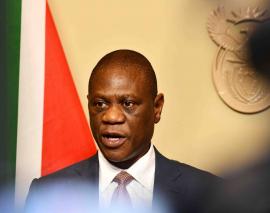
Government activities for the week 26 February to 1 March 2024
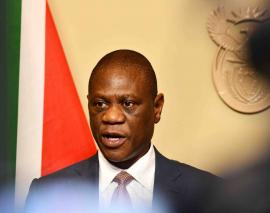
On Monday, 26 February, Deputy President Paul Mashatile will address the 14th Policy Dialogue Forum of the International Task Force on Teachers for Education.
Meanwhile, the Minister in the Presidency responsible for Electricity, Dr Kgosientsho Ramokgops will brief the media on the implementation of the Energy Action Plan.
In addition, the Electoral Commission will brief the media on the state of readiness for the 2024 general elections.
On Tuesday, 27 February, the Department of Justice and Correctional Services hosts a conference the Implementation of Integrated Criminal Justice System programme.
On Wednesday, 28 February, the Department of Justice and Correctional Services’ conference the Implementation of Integrated Criminal Justice System programme continues.
On Friday, 1 March, the Minister of Cooperative Governance and Traditional Affairs (CoGTA), Thembi Nkadimeng, will host the Summit on Ethical Leadership in Local Government, marking the culmination of three years of collaborative efforts within the Local Government Ethical Leadership.
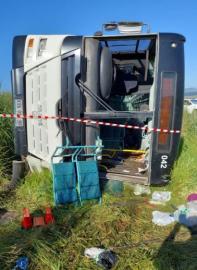
Investigation into KZN bus crash ferrying ANC supporters
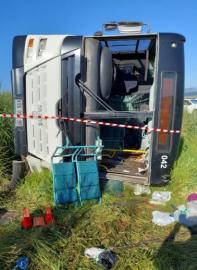
An investigation has been launched into a bus crash which claimed the lives of nine people who were returning home to Mpumalanga after the African National Congress (ANC) election manifesto launch in Durban.
According to media reports, the bus accident happened at around 5am in Paulpietersburg under the eDumbe Local Municipality in Zululand on Sunday.
“The law enforcement team on the scene has so far confirmed nine fatalities. However, they have not concluded the full recovery of the bus at the accident scene.
“Scores of other occupants sustained injuries, with four being more critical [and] they have all been taken to a local hospital. The cause of the accident is being investigated, and experts will be deployed to assist with the forensic investigation,” KwaZulu-Natal Transport MEC, Sipho Hlomuka said.
The MEC said a team was deployed on the scene to work with all law enforcement agencies.
“The investigation has already started, and we are in touch with the bus owner. Our investigation is looking at the condition of the road, condition of the bus, weather during the times of the accident, and the condition of the driver,” Hlomuka said.
He expressed his deepest condolences to the ANC and all affected families and wished those who sustained injuries a speedy recovery.
The MEC encouraged road users, especially public transport movers, to be extra cautious on the road.

Swift arrest of suspects in German murder case lauded

The Provincial Commissioner of the South African Police Service (SAPS) in Limpopo, Lieutenant General Thembi Hadebe has commended police for the swift arrest of three suspects who allegedly assaulted and killed a male German tourist at the weekend.
The incident took place at Northam in the Waterberg District on Saturday 24 February 2024.
According to the police, the 74-year-old victim departed from Botswana on Friday and drove to South Africa in a sedan.
He arrived at Lephalale in the Waterberg District on Saturday morning, and as he drove, he offered an unknown male hitchhiker a lift.
Along the way, he requested him to assist with accommodation around North West province before proceeding with his tour across the country.
Preliminary reports indicate that the pair established a friendship to an extent that the victim requested the man to drive his vehicle.
On arrival at the said accommodation, the suspect suggested they make a turn at a liquor outlet where they had a few drinks.
“That’s when the suspect informed his two friends that the elderly man is expecting a substantial amount of money from his family abroad. The suspect and his two friends drove with the unsuspecting victim to his place [and] upon arrival, they tied him up and started to assault him while demanding his bank pin code.
“They also searched him and took an undisclosed amount of cash and other valuables,” said police in a statement on Sunday.
The three suspects removed the vehicle’s number plates and drove with the tourist to Northam in Limpopo using a secluded gravel road.
When they reached a particular farm, two suspects dragged the victim from the vehicle where they dumped him in the bushes, while the driver remained in the vehicle.
While patrolling, security officials noticed the suspicious vehicle parked at night and without number plates.
They stopped to investigate, and noticed one of the suspect’s blood-stained t-shirt, and they notified the police.
“Upon their arrival, they started with their initial investigations, and the victim’s body was found in the bushes. The two suspects had already fled the scene. An intelligence driven operation was activated, and the two suspects were arrested in the North West province later in the evening, in possession of some of the deceased’s belongings.”
The three – aged between 24 and 46 – are expected to appear before the Northam Magistrate’s Court on Monday, 26 February 2024, on charges that include murder.
“We will work hard to secure a water-tight case that will result in a lengthy conviction for these perpetrators,” said Lieutenant General Hadebe.

How to: Easy steps to register to vote online

With just a few hours to go before the voter’s roll closes, the Electoral Commission has made it easier than ever to register to vote using their website.
The online voter registration portal, registertovote.elections.org.za, is functional and has proven to be the most effective method, allowing everyone to update their details from the comfort of their own homes, work places and communities ahead of the 2024 National and Provincial Elections.
Voters can use this portal to register to vote, view or update their current voter address, find their voting station, request a special vote, or simply browse for important information such as upcoming election dates in their ward.
You can register to vote by following these easy steps:
- Get your SA ID card/book ready and go to the link registertovote.elections.org.za.
- Enter your personal information: ID number, name and surname, and mobile number. The Chief Electoral Officer must compile and maintain a national common voters’ roll. The personal information required is for purposes of achieving this legal requirement and will not be used for any other purpose as required by the Protection of Personal Information Act, No. 4 of 2013.
- A one-time pin (OTP) will be sent to your cellphone number. Insert the pin and click on “confirm pin”.
- Capture your home address. You can type your address and select from the list or enter your address and click the search button.
- Review and acknowledge your information in the voter registration summary. This page will also tell you your ward and voting district.
- Tick the declaration box and then click on ID verification.
- Take a photo or upload a scan of your SA ID and click on continue.
- Your voter registration application has been submitted successfully. The IEC will verify the application and will notify you once it has been processed. You will receive an sms notification.
To submit an application to register to vote, you must meet the following requirements:
- be a South Africa citizen;
- be at least 16 years (you can only vote from age 18).
What you need to upload when using online voter registration:
- green barcoded ID book
- smart ID card,
- temporary ID certificate (TIC)
You are only registered to vote once you have received a receipt via SMS or email, or have confirmed that you are registered.
Voter registration for the 2024 General Elections will close at midnight, which is the day of proclamation of the General Election 2024.
The President and the Provincial Premiers will proclaim Election Day, 29 May 2024, during the course of today.
Citizens have until midnight to use the platform for voter registration and update their particulars. Citizens out of country can also use the same voter registration platform until midnight.
Citizens may also visit IEC offices in the all municipalities to register to vote. The offices will remain operational until 16:00.
Voters can also reach out to the Chat-bot on the 0600 88 00 00 WhatsApp line or call 0800118000.
SIU launches maladministration probes in KZN and Free State
The Special Investigating Unit (SIU) has been authorised – through Presidential proclamation – to launch a probe into allegations of serious maladministration in the affairs of the Free State Department of Public Works and Infrastructure and Human Settlements, the Free State Provincial Legislature and the KwaZulu-Natal Department of Transport.
The SIU said in the Free State investigation, the unit will probe the procurement of, or contracting for goods and services in relation to the Ramkraal Project by the provincial legislature.
“The SIU will also investigate payments made in a manner that was not fair, competitive, transparent, equitable or cost-effective; or contrary to applicable legislation, and any related unauthorised, irregular, or fruitless and wasteful expenditure incurred by the State.
“In addition to investigating maladministration, malpractice, corruption and fraud, the SIU will identify system failures and make systematic recommendations to improve measures to prevent future losses,” the unit said.
In relation to the provincial KwaZulu-Natal Department of Transport, the investigation will focus on the construction of the Mngwenya River, Umlalazi River, Mhlathuze and Phethu River bridges.
“The proclamation covers allegations of unlawful and improper conduct that took place between 01 June 2016 and 23 February 2024, the date of the publication of the Proclamation or before 01 June 2016 and after the date of the proclamation that are relevant to, connected with, incidental to the matters or involves the same persons, entities or contracts investigated,” the SIU said.
The corruption busting unit said the scope of the investigation will cover any allegations of:
- serious maladministration in connection with the affairs of the State institutions being investigated.
- improper or unlawful conduct by employees of the state institutions.
- unlawful appropriation or expenditure of public money or property.
- unlawful, irregular, or unapproved acquisitive act, transaction, measure, or practice having a bearing upon State property.
- intentional or negligent loss of public money or damage to public property.
- offence referred to in Part 1 to 4, of Chapter 2 of the Prevention and Combating of Corrupt Activities Act, 2004, and which offences were committed in connection with the affairs of the state institutions.
- unlawful or improper conduct by any person which has caused or may cause serious harm to the interests of the public.
“In line with the Special Investigating Units and Special Tribunals Act 74 of 1996, the SIU will refer any evidence pointing to criminal conduct it uncovers during its investigations to the National Prosecuting Authority for further action.
“The SIU is empowered by the SIU Act to institute civil action in the High Court or a Special Tribunal in its name to correct any wrongdoing uncovered during its investigation caused by acts of corruption, fraud, or maladministration,” the SIU said.

Social grants to increase in 2024

Social grants are expected to increase to keep in line with inflation and increase access for those who are eligible.
This does not include the Social Relief of Distress Grant (SRD Grant) also known as the R350 grant.
This was announced by Finance Minister Enoch Godongwana during the Budget Speech delivered in Cape Town on Wednesday.
“We are sensitive to the increase in the cost of living for the nearly 19 million South Africans who rely on these grants to make ends meet. In this regard, we have done as much as the fiscal envelope allows,” he said.
The increases to be implemented during this year are as follows:
- An increase of R100 to the old age, war veterans, disability and care dependency grants. This amount will be divided into R90 effective from April, and R10 effective October;
- A R50 increase to the foster care grant; and
- A R20 increase to the child support grant.
In the expanded Budget 2024 review, National Treasury explained that social grant expenditure – excluding the SRD grant – will increase from R217.1 billion in 2023/24 to R259.3 billion in 2026/27.
The COVID‐19 Social Relief of Distress Grant is allocated R33.6 billion in 2024/25 with provisional allocations for the 2025/26 and 2026/27.
“Work is currently underway to improve the COVID-19 Social Relief of Distress Grant by April this year. National Treasury will work with the Department of Social Development in ensuring that improvements in this grant are captured in the final regulations.
“These improvements will be within the current fiscal framework. For the extension of the grant beyond March 2025, the social security policy reforms, together with the funding source, will be finalised,” the Minister said.
National Treasury expects that grant beneficiaries, excluding those receiving the COVID‐19 SRD Grant, are projected to increase from 18.8 million in 2023/24 to 19.7 million in 2026/27.
Municipalities sign up for Eskom debt relief programme
At least 70 municipalities have applied for and been approved for the Eskom debt relief programme introduced by National Treasury last year.
The debt relief programme is aimed at assisting ailing municipalities to pay off their bulk electricity supply debt to the power utility.
This was revealed in the 2024 Budget Review drafted by National Treasury.
“By December 2023, 72 applications had been submitted, totalling R56.7 billion or 96.9 % of total municipal debt owed to Eskom at end‐March 2023. [Some] 70 applications totalling R55.2 billion had been approved as of January 2024, said Treasury.
Once municipalities are admitted into the programme, strict conditions set by Treasury have to be followed in order for the debt to be written off over a three-year period.
“These conditions include enforcing strict credit controls, paying their monthly electricity accounts and enhancing revenue collection,” Treasury said on Wednesday.
Smart meter conditional grant
In the Budget Speech tabled by Finance Minister Enoch Godogwana, Treasury announced that a new conditional grant will be introduced to increase the rollout of prepaid smart meters.
“A new conditional grant will be created to fund the rollout of smart prepaid meters, initially in municipalities that have been approved for Eskom debt relief. The National Treasury will distribute this grant.
“A total of R2 billion has been allocated for the grant, made up of R500 million in 2024/25, R650 million in 2025/26 and R800 million in 2026/27,” the department said.
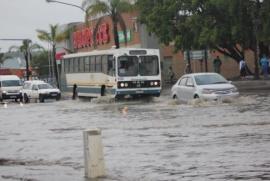
Government raises US$3.3 billion to support climate change initiatives
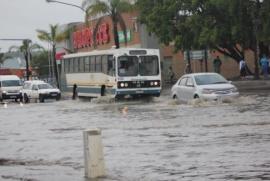
Government has raised US$3.3 billion so far from Multilateral Development Banks and International Finance Institutions to support climate change, energy, and just transition objectives.
Delivering the 2024 National Budget Speech, Finance Minister Enoch Godongwana said National Treasury plays a crucial role in mobilising resources, designing incentives, and influencing policy to mainstream climate change.
“As climate-related disasters intensify, a multi-layered risk-based approach is being developed to manage the associated fiscal risks. This considers various funding instruments from grants to contingency funds, including the Climate Change Response Fund, depending on the incidence and intensity of the disaster event.
“The National Treasury is reviewing disaster response grants to improve efficiency and create incentives for disaster planning, preparedness and risk reduction. It is also developing a climate-budget tagging framework to influence policy, planning, and budget decisions, by tracking climate-related expenditures in public budgets,” the Minister said on Wednesday in Parliament.
He said the support of concessional funding providers, such as Multilateral Development Banks, is going a long way to support the country’s climate adaptation, mitigation, energy transition, and sustainability initiatives.
“Crowding-in the private sector is necessary to managing the climate disaster funds. We are actively participating in climate negotiations, aligning with the government’s advocacy for reforming multilateral finance institutions.
“We are also working with eight municipalities to adapt and mitigate the effects of climate and weather-related events, by providing technical assistance for climate-responsive capital projects,” the Minister said.
According to the 2024 National Treasury Budget Review, the department is finalising a disaster risk financing strategy, centred on innovative financing and risk transfer to effectively mitigate climate impacts.
The strategy will boost state capacity to fund disaster recovery efforts and expand insurance mechanisms to protect against the financial strain of natural disasters.
“Recent years have seen a significant increase in extreme weather events and economic losses amid mounting concern over the effects of climate change. Between 1980 and 2021, 86 notable weather-related disasters have been recorded, affecting more than 22 million people and causing economic losses of about R113 billion.
“The 2017 Knysna wildfires, Cape Town (2015–2018) and Eastern Cape (2015–2020) droughts and KwaZulu-Natal floods in 2022 have heavily affected agriculture and tourism, with negative implications for government spending and revenue.
“These events exacerbate economic inequality, particularly in poor communities that are highly exposed to droughts, floods and wildfires and their consequences,” the document said.
Government incentivises electric vehicles producers
In an effort to encourage the production of electric vehicles in South Africa, government will introduce an investment allowance for new investments, beginning 1 March 2026.
This will allow producers to claim 150% of qualifying investment spending on electric and hydrogen-powered vehicles in the first year.
“The incentive will be implemented in addition to the existing support under the Automotive Production Development Programme. Government has also reprioritised R964 million over the medium term to support the transition to electric vehicles,” the Minister said.
The Electric Vehicles White Paper outlines government’s strategy to transition towards a broader new energy vehicle production and consumption in South Africa, starting with electric vehicles.
It aims to transition the automotive industry from primarily producing internal combustion engine vehicles to a dual platform that includes electric vehicles, by 2035.

Government to introduce global minimum corporate tax
Over the next few years, government plans to implement a global minimum corporate tax to limit the negative effects of tax competition.
“Multinational corporations with annual revenue exceeding €750 million will be subject to an effective tax rate of at least 15%, regardless of where their profits are generated. The proposed reform is expected to yield an additional R8 billion in corporate tax revenue in 2026/27,” Finance Minister Enoch Godongwana said on Wednesday in Parliament.
Delivering the 2024 National Budget Speech, Godongwana encouraged interested parties to provide comments on the draft Global Minimum Tax Bill published today.
The draft Global Minimum Tax Bill aims to limit the race to the bottom of effective corporate tax rates for large multinationals, with countries competing to attract income by offering low tax rates and tax incentives.
“Implementing the minimum tax in South Africa will bolster the corporate tax base. South Africa helped develop tax rules to address base erosion and tax challenges arising from the digitalisation of the economy as a member of the Steering Group of the OECD [Organisation for Economic Co-operation and Development] /G20 Inclusive Framework on Base Erosion and Profit Shifting.
“These rules are designed to limit the channels that multinationals use to shift profits from high- to low-tax countries. The 2023 Budget Review outlined the two pillars of this framework, which were endorsed by more than 135 countries in 2021. The first focuses on the digital economy and the coherent tax treatment of multinationals,” the 2024 Budget Review said.
The framework will be implemented through a multilateral convention to ensure that the biggest and most profitable multinationals reallocate part of their profit to all countries where they sell their products and provide their services.
“The second pillar introduces the global minimum tax. It ensures that any multinational with annual revenue exceeding €750 million will be subject to an effective tax rate of at least 15 %, regardless of where its profits are located. Government proposes to introduce two measures to effect this change – an income inclusion rule and a domestic minimum top up tax – for qualifying multinationals from 1 January 2024.
“The income inclusion rule will enable South Africa to apply a top-up tax on profits reported by qualifying South African multinationals operating in other countries with effective tax rates below 15%.
“The domestic minimum top-up tax will enable SARS [South African Revenue Service] to collect a top-up tax for qualifying multinationals paying an effective tax rate of less than 15 % in South Africa,” National Treasury said.
The Explanatory Memorandum and Draft Global Minimum Tax Bill will contain more details on these proposals as well as a request for public input.
Broadening the tax base
“Our long-term tax policy strategy remains focused on broadening the tax base while improving tax compliance and administrative efficiency. Visible progress has been made in rebuilding and modernising the South African Revenue Service.
“The tax authority has expanded the tax register, improved debt collections and reduced fraudulent refunds and trade valuations. This has led to improvements in revenue collection,” the Minister said.
To address the high levels of illicit tobacco, SARS is deploying CCTV and related technologies at licensed tobacco manufacturers.
“Investigations and prosecutions have resulted in R10 billion in additional assessments from the key players in the illicit gold and tobacco industry, of which over R4 billion from key players in the illicit gold and tobacco industry.
“These and other efforts have assisted with the improvement in revenue. Our bigger challenge, as I have stated earlier, is that our pie is not growing fast enough and this limits our ability to generate sufficient revenues to distribute among our priority areas,” Godongwana said.