
Comments sought on draft tax bills and global minimum tax bills
National Treasury and the South African Revenue Service (SARS) have called for comments on the 2024 Draft Rates Bill (2024 Draft Rates Bill), 2024 Draft Revenue Laws Amendment Bill, Draft Global Minimum Tax Bill, and the Draft Global Minimum Tax Administration Bill.
The four draft bills were published in the government gazette on Wednesday for public comment.
“The 2024 Draft Rates Bill contains announcements made in Chapter 4 and Annexure C of the 2024 Budget Review that deal with the increase of excise duties. The 2024 Draft Revenue Laws Amendment Bill is aimed largely at clarifying the existing language and to simplify the directives system for both administrators and SARS to allow for the efficient implementation of the ‘two-pot’ retirement reform,” Treasury said.
The department said the Draft Global Minimum Tax Bill is aimed at implementing the GloBE Model Rules in South Africa to enable the country to impose a multinational top-up tax at a rate of 15% on the profits of in-scope multinational enterprise groups.
“The Draft Global Minimum Tax Administration Bill is aimed at the administration of the Draft Global Minimum Tax Bill,” the department explained.
After receipt of written comments, Treasury and SARS will engage with stakeholders through public workshops to discuss the written comments on the draft bills.
“The Standing Committee on Finance (SCoF) and the Select Committee on Finance (SeCoF) in Parliament are expected to make a similar call later this year for public comment and convene public hearings on the draft bills before their formal introduction in Parliament.
“Thereafter, a response document on the comments received will be presented at the parliamentary committee meetings, after which the draft bills will then be revised, taking into account public comments and recommendations made during committee hearings, before they are tabled formally in Parliament for consideration,” the department said.
The 2024 Draft Rates Bill, 2024 Draft Revenue Laws Amendment Bill, Draft Global Minimum Tax Bill and Draft Global Minimum Tax Administration Bill can be found on the National Enquiries: Communications Unit Email: media@treasury.gov.za, Tel: (012) 315 5046 Treasury (www.treasury.gov.za) and SARS (www.sars.gov.za) websites.
More general information underlying the draft legislation can be found in the 2024 Budget Review, available on the National Treasury website.
“The 2024 Draft Taxation Laws Amendment Bill and 2024 Draft Tax Administration Laws Amendment Bill, which contain the remaining tax proposals announced in the 2024 Budget Review, will be released for public comment later in the year,” the department said.
Written comments should be forwarded to the National Treasury’s tax policy depository at 2024AnnexCProp@treasury.gov.za, and SARS at acollins@sars.gov.za by the close of business on 31 March 2024.
Teacher caught in possession of drugs at school
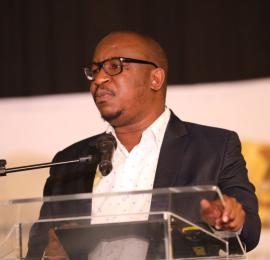
Gauteng Education MEC, Matome Chiloane has condemned an incident at a school in Ekurhuleni where a teacher was allegedly found in possession of drugs on school premises.
In a statement on Wednesday, the Gauteng Department of Education said the incident took place on 14 February 2024 at the Thoko Thaba Secondary School.
According to the department’s reports, the educator was allegedly found with a bag and box of drugs inside school premises.
Police were called in and the teacher was arrested. He appeared in court on Thursday, 15 February 2024.
MEC Chiloane said it is also concerning that this matter was not reported to the Department by the School Management Team (SMT) in a timely manner, which led to a planned protest by the community on Wednesday.
The department has launched an investigation, and the educator has been removed from the school as a precaution.
“We are disappointed about this incident, and vehemently condemn such conduct and we will be acting against it accordingly. We also plead with the community to allow this matter to be handled by the department and relevant law enforcement authorities for appropriate resolution,” Chiloane said.
IEC welcomes announcement of 2024 Election Date
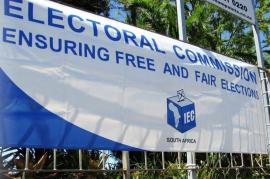
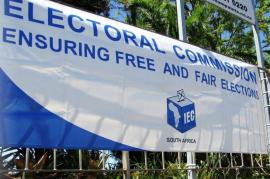
The Electoral Commission of South Africa (IEC) has welcomed the announcement by President Cyril Ramaphosa setting the 2024 National and Provincial Elections date for 29 May.
The President has, in line with section 17(2) of the Electoral act 73 of 1998, consulted with the IEC on the election date.
“This pronouncement of the Election Date provides an unambiguous motivation for the Commission to pull out all the stops in the intensification of preparations for Election Day. The Electoral Commission reiterates its commitment and readiness to ensure a successful 2024 general elections,” the Commission said in a statement.
Furthermore, the President convened a meeting with all nine provincial Premiers and the IEC to discuss the state of readiness for the General Elections.
“It creates certainty for us. It creates certainty for those who want to participate as contestants, be they on party lists or as independent candidates,” said IEC Deputy CEO, Masego Shiburi.
Shiburi said the President announced the date in consultation with the Commission, as that is the statute requirement.
“With each election, the number of competing parties increase. For these elections, we will also have independent candidates and their numbers are still indeterminate because candidate nomination is yet to open.
“Once we finalise candidate nomination, we will be able to print ballots and make them available in our missions to those who will be voting abroad but mostly importantly, to those who will be voting in the country,” Shiburi said.
The announcement of the Election Date comes after the successful voter registration campaign, which included two general registration weekends, an overseas voter registration drive, campus activations and registration within Correctional Services centres.
The 2024 Elections coincide with South Africa’s celebration of 30 years of freedom and democracy.
President Ramaphosa has called on all eligible voters to fully participate in this important and historic milestone of the democratic calendar.
“Beyond the fulfilment of our constitutional obligation, these upcoming elections are also a celebration of our democratic journey and a determination of the future that we all desire.
“I call on all South Africans to exercise their democratic right to vote and for those who will be campaigning to do so peacefully, within the full observance of the law. We also urge unregistered voters to use the online registration platform to register,” President Ramaphosa said.
According to the IEC, more than 27 million South Africans are registered to vote and 14 million others remain unregistered but are eligible to do so.
The Electoral Commission has reminded South Africans that while the Election Date has been set and announced, eligible voters have until Friday, 23 February 2024 to register. The latter date is the anticipated day of the proclamation of the Election Date.
Unregistered voters and those who need to update their address details can visit their local municipality office, the Electoral Commission or go to the online voter registration portal, registertovote.elections.org.za or reach the chat bot on 0600 88 00 00 WhatsApp line.
Election Timetable
Following the proclamation of the Election Date, the Electoral Commission will publish the Election Timetable in the Government Gazette after consultation with the National Party Liaison Committee.
The Election Timetable will outline the various cut-off dates for the performance of certain electoral activities. The timetable will include the following:
– Certification of the voters’ roll.
– Publication of details of voting stations.
– Submission of candidates nomination.
– Submission of notice to vote outside of the country.
– Applications for special votes .
Meanwhile, the Commission has reminded eligible voters of the general rule in elections. That is, a person must register where they live and vote at the voting station where they are registered.
“The only exception to the rule is that a voter may vote outside of the voting district of registration upon notifying the Electoral Commission by a date to be regulated by the Election Timetable,” the Commission said.

R22 million for KZN spaza shops and general dealers
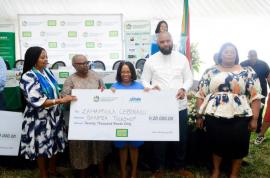
A total of R22 million has been allocated to support South African spaza shop owners, supermarkets, and general dealers in KwaZulu-Natal.
The Zimele Traders Fund by the Ithala Development Finance Corporation was announced by Economic Development, Tourism and Environmental Affairs MEC, Siboniso Duma, on Tuesday.
Duma said spaza shop owners, including supermarkets and general dealers in the province, who are strictly South Africans can apply for a grant in the form of trading stock to the value of R20 000.
“A total of R10 million has been set aside for this purpose. We are targeting 500 spaza shops across the province,” Duma said.
This follows an announcement made towards the end of last year, where the MEC revealed the department’s intention to embark on an entrepreneurship revolution, focusing on spaza shops located in rural areas and the townships.
Ithala SOC limited and Ithala Development Finance Corporation (IDFC), which are the department entities, are deepening support for entrepreneurs in the informal economy.
Spaza shop owners have long complained about being forced out of the market because they lack the buying power, while their competitors, who are mostly foreigners, buy in bulk which makes them have a competitive edge.
The MEC said the department has reconfigured the bulk buying warehouse at KwaSithebe in Mandeni, with a cost of more than R15 million.
“We have added a call centre and the online ordering system. The first bulk purchase stock for spaza shops, supermarkets and general dealers is valued at R10 million.
“In addition, we have made available 17 trucks to move the stock across the province. This is to create direct access stock, reduce costs of goods and further make them accessible within local municipalities,” Duma said.
As a permanent arrangement, the department is identifying buildings that are owned by Ithala across the province to be used as warehouses.
The MEC called on eligible spaza shop owners, supermarkets, and general dealers to submit their applications for the grant.
The applications opened on Tuesday, 20 February, and will close on 16 March 2024.
“Successful applications will be announced on 15 April 2024. Applications will run indefinitely,” he said.
Duma also announced that through the Zimele Fund, a total of about R11.9 million has been set aside for a soft loan of up to R100 000 at 2% interest for a co-operative and 4% fixed interest for a Close Corporation/ Pty.
For a quotation request, shop owners are requested to use the WhatsApp number 072 521 0897 or 031 319 5500 for enquiries.
Emails can be send to zimeletradersfund@kznedtea.gov.za/ Website: http://www.kznbulk-buying.co.za.

Accessing accurate public information
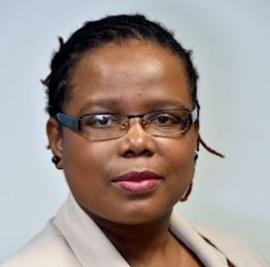
By Zanele Mngadi
Through social media apps, websites, and other digital tools, the internet gives us a lot of ways to connect with each other. This makes information easy to find.
However, the ease with which we get information online makes it hard to determine how true it is. The COVID-19 pandemic is a great example of this challenge because knowledge spread very quickly through our phones and social media sites.
During this dark time, scary fake news spread very quickly, making it harder for people to get the right information and stay safe, which was bad for their health and made them less likely to trust others.
In order to fight fake news, the South African government set up many ways for people to easily get true and accurate information. This included the SA Coronavirus website, social media accounts, and regular updates for the whole country.
Lessons from the pandemic
Because of the pandemic, government learned that giving people easy access to reliable information gave them the tools they needed to make smart choices about how to protect their health.
Building on the success of spreading information widely during COVID-19, government has adopted a multi-media approach that uses all forms of media to give South Africans more power by giving them accurate information about problems facing the country, the government’s solutions, and programmes meant to bring about change.
Government just recently set up two WhatsApp channels, governmentza and the PresidencyZA, that people can follow to get regular updates on things that affect everyone, like chances for legal education and work.
This adds to government’s social media platform GovernmentZA, which lets people get true information right away and talk to the government directly. People should follow these social media pages on Facebook, Instagram, LinkedIn, TikTok, WhatsApp, X, and YouTube, as well as government websites like https://www.gov.za, https://www.gcis.gov.za/, and https://www.thepresidency.gov.za/, to get accurate news about issues that affect the whole country.
The GCIS also has its own in-house news agency, SAnews (https://www.sanews.gov.za/) which provides regular news updates on matters of public concern, at no cost. In addition the GCIS launched a podcast, Vuk Talks to give people more access to information about government programmes. It’s on YouTube and Spotify.
Our online presence adapts to the changing needs of our citizens, but we also make sure that people who don’t have access to the internet can still get information.
The government tries to get accurate and reliable news to millions of people in rural areas and townships. Over the years Vuk’uzenzele newspaper has touched the lives of many people. It also brought the government to closer to the people through Izimbizo and partnerships with local community radio stations. From April 2024 on, the newspaper will only be available online, but its articles will still be useful to everyone in South Africa. We have also partnered with SABC 2 on the 13-part series Citizens Connect in an attempt to educate more citizens.
The value of accurate information
All of these online platforms let people to easily get reliable information directly from the government about their lives, our country, and the world we live in. Reliable information is essential to make democracy work. The opposite is equally true: inaccurate information, often a result of fake news, can be dangerous to democracy, especially during big national events such as elections.
As the seventh national and provincial elections get closer, people are being warned to be careful of fake news online, especially since new technologies make it hard to tell the difference between fact and fiction.
With the rise of deep fake content, fake content can seem credible. Dishonest people use Artificial Intelligence (AI) to make fake videos, pictures, and audio recordings of other people. Public figures, such as our political leaders, are often the targets of these attacks.
Be vigilant at all times
Government urges every citizen to be wary of falling victim to fake news. Pay close attention to face features and lip movements that don’t match up on videos because that can be a sign of deep fake content. If in doubt, verify the information you receive via trustworthy information sources (such as government platforms). That’s how you can learn the truth and make smart decisions about your future.
If you use social media and websites as sources of information, make sure that they are real. It’s easy to miss fake accounts or profiles because their names sound a lot like real ones. So, double-check the writing of the profiles and websites you follow.
Every South African needs to make sure that the news they spread comes from reliable sources. Let’s all stay alert all times to avoid being duped by fake news. Let’s all play our part to make our democracy strong. Let’s fight disinformation.
*Zanele Mngadi is Chief Director: Products and Platforms at the GCIS

Bodies of soldiers who died in the DRC return home
The South African National Defence Force (SANDF) will on Wednesday repatriate and officially hand over the mortal remains of Captain Simon Mkhulu Bobe and Lance Corporal Irven Thabang Semono to their families.
Bobe and Semono were killed and three of their colleagues injured in the Democratic Republic of Congo (DRC) on Wednesday last week after a mortar bomb landed inside one of the South African contingency military bases.
The soldiers were part of the Southern African Development Community Mission in the Democratic Republic of Congo (SAMIDRC) deployed to support and assist government of the second-largest country in Africa to restore peace, security and stability.
According to the SANDF, the remains will be officially handed over during a military procession ceremony at Waterkloof Air Force Base today.
The Minister of Defence and Military Veterans, Thandi Modise, is expected to form part of the officials attending the handing over ceremony.
Modise, along with the Deputy Minister of Defence and Military Veterans, Thabang Makwetla, the Acting Secretary for Defence, Dr Thobekile Gamede, and the Chief of the SANDF, General Rudzani Maphwanya, have since expressed their heartfelt condolences to the families of the deceased soldiers.

Two sentenced to 60 years in prison

Two suspects have each been sentenced to 60 years in prison on several charges, including two counts of attempted murder, murder and the possession of illicit firearms.
The two, Sakhiwo Khala (42) and Siyabulela Mcelu (37) were sentenced in the Khayelitsha Regional Court in the Western Cape on Monday.
According to the Directorate for Priority Crimes Investigation (Hawks), the sentences emanate from a 2015 incident where an SBV cash vehicle arrived at Nolungile Railway Station in Khayelitsha.
It is alleged that when SBV crew members came back from collecting the money they were attacked and shot by three unknown suspects.
The crew returned fire and one suspect was fatally wounded during the ordeal and two other suspects were wounded but fled the scene on foot.
The suspects were charged for fatally wounding one of their own co- suspects. The crew members also sustained injuries during the shootout. The wounded suspects were traced and arrested.
The two were found guilty of the counts on 08 November 2023.
The accused were sentenced as follows:
Count 1: Attempted robbery with aggravating circumstances, sentenced to 12 years imprisonment each.
Count 2: Attempted murder, sentenced to six years imprisonment each.
Count 3: Attempted murder, sentenced to six years imprisonment each.
Count 4: Murder, sentenced to 22 years imprisonment each.
Count 5: Possession of illicit firearms, sentenced to 12 years imprisonment each.
Count 6: Unlawful possession of ammunition, sentenced to two years imprisonment each.
The court ordered that counts 1,2,3 ,5 and 6 run concurrently with count 4.
Effectively each accused will serve 22 years direct imprisonment.
In terms of Section 103 (1) and (2) of the Firearms Control Act, Act 60 of 2000, both accused were declared unfit to possess a firearm.
The Provincial Head of the Directorate for Priority Crime Investigation in the Western Cape Major General Mathipa Makgato commended the team and was delighted that justice has been served.
R113.2 million Gauteng Health PPE tender declared invalid
The Special Investigating Unit (SIU) has welcomed a Special Tribunal judgement declaring the R113.2 million Gauteng Department of Health personal protective equipment contract awarded to private company LNG as invalid and unlawful.
The company has also been ordered to repay the profits earned from the tender.
The SIU had applied to the Special Tribunal to have the contract scrapped following an investigation into the affairs of the department.
“On 24 April 2020, the then Chief Financial Officer of Gauteng health department took a decision to procure 500 000 N95 masks at R55,50 each, 1 000 000 three-ply surgical masks at R18.00 each and 250,000 boxes of 100 sterile, powder-free surgical gloves at R270 per box.
“An SIU investigation in the affairs of Gauteng health department has found that [a] competitive bidding process was not followed and deviation from this process was not duly approved, and the contracted prices were high.
“Furthermore, the SIU found that LNG was not registered on the government’s Central Supplier Database for the supply of PPE [personal protective equipment] when it was awarded the multimillion-rand contract,” the unit said.

E-tolls ‘will be history’ in Gauteng – Premier Lesufi

The Gauteng e-toll scheme is expected to be delinked from the end of March this year.
This was announced by Gauteng Premier Panyaza Lesufi during the State of the Province Address (SOPA) on Monday evening.
“E-tolls are a system that was introduced in the province by national government on the basis that we wanted to improve our road network. We have now reached a stage where we all accept that the people of Gauteng have rejected e-tolls.
“We had a meeting with all affected parties. We held a meeting with the Minister of Finance [Enoch Godongwana]; we also held a meeting with the Minister of Transport [Sindisiwe Chikunga]. All of us now have reached an agreement that by the 31st of March this year, the formal process to switch off and de-link e-tolls will begin and e-tolls will be history in our province,” he said.
Lesufi added that the Finance Minister will provide more detail.
The scrapping of e-tolls has long been in the pipeline and Minister Godongwana, during the mini budget speech in October 2022, called for moving on from “debates of previous years and find solutions to this challenge”.
During that speech, the Minister explained that the Gauteng provincial government had agreed to “contribute 30 percent to settling SANRAL’s debt and interest obligations” related to the tolls.
“Gauteng will also cover the costs of maintaining the 201 kilometres and associated interchanges of the roads and any additional investment in road will be funded through either the existing electronic toll infrastructure or new toll plazas, or any other revenue source within their area of responsibility.
“Government proposes to make an initial allocation of R23.7 billion from the national fiscus, which will be disbursed on strict conditions,” the Minister said then.
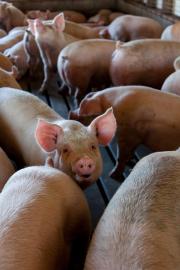
WC pig owners urged to heighten biosecurity to contain swine fever
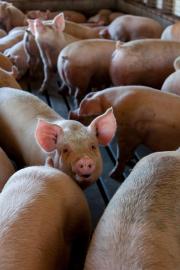
The Western Cape Department of Agriculture has urged pig farmers to heighten biosecurity measures following laboratory results confirming African Swine Fever (ASF) in pigs of small farmers on the outskirts of Groeneweide Park, George.
ASF is a virus that affects pigs and there is no vaccination or treatment currently available for the prevention of the disease.
The department said the new outbreak confirmed recently is the fourth outbreak of disease in the Garden Route area since 2022.
“Previously, there had been outbreaks in KwaNonqaba and Mossel Bay in 2022 and 2023, which were both resolved; and an outbreak in Thembalethu in 2022, which remains a concern. It is estimated that about 45 pigs have died thus far, with about 250 pigs remaining in the area,” department spokesperson Daniel Johnson said.
Johnson said the area has been placed under quarantine, and community members have been urged to not remove any pigs or pig products from the area to prevent the further spread of the disease.
Johnson has also emphasised that ASF virus is specific to pigs and does not affect humans or other species of animals.
“The public needs to know that pigs slaughtered at abattoirs have undergone meat inspection. Pork products found in supermarkets are safe for human consumption,” Johnson said.
Critical measures to minimise the spread of ASF
• All carcasses should be disposed of safely.
• Pigs should be confined to prevent roaming and potentially picking up and spreading the disease.
• Hands, shoes, clothing and equipment should be sanitised before and after being in contact with a pig.
• Any meat products should be thoroughly cooked before being fed to pigs.
• Farmers should confirm that any purchased pigs are bought from known ASF-free herds.
Usually, the first signs of an ASF outbreak are the sudden death of pigs, and in some cases, other symptoms can include breathing difficulties, redness of the skin, especially underneath the pig and on the ears, hind leg weakness and loss of appetite.
“Occasionally, the pig may also have blood in their faeces and their vomit. Should these signs be seen, please contact your closest State Veterinary Office at https://www.elsenburg.com/veterinary-services/animal-health-and-disease,” Johnson said.