
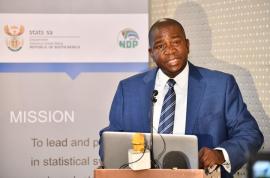
Stats SA records decrease in number of employed persons
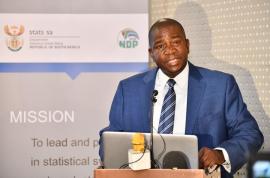
The Quarterly Labour Force Survey (QLFS) results for the fourth quarter of 2023 by Statistics South Africa (Stats SA) indicate that the number of employed persons decreased by 22 000 to 16.7 million in the fourth quarter of 2023 when compared to the third quarter.
Addressing a media briefing on Tuesday in Pretoria, Statistician-General Risenga Maluleke said the number of unemployed persons increased by 46 000 to 7.9 million compared to quarter three.
“Additionally, the number of people who were not economically active for reasons other than discouragement increased by 218 000 to 13.4 million, while discouraged work-seekers decreased by 107 000 in the fourth quarter of 2023 compared to the third quarter of 2023. This resulted in a net increase of 111 000 in the not economically active population.
“The above changes in employment and unemployment resulted in the official unemployment rate increasing by 0.2 of a percentage point from 31.9% in the third quarter of 2023 to 32.1% in the fourth quarter of 2023.
“The unemployment rate according to the expanded definition decreased by 0.1 of a percentage point to 41.1% in Q4: 2023 compared to Q3: 2023,” Maluleke said.
Formal sector employment decreased by 128 000 in Q4: 2023, while informal sector employment increased by 124 000 over the same period.
The industries that contributed to the net employment decline include community and social services (down by 171 000), construction (down by 36 000), agriculture (down by 35 000), trade (down by 28 000) and manufacturing (down by 1 000).
However, finance (up by 128 000), transport (up by 57 000), mining (up by 37 000) and private households (up by 18 000) recorded the largest employment gains.
“Provincially, employment losses were recorded in Eastern Cape (111 000), Limpopo (40 000), North West (30 000) and Northern Cape (2 000). The largest employment increase was recorded in KwaZulu-Natal (62 000), followed by Mpumalanga (48 000) and Western Cape (23 000) during the same period.
“The youth (15–34 years) remain vulnerable in the labour market; the fourth quarter of 2023 results show that the total number of unemployed youth increased by 87 000 to 4.7 million while there was a decrease of 97 000 in the number of employed youth to 5.9 million. This resulted in an increase in the youth unemployment rate by 0.9 of a percentage point from 43.4% in Q3: 2023 to 44.3% in Q4: 2023,” he said.

Over 83 000 land claims settled
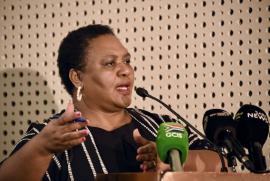
Agriculture, Land Reform and Rural Development Minister, Thoko Didiza, says a total of 83 067 land claims have been settled since the inception of the Land Restitution Programme in 1995 to 2023.
Didiza said the number equates to 94% of the old-order claims that have been successfully settled, with about 2.3 million people having benefitted from the restitution.
Presenting the research findings on the evaluation of South Africa’s Land Restitution Programme on Monday, Didiza said a total of R25 billion was spent on the purchase and transfer of 3.9 million hectares.
“An additional R22.5 billion has been spent on financial compensation for those beneficiaries who elected for financial compensation. Between 2019 and 2023, a total of 1 494 claims were settled, largely fuelled by the department’s interventions in fast-tracking the settlement of claims,” Didiza said.
The study, which started in 2018 and included 2 664 households and 3 378 people, who were sampled and interviewed, found that the economic power of the restitution beneficiaries increased by 16%, measured in per capita per month, relative to the control sample.
The Restitution of Land Rights Act of 1994 is among the first laws passed by the democratically elected government.
This was done with the conscious acknowledgement that land justice is paramount, and restoration of Black people’s dignity and freedom is central to a democratic dividend, said the Minister.
The Restitution of Land Rights Act made provisions for the restitution of rights in land to people or communities dispossessed of such rights after 1913.
The constitutionality of land restitution is preserved in Section 25(7) of the Constitution of South Africa which states that “a person or community dispossessed of property after 19 June 1913 as a result of past racially discriminatory laws or practices is entitled, to the extent provided by an Act of Parliament, either to restitution of that property or to equitable redress”.
Didiza said families of forced removal victims were fragmented for decades, and conflicts that arose at post-settlement claims were a function of a lack of social cohesion and trust created during a lengthy period of disintegration.
The Minister said investments in communication and social cohesion programmes would assist in mitigating the information gap and building trust among beneficiaries.
She said from the study findings, the department can draw some policy insights.
“Firstly, the study findings are enlightening us to understand that land restitution is not only about financial and economic justice but also psychological and social restoration, a lesson we should bear in mind when we evaluate the success or failures of land restitution projects.
“Secondly, over and above the post-settlement support and skill training, which we are already providing to beneficiaries as the government, there is an additional need to formulate community integration programmes,” Didiza said.
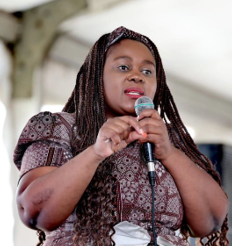
Emergency housing team to assist Nongoma storm victims
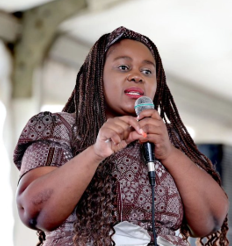
Human Settlements Minister Mmamoloko Kubayi has dispatched the department’s emergency housing team to establish the extent of damage caused by a storm that hit several houses in Nongoma, KwaZulu-Natal, on Saturday.
According to the department’s preliminary assessments, to date, several households in Ekubuseni, Gomodo and Holinyoka villages were largely affected, leaving four households homeless.
Kubayi said after the completion of the assessments, the Emergency Housing Unit will then intervene based on the four categories of emergency housing interventions provided by the department.
The four categories of emergency housing interventions include restoration, relocation, rebuilding and repairs.
Restoration provides building materials to all households whose structures were destroyed by the storm, while relocation provides Temporary Emergency Accommodation (TEAs) for all homeless families.
Rebuilding involves reconstructing Temporary Residential Units (TRUs) for all destroyed mud houses, while repairs include fixing all damaged formal houses after the National Home Builders Registration Council (NHBRC) has completed the structural assessments.
“I have directed officials to ensure that affected households are assisted as a matter of urgency. We have roped in one of our agencies, the NHBRC, to help the team assess the integrity of all structures that have been affected,” Kubayi said.
Established in 2023, the Emergency Housing Unit is tasked with the responsibility of responding to emergencies, including fires and floods.
This is done through collaboration with other spheres of government.
“Our main objective in emergency housing response is to ensure that we respond swiftly and provide solutions that will enable the affected communities to rebuild their homes,” the Minister said.
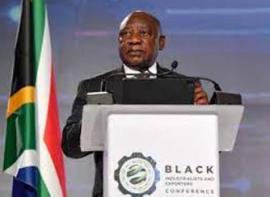
800 black firms to gather for the Black Industrialists and Exporters Conference
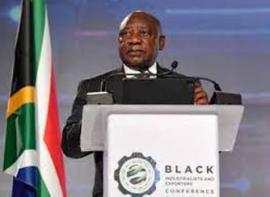
The Department of Trade, Industry and Competition (dtic), in partnership with the Industrial Development Corporation (IDC) and the National Empowerment Fund (NEF), will host the second Black Industrialists and Exporters Conference at the Sandton International Convention Centre on 20 March 2024.
The day-long conference will provide a platform for an exchange of ideas, knowledge and information on the achievements of the Black Industrialists Programme since its inception in 2015, as well as challenges and opportunities presented by the programme.
There will also be an exhibition that will showcase proudly South African products manufactured by Black Industrialists and an awards ceremony that will recognise and reward Black Industrialists that have contributed significantly in the country’s industrialisation, job creation, poverty alleviation, innovation and transformation efforts.
More than 1 300 delegates, including 800 black firms, 73 panellists and speakers, 139 exhibitors, nine buyers from the country’s biggest retailers and seven ministers participated in the inaugural event that took place in Sandton in July 2022.
The objective of the Black Industrialists Programme is to increase the participation of black South Africans in the ownership and control of productive enterprises in key sectors and value chains of the country’s economy.
President Cyril Ramaphosa graced the inaugural event which took place in Sandton in 2022. He officially opened the conference and later handed over certificates to deserving and distinguished Black Industrialists in various categories.
In his keynote address, President Ramaphosa described the conference as “an opportunity to reflect on progress in advancing redress and equity in the South African economy.”
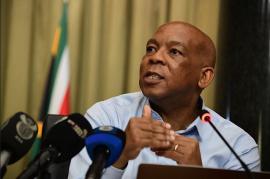
Electricity Minister to engage KZN business stakeholders
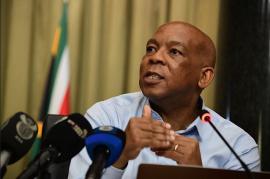
Minister in The Presidency responsible for Electricity, Dr Kgosientsho Ramokgopa, is expected to engage with business stakeholders in KwaZulu-Natal on energy challenges and interventions.
The engagement is expected to take place at the Durban Exhibition Centre on Tuesday, 20 February.
“The energy sector in South Africa is facing significant challenges which have implications for businesses, households, and the economy at large. The engagement will provide an opportunity for stakeholders to share their perspectives on the energy challenges businesses face in the region.
“The primary objective of this engagement is to foster dialogue and collaboration between the Ministry of Electricity, supported by the KwaZulu-Natal Provincial Government and business stakeholders in the province,” the Ministry in the Presidency said in a statement.
Ramokgopa is expected to be joined by KZN Premier Nomusa Dube-Ncube and eThekwini Municipality Mayor Mxolisi Kaunda.
Meanwhile on Sunday, power utility Eskom said it is working to restore power “as quickly as possible” following a high volume of electrical faults in Northern KZN.
The faults are due to damage to infrastructure following a storm in the area over the weekend.
“Eskom apologises for any inconvenience caused and reminds those affected by the loss of supply to treat all electrical installations as live and dangerous, as electricity supply may be switched on without notice.
“Customers are also urged to stay away from fallen infrastructure. Eskom will endeavour to restore power as quickly as possible and wishes to thank customers for their patience.
“Customers are encouraged to download the MyEskom Customer App from Google Play and the App Store, or use the Alfred chatbot on https://alfred.eskom.co.za/chatroom/ to report fallen infrastructure, report faults and follow up on progress,” the power utility said.
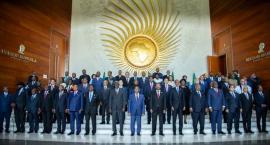
AU launches 50-year blueprint for Africa’s socio-economic development
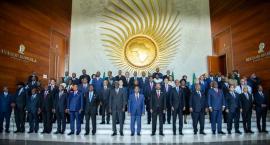
African Union (AU) Heads of State and Government have launched the Second Ten-Year Implementation Plan of the AU’s Agenda 2063: “The Africa we want”.
Agenda 2063 serves as a 50-year blueprint for Africa’s socio-economic development and integration.
It was adopted by the AU Member States at the Assembly of Heads of State and Government of the African Union (AU) this weekend, after extensive consultations across the continent.
President Cyril Ramaphosa concluded his participation at the summit on Sunday.
“A key flagship project of Agenda 2063 in which South Africa is playing a leading role is the operationalisation of the African Continental Free Trade Agreement (the AfCFTA), that serves as a milestone development in the evolution of the AU,” said the Presidency.
The AU Assembly met under the theme: “Educate an Africa fit for the 21st Century: Building resilient education systems for increased access to inclusive, lifelong, quality, and relevant learning in Africa”.
The assembly also discussed the status of peace and security on the continent and the Report of the AU Peace and Security Council (AUPSC).
“The discussion took place against the backdrop of great concern regarding the state of peace and security in Africa. The ongoing and concerning trend of unconstitutional changes of government that have occurred in West Africa as well as the ongoing conflicts in the eastern Democratic Republic of Congo (DRC), Sudan, South Sudan and Mozambique,” said the Presidency.
President Ramaphosa presented a report on the continent’s response to the COVID-19 pandemic and the state of readiness against future health threats, in his capacity as the Champion of the AU’s COVID-19 response.
As the pandemic is waning on the continent, said the Presidency, South Africa intends to work with the AU Commission and the Africa Centre for Disease Control towards expanding the role of the President to include all other health pandemics that are affecting the continent.
President Ramaphosa said: “Although the Africa CDC has classified COVID-19 as no longer a public health emergency of international concern, it remains an ever-evolving endemic virus. Furthermore, the effects of the pandemic continue to reverberate across our continent and beyond.
“The COVID-19 crisis was an opportunity for us as Africa to bolster our manufacturing sector. We were able to draw in an impressive USD 1.1 billion in financial and technical investments, in addition to the USD 1 billion advanced market commitment from GAVI, the Vaccine Alliance.”
The President praised the concerted efforts and collaboration demonstrated by the continent during the COVID-19 pandemic. He further urged the gathered leaders to continue improving the levels of alertness of their countries against future pandemics.
“Despite these successes, we are still at the delicate juncture of recovery. There is the threat of future pandemics. Our rapid and precise interventions have averted further crises, and for this, we must continue to sharpen our vigilance.
“The adoption of a strong Common Africa Position on Pandemic Preparedness and Response (CAP PPPR) is non-negotiable. It will define our roadmap to safeguarding our people, with a keen focus on critical issues,” he said.
Addressing the summit leaders on positive masculinity and the need to support the development of the AU Convention on Violence against Women and Girls, the President expressed his gratitude for the effort of Champions on Positive Masculinity and all Member States that have been part of the continental movement.
The President called on the assembly to forge a strong and enduring commitment to protect and uplift those who have suffered from violence against women and girls.
“We must now launch the AU Convention on Ending Violence Against Women and Girls Campaign, championing continent-wide consultations and ensuring that the journey to developing this critical instrument is shared by citizens across our vast continent.
“Developing the AU Convention on Ending Violence Against Women and Girls is more than a political act. It is a moral imperative to redefine our societies, to confront the legacies of colonialism, patriarchy and racism, and to champion equality, freedom and self-determination for every African.
“As President of South Africa, I hereby commit to support the development and timely adoption of a comprehensive convention that is backed by resources and institutional mechanisms to ensure its efficacy,” said President Ramaphosa.
On the margins of the AU Summit, President Ramaphosa held several bilateral meetings with Heads of State and Government.
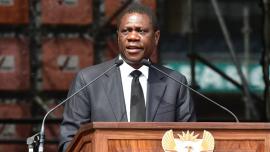
Deputy President’s office responds to newspaper allegations
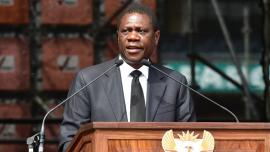
The Office of the Deputy President says it has noted the article published by the Sunday World on Sunday, 18 February 2024.
This is after the Sunday publication claimed that Deputy President Paul Mashatile and his Chief of Staff, Mduduzi Mbada, are protecting the Deputy President’s spokesperson, Vukani Mde, over a sexual harassment complaint against him.
According to the report, a senior female staffer in the office, reporting directly to Mde, complained about unwarranted sexual advances last August that Mashatile’s spokesperson made towards her.
Sunday World reported that Mde allegedly sent the victim “messages that are sexual in nature to her work cellphone number”, passed unwelcomed comments about her “sex life and her looks” and proposed love while communicating work instructions.
The Office of the Deputy President has dismissed the false allegation that they were shielding Mde.
“The Chief of Staff has briefed the Deputy President that a letter of intention to suspend Mr Mde, in light of the allegations against him, was issued and hand-delivered to the spokesperson, Mr Vukani Mde.
“The Deputy President is aware that there is a process underway in the Presidency to investigate the allegations made against Mde by one of the senior employees in the office, and is of the view that all due processes should be adhered to,” the statement read.
The Deputy President has since condemned any form of gender-based violence, especially against women, and said he believes that all employees should be protected from any victimisation.
“The Office of the Deputy President wishes to assure that this matter is given the necessary attention it deserves and will provide an update in due course.”
SIU updates Parliament on NLC corruption investigation
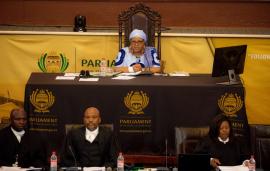
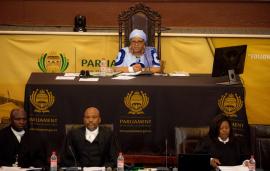
The Special Investigating Unit (SIU) has completed 90% of the second phase in its three-phased National Lotteries Commission (NLC) investigation.
The unit said in a statement on Wednesday the investigation in its totality is worth approximately R1.4 billion which the state and the NLC have allegedly lost due to corruption at the organisation.
The value of each phase is:
• Phase 1 – R279 710 409.
• Phase 2 -R246 659 310.
• Phase 3 – R905 901.910.04
The SIU appeared before Parliament’s Portfolio Committee on Trade and Industry on Wednesday to give an update on the investigation. In the presentation, SIU revealed new investigation findings.
One of the findings is related to award-winning actress, Moiteri Pheto, who unduly benefitted once again from the NLC grant funding.
The NLC approved grant funding of R5 million to Zibisibix Non-Profit Company for a chicken farm in December 2018. After receiving the R5 million, money moved from the account and the following payments were made:
• Black Planet Trading (Director: Thula Sindi) of an amount of R140 000.00
• Tsoseletso (Director: Moitheri Pheto) – R253 000.00
• Pheto Safe and Cleaning (Director: Dimakatso Pheto) – R124 000.00
• Sunguti projects (Director: Moitheri Pheto) – R2 800 000.00
• Moitheri Pheto’s personal bank account – R182 000.00
• Dimakatso Pheto (Moitheri’s sister) – R315 500.00
• Vehicle dealership- R252 400
• Agricultural Supplies- R209 500
The farm was purchased for R850 000, and the SIU found that the former chairperson of the NLC board Professor Alfred Nevhutanda signed the offer to purchase the farm in the Vaal area.
“Furthermore, the evidence that SIU gathered revealed that the farm was purchased for the benefit of Dimakatso Pheto. The case has been referred for civil litigation for recovery and criminal referrals are being prepared,” it said.
The SIU also presented to Parliament how the South African Youth Movement (SAYM) applied for grant funding on behalf of the Presley Chweneyagae Foundation, which belong to award winning actor, Presley Chweneyagae.
The main purpose of the application was for the Take Back the Future Musical, Documentary and Poetry Arts programme. The NLC approved a grant funding of an amount of R15 million.
From the R15 million, R2 999 967.00 was transferred to Iron Bridge Travelling Agency and Events in August 2016. Iron Bridge Travelling Agency and Events is owned by the former NLC Chief Operating Officer, Phillemon Letwaba’s wife, Rebotile Malomane.
In May 2017, a further R950 190.00 was transferred to VNMM Consulting Engineers CC. VNMM Consulting Engineers is owned by Prof Nevhutanda’s son-in-law, Meshack Makhubela. On 25 May 2017, an amount of R500 000 with a reference plot purchase was transferred to conveyancing attorneys.
From the balance of R 450 190, Prof Nevhutanda received R100 000 for a bus purchase and a further R60 000 for a funeral and debit orders for a car finance account.
The SIU investigation revealed how a non-profit organisation (NPO) was hijacked and funds that were meant to uplift poor women in Marikana and the surrounding areas in the North West province on a chicken farming project were misused.
The application was adjudicated and the grant funding for the value of R13 million was awarded to an NPO and was to be paid in two tranches of R7 million and R6 million. In November 2020, the hijacked NPO made an application for additional funding and received a further R3.5 million.
The SIU’s investigation revealed that a shelf company named Silverlite Trading bought the land in Marikana for this project for R400 000. Advocate William Huma, a former NLC board member is the current sole director of Silverlight.
The SIU went on a site visit and found that the farm was well-built and completed. The chicken farm contains a workers’ house, guard house, egg packaging and storehouse and chicken egg production house and there is a borehole.
However, since the chicken farm is not in operation. It is being vandalised, and some of the electric cables and solar panels were stolen from the farm.
The SIU has so far made eight criminal referrals to the National Prosecuting Unit and 11 disciplinary referrals to NLC officials.
The SIU was, in terms of Proclamation R32 of 2020, authorised by President Cyril Ramaphosa to investigate allegations of corruption and maladministration in the affairs of NLC and the conduct of NLC officials and to recover any financial losses suffered by the State.
In line with the Special Investigating Units and Special Tribunals Act 74 of 1996 (SIU Act), the SIU will refer any evidence pointing to criminal conduct it uncovers during its investigations to the National Prosecuting Authority (NPA) for further action.
The SIU is empowered by the SIU Act to institute civil action in the High Court or a Special Tribunal in its name to correct any wrongdoing uncovered during its investigation caused by acts of corruption, fraud, or maladministration.

Two SANDF soldiers killed in DRC, three wounded
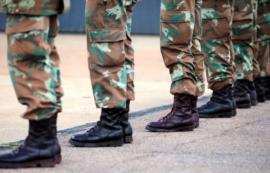
The South African National Defence Force (SANDF) confirmed on Wednesday that three soldiers were killed and two injured in the Democratic Republic of Congo (DRC).
This, according to a statement released yesterday, was after a mortar bomb landed inside one of the South African contingency military bases.
The soldiers are part of the Southern African Development Community Mission in the Democratic Republic of Congo (SAMIDRC) deployed to support and assist government of the second-largest country in Africa to restore peace, security and stability.
“As a result of this indirect fire, the SANDF suffered two casualties and three members sustained injuries,” the statement read.
The injured members were rushed to the nearest hospital in Goma.
According to the SANDF, details of the incident are still sketchy at the moment, while further investigations will be conducted to determine the basis of the incident.
The Minister of Defence and Military Veterans, Thandi Modise, along with the Deputy Minister of Defence and Military Veterans, Thabang Makwetla, the Acting Secretary for Defence, Dr Thobekile Gamede, and the Chief of the SANDF General, Rudzani Maphwanya, have since expressed their heartfelt condolences to the families of the deceased soldiers.
They also wished the injured members a speedy recovery.

Eskom load limiting project moves to Eastern Cape town
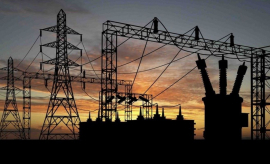
State power utility Eskom says it will be going live with the piloting of load limiting at Bedford in the Eastern Cape.
This comes after the successful implementation of the project in another Eastern Cape town, Adelaide.
Eskom Cape Coastal Cluster General Manager Mbulelo Yedwa said: “Electricity load limiting through smart meters is being implemented to better balance the supply and demand of electricity on the grid during Stages 1 to 4 of load shedding allowing customers to continue to use essential appliances with the capacity of up to 10 Amperes.”
The power utility explained that instead of being load shed during Stages 1 to 4, customers with smart meters in Bedford will have their load limited.
“An hour before the start of load shedding, these customers in selected pilot areas will be prompted to reduce their consumption from 60 Amperes to 10 Amperes by sending a message to the Customer Interface Unit (CIU) of the smart meter.
“Customers will also be notified by text message. If the customer load is still above 10 Amperes, the smart meter will automatically make two more attempts 30 seconds apart. After three failed attempts, the next reset will be in 30 minutes,” Eskom said.
The initiative, according to Eskom, is aimed at reducing the impact that load shedding has on customers with the following benefits:
- Customers will still be able to use essential appliances during load limiting e.g lights, TV, cellphone charger, fridge, security.
- No more delayed restoration of supply after load shedding due to failure of equipment.
- Avoid theft and vandalism of Eskom infrastructure. Protect equipment fatigue from repetitive switching.
- Reduction in cable faults
“It is the responsibility of the customer to reduce consumption by switching off non-essential appliances and only keep connected essential appliances up to a maximum of 10 Amperes for the duration of the load limiting period,” Eskom said.