
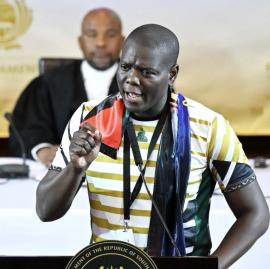
Sixth administration cracking down on crime – Lamola
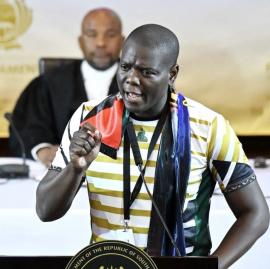
Minister of Justice and Correctional Services, Ronald Lamola says the sixth administration is steadily rebuilding law enforcement agencies like the National Prosecuting Authority to fight crime.
Lamola was speaking during the debate of the State of the Nation Address held in Cape Town.
“[It] is the sixth administration that strengthened the work of law enforcement agencies like the NPA [National Prosecuting Authority] by appointing permanent leadership in the upper echelons of the NPA and the SAPS [South African Police Service] and increased the operational budget resulting in visible institutional growth and stability.
“Organized crime verdicts have increased by 21% from 193 to 234 at a conviction rate that is above 80%. Gang leaders are behind bars or in court, whether it is Jerome Booysen, Nafik Modak, Ralph Stanfield, Mark Lifman and Vusi Khekhe, all are behind bars.
“The conviction rate in gender-based violence and femicide matters is at 74.6%. When it comes to successful prosecutions for cable theft matters, the NPA has exceeded some of the targets, the conviction rate is well above 85%, 299 convictions have been obtained from 347 cable theft verdicts,” Lamola said.
The Minister added that R3.2 billion from the criminal assets recovery funds has been allocated to fighting illegal mining and organised crime.
Furthermore, 2 996 arrests have been executed related to illegal mining activities as at December last year.
“SAPS is implementing Operation Shanela, a comprehensive plan to combat crime throughout the country. The plan includes clamping down on illegal mining areas.
“At the end of last year, the Asset Forfeiture Unit, Special Investigation Units and the Hawks have secured preservation orders to freeze assets which are proceeds of unlawful activities of a syndicate dealing in unwrought gold in Gauteng province.
“The frozen assets include 51 properties with a value of more than R16 million. In Mpumalanga, they secured a preservation order of assets worth more than one billion rands. The message is clear, crime does not pay and the tide against crime is turning,” Lamola said.
‘I am Tintswalo’
Harking back to President Cyril Ramaphosa’s SONA last week in which he described the life of Tintswalo, Lamola described how he himself is a product of progressive government policies.
He recalled how he benefitted from the Tertiary Education Fund of South Africa (TEFSA), now known as the National Student Financial Aid Scheme (NSFAS), after his parents who were both farmworkers could not afford his tertiary education.
“I can stand here in this house [and say] with great conviction that had it not been for …government’s expansion of TEFSA and my sister paying for my university registration and monthly stipend, I would not be standing here today.
“I would not have been an Attorney of the High Court of South Africa having appeared in the highest Court in the world, the ICJ, on global affairs. My life was predestined as a farm worker [by] design by the apartheid government and not by choice.
“The village where I come from, Cunningmore B in Mpumalanga, had no electricity nor running water. Today there is electricity, running water and tarred roads, so are many villages across the country.
“[NSFAS]…results are tangible. You can touch them with your bare hands,” he said.

Investigation launched after skull found next to graveyard

Police in Mbuzini, Mpumalanga, have opened an investigation following the discovery of a human skull next to a graveyard and railway line on 13 February 2024.
While performing their duties, police received information from the community about a human skull found at Hhoyi Trust next to Mbuzini.
The police responded and upon arrival found the skull on the ground. Other relevant stakeholders were summoned to the scene. An inquest has been opened.
“Currently, police are working hard to get the identity of the person whose skull belongs to, hence any member of the public with information that may assist in achieving this goal may go to the nearest Police Station or call the Crime Stop number at 08600 10111,” said the police in the statement.
Alternatively, members of the public can send information via My SAPS App.
All received information will be treated as confidential and callers may opt to remain anonymous.

Northern Cape man sentenced for child pornography

The South African Police Service (SAPS) Northern Cape Provincial Commissioner, Lieutenant General Koliswa Otola has welcomed the eight year sentence handed down to a 45-year-old for possession of child pornographic material.
This as the De Aar Regional Court sentenced John Henry Meiring on Wednesday.
Lieutenant-General Otola commended Lieutenant Colonel Marli Strydom for her relentless efforts that led to the arrest of the accused on 22 February 2022 and for the conviction and sentencing.
The South African Police Service, Serial and Electronic Crime Investigations (SECI), a specialised unit within Family Violence, Child Protection and Sexual Offences (FCS) in the Northern Cape, discovered that the accused was in possession of pornographic images of children.
The accused’s cell phone and hard drives were seized for investigation purposes. During the analysis of the exhibits, 773 pornographic images of children were found on the devices.
Addressing crimes against women, children and vulnerable persons remains a top priority for the SAPS in the province.
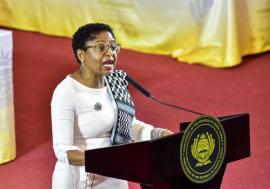
Citizens urged to reflect on 30 years of freedom
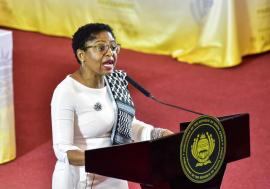
As South Africa marks 30 Years of Freedom, citizens have been urged to remember how far government has come in improving the lives of South Africans and undoing the damaging legacy of apartheid.
“As we mark 30 Years of Freedom, we must not exercise our reflections and recollections without remembering exactly where we’ve come from or without acknowledging what has confronted us as a society in our journey to here,” Minister in the Presidency Khumbudzo Ntshavheni said in Cape Town.
Addressing a joint debate on the State of the Nation Address (SONA) on Wednesday, the Minister said despite the global economic meltdown of 2007 and 2008 as well as the COVID-19 pandemic, government has continued to provide economic opportunities for citizens.
“Tintswalo or the Black Diamonds as they are generally referred to or the national breadwinners as they called themselves during the COVID19 vaccination period, continue to lead the installation of digital connectivity in deep-rural KwaZulu-Natal and other provinces. They work as young black and women engineers at our power stations,” the Minister said.
She said government has also provided opportunities for young people to work side by side to create a sovereign launch capability that has allowed the country to take satellite technologies into space and they are the bedrock of the more than 10 000 small, medium, and micro enterprises (SMMEs) that are suppliers to the National School Nutrition Programme.
The Minister said that young people are the engineers and contractors behind the more than 750 000 km road network from 525 000 km in 1995.
“Yes, some of the provincial and municipal roads have potholes but we are intervening. Currently South African National Roads Agency (SANRAL) has taken over 2 600 km of roads transferred from provinces so we can use its road construction and maintenance capacity to deliver better roads and with more under consideration,” she said.
She added that in the past five-years, SANRAL has executed projects to the value of R120 billion, which translated to just under 45 000 job opportunities and the participation of almost 6500 black owned SMMEs.
“Just this January, SANRAL announced another R28 billion injection into the industry with the implementation of over 70 projects. SANRAL’s work to improve the country’s road network is complemented by Operation Valazonke aimed at closing potholes on municipal roads across all municipalities. We are aware that some municipalities are progressing faster than others,” Ntshavheni said.
Passenger Rail Agency of South Africa
The Minister affirmed that work is underway to rebuild the network industries to ensure it services the country more effectively.
“Despite the teething challenges, the Passenger Rail Agency of South Africa (PRASA) has restored operations on 26 out of 40 commuter rail corridors following disruptions caused by the COVID-19 pandemic and the criminality that vandalised our rail infrastructure.
“Of these restored service lines, 19 of them are operated with the new trains. PRASA has received 184 new trains that have been built in Nigel, Ekurhuleni. In addition, 276 Metrorail coaches have been upgraded or refurbished, 97 train stations have been refurbished, and 29 cooperatives are responsible for cleaning and basic maintenance of these stations.
“Through the capital spend, PRASA created more than 46 000 job opportunities. Even Transnet is starting to register a turn-around at its operations with the arrival of critical equipment, irrespective of the weather – those containers can be loaded and offloaded at the harbour.”
Promoting public employment
She noted that eight consecutive Quarterly Labour Force surveys have indicated an improvement in the unemployment situation in the country – with 16.7 million people in employment by the end of the third quarter of 2023 – the first to surpass the pre-COVID-19 employment levels.
“Although six million youth are now in employment, the challenge of youth unemployment like the world over remains. It is for that reason that President [Cyril] Ramaphosa led the establishment of initiatives like the Youth Employment Service (YES) in partnership with private-sector partners.
“YES has created over 130 000 work experiences for young people to date. Over 1.7 million work and livelihood opportunities for unemployed South Africans have been created through the Presidential Employment Stimulus, which prioritised predominantly youth and women.”
Key achievements in the stimulus include:
- Employing 1.1 million education and general assistants in 23 000 schools.
- Providing production input vouchers to 180 000 small-scale farmers.
- Providing 29 000 opportunities in environmental management and rehabilitation.
- Employing 107 000 people across 6 500 worksites through the Social Employment Fund.
“The SA Youth Mobi platform was launched, which provides pathways for young people to employment, learning and youth enterprise. To date, over 4.8 million young people have registered on the platform and more than one million have been placed in earning opportunities.
“The National Youth Service has been revitalised, offering young people opportunities to undertake work that builds the community and provides them with skills, self-confidence and work experience. Over 47 000 participants were placed in the first phase of the National Youth Service,” the Minister said.
She said all these achievements have been made possible by South Africans who consider it their duty to be part of transforming the country and undoing the damaging legacy of apartheid.
“The work done during the sixth administration and 30 years under the democratic dispensation is to ensure we leave no-one behind, despite the hand this President’s tenure was dealt,” the Minister said.

Unemployed doctors to be placed by April, says Minister Phaahla
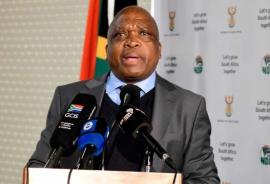
Government is working tirelessly to ensure that unemployed doctors who want to join the public service are placed by 1 April this year, Health Minister, Dr Joe Phaahla has announced.
This follows an ongoing public outcry over doctors who have completed statutory community service programmes but remain unemployed.
“I am, therefore, happy to announce that working with the Minister of Finance we have a solution to address the current challenge of doctors who want to stay in the public service but could not be offered funded posts,” said the Minister.
During the debate on the President Cyril Ramaphosa’s State of the Nation Address (SONA), Phaahla said the Finance Minister will flesh out more details during his Budget Speech next week on how these posts will be funded.
“Our national team is working with the National Treasury team to thrash out the details and working with provincial health departments to speed up the process so that by 1st April 2024 all those who will not be already in posts can be able to start.”
Phaahla said he was confident that some provinces will even be able to start giving out appointment letters before 1 April 2024.
“The measures we are working on with the Minister of Finance will give us sufficient breathing space while we are working on long-term solutions.”
He told Parliament that over the last 15 years, government has ramped up the training of doctors both in the local universities and the Nelson Mandela Fidel Castro programme in Cuba.
The number of graduates, according to Phaahla, has almost doubled over the last 10 years, from 1 338 graduates who entered the internship programme in 2014 to 2 210 this year.
“The medical profession is very key in the multidisciplinary teams and that is why we are doing everything to retain as many doctors, nurses, physiotherapists and other members of the teams in the public health system.”
In addition, he said his department was committed to working with the medical association and the trade union to look at more opportunities for doctors including offering primary health services in the community as the State prepares to implement the National Health Insurance (NHI).
NHI
He told the House that the government interventions are laying the foundation for the implementation of the NHI.
Phaahla also took the time to thank members of both the National Assembly and the National Council of Provinces (NCOP) who passed the Bill last year.
As stated in the Bill, he said the NHI will be implemented in two remaining phases from 2024 to 2026, while between 2026 and 2028 government will focus on establishing the Board and CEO and several key committees of the NHI Fund.
“We are confident that the innovative funding of infrastructure as stated by the President will also contribute to health facilities.”
In the meantime, he said his department was strengthening key delivery areas.
These include the healthcare benefits design, digital health systems, and risk identification and fraud prevention.
COVID-19
Since the lifting of all restrictions in June 2022, he said the health sector has been on a recovery path.
“Honourable Speaker and Honourable Members indeed as stated by the President, key indicators show that we have recovered well from the impact of the COVID-19 pandemic.”
For example, he cited the improved life expectancy approaching pre-COVID, the continued reduction in maternal mortality in pregnancy and reduced infant and under-five mortality rates.
Meanwhile, he said backlogs in planned surgery procedures including in orthopaedics, general surgery and eye operations are being attended to through the mobilisation of specialists to spend time in under-served areas with many doing it free of charge.
In addition, Phaahla said procurement and distribution of medicines has stabilised with the result and that public health institutions now have stock availability of 85%.
As stated by the President in his SONA, the department will also focus on serious interventions to improve the quality of health services by upgrading infrastructure, including building new facilities.
SIU welcomes arrest of allegedly corrupt former Eskom officials
The Special Investigating Unit (SIU) has welcomed the arrest and appearance in court of two former Eskom officials on charges of fraud, corruption and money laundering.
The two employees, Thandi Magagula and Nontuthubo Mahweliri, were employed at the Hendrina Power Station and were arrested by the Hawks last week and have appeared in different courts.
“The court appearance is part of the implementation of the National Anti-Corruption strategy by law enforcement agencies to strengthen its fight against corruption, especially when such crimes are committed by state employees in positions of trust to deliver services for the benefit of the public and the economy, but instead, steal from the most vulnerable to enrich themselves and fund their opulent lifestyles,” the SIU said.
Magagula allegedly conducted business with the electricity supplier while employed there.
“An SIU investigation revealed that Magagula held a private investment in a company called Montoza Engineering. Montoza Engineering had one or more contracts with Eskom and according to Eskom records during the period of approximately October 2015 to November 2015, had rendered services and provided work or goods to Eskom to the value of approximately R58 888.76.
“Magagula as an employee of Eskom was not supposed to conduct any business with the entity as this is against Eskom’s policy on conflict of interest,” the SIU said.
She also underwent a disciplinary hearing at Eskom, was found guilty and was given a seven-day suspension.
Mahweliri also allegedly operated under the same modus operandi.
“The investigation by the SIU found that Mahweliri failed to declare that she is a member of a company called NKG Trading investments, which had a contract with Eskom and failed to apply for permission to perform private work. Her company received payments to the value of R1 082 884 for the period 2017 and 2018.
“The SIU also referred Mahweliri for disciplinary action. Eskom held a hearing, and she was found guilty of all charges of misconduct and suspended for 7 days without pay,” the SIU said.
Both cases were postponed and they are expected to appear in the Middelburg Specialised Commercial Crime Court.

SANRAL notifies motorists about blasting along the N2
The South African National Roads Agency (SANRAL) has advised road users that the N2 will be intermittently closed between Makhanda (formerly Grahamstown) and the Fish River Pass due to blasting operations taking place this month.
Blasting operations started on Monday and will end on 26 February 2024.
Motorists are notified of the following dates:
- Thursday,15 February 2024
- Monday,19 February 2024
- Thursday, 22 February 2024, and
- Monday, 26 February 2024.
“The road will be closed on these days from 3pm, for a maximum period of three hours, up to 6pm to allow sufficient time for cleaning of the existing N2 and making it safe for the travelling public,” SANRAL said.
“Motorists travelling westwards between East London or Qonce (formerly King William’s Town) and Gqeberha (formerly Port Elizabeth) may consider using the following alternative route:
- From East London, follow the R72 to Port Alfred and Kenton-on-Sea through to Nanaga and turn left onto the N2 and continue on to Gqeberha.
Motorists travelling eastwards between Gqeberha and Qonce or East London may consider using the following alternative route:
- From Gqeberha, follow the N2 to Nanaga and turn right onto the R72 at the junction at Nanaga and travel on via Alexandria and Port Alfred to East London.
- From East London, turn left onto the N2 and travel westwards through to Qonce.
“Motorists are requested to plan their trips accordingly, consider alternative routes and use caution when making use of the roads,” SANRAL’s Southern Region Manager Mbulelo Peterson said.

Mpilisweni School of Specialisation officially launched in Gauteng
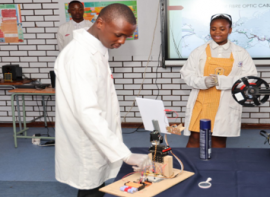
Gauteng Department of Education (GDE) MEC, Matome Chiloane, officially launched the Mpilisweni Maths, Science & ICT School of Specialisation, with a focus on Manufacturing and Logistics in Katlehong, Ekurhuleni, on Tuesday.
This public secondary school specialises in Manufacturing and Logistics because of the Economic Development Corridor in which it is located.
The GDE said it intentionally streamlines its schools to match the focuses of each of the schools’ Economic Development Corridors, thus responding to the skills gap of each corridor.
Katlehong is a large township in the Gauteng province of South Africa. It is located 28km south-east of Johannesburg, between two other townships, Thokoza and Vosloorus, which are all next to the N3 highway.
According to the department, learners from the school demonstrated a wide array of advanced skills during the official launch.
“These include a smart truck that they built, which is meant to use solar power instead of petrol. Learners proceeded to show extensive knowledge in DNA profiling, using biotechnology and gel electrophoresis to analyse DNA.
“The school also features a driving simulator, which is able to simulate other real-world environments. Other inventions included a solar tracking panel which detects light sources similar to a sunflower, as well as a LiFi connected sound system,” the GDE said. LiFi is a high speed, bidirectional and fully networked wireless communication of data using light.
The GDE said the crown jewel of the learners’ creation is a smart factory that uses smart automation to operate and produce bread from scratch.
Girl learners first exhibited a model of the factory, which includes automation and mechatronics that they envision using in the future.
The MEC had the opportunity of viewing the actual factory and getting a taste of the bread. The school sells the loaves of bread to schools in surrounding areas at only R9.90 a loaf.
The factory is a result of the partnership between the Gauteng Department of Education and Sifiso Edtech, which is invested in providing real-world applications of innovative technology in education.
Albany is also a partner, with their baking expertise, fusing learner knowledge with practical resources that do not only result in mere loaves of bread, but essentially nurtures the minds and bodies of learners, and ultimately the community.
Mpilisweni is a no-fee school that relies entirely on Section 21 allocation for financial upkeep.
The school has maintained a 90%+ matric pass rate for the past three years. A survey done by the department indicates that most parents prefer to enrol their children at Mpilisweni due to the quality of teaching and the improved performance.
“It is through this backdrop of consistent performance and in this developing community that we launch an innovative School of Specialisation to produce the province’s model citizens. Learners at Mpilisweni will benefit from a wide array of skills within the manufacturing and logistics industry that reach beyond the standard curriculum,” Chiloane said.

Internet connectivity improves
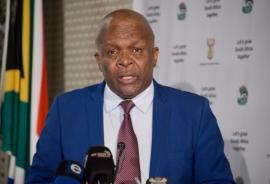
Minister of Communications and Digital Technologies, Mondli Gungubele, says that internet connectivity and penetration has improved greatly.
According to the Minister, internet connectivity and penetration has improved from a mere 21.1% in 2011 to a staggering 79% in 2022, elevating citizens in a rapidly changing world that is driven by digital technologies.
The improvement is due to work being done through the SA Connect broadband connectivity project, which is dedicated to bridging the digital divide by providing Wi-Fi access to communities and ensuring universal access to the internet.
Phase 2 of the SA Connect project was launched by government last year with the aim to provide core and access network infrastructure to enable broadband connectivity to community Wi-Fi hotspots that will connect households.
Addressing a joint debate on the State of the Nation Address (SONA) on Tuesday, the Minister said government will continue to connect rural and township areas with a target of 5.5 million households enabled by WIFI hotspots in the next three to four years.
In addition, government will connect 1.5 million households enabled by WIFI hotspots by December 2024 and 747 000 households enabled by 4 250 WIFI hotspots by the end of this financial year.
“We can report that to date, a coverage of 361 000 households which has been enabled by 2 502 WIFI hotspots has been achieved. The work has been done and will continue being done. It will involve 76 internet service providers, which are small medium and micro enterprises (SMMEs). This will result in 4 500 direct jobs and many more indirect jobs and opportunities downstream,” Gungubele said.
Spectrum
With government having freed spectrum of above 700MHz for use by mobile operators, that spectrum will connect public institutions and deploy 4G and 5G technology throughout the country.
The availability of spectrum paves the way for affordable, high-speed internet access for all.
“Working with the private sector thus far, all eight metros have been connected to fibre, and we are expanding to more towns. We have as part of our implementation of the recommendations of the Presidential Commission on Fourth Industrial Revolution (4IR), embarked on several digital infrastructure projects to ensure transformation through access in a changing world,” the Minister said.
He said Cabinet approved the Next Generation Spectrum Policy for economic development on 25 November 2023.
The policy intends to support the spectrum allocation and licensing for fixed mobile; broadcasting; aeronautical and marine; research and development; community access, and other relevant industries.
The policy also seeks to promote equity and fair allocation to contribute towards the transformation of the sector and accessibility of digital connectivity even in outlying parts of the country.
The purpose of the policy is to address gaps and limitations that were identified in the 2016 National Information and Communications Technology White Paper and prepares for the amendment of relevant sections of the Electronic Communications Act, 2005 (Act 36 of 2005), which include:
- unclear roles and responsibilities between Minister and the authority (ICASA) which contributed to inefficiencies
- gaps in the spectrum management regime
- an exclusive spectrum regime that benefit a few and bigger players; and
- inefficiencies towards extending broadband access to rural, remote, and underserved areas.
“Working with our mobile operators, we will connect over 21 878 public basic education institutions, health centres and clinics, public libraries, and offices/ residences of traditional leaders to the internet, over the next three years.
“4G connection is expanding to township and rural areas under the democracy ka[meaning of] Tata Rolihlahla Mandela. Information and communications technology (ICT) is a great equaliser. Everyone in South Africa must and will access modern digital technologies.
“A digitally disconnected South Africa automatically removes itself from participating in the global community of the future. The social and economic impact of which will be catastrophic,” the Minister said.

SA deploys 2900 troops to eastern DRC
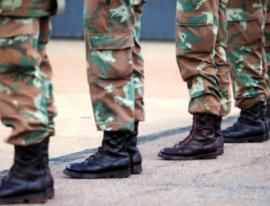
South Africa is to deploy at least 2 900 members of the South African National Defence Force to assist in the fight against illegal armed groups in the eastern Democratic Republic of Congo (DRC).
President Cyril Ramaphosa ordered the deployment in line with fulfilling South Africa’s international obligation towards the Southern African Development Community (SADC) mission to support the DRC.
The deployment comes as the DRC battles Tutsi-led M23 rebels whose attacks and advances in recent days, is threatening the North Kivu provincial capital, Goma.
According to media reports, decades of conflicts in eastern Congo between myriad rival armed groups over land and resources have killed hundreds of thousands of people and displaced more than seven million.
The SADC Mission in the Democratic Republic of Congo (SAMIDRC) was deployed on 15 December 2023 to support the government of the DRC to restore peace and security in the eastern DRC, which has witnessed an increase in conflicts and instability caused by the resurgence of armed groups.
“The employment will cover the period from 15 December 2023 to 15 December 2024 and it was authorised in accordance with the provisions of section 201(2) (c) of the Constitution of the Republic of South Africa.
“The budgeted expenditure to be incurred for the employment amounts to just over R2 billion. This expenditure will not impact provisions for the defence force’s regular maintenance and emergency repairs,” the Presidency said in a statement on Monday.
The obligation to contribute troops to the SADC mission in the DRC is borne by all SADC Member States. SADC is a 16-member group of countries, including the Congo.
The deployment of the SAMIDRC was approved by the Extraordinary SADC Summit of Heads of State and Government held in Windhoek, Republic of Namibia, on 08 May 2023 as a regional response to address the unstable and deteriorating security situation prevailing in the eastern DRC.
As part of the SAMIDRC, a SADC regional force from the Republics of Malawi, South Africa and the United Republic of Tanzania and elements of the DRC Armed Forces are working with the Congolese Army, the Forces Armees de la Republic Democratique du Congo (FARDC), in fighting armed groups operating in the eastern DRC.
In a statement in January, SADC said the presence of the SAMIDRC demonstrates the commitment of SADC member states to supporting the DRC in its efforts to achieve lasting peace and stability and, ultimately, create an enabling environment for sustainable development and prosperity.