

End of load shedding ‘finally within reach’ – President Ramaphosa
Government’s “single-minded focus” on implementing plans to urgently address the energy crisis are making gains – with the end of load shedding “finally within reach”.
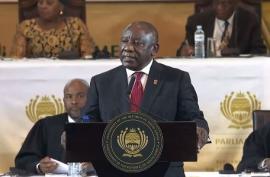
This according to President Cyril Ramaphosa who delivered the State of the Nation Address at the Cape Town City Hall, on Thursday evening.
The President said government has a clear plan – the Energy Action Plan – which is being implemented with “single-minded focus through the National Energy Crisis Committee”.
“We have delivered on our commitments to bring substantial new power through private investment on to the grid, which is already helping to reduce load shedding. Last year, we implemented a major debt relief package which will enable Eskom to make investments in maintenance and transmission infrastructure and ensure its sustainability going forward.
“Since we revived our renewable energy programme five years ago, we have connected more than 2500 MW of solar and wind power to the grid with three times this amount already in procurement or construction,” he said.
The amount of rooftop solar has also increased since government implemented tax incentives and financial support with regard to this.
Regulatory reforms implemented by government have also enabled private investment in electricity generation enabling the development of more than 120 new private energy projects.
“These are phenomenal developments that are driving the restructuring of our electricity sector in line with what many other economies have done to increase competitiveness and bring down prices.
“Through all of these actions, we are confident that the worst is behind us and the end of load shedding is finally within reach. But we are not stopping there,” President Ramaphosa said.
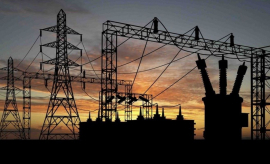
To further strengthen South Africa’s hand in energy security, some 14 000km of new transmission lines are to be built in South Africa to connect renewable energy projects.
“To ensure that we never face a similar crisis ever again, we are reforming our energy system to make it more competitive, sustainable and reliable into the future. We are going to build more than 14 000km of new transmission lines to accommodate renewable energy over the coming years,” he said.
President Ramaphosa explained that to fast track the building of the transmission lines private investment in transmission infrastructure will be roped in “through a variety of innovative investment models”.
State of the Nation Address in numbers
Friday, February 9, 2024
President Cyril Ramaphosa delivered the State of the Nation Address (SONA) at the Cape Town City Hall on Thursday.
Below is the SONA in numbers:
Social Assistance
- More than 26 million – South Africans who continue to receive social assistance every month provided by the democratic state.
- Some 9 million – unemployed people receiving the Special Social Relief of Distress Grant every month.
Unemployment and Job Creation
- Two million – people who lost their jobs due to COVID-19.
- 15 to 24 – the ages of millions of young people who were not in employment, education or training, by 8 February 2024.
- More than 1.7 million – work and livelihood opportunities created through the Expanded Public Works Programme.
- More than 1 million – school assistants placed in 23 000 schools through the Presidential Employment Stimulus.
- 23 000 – schools where more than one million school assistants have been placed through the Presidential Employment Stimulus.
- From 8 million to over 16.7 million – the increase in the number of South Africans in employment since 1994 until 2024.
- Over 4.3 million – young people engaged on SAYouth.mobi, a zero-rated platform for unemployed young people to access opportunities for learning and earning.
- 1.6 million – young people who have secured opportunities through the SAYouth.mobi, a zero-rated platform for unemployed young people to access opportunities for learning and earning.
Crime and Corruption
- More than 200 – accused persons being prosecuted by the National Prosecuting Authority.
- R14 billion – value of freezing orders granted to the National Prosecuting Authority’s Asset Forfeiture Unit for state capture-related cases.
- Around R8.6 billion – value of corrupt proceeds that have been returned to the State.
- R4.8 billion – unpaid taxes collected by the South African Revenue Service.
- R64 billion – value of civil litigation instituted by the Special Investigating Unit.
- 5 000 – extra police officers deployed to Public Order Policing.
- Over 285 000 – arrests made by the South African Police Service since May 2023 through Operation Shanela.
- 20 000 – police officers recruited over the last two years.
- 10 000 – police officers to be recruited in the year to come.
- Over 100 000 – people stopped by the new Border Management Authority from entering South Africa illegally.
Energy
- More than 2 500 – megawatts of solar and wind power connected to the grid.
- More than 120 – new private energy projects in development.
- More than 14 000 – kilometres of new transmission lines to be built over the coming years to accommodate renewable energy.
- Around R170 billion to almost R240 billion – increases in the value of financing pledges for the Just Energy Transition Investment Plan in the past year.
Economy and Investment
- More than 60 – ships waiting to berth at the Port of Durban in mid-November 2023.
- 12 – ships waiting to berth at the Port of Durban at the end of January 2024.
- R1.5 trillion – value of new investment commitments raised through five South Africa Investment Conferences.
- R500 billion – value of new investment commitments raised through five South Africa Investment Conferences that have already flowed into the economy.
- Approximately 39% – black ownership of mining by 2024, compared with 2% in 2004.
Road Infrastructure
- Nearly 25 000 – kilometres of roads being managed by the South African National Roads Agency Limited.
- More than 1 200 – projects to the value of R120 billion awarded by the South African National Roads Agency Limited in the past five years.
- R120 billion – the value of more than 1 200 projects awarded by the South African National Roads Agency Limited in the past five years.
Land
- 25% – farmland owned by black South Africans through redistribution.
- 30% – target of farmland to be owned by black South Africans through redistribution by 2030.
Labour
- Around 1 000 – black industrialists supported with funding and other forms of support in the last five years.
- More than 90 000 – workers employed by black-owned firms which contribute many billions of rands to the South African economy.
- About 200 000 – workers who obtained ownership of shares in the companies in which they work.
- Over half a million – status of worker ownership in companies in the South African economy.
- Over 6 million – workers whose wages were raised by the introduction of the National Minimum Wage.
Matric
- 82.9% – latest matric pass rate; the highest ever.
Poverty Alleviation
- 71.1% – South African population living in poverty in 1993.
- 60.9% – the drop in the poverty rate by 2010.
- 55.5% – the drop in the poverty rate by 2020.
Health
- More than 100 000 – South Africans who lost their lives to COVID-19.
- 54 years – life expectancy in 2003.
- 65 years – life expectancy in 2023.
- 95% – persons diagnosed with HIV who know their status.
- 79% – persons who receive antiretroviral treatment out of the 95% diagnosed with HIV who know their status.
- 93% – persons virally suppressed out of the 95% diagnosed with HIV who know their status.
Housing, Water and Telecommunications
- Nearly nine out of every 10 – households living in a formal dwelling.
- Only 6 out of 10 – people who had access to clean drinking water at the end of apartheid.
- 9 out of 10 – South Africans with access to clean drinking water by 2024.
- 79% – households with access to the internet in 2022.
Gender-Based Violence and Femicide
- Around R21 billion – money dedicated over the medium term to implement the six pillars of the National Strategic Plan on Gender-based Violence and Femicide, including the economic empowerment of women.

Deputy Minister Bogopane-Zulu to launch ChommY in Manenberg

Following the State of the Nation Address on Thursday, Social Development Deputy Minister, Dr Hendrietta Bogopane-Zulu, in partnership with USAID, will on Saturday launch ChommY at the Silverstream Primary School in Manenberg, in the Western Cape.
ChommY is a social and behavioural change programme for boys and girls between the ages of 10 and 14 years.
Manenberg is largely a coloured community on the Cape Flats that has been characterised as an area plagued by gang-related violent crimes and drug abuse.
ChommY, a colloquial term for “friend”, seeks to build a positive friendship among children and encourages young boys and girls to motivate one another to minimise risky behaviour and social ills, including, bullying.
“The programme gives children the opportunity to develop a personal plan for their lives and emphasises the importance of support from parents and communities to enable young people to make informed decisions. The programme forms part of a basket of social and behavioural change programmes offered by the Department of Social Development,” the department said in a statement.
Observed under the theme: “Invest in my Future…Protect me Today”, ChommY aims to generate knowledge, develop skills, and empower young people to make informed choices and contribute on reducing high prevalence of HIV infections, substance abuse and prevention of teenage pregnancy.
Bogopane-Zulu will facilitate dialogues with the children as they share their social experiences and solutions.
Bokamoso – the programme’s mascot – will interact with the children as they participate in indigenous games.

NATJOINTS ready to handle all safety and security aspects for SONA

The National Joint Operational and Intelligence Structure (NATJOINTS) is satisfied that all deployments are in place to ensure the State of the Nation Address (SONA) 2024 takes place in a peaceful, safe and secure environment.
The NATJOINTS structure responsible for coordinating all security and law enforcement operations throughout the country is led by the South African Police Service (SAPS), State Security Agency (SSA) and South African National Defence Force (SANDF).
In a statement on Wednesday, national police spokesperson Brigadier Athlenda Mathe said the structure has been meeting regularly in the build-up to SONA to ensure that the plans that are in place are adequate for the safety and security of participants, spectators, communities living near the Cape Town City Hall and businesses operating in this vicinity.
“The operational plan is in place and all critical role players are ready to execute their various responsibilities, as per their mandate.
“All law enforcement agencies led by the SAPS have mobilised resources to heighten police visibility with the aim of preventing and combatting any form of opportunistic crimes before, during and post the planned address,” Mathe said.
Residents of Cape Town, spectators and those who are operating businesses in the vicinity of the Cape Town City Hall are also advised about road closures by the City of Cape Town Traffic Services ahead of the delivery of the President’s State of the Nation Address on Thursday.
READ | Public advised of road closures ahead of SONA 2024
“It is important to emphasise that those who are not accredited or authorised to be in attendance should avoid the area around the Cape Town City Hall on Thursday, 8 February 2024.
“It is on that score that we urge the cooperation of those who will be in and around the vicinity of the Cape Town City Hall on the day.
“Any lawlessness and any form of criminality and any behaviour that contravenes the law will be dealt with accordingly. No disruptions will be allowed and tolerated by law enforcement,” Mathe said.
She said all law enforcement agencies securing the SONA are expected to execute their duties according to their constitutional mandate and within relevant prescripts before, during and after the main address.
Mathe said NATJOINTS is also policing build-up activities to the SONA and the four-day Investing in African Mining Indaba that is currently underway. Thus far, these events have been incident-free, with no incidents of disruption and criminality reported.
“The NATJOINTS is thus satisfied and confident that like all other State of the Nation Addresses, this one will also take place in a safe and secure environment,” she said.
PRASA Western Cape making strides
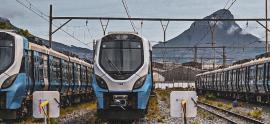
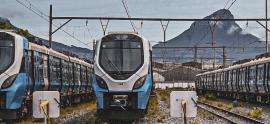
Acting regional manager of Passenger Rail Agency of South Africa (PRASA) in the Western Cape, Raymond Maseko, says the agency has done much work to recover the province’s network following a series of challenges.
Maseko was speaking on the sidelines of a blitz activation at the Cape Town train station ahead of the State of the Nation Address (SONA) to be held at the Cape Town City Hall on Thursday evening.
“We had a reset. Post-COVID when we started, there were only 14 stations in the Western Cape that had train access…out of 125 stations.
“Last year when we were here, the community of the central line did not have access to trains. As we speak today, we have access to trains up to Nyanga. There are only 11 stations in the Western Cape out of 125 that do not have train access.
“If you go currently to Phillipi station, there are people working there. If you go to Mandalay station, there are people working there and Kapteinsklip, there are people working there. We are on the cusp of actually recovering the Western Cape network in its entirety,” he said.
Maseko highlighted that despite all the progress made, criminality – specifically copper cable theft – is hampering the agency’s work.
“In South Africa, we have a scourge of cable theft. This is affecting our business [seriously]. Most of the lines that are not available today [is due to] the copper theft that has happened. This morning, we had cable theft at Tygerberg and this… affected the entire system from after 3am. We were only [set] to recover it moments ago. The impact is so severe.
“We need South Africans to partner with us. There is nothing like ‘government infrastructure’. In essence, there is just South African infrastructure because all of our taxes are what is creating this infrastructure. It is for South Africans to actually protect the infrastructure. You see something, say something. Do not just keep quiet,” he said.
Maseko said the agency has also completed building student accommodation that will accommodate thousands of students in the city.
“There is student accommodation that we started building just before lockdown… up until now… [some] 3 200 beds. There are already 1 500 students enjoying the benefits that we have put up. The idea from PRASA is densification and its also transport-orientated development.
“That means that we are asking the cities – we are asking that any development that happens – make it around transport hubs. Think about what we have done here. Students from the Cape Peninsula University of Technology can be here… that is somewhere around Belville, and UCT that is around town, they can always live here.
“They get off here, get into a train, get off at the nearest station… and then they go off into their places of higher institutions,” Maseko said.
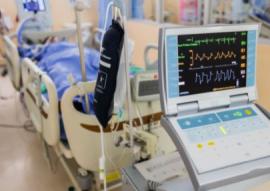
MEC saddened by death of Grade 1 Gauteng learner
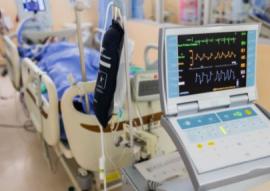
Gauteng Education MEC Matome Chiloane has expressed devastation at the death of a Grade 1 girl learner who passed away after allegedly consuming biscuits from a local spaza shop.
In an incident that took place on Tuesday, it is alleged that the learner from Mandlethu Primary School in Tsakane, Brakpan, began experiencing health complications in class just before break at 11am and started vomiting a few minutes later.
According to the Gauteng Department of Education (GDE), the learner’s parents were contacted immediately to come to the school, while emergency services were also alerted to provide the necessary medical assistance.
“Unfortunately, the learner was certified dead by paramedics upon arrival. According to information at our disposal, the parents confirmed that the child had consumed biscuits which were bought from a local spaza shop owned by foreign nationals,” the GDE said.
Police are investigating circumstances surrounding this incident, while the department’s Psycho-Social Support Unit has been deployed to provide trauma support and counselling to all affected individuals.
“We are deeply saddened by this unfortunate incident.
“We plead with parents to be vigilant concerning the edible goods that their children consume. We call upon law enforcement agencies and municipalities to be more stringent on compliance matters related to spaza shop products. Indeed, we wish to extend our sincerest condolences to the family and the school community at large,” MEC Chiloane said.

Dirco dismisses Nigerian High Commission’s ‘warning’ ahead of Afcon semi-final

The Department of International Relations and Cooperation (Dirco) has assured that South Africa does not pose any danger to Nigerian citizens, as the two countries are set to face each other in the semi-final match of the Africa Cup of Nations (Afcon) tonight.
This assurance follows a safety advisory issued by the Nigerian High Commission in Pretoria on Tuesday, for its citizens residing in South Africa.
“The attention of the Nigerian High Commission Pretoria has been drawn to potentially inflammatory online comments made by a section of South African citizens against Nigeria living in the host country, largely influenced by the upcoming 2024 African Cup of Nations Bafana Bafana [semi-final] on Wednesday,” their statement read.
The commission has advised citizens to be cautious of where they watch the match, particularly in public places, and to avoid loud, riotous or provocative celebrations if Nigerians win the match, both before and after the game.
However, the Dirco has since described the commission’s advisory as “unfortunate”.
“The advisory is regrettable because it seems to create alarm and unnecessary tension between the citizens of South Africa and Nigerians living in or visiting South Africa,” the department said.
“The South African national soccer team, Bafana Bafana, has played against their Nigerian counterparts, the Super Eagles, on many occasions, and there has been no history of soccer hooliganism among South Africans associated with the outcome of such encounters.”
The department has since called on the diplomatic representatives to approach the department to address any concerns about diplomatic matters.
“We are confident that the sports-loving nation of South Africa poses no threat to Nigerian citizens, and we do not agree with the apprehension expressed by the High Commission.”
Meanwhile, Bafana Bafana is said to be confident ahead of the Afcon semi-final clash against the Super Eagles.
“Yes, we know and understand who we are up against. We know the might of this team and that their players play all over Europe. We also know that last time in an Afcon what the result was, but this time it’s different. It’s different players, a different team and a different Afcon. Anything is possible,” the Bafana Bafana coach, Hugo Broos, was quoted saying on Tuesday.
The South African Football Association (Safa), also cited captain and goalkeeper, Ronwen Williams, who was the man of the match in the quarter-final clash against Cape Verde.
Williams made history after saving four penalties out of the five penalties in a shootout – something that has never been achieved at the Africa Cup before.
“After seeing the players run for about 130 minutes non-stop, it was my turn to stand up and do my part. I’m happy it went our way but ultimately this is a team sport. I don’t like to take credit because they fought just as hard. So, reaching the semi-finals here means we did it together,” he said.
Kick off is at 19:00 this evening.

2023 Tax laws published
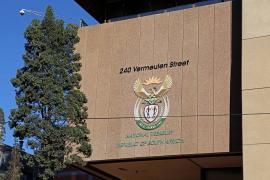
National Treasury has announced the publication of the 2023 Tax Acts that have been promulgated and give legislative effect to the tax proposals outlined by the Minister of Finance in his annual National Budget Speech last year.
The Rates and Monetary Amounts and Amendment of Revenue Laws Act, 2023, (Act No. 19 of 2023) (2023 Rates Act), Taxation Laws Amendment Act, 2023 (Act No 17 of 2023) (2023 TLAA) and Tax Administration Laws Amendment Act, 2023 (Act No. 18 of 2023) (2023 TALAA) were promulgated on 22 December 2023.
“The 2023 Rates Act gives effect to changes in rates and monetary thresholds and increases of the excise duties on alcohol and tobacco. The 2023 TLAA contains more complex, technical, anti-avoidance legislative changes. The 2023 TALAA deals with tax proposals that are technical and administrative in nature.
“A final Response Document on the 2023 Rates and Monetary Amounts and Amendment of Revenue Laws Bill (2023 Rates Bill), 2023 Taxation Laws Amendment Bill (2023 TLAB) and 2023 Tax Administration Laws Amendment Bill (2023 TALAB), as well as the Explanatory Memorandum to the 2023 TLAB (Explanatory Memorandum) and the Memorandum of Objects to the 2023 TALAB (Memorandum of Objects) are also published,” National Treasury said on Tuesday.
The final Response Document updates the Draft Response Document to consider submissions and decisions made following further inputs made by stakeholders, the Standing Committee on Finance and the Select Committee on Finance during public hearings regarding the 2023 Draft Rates Bill, 2023 Draft TLAB and 2023 Draft TALAB.
The 2023 Rates Act, 2023 TLAA, 2023 TALAA, final Response Document, Explanatory Memorandum and Memorandum of Objects can be found on the National Treasury (www.treasury.gov.za) and SARS (www.sars.gov.za) websites.
President Ramaphosa agrees to extend Commissioner Kieswetter’s tenure at SARS
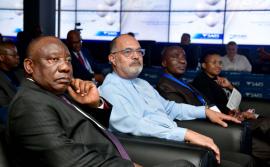
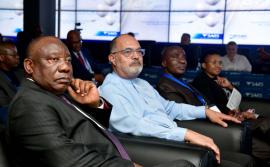
President Cyril Ramaphosa has agreed to extend South African Revenue Service (SARS) Commissioner Edward Kieswetter’s tenure beyond the end of his term at the revenue collector.
The Commissioner’s contract of employment was set to end on 30 April, where after a new Commissioner would be appointed.
“President Cyril Ramaphosa and the South African Revenue Service (SARS) Commissioner Edward Kieswetter have agreed to extend the tenure of the Commissioner beyond the end of his term to enable an orderly transition in the organisation,” the Presidency said in a statement.
In March 2019, President Ramaphosa appointed Kieswetter, in terms of Section 6 of the South African Revenue Service Act, for a five-year term that started on 1 May 2019.
The decision was informed by the recommendation to the President from the Minister of Finance that the recommended candidate of the independent selection panel be appointed.
The process for the appointment of the SARS Commissioner is informed by the South African Revenue Service Act and was guided by the recommendations of the Commission of Inquiry into Tax Administration and Governance by SARS chaired by retired Judge Robert Nugent.
Nzimande approves NSFAS eligibility criteria for financial aid
Higher Education, Science and Innovation Minister, Dr Blade Nzimande, has approved the proposed 2024 National Student Financial Aid Scheme (NSFAS) eligibility criteria and conditions for financial aid.
In terms of Section 4 of the NSFAS Act, the first and second functions of NSFAS are to “allocate funds for loans and bursaries to eligible students” and to “develop criteria and conditions for the granting of loans and bursaries to eligible students, in consultation with the Minister”.
Nzimande said the approved 2024 Eligibility Criteria and Conditions apply to students at public universities and Technical and Vocational Education and Training (TVET) colleges.
“The approved 2024 Eligibility Criteria and Conditions make slight amendments to the 2023 NSFAS Financial Aid Eligibility Policy but maintain the principles of the 2023 NSFAS Board policy positions.
“The changes recommended by the NSFAS Board were proposed in consideration of, among others, the differences between TVET college and university student bursary packages,” Nzimande said in a statement on Tuesday.
The policy changes for the 2024 academic year, are as follows:
- University managed self-catering and private off-campus accredited accommodation will be capped at R50 000 in metro areas and R41 000 in all other areas per academic year, while university managed and catered accommodation are capped at R66 500 in metros and R57 500 in other areas, per beneficiary.
- TVET college managed and leased self- catered accommodation and private off-campus accredited accommodation will be capped at R50 000 in metros and R41 000 in other areas, whilst TVET college-owned catered residence will be capped at R60 000 in metros and R51 000 in other areas, per beneficiary.
- In 2024, the living allowance will be R10 000 for TVETs and R16 500 for universities per annum (distributed monthly), per beneficiary.
Nzimande noted this is aimed at progressively but decisively closing the gap between TVET College and university students.
Conditions on policy changes
The conditions on policy changes include that students who change institution types (shift from TVET college to university or vice versa) must re-apply for funding.
Students who de-register or drop out during an academic term and wish to resume their studies in future academic terms, must re-apply.
A student that no longer complies with the university N+Rule or TVET college N+Rule may not be funded. The university N+ Rule is based on the number of years a student is registered in the higher education sector.
The TVET college N+ Rule is based on NSFAS funded academic terms at TVET Colleges.
“The additional NSFAS funded academic term may be for repeating at any level from the entry academic term to exit the academic term.”
The policy notes that the N+ Rule does not apply to occupational programmes as “these programmes are aligned to employment contracts which do not make provision for the N+1 period of study.”
Financial aid received cannot be used to settle historic debt unless it is specified as such.
University academic eligibility criteria
The policy states that the academic progression criteria will be measured by the percentage of course credits that a student achieves in the academic year. Institutions and NSFAS will progressively align academic progression criteria requirements.
As of 2024, continuing and First Time Entering Students (FTEN) university students must achieve a credit pass rate of 50%.
Continuing and FTEN university students must achieve a course credit pass rate of 60% for the end of the 2024 academic year to succeed academically for the 2025 funding year.
TVET academic eligibility criteria
A bursary may only be awarded to students progressing to the next NC (V) level if they passed at least five subjects in the previous NC (V) level.
A bursary may only be awarded to students progressing to the next Report 191 level if they passed a minimum of three subjects in the previous N-Level.
Academic progression criteria requirements for continuing students studying occupational programmes will be determined by TVET colleges, and the results shared with NSFAS.
Students with disabilities
In the event that the human support is in the form of a carer, the carer may be anyone selected by the student living with a disability and approved by the institution, provided that all supporting documents are ratified by NSFAS prior to funding being approved.
In terms of responsibility added on NSFAS, the 2024 policy states the scheme must comply with National Treasury and the Public Finance Management Act (PFMA) requirements.
“As such, all NSFAS funding decisions and payments are subject to these requirements and restrictions.”