

Eskom rolls out load limiting in Gauteng

Eskom is rolling out its load limiting project – aimed at optimising electricity consumption – across Gauteng following the project’s successful implementation in Fourways, Johannesburg.
According to the power utility, load limiting aims to better balance the supply and demand of electricity during Stages 1 – 4 of load shedding.
“Through load limiting measures during Stages 1 to 4 of load shedding, customers’ electricity capacity will be reduced from 60/80 Amps to 10 Amps. This will allow customers to continue with the minimal use of electricity for essential appliances such as lights, TVs, Wi-Fi routers, fridges and security systems.
“An hour before the start of load shedding, Eskom will prompt customers to reduce their consumption to 10 Amps by sending a message to their cellphone. The system will provide the customer with four opportunities to reduce their consumption. Thereafter, if the load has not been reduced, the meter will automatically switch off the electricity supply for 30 minutes before supply is restored,” Eskom said.
The next areas where the project is due to be implemented in Johannesburg are Buccleuch, Kelvin, Paulshof, Marlboro, Sunninghill and Waterfall, where customers use smart meters.
“The initiative focuses on select customers with smart meters, as these have the technical functionality to be controlled remotely.
“The power utility urges all its customers with compatible meters, where load limiting will be implemented, to support the initiative, which ensures that they continue to have electricity for the duration of load shedding.
“The success of the project depends on the partnership between Eskom and the cooperation of customers, and their willingness to reduce their electricity consumption to below 10 Amps,” Eskom said.

Six suspects arrested for human trafficking

A multi-disciplinary team consisting of various units within the South African Police Service (SAPS), led by the Anti-Kidnapping Task Team, has arrested six suspects on suspicion of human trafficking and kidnapping in Mayfair, Johannesburg.
The six men are expected to face charges of human trafficking, sex trafficking, kidnapping and extortion. They are expected to appear before court today.
Two Indian women, aged between 20 and 24 years, have since been rescued.
The team, consisting of private security, received intelligence on a Johannesburg-based human trafficking network preying on Indian women.
The women were allegedly enticed to the country with false promises of employment. Upon arrival, they were kept against their will, offered to clients leading to sexual encounters.
On Wednesday, members operationalised information and pounced on an identified address and a commercial site.
The members seized an array of cellphones, numerous documents, including passports and cash, for further investigation. Investigations are continuing.
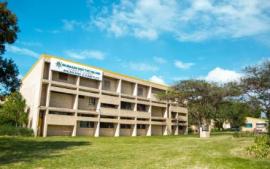
Over 32 000 beds registered on NSFAS platforms available for students
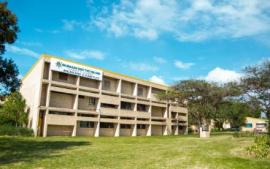
Out of the 40 522 beds registered on the National Student Financial Aid Scheme (NSFAS) platforms at Technical Vocational Education and Training (TVET) colleges, 32 272 have been accredited and are available for registered NSFAS-funded students.
NSFAS Acting Board Chairperson, Professor Laurens Van Staden, said about 8 250 registered beds on NSFAS platforms in TVET colleges are in the process of being accredited.
“For universities, out of the total of 72 241 beds registered, 43 581 have been accredited and are available for registered NSFAS-funded students, and about 28 420 are in the process of being accredited,” Van Staden said.
NSFAS is piloting the accreditation of private student accommodation in 17 universities and 23 TVET colleges for the 2024 academic year.
Through the pilot programme, NSFAS aims to ensure that student accommodation service providers provide accommodation that is accessible, decent, safe and academically conducive for all students.
The purpose of the student accommodation programme is to assign students to available accommodation; accredit accommodation providers; pay accommodation fees to accommodation providers through secured platforms, and grade accommodation to create a standard, among others.
From 18 January 2024, NSFAS provided access to a portal for all institutions to view the available beds.
The NSFAS board, led by Van Staden, met with the South African Union of Students (SAUS) Executive, led by President Yandisa Ndzoyiya on Thursday to discuss the entity’s state of readiness for the beginning of the academic year.
“All institutions have been provided with access to the NSFAS accommodation portal in order to view the available beds. Institutions must note that accrediting agents are continuing with the process of accreditation and the list will be updated daily,” said Van Staden.

De Berg Nature Reserve declared 30th Ramsar site
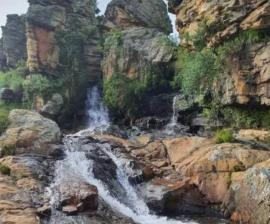
The Minister of Forestry, Fisheries and the Environment, Barbara Creecy, has welcomed the declaration of De Berg Nature Reserve as South Africa’s 30th Ramsar site under the Convention on Wetlands of International Importance.
The Ramsar Convention encourages the designation of sites containing representative, rare or unique wetlands, or wetlands that are important for conserving biological diversity.
“The conservation and restoration of wetlands is crucial to achieving many of our national and global sustainable development goals. Estuaries, marshes and vleis, rivers and lakes, and the biodiversity that they preserve matter for our health, food supply, tourism and jobs.
“Wetlands are vital for humans, ecosystems and our climate, providing essential ecosystem services such as water regulation, including flood control and water purification,” Creecy said on Friday.
Through the Working for Wetlands Programme, the Department of Forestry, Fisheries and the Environment (DFFE) has invested over R1.4 billion in the rehabilitation of 1 873 wetlands and created 43 662 jobs.
The programme commenced in the year 2000 and is being implemented in all nine provinces of South Africa by a dedicated team of experts working closely with communities.
De Berg Nature Reserve is located along the headwaters of the Dwars River in the highest part of Mpumalanga approximately, 20 kilometres north of the town of Dullstroom, and lies adjacent to the Verloren Valei Ramsar Site.
At an elevation of just over 2 300 metres above sea level, the Ramsar site contains the highest altitude wetlands in Mpumalanga, consisting of numerous valley bottom, seep wetlands and mountain streams, and represents some of the most pristine and habitat diverse watercourses in the South African grassland biome.
“The Ramsar site, which is a biodiversity hotspot, not only supports numerous pristine headwater wetlands but also supports numerous threatened, critically endangered, and vulnerable species of plants and animals.
“The site falls within the Lydenburg and Sekhukhune centres of plant endemism, and has a total of 878 indigenous plant species, which includes 30 plant species that are threatened and near threatened, and includes a new species of Bulbine, (B decastroi) which can be found in the valleys of the reserve.
“This site also has 18 species of frogs, 71 reptile species, 432 bird species and a 120 mammal species, including Vandam’s girdled lizard (Smaug vandami), various crane species such as blue crane and grey-crowned crane and mountain reedbuck,” the department said.
Many of these species are also rare and vulnerable species. They include flocks of up to 30 of the vulnerable Southern Bald Ibis, which roosts on the cliffs above Ibis Falls, one of 10 iconic waterfalls that can be found at the site.
Although wetlands cover less than 3% of South Africa’s land area, they offer diverse benefits that enrich human well-being.
The department said Wetlands are increasingly regarded in South Africa as socio-ecological systems as opposed to only ecological systems.
Many of the country’s wetlands are in urban areas and are often the last remaining open areas for recreational use by the public.
“The South African National Biodiversity Institute (SANBI) – an entity of DFFE – is also actively contributing to wetland conservation through its comprehensive approach to mapping and understanding this critical ecological infrastructure, emphasizing that informed action today can make a significant difference for the future of wetlands, human well-being and biodiversity.
“Strategic Water Source Areas (SWSAs) are crucial to South Africa’s water security, and various SANBI projects provide insight into land use and protection levels in these strategically important national assets,” Creecy said.
The designation of De Berg Nature Reserve as South Africa’s 30th Ramsar Site under the Convention on Wetlands of International Importance coincides with World Wetlands Day (2 February) which is commemorated under the theme “wetlands and human wellbeing”.
Once designated, these sites are added to the Convention’s List of Wetlands of International Importance and become known as Ramsar sites. In designating a wetland as a Ramsar site, countries agree to establish and oversee a management framework aimed at conserving the wetland and ensuring its wise use.
“Through the development of partnerships to monitor, protect and rehabilitate wetlands, by ensuring our wetlands are kept free of litter and invasive alien plant species and by ensuring that we follow best practices to ensure that wetlands are sustainably used for their services we show our appreciation for and acknowledge the value of wetlands and ensure that they remain in place to provide future generations with the same services,” the Minister said.

Applications and nominations for Deputy Public Protector open

Parliament’s Portfolio Committee on Justice and Correctional Services is calling for applications and nominations for the position of Deputy Public Protector (DPP).
This after the former incumbent, Advocate Kholeka Gcaleka, was appointed to the post of Public Protector in November 2023.
The requirements for the person who will take up the mantle are as follows:
- Is admitted as an advocate or an attorney and has, for a cumulative period of at least 10 years after having been so admitted, practiced as an advocate or an attorney; or
- Is qualified to be admitted as an advocate or an attorney and has, for a cumulative period of at least 10 years after having so qualified, lectured in law at a university; or
- Has specialised knowledge of or experience in, for a cumulative period of at least 10 years, the administration of justice, public administration or public finance; or
- Has, for a cumulative period of at least 10 years, been a member of Parliament; or
- Has acquired any combination of experience mentioned in paragraphs (a) to (d), for a cumulative period of at least 10 years.
The committee said: “The DPP is appointed by the President on the recommendation of the National Assembly for such a period as the President may determine at the time of such appointment, but not exceeding seven years. The DPP may at the end of his or her term be reappointed for one additional term.”
The nominations or applications must contain a CV providing the nominee or applicant’s:
- Full name, ID number and gender;
- Contact details, including physical address, telephone/cell phone number and email address;
- Relevant previous work experience (including relevant dates and organisations concerned); and
- Academic qualifications.
The committee explained that when nominating a candidate, the nomination must include “the full name, address/email address and contact details of the person or organisation making the nomination and a signed acceptance of the nomination by the nominee”.
“[A] list of all the nominations/applications received will be published in order to allow members of the public to comment on the suitability of candidates. The shortlisted candidates will be subjected to a screening process,” the committee said.
Nominations or applications can be sent to: Vhonani Ramaano at Dppvacancy@parliament.gov.za by 4pm on 16 February while further enquiries can be addressed to Ramaano on 083 709 8427.
SIU authorised to investigate ECRDA
President Cyril Ramaphosa has signed Proclamation R147 of 2024 authorising the Special Investigating Unit (SIU) to investigate allegations of serious maladministration in the affairs of the Eastern Cape Rural Development Agency (ECRDA).
The SIU is also authorised to recover any financial losses suffered by the State and ECDRA.
“Proclamation R147 of 2024 authorises the SIU to probe the procurement and/or contracting for goods, works or services concerning a tender for the planning and design of the Marine Tilapia Industry Incubator Project within the Mbhashe Local Municipality, by or on behalf of the ECRDA,” said the SIU in a statement.
It will also investigate any unauthorised, irregular, or fruitless and wasteful expenditure incurred by ECRDA or the State.
The scope of the investigation also covers any unlawful or improper conduct by officials or employees of ECRDA, the applicable suppliers or service providers or any other person or entity.
The Proclamation covers allegations of unlawful and improper conduct that took place between 1 February 2020 and 26 January 2024, the date of the publication of the Proclamation or before 1 February 2020 and after the date of the Proclamation that are relevant to, connected with, incidental to the matters or involves the same persons, entities or contracts investigated.
In addition to investigating maladministration, malpractice, corruption and fraud, the SIU said it would identify system failures and make systematic recommendations to improve measures to prevent future losses.
“In line with the Special Investigating Units and Special Tribunals Act 74 of 1996 (SIU Act), the SIU will refer any evidence pointing to criminal conduct it uncovers during its investigations to the National Prosecuting Authority (NPA) for further action,” it said.
The SIU is empowered by the SIU Act to institute civil action in the High Court or a Special Tribunal in its name to correct any wrongdoing uncovered during its investigation caused by acts of corruption, fraud or maladministration.

SIU to probe Eastern Cape Rural Development Agency affairs
The Special Investigating Unit (SIU) is expected to investigate allegations of serious maladministration at the Eastern Cape Rural Development Agency (ECRDA).
This after President Cyril Ramaphosa signed a proclamation authorising the unit to delve into the affairs of the agency.
SIU spokesperson Kaizer Kganyago said the unit will also look to recover any financial losses that the state may have incurred.
“Proclamation R147 of 2024 authorises the SIU to probe the procurement and/or contracting for goods, works or services concerning a tender for the planning and design of the Marine Tilapia Industry Incubator Project within the Mbhashe Local Municipality, by or on behalf of the ECRDA.
“The SIU will also investigate any unauthorised, irregular, or fruitless and wasteful expenditure incurred by ECRDA or the State. The scope of the investigation also covers any unlawful or improper conduct by officials or employees of ECRDA, the applicable suppliers or service providers or any other person or entity,” he explained.
The proclamation allows the unit to probe allegations over the period between February 2020 and 26 January 2024.
“In addition to investigating maladministration, malpractice, corruption and fraud, the SIU will identify system failures and make systematic recommendations to improve measures to prevent future losses.
“In line with the Special Investigating Units and Special Tribunals Act 74 of 1996 (SIU Act), the SIU will refer any evidence pointing to criminal conduct it uncovers during its investigations to the National Prosecuting Authority [NPA] for further action.
“The SIU is empowered by the SIU Act to institute civil action in the High Court or a Special Tribunal in its name to correct any wrongdoing uncovered during its investigation caused by acts of corruption, fraud, or maladministration,” Kganyago said.

Lamola condemns protest actions in Groblersdal

The Department of Justice and Correctional Services has condemned protestors’ attempts to forcefully enter the Groblersdal Magistrate’s Court premises and their brandishing of the colonial era Vierkleur flag.
The court was hearing a case against two men – Piet Groenewald and his son Stephen Greef – who allegedly assaulted one of their workers whom they accused of being drunk on duty.
Justice and Correctional Services Minister Ronald Lamola said: “We applaud the [SA Police Service] for swiftly arresting all the protesters that attempted to block or enter the Court forcefully. This has restored the dignity of the Court and sends a message that our courts cannot be a playground for lawlessness.”
The department described the display of the Vierkleur flag by the protestors as deeply troubling as “it evokes memories of a time when discrimination and inequality prevailed”.
The flag features three horizontal red, white and blue stripes with a vertical green stripe at the hoist.
“We have noted, with concern, images in the media of a group of protestors brandishing the Vierkleur flag. The Vierkleur is a flag that was used by the old Boer Republic of the Transvaal which existed in the 2nd half of the 19th century until the Boers defeat in the Anglo-Boer War.
“The Vierkleur flag, is a symbol that represents a bygone era of colonisation and aparthied. This flag holds historical significance, but it also carries connotations of a time when black people were denied their basic rights.
“In August 2019 the Equality Court…ruled that the display of the old apartheid flag constitutes hate speech in South Africa. The Court held that the Constitutional Court has time and again emphasised the importance of historical context when considering human dignity, especially the history of racialized inequality in South Africa,” the department said.
The matter is expected to be referred to the South African Human Rights Commission (SAHRC).
“By brandishing the Vierkleur flag, individuals are openly rejecting the core values of democracy, equality, and the Constitution. This act is reminiscent of the old apartheid flag and cannot be tolerated.
“The Ministry firmly denounces the waving of this flag and will take decisive measures to ensure that the [SAHRC] thoroughly examines this matter,” the department concluded.

Pandor says Israel is ‘ignoring’ the ICJ order to stop killings in Gaza
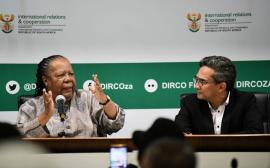
International Relations and Cooperation Minister, Dr Naledi Pandor, said she was of the view that Israel was flouting Friday’s International Court of Justice (ICJ) ruling to stop the killings in Gaza.
“I do believe the rulings of the court have been ignored by Israel. Hundreds of people have been killed in the past three or four days. And clearly, Israel believes it has the licence to do as it wishes. So, the world has to reflect because we have to come to a point to say what do we do to stop such acts occurring, not just with Israel but any party in the world,” Pandor said on Wednesday.
The Minister was briefing the media on a range of issues including the ongoing Israeli “offensive” on Gaza in the wake of the recent ICJ ruling.
The ICJ ordered Israel to, among others, take all measures within its power “to prevent and punish the direct and public incitement to commit genocide” and to immediately ensure that Palestinians have access to basic services and humanitarian assistance.
Pandor said she believes that the findings made it clear that it was “plausible” that genocide was taking place against the Palestinian people in Gaza.
While South Africa had called for the suspension of Israeli military operations in Gaza, the court did not grant this provisional measure.
However, Pandor said the ICJ’s decision marks a decisive victory for international law and a significant milestone in the search for justice for the Palestinian people.
“It also affirms the importance of global governance institutions, including organs of the United Nations. It remains vital for all Member States to respect and implement the decisions of the court.”
South Africa had approached the ICJ to garner not only a ceasefire of Israel’s military barrage of Palestine but also to ask the court to find the Israeli government guilty of committing acts of genocide.
“And I suppose what confronts us now is what do we do if there is no implementation? And that is the question all nations must answer today because it is a body of the United Nations that has set out these provisional measures. It’s not the South African government… And if its orders are not respected, what does this mean for every other government that commits atrocities against a people.”
She is of the view that this is the big question that faces the global community.
Citing Oxfam’s report, the Minister said figures indicate that the average daily killing of Palestinians by the Israeli military since 7 October 2023 surpasses the daily death toll of any major conflict in recent years.
“The deaths of children are almost incomparable both in terms of actual numbers killed and the rate at which children have been killed. More journalists have been killed in Gaza in the last 100 days than were killed during World War II and the Vietnam War.”
Pandor said South Africa will continue to do everything within its power to preserve the existence of the Palestinian people as a group, and to end all acts of apartheid and genocide against the Palestinian people.
“We will walk with them towards the realisation of their collective right to self-determination, for, as Nelson Mandela momentously declared, ‘Our freedom is incomplete without the freedom of the Palestinians’.”
“The UN peace and security architecture is clearly not able to give effect to the right to self-determination of the Palestinian people or to protect them from grave war crimes and the threat of genocide, necessitating concerned States to turn to the judicial institutions of the UN.”
Pandor also took the time to welcome the support expressed by several countries.
“We encourage States that are so inclined to approach the Court to intervene in the proceedings to send a strong message to the international community that the situation in the Gaza Strip is indefensible.”

Electoral Commission Chairperson oversees inmates’ voter registration
Thursday, February 1, 2024
The Chairperson of the Electoral Commission, Mosotho Moepya, is at the Zonderwater Correctional Services in Cullinan, east of Pretoria today, to oversee the inmates’ voter registration process.
The visit by the Chairperson forms part of the Electoral Commission’s voter registration drive for inmates.
The commission set aside the dates 30 January to 1 February 2024 for inmates’ registration ahead of the 2024 National and Provincial Elections.
“The Electoral Commission has worked closely with the Department of Correctional Services since 1999 to provide voter registration and voting opportunities for inmates in line with the Constitutional right extended to inmates to vote,” the Electoral Commission said in a statement.
The commission reiterated its call for all eligible inmates to participate in the upcoming elections by updating their voter registration details or register as voters.
The commission had earlier urged families of inmates to deliver identity documents (ID) to correctional centres.
It said it acknowledged that many offenders do not keep ID documents in their possession and it is for this reason family members are requested to make the necessary arrangements by delivering any of the following forms of identification: green-barcoded ID, smartcard ID or temporary identification certificate (TIC) to correctional facilities.
The Department of Correctional Services indicated that it would put all necessary measures in place to ensure that IDs are kept safe.