

Gauteng police recover over 400 firearms
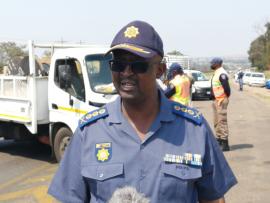
The South African Police Service (SAPS) in Gauteng, together with other law enforcement agencies, has recovered over 400 firearms and 6 000 live rounds of ammunition during the month of January.
All these firearms and ammunition were recovered through different crime prevention actions, including Operation Shanela intelligence-driven operations, daily patrols, stop and searches, and vehicle checkpoints.
On 9 January, an intelligence-driven operation was conducted by members of Springs Crime Prevention at Everest informal settlement after receiving a tip-off from members of the community.
The identified premises was searched and a firearm with ammunition was found hidden inside a bin containing rice. A 20-year-old suspect was arrested for possession of an unlicensed firearm and the unlawful possession of ammunition.
In another incident, Edenvale officers were conducting regular patrol duties when they arrested three suspects found in possession of two firearms with filed off serial numbers.
“One firearm removed from the wrong hands means a lot because it could have been used to take a life or destroy one’s property.
“The efforts and commitment of the police to remove illegal and unlicensed firearms with ammunition from the streets are greatly appreciated,” said Gauteng Police Commissioner, Lieutenant General Elias Mawela.
He thanked community members for their support and involvement in fighting crime by reporting criminal activities and giving tip-offs, as some of the successes are through information received from the public.
Mawela said firearms remain the weapon of choice in serious and violent crimes committed in Gauteng. He stressed that efforts will continue to be made to curb the proliferation of illegal and unlicensed firearms in the province.
Crime can be reported on the Crime Stop number on 08600 10111 and anonymous tip-offs can be given via the MySAPS App, which can be downloaded on any smartphone. All information received is treated as strictly confidential.
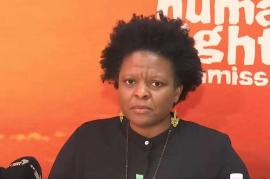
SAHRC releases July 2021 unrest report
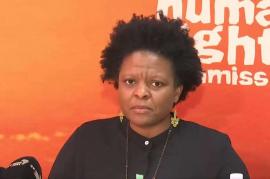
The South African Human Rights Commission (SAHRC) has released its report into the July 2021 unrest that unfolded in Gauteng and KwaZulu-Natal (KZN), during which some 350 people lost their lives.
The violence and destruction also caused damage to infrastructure and businesses costing South Africa’s economy some R50 billion, with a further two million jobs being lost or affected.
Speaking at the release of the report, SAHRC Commissioner Philile Ntuli said the commission found that myriad factors contributed to the outbreak of destruction and violence during the riots.
“The violence and destruction were symptomatic of unresolved systemic conditions, including post-COVID-19 economic recovery, high unemployment, lawlessness, discrimination, socio-economic divides, and issues within the security sector.
“The Commission concluded that organised groups and individuals opportunistically exploited these conditions to attempt to usurp the rule of law,” Ntuli said.
The Commission’s work focused on four issues namely:
- The social, economic, spatial, and political factors prevalent in the various affected areas, and the extent to which these played a role in the unrest.
- The causes of the alleged racially motivated attacks and killings in the country.
- The causes of the apparent lapses in law enforcement by State Security agencies, particularly in the South African Police Service, and the role of private security companies in the unrest.
- The causes of the July unrest, with particular focus on Gauteng and KwaZulu-Natal.
The SAHRC made a series of findings on and recommendations for each issue – including on the South African Police Service and the country’s intelligence services.
The full report can be obtained at https://www.sahrc.org.za/home/21/files/JULY%20UNREST%20REPORT%20FINAL_29%20JAN%202024.pdf.
Ntuli described the unrest as a well-orchestrated and a “violent culmination of deep-rooted political and social challenges” that South Africa had been facing.
“The unrest was largely attributed to typologies of organisation and orchestration of public discord, crime and protest.
“Evidence indicated that the acts during the unrest were well-orchestrated, including the blocking of the N3, destruction of factories and warehouses, attack on government communication facilities, and bombing and theft of ATMs. These events were interconnected and required significant resources.
“Two types of actors were identified during the unrest: primary actors, who led and executed widespread destruction, and secondary actors, who participated in theft. The timing of the events coincided with the incarceration of former President Jacob Zuma, leading to a perception that the two were related,” Ntuli said.
Ntuli said while evidence suggests that the unrest was well orchestrated, the Commission “did not receive clear evidence identifying specific groups or individuals as primary actors, while… the common purpose or intention behind the unrest remained unclear”.
In her concluding remarks, Ntuli said the July 2021 unrest must be a “marker and a lesson” as South Africa continues its journey “from our colonial past”.
“Building a united, inclusive, safe and prosperous South Africa requires confronting the past, acknowledging present challenges, and working together for positive change. The unrest was a wake-up call, nudging us all to the reality of the fragility of the peace and security that some enjoy.
“It was a reminder that the process of democracy and constitutionalism has to benefit all, if it is to be sustained. It was a confrontation with the reality that the Bill of Rights must be realised for all, and particularly for those of whom the same rights were deprived by the colonial and apartheid governments,” she said.
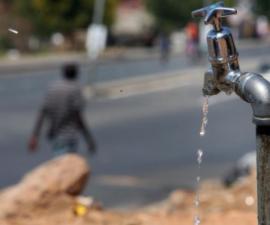
eThekwini allocates R30m to upgrade damaged water pump station
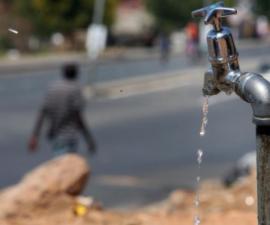
A total of R35 million has been allocated towards the upgrading of an entire pump station, which was destroyed by a fire in Ntuzuma, north of Durban.
The Ntuzuma Reservoir 2 pump station was destroyed by a fire in April last year and resulted in additional strain on the already challenged infrastructure.
This was revealed in a joint statement issued following a multi-stakeholder technical team meeting to resolve eThekwini Metro water challenges.
The stakeholders acknowledged that the Ntuzuma water supply system has been experiencing challenges as a result of the damage to the pump station, with the station currently operating at 50% capacity.
“The project [upgrade] will commence in March this year and is planned to be completed by the 2025/26 financial year. This project will start improving water supply to Inanda, Lindelani and KwaMashu by July 2024,” the statement said.
The Department of Water and Sanitation (DWS) Director-General, Dr Sean Philips, attended a multi-stakeholder technical meeting, held between the department, eThekwini Metro and uMngeni-uThukela Water to resolve the current water challenges in eThekwini.
This follows a directive by Water and Sanitation Minister, Senzo Mchunu, that the eThekwini Metro, working with uMngeni-uThukela Water, should urgently come up with long lasting interventions in response to ongoing water and sanitation services in the municipality.
The team noted that water demand in eThekwini has grown rapidly, mostly due to population growth and partly due to increasing leaks in the municipality’s water distribution systems.
“The planners in DWS anticipated this growth in demand and put in place plans to transfer water from the uMkhomazi River to augment uMngeni Water Supply System (uMWS), through the Umkhomazi Water Project, as well as a project to raise the wall of the Hazelmere Dam,” the statement read.
The team also noted the raising of the Hazelmere Dam wall, which was completed in 2023 and has doubled the amount of water that can be stored in the Dam at a cost of R820 million.
To enable additional stored water to be treated, the team said, Umgeni-uThukela has completed a project to increase the capacity of the Hazelmere Water Treatment Works from 55 to 75 ML (megalitres) per day, at a cost of R135 million.
“Umgeni-uThukela will further increase the capacity of the treatment works to 90 ML per day within the next three years, at a cost of R25 million,” the statement read.
The meeting also emphasised that eThekwini water challenges must be addressed by the municipality by decreasing non-revenue water collection in its water distribution system, and water users using water more sparingly to reduce the average consumption of water per capita per day.
The No Drop audit report, which was released by DWS in December 2023, found that the water user in eThekwini was 298 litres per capita per day (l/c/d), compared to the international average of 173 l/c/d. Non-revenue water also increased from 37% in 2013 to 58% in 2023.
Some of the municipality measures currently being implemented to increase the supply of water, include groundwater, water re-use and desalination, amongst others.
The municipality is also implementing a range of interventions to drastically reduce its non-revenue water, including the implementation of a pipeline replacement programme, with a number of projects under the programme being in the final phases of procurement.
According to the statement, the programme is scheduled to commence by the end of March 2024, and will continue for the foreseeable future.
“The municipality is implementing projects to replace parts of its old infrastructure on which high levels of water losses are being experienced, including replacing pumping mains on major water distribution systems such as Tongaat, Waterloo, Grange and Hazelmere water distribution systems.
“The municipality has budgeted approximately R1 billion per annum for these projects, which will continue every year for the foreseeable future. Some of these projects started in the 2022/23 municipal financial year and are being funded from the infrastructure levy which was recently introduced by the municipality,” the statement said.
The municipality has also constructed 12 new reservoirs in the past two years to the value of R500 million to enhance water supply and implemented an active leak detection and repair programme.
“Procurement processes for a performance-based contract to detect and repair leaks are currently being concluded and it is envisaged that the contract will commence at the beginning of April 2024. This contract will be funded from the savings resulting from reducing leaks.
“The municipality is implementing a pressure management programme through installing 108 pressure management valves, in addition to the 3000 that already exist. The purpose of this programme is to reduce water pressures in water distribution systems which reduces the frequency of pipe bursts and extends the useful life of the infrastructure,” the statement highlighted.
In addition, the procurement process for pressure management valves has been finalised and installation of the valves is expected to commence in March 2024.

South Africa bears ‘moral duty to act’ against genocide
President Cyril Ramaphosa has used his weekly newsletter to citizens to remind South Africans that as a signatory to the Genocide Convention, government bears a responsibility to prevent acts of genocide wherever they occur.
This in the wake of South Africa’s approach to the International Court of Justice (ICJ) to garner not only a ceasefire of Israel’s military barrage of Palestine but also to ask the court to find the Israeli government guilty of committing acts of genocide.
“The Genocide Convention was unanimously adopted by the United Nations General Assembly in the immediate aftermath of the Holocaust, one of the worst crimes in modern history. Having witnessed the mass extermination of six million Jews and millions of other victims of the Nazis, the world came together to prevent such atrocities from occurring again.
“As a signatory to that convention, South Africa carries a responsibility, like other States that are signatory to the convention, to prevent acts of genocide wherever they occur. It was in fulfilment of this responsibility and to prevent further civilian deaths and destruction that South Africa took this case to the court,” the President said.
The court ordered Israel, amongst others, to take all measures within its power to prevent the commission of genocide and to immediately ensure that Palestinians have access to basic services and humanitarian assistance.
The ICJ also found that it was “plausible” that Israel committed acts which violate the Genocide Convention.
President Ramaphosa explained that South Africa’s own painful past rooted in racism and apartheid lends credence to its unrelenting position on the war.
“As a nation that fought and defeated apartheid, we have a particular obligation to stand up for justice and fundamental human rights for all people, everywhere. It is this obligation that informed our application to the International Court of Justice (ICJ) to halt the violence unleashed by Israel on the Gaza Strip,” he said.
Refuting Anti-Semitism allegations
President Ramaphosa emphasised that critique of the Israeli government’s strikes on Gaza “is not directed at any religious or ethnic group, and cannot simply be dismissed as Anti-Semitism”.
“Nor can our case before the ICJ be said to diminish the enormity of the Holocaust. On the contrary, it is the experience by humanity of the Holocaust and other acts of genocide that motivates our efforts to prevent anything of this nature from happening again.
“As government, we have been consistent about the application of international law. We have been equally consistent in condemning the atrocities committed by Hamas against Israeli civilians on 7 October 2023 and in calling for the release of hostages still being held in Gaza.
“Yet, as we argued in our case before the ICJ, this attack on civilians in Israel cannot justify the subsequent acts committed by the Israeli military against the residents of Gaza,” he said.
President Ramaphosa said the court application to the ICJ is solely focused on “the Palestinian people; their suffering, the deprivation of their rights, and the denial of their right to self-determination”.
“Yet, in bringing this application, we are seeking to reinforce, protect and advance the rights of all people, at all times. The unprecedented onslaught against the people of the Gaza Strip by the Israeli military is an assault on all those who believe in justice, human rights and respect for international law.
“As South Africa, we have called these genocidal acts that the international community has a duty to halt and hold Israel accountable for. As South Africans who are committed to peace, justice and human rights, we are proud to stand on the right side of history,” he said.
The President called on South Africans to support government’s call for justice.
“A genocide is unfolding in the Gaza Strip and we have a moral duty to act. Let it be recorded in the history books that the democratic South Africa was not among those who shut their eyes or claimed they didn’t know.
“I call on all South Africans to rally behind our call for justice for the Palestinian people, and for a negotiated settlement that will bring about a just peace between Israelis and Palestinians. This cause is a reminder to us all that justice for only some is justice for none,” President Ramaphosa said.
IEC to host voter registration this weekend
The Electoral Commission (IEC) will on Wednesday host a media briefing to unveil plans for the second national voter registration weekend scheduled for 3 and 4 February 2024.
The second national voter registration weekend is part of the Electoral Commission’s effort to ensure that South Africans, who were unable to register to vote during the first registration drive in November 2023, have another opportunity to do so.
Existing voters will also use the opportunity to update and/or change their details before the voters’ roll is closed for the 2024 General Elections.
During the briefing, the Electoral Commission will shed light on its countrywide rollout plan ahead of the voter registration weekend.
Last week, the IEC announced that South Africans living abroad were given the opportunity to register at South Africa’s 120 high commissions, embassies and consulates on January 26, 27 and 28.
Registration for inmates at correctional centres is scheduled to take place between January 30 and February 1.
“The Commission has been informed that due to the transfer factor for inmates, correctional centres will also be accepting IDs for inmates serving sentences in distant towns or provinces. These identity documents will be transferred to the relevant facilities where inmates are incarcerated,” the IEC said in a statement.
The Department of Correctional Services has indicated that it will put all necessary measures in place to ensure that IDs are kept safe.
The IEC emphasizes that the online voter registration portal will remain accessible until the date of the proclamation of the elections, providing an additional avenue for voter registration.
According to the IEC, 23 296 voting stations will open from 08h00 to 17h00 on Saturday, 3 February and Sunday, 4 February to allow new voters to register and existing voters to check and if necessary, update their registration details ahead of the 2024 National and Provincial Elections.
Following the first registration weekend held in November 2023, the voters’ roll contains 26.8 million voters.
The Commission said it is hopeful that the second registration weekend will build on and surpass the satisfactory turnout recorded in November.
Citizens aged 16 years and older can register to vote. All they need is a South African identity document (the green barcoded ID book, smartcard ID or a valid temporary ID certificate). However, only those aged 18 and older can vote.
When registering, voters will need to provide their address or a description of where they live to allow the Electoral Commission to place them on the correct segment of the voters’ roll. However, proof of address is not a requirement to register as a voter.
The Electoral Commission helpline — 0800 11 8000 — is available to assist citizens with queries and information about the registration process and information related to locations of voting stations.
President to officiate launch of SA’s first shipment under AfCFTA
Monday, January 29, 2024
President Cyril Ramaphosa will on Wednesday officiate the launch of South Africa’s first shipment and preferential trading under the African Continental Free Trade Area (AfCFTA).
The launch ceremony will take place at the Port of Durban and occurs on the margins of the 13th AfCFTA Council of Ministers meeting to be held at the Inkosi Albert Luthuli International Convention Centre from 30 – 31 January 2024.
South Africa is the first among the four Southern African Customs Union (SACU) countries to practically realise the AfCFTA agreement.
The 37th African Union Ordinary Session of the Assembly of Heads of State and Government will, at its annual convention next month, take stock of the progress made thus far in the implementation of the AfCFTA.
The successful implementation of the AfCFTA is expected to lead to diversification of exports, increased productive capacity, acceleration of growth, increased investment, increased employment opportunities and incomes and most importantly, broaden economic inclusion both in South Africa and the rest of the continent.
It provides South African exporters with new market access opportunities to key markets in the African continent and can unlock growth.
President Ramaphosa will be joined by the Minister of Trade, Industry and Competition, Ebrahim Patel; KwaZulu-Natal Premier Nomusa Dube-Ncube and AfCFTA Secretary General Wamkele Mene. Other dignitaries will include the AfCFTA Council of Ministers, who will witness the first shipment of Proudly South African products exported to the continent.
The Department of Trade, Industry and Competition said the launch ceremony will be a historic step and an instrumental tool in generating meaningful trade on the African continent through the shipment of made-in-South Africa products.
“The main message being sent to Africa and the rest of the world through this event is to illustrate that companies can trade under the AfCFTA procedures to expand their markets within a legally binding framework,” the department said.

Foreign nationals to appear in court for contravention of Immigration Act
About 23 foreign nationals and two South Africans are expected to appear before the Mankweng Magistrate’s Court today for contravention of the Immigration Act and bribery.
This after the South African Police Service arrested them on Saturday in Solomondale near Polokwane.
It is reported that members of the SAPS Limpopo Provincial Tracking Team, in conjunction with two private security companies, SPS High Risk and Tshimollo Security, operationalised information gathered regarding a white Toyota Quantum that was driving along the R81 in Solomondale, from the Beitbridge border.
It is reported that the operational team successfully spotted the said Quantum at a filling station along the R81 road in Sebayeng and upon checking, they discovered that 23 Ethiopian male nationals, aged between 20 and 38 years, were ferried in a 15-seater passenger mini bus by the driver, a 44-year-old male South African citizen.
Preliminary investigations revealed that all the passengers in the Quantum were illegally smuggled into South Africa from Ethiopia through Zimbabwe.
It is reported that while in the process of searching the Quantum and the passengers, a white Toyota Fortuner, being driven by a male foreign national, pulled up at the scene.
It is reported that the driver of the Quantum was found in possession of a licensed firearm and it was confiscated for investigation purposes.
Meanwhile, the driver of the Fortuner reportedly tried to bribe the police with R5 000 to let the Quantum and the passengers go free. The man was charged with bribery.
The two drivers were also arrested and are facing charges of human trafficking, bribery and contravention of Immigration Act.
The Acting Limpopo Commissioner, Major General Jan Scheepers, hailed the involved teams for their commitment and alertness in ridding the province of criminality.
Government leads partnerships in addressing pressing challenges
Monday, January 29, 2024
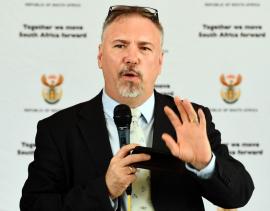
By Michael Currin
Our history has shown that when South Africans pull together in partnership, there is nothing that we cannot overcome. We adeptly demonstrated this when we worked together to drive back the spread of COVID-19 through a societal-wide approach.
The strong partnerships forged between government, business, organised labour and civil society were instrumental in saving precious lives. This partnership has today become a blueprint to address our country’s most pressing challenges in energy, transport and logistics, and crime and corruption.
The roll-out of partnerships in these focal areas between government, led by President Cyril Ramaphosa, and business leadership, represented by Business Unity South Africa, has galvanised our collective energies to improve our country’s prospects.
Through jointly implementing key interventions to end load-shedding, improve our logistics system’s performance, and address crime and corruption, we are creating a fertile environment for inclusive growth, job creation and increased public confidence, while enhancing the implementation capacity of the State.
In many of these areas, government itself has taken the bold lead through policy initiatives and dedicated programmes to bring about change to many lives, as we aspire to, as a proudly South African nation. Under the stewardship of President Ramaphosa, we have developed targeted interventions such as the Energy Action Plan (EAP), Freight Logistics Roadmap, Economic Reconstruction and Recovery Plan (ERRP), and National Anti-Corruption Strategy.
Government has also been working around the clock to restore our credibility, stabilise finances and improve the operational performance and governance within state-owned companies. We have accelerated key reforms under Operation Vulindlela, a joint initiative of The Presidency and National Treasury, to secure confidence in sectors affected by regulatory uncertainty and unlock greater investment in growth sectors.
Since the establishment of Operation Vulindlela three years ago, targeting 19 priority reforms, government, in collaboration with social partners, has seen progress in the reforms that will help rebuild the economy and create jobs.
What we need to consider, however, are the constant headwinds that South Africa is confronted with, including global conflicts which impact our supply chains; the legacy of our distorted past, including the recent state capture, and our own strained financial resources. As such, government cannot achieve the desired results on its own, but has certainly demonstrated over recent years that it has been working hard to rebuild trust with South Africans and stabilise public finances.
The years of state capture and corruption subjected the Public Service and state-owned entities to the worst kind of abuse at the hands of people who tried to institutionalise their corrupt actions and took a great toll on the capacity of the State.
We believe that, through the joint action and pooling of resources, we can address our critical challenges to set our country on a path to recovery. This must be seen as a national, patriotic effort requiring all of us to contribute our very best. Business, with its considerable skills, capacity and resources, is ideally positioned to help in rebuilding our economy.
Importantly, our partnerships should not be construed as government reneging on its commitments to the people of South Africa, or even shirking its responsibilities to the private sector and society at large in creating an enabling environment to build a better life for all.
We have consistently shown that we are advancing our nation’s key priorities and willingly taking the necessary and calculated decisions to move our country forward. Through our ERRP, we have drawn all of society in a common front that has helped our economy claw back to pre-COVID-19 levels.
In March last year, President Ramaphosa directed Transnet to swiftly implement reforms to turn around the crisis in our logistics system. In consultation with industry stakeholders, a comprehensive Freight Logistics Roadmap was developed, which will translate our policy commitments into reality.
This partnership is already being felt on the ground with business, for example, supporting recovery efforts following the collision of two trains on the coal line outside Richards Bay in KwaZulu-Natal on 14 January 2024. Our partners, among others, provided heavy earth moving and breakdown equipment to clear the accident site. This hands-on support is a reflection of true patriotism in action that goes a long way in uplifting our nation and building national pride. It allowed Transnet’s Freight Rail to speedily restore this critical coal export line, by 20 January 2024, ahead of schedule.
The steadfast implementation of the country’s EAP, introduced by President Ramaphosa in 2022 to address our energy challenges, ensured an improved performance in our energy generation system, which has subsequently led to a measurable decline in the frequency and severity of load shedding.
These energy interventions are driven at the highest level through the National Energy Crisis Committee, which is led by government and supported by business, and the millions of South Africans who make every effort in using only the electricity they need, thus reducing demand on the grid.
Government’s efforts in rooting out corruption are bearing fruit because those who were identified in the State Capture Commission as having abused state resources through corruption are being made to account. One of our top priorities was the adoption of the National Anti-Corruption Strategy 2020 – 2030 and the steady but certain move to implement the recommendations of the State Capture Commission.
This has translated to the National Prosecuting Authority (NPA) freezing R10.7 billion over the past four years and its Asset Forfeiture Unit recovering R2.83 billion from corrupt activities. In state capture cases, the NPA has recovered R2.55 billion. More recently, German Software company, SAP, agreed to pay R2.2 billion in restitution to state entities and government departments after investigations by South African authorities found that the company had bribed officials to win contracts.
The strong public-private partnerships we have forged with business, social partners and communities to fight crime and corruption will, together with our own initiatives, go a long way in reversing this societal scourge.
Our work in these key areas is a clear statement of intent to lead and create an environment for greater development and faster economic growth. It affirms our commitment to do everything within our ambit to take the country forward.
We are confident that through our shared determination, we can overcome the severe challenges that we currently face. Government will continue to mobilise our country’s substantial capabilities across all sectors to rebuild our economy and set us on a path of sustained inclusive growth. However, this will be achieved through the patriotic efforts of each of us, which will make it possible for us to advance towards the realisation of the concept of a better life for all.
Michael Currin is Deputy Director General at GCIS
*This article was first published on SABC News
Minister congratulates boxer Jackson Chauke
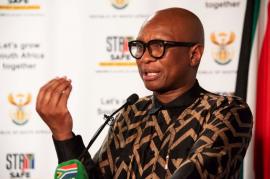
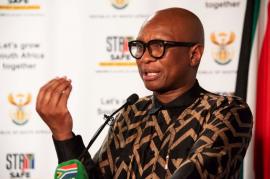
Minister of Sport, Arts and Culture Zizi Kodwa has congratulated South African boxer Jackson Chauke for winning the vacant International Boxing Organization (IBO) flyweight title.
Chauke defeated British boxer Quaise Khademi to become the latest world titleholder.
“I congratulate Chauke for his excellent and inspirational achievement. He has raised the country’s flag sky high. Chauke is an inspiration not only to South African boxers but to all athletes for his dedication and commitment to the sport. These qualities have driven Chauke to the IBO flyweight title at 38 years of age,” Kodwa said.
The Minister said he was an experienced fighter who won a silver medal in the men’s flyweight boxing event at the 2006 Commonwealth Games in Melbourne, Australia.
Chauke has had a stellar career which has culminated in his IBO flyweight title victory.
“I once again express my desire to see South African boxing being revived and to return to the heights it has scaled before. May Chauke’s success and recent presence of South African boxers competing on the sport’s global stages further invigorate South African boxing,” he said.
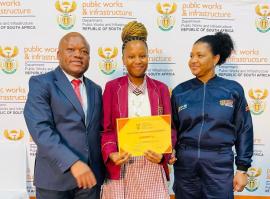
Department awards bursaries to hardworking matriculants
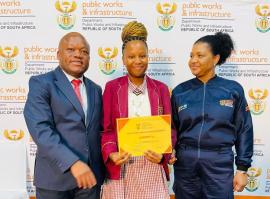
Public Works and Infrastructure Minister Sihle Zikalala has hailed teachers and guardians as true heroes and heroines and thanked them for encouraging, motivating and guiding learners during the 2023 matric examination.
“To the bursary awardees, you are the crown in the jewel; and today we sing your praises for demonstrating that paying attention and putting in effort pays,” Zikalala said on Thursday, during a ceremony to award bursaries to 100 learners from the Class of 2023 who have enrolled to study various built environment courses at universities across the country.
Zikalala congratulated the learners for being worthy recipients of the prestigious bursaries from the Department of Public Works and Infrastructure.
He said the young people who are receiving the bursaries have honoured the sacrifices of the youth of 1976 who protested against an inferior Bantu Education that sought to turn education for the black majority into an instrument of racial subjugation and guarantor for the supply of cheap black labour.
“The Department of Public Works and Infrastructure (DPWI) plays a critical role in delivering essential services. To do so effectively, it must have a highly skilled and competent workforce.
“This year is the 10th year that the Department of Public Works and Infrastructure has been offering these bursaries to address the challenges of the skills pipeline and transformation in the Built Environment.
“Our university bursary scheme is one of the ways through which as a department, we respond to the country’s occupation skills that are in high demand as gazetted by the Department of Higher Education and Training,” the Minister said.
The Department of Public Works and Infrastructure Bursary Scheme supports undergraduate study areas like: Construction Project Management, Occupational Health and Safety, Quantity Surveying, Landscape Architecture, Architecture, Property Studies, Real Estate, Urban Design and Regional Planning, Engineering (Mechanical, Electrical, Civil, Structural, Chemical), Interior Design, Actuarial Science, Horticulture, Geographic Information Science (GISc) and Maritime Studies.
The Council for the Built Environment (CBE) has lamented the slow pace of transformation in the built environment which is compounded by the challenge of aging professionals who are leaving the sector.
“One of our programmes to address these challenges and in contributing to the skills of the future in our sector is the department’s schools programme and the university bursary scheme programme.
“We are pleased to report that our valued bursary beneficiaries are supported financially throughout their tertiary studies until graduation.
“Upon completion of studies, bursary holders join the department’s internship programme wherein they gain relevant technical experience for a duration of 24 months in line with their contractual obligation to the department and in accordance to the DPSA regulated internship period,” Zikalala said.
The estimated budget per student is R177 500. This amount varies based on the institution and study programme. The department has allocated budget of R17 800 000 for the 2024 academic year new intake.
The bursary covers all university costs including tuition fees, accommodation, meals, textbooks, projects, excursions and a monthly allowance.