
IEC welcomes Constitutional Court judgement
The Electoral Commission has welcomed Monday’s judgement by the Constitutional Court in relation to the challenges to the Electoral Amendment Act.
According to the Commission, the judgement provides the necessary certainty in relation to the preparations of the 2024 National and Provincial Elections.
This as the court handed down judgement on whether the current split of seats in parliament should remain as is or be changed to make it possible for independent candidates a better chance of getting elected.
“The Electoral Commission will immediately put in place the regulations necessary to give practical effect to revisions of the electoral system in the light of the judgement handed down today by the apex court,” the Electoral Commission said in a statement on Monday.
The Electoral Commission has always been of the view that the distribution of seats of the National Assembly between the compensatory tier and the regional tier was rational and satisfied the constitutional requirement for general proportionality.
“The important confirmation of the Constitutional Court is that the contestants in the regional tier of the elections are subject to the same number of votes per seat. Furthermore, that no votes of independents are to be transferred to political parties.
“Pertinently, the Electoral Commission will now finalise adjustments to the signature requirements portal, so that prospective independent candidates and unrepresented parties can start collecting and capturing. The signature portal, as well as the final regulations, will be launched soon.
“The Electoral Commission notes the three-way judgement on the One South Africa Movement twin challenges. This is indicative of the constitutional complexity related to the design of an electoral system,” the Commission said.
The elements of the findings in relation to the recalculation of formulae is a matter on which the soon to be established Electoral Reform Consultation Panel will have to be seized with going forward.

Transnet granted National Treasury support package

Ports and freight rail company Transnet has been issued an immediate R47 billion guarantee facility by National Treasury in support of the company’s recovery plan and to meet the state-owned entity’s immediate debt obligations.
This was announced in a joint statement by National Treasury and the Department of Public Enterprises.
“The financial support package provided for the entity is a R47 billion guarantee facility against which Transnet will drawdown an initial amount of R22.8 billion to deal with immediate liquidity matters such as settling maturity debt.
“Government has not considered an equity injection given that the budget for 2023/24 is closed and is confident that this guarantee facility alongside swift implementation of the Transnet Recovery Plan will be sufficient to resolve Transnet’s challenges.
“A Guarantee Framework Agreement between the National Treasury, Department of Public Enterprises, and Transnet will include strict guarantee conditions that will be continuously reviewed and amended when deemed necessary. Any further drawdowns will be subject to Transnet meeting these conditions,” the statement read.
The guarantee framework agreement must be concluded between the three parties within 14 days to “ensure that any fiscal risks are mitigated and that the conditions of the facility are fully agreed to by all parties”.
“In addition, National Treasury will continue to work with Transnet to pursue other initiatives to revive its operations and financial viability.
“Transnet [is] to explore further the divestment of non-core assets, reduction of the current cost structure, alternative funding models for infrastructure and maintenance requirements. The latter includes but is not limited to project finance, third party access, concessions, and joint ventures,” the statement said.
The two departments highlighted that the freight and logistics company plays a central role in the South African economy and the government’s goal of inclusive growth but has been facing obstacles over the last few years.
“[The] entity has suffered significant operational, financial and governance challenges in recent times and is struggling to fulfil this strategic role. In recognition of the seriousness of these challenges, the [departments] have been working with Transnet to find a solution to the company’s immediate and longer-term problems, and the decision to grant the guarantee facility is a result of these discussions.
“Government continues to pursue deep-running, broader reforms of the company and the logistics sector as a whole. Without a comprehensive reform of the sector, rather than that of single entity, we risk being faced with similar challenges in the future,” the statement said.
According to the statement, Ministers Pravin Gordhan and Enoch Godongwana expressed optimism that the guarantee will assist the entity.
“Minister Godongwana is positive that the necessary reforms needed to put Transnet back on track can be achieved if the entity commits to meeting the strict conditionalities attached to the guarantee and quickly implementing the reforms informed by the National Logistics Crisis Committee.
“Minister Pravin Gordhan highlighted the fact that Transnet is critical to the South African economy. A well-functioning logistics company is particularly important given the geographical distribution of economic activity in the country, our reliance on commodity and other exports, as well as our distance from key export markets,” the statement said.

New provincial number plate system unveiled in KZN
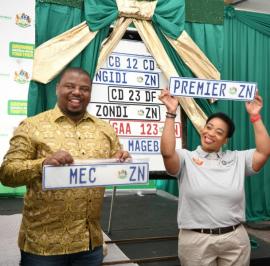
KwaZulu-Natal Premier Nomusa Dube-Ncube has unveiled a new number plate system for the province, marking an end to the traditional discrete numbering system to a more dynamic and continuous numbering system.
Dube-Ncube on Friday said the shift was deemed necessary to align the province with other regions and the national numbering system, while addressing the issue of towns running out of available numbers.
Emphasising the importance of this paradigm shift, the Premier said the new numbering system will come with improved security features, which will assist in the fight against crime.
To ensure a seamless transition, the implementation was planned in two phases, with the first phase starting on Friday, focusing on the registration of new vehicles, change of ownership, and re-registration of stolen-recovered vehicles.
This initial step lays the groundwork for the subsequent phases of the comprehensive rollout.
The second phase, which is set to commence on 1 March 2024, will encourage the voluntary migration of all vehicle owners from the existing system to the new one.
Vehicle owners have been given a 24-month window to complete this migration, after which all motor vehicles will automatically be issued with a new format licence number upon licensing.
Accompanied by Transport, Community Safety and Liaison MEC, Sipho Hlomuka and eThekwini Mayor, Mxolisi Kaunda, Dube-Ncube conducted a thorough test of the readiness of the Electronic National Administration Traffic Information System (ENaTis).

Heatwave conditions break records

Following the heatwave conditions that prevailed for a number of days in most parts of the country, the South African Weather Service (SAWS) says November records were broken in both the maximum and minimum temperature measurements.
Heatwave conditions prevailed from 19 November 2023 in most parts of the country, with isolated areas having extremely hot conditions for several days in a row.
“Hot conditions reached their peak on 27 November 2023, when extremely hot conditions were experienced in large parts of the country. Preliminary data indicates new temperature records for November over the Northern Cape, Free State and North West provinces.
“More than 10 stations recorded the highest temperature records on the 27th, with the Automatic Weather Station at Augrabies Falls recording the highest maximum temperature of 46.7°C, breaking its previous record of 46.2°C (2019-11-28).
“It must be noted that the highest maximum temperature record for Augrabies Falls remains at 48.6°C, measured on 2016-01-05, and the 46.7°C is the new record for the month of November,” SAWS said on Thursday.
The El Niño-Southern Oscillation (ENSO) is currently in an El Niño state and according to the latest predictions is expected to persist through most of the summer months.
ENSO’s typical impact on Southern Africa is in favour of generally drier and warmer conditions during the spring and summer months from October to March.
“However, current global forecasts indicate a great deal of uncertainty for the typical drier conditions that South Africa experiences during typical El Niño seasons, over the eastern parts of the country. Weather extremes will continue to occur from time to time during the summer season as much as drier conditions are expected.
“Caution is advised at this point, as the El Niño effect might still manifest its influence in the next few months and change the outlook of the rainfall forecast for mid- and late summer. Minimum and maximum temperatures are expected to be mostly above-normal countrywide for the forecast period,” SAWS said.
The weather service will continue to monitor the weather and climate conditions and provide updates on any future assessments that may provide more clarity on the current expectations for the coming season.
Furthermore, the public is urged and encouraged to regularly follow weather forecasts on television and radio.
Updated information in this regard will regularly be available at www.weathersa.co.za as well as via the SA Weather Service X account. @SAWeatherService.
Empangeni mega catalytic project set to accelerate KZN housing delivery
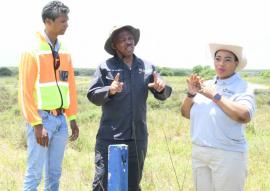
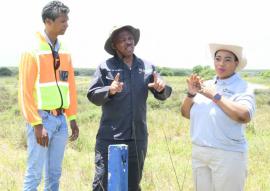
KwaZulu-Natal Premier Nomusa Dube-Ncube has unveiled the Empangeni Integrated Residential Development Programme (IRDP) Phase 2, identified as a mega catalytic project, which is set to drastically accelerate and sustain delivery of housing opportunities in the KwaZulu-Natal North Coast.
The focal point of the launch was the Aquadene Housing Project, a key component of the Empangeni IRDP, which the provincial government has fast-tracked through the installation of bulk services to enable the project to commence, despite the fact that provisioning of water and sanitation bulk services is a responsibility of King Cetshwayo District Municipality.
Dube-Ncube said at the launch that beyond providing housing solutions, the initiative holds the potential to significantly boost the economic prowess of the municipality through increased revenue collection.
“As a mixed-use project with diverse typologies, including Breaking New Ground, First Home Finance, Rental Stock and Serviced Sites, the IRDP aims to generate approximately 10 000 housing possibilities. This ambitious target was set to be achieved through the implementation of various policy instruments designed to address the diverse housing needs of the community,” Dube-Ncube said.
Some of the substantial progress witnessed during the initial phases of the Empangeni IRDP Project includes the completion of a considerable amount of earthwork, primarily in the form of vital internal services, and the establishment of an extensive road network at the IRDP site near the Qalakabusha Correctional Centre, situated on the outskirts of the Empangeni central business district.
The infrastructure for bulk water and sanitation was also successfully integrated into the project, and the road network extending from the IRDP site to Owen Sithole Agricultural College and further to Dondotha, showcased the careful planning and execution of the project’s infrastructure.
“These developments not only aimed at providing housing solutions but also at enhancing connectivity and accessibility within the region,” Dube-Ncube said.

Final Next Generation Radio Frequency Spectrum Policy approved
Cabinet has approved the publication of the final Next Generation Radio Frequency Spectrum Policy.
The policy intends to support the spectrum allocation and licensing for fixed mobile; broadcasting; aeronautical and marine; research and development; community access, and other relevant industries.
The policy also seeks to promote equity and fair allocation to contribute towards the transformation of the sector and accessibility of digital connectivity even in outlying parts of the country.
The purpose of the policy is to address gaps and limitations that were identified in the 2016 National Information and Communications Technology White Paper and prepares for the amendment of relevant sections of the Electronic Communications Act, 2005 (Act 36 of 2005), which include:
• unclear roles and responsibilities between Minister and the authority (ICASA) which contributed to inefficiencies;
• gaps in the spectrum management regime;
• an exclusive spectrum regime that benefit a few and bigger player; and
• inefficiencies towards extending broadband access to rural, remote and underserved areas.
Draft White Paper on Electric Vehicles (EVs)
Cabinet has also approved the White Paper on Electric Vehicles (EVs) that aims to ensure South Africa becomes part of the global shift from internal combustion engines to new technology vehicles (electric vehicles).
“The policy supports investments in the development and expansion of new and existing manufacturing plants to support the production of electric vehicles in the country,” Cabinet said.
South Africa’s automobile industry plays a critical role in economic growth and supports thousands of jobs, and the country is also endowed with mineral resources that position it to become a key and strategic player in EV value chains.
Comprehensive Student Funding Model for post-school education and training
Cabinet has approved the Comprehensive Student Funding Model for post-school education and training that seeks to provide funding to children, commonly known as the missing middle.
“The funding model will cater for students whose families do not qualify for the National Student Financial Aid Scheme funding, by up to the maximum of R600 000 per year.
“The funding will focus on promoting the acquisition of skills and qualifications for the future, with 70% of eligible applicants funded for critical skills and 30% for humanities,” Cabinet said.
Draft Human Settlements White Paper
Cabinet has further approved the publication of the draft Human Settlements White Paper for public comments.
It is intended to strengthen the department’s approach of providing sustainable human settlements. The White Paper informs the government approach to use tailor-made subsidy instruments that target poor households and vulnerable groups such as persons with disabilities.
The policy promotes coordination between the three spheres of government for effective and efficient delivery of human settlements. It will enhance the realisation of the rights for South Africans to adequate housing and sustainable spaces, including supporting economic opportunities and social cohesion.
Revised White Paper on Families (WPF)
Cabinet has also approved the Revised WPF for implementation. The policy seeks to foster well-functioning families which are loving, peaceful, safe, stable and economically self-sustaining.
“The policy views the family as a key development imperative and seeks to mainstream family issues into government-wide, policy-making initiatives to foster positive family well-being and overall socio-economic development in the country,” Cabinet said.
The WPF emphasises the point that healthy families are the foundation of strong communities and societies. It notes that families are best placed to fulfill their role in society when they function in an enabling and supportive environment.
Government will implement the WPF in collaboration with civil society, non-governmental organisations, research institutions and other social partners. Then policy is available on www.gov.za.

Cabinet welcomes project connecting 1 600 homes to internet in KZN

Cabinet has welcomed the launch of a project that has connected 1 600 households and enabled at least 6 000 community members to access broadband services in KwaZulu-Natal.
The launch of the first Gigabit Mesh Network at Ward 1 of the Greater Kokstad Local Municipality is part of the government’s SA Connect programme that aims to achieve universal access to the internet funded through the Broadband Access Fund.
This is according to the Minister in the Presidency Khumbudzo Ntshavheni, who addressed the media on Thursday on the outcomes of the Cabinet meeting held this week.
“This network renders Ward 1 of the Greater Kokstad Local Municipality to become the first wall-to-wall connected site in KwaZulu-Natal.”
Meanwhile, the Broadband Access Fund, according to the Minister, has empowered Small, Medium and Micro Enterprises (SMME) internet service providers across the country to support the creation of direct and indirect job opportunities for designated groups such as youth, women and persons with disabilities.
“In the Harry Gwala District Municipality, more specifically, the Broadband Access Fund has been able to empower 12 sub-contracted SMMEs while creating 79 job opportunities for youth, women, men and persons with disabilities.”
Meanwhile, in other matters discussed by Cabinet, the Minister also announced that Cabinet approved the draft policy on Water and Sanitation Services on privately owned land.
“The draft policy seeks to explore ways to redress the provision of water services to residents on privately owned land by ensuring there is access to a safe and potable water supply and sanitation.”
This, according to Ntshavheni, will be supported by appropriate health and hygiene practices for the people living on those lands that are currently out of the municipal distributing network as envisaged in the Water Services Act, 1997 (Act 108 of 1997).
Eskom hopeful of positive Municipal Debt Relief programme results
Eskom is pinning its hopes on the Municipal Debt Relief programme facilitated by National Treasury to support municipalities in dealing with their historical debt challenges.
According to the power utility, unpaid municipal bulk electricity supply debt has – as at March this year – reached some R58.5 billion.
“Over the years, arrear debt, particularly municipal debt, had grown to unsustainable levels. Eskom continues to make efforts to address the arrear debt. However these have not yielded the desired outcome, as the debt continued to escalate.
“A high-level intervention and continuous, coordinated multi-stakeholder approach is required, and Eskom pins its hopes on the Municipal Debt Relief programme facilitated by National Treasury to support municipalities to deal with their historical debt challenges. Eskom welcomes the Municipal Debt Relief, as it is seen to be improving its cash flow,” the power utility said.
The programme’s aim is to relieve the municipalities of Eskom debt over a three year period , with conditions including:
- Enforcing strict credit controls
- Enhancing revenue collection
- Ensuring up-to-date payment of Eskom monthly current account
At least 52 municipalities have been approved for the programme.
“Eskom has not processed any debt write-offs at this stage, as the Municipal Debt Relief has conditions that the municipalities must fulfil over the next three years. Eskom would be required to process the first portion of debt write-off only after municipalities have met the set conditions to the satisfaction of National Treasury for 12 consecutive months,” the power utility explained.
Turning to residential customers, the electricity provider encouraged residents to make use of mechanisms available to pay their bills.
“Eskom has mechanisms in place to assist its direct residential customers facing challenges in settling their accounts in full. However, as it is the case with any business, customers who do not pay their monthly accounts and fail to engage leave Eskom with no option but to implement Credit Control Management processes, including interruption of services.
“Payment for services is critical for the sustainability of any service provider, including Eskom. Therefore, Eskom urges all South Africans to pay for services they consume,” the power utility concluded.

SAPS determined to get perpetrators of GBVF behind bars

Warrant Officer Busisiwe Ncula, who is attached to the Eastern Cape’s Family Violence, Child Protection and Sexual Offences Investigations (FCS) Unit, has successfully secured 33 life term sentences and an additional 2 087 years’ imprisonment for 15 rapists.
This as the South African Police Service (SAPS) is observing this year’s 16 Days of Activism of No Violence against Women and Children by highlighting the work of its men and women in blue to put behind bars those involved in the abuse of our country’s women, children and vulnerable groups.
Ncula, 42, led the investigations into Khululekile Justin Ngqeza who raped 10 women in two years. Ngqeza pretended to be a model scout on Facebook. He would lure his victims to photoshoots and then rape them. His arrest was led by Ncula in 2020.
The man dubbed the Facebook rapist was targeting girls between 15 and 21 years of age from Mthatha and Queenstown. He was sentenced in May this year.
Ncula ensured the rapist was kept in custody from the time he was arrested to the day that he was sentenced.
The Warrant Officer is urging rape survivors or victims of gender-based violence and femicide (GBVF) to speak out and immediately open cases when such incidents happen.
“The more rape survivors or victims of gender based violence and femicide report these cases, the more police will make arrests and ensure we remove such perpetrators from society. Victims should come forward report to the police and trust the police that they would professionally handle their cases,” said Ncula.
Ncula has also secured the conviction of a Gqeberha serial rapist in October 2023.
Thabiso Klaas was sentenced to three life term sentences, plus 60 years imprisonment for raping women in and around the city.

Cabinet supports Competition Commission’s rand manipulation probe

Cabinet on Thursday said it will back the Competition Commission’s rand manipulation investigation.
This comes after the competition authorities announced that the British multinational Standard Chartered Bank (SCB) admitted liability in the currency manipulation case and agreed to pay a R42 million fine.
The SCB is one of 28 banks, locally and overseas, currently being investigated for allegations of manipulating the value of the rand exchange rate between 2007 and 2013.
The probe includes fixing bids, bid-offer spreads, the spot exchange rate, and the exchange rate.
Citibank, according to the Commission, already settled the same conduct in 2017.
“Cabinet received a briefing from the Competition Commission and National Treasury on the case of the ZAR/USD currency exchange rate collusion.
“In particular, the Competition Commission provided an update on the cases currently before courts, as well as concluded settlements with Citibank and Standard Chartered Bank,” the Minister in the Presidency, Khumbudzo Ntshavheni, said on Thursday.
Ntshavheni was addressing media on the outcomes of the Cabinet meeting held the previous day.
“Cabinet supports the important work the Competition Commission is doing in this case. Noting actions in other jurisdictions on the cases involving the ZAR/USD currency trading collusion, Cabinet urges respondent banks currently facing prosecution in our courts to cooperate with local authorities as they did with our foreign counterparts.”
International crime
Meanwhile, the Executive has commended the Directorate for Priority Crime Investigation (Hawks) for spearheading an operation that arrested five suspects at the OR Tambo International Airport on 15 November 2023.
The Hawks, according to the Minister were cooperating with the Airports Company South Africa (ACSA),
The suspects were arrested on allegations of drug trafficking, contravention of the Civil Aviation Act, 2009 (Act 13 of 2009) and contravention of the Customs and Excise Act, 1964 (Act 91 of 1964).
“These arrests are linked to a consignment of drugs recently seized in Australia.
“The drug seizure abroad was positively linked to suspects in South Africa, resulting in the arrests of two suspects employed by ACSA, two suspects from Menzies Aviation and one from Swissport.”